

01 / APPLICATION OVERVIEW
Aluminum Gutter Guard Prevents Gutter Clogging
Aluminum gutter guard is an open-grid cover designed to reduce gutter clogging on residential, commercial, and industrial buildings.
Installed over roof gutters and drainage channels, the guard intercepts leaves, twigs, and larger debris while allowing rainwater to enter the gutter and flow toward the downpipes.
Product selection should consider gutter width, roof runoff volume, opening size, support conditions, aluminum grade, surface finish, panel layout, fastening method, and access for periodic cleaning.
Discuss Your Walkway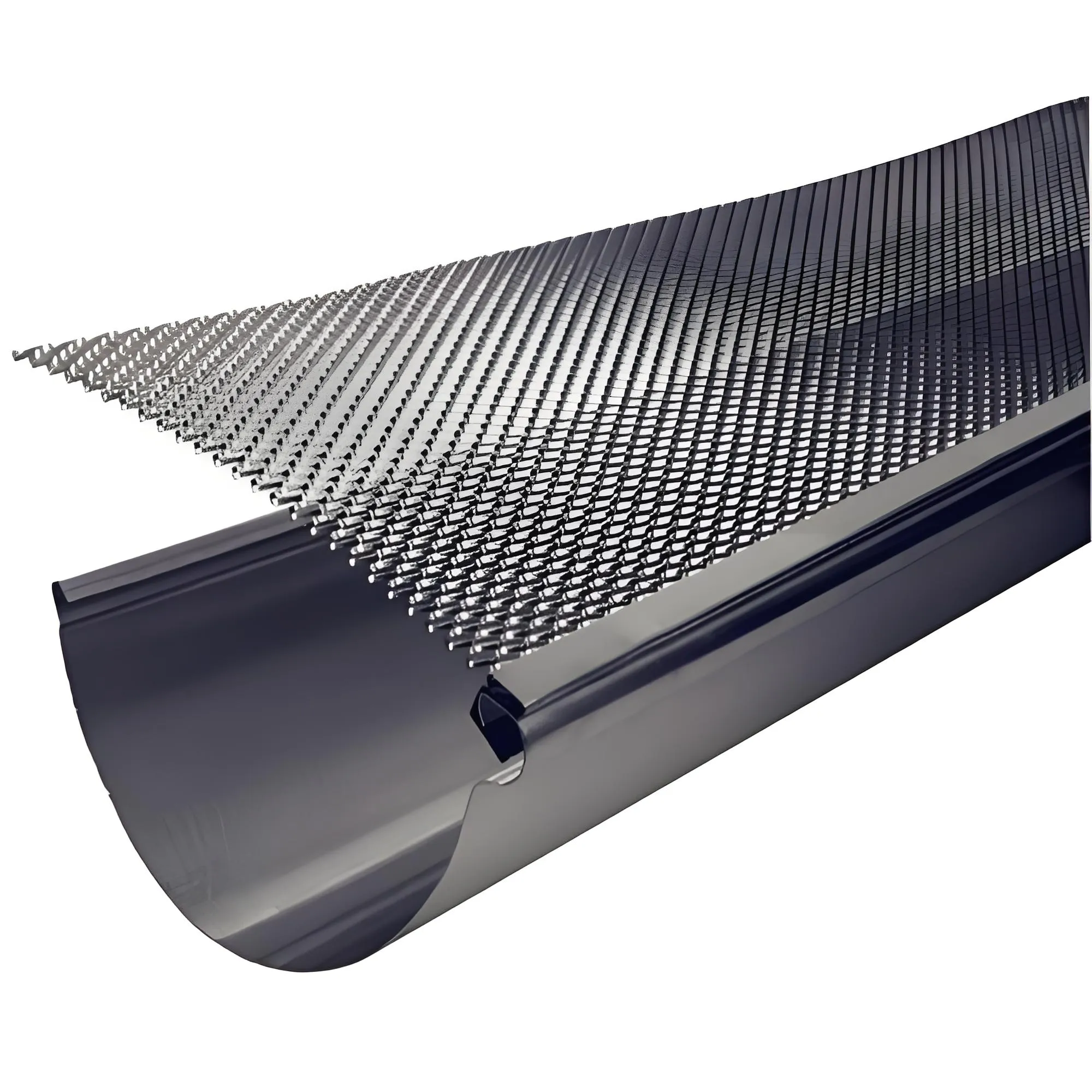
02 / APPLICATION SCENARIOS & REQUIREMENTS
Application Scenarios & Project Requirements
Review the operating conditions, users, loads, environment and project requirements before selecting the appropriate steel grating specification.
Commercial Roof Drainage
Aluminum gutter guards help keep leaves and windblown debris out of gutters on offices, retail buildings, warehouses, and other commercial properties, reducing blockages that can cause overflow near entrances, walls, and loading areas.
Industrial Building Gutters
Factory and workshop roofs often have long gutter runs that are difficult to inspect frequently. Properly supported aluminum guards limit the entry of larger debris while preserving access for scheduled drainage maintenance.
Residential Roof Gutters
On houses and apartment buildings, the guard covers exposed gutters beneath trees and helps maintain a clear route to the downpipes during seasonal leaf fall and heavy rainfall.
Canopies and Covered Walkways
Aluminum guards can be fabricated for gutters fitted to entrance canopies, carports, and covered walkways, where overflowing water may otherwise create wet surfaces or interfere with pedestrian access.
03 / SPECIFICATIONS & PRODUCT OPTIONS
Common Specifications & Available Options
Compare materials, bearing bar sizes, spacing, surface types, finishes and panel dimensions to match the requirements of the application.
Specifications
| Parameter | Specification / Options |
|---|---|
| Material | Aluminum alloy selected for outdoor exposure and fabrication requirements. |
| Product form | Press-locked grating, expanded aluminum mesh, perforated panel, or fabricated open-grid cover. |
| Surface finish | Mill finish, anodized, or powder-coated. |
| Guard width |
Produced to match the clear gutter width and required edge bearing. Final width should be confirmed from site measurements or approved drawings. |
| Opening size | Selected according to local debris type, required water intake, and cleaning method. |
| Panel length | Standard transportable sections or cut-to-size lengths based on the gutter layout. |
| Edge treatment | Plain, folded, framed, or banded edges to suit the support and fixing arrangement. |
| Support direction | Load-carrying elements must span between the gutter edges or designated structural supports. |
| Fixing | Aluminum or compatible corrosion-resistant clips, brackets, screws, or project-specified fasteners. |
| Custom fabrication | Available with end cuts, corner sections, downpipe access points, and panel identification according to approved layout drawings. |
Need a different size? Send your layout for a custom panel review.
Request Your SpecificationThe sizes above are reference examples, not approved combinations for every span. Confirm the bearing direction, loads, clear span and material before ordering. Panel size does not indicate the allowable unsupported span.
WHY USE STEEL GRATING?
Advantages for Steel Grating Applications
Debris Interception
The open cover intercepts leaves, twigs, and other large debris before they enter the gutter, helping maintain a clearer drainage route to outlets and downpipes.
Unrestricted Water Entry
Appropriately sized openings allow roof runoff to pass into the gutter while limiting solid debris. The opening pattern should be matched to expected rainfall and surrounding vegetation.
Low Structural Weight
Aluminum provides useful stiffness at a relatively low weight, reducing the additional load applied to gutter brackets and making long guard sections easier to position during installation.
Outdoor Corrosion Resistance
Aluminum naturally forms a protective oxide layer and can be anodized or powder-coated when additional surface protection or a specified architectural appearance is required.
Layout Flexibility
Panels can be fabricated to suit straight gutters, corners, outlet locations, and changes in width, reducing unnecessary site cutting and supporting an orderly installation sequence.
Removable Sections
Mechanically fixed sections can be removed individually for gutter inspection, sediment cleaning, or downpipe maintenance without dismantling the complete gutter guard system.
04 / INSTALLATION & PROJECT PHOTOS
Installation Guidance & Application Photos
Review the panel layout, support conditions, fixing methods and fabrication details before installation, and refer to the application photos for practical examples.
-
Survey the Gutter
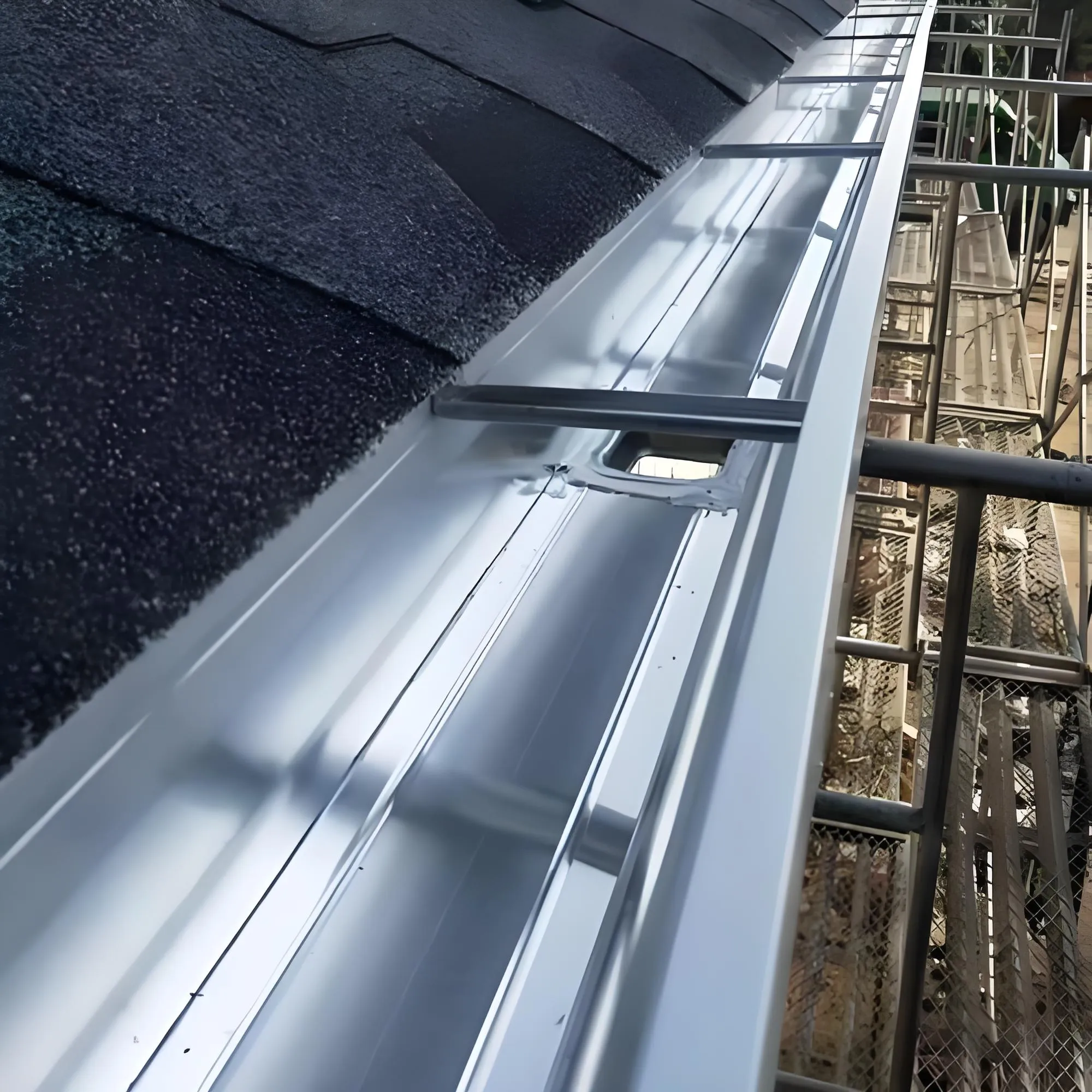
Measure the clear gutter width, section profile, bracket spacing, corners, outlets, and obstructions. Confirm that the existing gutter and supporting components can carry the guard and expected maintenance loads.
-
Check the Panel Layout
Match panel identification to the approved layout and verify that load-carrying elements span between suitable supports. Keep designated access sections aligned with downpipes and cleaning points.
-
Position and Secure Panels
Seat each section evenly without restricting the gutter flow path. Install compatible clips, brackets, or project-specified fasteners at the required spacing, allowing for aluminum thermal movement where necessary.
-
Inspect the Drainage Route
Check joints, corners, edges, and fasteners for movement or sharp projections. Remove installation debris, test water flow toward the outlets, and establish a routine inspection schedule for the completed gutter system.
05 / RELATED REFERENCE & FAQ
Frequently Asked Questions
How does an aluminum gutter guard help prevent clogging?
The guard forms an open barrier above the gutter that intercepts leaves, twigs, and other large debris while allowing rainwater to pass through. Fine particles can still enter, so periodic inspection and sediment removal remain necessary.
Which opening size should be specified?
Opening size depends on the type of nearby vegetation, roof runoff rate, roof pitch, and local rainfall intensity. Smaller openings block finer debris but may require more frequent surface cleaning, while larger openings generally admit water more readily.
Can the gutter guard dimensions be customized?
Yes. Width, length, edge profile, corner sections, and outlet access points can be produced from site measurements or approved layout drawings. The required bearing area and fastening clearance should be included when confirming final dimensions.
Which surface finish is suitable for outdoor use?
Mill-finish aluminum is suitable for many general environments. Anodizing or powder coating may be specified for additional surface protection, color matching, or architectural requirements. The finish should be selected according to the site exposure and maintenance plan.
How should aluminum gutter guard panels be fixed?
Panels should be secured with compatible corrosion-resistant clips, brackets, or screws that prevent lifting and movement without obstructing water flow. The fixing design should also accommodate thermal expansion and permit removal at designated maintenance locations.
Does a gutter guard eliminate gutter maintenance?
No. It reduces the amount of large debris entering the gutter but does not eliminate dust, seeds, roof granules, or fine sediment. Guards, outlets, and downpipes should be inspected periodically and after severe storms or heavy seasonal leaf fall.
06 / PROJECT ENQUIRY
Tell Us About Your Walkway
Share your layout and operating requirements so our team can review the grating, fabrication and supply scope.
Send Drawings by Email Discuss on WhatsAppThe email button opens your mail app. Attach your drawings before sending.
Include these details
- Application location and exposure conditions
- Drawings, panel dimensions and quantities
- Support layout, clear span and design loads
- Material, finish and walking-surface requirements
- Cut-outs, fixings and removable access sections
- Destination, required delivery date and project standards
Already have a specification? Send it with your enquiry.