

01 / APPLICATION OVERVIEW
Steel Grating Drilling Platforms for Offshore Safety
Steel grating drilling platforms provide load-bearing access around offshore drilling equipment, with surface profiles and corrosion protection selected for demanding marine operating conditions.
Grating decks form inspection routes, equipment service areas, and working platforms around drilling auxiliaries, mud processing equipment, and pipework. Removable panels allow access to services below, while open areas permit drainage where the platform’s spill-control and fire-protection design allows it.
Selection should consider operating loads, concentrated maintenance loads, vibration, bearing direction, support span, and panel restraint. Salt spray, drilling fluids, dropped-object exposure, electrical bonding, drainage containment, and applicable offshore requirements must also be addressed in the complete platform design.
Discuss Your Walkway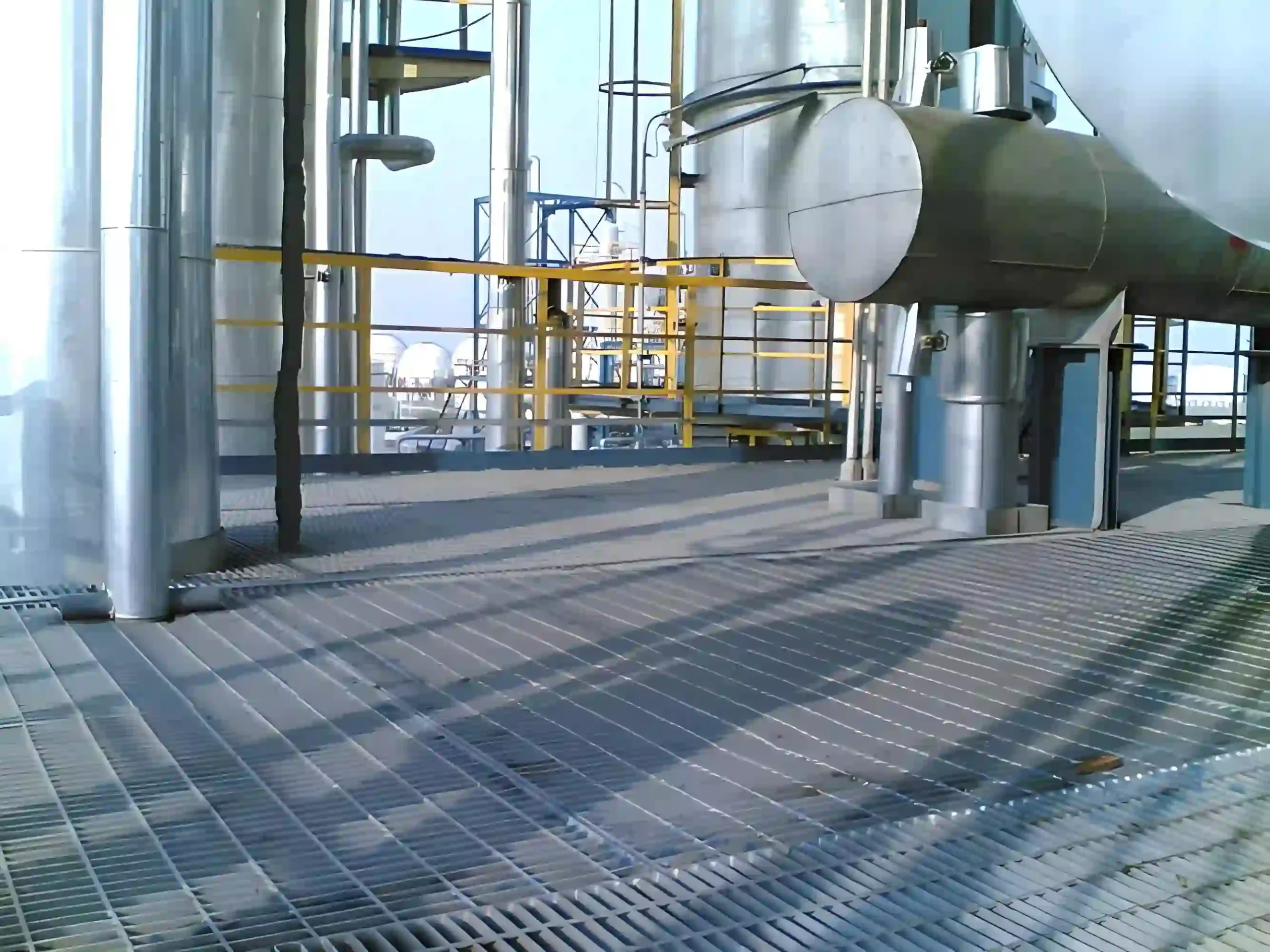
02 / APPLICATION SCENARIOS & REQUIREMENTS
Application Scenarios & Project Requirements
Review the operating conditions, users, loads, environment and project requirements before selecting the appropriate steel grating specification.
Drilling Equipment Access
Grating platforms provide inspection and service access beside drilling auxiliaries and elevated equipment. Layouts should maintain clearance from moving machinery, preserve designated access routes, and accommodate the verified loads from personnel, tools, and planned maintenance activities.
Mud Processing Service Areas
Grating can provide access around shale shakers, pumps, and associated pipework where the drainage design permits an open deck. Surface selection and cleaning procedures must account for drilling mud, while liquids passing through require suitable collection below.
Pipe Rack Walkways
Elevated grating routes allow personnel to inspect pipework, operate accessible valves, and reach instruments. Panel layouts should coordinate with pipe supports, insulation, equipment removal paths, and protected openings through the deck.
Exposed Utility Platforms
External platforms provide operating access around offshore utility equipment exposed to rain and salt spray. The grating, supports, and connections require verification for the specified environmental loads, corrosion conditions, and secure retention above lower decks.
03 / SPECIFICATIONS & PRODUCT OPTIONS
Common Specifications & Available Options
Compare materials, bearing bar sizes, spacing, surface types, finishes and panel dimensions to match the requirements of the application.
Specifications
| Parameter | Specification / Options |
|---|---|
| Material |
Carbon steel bearing bars, cross bars, and perimeter members to the project-specified grades and documentation requirements. Specify toughness or material traceability requirements where applicable to the installation. |
| Corrosion protection |
Hot-dip galvanized after fabrication where suitable, with an additional compatible coating system where specified for marine exposure. Select protection for actual salt spray, wetting, chemical contact, and maintenance conditions. |
| Bearing bar section |
Bar depth and thickness selected from verified load data or calculations for the actual span and operating duty. Include concentrated loads, deflection limits, and the effect of the specified serrated profile. |
| Bearing bar spacing |
Project-defined pitch based on structural capacity, footwear, drainage, and dropped-object requirements. State clear openings separately from center-to-center spacing. |
| Cross bar spacing | Typically 50 or 100 mm center-to-center, with other arrangements subject to the selected grating construction and project specification. |
| Panel dimensions |
Cut-to-size panels manufactured to approved deck layouts, supporting steelwork, and equipment interfaces. Coordinate panel weight, lifting provisions, removal clearance, and identification with offshore handling procedures. |
| Walking surface |
Serrated or other project-approved surface selected for footwear and expected exposure to water, oil, and drilling fluids. Request relevant slip-performance evidence where specified; contamination still requires control. |
| Bearing direction |
Bearing bars span between designated deck supports with the specified end bearing. Mark the load-bearing direction and supported edges on fabrication drawings. |
| Openings and edges | Framed penetrations, banded edges, toe plates, and additional supports detailed for equipment clearances and dropped-object control. |
| Panel restraints |
Engineered clips, bolted hold-downs, or approved welded connections selected for vibration, displacement, and applicable uplift loads. Include fastener retention and electrical bonding provisions where required by the project. |
| Design verification |
Check personnel loads, maintenance loads, equipment contact areas, and applicable dynamic or environmental actions. Define any classification, testing, inspection, and certification requirements in the purchase specification. |
Need a different size? Send your layout for a custom panel review.
Request Your SpecificationThe sizes above are reference examples, not approved combinations for every span. Confirm the bearing direction, loads, clear span and material before ordering. Panel size does not indicate the allowable unsupported span.
WHY USE STEEL GRATING?
Advantages for Steel Grating Applications
Verified Operating Load Capacity
Bearing bars and supporting members can be sized for defined offshore operating duties. Strength and deflection checks establish suitable access surfaces for personnel, tools, and the specified maintenance loads.
Traction-Oriented Surface Options
Serrated profiles provide additional contact edges for footwear in suitable conditions. Surface selection can address expected wetting and contamination, supported by cleaning procedures and any project-required slip testing.
Reduced Surface Pooling
Open grating allows rainwater and wash water to leave the walking surface. Where process liquids are present, drainage must connect with the designated collection arrangement to protect lower decks and equipment.
Marine Exposure Protection
Galvanizing and compatible coating systems can protect fabricated carbon steel against specified marine exposure. Accessible panels and connections also allow inspection of coating damage and corrosion during scheduled offshore maintenance.
Controlled Maintenance Access
Removable panels provide planned access to services and structural members below the deck. Identified modules and engineered restraints support repeatable removal and reinstatement under the installation’s maintenance procedures.
Coordinated Equipment Interfaces
Factory-prepared openings and panel shapes can follow equipment foundations, pipe penetrations, and deck supports. Coordinating these details preserves the intended load path and reduces modifications in congested offshore work areas.
04 / INSTALLATION & PROJECT PHOTOS
Installation Guidance & Application Photos
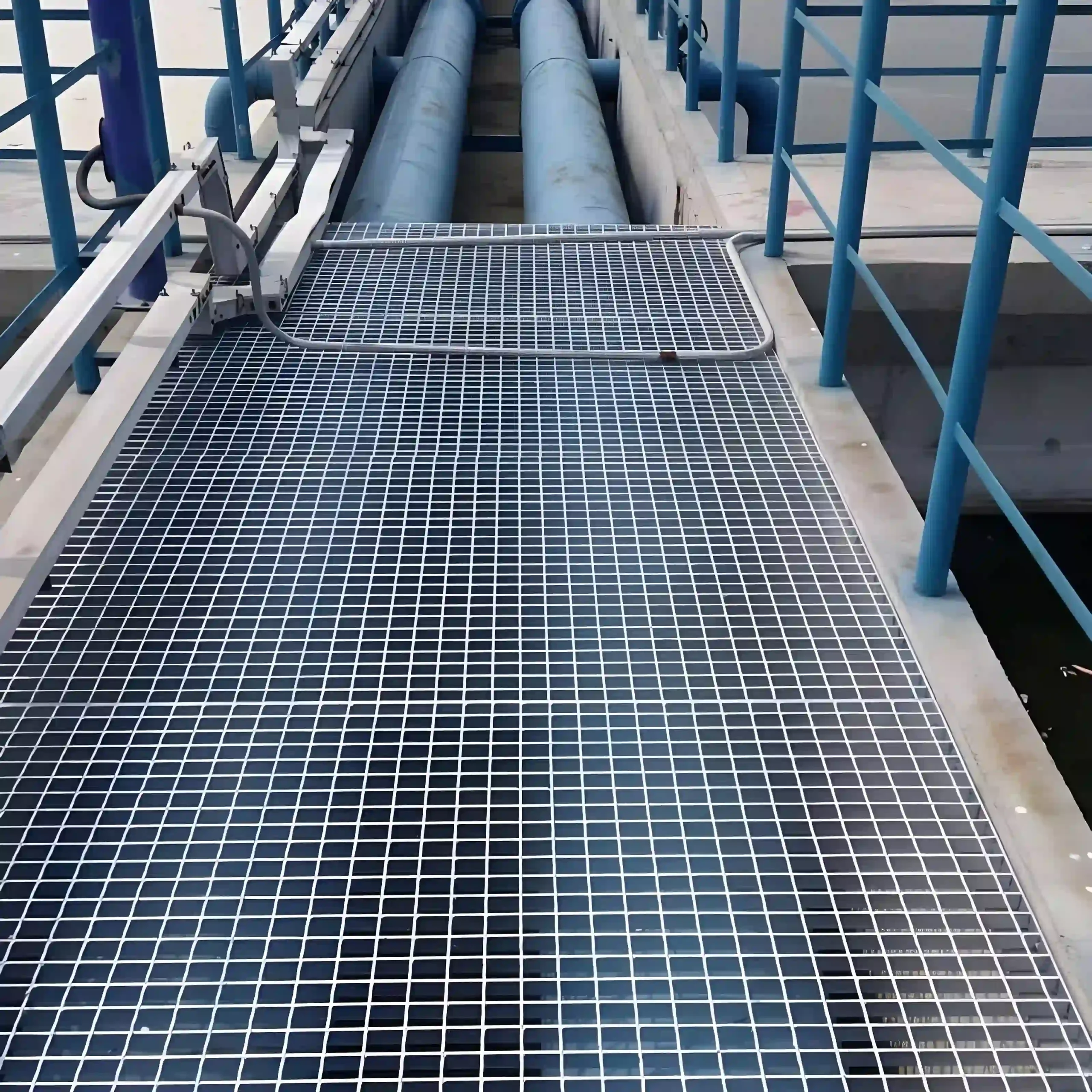
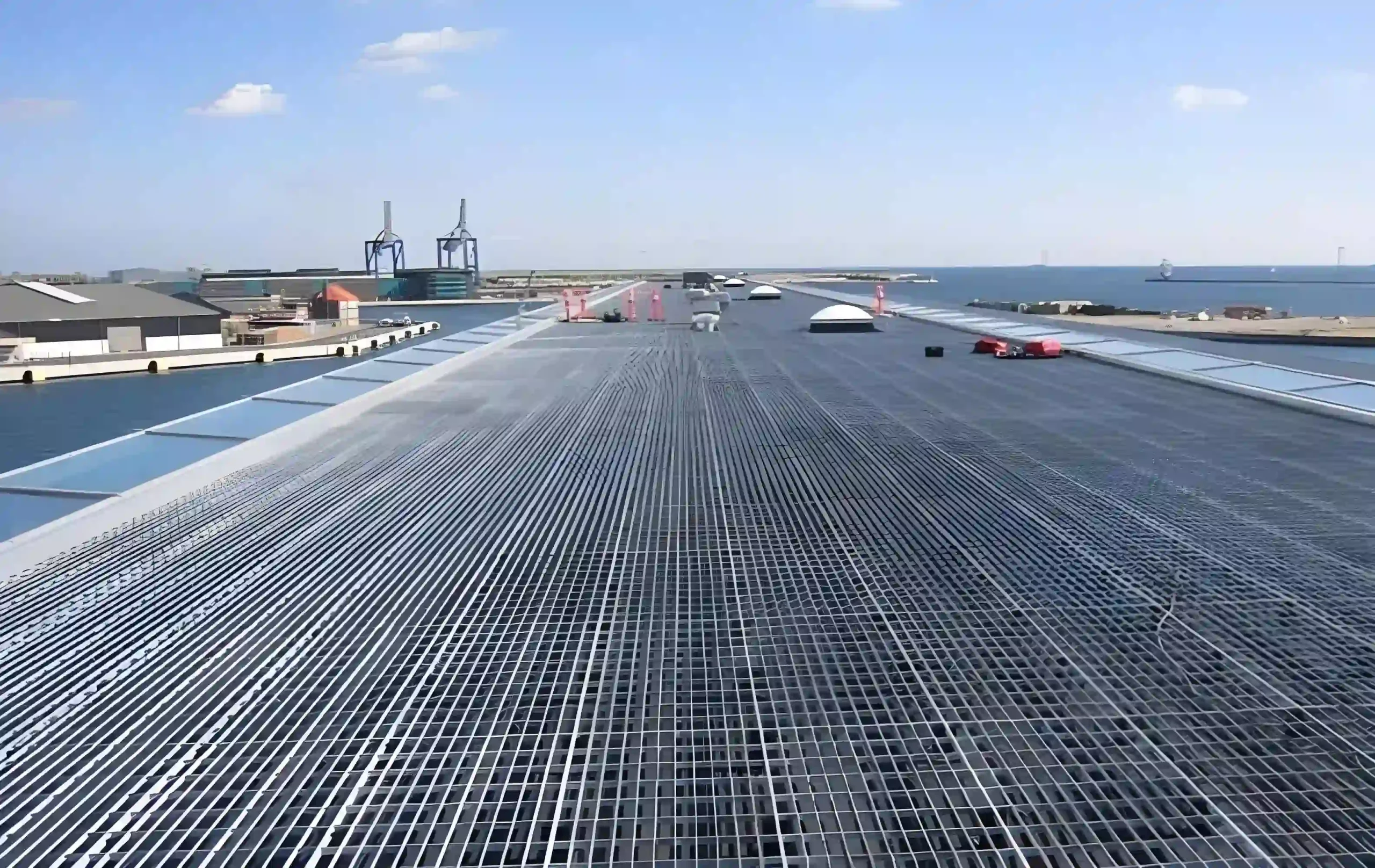
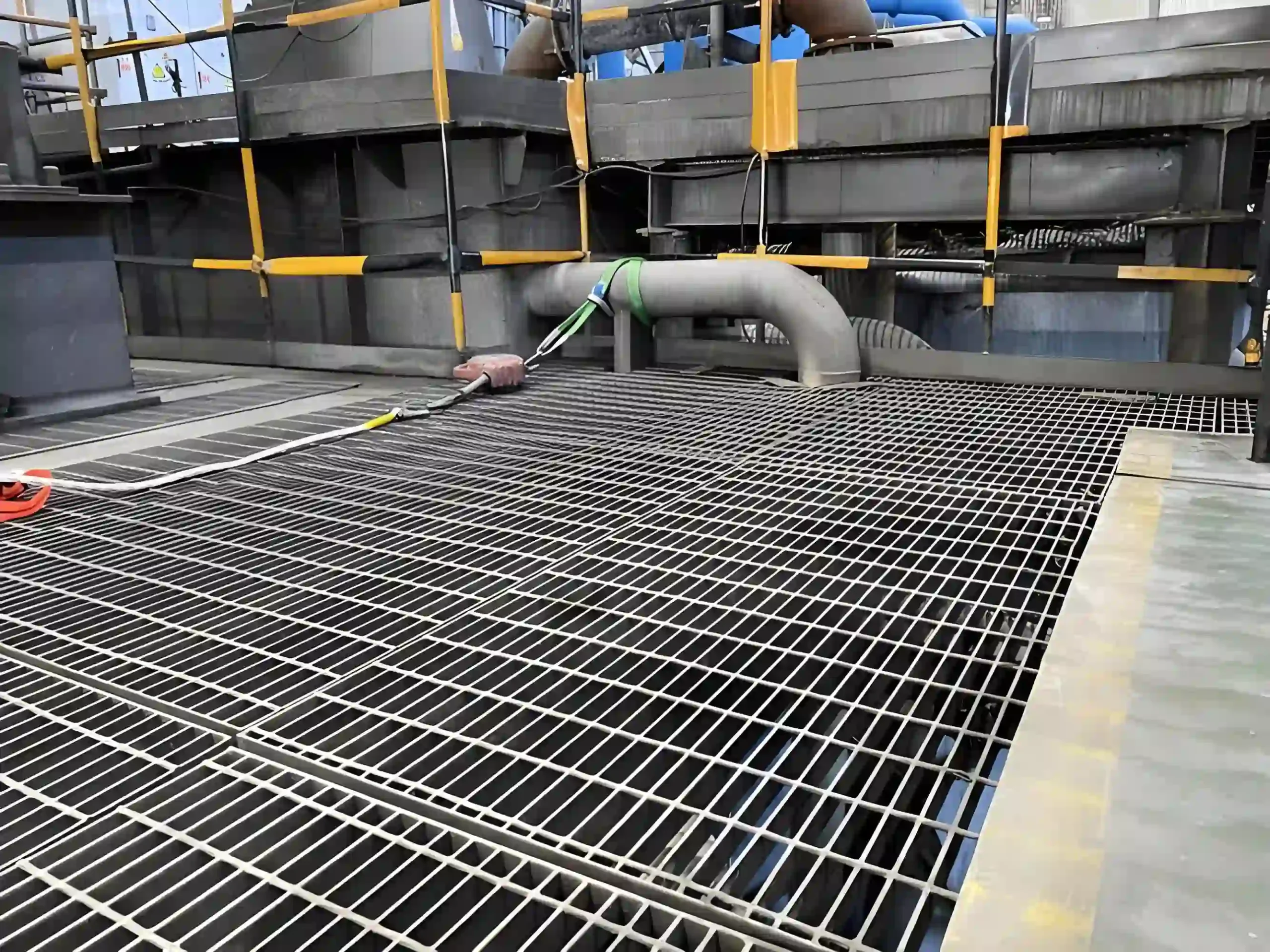
Review the panel layout, support conditions, fixing methods and fabrication details before installation, and refer to the application photos for practical examples.
-
Verify the Work Area and Supports
Confirm the approved offshore work permit, lifting arrangements, and controls for open deck areas. Check support positions, elevations, clear spans, corrosion condition, and specified loads against the installation drawings before placing panels.
-
Position Identified Panels
Match panel marks to the deck layout and verify bearing direction, end bearing, and equipment clearances. Control panels and loose items during handling. Maintain protection around unfinished openings and avoid unapproved cutting of bearing bars or frames.
-
Complete Restraints and Interfaces
Install specified hold-downs, locking components, and any required bonding connections. Complete framed penetrations and toe plates, and keep drainage paths clear. Follow the approved tightening or welding procedure and repair protective finishes disturbed during installation.
-
Inspect Before Operational Use
Check panel stability, restraint engagement, joints, exposed edges, and coating condition. Confirm dropped-object controls, drainage collection, and access clearances. Record the required acceptance checks and verify that all removed panels and fasteners have been reinstated before reopening the area.
05 / RELATED REFERENCE & FAQ
Frequently Asked Questions
What makes steel grating suitable for offshore drilling platforms?
Properly designed grating provides load-bearing access, open drainage, and removable sections around offshore equipment. Suitability depends on the complete installation, including surface profile, corrosion protection, structural supports, and panel restraints. The specification should address the actual operating area rather than assume one grating type suits every drilling-platform location.
Is hot-dip galvanizing sufficient for offshore corrosion protection?
It may be suitable for some exposure conditions, but performance varies with salt deposition, wetting, chemical contact, and coating damage. More demanding locations may require a compatible additional coating or another material system. Specify the actual exposure and required maintenance strategy before selecting the corrosion protection.
Does serrated grating remain slip-resistant when covered with drilling mud?
Drilling mud, oil, and grease can reduce traction even on serrated grating. Select the profile using the expected contamination, footwear, and any required slip-performance assessment. Drainage, leak control, and prompt cleaning remain necessary, particularly where deposits fill the serrations or obscure the walking surface.
How should offshore grating panels be restrained against movement?
Use a connection system verified for the panel geometry, support arrangement, vibration, and applicable uplift or displacement loads. Specify fastener locking and retention where required. Fixing quantity and position should follow approved drawings, with inspection procedures covering loose, damaged, or missing components throughout service.
How are dropped-object risks addressed with open grating?
Select clear openings and perimeter gaps according to the project’s dropped-object requirements and the activities below. Toe plates, framed penetrations, tool controls, and supplementary barriers may also be required. Where mesh or other infill is added, assess its attachment, corrosion, drainage, and cleaning implications as part of the assembly.
Can open steel grating replace a solid or fire-rated offshore deck?
Only where the approved platform design permits an open surface. Ordinary grating does not contain spilled liquids or provide a fire-rated separating deck. Areas requiring containment, fire separation, or protection of lower levels need the specified deck system; the steel material alone does not establish an assembly fire rating.
06 / PROJECT ENQUIRY
Tell Us About Your Walkway
Share your layout and operating requirements so our team can review the grating, fabrication and supply scope.
Send Drawings by Email Discuss on WhatsAppThe email button opens your mail app. Attach your drawings before sending.
Include these details
- Application location and exposure conditions
- Drawings, panel dimensions and quantities
- Support layout, clear span and design loads
- Material, finish and walking-surface requirements
- Cut-outs, fixings and removable access sections
- Destination, required delivery date and project standards
Already have a specification? Send it with your enquiry.