

01 / APPLICATION OVERVIEW
Steel Grating for Heavy Loads and Slip-Resistant Access
Steel grating for heavy loads provides rigid, slip-resistant access platforms, walkways, and stair treads for demanding industrial and infrastructure applications.
It is used around heavy machinery, conveyor systems, loading areas, plant platforms, maintenance routes, and elevated service structures. Open panels allow drainage and ventilation, while serrated bearing bars improve footwear contact where oil, water, dust, or mud may affect walking conditions.
Selection should consider uniform and concentrated loads, clear support span, bearing bar direction, bar depth and thickness, allowable deflection, surface profile, corrosion exposure, fixing method, and panel handling weight. Heavy wheel loads or equipment storage require separate structural verification.
Discuss Your Walkway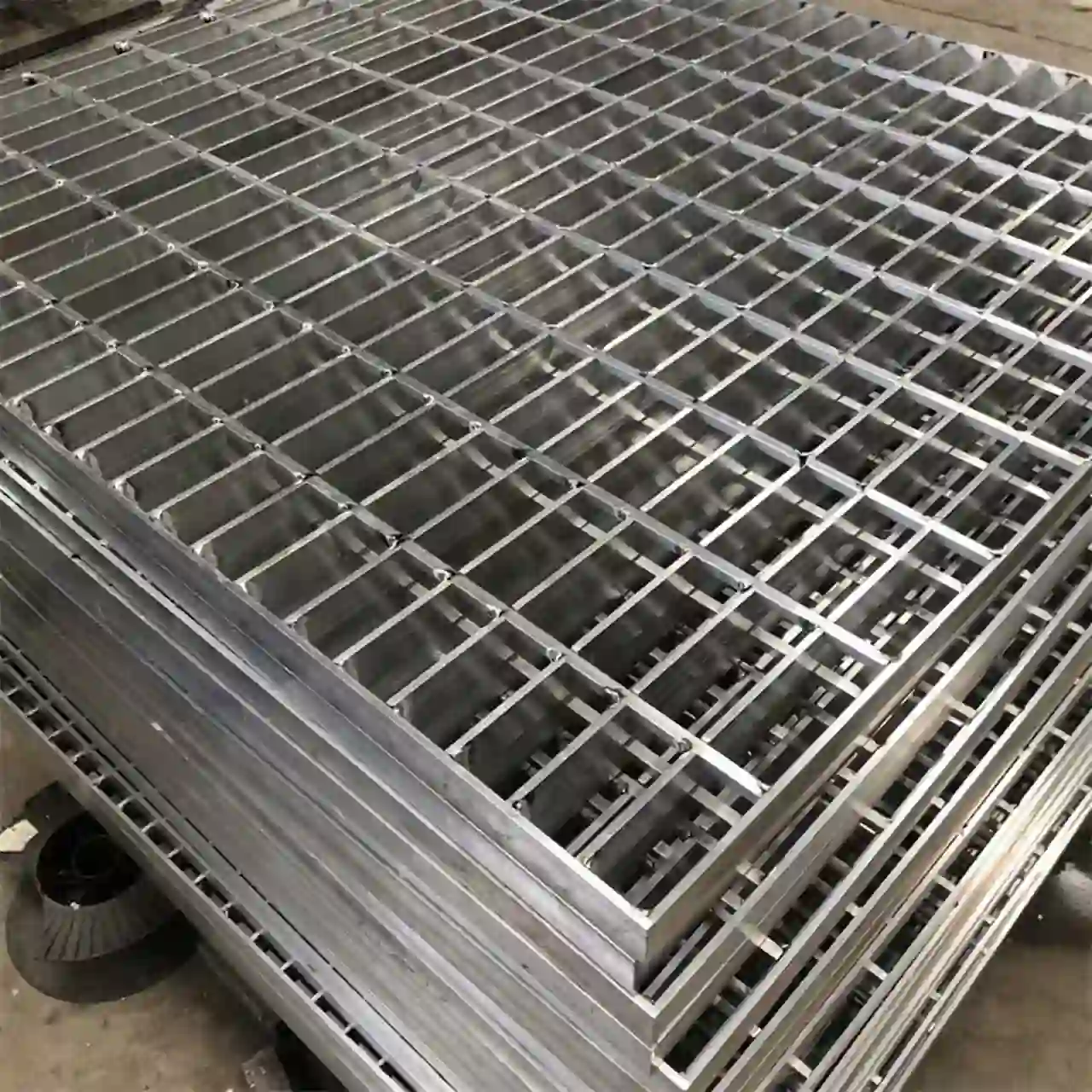
02 / APPLICATION SCENARIOS & REQUIREMENTS
Application Scenarios & Project Requirements
Review the operating conditions, users, loads, environment and project requirements before selecting the appropriate steel grating specification.
Heavy-Duty Equipment Platforms
Steel grating platforms support personnel, tools, and maintenance activities around crushers, pumps, motors, and industrial processing equipment. Bearing bar sizes and support spacing should be selected from the specified loads and clear span rather than from standard appearance alone.
Conveyor and Transfer Walkways
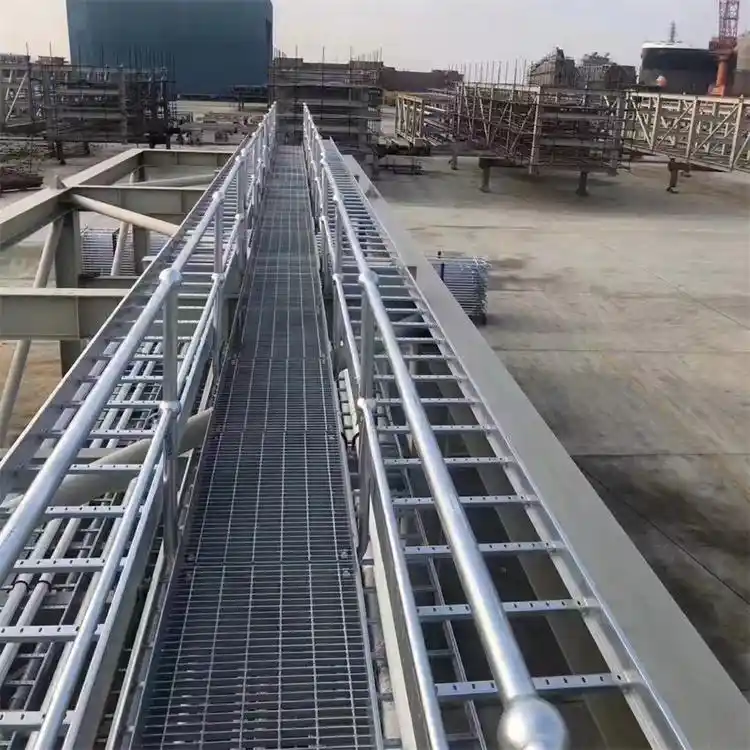
Grating walkways provide access along conveyors, transfer towers, and inspection routes. Serrated surfaces can improve footing in areas exposed to water, oil, dust, or spilled materials, while the open grid permits drainage and ventilation around the equipment.
Loading and Service Platforms
Heavy-load grating is suitable for loading platforms, service decks, and access areas where personnel handle tools or replacement parts. Local areas subject to pallet, trolley, or concentrated equipment loads should receive separate load and deflection checks.
Industrial Stairways and Landings
Serrated grating treads and landings provide slip-resistant access between plant elevations. Tread dimensions, nosings, support connections, and load capacity should match the approved stair design and the conditions expected during routine and emergency use.
03 / SPECIFICATIONS & PRODUCT OPTIONS
Common Specifications & Available Options
Compare materials, bearing bar sizes, spacing, surface types, finishes and panel dimensions to match the requirements of the application.
Specifications
| Parameter | Specification / Options |
|---|---|
| Material |
Weldable carbon steel, commonly Q235B, Q355B, ASTM A36, or ASTM A572 Grade 50 where specified and accepted by the project. Material grade and standard should be stated on the fabrication drawings. Selection must follow the structural and environmental design basis. |
| Surface treatment |
Hot-dip galvanized after fabrication for suitable outdoor and humid service; painted, powder-coated, or stainless steel options can be specified for compatible environments. Confirm chemical exposure, temperature, abrasion, and cleaning requirements before selecting the finish. |
| Bearing bar size |
Common options include 25 × 3, 30 × 3, 30 × 5, 32 × 5, and 40 × 5 mm. Heavy-load sections may include 50 × 5, 50 × 6, 60 × 6, 65 × 6, and 75 × 8 mm. Bar depth × thickness. Actual capacity depends on material, clear span, spacing, support condition, and loading arrangement. |
| Bearing bar spacing |
Common center-to-center pitches include 30, 34.3, and 40 mm. Closer pitches such as 20 mm may be specified where smaller clear openings are required. Clear opening equals pitch minus bar thickness and must satisfy the project access and object-retention criteria. |
| Cross bar spacing | Typical center-to-center pitches include 50 and 100 mm; 50.8 and 101.6 mm series are also available. Welded, pressure-locked, or riveted construction should be identified. |
| Panel dimensions |
Common panel examples include 600 × 1,000, 800 × 1,200, 1,000 × 1,000, 1,000 × 1,200, and 1,000 × 3,000 mm, with cut-to-size fabrication available. State bearing bar length and panel width separately. Panel size does not define the allowable unsupported span. |
| Walking surface |
Plain or serrated bearing bars. Serrated profiles are commonly selected for areas exposed to water, oil, mud, dust, or process residue. Verify load data for the selected serrated section. Slip resistance still depends on cleaning and the actual contaminant present. |
| Stair tread dimensions |
Common tread widths include 600, 800, 900, 1,000, and 1,200 mm, with front-to-back depths around 240, 270, or 300 mm. End plates and anti-slip nosings can be supplied. Final rise, run, width, nosing, and connection details must match the approved stair design. |
| Edges and openings |
Banded edges, reinforced equipment cut-outs, toe plates, and custom openings for pipes, ducts, and cable routes are available. Cut bearing bars may require additional support or reinforcement. Opening protection should follow the platform safety design. |
| Fixings |
Grating clips, bolted retaining plates, or welded connections can be specified. M8 and M10 fixings are common where compatible with the selected clamp and support detail. Define fixing quantity, location, tightening requirements, and resistance to vibration or uplift. |
| Load and bearing direction |
Bearing bars span between supporting members. Confirm clear span in mm, uniform load in kN/m², concentrated load in kN, contact area, and allowable deflection in mm. Check wheel loads, impact, tool trolleys, and temporary material storage separately. Specify minimum end bearing on the drawings. |
Need a different size? Send your layout for a custom panel review.
Request Your SpecificationThe sizes above are reference examples, not approved combinations for every span. Confirm the bearing direction, loads, clear span and material before ordering. Panel size does not indicate the allowable unsupported span.
WHY USE STEEL GRATING?
Advantages for Steel Grating Applications
Load-Matched Steel Sections
Bearing bar depth, thickness, and spacing can be selected for the actual span and loading condition. Routine walkways, heavy maintenance areas, and trolley routes can use sections verified for their different service demands.
Serrated Slip-Resistant Surface
Serrated bearing bars provide additional contact edges for footwear on routes exposed to rain, oil, mud, dust, or process residue. The selected profile should still be checked for load capacity and maintained through regular cleaning.
Open Drainage and Ventilation
The open grid allows water and some loose material to pass through the surface while supporting air movement around equipment. This helps reduce standing water, although blocked openings and accumulated deposits require planned housekeeping.
Corrosion-Resistant Finishes
Hot-dip galvanizing, paint systems, powder coating, or stainless steel can be selected for the exposure. Finish selection should account for humidity, chemicals, abrasion, temperature, and the maintenance conditions at the installation site.
Support for Concentrated Loads
Heavy-duty panels can be designed for defined concentrated loads such as maintenance tools, small trolleys, or equipment components. Support spacing, contact area, and allowable deflection must be verified for each local loading condition.
Custom Fabrication and Retention
Panels can be banded, cut around equipment, reinforced at openings, and supplied with project-specified clamps or retaining plates. Drawing-based fabrication helps maintain bearing direction and reduce uncontrolled site modifications.
04 / INSTALLATION & PROJECT PHOTOS
Installation Guidance & Application Photos
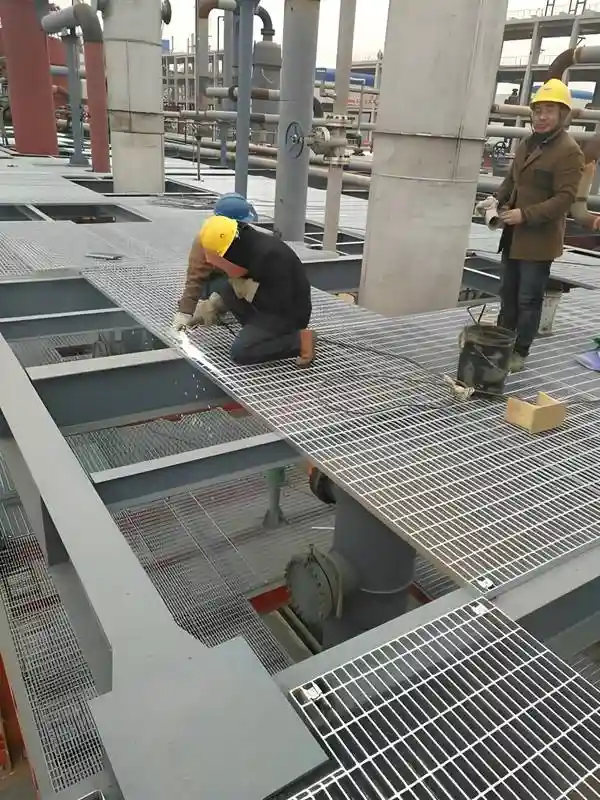
Review the panel layout, support conditions, fixing methods and fabrication details before installation, and refer to the application photos for practical examples.
-
Verify Supports and Design Loads
Check support locations, clear spans, elevations, and required end bearing against the approved drawings. Confirm uniform and concentrated loads, including wheel or equipment loads where applicable. Complete site isolation and access controls before installation.
-
Position Panels in the Correct Direction
Match panel identification to the layout and orient bearing bars across the designated supports. Check joints, stair transitions, openings, edge banding, and clearances. Do not cut bearing bars or change support positions without design approval.
-
Install Specified Fixings
Secure each panel with the specified clamps, retaining plates, or welds. Apply the required tightening procedure and vibration-resistant details. Confirm that removable panels remain restrained during service while still allowing planned maintenance access.
-
Inspect the Finished Access Surface
Check for rocking panels, unsupported edges, loose fixings, sharp projections, excessive deflection, and blocked drainage. Repair coating damage using the approved method, then establish routine inspections for wear, corrosion, contamination, and fixing movement.
05 / RELATED REFERENCE & FAQ
Frequently Asked Questions
What determines the load capacity of heavy-duty steel grating?
Capacity depends on bearing bar size, material grade, spacing, clear support span, support condition, and load distribution. The design must identify both uniform and concentrated loads, including contact area and allowable deflection. Wheel traffic, impact, or temporary equipment storage may require separate structural checks rather than selection from a standard load table alone.
Is serrated grating better for slip-resistant access?
Serrated bearing bars provide additional contact edges and are commonly considered for walkways exposed to water, oil, mud, dust, or process residue. Their performance depends on the contaminant, footwear, drainage, and cleaning. Serrated grating does not replace housekeeping or a complete assessment of the access route and surrounding hazards.
Which bearing bar sizes are available for heavy loads?
Common options include 30 × 5, 32 × 5, and 40 × 5 mm, while heavier platforms may use 50 × 5, 50 × 6, 60 × 6, 65 × 6, or 75 × 8 mm sections. The correct size depends on span, spacing, material, load, contact area, and deflection limit. Final selection should follow verified engineering data.
How should grating be protected against corrosion?
Hot-dip galvanizing after fabrication suits many outdoor and humid installations. Painted or powder-coated systems may suit controlled indoor environments, while stainless steel may be required for more aggressive exposure. Provide the chemical conditions, temperature, abrasion, and cleaning methods so the finish and fastener materials can be selected correctly.
Can heavy-load grating panels be made to custom dimensions?
Yes. Panels can be cut to approved dimensions and supplied with banded edges, reinforced openings, toe plates, stair end plates, and custom cut-outs for pipes, ducts, and equipment. The layout should identify bearing direction, support points, removable sections, and manageable panel weights before fabrication.
What information is needed for a heavy-duty grating quotation?
Provide the layout drawings, quantities, clear spans, bearing direction, uniform and concentrated loads, material grade, bar sizes and spacing, surface profile, finish, and fixing requirements. Identify wheel traffic, equipment handling, stairways, openings, corrosion exposure, and any areas requiring removable panels so the quotation reflects the actual service conditions.
06 / PROJECT ENQUIRY
Tell Us About Your Walkway
Share your layout and operating requirements so our team can review the grating, fabrication and supply scope.
Send Drawings by Email Discuss on WhatsAppThe email button opens your mail app. Attach your drawings before sending.
Include these details
- Application location and exposure conditions
- Drawings, panel dimensions and quantities
- Support layout, clear span and design loads
- Material, finish and walking-surface requirements
- Cut-outs, fixings and removable access sections
- Destination, required delivery date and project standards
Already have a specification? Send it with your enquiry.