

01 / APPLICATION OVERVIEW
Steel Grating Operating Platforms for Strength and Corrosion Resistance
Steel grating operating platforms provide load-bearing access around industrial equipment, with protective finishes selected for outdoor exposure, moisture, and process conditions.
Grating decks provide standing areas for valve operation, instrument checks, sampling, and routine equipment servicing. Panels can be arranged around vessels, pumps, and pipework, with removable sections positioned where maintenance requires access below the platform.
Engineering selection should consider operating loads, concentrated maintenance loads, support span, bearing direction, allowable deflection, and equipment clearances. Corrosion protection, walking surface, panel restraints, edge protection, and drainage must suit the chemicals, moisture, and working conditions present at the installation.
Discuss Your Walkway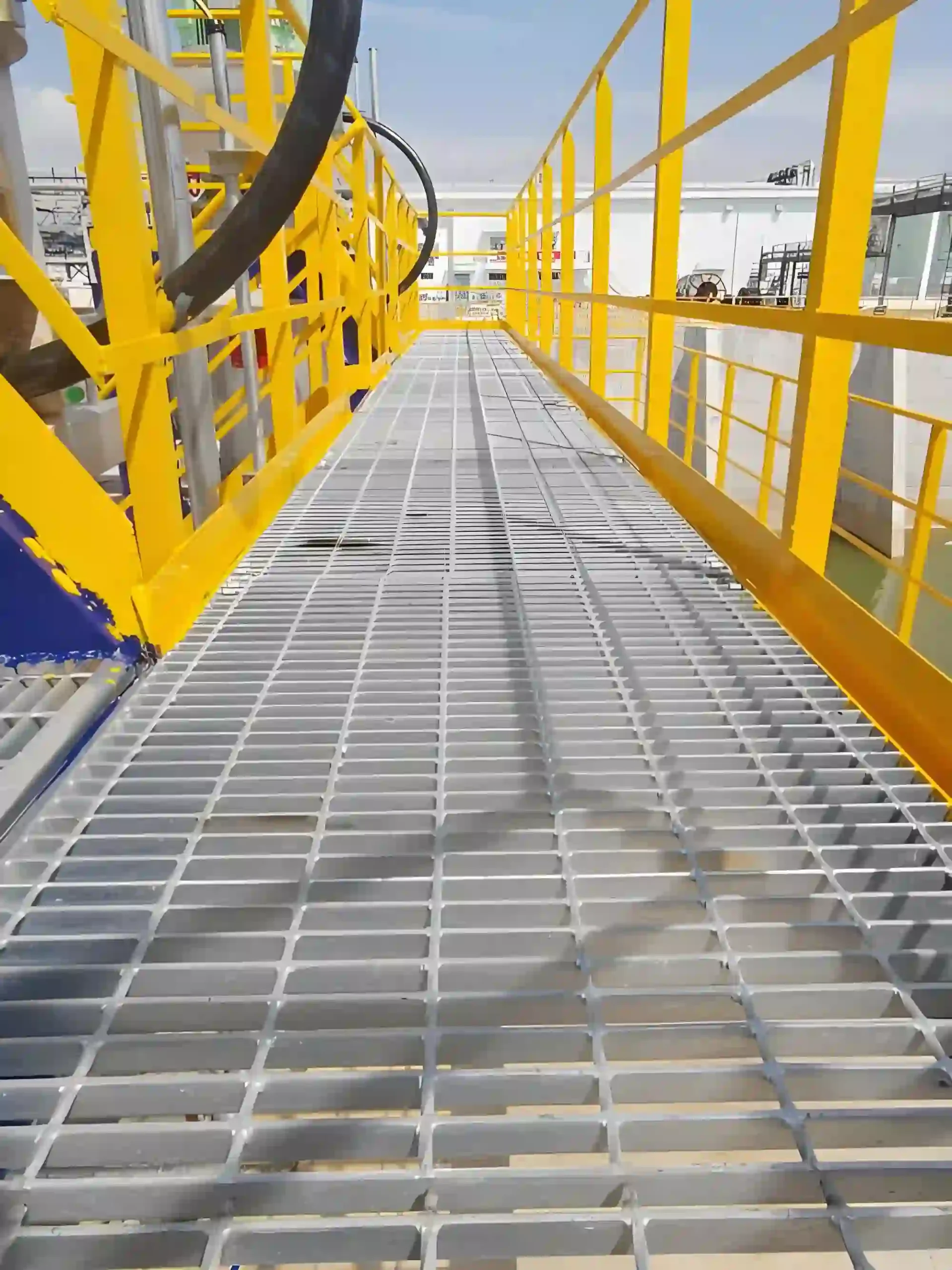
02 / APPLICATION SCENARIOS & REQUIREMENTS
Application Scenarios & Project Requirements
Review the operating conditions, users, loads, environment and project requirements before selecting the appropriate steel grating specification.
Vessel Operating Platforms
Grating platforms provide working space beside vessel instruments, sampling points, and manually operated valves. Platform elevations and panel openings should allow operators to reach the required fittings while maintaining clearance for insulation, pipe movement, and equipment servicing.
Pump and Process Equipment Decks
Raised grating decks provide access around pumps, filters, and process skids where piping or drainage channels occupy the area below. The floor layout should accommodate operating positions, maintenance routes, and any specified temporary component loads.
Water Treatment Platforms
Platforms beside treatment tanks and channels support inspection, valve adjustment, and routine plant operation. Surface treatment must suit humidity, splash exposure, and cleaning chemicals, while panel layouts should preserve access to mechanisms and designated lifting areas.
Outdoor Utility Platforms
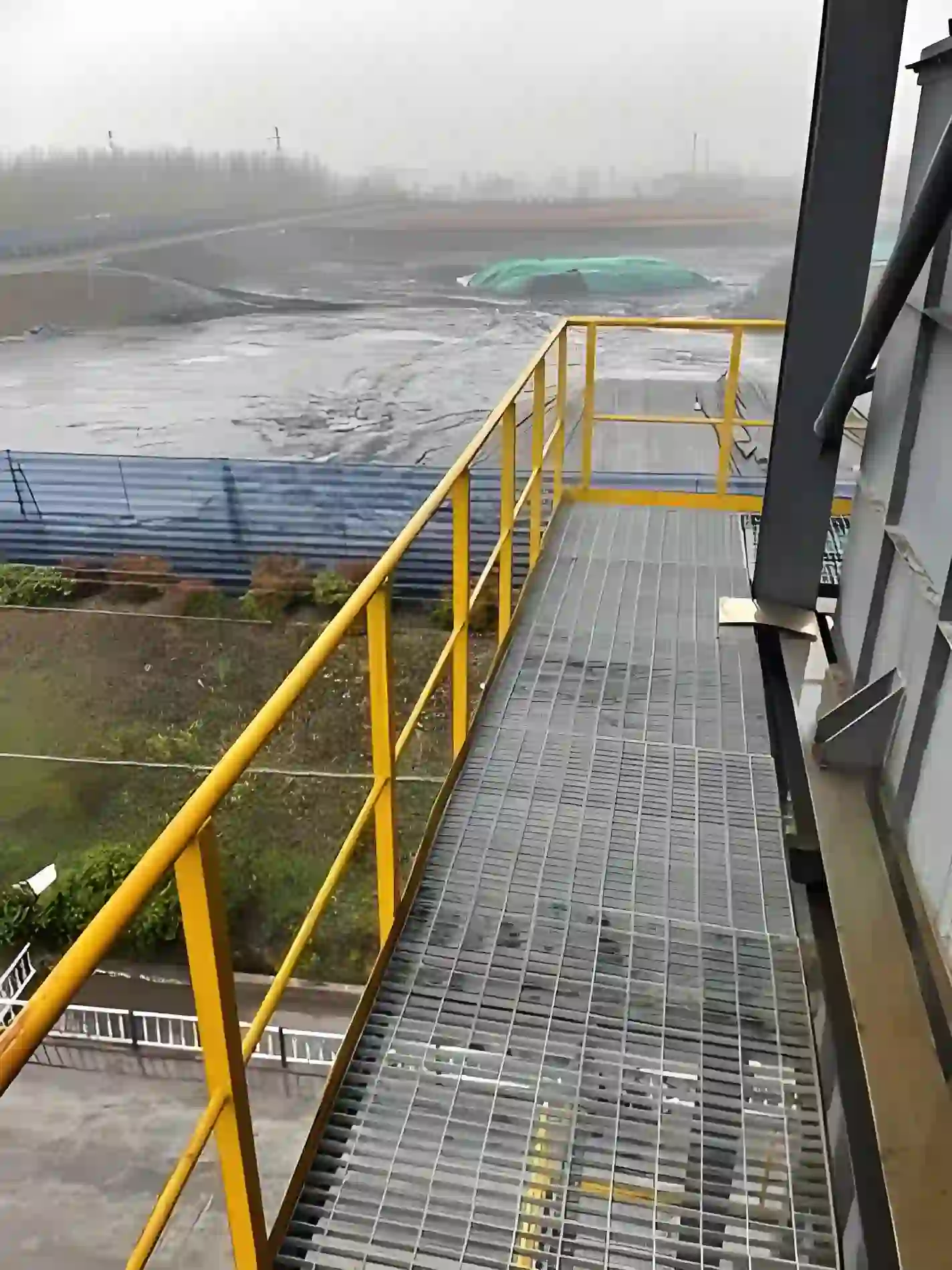
Grating decks provide operating access around elevated utility equipment and pipework exposed to rainfall. Galvanized panels can suit atmospheric exposure, with supports and connections coordinated for wind, operating loads, and the required maintenance clearances.
03 / SPECIFICATIONS & PRODUCT OPTIONS
Common Specifications & Available Options
Compare materials, bearing bar sizes, spacing, surface types, finishes and panel dimensions to match the requirements of the application.
Specifications
| Parameter | Specification / Options |
|---|---|
| Material | Carbon steel bearing bars, cross bars, banding, and associated support components to the project-specified structural grades. |
| Corrosion protection |
Hot-dip galvanized after fabrication for suitable outdoor and humid environments; a compatible additional coating may be specified for more demanding exposure. Confirm suitability for process chemicals, splash conditions, cleaning agents, and operating temperatures. |
| Bearing bar size |
Common examples include 25 × 3, 30 × 3, 30 × 5, 32 × 5, and 40 × 5 mm. Height × thickness; verify the section for actual loads, clear support span, and allowable deflection. |
| Grid spacing |
Typical bearing bar pitches: 30 or 40 mm; typical cross bar pitches: 50 or 100 mm. Dimensions are center-to-center. Specify closer spacing where required for footwear, small objects, or access conditions. |
| Panel dimensions |
Cut-to-size panels manufactured to approved platform layouts, equipment interfaces, and supporting steelwork. Coordinate panel weight, removal direction, and lifting clearance with the maintenance plan. |
| Design loads |
Project-defined personnel, distributed, and concentrated maintenance loads, including specified component storage or handling loads. Equipment supports and lifting loads require separate verification where they affect the platform. |
| Walking surface |
Plain or serrated bearing bars selected through the assessment of moisture, contamination, footwear, and cleaning practices. Use structural load data applicable to the selected surface profile. |
| Bearing direction |
Bearing bars span between designated platform beams with the specified end bearing. Show the load-bearing direction and supported edges on fabrication and installation drawings. |
| Edge and opening treatment | Banded edges, framed penetrations, and toe plates where required, with additional supports for interrupted bearing bars. |
| Fixing | Compatible grating clips, bolted restraints, or approved welded connections selected for movement, vibration, uplift, and access requirements. |
| Custom fabrication |
Irregular panels, vessel cut-outs, removable service sections, and panel identification produced from approved drawings. Coordinate handrail posts, access stairs, and equipment clearances before fabrication. |
Need a different size? Send your layout for a custom panel review.
Request Your SpecificationThe sizes above are reference examples, not approved combinations for every span. Confirm the bearing direction, loads, clear span and material before ordering. Panel size does not indicate the allowable unsupported span.
WHY USE STEEL GRATING?
Advantages for Steel Grating Applications
Engineered Operating Load Capacity
Bearing bar sections and support spacing can be selected for personnel and defined maintenance loads. Checking both strength and deflection helps provide a stable working surface at frequently used operating positions.
Protection for Exposed Steel
Galvanizing after fabrication protects accessible steel surfaces, including cut edges and welded areas. A coating system matched to the actual environment can address additional exposure where atmospheric zinc protection alone is unsuitable.
Reduced Surface Water Accumulation
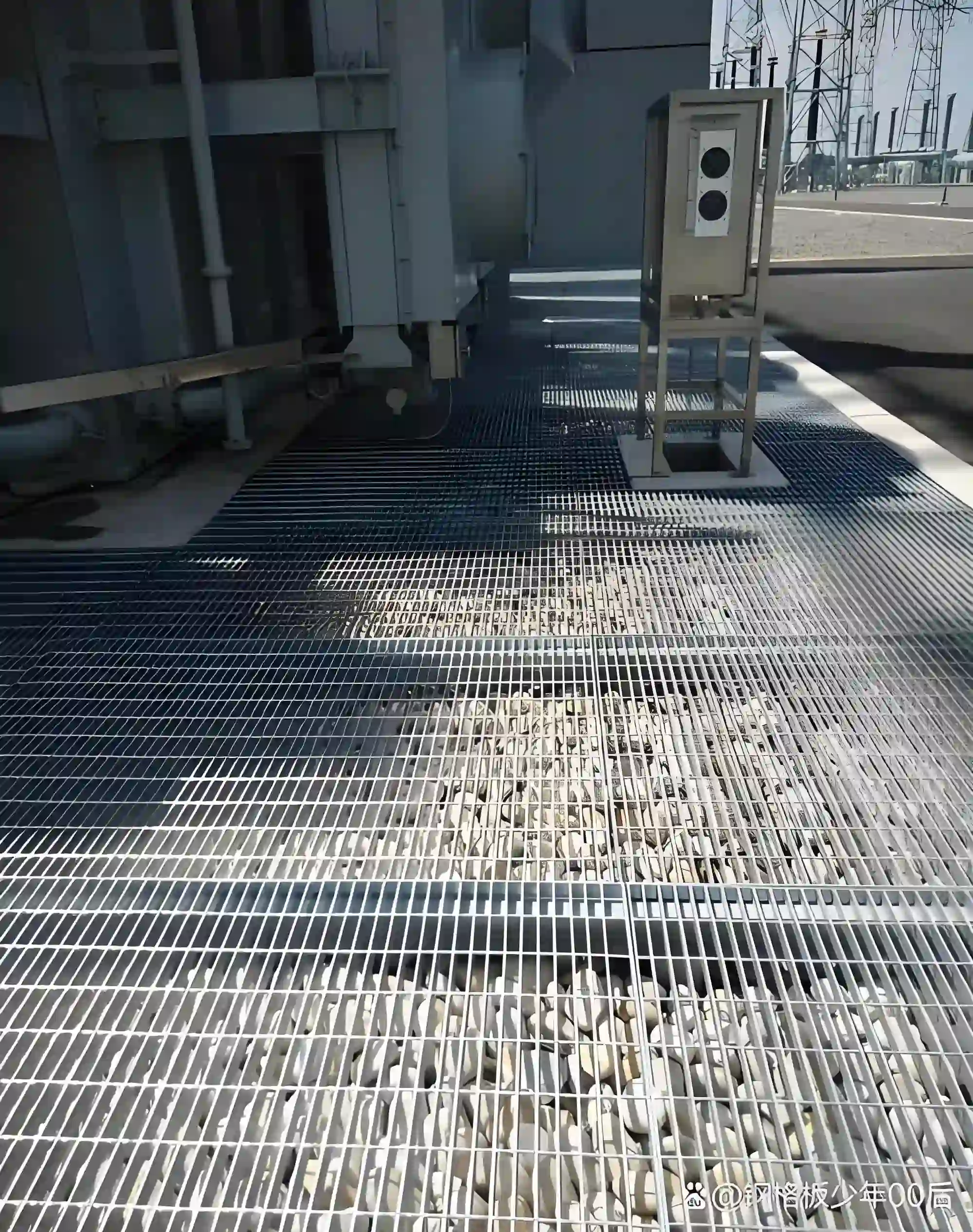
Open grating allows rainwater and wash water to pass through the deck. The collection arrangement below can be coordinated to prevent discharge onto electrical equipment, occupied routes, or areas requiring containment.
Equipment-Specific Panel Layouts
Panels can be fabricated around vessels, columns, and pipe penetrations while preserving defined operating areas. Planned openings and supporting members reduce the need for modifications beside installed equipment.
Removable Service Sections
Mechanically fixed panels can provide access to services beneath the platform or clearance for component removal. Panel dimensions and restraints can be coordinated with the approved lifting and maintenance procedure.
Surface Options for Wet Work
Serrated bearing bars provide additional contact edges where wet conditions affect footing. Their use should be combined with suitable footwear and cleaning, since oil or process deposits can still create slip hazards.
04 / INSTALLATION & PROJECT PHOTOS
Installation Guidance & Application Photos
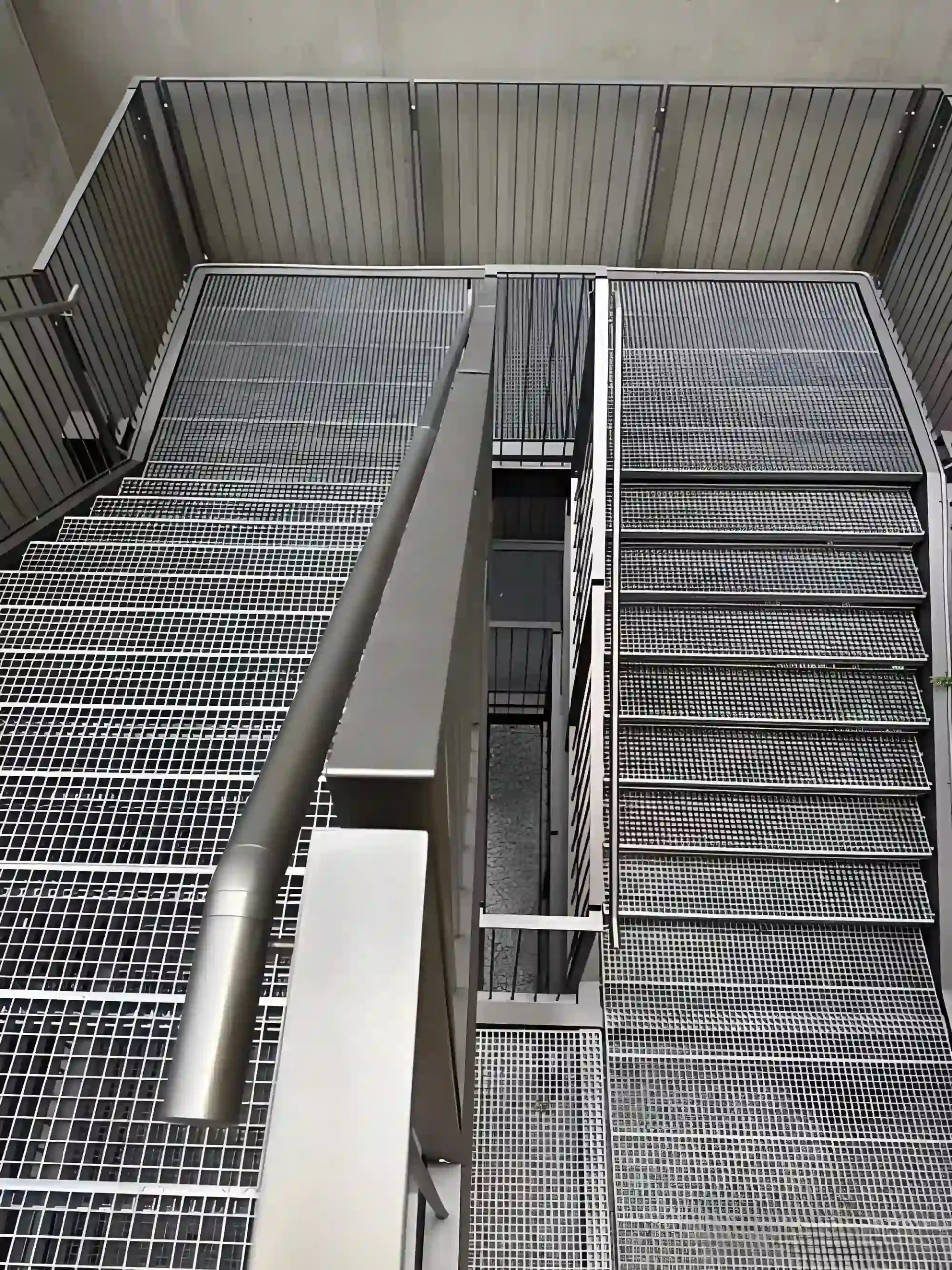
Review the panel layout, support conditions, fixing methods and fabrication details before installation, and refer to the application photos for practical examples.
-
Verify the Platform Structure
Check beam positions, elevations, clear spans, support widths, and specified loads against approved drawings. Confirm working clearances around valves and instruments, and verify that openings and maintenance routes match the installed equipment.
-
Position the Grating Panels
Match panel marks to the layout and confirm that bearing bars span between the designated supports. Check end bearing, joints, framed penetrations, and removable sections. Maintain specified clearances around equipment and provide approved support for cut bearing bars.
-
Secure Panels and Complete Interfaces
Install the specified restraints using the approved tightening or welding procedure. Complete toe plates and interfaces with stairs and railings as detailed. Avoid unapproved cutting or drilling, and restore protective coatings where installation work exposes steel.
-
Inspect Before Operation
Check panel stability, fasteners, edge protection, access clearances, and coating condition. Remove debris and contaminants, verify drainage arrangements, and confirm that removable sections can be safely handled and refitted. Complete the specified acceptance checks before loading the platform.
05 / RELATED REFERENCE & FAQ
Frequently Asked Questions
How is grating selected for an industrial operating platform?
Start with the platform layout, personnel loads, maintenance activities, and support spans. Include concentrated loads from tools or temporarily stored components, then check strength and deflection. The selection should also address operating clearances, surface conditions, corrosion exposure, panel restraint, and access to equipment below the deck.
Is hot-dip galvanizing suitable for every process environment?
Hot-dip galvanizing is commonly used for outdoor atmospheric exposure, but its suitability depends on the liquids and chemicals present. Acidic or strongly alkaline contact, persistent immersion, and certain cleaning agents can affect zinc performance. Provide the exposure details before selecting galvanizing, an additional coating, or another material system.
Can pumps or other equipment be mounted directly on the grating?
Only where the grating and its supports have been designed for the equipment loads and connections. Equipment feet can create concentrated loading, while rotating machinery may introduce vibration. Many installations support equipment directly on structural steel, with the grating serving as the surrounding operating floor.
Should operating platforms use plain or serrated grating?
Plain grating may suit dry operating areas, while serrated bars may be selected for routes exposed to rain or wash water. Assess actual contaminants, footwear, and cleaning practices before choosing. Serrations do not eliminate oil-related slip hazards, and structural checks must use data appropriate to the selected profile.
How are openings around vessels and pipes supported?
Openings should be detailed before fabrication so interrupted bearing bars have an approved load path to the platform structure. Edge banding alone should not be assumed to carry those loads. Additional beams or engineered frames may be required, with clearance for insulation, thermal movement, and maintenance.
What maintenance helps preserve platform strength and corrosion protection?
Inspect panels, supports, and restraints for damage, corrosion, loose connections, and excessive movement. Remove process deposits and repair coating damage using the specified system. Reassess the structure if equipment or operating loads change, and replace components where deterioration affects their verified load capacity.
06 / PROJECT ENQUIRY
Tell Us About Your Walkway
Share your layout and operating requirements so our team can review the grating, fabrication and supply scope.
Send Drawings by Email Discuss on WhatsAppThe email button opens your mail app. Attach your drawings before sending.
Include these details
- Application location and exposure conditions
- Drawings, panel dimensions and quantities
- Support layout, clear span and design loads
- Material, finish and walking-surface requirements
- Cut-outs, fixings and removable access sections
- Destination, required delivery date and project standards
Already have a specification? Send it with your enquiry.