
Home > Products > Steel Grating > Carbon Steel 19-W-4 Grating
Carbon steel 19-W-4 grating is a standard-duty welded steel bar grating commonly used for industrial flooring, walkways, catwalks, platforms, drainage…
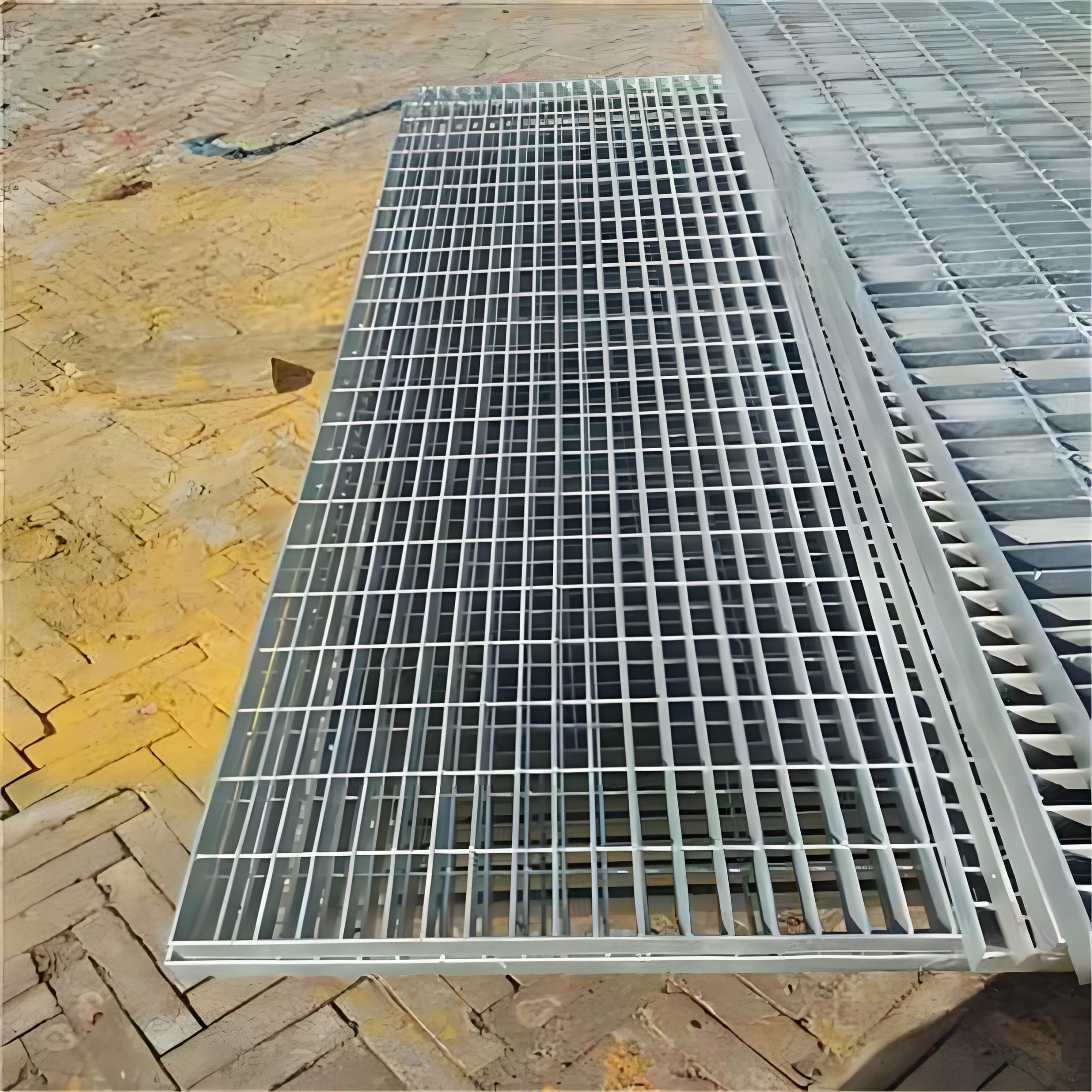
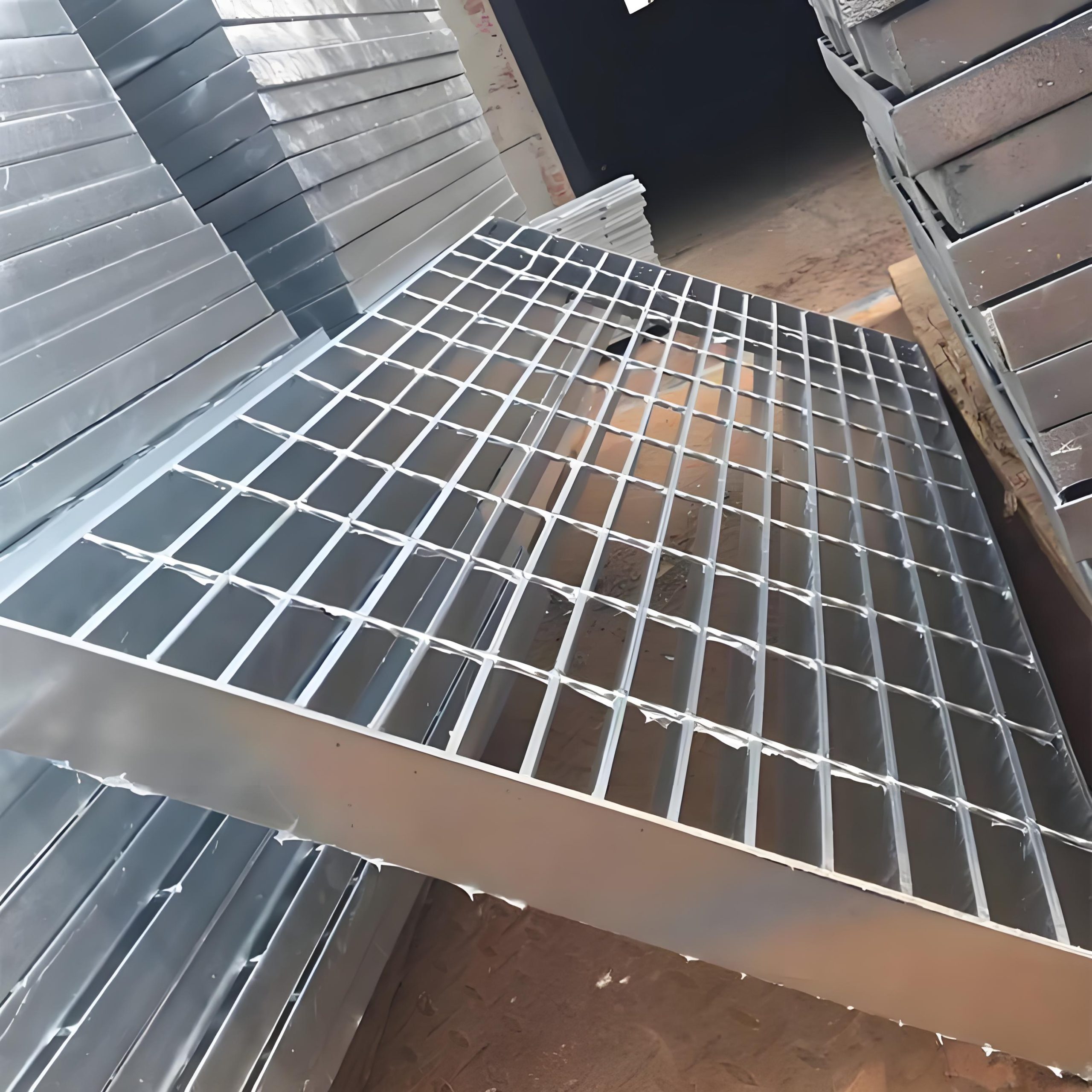
Carbon steel 19-W-4 grating is a standard-duty welded steel bar grating commonly used for industrial flooring, walkways, catwalks, platforms, drainage covers, trench covers, stair treads, and general access areas. The 19-W-4 specification refers to welded bar grating with bearing bars spaced at 19/16 inch centers and cross bars spaced at 4 inch centers. Carbon steel makes this grating strong, economical, easy to fabricate, and suitable for many industrial projects. For outdoor or wet environments, carbon steel 19-W-4 grating is often supplied with hot-dip galvanizing to improve corrosion resistance. To select the correct grating, buyers need to consider bearing bar size, span direction, load capacity, surface type, panel size, fabrication details, and surface finish before requesting a quotation.
Carbon steel 19-W-4 grating is one of the most practical steel grating options for industrial flooring and walkway projects because it combines reliable load-bearing performance with reasonable cost. The open-grid structure allows water, air, light, dust, and debris to pass through the panel, making it suitable for factories, power plants, warehouses, water treatment plants, chemical facilities, equipment platforms, drainage channels, and maintenance access areas.
In industrial flooring, 19-W-4 carbon steel grating provides a stable walking surface without creating a fully closed floor. This is useful in areas where workers need visibility, ventilation, drainage, and easier cleaning. In walkway and platform projects, the grating can be cut to size, banded, notched, framed, or fabricated into stair treads according to drawings. In drainage and trench cover projects, the same specification can be used as removable covers, provided the bearing bar size and clear span are suitable for the expected load.
The main advantage of carbon steel 19-W-4 grating is its balance between strength and economy. Carbon steel is generally more cost-effective than stainless steel, and welded construction makes it suitable for repeated industrial use. However, untreated carbon steel can rust in wet or outdoor environments. For this reason, many buyers choose hot-dip galvanized carbon steel 19-W-4 grating for outdoor platforms, drainage covers, walkways, catwalks, and trench covers.
| Product | Carbon Steel 19-W-4 Grating |
| Grating Type | Standard-duty welded steel bar grating |
| Bearing Bar Spacing | 19/16 inch center-to-center, approximately 1-3/16 inch |
| Cross Bar Spacing | 4 inch center-to-center |
| Common Surface | Plain surface or serrated surface |
| Common Finish | Raw black steel, painted, or hot-dip galvanized |
| Main Applications | Industrial flooring, walkways, platforms, catwalks, drainage covers, trench covers, stair treads |
The term 19-W-4 is a specification code used to describe the spacing and construction of welded steel bar grating. It does not describe the bearing bar size, panel size, surface finish, or exact load capacity by itself. Therefore, a complete carbon steel 19-W-4 grating specification should include the spacing code, bearing bar size, material, surface type, finish, panel dimensions, fabrication requirements, and quantity.
The number 19 refers to the bearing bar spacing. In 19-W-4 grating, the bearing bars are spaced at 19/16 inch centers. This is commonly expressed as approximately 1-3/16 inch center-to-center. Bearing bars are the main load-carrying members of the grating panel. Their spacing affects open area, walking comfort, drainage capacity, material weight, and load distribution.
The letter W means welded construction. In welded bar grating, the cross bars are welded to the bearing bars to form a rigid panel. Welded construction is widely used for carbon steel grating because it provides stable performance, efficient production, and good strength for industrial flooring and walkway applications.
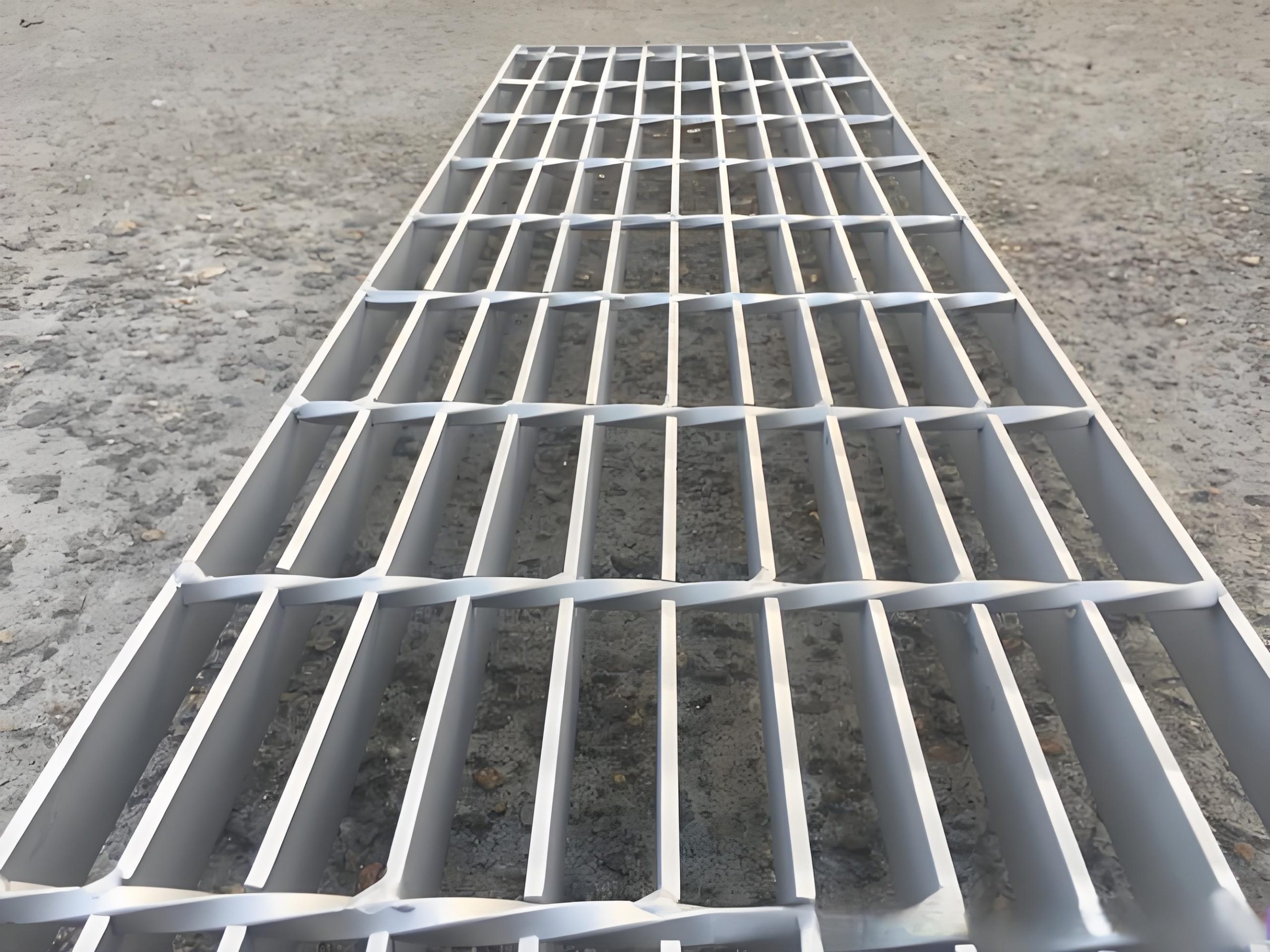
The number 4 refers to cross bar spacing. In 19-W-4 grating, the cross bars are spaced at 4 inch centers. Cross bars help maintain the spacing of the bearing bars and provide lateral stability. They are not the primary load-carrying bars, but they help keep the panel stable during handling, installation, and service.
19-W-4 is popular because it provides a practical combination of open area, walking support, drainage performance, and cost efficiency. It is open enough for drainage and ventilation, but still strong enough for many standard-duty industrial areas when the correct bearing bar size is selected. This makes it suitable for platforms, walkways, catwalks, trench covers, and stair treads.
| Specification Part | Meaning | Importance |
| 19 | Bearing bars spaced at 19/16 inch centers | Defines the main spacing and affects open area, load distribution, and walking surface |
| W | Welded construction | Indicates cross bars are welded to bearing bars for a rigid grating panel |
| 4 | Cross bars spaced at 4 inch centers | Defines cross bar layout and panel stability |
| Carbon steel | Base material of the grating | Provides strength, economical cost, and good fabrication ability |
Carbon steel 19-W-4 grating is made by arranging bearing bars in one direction and welding cross bars across them at regular intervals. This creates a strong open-grid panel. The structure is simple, but each part has a specific function. If the bearing bar direction, bar size, welding quality, or support condition is wrong, the grating may not perform correctly even if the specification appears suitable.
Bearing bars are the main structural members in carbon steel 19-W-4 grating. They are usually flat steel bars placed vertically, and they carry the load across the support span. Bearing bars must run in the correct direction. In a platform, they should span from beam to beam. In a trench cover, they should span across the trench opening. If the bearing bars are installed parallel to the unsupported opening, the grating may bend or fail under load.
Cross bars connect the bearing bars and keep them aligned. In 19-W-4 grating, cross bars are spaced at 4 inch centers. They help distribute lateral forces and maintain panel shape. In welded carbon steel grating, the cross bars are firmly welded to the bearing bars, creating a stable structure suitable for industrial use.
The open structure of 19-W-4 grating is one reason it is widely used in industrial projects. Water can drain through the panel, air can circulate, and light can pass to lower levels. This is especially useful for walkways around equipment, outdoor platforms, drainage channels, trench covers, and areas where cleaning access is important.
Carbon steel 19-W-4 grating can be supplied with banded edges, welded frames, notches, cut-outs, toe plates, clips, and stair tread accessories. Banding is commonly used to close open ends and improve panel handling. For trench covers and removable access panels, banding also improves edge strength and reduces sharp exposed bar ends.
| Structural Part | Function | Buyer Should Check |
| Bearing bar | Carries the main load across the span | Height, thickness, material, direction, and support span |
| Cross bar | Connects bearing bars and stabilizes the panel | Spacing, weld quality, and alignment |
| Banding bar | Closes and reinforces panel edges | Needed for cut panels, trench covers, walkways, and stair treads |
| Support frame | Provides stable seating for covers or panels | Important for trench covers, drainage covers, and removable panels |
| Surface finish | Protects against corrosion or improves appearance | Raw steel, painted, or hot-dip galvanized finish |
Spacing is one of the defining features of 19-W-4 carbon steel grating. The bearing bar spacing and cross bar spacing affect strength, open area, walking comfort, drainage efficiency, and price. However, spacing alone does not determine load capacity. Bearing bar size and clear span are equally important.
In carbon steel 19-W-4 grating, the bearing bars are spaced at 19/16 inch centers. This spacing provides a practical walking surface for many industrial applications while maintaining good open area. The actual clear opening between bearing bars depends on the thickness of the bearing bar. Thicker bearing bars reduce the clear opening slightly, while thinner bars provide a larger opening.
This spacing is suitable for many walkways, platforms, catwalks, and drainage areas. It allows water and debris to pass through more easily than solid flooring, while still giving workers a stable surface. For public areas, high-heel traffic, small-wheel carts, or special safety requirements, buyers should confirm whether the opening size is suitable.
The cross bars in 19-W-4 grating are spaced at 4 inch centers. This spacing helps maintain panel stability and keeps the bearing bars aligned. It also contributes to the overall rigidity of the welded grating panel. For standard-duty industrial applications, 4 inch cross bar spacing is widely used because it offers a good balance of performance and cost.
The 19-W-4 pattern provides a high open area compared with solid plate flooring. This helps drainage, ventilation, light transmission, and cleaning. In drainage cover applications, the open area allows water to enter the trench quickly. In platform flooring, it reduces the accumulation of dust, water, and small debris. In elevated walkways, it can improve airflow and visibility.
| Spacing Item | Carbon Steel 19-W-4 Detail | Practical Effect |
| Bearing bar spacing | 19/16 inch center-to-center | Defines main grating opening and walking surface |
| Approximate spacing | About 1-3/16 inch center-to-center | Commonly used standard-duty industrial spacing |
| Cross bar spacing | 4 inch center-to-center | Provides panel stability and welded grid structure |
| Open area | Depends on bar size and spacing | Supports drainage, ventilation, and cleaning |
The 19-W-4 designation does not specify one fixed bearing bar size. Carbon steel 19-W-4 grating can be produced with different bearing bar heights and thicknesses depending on the load and span. This is one of the most important details buyers must confirm before ordering.
Bearing bar height has a major effect on bending strength. A taller bearing bar can span a longer distance and carry more load than a shorter bar with the same thickness. For light-duty walkways and short spans, smaller bearing bars may be enough. For longer spans, platforms, catwalks, and stronger trench covers, taller bars may be required.
Bearing bar thickness affects strength, durability, and weight. Thicker bars increase material cost but provide better resistance to damage, impact, and repeated use. In demanding industrial environments, a thicker bearing bar can improve service life. For lighter areas, a thinner bar may be more economical.
Common bearing bar sizes for carbon steel 19-W-4 grating include 1 inch x 1/8 inch, 1 inch x 3/16 inch, 1-1/4 inch x 1/8 inch, 1-1/4 inch x 3/16 inch, 1-1/2 inch x 1/8 inch, and 1-1/2 inch x 3/16 inch. Heavier sizes may be used when the application requires higher load capacity or longer spans. The final choice should be based on span, load, support condition, and deflection requirements.
| Bearing Bar Size | Typical Application | Selection Note |
| 1 inch x 1/8 inch | Light-duty walkways, short spans, drainage covers | Economical for lighter loads and shorter support spacing |
| 1 inch x 3/16 inch | General industrial access areas | Higher strength and durability than 1/8 inch thickness |
| 1-1/4 inch x 1/8 inch | Walkways, platforms, catwalks | Improved span capacity with moderate weight |
| 1-1/4 inch x 3/16 inch | Industrial flooring and stronger standard-duty areas | Good balance of strength and cost for many projects |
| 1-1/2 inch x 1/8 inch | Longer spans and platform panels | Taller bar helps reduce deflection |
| 1-1/2 inch x 3/16 inch | Heavier standard-duty platforms and trench covers | Suitable where stronger load performance is required |
| 2 inch or heavier | Long spans or more demanding industrial use | May be selected when standard smaller bars are not enough |
Carbon steel 19-W-4 grating is usually considered a standard-duty welded grating pattern, but load capacity depends on bearing bar size, span, material, support condition, and load type. Two grating panels may both be called 19-W-4, but if one uses smaller bearing bars and the other uses heavier bearing bars, their load capacity will be different.
Industrial platforms may carry workers, tools, maintenance parts, small equipment, and temporary loads. For platform flooring, the support beam spacing must be known before selecting bearing bar size. The bearing bars should span between support beams. If the support span is long, a larger bearing bar may be needed to limit deflection and maintain a stable walking surface.
Catwalks are often narrower than platforms but still require safe walking performance. Carbon steel 19-W-4 grating is commonly used for catwalks around tanks, conveyors, pipe racks, maintenance lines, and industrial equipment. Serrated surface may be preferred for outdoor or wet catwalks. Proper fixing clips and banding are also important to prevent movement.
For drainage covers and trench covers, the grating must support the expected traffic over the trench. Pedestrian drainage channels may use lighter standard-duty grating. Forklift or vehicle drainage areas require stronger bearing bars, proper frame support, and careful load review. The clear trench opening is critical because it determines the unsupported span.
Wheel loads are more concentrated than walking loads. A forklift, trolley, pallet jack, or vehicle can apply high pressure through a small contact area. If carbon steel 19-W-4 grating is used in wheel traffic areas, the supplier should check wheel load, wheel direction, bearing bar orientation, and support condition. Standard-duty grating may not be suitable for all vehicle applications unless properly designed.
| Application | Typical Load Type | Design Focus | Buyer Should Provide |
| Walkway | Workers and light tools | Walking safety and suitable span | Support spacing and surface condition |
| Platform | Workers, maintenance loads, light equipment | Bearing bar size and deflection control | Beam spacing, load requirement, panel layout |
| Catwalk | Pedestrian access and maintenance traffic | Fixing, banding, anti-slip surface | Width, span, indoor or outdoor use |
| Drainage cover | Pedestrians, carts, or light equipment | Open area, support frame, corrosion protection | Trench width, load type, water exposure |
| Forklift crossing | Concentrated wheel load | Heavy bearing bars and strong support | Forklift weight, wheel load, trench span |
| Vehicle area | Repeated wheel traffic | Load review and secure installation | Vehicle type, wheel load, frame design |
Carbon steel 19-W-4 grating can be supplied with plain bearing bars or serrated bearing bars. The choice depends on slip risk, environment, walking frequency, cleaning conditions, and budget. Both options use the same general 19-W-4 spacing, but the walking surface performs differently.
Plain surface grating uses smooth-top bearing bars. It is economical, easy to fabricate, and suitable for many dry indoor industrial applications. Plain carbon steel 19-W-4 grating is commonly used for platforms, walkways, mezzanine floors, indoor access panels, and general equipment service areas where water or oil exposure is limited.
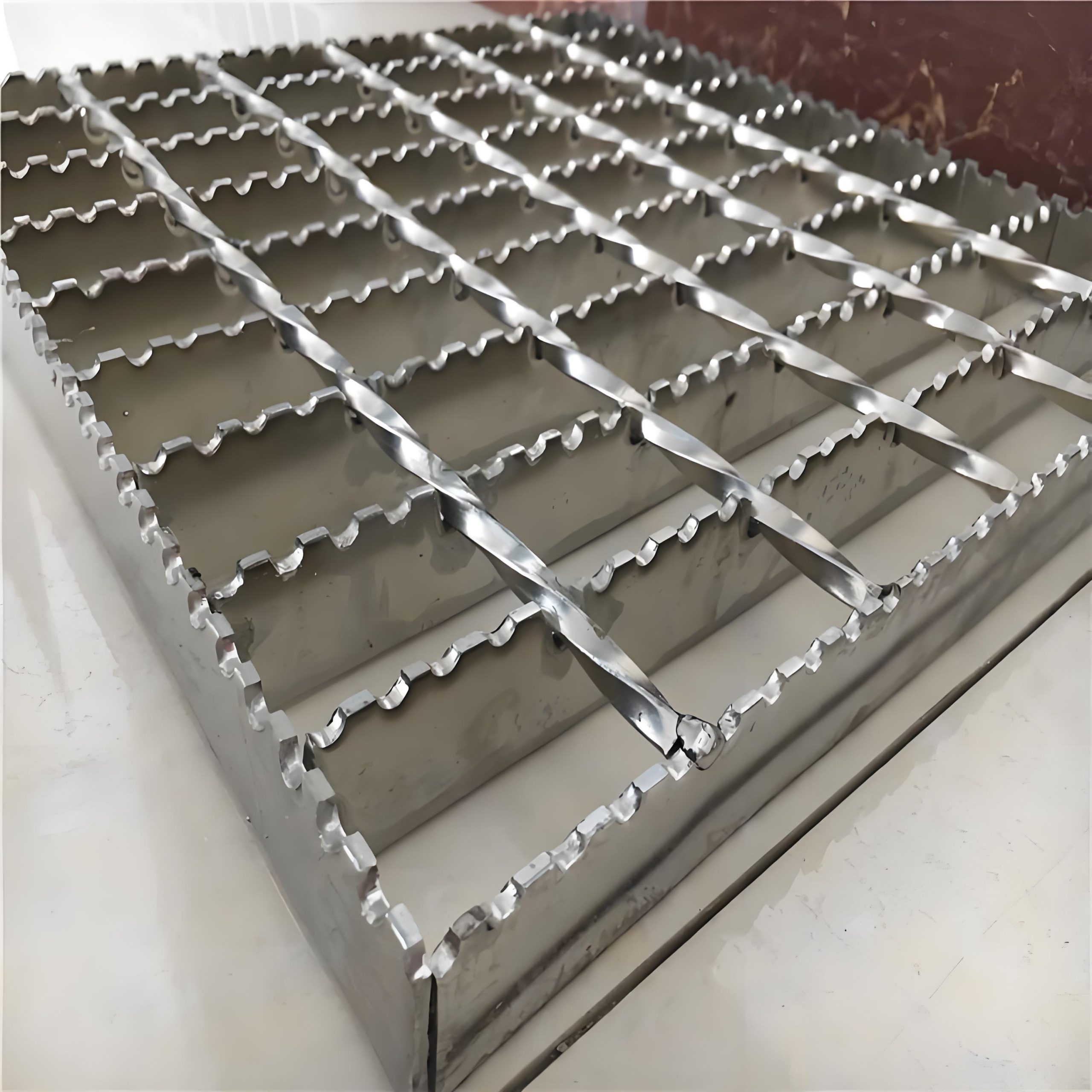
Serrated grating has notched bearing bar tops to improve slip resistance. It is commonly used for outdoor platforms, stairs, wet walkways, oily industrial floors, drainage areas, and locations where workers may walk across the surface in rain or with dirty footwear. Serrated grating may cost slightly more because of the additional bar processing, but it can improve safety in wet or slippery environments.
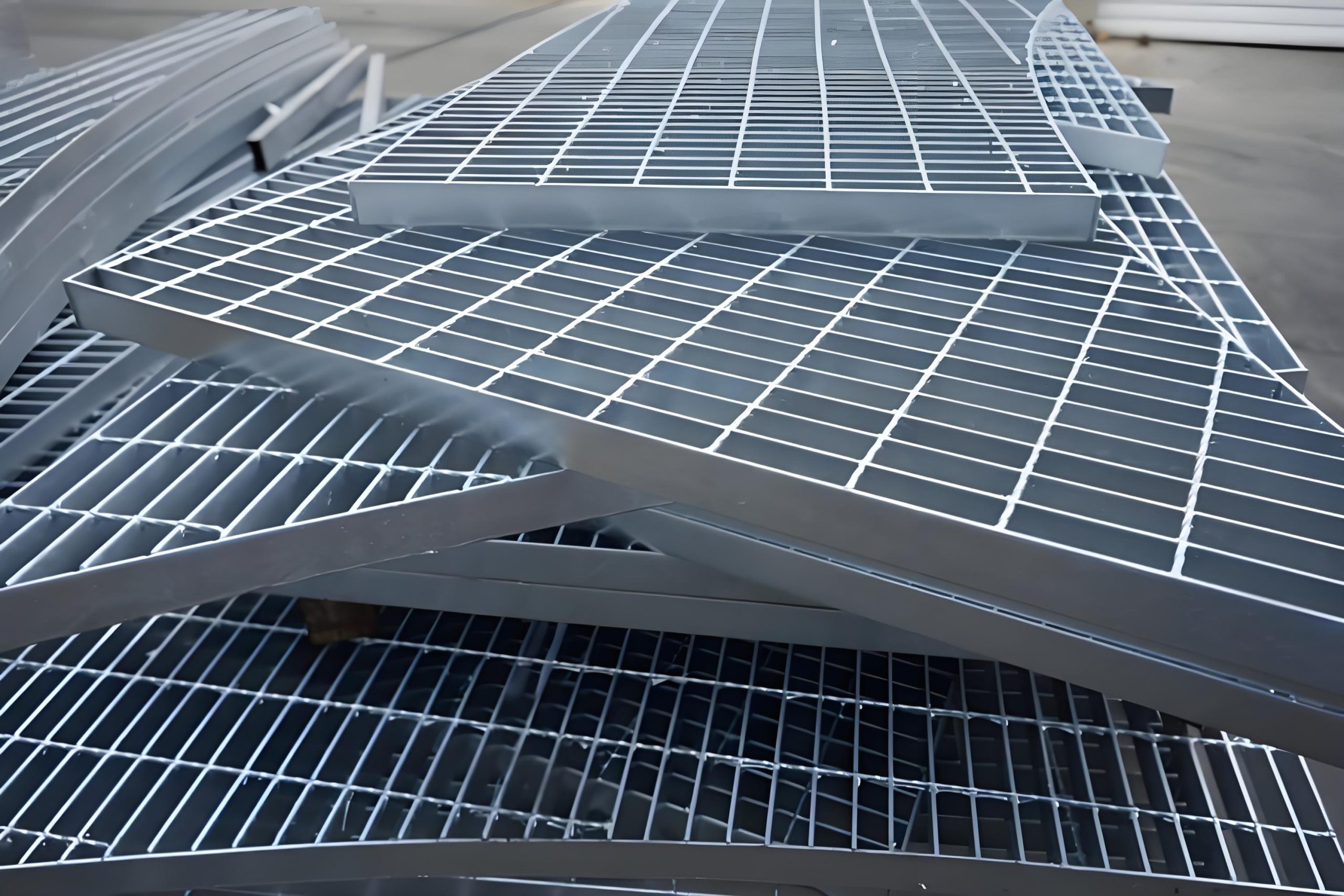
If the project is indoors, dry, and mainly used for general access, plain carbon steel 19-W-4 grating is often enough. If the area is outdoor, wet, oily, sloped, or used for stairs, serrated carbon steel 19-W-4 grating is usually more suitable. For stair treads, serrated grating with a nosing plate is commonly recommended to improve foot grip and edge visibility.
| Surface Type | Advantage | Suitable Application | Note |
| Plain surface | Lower cost and easy cleaning | Dry indoor platforms, walkways, access flooring | May be slippery in wet or oily areas |
| Serrated surface | Better anti-slip performance | Outdoor walkways, stairs, drainage areas, wet industrial floors | Recommended where slip risk is higher |
| Plain galvanized grating | Corrosion protection with standard walking surface | General outdoor industrial use | Good balance of price and durability |
| Serrated galvanized grating | Corrosion protection plus improved traction | Outdoor stairs, catwalks, drainage covers | Often selected for safety-focused projects |
Carbon steel 19-W-4 grating can be supplied as raw black steel, painted steel, or hot-dip galvanized steel. The correct finish depends on the service environment. Raw carbon steel is economical, but it has limited corrosion resistance. Hot-dip galvanized grating costs more initially, but it is usually the better option for outdoor or wet applications.
Raw carbon steel 19-W-4 grating is typically supplied without a zinc coating. It may be used in dry indoor environments, temporary applications, or projects where the buyer will apply local painting or coating after installation. The advantage is lower initial cost. The limitation is that raw carbon steel can rust when exposed to moisture, rain, humidity, or chemicals.
Painted carbon steel grating provides basic surface protection and can meet color requirements. It may be suitable for indoor or low-corrosion areas. However, paint can wear or chip under foot traffic, wheel traffic, impact, and outdoor weather. If the grating is used in heavy industrial or drainage areas, painting may require more maintenance than galvanizing.
Hot-dip galvanized carbon steel 19-W-4 grating is widely used for outdoor platforms, drainage covers, trench covers, catwalks, stair treads, and industrial flooring exposed to humidity. The grating is galvanized after fabrication, so the zinc coating protects bearing bars, cross bars, weld points, edges, and banding. This makes it more suitable for long-term outdoor use than raw carbon steel.
If the grating is used indoors in a dry environment and the project needs a lower initial cost, raw carbon steel may be acceptable. If the grating is used outdoors, in drainage areas, in humid workshops, or near water, hot-dip galvanized 19-W-4 grating is usually the safer choice. For highly corrosive environments, stainless steel may be more suitable than galvanized carbon steel.
| Finish | Initial Cost | Corrosion Resistance | Recommended Use |
| Raw black carbon steel | Lowest | Low | Dry indoor areas, temporary use, local coating projects |
| Painted carbon steel | Low to medium | Basic to moderate | Indoor or low-corrosion industrial areas |
| Hot-dip galvanized carbon steel | Medium | Good for many outdoor environments | Outdoor walkways, drainage covers, trench covers, platforms, stairs |
| Stainless steel alternative | Higher | Better in corrosive environments | Coastal, chemical, food processing, wastewater, marine areas |
Carbon steel 19-W-4 grating can be supplied as standard panels or custom-cut panels. Standard panels are useful for stock, resale, or local fabrication. Custom-cut panels are preferred when the project requires ready-to-install pieces according to drawings.
Standard grating panels are often supplied in larger sheets and then cut to project dimensions. This is practical for contractors, distributors, and fabrication shops that handle cutting locally. Standard panels can reduce production time and may be more economical for repeated requirements. However, the buyer must still confirm bearing bar direction before cutting.
Custom-cut carbon steel 19-W-4 grating is used when panels must fit platforms, trench openings, machine areas, columns, pipe penetrations, stair structures, or irregular layouts. The manufacturer can cut panels to size, add banding, notch around obstacles, and apply surface treatment after fabrication. This reduces site work and improves installation accuracy.
Bearing bar direction is critical for load capacity. In custom panels, drawings should clearly show which direction the bearing bars run. If the bearing bars are cut or installed in the wrong direction, the panel may not carry the intended load. For platform floors, the bearing bars should span between support beams. For trench covers, the bearing bars should span across the trench opening.
Panel size should also consider handling. Very large panels may reduce joints but become difficult to lift, move, install, or remove. For trench covers and maintenance access panels, smaller sections may be better. For large platforms, panel size should be coordinated with installation equipment, support spacing, and shipping method.
| Panel Option | Advantage | Best Use |
| Standard full panel | Economical and suitable for stock | Distributor inventory, large flooring areas, local fabrication |
| Cut-to-size panel | Ready for installation | Platforms, walkways, catwalks, trench covers |
| Banded panel | Stronger and safer edges | Removable panels, walkways, drainage covers, stair treads |
| Notched panel | Fits around pipes, posts, and equipment | Industrial platforms and machine areas |
| Framed panel | Improves seating and stability | Trench covers, drainage covers, utility access panels |
Fabrication options make carbon steel 19-W-4 grating suitable for real project conditions. Few industrial sites are made only of rectangular open spaces. Most projects need cut-outs, edges, frames, notches, stair tread details, or fixing accessories. A manufacturer with fabrication capability can supply grating panels that are closer to ready installation.
Banding is the process of welding a flat bar around the edge of the grating panel. It closes the open bearing bar ends, improves appearance, strengthens the panel perimeter, and reduces sharp edges. Banding is especially useful for cut-to-size panels, trench covers, stair treads, removable access panels, and walkways where workers may contact the panel edge.
Notching allows grating panels to fit around columns, pipes, posts, walls, equipment foundations, and other obstructions. Notched areas should often be banded to restore edge strength and provide a clean finish. Accurate notching requires drawings or templates. If the notch is wrong, the panel may leave large gaps or fail to fit during installation.
Additional welding may be required for banding, frames, stair tread end plates, nosing plates, clips, hinges, handles, or reinforcement. Good welding quality is important because weak welds can break during handling or service. For galvanized grating, welding should be completed before hot-dip galvanizing whenever possible so the welded areas receive zinc protection.
Carbon steel 19-W-4 grating can be fabricated into stair treads by adding end plates and nosing. Serrated bearing bars are often selected for stair treads to improve slip resistance. End plates are drilled or punched for bolt installation onto stair stringers. Hot-dip galvanizing is common for outdoor stair treads.
Grating clips help secure panels to support beams while allowing removal if needed. Frames are useful for trench covers and drainage covers. A frame provides a stable seating surface and helps prevent panel movement. For vehicle or forklift areas, frame design becomes more important because repeated movement can damage unsupported concrete edges.
| Fabrication Option | Purpose | Common Application |
| Banding | Closes edges and improves strength | Walkways, cut panels, trench covers, stair treads |
| Notching | Fits panels around obstacles | Pipe racks, columns, machine bases, platform openings |
| Frame welding | Provides support and seating | Drainage covers, trench covers, removable access panels |
| Stair tread fabrication | Adds nosing and end plates | Industrial stairs and access platforms |
| Clip preparation | Supports secure installation | Platforms, catwalks, walkways |
| Reinforcement | Improves load capacity in selected areas | Large spans, trench covers, special load zones |
Carbon steel 19-W-4 grating is used in many industrial projects because it is strong, economical, open, and easy to fabricate. It is especially suitable where a solid surface is not required and where drainage, ventilation, or visibility is beneficial.
Industrial flooring is one of the main applications of carbon steel 19-W-4 grating. It is used in factories, workshops, processing plants, and equipment areas where workers need access above lower levels or around machinery. The open structure reduces water accumulation and allows light and air to pass through.
Carbon steel 19-W-4 grating is commonly used for walkways and catwalks around tanks, conveyors, pipe racks, maintenance platforms, and production lines. For outdoor walkways, galvanized and serrated grating is often preferred. For indoor dry walkways, plain grating may be enough.
Platforms and mezzanines often require grating panels supported by structural beams. 19-W-4 grating can provide a durable access surface while reducing dead weight compared with solid plate flooring. The bearing bar size should be selected according to beam spacing and load requirements.
Carbon steel 19-W-4 grating is suitable for drainage covers and trench covers where water needs to flow through the surface. For pedestrian drainage channels, standard-duty grating can be economical and practical. For forklift or vehicle crossing areas, stronger bearing bars, frames, and fixing methods may be needed.
19-W-4 grating can be fabricated into stair treads with end plates and nosing. Serrated carbon steel grating is often used for industrial stairs because it improves slip resistance. Hot-dip galvanized stair treads are common for outdoor and corrosive industrial environments.
Utility areas often need removable grating panels for inspection and maintenance. Carbon steel 19-W-4 grating can be cut and banded into removable access panels. If the area is wet, galvanized finish is recommended. If frequent removal is required, panel size and weight should be considered.
| Application | Why Carbon Steel 19-W-4 Grating Is Used | Recommended Detail |
| Industrial flooring | Strong, open, and economical walking surface | Correct bearing bar size and support direction |
| Walkways | Allows drainage and ventilation | Serrated surface for wet or outdoor areas |
| Catwalks | Lightweight access surface for maintenance | Banding and fixing clips |
| Platforms | Works with steel support beams | Span and deflection check |
| Drainage covers | Open surface allows water flow | Galvanized finish and proper frame support |
| Trench covers | Removable protection over channels | Banded edges and bearing bars across the span |
| Stair treads | Can be fabricated with end plates and nosing | Serrated surface and hot-dip galvanizing for outdoor use |
Selecting carbon steel 19-W-4 grating should start with span and load, not only price. A low-cost panel may be too weak if the span is long or the load is concentrated. A very heavy panel may be unnecessary if the application is only a short-span pedestrian walkway. The correct selection balances safety, weight, cost, corrosion resistance, and installation convenience.
The clear span is the unsupported distance between supports. In platform flooring, it is usually the distance between support beams. In trench cover applications, it is the clear opening of the trench. The longer the clear span, the stronger the bearing bar needs to be. Buyers should provide the clear span instead of only panel length and width.
Load type matters because pedestrian loads, equipment loads, wheel loads, and vehicle loads behave differently. A walkway used only by workers is different from a trench cover crossed by forklifts. Wheel loads are concentrated and may require stronger grating. Buyers should describe whether the grating will be used for walking, carts, trolleys, forklifts, cars, trucks, or maintenance equipment.
After span and load are known, the bearing bar size can be selected. Smaller bars may be suitable for short spans and light loads. Taller or thicker bars may be required for longer spans, platforms, or trench covers. If the load is beyond standard-duty conditions, a heavy-duty grating specification may be more suitable than standard 19-W-4.
Surface selection should match the working environment. Plain surface is suitable for dry general access. Serrated surface is better for wet, oily, outdoor, or stair applications. In safety-sensitive areas, the additional cost of serrated grating may be justified.
Raw carbon steel may be used indoors or for temporary applications. Painted carbon steel provides basic protection and color. Hot-dip galvanized carbon steel is usually better for outdoor, drainage, and humid environments. The finish should be selected before fabrication planning because hot-dip galvanizing is typically done after cutting, welding, and banding.
| Selection Step | Question to Ask | Why It Matters |
| Span | What is the unsupported distance between supports? | Determines bearing bar height and thickness |
| Load | Will the grating carry workers, carts, forklifts, or vehicles? | Determines whether standard-duty 19-W-4 is suitable |
| Surface | Is the area dry, wet, oily, or outdoor? | Determines plain or serrated top surface |
| Finish | Will the grating be exposed to moisture or corrosion? | Determines raw, painted, or galvanized finish |
| Fabrication | Does the panel need cutting, banding, notching, or frames? | Ensures correct installation and reduces site work |
| Handling | Will the panel be fixed or removable? | Controls panel size, weight, handles, and banding |
Quality control is important because carbon steel 19-W-4 grating is often used as a walking or load-bearing product. Poor welding, wrong spacing, warped panels, incorrect dimensions, sharp edges, or weak surface finish can create safety risks and installation problems. A reliable manufacturer should inspect each critical point before shipment.
Welded grating depends on strong connections between bearing bars and cross bars. If the welds are weak, the panel may become loose or unstable during service. Additional welds for banding, frames, stair tread end plates, and accessories should also be checked. For removable panels and stair treads, weld strength is especially important because these parts experience handling and repeated use.
Flatness affects installation and walking safety. A warped grating panel can rock on the support, create trip hazards, or make noise under traffic. Welding heat and hot-dip galvanizing may affect flatness, so inspection should be done after fabrication and finishing. For trench covers, flatness is especially important because the panel must sit properly in the frame.
The manufacturer should check panel width, length, diagonal tolerance, bearing bar spacing, cross bar spacing, bearing bar direction, notching position, and frame fit. For custom panels, even a small dimension mistake can cause installation delays. For platform projects, wrong bearing bar direction can affect load capacity.
Raw carbon steel should be clean and free from excessive burrs. Painted grating should have consistent coating. Hot-dip galvanized grating should have proper zinc coverage, no dangerous sharp zinc points, and acceptable surface appearance. Serrated grating should be checked for safe handling because the notched surface can be sharp if poorly finished.
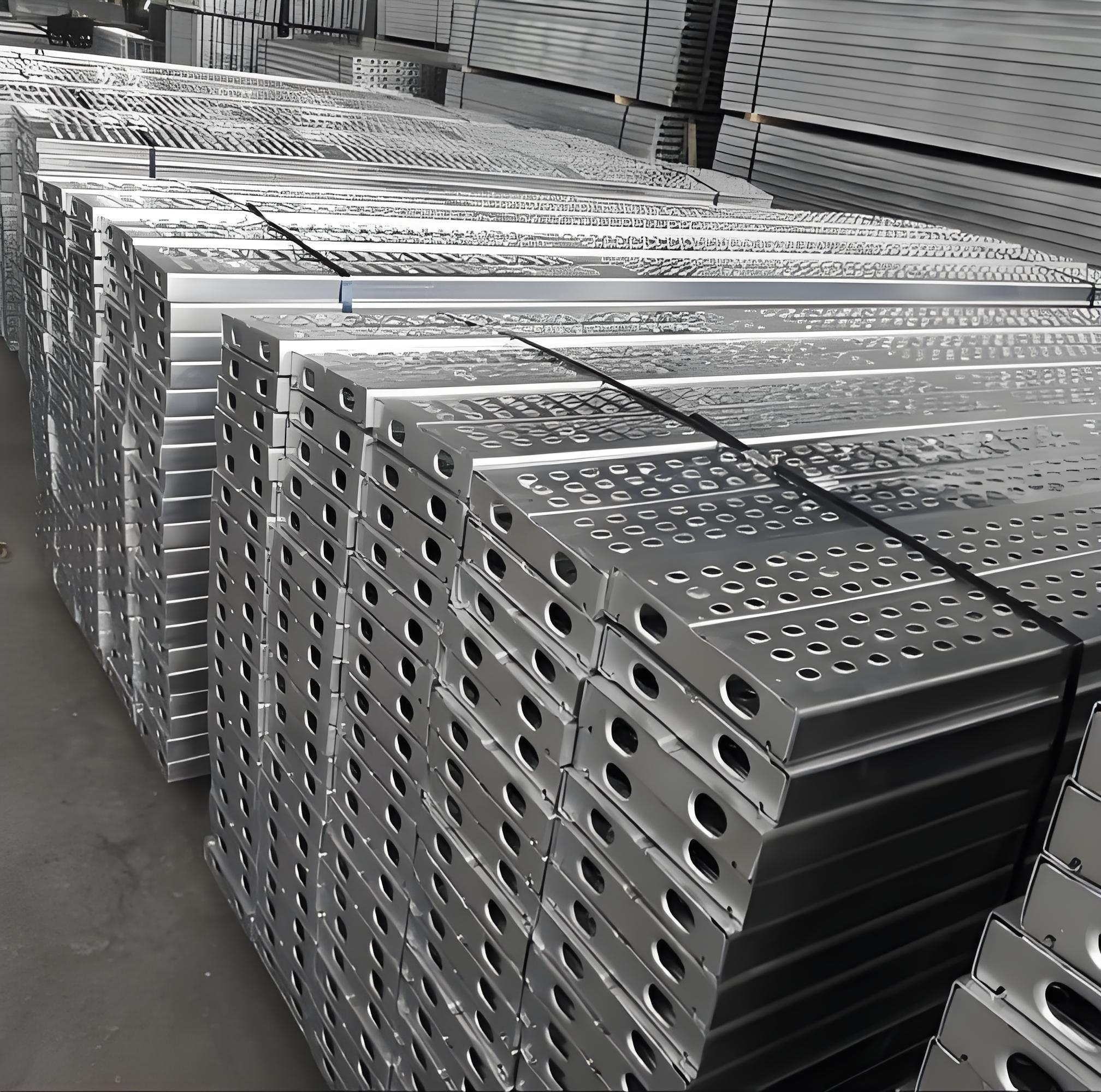
Carbon steel 19-W-4 grating panels are heavy and can be damaged during loading if not packed properly. Packaging should protect the panels from bending, surface damage, and mixed-size confusion. For galvanized grating, excessive rubbing during transport can damage the zinc surface. For custom projects, labels and packing lists are important.
| Quality Item | Inspection Focus | Problem if Ignored |
| Material | Carbon steel grade, bearing bar size, thickness | Wrong strength, unstable quality, unexpected cost difference |
| Welding | Cross bar welds, banding welds, frame welds | Loose bars, weak edges, reduced service life |
| Flatness | Panel levelness after welding and galvanizing | Rocking, trip hazard, poor installation |
| Dimensions | Width, length, diagonal, notches, holes | Panel does not fit the site |
| Spacing | Bearing bar spacing and cross bar spacing | Wrong specification and inconsistent appearance |
| Surface finish | Raw steel condition, paint, galvanizing, burr removal | Rust, rough handling, poor appearance, early maintenance |
| Packaging | Stacking, labels, surface protection | Shipping damage and installation confusion |
To get an accurate quotation for carbon steel 19-W-4 grating, buyers should provide more than the product name. The supplier needs enough details to calculate material weight, fabrication cost, surface treatment cost, packaging, and delivery. Clear information also helps prevent wrong specifications and installation problems.
A complete inquiry should include 19-W-4 grating, bearing bar size, surface type, material, finish, panel size, and quantity. If the buyer does not know the bearing bar size, the clear span and load requirement should be provided so the supplier can recommend a suitable bar size.
The supplier should know whether the grating is used for walkways, platforms, catwalks, stair treads, drainage covers, trench covers, or equipment access. Load details should include pedestrian traffic, carts, forklifts, vehicles, or equipment. For wheel loads, more information is needed because concentrated loads can be more demanding than general walking loads.
Drawings help the supplier confirm panel layout, bearing bar direction, notching, banding, frames, clips, stair tread details, and hole positions. If drawings are not available, a size list and site photos can still help. For large projects, each panel size should be listed clearly.
The buyer should describe whether the grating will be used indoors, outdoors, in wet areas, in drainage channels, near chemicals, or in coastal environments. This helps determine whether raw carbon steel, painted carbon steel, or hot-dip galvanized carbon steel is suitable. If corrosion risk is high, stainless steel may need to be considered.
Quantity affects unit price and production planning. Packaging and delivery requirements are also important for export orders. Buyers should provide destination port or delivery address, preferred trade term, packing requirements, and project schedule. For custom panels, labels and installation marks may be needed.
| Quotation Information | Details to Provide |
| Product specification | Carbon steel 19-W-4 welded steel bar grating |
| Bearing bar size | For example, 1 inch x 1/8 inch, 1-1/4 inch x 3/16 inch, or recommended by supplier |
| Surface type | Plain or serrated |
| Finish | Raw black steel, painted, or hot-dip galvanized |
| Panel size | Width, length, thickness, bearing bar direction, and quantity |
| Application | Flooring, walkway, catwalk, platform, drainage cover, trench cover, stair tread |
| Load requirement | Pedestrian, cart, forklift, vehicle, equipment, or special load |
| Clear span | Unsupported distance between supports or trench opening width |
| Fabrication | Cutting, banding, notching, welding, frames, clips, stair tread end plates |
| Delivery | Quantity, packing method, destination, delivery term, and required lead time |
For industrial buyers, carbon steel 19-W-4 grating is often not purchased as a simple stock panel only. Many projects need cut-to-size panels, banded edges, stair treads, trench cover frames, notches, fixing clips, or hot-dip galvanized finish. A manufacturer with fabrication capability can help reduce site cutting work and improve installation efficiency.
Anping County Chuansen Silk Screen Products Co., Ltd. supplies carbon steel 19-W-4 grating for industrial flooring, walkways, platforms, catwalks, stair treads, drainage covers, trench covers, and custom access panels. From a factory perspective, the key is to confirm the bearing bar direction, clear span, load condition, surface type, finish, and fabrication details before production. This reduces the risk of incorrect grating selection and helps buyers receive panels that are ready for practical installation.
For standard grating orders, the factory can provide regular welded steel bar grating panels. For project orders, panels can be cut, banded, notched, framed, galvanized, and packed according to drawings. For stair tread orders, grating can be fabricated with nosing plates, end plates, and bolt holes. For trench cover orders, the panels can be supplied with frames, banded edges, lifting details, and suitable surface finish according to the load and site condition.
What is carbon steel 19-W-4 grating?
Carbon steel 19-W-4 grating is welded steel bar grating made from carbon steel with bearing bars spaced at 19/16 inch centers and cross bars spaced at 4 inch centers. It is commonly used for industrial flooring, walkways, platforms, catwalks, drainage covers, trench covers, and stair treads. The final load capacity depends on bearing bar size, span, material condition, and support method.
Is 19-W-4 grating good for walkways?
Yes, 19-W-4 grating is widely used for industrial walkways when the correct bearing bar size and support span are selected. It provides a stable open walking surface with good drainage and ventilation. For outdoor, wet, oily, or stair applications, serrated carbon steel 19-W-4 grating or hot-dip galvanized serrated grating is usually recommended for better slip resistance and corrosion protection.
Should carbon steel grating be galvanized?
Carbon steel grating should usually be hot-dip galvanized when it is used outdoors, in wet areas, in drainage channels, or in humid industrial environments. Raw carbon steel is more economical but can rust if exposed to moisture. Hot-dip galvanized carbon steel 19-W-4 grating provides better corrosion resistance and is commonly used for outdoor platforms, trench covers, drainage covers, catwalks, and stair treads.
Please Feel free to give your inquiry in the form below.we will reply you in 24 hours.
 English English
  Arabic
 Vietnamese
 German
 French