
Home > Products > Steel Grating > Hot-Dip Galvanized 19-W-4 Grating
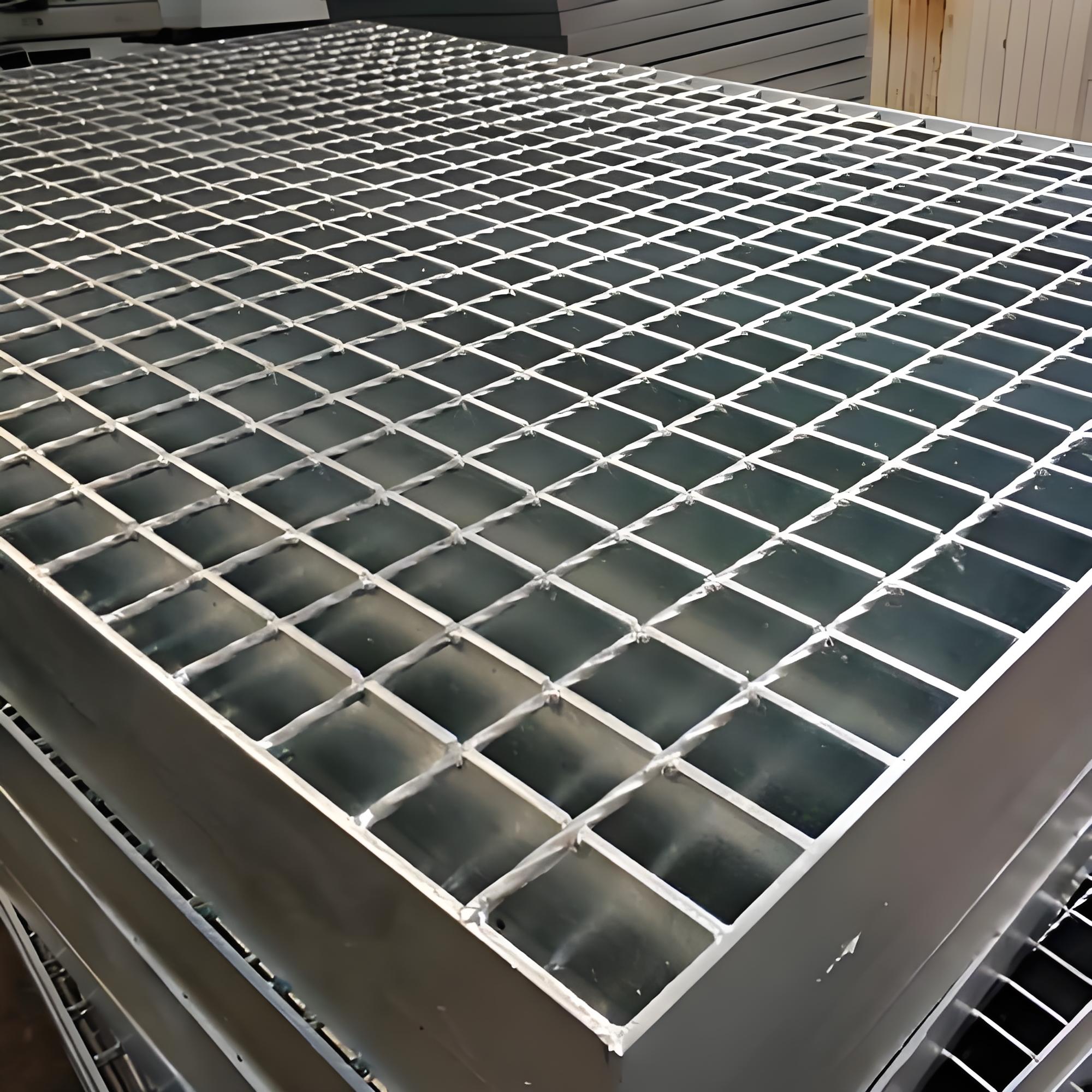
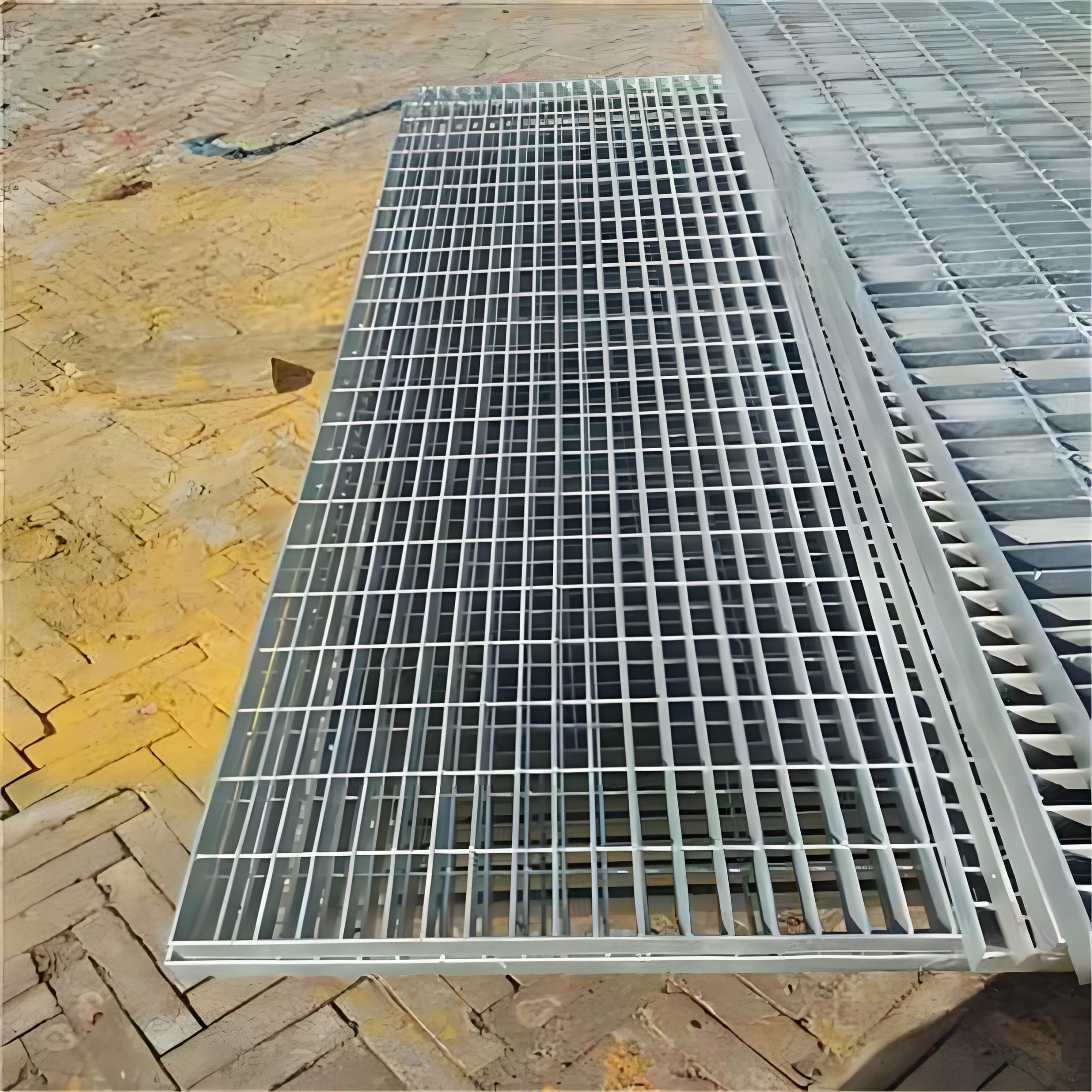
Hot-dip galvanized 19-W-4 grating is a welded steel bar grating specification widely used for outdoor platforms, industrial walkways, catwalks, draina…
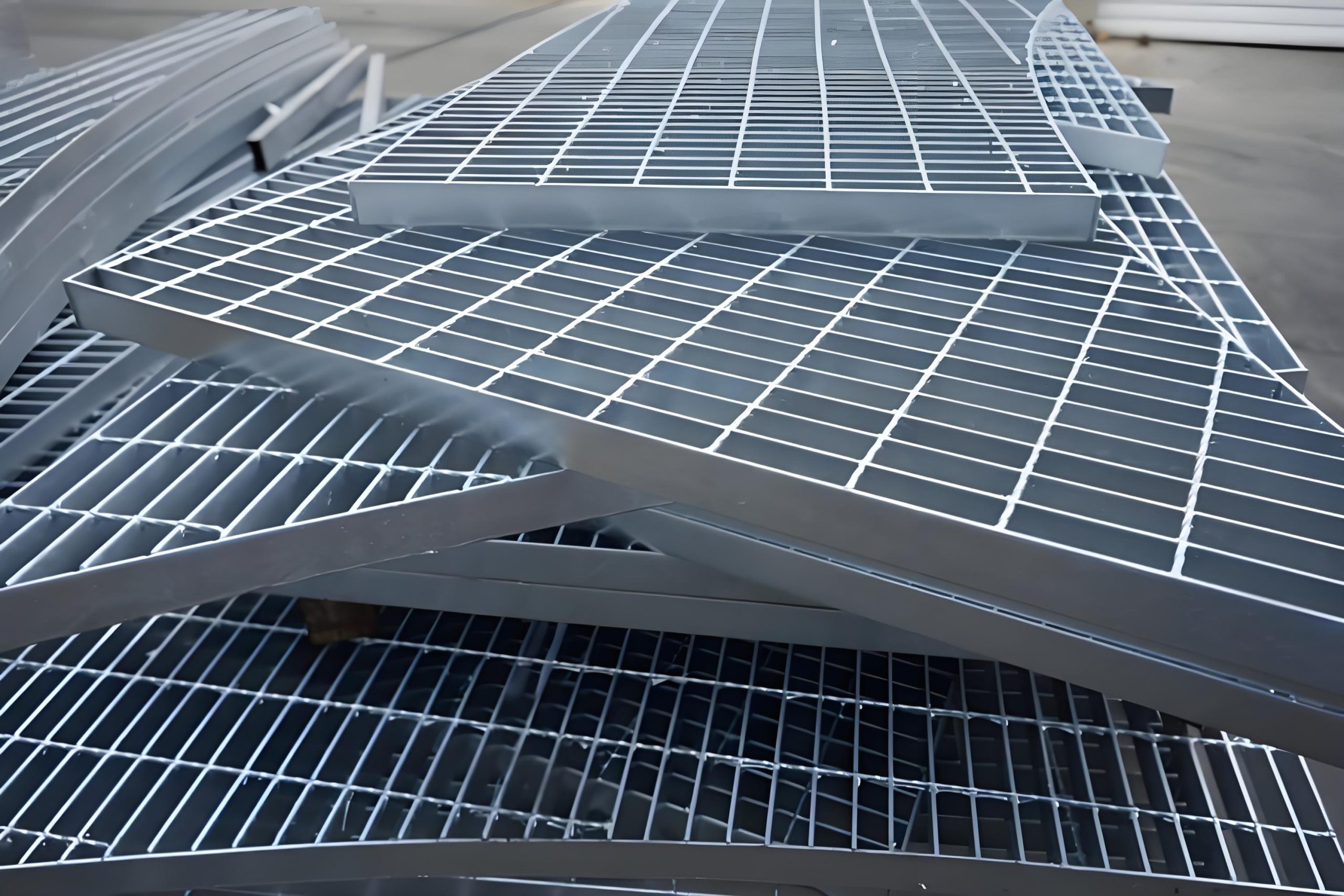
Hot-dip galvanized 19-W-4 grating is a welded steel bar grating specification widely used for outdoor platforms, industrial walkways, catwalks, drainage covers, trench covers, stair treads, maintenance floors, and utility access areas. The 19-W-4 designation means the bearing bars are spaced at 19/16 inch centers, the grating uses welded construction, and the cross bars are spaced at 4 inch centers. After fabrication, the steel grating is hot-dip galvanized to improve corrosion resistance in outdoor, wet, humid, and general industrial environments. For buyers, the correct selection is not only about ordering 19-W-4 grating. The bearing bar size, span direction, load requirement, surface type, galvanizing quality, fabrication details, and installation environment must all be confirmed before production.
Hot-dip galvanized 19-W-4 grating is one of the most practical steel grating choices for outdoor industrial projects because it combines welded carbon steel strength with zinc corrosion protection. In factories, power plants, water treatment plants, logistics yards, construction platforms, chemical facilities, road drainage systems, and municipal maintenance areas, grating panels are often exposed to rain, moisture, dust, mud, industrial air, and occasional cleaning water. Raw carbon steel can rust quickly under these conditions, so hot-dip galvanizing is commonly used to extend service life and reduce maintenance.
The 19-W-4 grating pattern is popular because it provides a good balance between open area, drainage efficiency, walking support, structural strength, and cost. The open surface allows water, air, light, and small debris to pass through the grating, making it suitable for outdoor walkways, drainage trench covers, elevated platforms, catwalks, and stair treads. Compared with solid steel plate, 19-W-4 grating is often lighter and better for drainage. Compared with more specialized heavy-duty grating, standard-duty 19-W-4 grating is often more economical for general industrial access.
For outdoor projects, hot-dip galvanized 19-W-4 grating is usually selected when the project needs a strong walking or covering surface with corrosion resistance. However, the final performance depends on more than the galvanized finish. If the bearing bars are too small for the span, the grating may deflect under load. If the bearing bar direction is wrong, the panel may not carry the intended load. If the galvanizing quality is poor, corrosion protection may be reduced. A professional grating supplier should confirm the application, span, load, surface requirement, finish, panel size, and fabrication details before giving the final recommendation.
| Product Name | Hot-Dip Galvanized 19-W-4 Grating |
| Grating Type | Standard-duty welded steel bar grating |
| Bearing Bar Spacing | 19/16 inch center-to-center, approximately 1-3/16 inch |
| Cross Bar Spacing | 4 inch center-to-center |
| Base Material | Carbon steel before galvanizing |
| Surface Finish | Hot-dip galvanized after fabrication |
| Common Surface Type | Plain surface or serrated surface |
| Typical Applications | Outdoor walkways, platforms, drainage covers, trench covers, catwalks, stair treads, industrial flooring |
The term 19-W-4 is a standard way to describe welded steel bar grating spacing and construction. It is important for buyers because it defines the grating layout, but it does not define every detail of the product. A complete specification should still include bearing bar size, material grade, surface type, finish, panel size, fabrication requirements, quantity, and application.
The number 19 refers to the bearing bar spacing. In 19-W-4 galvanized steel grating, the bearing bars are spaced at 19/16 inch centers. This spacing is also commonly expressed as approximately 1-3/16 inch center-to-center. Bearing bars are the main load-carrying members of the grating panel. Their spacing affects the open area, walking surface, drainage performance, and material weight.
For many industrial applications, 19/16 inch bearing bar spacing is a practical standard-duty choice. It provides enough open area for water drainage and air movement while maintaining a usable walking surface for workers. However, for special pedestrian safety requirements, small-wheel traffic, public access, or high-heel traffic, the opening size should be checked carefully.
The letter W means welded construction. In welded steel bar grating, the cross bars are welded to the bearing bars to form a rigid panel. Welded construction is widely used for carbon steel grating because it is strong, stable, economical, and suitable for industrial production. After welding and fabrication, the entire panel can be hot-dip galvanized for corrosion protection.
The number 4 refers to cross bar spacing. In 19-W-4 grating, the cross bars are spaced at 4 inch centers. Cross bars stabilize the bearing bars and help maintain the grating pattern. They are not the primary load-carrying bars, but they are important for panel rigidity, handling strength, and overall construction quality.
A buyer should not specify only “19-W-4 galvanized grating” and expect one fixed product. The same 19-W-4 spacing can be produced with different bearing bar sizes, surfaces, panel dimensions, and fabrication details. A 1 inch x 1/8 inch bearing bar panel and a 1-1/2 inch x 3/16 inch bearing bar panel may both be 19-W-4, but their load capacities and weights are very different. The project span and load determine which bearing bar size is suitable.
| Specification Part | Meaning | Why It Matters |
| 19 | Bearing bars at 19/16 inch centers | Affects open area, walking surface, drainage, and load distribution |
| W | Welded construction | Indicates the grating is made by welding cross bars to bearing bars |
| 4 | Cross bars at 4 inch centers | Controls cross bar layout and panel stability |
| Hot-dip galvanized | Zinc coating applied after fabrication | Improves corrosion resistance for outdoor and wet environments |
| Bearing bar size | Height and thickness of the main bars | Determines load capacity, deflection, weight, and price |
The structure of hot-dip galvanized 19-W-4 grating starts with welded carbon steel bar grating. The panel is fabricated first, then galvanized. This means the bearing bars, cross bars, welded joints, banding bars, and many cut or fabricated areas can receive zinc coating after the grating is assembled.
Bearing bars carry the main load. They are usually flat steel bars placed vertically and arranged in one direction. For grating panels used as flooring, walkways, or trench covers, bearing bars must span across the support opening. If the bearing bars run in the wrong direction, the grating may not support the intended load even if the panel looks correct.
For example, when 19-W-4 grating is used as a trench cover, the bearing bars should generally span across the trench width. When used as platform flooring, the bearing bars should span between structural support beams. This direction should be shown clearly in drawings and confirmed before cutting or fabrication.
Cross bars are welded perpendicular to the bearing bars. In 19-W-4 grating, cross bars are spaced at 4 inch centers. Their main role is to hold the bearing bars in position and provide lateral stability. Good welding between cross bars and bearing bars is important because weak welds can lead to loose panels, vibration, or reduced service life.
For many project applications, grating panels are not supplied as open-edged raw panels. They may be cut to size, banded, notched, framed, or fabricated into stair treads. Edge banding closes the open ends of bearing bars, improves appearance, strengthens the edge, and makes handling safer. For trench covers and removable panels, edge banding is especially useful because the panel may be lifted and moved during maintenance.
In most cases, cutting, welding, banding, notching, and stair tread fabrication should be completed before hot-dip galvanizing. This allows the zinc coating to cover the fabricated surfaces more completely. If panels are cut after galvanizing, the cut edges may lose zinc protection unless repaired with a suitable zinc-rich coating. For long-term outdoor use, fabrication-before-galvanizing is usually preferred.
| Structural Component | Main Function | Important Detail |
| Bearing bar | Carries the main load across the span | Must be selected by size and installed in the correct direction |
| Cross bar | Stabilizes the bearing bars | Weld quality affects panel rigidity |
| Banding bar | Closes and reinforces panel edges | Recommended for cut panels, trench covers, walkways, and stair treads |
| Nosing plate | Improves front edge visibility and traction for stair treads | Common for industrial stair treads |
| Toe plate | Prevents objects from falling from elevated areas | Used for platforms and walkways when required |
| Hot-dip galvanized coating | Protects steel from corrosion | Best applied after fabrication |
The spacing details of 19-W-4 grating define the grid pattern. These details affect the open area, walking feel, drainage performance, ventilation, appearance, weight, and price. For buyers comparing different galvanized steel grating offers, spacing should be checked carefully because different spacing patterns are not directly interchangeable.
The bearing bar spacing of 19-W-4 grating is 19/16 inch center-to-center. This spacing is widely used for standard-duty grating because it provides a practical open surface. The actual clear opening between bars depends on the bearing bar thickness. A thicker bearing bar reduces the clear opening slightly, while a thinner bearing bar increases the clear opening.
For outdoor platforms and walkways, this spacing allows rainwater and debris to pass through the surface. For drainage covers, it allows water to enter the trench. For industrial flooring, it reduces the buildup of dust and liquid. For stair treads, the spacing works well when combined with serrated bars and nosing plates.
The cross bar spacing is 4 inch center-to-center. This spacing is common for welded steel bar grating and supports stable panel construction. The cross bars help hold the bearing bars in position during transportation, installation, and use. For most standard-duty industrial applications, 4 inch cross bar spacing is practical and economical.
One advantage of 19-W-4 grating is its balance between open area and walking support. A very tight bar spacing may reduce open area and increase material cost. A wider spacing may improve drainage and reduce weight but may not be suitable for all walking or wheel conditions. 19-W-4 is widely used because it fits many industrial applications without becoming too heavy or too open.
| Spacing Item | 19-W-4 Detail | Practical Effect |
| Bearing bar spacing | 19/16 inch center-to-center | Defines main bar spacing and open area |
| Approximate bearing spacing | About 1-3/16 inch center-to-center | Common standard-duty industrial spacing |
| Cross bar spacing | 4 inch center-to-center | Maintains panel stability and welded construction |
| Open structure | Depends on bar size and spacing | Supports drainage, ventilation, light transmission, and cleaning |
Hot-dip galvanizing is used for 19-W-4 grating because carbon steel needs protection when exposed to moisture, rain, industrial air, outdoor weather, and wet cleaning conditions. Welded steel grating has many surfaces, edges, intersections, and welded points. If these areas are not protected, rust can develop and shorten the service life of the grating.
Hot-dip galvanizing is usually performed after the grating panel is welded and fabricated. This is important because the zinc coating can cover bearing bars, cross bars, welded joints, banding, stair tread parts, and many fabricated edges. For outdoor steel grating, this is often more reliable than painting before or after fabrication.
Outdoor grating faces rainwater, humidity, dust, and temperature changes. In industrial plants, it may also face cleaning water, mild chemical exposure, or airborne contaminants. Hot-dip galvanized coating provides a protective layer that helps reduce direct steel exposure to these conditions. This makes galvanized 19-W-4 grating suitable for many outdoor industrial uses.
Raw carbon steel grating may have a lower initial price, but it requires maintenance when exposed to moisture. Paint can also wear or chip under traffic. Hot-dip galvanized grating usually offers better long-term protection for outdoor projects, reducing the need for frequent repainting or replacement in general environments.
Stainless steel grating provides stronger corrosion resistance in aggressive environments, but it costs more. For many general outdoor industrial projects, hot-dip galvanized carbon steel 19-W-4 grating provides a more economical balance of strength, corrosion protection, and service life. However, for coastal, chemical, marine, or highly corrosive conditions, stainless steel may still be a better long-term option.
| Finish Option | Initial Cost | Corrosion Resistance | Typical Use |
| Raw carbon steel | Lowest | Low | Dry indoor or temporary applications |
| Painted carbon steel | Low to medium | Basic to moderate | Indoor or low-corrosion areas |
| Hot-dip galvanized steel | Medium | Good for many outdoor and wet environments | Outdoor platforms, walkways, trench covers, drainage covers |
| Stainless steel | Higher | Better in corrosive or hygienic environments | Coastal, chemical, food processing, wastewater, marine areas |
The main benefit of hot-dip galvanized 19-W-4 grating is improved corrosion resistance. Outdoor industrial grating often works in conditions where water, humidity, and air exposure are unavoidable. The zinc coating helps protect the steel surface and reduces corrosion compared with raw carbon steel.
Outdoor platforms and walkways are directly exposed to weather. Rainwater can remain on the surface or around welded areas. Galvanized grating is open, so water drains quickly, and the zinc coating helps protect the steel. This combination makes hot-dip galvanized 19-W-4 grating suitable for elevated platforms, access walkways, pipe rack catwalks, and outdoor maintenance areas.
Drainage covers and trench covers are frequently exposed to water. In these applications, corrosion resistance is important because rust can reduce appearance, strength, and service life. Galvanized 19-W-4 grating allows water to pass through while the zinc coating helps protect the steel. For municipal drainage, factory drainage, and outdoor utility trenches, this is a practical solution.
Many industrial areas are cleaned with water or exposed to process liquids. Galvanized grating is useful when the environment is wet but not highly chemical. If the liquid contains strong acids, chlorides, saltwater, or aggressive chemicals, the buyer should check whether galvanized steel is suitable or whether stainless steel or another material is required.
Hot-dip galvanized 19-W-4 grating can be used in many outdoor environments, but coastal and chemical conditions require more careful evaluation. Salt and strong chemicals can reduce the service life of galvanized coatings. In these cases, stainless steel 316, duplex stainless steel, composite grating, or special coating systems may be considered depending on the project requirement.
| Environment | Galvanized 19-W-4 Grating Suitability | Selection Note |
| General outdoor industrial area | Very suitable | Good balance of cost and corrosion resistance |
| Rainwater drainage channel | Very suitable | Open structure supports drainage and zinc coating protects steel |
| Factory wash-down area | Suitable depending on liquid exposure | Check whether cleaning chemicals are mild or aggressive |
| Humid indoor workshop | Suitable | Better than raw carbon steel for moisture exposure |
| Coastal area | Use with caution | Consider stainless steel if salt exposure is high |
| Chemical plant | Depends on chemicals | Confirm chemical compatibility before selecting galvanized steel |
The 19-W-4 pattern defines spacing, but bearing bar size determines much of the load capacity. Hot-dip galvanized 19-W-4 grating can be made with different bearing bar heights and thicknesses. The correct size depends on span, load, deflection limits, application, and whether the grating is used for walking, drainage covers, platforms, or wheel traffic.
Bearing bar height and thickness affect strength, stiffness, weight, and price. A taller bearing bar improves bending resistance across a span. A thicker bearing bar increases durability and load-bearing capacity. If the span is short and the load is light, a smaller bearing bar may be economical. If the span is long or the load is heavier, a larger bearing bar is required.
Common bearing bar sizes for hot-dip galvanized 19-W-4 grating include 1 inch x 1/8 inch, 1 inch x 3/16 inch, 1-1/4 inch x 1/8 inch, 1-1/4 inch x 3/16 inch, 1-1/2 inch x 1/8 inch, 1-1/2 inch x 3/16 inch, and heavier sizes for stronger requirements. For standard-duty industrial applications, these sizes cover many walkway, platform, and drainage cover uses.
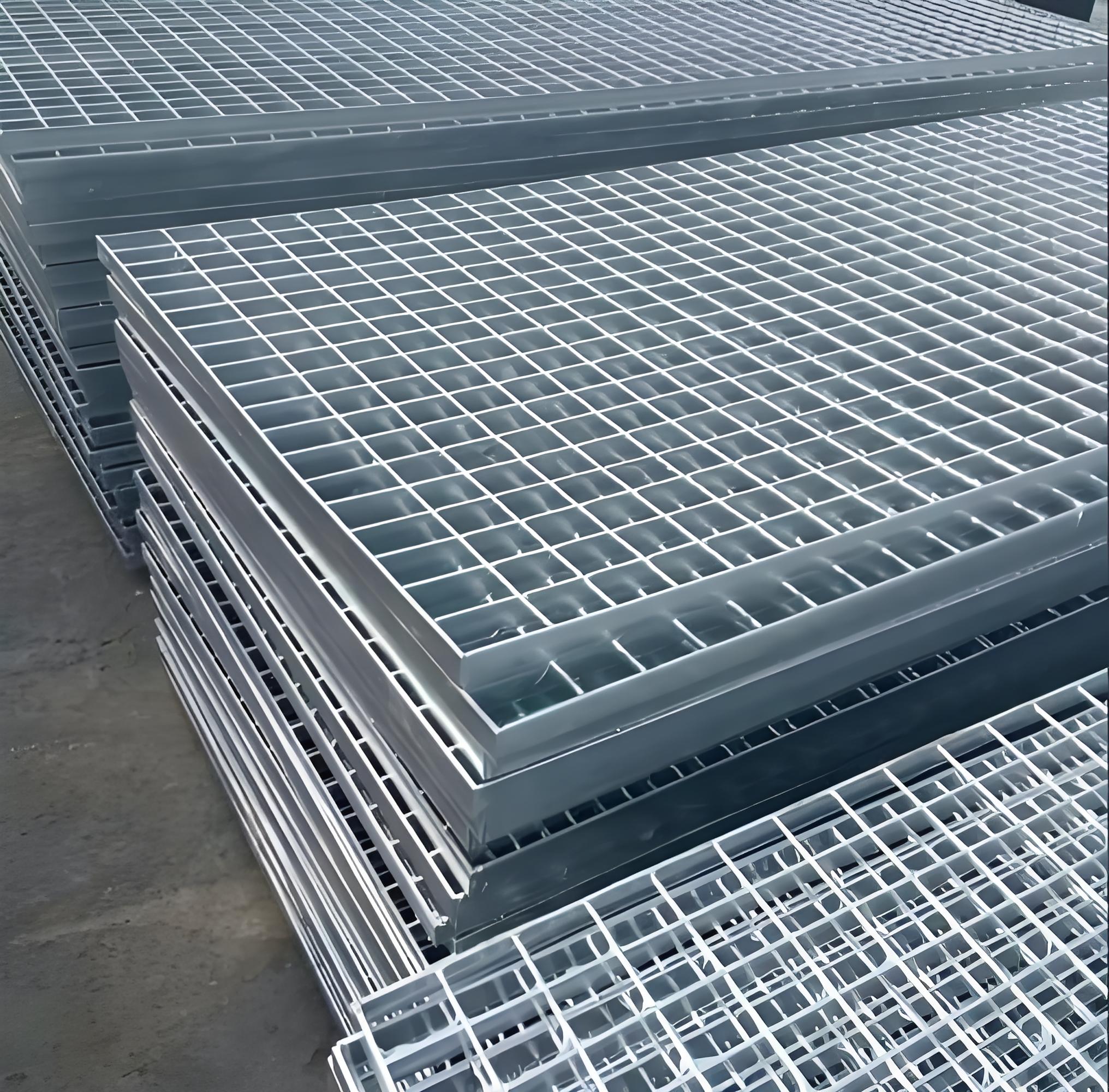
Hot-dip galvanizing adds a protective zinc coating to the steel. It does not replace correct structural design. A galvanized panel with small bearing bars cannot safely perform like a heavier panel simply because it has zinc coating. The galvanizing protects against corrosion, while bearing bar size handles structural strength. Both must be selected correctly.
| Bearing Bar Size | Typical Use | Selection Note |
| 1 inch x 1/8 inch | Light-duty walkways and short-span drainage covers | Economical for lighter loads and shorter spans |
| 1 inch x 3/16 inch | General access areas and moderate-duty panels | Better durability than 1/8 inch thickness |
| 1-1/4 inch x 1/8 inch | Walkways, catwalks, and platforms | Improved span capacity with moderate weight |
| 1-1/4 inch x 3/16 inch | Stronger standard-duty industrial flooring | Good balance of strength and cost |
| 1-1/2 inch x 1/8 inch | Longer spans and outdoor platforms | Taller bar helps control deflection |
| 1-1/2 inch x 3/16 inch | Heavier walkways, trench covers, and platform panels | Suitable where higher load capacity is needed |
| 2 inch or heavier | Longer spans or stronger industrial requirements | May be required for special loads or heavier traffic |
Load capacity selection for hot-dip galvanized 19-W-4 grating should be based on the clear span, bearing bar size, support condition, load type, and installation method. A grating panel used for a pedestrian walkway does not need the same structure as a panel used for a forklift crossing or vehicle drainage trench.
For industrial walkways, 19-W-4 grating is commonly used because it provides a stable open surface for workers and maintenance access. The supplier should confirm the support span and expected load before selecting bearing bar size. If the walkway is outdoors, hot-dip galvanized finish is normally recommended. If the walkway is wet or oily, serrated bearing bars may also be recommended.
For platforms, the grating must work with the support beam layout. The bearing bars should span between beams, and the panel should be secured with clips or other fixing methods. Platform loads may include workers, tools, maintenance parts, and sometimes equipment. If equipment will be placed on the grating, the load condition should be reviewed carefully.
When 19-W-4 galvanized grating is used as drainage cover or trench cover, the clear trench opening becomes the span. Pedestrian drainage covers may use lighter standard-duty bearing bars. Forklift or vehicle areas require stronger bearing bars, proper frame support, and secure installation. If wheel loads are present, the supplier should know the wheel type, wheel load, and traffic direction.
Even if the grating does not fail structurally, excessive deflection can create an unsafe feeling, noise, vibration, and long-term fatigue. For walkways and platforms, deflection affects comfort and safety. For trench covers, excessive deflection can damage frames or concrete edges. Bearing bar size should be selected to control both strength and deflection.
| Application | Typical Load | Selection Focus |
| Pedestrian walkway | Workers and light tools | Suitable bearing bar size, anti-slip surface, support span |
| Maintenance platform | Workers, tools, access equipment | Beam spacing, deflection control, fixing clips |
| Catwalk | Pedestrian access and maintenance traffic | Panel stability, banding, serrated surface if outdoors |
| Drainage cover | Water flow plus pedestrian or cart load | Open area, galvanized finish, support frame |
| Trench cover | Pedestrian, carts, forklifts, or vehicles | Clear opening, bearing bar direction, frame support, fixing method |
| Stair tread | Foot traffic and impact at step edge | Serrated surface, nosing plate, end plates, bolt holes |
Hot-dip galvanized 19-W-4 grating can be supplied with plain bearing bars or serrated bearing bars. Both can be galvanized after fabrication. The correct choice depends on the slip risk, environment, traffic type, and safety requirement.
Plain galvanized grating uses smooth-top bearing bars. It is suitable for general outdoor walkways, platforms, drainage covers, and industrial flooring where slip risk is moderate. It is usually more economical than serrated grating and easier to clean because the top surface has less texture. For dry or low-risk outdoor areas, plain galvanized 19-W-4 grating can be a practical choice.
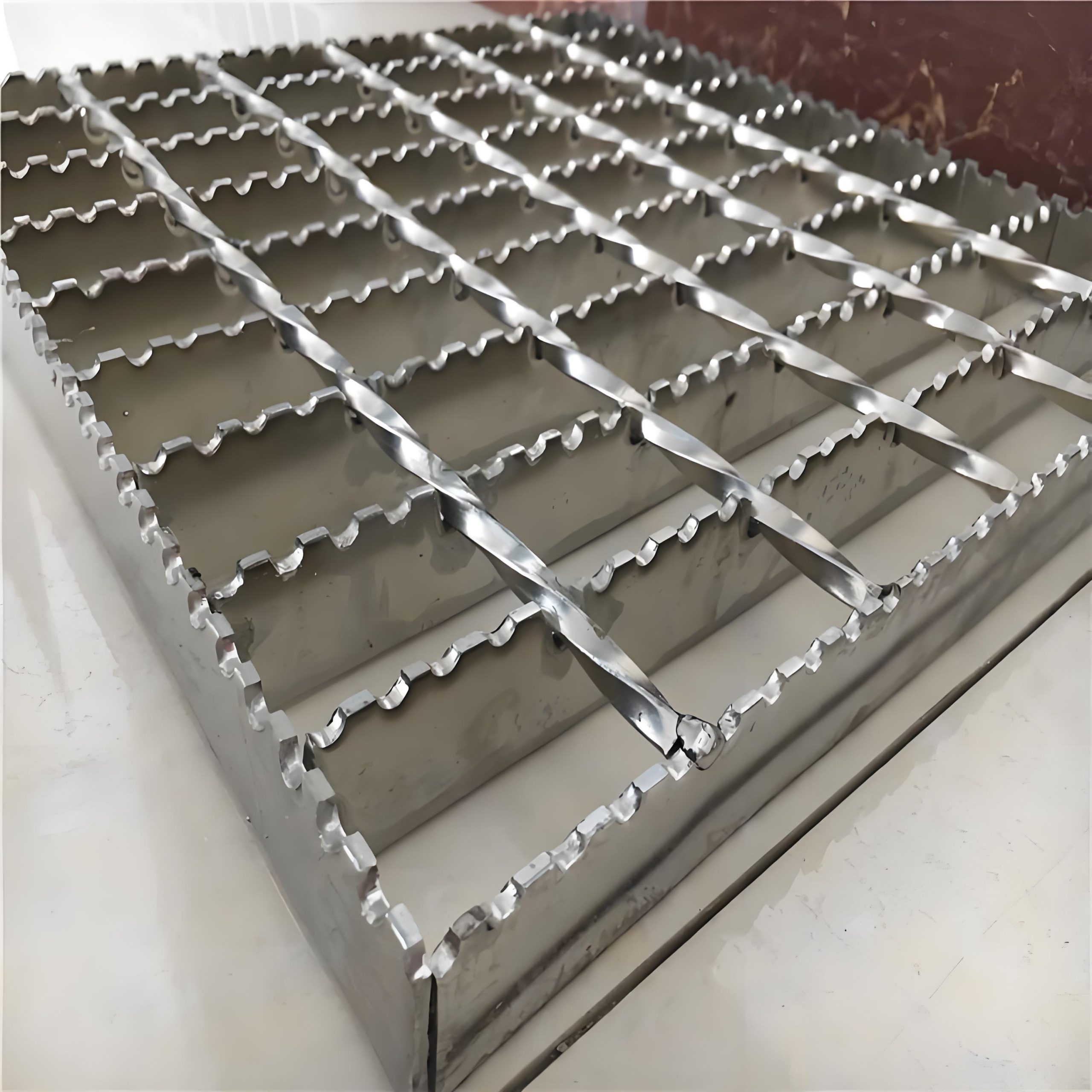
Serrated galvanized grating has notched bearing bars designed to improve traction. It is commonly used in wet walkways, outdoor stairs, drainage areas, washing zones, oily industrial floors, and locations where workers may walk in rain, mud, or slippery conditions. Serrated grating may cost slightly more, but it can improve safety in demanding environments.
If the grating is mainly used in a dry area with normal access traffic, plain surface may be enough. If the grating is installed outdoors, on stair treads, near drainage channels, in wash-down areas, or in oily industrial environments, serrated surface is usually a better option. For stair treads, serrated grating with nosing plates is often preferred because it improves foot grip and makes the step edge more visible.
| Surface Type | Main Advantage | Suitable Application | Selection Note |
| Plain galvanized 19-W-4 grating | Economical and easy to clean | General platforms, walkways, drainage covers | Suitable where slip risk is not high |
| Serrated galvanized 19-W-4 grating | Improved slip resistance | Wet walkways, stairs, outdoor platforms, oily areas | Recommended for higher safety requirements |
| Plain galvanized stair tread | Basic access step | Dry industrial stairs | Serrated is often better for outdoor stairs |
| Serrated galvanized stair tread | Better grip with corrosion protection | Outdoor stairs and industrial access ladders | Often combined with nosing plates |
Hot-dip galvanized 19-W-4 grating can be supplied as standard panels or fabricated panels according to drawings. Standard panels are useful for stock, resale, or local cutting. Custom fabricated panels are better when the project needs ready-to-install grating for platforms, walkways, trench covers, stair treads, or equipment access areas.
Standard grating panels are often produced in larger panel sizes and then cut according to project requirements. This is useful for distributors, contractors, and workshops that want stock panels for later fabrication. Standard panels may reduce lead time when common specifications are available.
Custom cutting is used when grating panels must fit exact platform dimensions, trench openings, stair structures, pipe penetrations, or equipment layouts. The manufacturer can cut panels to required sizes, add edge banding, notch around obstacles, and then hot-dip galvanize the finished panels. This helps protect cut and welded edges with zinc coating.
Industrial projects often require many different panel sizes. Drawings should show panel dimensions, bearing bar direction, support layout, notching, openings, fixing clips, and installation sequence. For large projects, each panel can be marked or labeled to match the installation plan. This reduces confusion at the job site.
Panel size should be selected according to support layout and handling method. Large panels reduce the number of joints but are harder to lift and install. Smaller panels are easier to handle and remove but may require more supports and more installation time. For trench covers and maintenance access areas, manageable panel size is important because workers may need to remove covers regularly.
| Panel Option | Main Benefit | Best Use |
| Standard panel | Good for stock and repeated use | Distributor inventory, large floor areas, local fabrication |
| Cut-to-size panel | Ready for project installation | Platforms, walkways, drainage covers, trench covers |
| Banded panel | Stronger and safer edges | Removable covers, walkways, catwalks, stair treads |
| Notched panel | Fits around pipes, columns, and machines | Industrial platforms and equipment access areas |
| Stair tread | Includes end plates and nosing | Industrial stairs and outdoor access steps |
| Framed trench cover | Provides better seating and stability | Drainage channels, utility trenches, road covers |
Fabrication details are important for hot-dip galvanized 19-W-4 grating because they affect safety, installation, handling, and long-term performance. A standard panel may need additional processing before it becomes a usable platform panel, walkway panel, trench cover, or stair tread.
Edge banding means welding a flat bar around the edge of the grating panel. It closes the open bar ends, improves appearance, strengthens the perimeter, and makes the panel safer to handle. Banding is commonly used for cut panels, trench covers, removable access panels, catwalks, and stair treads.
For hot-dip galvanized grating, banding is usually completed before galvanizing. This allows the banding welds and cut areas to receive zinc coating. If banding is added after galvanizing, the welded area must be repaired with suitable corrosion protection.
Notching allows grating panels to fit around columns, posts, pipes, walls, equipment bases, and other obstacles. Accurate notching helps reduce gaps and improves installation quality. Notched edges should often be banded to protect the edge and improve strength. Drawings are important because wrong notching can cause panels to fail during installation.
Toe plates are used along elevated platforms, walkways, and access areas to help prevent tools or objects from falling from the edge. In many industrial platform projects, toe plates are required by safety design. Toe plates can be welded to grating panels or installed separately depending on the structure. When toe plates are welded to grating, fabrication should be completed before galvanizing.
Grating panels should be fixed to the support structure where movement, vibration, or displacement is possible. Clips, clamps, bolts, saddle clips, and other fixing accessories may be used depending on the installation. For outdoor platforms and walkways, proper fixing helps prevent panel movement under foot traffic, wind, vibration, or maintenance activity.
When 19-W-4 grating is used for stair treads, it normally needs end plates, bolt holes, and nosing. Serrated grating is often selected for outdoor stair treads. The tread width, length, nosing type, end plate size, and hole spacing should be confirmed before production.
| Fabrication Detail | Purpose | Common Application |
| Edge banding | Closes edges and improves strength | Walkways, trench covers, cut panels, stair treads |
| Notching | Fits panels around obstacles | Pipes, posts, columns, machine bases |
| Toe plates | Helps prevent objects falling from elevated areas | Platforms, catwalks, elevated walkways |
| Installation clips | Secures panels to support structures | Platforms, walkways, catwalks, industrial floors |
| End plates | Allows stair tread bolting | Industrial stair treads |
| Nosing plates | Improves stair tread edge safety | Outdoor and industrial stairs |
Hot-dip galvanized 19-W-4 grating is used in many industrial projects because it provides a strong open surface with outdoor corrosion protection. It is especially useful where drainage, ventilation, safe access, and long-term durability are needed.
Outdoor walkways often need a surface that can handle rain, humidity, and worker traffic. Hot-dip galvanized 19-W-4 grating allows water to pass through and helps reduce standing water on the walking surface. For wet or sloped walkways, serrated surface may be selected for better traction.
Industrial platforms and mezzanines use grating to provide access around equipment, pipes, tanks, conveyors, and machinery. Hot-dip galvanized grating is suitable for outdoor platforms and humid industrial spaces. The bearing bar size should be selected according to support beam spacing and load requirements.
Catwalks around conveyors, pipe racks, tanks, and process equipment often use 19-W-4 grating because it is open, strong, and easy to install. Galvanized finish helps resist corrosion in outdoor and industrial air conditions. Proper banding and fixing clips improve safety and stability.
Hot-dip galvanized 19-W-4 grating is commonly used as drainage cover and trench cover because water can pass directly through the grating. For pedestrian drainage, standard-duty panels may be enough. For forklift or vehicle traffic, stronger bearing bars, support frames, and secure fixing are usually required.
19-W-4 grating can be fabricated into stair treads with end plates and nosing. Hot-dip galvanizing protects outdoor stair treads from corrosion. Serrated bearing bars are often recommended for outdoor stairs because they improve slip resistance.
Utility areas often need removable grating panels for inspection and maintenance. Hot-dip galvanized 19-W-4 grating can be used for cable trenches, pipe trenches, pump rooms, equipment rooms, and maintenance channels. If panels need frequent removal, manageable size and banded edges should be considered.
| Application | Why Hot-Dip Galvanized 19-W-4 Grating Is Used | Recommended Detail |
| Outdoor walkway | Good drainage and corrosion resistance | Serrated surface if wet or slippery |
| Industrial platform | Strong open flooring with reduced water buildup | Select bearing bar size by span |
| Catwalk | Lightweight access surface for maintenance | Use banding and fixing clips |
| Drainage cover | Open structure allows water flow | Confirm trench clear span and load |
| Trench cover | Removable and durable channel protection | Add banding, frames, or lifting details if needed |
| Stair tread | Durable outdoor step surface | Use serrated grating, nosing, and end plates |
| Utility access | Allows ventilation and inspection | Use manageable panel sizes for maintenance |
Selecting hot-dip galvanized 19-W-4 grating should begin with three practical questions: What is the span? What load will the grating carry? What environment will it work in? The answers determine bearing bar size, surface type, finish, fabrication, and installation method.
The clear span is the unsupported distance between supports. For platform flooring, it is the distance between support beams. For trench covers, it is the clear opening of the trench. Longer spans require stronger bearing bars. Buyers should provide the clear span instead of only the overall panel size.
The load may come from workers, tools, carts, maintenance equipment, forklifts, or vehicles. Standard-duty 19-W-4 grating is suitable for many pedestrian and industrial access applications, but wheel loads require special attention. Forklift and vehicle loads are concentrated and may need heavier bearing bars or a different grating design.
Hot-dip galvanized 19-W-4 grating is suitable for many outdoor and wet environments. However, corrosion conditions vary. General rainwater exposure, factory humidity, and outdoor industrial air are common uses. Coastal salt exposure, chemical splash, wastewater, or strong cleaning chemicals may require stainless steel or additional protection.
After the span and load are known, the bearing bar size can be selected. Smaller bearing bars are economical for short spans and light loads. Larger bearing bars are needed for longer spans or higher loads. The supplier should help confirm whether standard-duty 19-W-4 grating is enough or whether a heavier-duty specification is required.
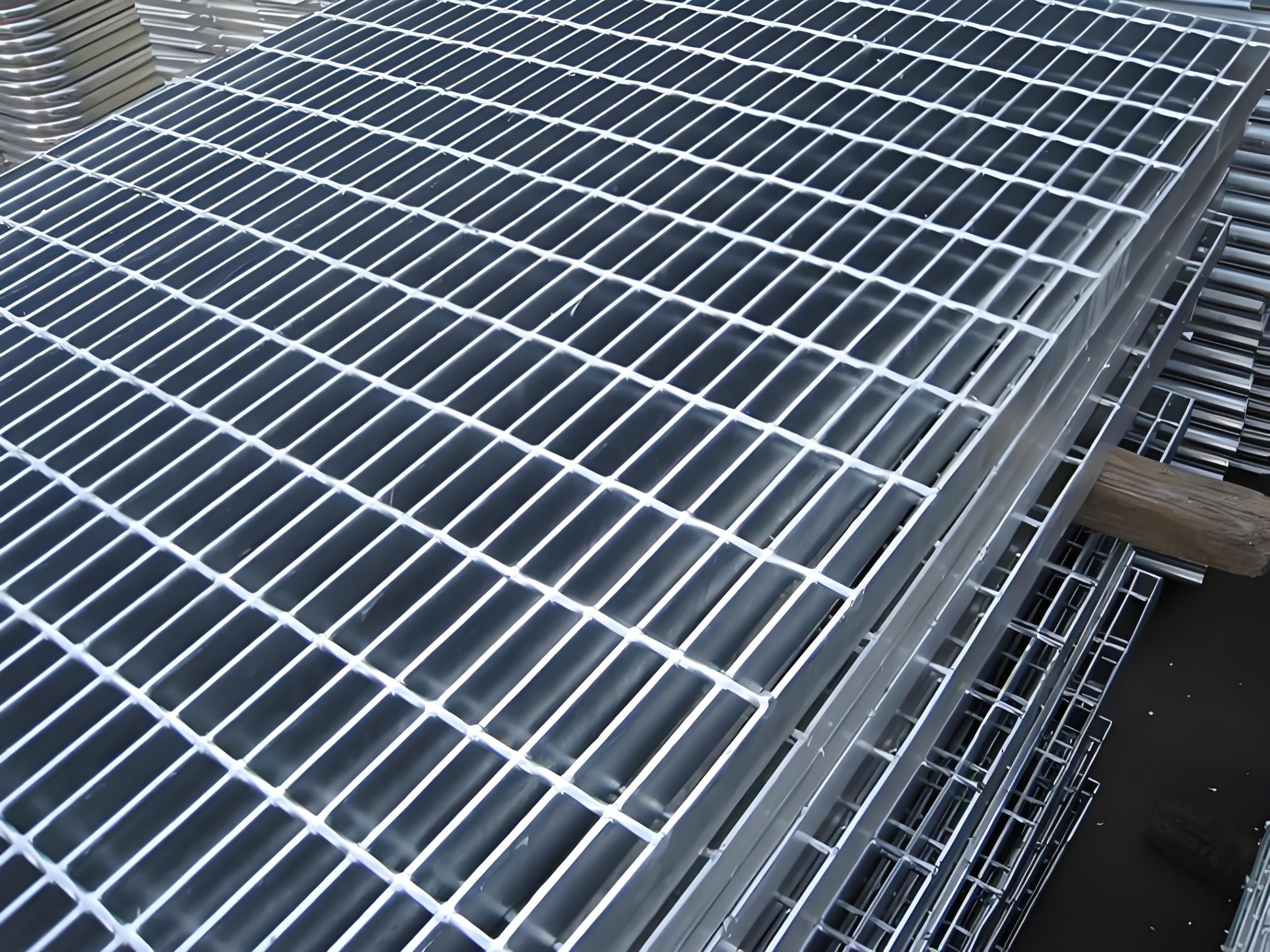
Surface choice depends on slip risk. Plain galvanized grating is suitable for general access. Serrated galvanized grating is better for outdoor, wet, oily, sloped, or stair applications. For safety-focused industrial projects, serrated surface is often recommended.
Before production, confirm cutting size, bearing bar direction, banding, notching, toe plates, stair tread details, clips, frames, and labels. These details affect installation speed and long-term performance. For project orders, drawings should be checked carefully before galvanizing.
| Selection Step | Key Question | Reason |
| Span | What is the unsupported distance? | Determines bearing bar height and thickness |
| Load | Will it carry pedestrians, carts, forklifts, or vehicles? | Determines whether standard-duty grating is suitable |
| Environment | Is it outdoor, wet, coastal, chemical, or general industrial? | Confirms if hot-dip galvanizing is enough |
| Surface | Plain or serrated? | Affects anti-slip safety |
| Fabrication | Does it need cutting, banding, notching, toe plates, or frames? | Ensures correct installation |
| Fixing | Will the panel be fixed, removable, or clip-installed? | Affects stability and maintenance |
Quality control is critical for hot-dip galvanized 19-W-4 grating because the product is often used as a walking, working, or load-bearing surface. Poor welding, wrong dimensions, uneven galvanizing, excessive distortion, or sharp zinc points can create installation and safety problems. A professional manufacturer should inspect the product before shipment.
Welding quality affects panel strength and stability. The cross bars should be securely welded to the bearing bars. Banding, stair tread end plates, nosing plates, frames, handles, and toe plates should also be welded properly. Weak welds may cause loose bars, broken edges, or early failure under repeated use.
Galvanizing quality should be checked after hot-dip galvanizing. The coating should cover the bearing bars, cross bars, welded joints, banding, and fabricated surfaces. Galvanizing thickness may be specified according to project requirements or applicable galvanizing standards. Buyers should confirm the required coating specification before ordering if the project has strict corrosion requirements.
Hot-dip galvanized surfaces may have a natural industrial appearance, but they should not have dangerous sharp zinc points, excessive lumps, uncoated areas, or severe roughness that affects handling and installation. Serrated galvanized grating should be checked carefully because sharp serrated edges combined with zinc buildup can make handling unsafe if not controlled.
Welding and galvanizing can both affect panel flatness. If a grating panel is warped, it may rock on the support, create noise, cause trip hazards, or fail to fit properly. Flatness inspection is especially important for walkways, platforms, trench covers, and stair treads. For removable trench covers, good flatness helps the panel sit securely in the frame.
Custom grating panels must match the project drawings. The manufacturer should check panel length, width, diagonal tolerance, bearing bar direction, notching, hole positions, frame fit, and stair tread dimensions. For large projects with many panel sizes, labels and packing lists help ensure correct installation.
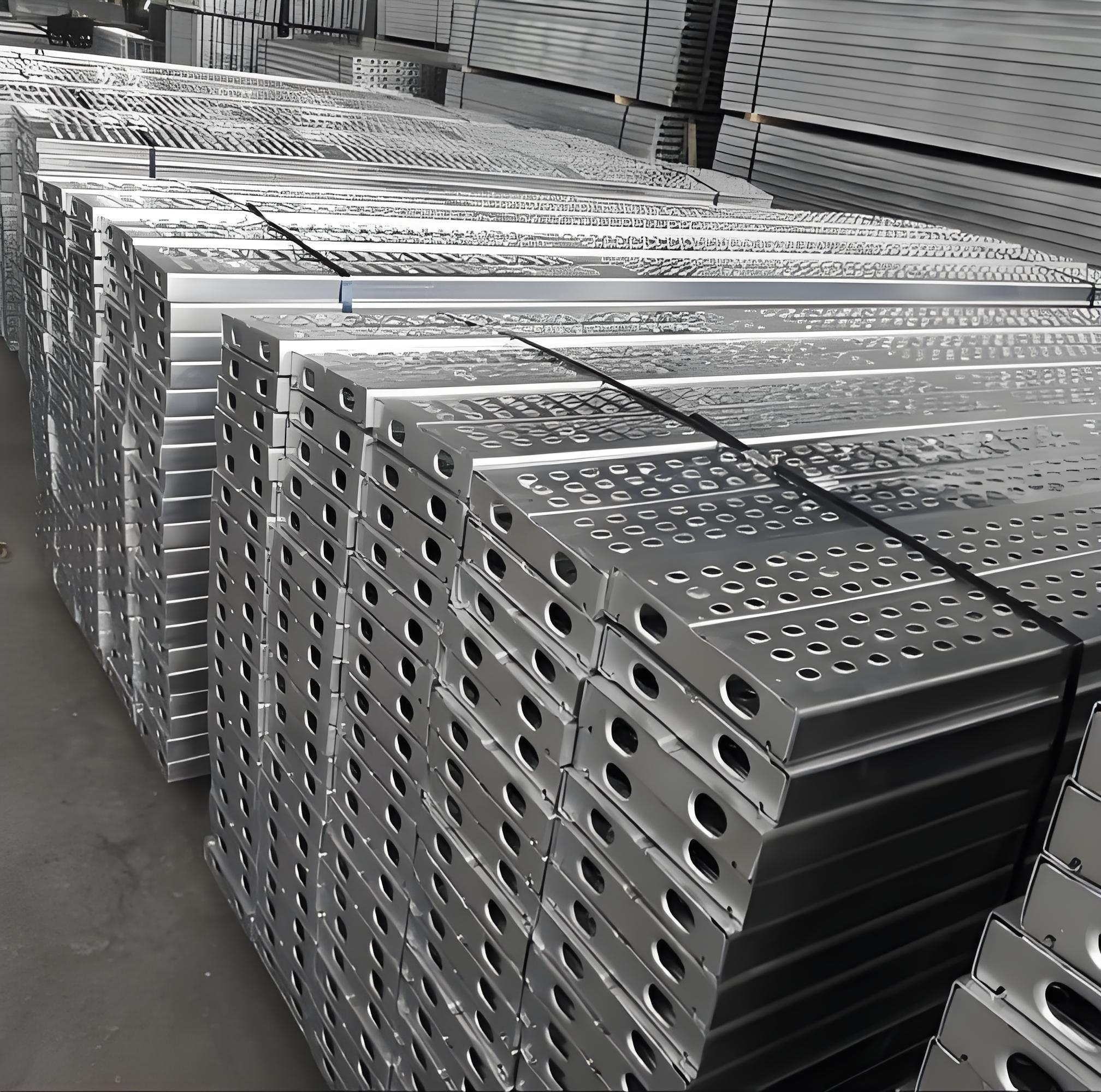
Galvanized grating panels are heavy and can be damaged during transport if not packed correctly. Good packaging protects the zinc coating, reduces deformation, and keeps custom sizes organized. For export orders, pallets, steel frames, labels, straps, and loading plans should be arranged according to product size and weight.
| Quality Control Item | Inspection Focus | Risk if Ignored |
| Welding | Cross bar welds, banding welds, stair tread welds, frame welds | Loose bars, weak panels, reduced service life |
| Galvanizing coverage | Zinc coating on bars, welds, edges, and fabricated surfaces | Unprotected areas may rust earlier |
| Galvanizing thickness | Project-required coating thickness or standard requirement | Insufficient corrosion protection |
| Surface safety | Sharp zinc points, burrs, excessive lumps, rough edges | Handling risk and installation difficulty |
| Flatness | Panel distortion after welding and galvanizing | Rocking, trip hazard, poor seating |
| Dimensions | Length, width, diagonal, notching, holes, bearing bar direction | Incorrect fit or reduced load capacity |
| Packaging | Stacking, labels, protection, loading stability | Coating damage, deformation, delivery confusion |
To get an accurate quotation for hot-dip galvanized 19-W-4 grating, buyers should provide complete project information. A clear inquiry helps the supplier calculate weight, fabrication cost, galvanizing cost, packing cost, and delivery cost correctly. It also reduces the risk of receiving panels that do not match the span, load, or installation condition.
The buyer should specify hot-dip galvanized 19-W-4 welded steel bar grating, bearing bar size, surface type, panel size, quantity, and application. If the buyer does not know the correct bearing bar size, the clear span and load requirement should be provided so the supplier can recommend a suitable option.
The supplier needs to know whether the grating is used for walkways, platforms, stair treads, trench covers, drainage covers, or catwalks. Load type should be described clearly. Pedestrian traffic, maintenance carts, forklifts, vehicles, and equipment loads require different designs. Clear span is especially important because it directly affects bearing bar selection.
Custom grating may need cutting, banding, notching, toe plates, stair tread end plates, nosing, frames, clips, or bolt holes. These details should be included before quotation. Drawings are the best way to confirm fabrication requirements. If drawings are not available, a size list and site photos can still help.
The buyer should describe the working environment: outdoor, indoor humid, drainage channel, coastal area, chemical area, wastewater area, or general factory use. If a specific galvanizing thickness or standard is required, it should be stated in the inquiry. For highly corrosive conditions, the supplier may recommend stainless steel or additional protection instead of standard hot-dip galvanized steel.
For export orders, the buyer should provide destination port, delivery term, packing requirement, and project deadline. Hot-dip galvanized grating panels are heavy, so packaging and loading should be planned carefully to avoid surface damage and deformation.
| Quotation Information | Details to Provide |
| Product specification | Hot-dip galvanized 19-W-4 welded steel bar grating |
| Bearing bar size | For example, 1 inch x 1/8 inch, 1-1/4 inch x 3/16 inch, or supplier recommendation |
| Surface type | Plain or serrated |
| Panel size | Width, length, bearing bar direction, and quantity |
| Application | Walkway, platform, catwalk, drainage cover, trench cover, stair tread, industrial floor |
| Load requirement | Pedestrian, cart, forklift, vehicle, equipment, or special load |
| Clear span | Unsupported distance between supports or trench opening width |
| Fabrication | Cutting, banding, notching, toe plates, stair tread end plates, frames, clips |
| Galvanizing requirement | General hot-dip galvanized finish or specific coating requirement |
| Delivery | Quantity, packing method, destination, trade term, and required lead time |
Hot-dip galvanized 19-W-4 grating is often supplied for project-based industrial use, so fabrication support is important. Buyers may need standard panels, cut-to-size walkway panels, banded trench covers, serrated stair treads, notched platform panels, toe plates, frames, or installation clips. A manufacturer with cutting, welding, banding, galvanizing coordination, inspection, and export packing ability can help reduce site work and improve installation efficiency.
Anping County Chuansen Silk Screen Products Co., Ltd. supplies hot-dip galvanized 19-W-4 grating for outdoor platforms, walkways, catwalks, drainage covers, trench covers, stair treads, industrial flooring, and custom access panels. From a factory perspective, the main goal is to match the grating specification with actual site conditions. This includes confirming bearing bar direction, span, load, surface type, fabrication details, galvanizing requirement, and packaging before production.
For platform and walkway projects, the supplier should check support beam spacing and panel layout. For trench cover projects, the supplier should confirm clear opening, frame support, removable or fixed installation, and traffic load. For stair tread projects, the supplier should confirm tread length, width, nosing, end plates, bolt holes, and whether serrated surface is required. For outdoor projects, galvanizing quality and packing protection should be controlled carefully to protect the product during long-distance transportation.
What is hot-dip galvanized 19-W-4 grating?
Hot-dip galvanized 19-W-4 grating is welded steel bar grating with bearing bars spaced at 19/16 inch centers and cross bars spaced at 4 inch centers, finished with hot-dip galvanizing for corrosion protection. It is commonly used for outdoor industrial walkways, platforms, catwalks, drainage covers, trench covers, stair treads, and maintenance flooring. The galvanizing protects the carbon steel surface from rust in many outdoor and wet environments.
Is 19-W-4 galvanized grating suitable for outdoor use?
Yes, 19-W-4 galvanized grating is suitable for many outdoor industrial applications because hot-dip galvanizing improves corrosion resistance against rain, humidity, and general outdoor exposure. It is commonly used for outdoor platforms, walkways, drainage covers, stair treads, and trench covers. For coastal, chemical, marine, or highly corrosive environments, the buyer should confirm whether galvanized steel is enough or whether stainless steel is required.
How do I choose the bearing bar size for 19-W-4 grating?
To choose the bearing bar size for 19-W-4 grating, first confirm the clear span, load type, support condition, and application. Short-span pedestrian areas may use smaller bearing bars, while longer spans, platforms, trench covers, forklifts, or heavier loads need larger bearing bars. The 19-W-4 code defines spacing, but it does not define load capacity by itself. Bearing bar size must be selected according to the actual span and load requirement.
Please Feel free to give your inquiry in the form below.we will reply you in 24 hours.