

01 / APPLICATION OVERVIEW
Steel Grating Machine Guards for Safety and Ventilation
Steel grating machine guards provide rigid barriers around industrial equipment while allowing airflow and visibility for operation, inspection, and maintenance.
Typical installations include guards around drive assemblies, conveyor equipment, fans, and processing machinery. Fixed panels restrict access to hazardous moving parts, while removable or hinged sections provide planned maintenance access. The open grid allows operators to observe equipment and supports ventilation around heat-generating components.
Guard design must account for the hazard location, opening size, reach distance, panel strength, frame support, and access frequency. Bearing bar spacing alone does not establish safety: clear openings and distance from moving parts must be assessed together. Surface treatment, fasteners, and any access interlocks should match the equipment environment and risk assessment.
Discuss Your Walkway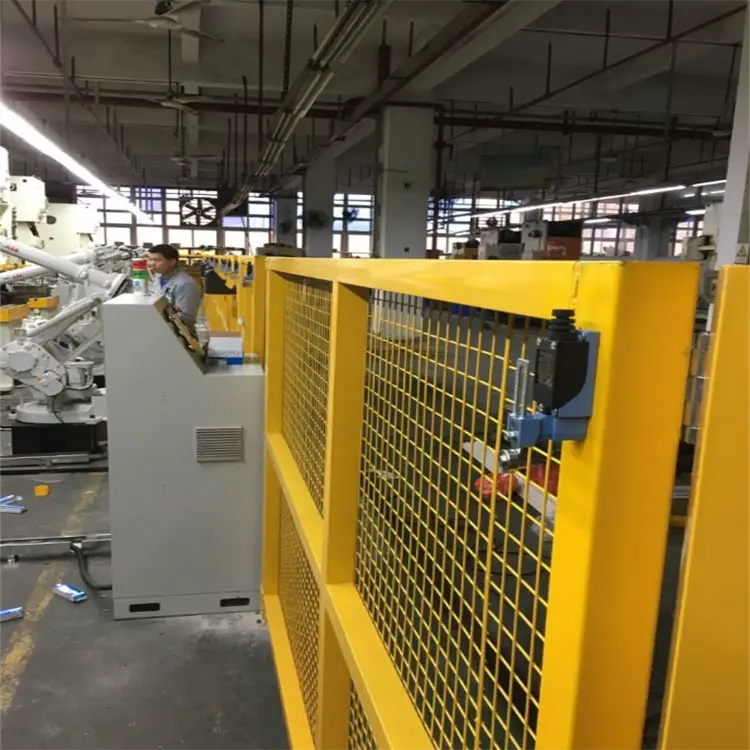
02 / APPLICATION SCENARIOS & REQUIREMENTS
Application Scenarios & Project Requirements
Review the operating conditions, users, loads, environment and project requirements before selecting the appropriate steel grating specification.
Conveyor Drive Guards
Framed grating panels can enclose conveyor drive units and transmission assemblies while permitting airflow and visual inspection. Panel openings and separation distances must prevent access to rotating shafts, couplings, and nip points identified in the equipment risk assessment.
Pump and Compressor Enclosures
Grating guards can form perimeter barriers around pump skids and compressor packages where ventilation and routine observation are needed. Removable sections provide access for servicing, with the guard layout coordinated around pipework, valves, maintenance clearances, and hazardous components.
Fan and Blower Barriers
Steel grating can protect access zones around industrial fans and blowers while allowing air movement. Clear opening dimensions and guard distance require particular attention near rotating blades; airflow resistance should also be checked against the equipment operating requirements.
Processing Machine Perimeters
Modular grating panels can define guarded areas around crushers, mixers, and other processing equipment. Fixed sections restrict routine entry, while designated access gates support maintenance. Applications involving ejected fragments, liquid spray, or fine debris may require additional containment panels.
03 / SPECIFICATIONS & PRODUCT OPTIONS
Common Specifications & Available Options
Compare materials, bearing bar sizes, spacing, surface types, finishes and panel dimensions to match the requirements of the application.
Specifications
| Parameter | Specification / Options |
|---|---|
| Material | Weldable carbon steel, commonly specified as Q235B or ASTM A36 where accepted by the project; the required material grade should be stated on the fabrication drawings. |
| Surface treatment | Hot-dip galvanized after fabrication for outdoor or humid installations; powder-coated or painted steel for suitable indoor environments. Coating selection should account for cleaning chemicals, abrasion, and corrosion exposure. |
| Bearing bar size |
Common fabrication options include 20 × 3, 25 × 3, 25 × 5, 30 × 3, 30 × 5, 32 × 5, and 40 × 5 mm. Bar depth × thickness. Select the section according to panel span, support arrangement, required impact resistance, and handling weight. |
| Bearing bar spacing |
Common center-to-center pitches include 30 and 40 mm; closer pitches such as 15 or 20 mm may be specified where fabrication permits. With 3 mm thick bars, these pitches produce nominal clear gaps of 27, 37, 12, and 17 mm respectively. Suitability depends on the complete opening geometry and distance to the hazard. |
| Cross bar spacing | Common center-to-center pitches are 50 and 100 mm. Cross bar section, actual clear spacing, and the resulting rectangular openings must be confirmed on the approved guard drawings. |
| Panel dimensions |
Illustrative module dimensions include 500 × 500, 600 × 1,000, 800 × 1,200, and 1,000 × 1,500 mm. Perimeter sections may use 1,000 × 2,000 mm panels where structurally suitable. Width × height. Final dimensions follow the equipment layout, support spacing, safe access requirements, and manageable removal weight. |
| Perimeter frame |
Example frame sections include 25 × 25 × 3, 30 × 30 × 3, and 40 × 40 × 4 mm steel angles, or 30 × 30 × 2 and 40 × 40 × 3 mm square hollow sections. Frame sizes are fabrication options, subject to structural verification for the specified guard loads. |
| Edges and cut-outs | Plain bars with deburred edges and perimeter banding are generally suitable. Shaft, pipe, and cable cut-outs should be dimensioned individually and reinforced where necessary, without creating access paths to moving parts. |
| Panel orientation | Main bars should span between the designated supporting frame members. Horizontal or vertical orientation must be shown on drawings and assessed for rigidity, reach prevention, and potential climbing access. |
| Fixings and access hardware | Tool-operated bolted brackets may use M6, M8, or M10 fasteners as specified by the designer. Hinges, latches, retained fasteners, and interlock mounting provisions are selected according to panel weight and access requirements. |
| Safety design criteria |
Confirm clear openings, hazard separation distances, guard height, floor gaps, and access arrangements against the applicable machinery safety requirements, such as ISO 14120 and ISO 13857 where specified. Standard grating dimensions do not automatically establish compliance or suitability for a machine guard. |
Need a different size? Send your layout for a custom panel review.
Request Your SpecificationThe sizes above are reference examples, not approved combinations for every span. Confirm the bearing direction, loads, clear span and material before ordering. Panel size does not indicate the allowable unsupported span.
WHY USE STEEL GRATING?
Advantages for Steel Grating Applications
Ventilation Around Equipment
The open grid permits air movement around motors, drives, and processing equipment. Suitable opening geometry can support cooling airflow, with the ventilation requirement checked alongside the guard’s reach-prevention function.
Visible Operating Conditions
Operators can observe equipment through the panel without routinely removing the guard. Visibility depends on bar depth, spacing, viewing angle, and lighting, which should be considered when positioning inspection points.
Rigid Protective Panels
Connected steel bars and a supporting perimeter frame form a rigid barrier. Correct section sizing and secure attachment help the guard resist foreseeable contact and remain positioned clear of moving equipment.
Exposure-Specific Finishes
Hot-dip galvanizing, painting, or powder coating can be specified to suit the operating environment. Appropriate corrosion protection helps preserve panel sections and fixing points in humid plants or outdoor equipment areas.
Planned Maintenance Access
Modular panels allow selected sections to be removed for servicing. Tool-operated fixings or appropriately interlocked access doors can be incorporated according to the risk assessment, equipment stopping behavior, and required access frequency.
Equipment-Specific Fabrication
Panels can be framed and shaped around approved equipment layouts, with defined mounting points and service openings. This supports installation around existing structures while maintaining the required separation from hazardous components.
04 / INSTALLATION & PROJECT PHOTOS
Installation Guidance & Application Photos
Review the panel layout, support conditions, fixing methods and fabrication details before installation, and refer to the application photos for practical examples.
-
Verify the Guard Layout
Isolate the equipment under the site’s energy-control procedure before installation. Check the approved guard drawings, hazard locations, clear openings, separation distances, and service access. Confirm that the selected panels suit the machine risk assessment.
-
Position Frames and Panels
Install the supporting frames at the specified locations and align each identified panel. Maintain clearance from moving parts and check floor gaps, adjacent structures, and cut-outs for unintended access paths. Avoid unapproved changes to bar spacing or panel dimensions.
-
Secure Fixings and Access Doors
Fit the specified brackets, bolts, hinges, and latches, using the required tightening values. Install retained fasteners where required. Have qualified personnel install and validate any interlocks or guard-locking devices according to the machine safety design.
-
Inspect Before Returning to Service
Check panel rigidity, sharp edges, fixing security, equipment clearance, and maintenance access. Repair coating damage using the specified method. Complete the required guarding and safety-function checks before operation, then include panels, fixings, and access devices in routine inspections.
05 / RELATED REFERENCE & FAQ
Frequently Asked Questions
Can standard steel grating be used as a machine guard?
It can be used where its opening geometry, strength, mounting arrangement, and distance from hazardous parts satisfy the machine risk assessment. Standard walkway grating may have openings that permit unsafe reach. The complete guard assembly should be evaluated against applicable machinery safety requirements before dimensions are approved for fabrication.
How are bar spacing and distance from moving parts selected?
The designer assesses actual clear openings together with the shortest reachable distance to the hazard. Center-to-center bar pitch alone is insufficient. Both dimensions of a rectangular opening, access over or around the guard, and gaps at its edges must be considered using the applicable reach-distance criteria, such as ISO 13857 where specified.
Will a grating guard provide enough ventilation?
The open grid allows airflow, but cooling performance depends on free area, bar depth, panel position, and the equipment’s airflow requirements. Fan and blower applications may require pressure-drop checks. Increasing opening size to improve ventilation must remain consistent with the required separation distance and reach-prevention criteria.
Which surface finish is suitable for industrial machine guards?
Hot-dip galvanizing after fabrication is commonly considered for outdoor or humid environments. Painted or powder-coated carbon steel may suit controlled indoor areas. Exposure to cleaning chemicals, salt, or process liquids requires a separate coating assessment. Provide the operating conditions so the finish can be specified for the actual service environment.
Should maintenance panels be bolted or fitted with interlocks?
Fixed guards generally use fastenings that require a tool for removal. Frequent access may justify a movable guard with an interlock, and guard locking may be needed if hazardous motion continues after a stop command. The choice depends on access frequency, stopping time, and the machine safety assessment.
What details are needed to manufacture custom grating guards?
Provide equipment drawings, hazard locations, panel dimensions, approved clear openings, separation distances, structural loads, frame sections, fixing details, and surface treatment. Identify removable panels, doors, interlock mounting provisions, and service cut-outs. Also state whether fragment, spray, or debris containment is required, since open grating alone may not provide it.
06 / PROJECT ENQUIRY
Tell Us About Your Walkway
Share your layout and operating requirements so our team can review the grating, fabrication and supply scope.
Send Drawings by Email Discuss on WhatsAppThe email button opens your mail app. Attach your drawings before sending.
Include these details
- Application location and exposure conditions
- Drawings, panel dimensions and quantities
- Support layout, clear span and design loads
- Material, finish and walking-surface requirements
- Cut-outs, fixings and removable access sections
- Destination, required delivery date and project standards
Already have a specification? Send it with your enquiry.