

Carbon steel bar grating is one of those products that looks simple at first glance, but once you start buying it for a real project, the details matter a lot. The right grating for a walkway is not always the right one for a platform, and a drainage cover has its own design logic as well. Buyers usually focus on three practical questions: what size should I use, how much load can it carry, and how much will it cost after fabrication and surface treatment. If you get those three points right, purchasing becomes much easier. If you get them wrong, the result can be overpaying for unnecessary material, choosing a panel that deflects too much, or ordering a finish that does not last in the actual environment.
Carbon steel bar grating is an open-grid steel product made by combining bearing bars with cross bars. The bearing bars are the main load-carrying flat bars, and the cross bars connect them into a stable panel. In standard production, the cross bars are usually resistance welded to the bearing bars, or the bars are mechanically locked together in a press-locked structure. That basic structure is what gives grating its mix of strength, drainage, ventilation, and relatively low weight compared with solid steel plate.
From a practical buying point of view, the bearing bar is the most important part because it determines most of the load capacity. The cross bars help hold the spacing, improve panel stability, and support overall rigidity, but the bearing bars are what really take the load. This is why buyers usually specify bearing bar height, bearing bar thickness, bearing bar pitch, and cross bar spacing when requesting a quotation.
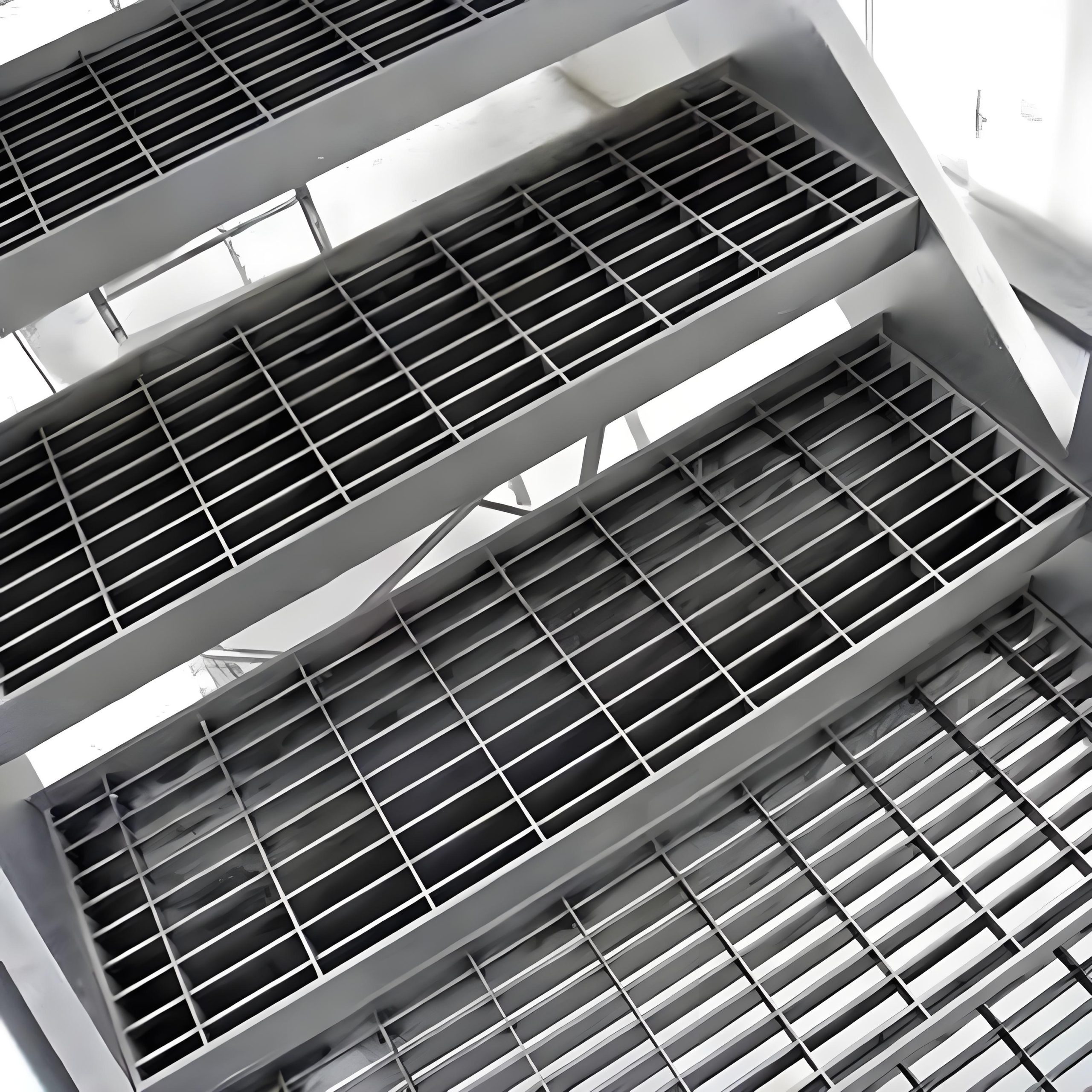
Common surface treatment options include hot-dip galvanizing, electro-galvanizing, painting, and black steel finish. Hot-dip galvanized carbon steel grating is the most widely used in outdoor and industrial applications because the zinc coating gives good corrosion protection and can handle weather exposure better than paint in many cases. Electro-galvanized grating has a thinner zinc layer and is more suitable for indoor or lighter-duty environments where corrosion risk is lower. Painted grating can be used when a specific color is needed or where the environment is relatively mild. Black grating means untreated carbon steel, usually chosen for indoor dry use, further fabrication, or budget-driven short-term projects.
The three biggest application categories are walkways, platforms, and drainage covers. In walkways, the focus is usually on safe foot traffic, anti-slip performance, and a bar spacing that prevents tools or heels from getting caught. In platforms, the load requirement is often higher, so stronger bearing bars and better structural rigidity become more important. In drainage applications, open area and debris control are the key factors, and the panel may also need to be removable, hinged, or fitted into a frame.
For walkways, the first question is always who or what will pass over the grating. If it is standard pedestrian traffic in an industrial or commercial environment, a common recommendation is bearing bar height in the range of 25 mm to 32 mm, with bearing bar thickness from 3 mm to 5 mm. This range usually provides a good balance between strength, walking comfort, and cost. It is strong enough for most foot traffic applications without becoming unnecessarily heavy.
Bearing bar spacing is especially important for walkways. In most cases, it is better to keep the spacing at 30 mm or less. A tighter pitch helps reduce the risk of high heels getting trapped and lowers the chance of small tools, bolts, or parts falling through. This matters a lot in maintenance walkways, elevated catwalks, and access routes above production equipment.
For surface treatment, hot-dip galvanizing is usually the safest recommendation for walkway grating, especially if the grating will be outdoors or exposed to moisture. It offers better weather resistance than simple paint and usually gives a more durable anti-rust solution over time. Also, the slightly textured zinc finish can help with slip resistance, although the main anti-slip performance still depends on the bar shape and surface profile.
If extra slip resistance is needed, serrated bearing bars are a smart upgrade. Serrated grating has tooth-like edges on the bearing bars, which improve grip under wet, oily, or muddy conditions. Another upgrade sometimes used is a sand-coated or anti-slip painted surface, though this depends on the project and service environment. In places like loading zones, plant access routes, or outdoor utility walkways, serrated hot-dip galvanized grating is often a more practical choice than plain-surface grating.
Buyers should also think about comfort and safety, not just structural strength. A walkway may technically carry the load, but if the spacing is too wide or the panel feels unstable underfoot, it still may not be the right product. That is why walkway selection should always combine load demand, spacing control, and surface finish instead of focusing on only one factor.
Platform grating usually needs to handle more load than a simple walkway. It may support workers, tools, machine access, stored materials, or maintenance activity concentrated in certain zones. Because of that, the recommended bearing bar size is commonly larger, with bearing bar height in the 32 mm to 50 mm range and thickness in the 5 mm to 6 mm range. These stronger bars improve bending resistance and help control deflection over larger spans.
For platform use, bearing bar spacing of 30 mm to 40 mm is very common. This spacing range gives a practical balance between load capacity, open area, and self-weight. If the spacing is too tight, the panel becomes heavier and more expensive. If it is too wide, load support and walking comfort may drop. For many standard industrial platforms, 30 mm pitch is a reliable default specification.
Cross bar spacing of 50 mm is often preferred on platforms because it improves overall rigidity and creates a denser panel structure. Compared with 100 mm cross bar spacing, a 50 mm pattern can make the panel feel more solid underfoot and can help in heavier-duty situations. It also improves the look of the finished panel when the project requires a more uniform and robust surface.
Edge treatment matters more on platforms than many first-time buyers expect. In most cases, the panel should have banding bars around all four sides. These edge bars improve structural integrity, help protect cut ends, and make handling easier. Platforms also often require pre-drilled installation holes or welded lugs so the panels can be fixed securely in place. If the grating layout includes removable sections for maintenance access, those fixing details should be confirmed before production, not after delivery.
Another point to remember is that platform loads are not always evenly distributed. A platform may carry concentrated loads from equipment feet, toolboxes, or wheeled carts. So even if a standard platform specification looks fine on paper, the final selection should still consider real use patterns rather than only uniform distributed load values.
For drainage use, carbon steel bar grating is commonly supplied as trench covers or channel covers. In many projects, people simply call it grating cover or drain cover grating. Here the design priority changes. The panel still needs enough strength, but open area and debris handling become more important than they are for a platform or walkway.
A common bearing bar spacing for drainage grating is 30 mm to 40 mm. This range usually allows water to pass through efficiently while still stopping larger debris from falling into the drain. If the spacing is too tight, drainage performance may be reduced and cleaning becomes harder. If the spacing is too wide, the cover may allow too much debris through or become less suitable for pedestrian traffic above it.
Cross bar spacing of 100 mm is often used in drainage covers because it helps reduce clogging and keeps the grid relatively open. For ordinary trench covers in roadsides, parking areas, factory drains, and plant utility channels, this is a very practical option. It keeps fabrication cost under control while maintaining good drainage flow.
Some drainage covers need special designs. Hinged grating covers are useful when regular inspection or cleaning is required. Lockable covers are often used in public or security-sensitive areas to prevent unauthorized removal. Embedded frame designs are common where the grating must sit neatly into a concrete or steel channel edge. These details should be decided early because they affect fabrication cost, installation method, and delivery lead time.
Typical drainage applications include roadside gutters, factory floor channels, parking lot drainage, wastewater treatment facilities, and service trenches around machinery. In these locations, the buyer should think not only about water flow, but also about whether the cover needs to be removed frequently, whether vehicles will cross it, and whether corrosion is likely to be severe because of chemicals, mud, or standing water.
Carbon steel bar grating is available in a wide range of sizes, but most industrial projects use a relatively standard group of specifications. Common bearing bar heights range from 25 mm to 100 mm, and typical bearing bar thicknesses range from 3 mm to 6 mm. Smaller sizes are often used in light-duty walkways and trench covers, while larger sizes are chosen for platforms, loading zones, and heavy-duty industrial access.
Common bearing bar center spacing includes 12.5 mm, 15 mm, 20 mm, 30 mm, and 40 mm. Among these, 30 mm is one of the most widely used because it offers a good all-around balance between open area, strength, and price. Tighter spacing such as 12.5 mm or 15 mm is usually chosen where small object retention matters, while 40 mm spacing may be used in less demanding drainage or industrial areas where greater openness is acceptable.
Cross bar spacing is typically 50 mm or 100 mm. A 50 mm pitch gives a tighter and more rigid grid, often preferred for platforms or when a denser structure is needed. A 100 mm pitch is widely used for standard welded grating and drainage covers because it reduces material use and keeps the panel more open.
Standard raw panel sizes often include widths of 1 m and 1.22 m, with lengths of 4 m and 6 m. These are common production sizes before cutting and fabrication. In actual projects, most panels are customized, because trenches, support beams, columns, and platform layouts rarely match stock panel dimensions exactly. That is why buyers should not assume a “standard size” means a ready-to-install panel.
When ordering custom sizes, it is important to confirm whether the price includes cutting, banding, openings, toe plate welding, and special edge shaping. A lot of quotation confusion comes from the difference between raw panel pricing and fully fabricated panel pricing. A serious supplier will normally ask for a panel layout or drawing schedule before giving a final number.
Load capacity should always be matched to the actual application. For pedestrian walkways, light-duty loading is usually in the range of 2 to 4 kN per square meter. This is often enough for normal foot traffic, maintenance access, and utility walkways where no heavy equipment is expected. In this category, smaller bearing bars such as 25×3 mm or 30×3 mm may be sufficient, depending on span and support conditions.
For maintenance platforms, medium-duty loading commonly falls around 4 to 7 kN per square meter. These areas may involve several workers, tools, repair activity, and occasional small equipment loads. Here, stronger sections such as 32×5 mm or 40×5 mm are often more suitable, especially when spans are longer or deflection control is stricter.
For heavy-duty platforms or traffic-bearing service areas, the load level is usually 7 kN per square meter or higher. In these cases, large bearing bars such as 40×5 mm, 50×5 mm, or even heavier sections may be required. If wheeled traffic or concentrated machine loads are involved, the design should be checked very carefully because concentrated loads can be more critical than evenly distributed loads.
Span is just as important as bar size. Even a strong grating panel will perform poorly if it spans too far without support. In many applications, the maximum allowable deflection is controlled at no more than span divided by 200. That means a 1000 mm span should not deflect more than about 5 mm under design load. Buyers sometimes compare bar size without checking span, and that leads to wrong selection.
A simple reference example can help. A 25×3 mm grating at 30 mm spacing over a short span may be suitable for light walkway service. A 32×5 mm grating at 30 mm spacing over around 900 to 1000 mm span is more typical for general industrial platform use. A 50×5 mm grating at tighter support conditions is often used where heavy service is expected. These are only quick orientation examples, not final engineering values.
For serious procurement, especially in public or industrial safety-sensitive areas, the buyer should request a load calculation sheet or test report. That document should show the bearing bar size, spacing, span, allowable load, and deflection basis. This is much better than relying only on verbal claims that the panel is “heavy duty” or “industrial grade.”
The cost of carbon steel bar grating starts with raw materials. The bearing flat bars make up most of the weight and therefore most of the base material cost. Cross bars add material and fabrication work, but the bearing bars usually have the biggest influence on price. Because the steel market changes, grating prices also move with raw material trends.
Specification size has a direct impact on cost. The higher and thicker the bearing bar, the more steel is used, so the price goes up. Tighter spacing also increases cost because more bars are required in the same panel width. This means a dense panel with heavy bars can cost much more per square meter than a lighter standard configuration, even if both panels appear similar from a distance.
Surface treatment is another key cost factor. In many projects, the added cost ranking is hot-dip galvanized first, then electro-galvanized, then black steel as the lowest finishing-cost option. Hot-dip galvanizing adds real value because it improves corrosion resistance significantly, but it also increases the final price because of zinc usage, processing, and handling. If the project environment is mild, buyers may reduce cost by choosing black steel with primer paint or electro-galvanizing, but only if corrosion risk is actually low.
Processing costs are often overlooked. Cutting, edge banding, welding, hole making, hinge installation, lock fittings, and special shapes can all add to the final price. A plain rectangular panel is always cheaper than a highly customized one. This is why two quotes with the same grating specification can still vary quite a lot once fabrication details are included.
As a rough industry reference, plain black steel grating may start around USD 18 to USD 30 per square meter for lighter standard types, while hot-dip galvanized industrial-grade grating may often fall in the range of USD 28 to USD 55 per square meter. Heavy-duty or highly customized panels can go higher. Exact pricing depends on steel market conditions, zinc cost, drawing complexity, and order quantity.
To optimize cost, it helps to choose standard specifications when possible, order in batch quantities, and avoid unnecessary variation in panel sizes. It also helps to select the galvanizing method based on real exposure conditions instead of automatically choosing the most expensive finish. A supplier such as Anping County Chuansen Silk Screen Products Co., Ltd. can usually quote more efficiently when the buyer provides a clear panel list instead of only a rough area total.
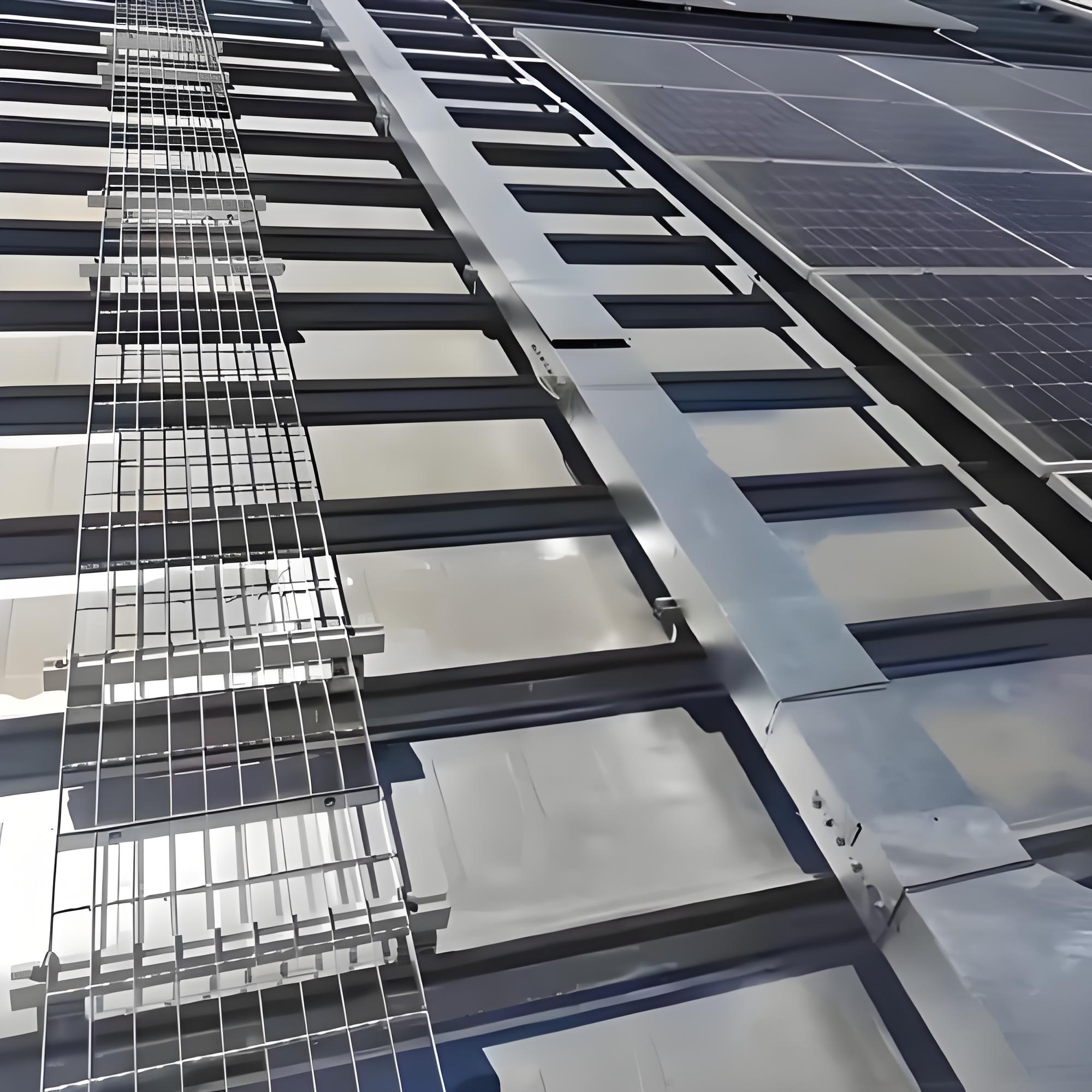
In dry indoor environments, black steel with anti-rust paint or electro-galvanized grating can be a reasonable choice. This applies to sheltered equipment rooms, warehouse mezzanines, and indoor service areas with low moisture exposure. The main advantage is lower cost, but the buyer should be honest about the environment. If water, cleaning chemicals, or humidity are actually present, the low-cost finish may not hold up well.
For normal outdoor use, hot-dip galvanized grating is usually the first recommendation. In many ordinary weather conditions, it can provide a service life of around 8 to 12 years, sometimes longer depending on zinc thickness and exposure level. It offers much better overall value than painted black steel in most outdoor projects because it protects not just the surface but also cut edges and welded areas more effectively.
In wet or corrosive environments, thicker galvanizing or a heavier anti-corrosion coating system may be needed. This applies to places with constant moisture, industrial fumes, mud accumulation, standing water, or frequent washing. In such cases, the buyer should not only ask whether the product is galvanized, but also ask about zinc coating requirement or corrosion protection grade.
For food processing, pharmaceutical production, or highly hygiene-sensitive applications, carbon steel is usually not the preferred material. Stainless steel grating is often a better substitute because it is cleaner in appearance, easier to maintain for hygiene, and more suitable for repeated wash-down environments. In these sectors, choosing carbon steel just to save initial cost often creates maintenance and cleanliness problems later.
The right finish should always match the service environment, not just the budget. Surface treatment is not a cosmetic add-on. It is a functional part of the grating’s service life.
One common installation method is welding. Welded fixing is a permanent solution and is widely used for platforms and walkways where the grating is not meant to be removed regularly. It provides strong attachment and reduces the chance of panel movement. The downside is that later removal is harder, and welded points may need anti-corrosion touch-up after installation, especially on galvanized products.
Clamp fixing, also called grating clips or saddle clips, is a removable installation method. This is very useful for drainage covers, maintenance access areas, or panels that need periodic cleaning. Clamps avoid site welding and make panel removal easier. They also help preserve the finish better because the panel is not burned by field welding.
Embedded frame installation is common in road drainage and trench cover applications. In this system, the grating sits inside a steel or concrete frame, which helps keep the panel aligned and stable under traffic or repeated opening. This method is especially practical for municipal drains, parking areas, and factory channels where the edge support needs to be solid and clean.
Hinged installation is another useful choice for drainage covers that must be opened frequently. A hinged grating can be lifted without being fully removed, which makes inspection and cleaning faster and reduces the risk of losing the cover. Some projects also add locking devices for safety or theft prevention.
The installation method should be decided before production because it affects panel dimensions, edge details, holes, lugs, and accessories. Buyers who wait until after delivery to decide the fixing method often run into unnecessary site modification work.
Before placing an order, the buyer should first confirm the actual use scenario: walkway, platform, or drainage. That sounds basic, but it changes the whole specification logic. Walkways care more about foot safety and spacing control. Platforms care more about structural strength. Drainage covers care more about water flow and removability.
The next step is to verify the bearing bar size, bearing bar spacing, and cross bar spacing. These three values determine most of the panel’s performance. Then confirm the surface treatment method and, if galvanized, the zinc coating requirement. After that, check dimensions carefully, including single panel length and width, total quantity, and whether the order includes banding, holes, hinges, locks, or other processing details.
It is also important to request a load calculation sheet and, where needed, a test report. These documents are especially useful when the grating will be installed in industrial facilities, public infrastructure, or projects with formal inspection procedures. They help avoid disputes later and make comparison between suppliers much more transparent.
What is the best carbon steel bar grating specification for walkways?
For many standard walkways, a practical starting point is bearing bar height of 25 mm to 32 mm, thickness of 3 mm to 5 mm, and bearing bar spacing of 30 mm or less. If the area is outdoors or exposed to moisture, hot-dip galvanizing is usually the preferred finish. If slip resistance is important, serrated bearing bars are worth considering.
How do I choose grating for a platform with higher load?
Start with the design load and support span. For medium to heavy platform use, bearing bars in the 32 mm to 50 mm height range and 5 mm to 6 mm thickness are commonly used. A 30 mm to 40 mm bearing bar pitch and 50 mm cross bar pitch are often good platform configurations. The final choice should be checked with a load calculation sheet rather than selected only by habit or past project experience.
Is hot-dip galvanized carbon steel grating worth the extra cost?
In most outdoor and industrial applications, yes. Hot-dip galvanizing costs more than black steel or electro-galvanizing, but it usually provides much better corrosion protection and longer service life. If the grating will be exposed to rain, humidity, wash-down, or general weathering, the extra upfront cost is often more economical than early repainting or replacement.