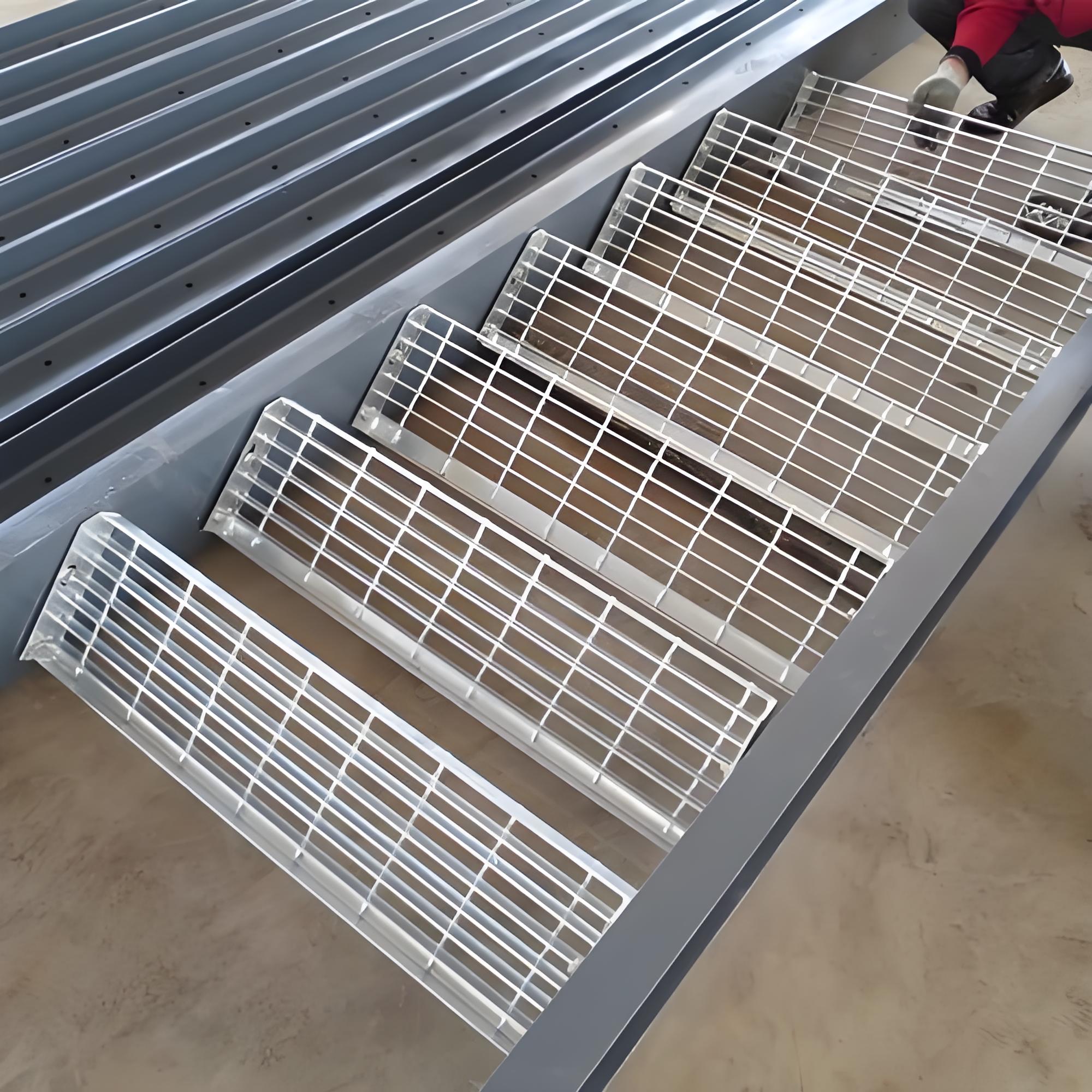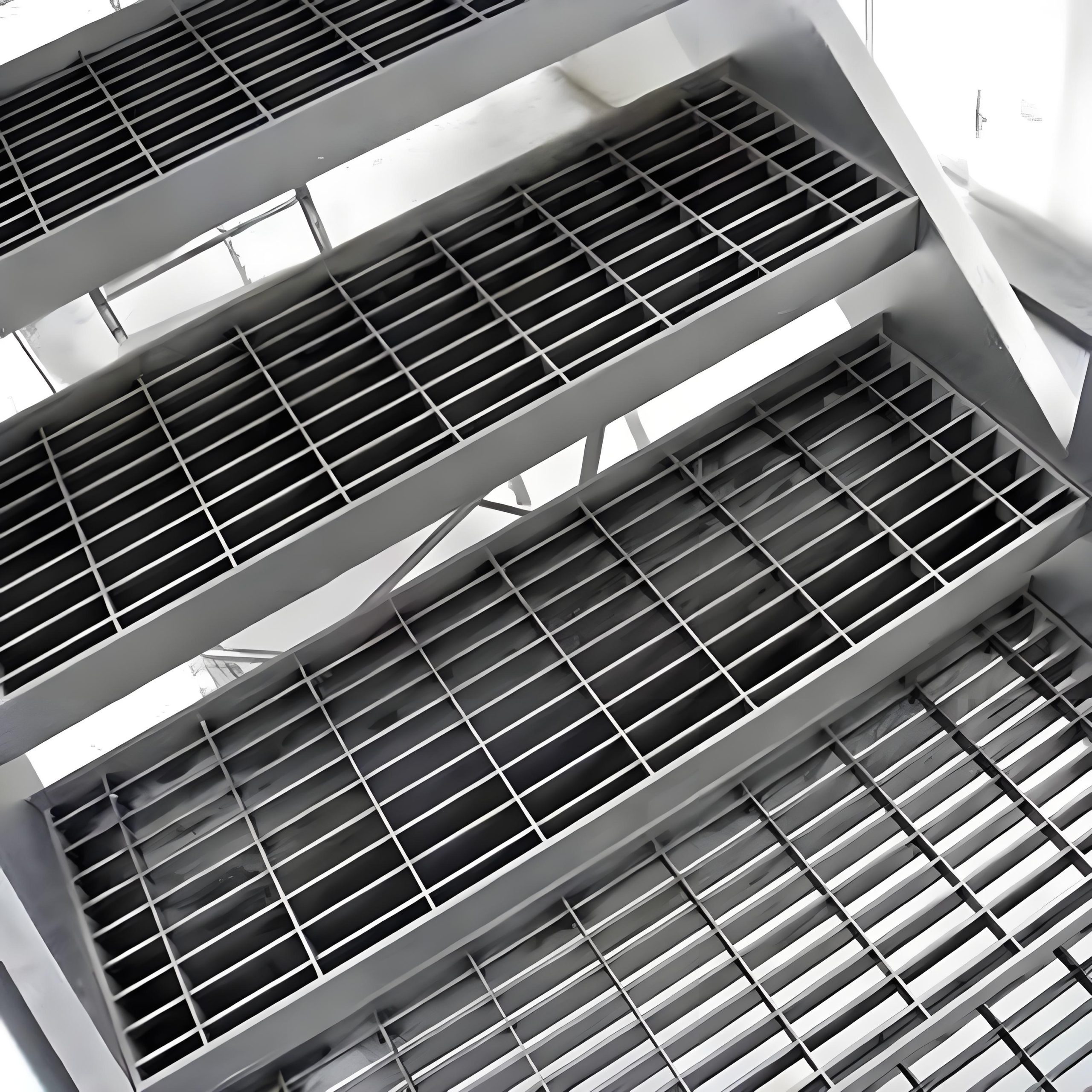

Home > Products > Step Board > Platform step board
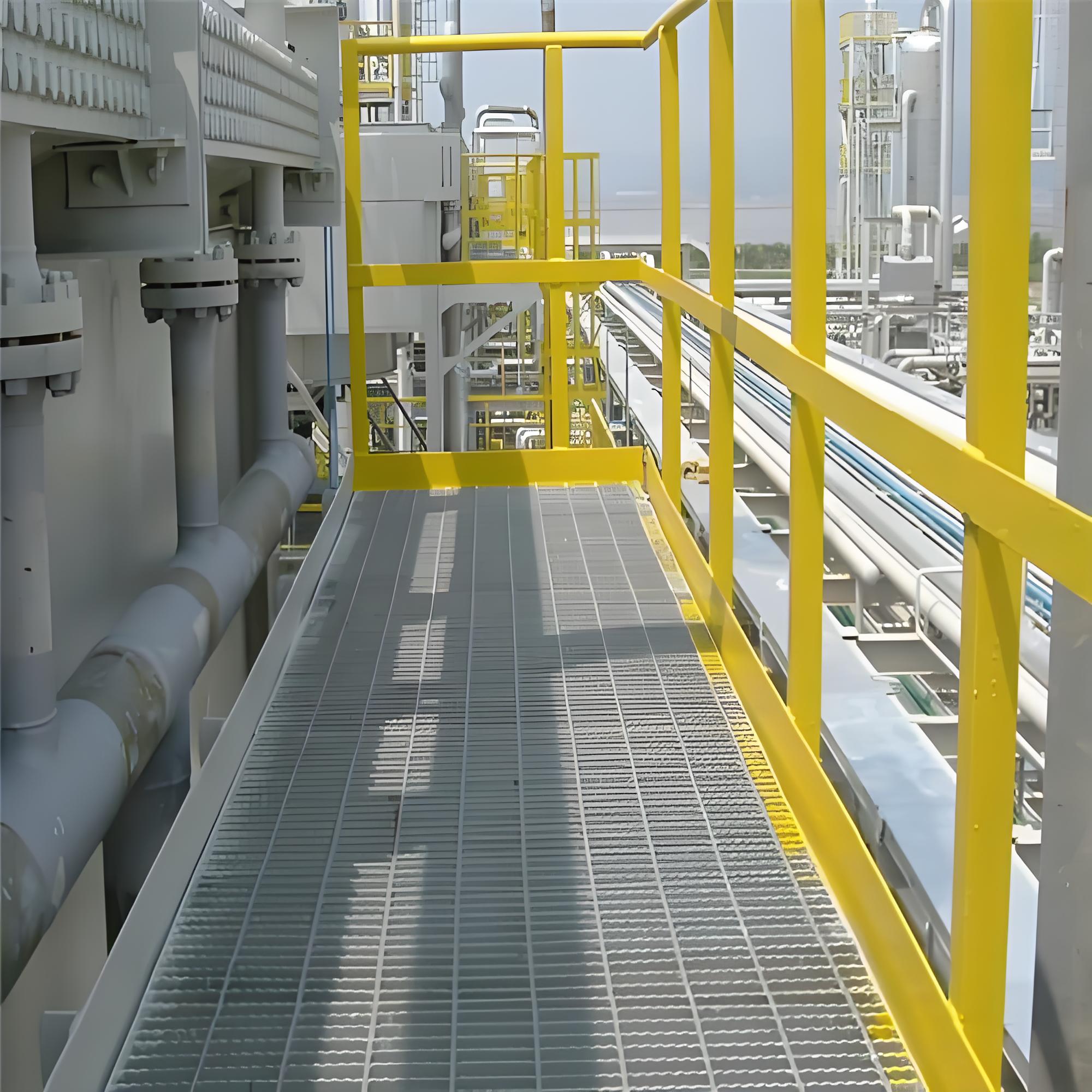
Platform step board is a heavy-duty structural panel designed for industrial working platforms, offshore rigs, power stations, steel mills, logistics …
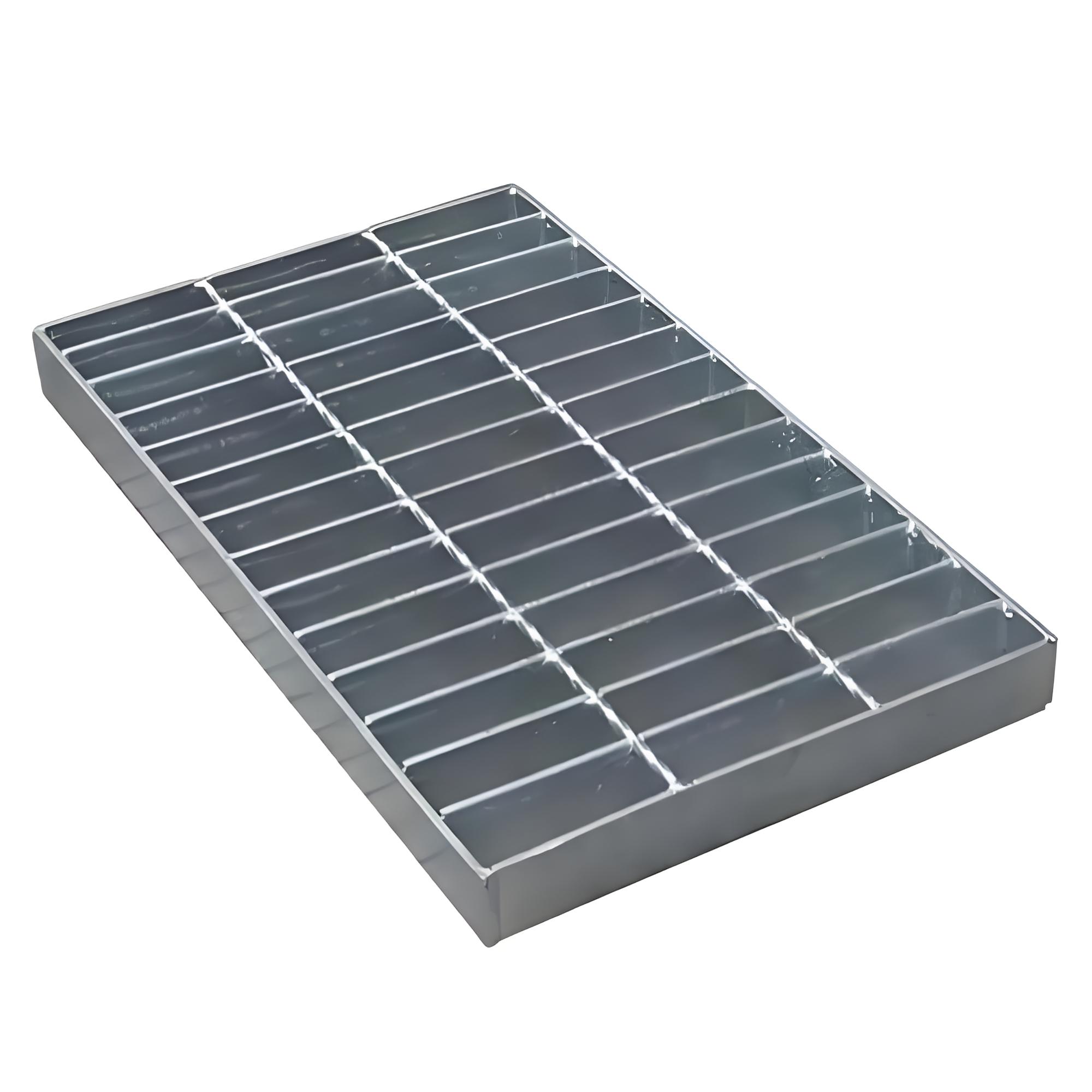
Platform step board is a heavy-duty structural panel designed for industrial working platforms, offshore rigs, power stations, steel mills, logistics mezzanines, and outdoor access platforms, providing a safe, non-slip, and high-strength walking surface for workers and equipment. Usually made of welded steel grating, press-locked grating, or serrated steel grating, it features excellent load capacity, drainage performance, and corrosion resistance, making it ideal for long-term use in harsh environments. Compared with ordinary floor plates, platform step board has a higher open area, lighter weight, and stronger anti-slip performance, and can be customized in material, size, surface treatment, and load grade according to project requirements. It is widely used in global industrial construction, petrochemical projects, municipal facilities, and marine engineering, complying with international safety and structural standards to ensure stable performance and personnel safety in high-intensity usage scenarios.
Platform step board refers to a modular floor component used on elevated industrial platforms, walkways, operating platforms, and maintenance platforms, serving as the main load-bearing surface for pedestrian traffic and light equipment. It is mainly composed of load-bearing flat bars, cross bars, and frame structures, connected by welding, press-locking, or plug-in processes to form a rigid and stable overall structure.
The core design of platform step board focuses on uniform stress distribution, high anti-slip performance, and effective drainage. Most models adopt an open grid design, allowing rainwater, oil, and debris to pass through quickly, avoiding surface accumulation that causes slipping hazards. The edge of the board is usually equipped with a frame or end plate to enhance structural rigidity and facilitate on-site splicing and installation.
Standard platform step board is manufactured from high-strength carbon steel and treated with hot-dip galvanizing for long-term rust prevention. For highly corrosive environments, 304 or 316L stainless steel is used to ensure service life. Each board is precisely sized to match platform modules, with options for smooth, serrated, or checkered surfaces to meet different anti-slip needs.
Welded steel platform step board is the most commonly used type, formed by resistance welding of bearing bars and twisted cross bars. It features high structural strength, stable performance, and cost efficiency, suitable for most industrial platforms, general walkways, and mezzanine floors. It supports medium to heavy loads and can be spliced in large areas for continuous platform laying.
Serrated platform step board is processed with serrated notches on the bearing surface, providing extremely high friction coefficients. It is specially designed for wet, oily, icy, and sloped platforms, such as offshore platforms, chemical workshops, refineries, and outdoor industrial walkways, effectively reducing the risk of slipping accidents.
Press-locked platform step board uses mechanical pressure to lock cross bars into bearing bars without welding. It has higher integrity, better vibration resistance, and a more uniform appearance, making it suitable for high-vibration environments such as power plants, compressor platforms, port machinery, and heavy industrial facilities.
Plug-in platform step board adopts an inserted interlocking structure, with high precision and good flatness. It is easy to install and replace, with uniform stress and strong durability, widely used in standardized industrial platforms and modular access systems.
Stainless steel platform step board is made of 304 or 316L stainless steel, with brushed or polished surface treatment. It has excellent corrosion resistance, hygiene, and easy cleaning, ideal for food processing plants, pharmaceutical workshops, marine decks, coastal facilities, and chemical environments.
Solid plate platform step board is made of thick checkered steel plate or perforated steel plate, providing a fully closed walking surface. It prevents small tools, parts, or debris from falling, suitable for precision workshops, maintenance platforms, and areas requiring high safety and cleanliness.
Oil and gas industry is one of the main application areas of platform step board. It is used on offshore drilling platforms, oil refineries, pumping stations, and pipeline support platforms. The high anti-slip and corrosion-resistant properties ensure safe operation in humid, oily, and salt-spray environments.
Power plants, including thermal power, hydropower, and wind power stations, use platform step board for equipment operation platforms, escalator walkways, maintenance passages, and generator sets. It withstands high temperature, dust, and long-term continuous use while maintaining structural stability.
Steel mills, smelting plants, and heavy manufacturing facilities apply platform step board in high-temperature, high-load, and heavy-traffic areas. The heavy-duty design resists deformation and impact, providing a safe working surface for workers and mobile equipment.
Municipal and transportation infrastructure uses platform step board in overpasses, railway stations, subway platforms, airport auxiliary facilities, and pedestrian walkways. It has strong weather resistance, can adapt to rain, snow, and freezing environments, and ensures public safety.
Food, beverage, and pharmaceutical industries use stainless steel platform step board for clean production areas, processing platforms, and inspection walkways. The hygienic surface is easy to clean and disinfect, complying with industry health standards and resisting corrosion from cleaning agents.
Logistics parks, warehouse mezzanines, and distribution centers use platform step board for elevated walkways, picking platforms, and storage passages. Its light weight and high strength reduce the load on building structures while supporting high-frequency pedestrian flow.
Marine, port, and coastal facilities rely on 316L stainless steel or heavy galvanized platform step board to resist saltwater corrosion. It is widely used on port docks, ship decks, terminal operating platforms, and coastal engineering facilities.
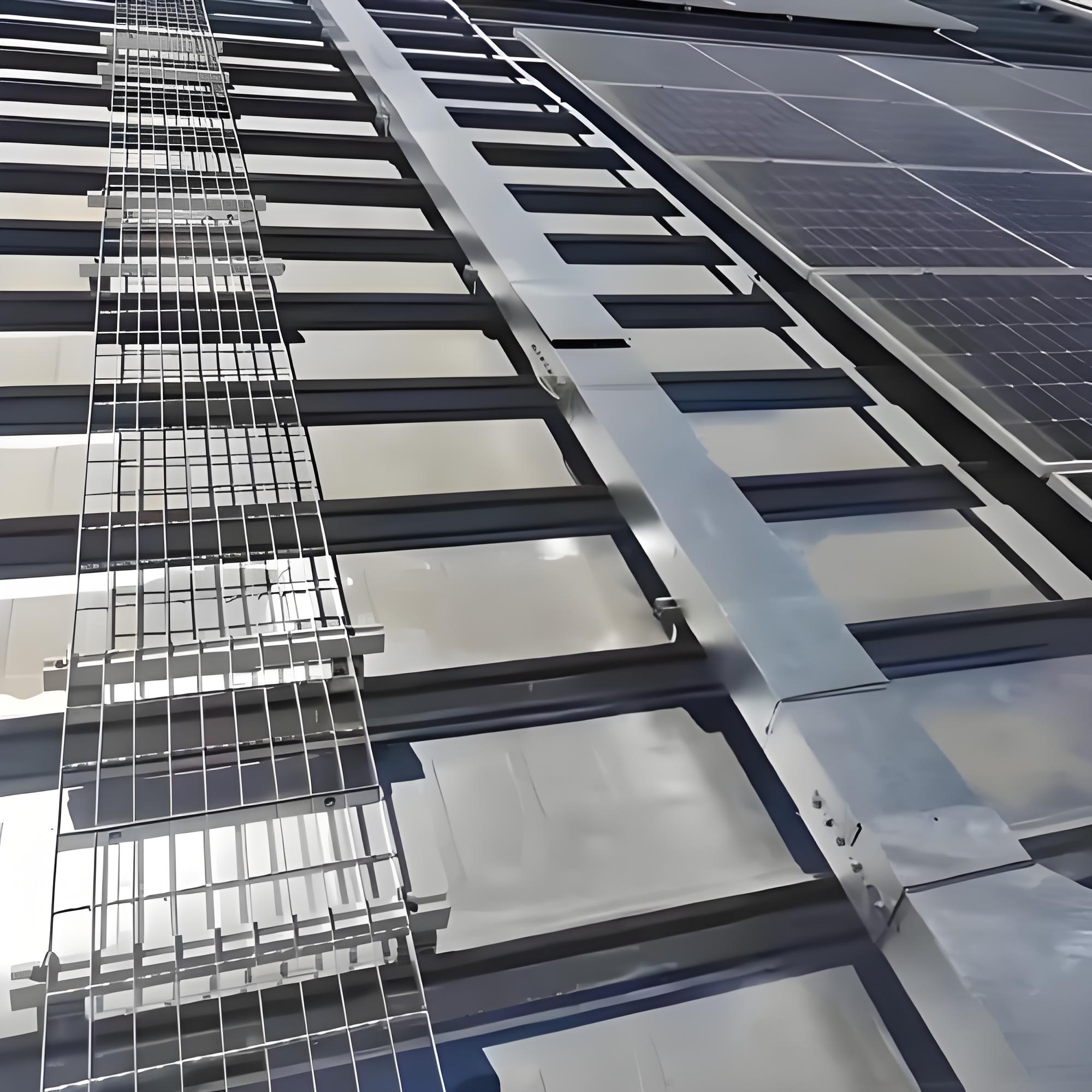
Excellent anti-slip performance ensures safe walking in harsh conditions. Serrated, checkered, or embossed surfaces provide high friction even in wet, oily, or icy environments, greatly reducing the risk of industrial accidents.
High load-bearing capacity and strong impact resistance enable platform step board to withstand long-term pedestrian flow, tool stacking, and light equipment passage without bending, cracking, or loosening.
Outstanding drainage and self-cleaning ability: the open grid structure allows water, mud, oil, and debris to pass directly through, keeping the surface dry and reducing maintenance frequency.
Long service life and low maintenance cost: hot-dip galvanized carbon steel models can be used for 15 to 30 years; stainless steel models last even longer. No regular painting or repair is required, saving long-term operation costs.
Light weight and easy installation: compared with concrete and cast iron floors, platform step board is lighter, easier to transport, and can be quickly spliced and fixed, shortening construction and renovation cycles.
Strong customization flexibility: various sizes, materials, surface treatments, and load grades are available to meet different environmental and structural needs.
Fire resistance and environmental friendliness: steel material is non-combustible and meets fire safety requirements. It is 100% recyclable, in line with green industrial construction standards.
Material selection: hot-dip galvanized carbon steel for general industrial and outdoor platforms; 304 stainless steel for humid and mildly corrosive environments; 316L stainless steel for coastal, marine, and chemical environments.
Surface type selection: serrated surface for high anti-slip requirements; smooth grating for general dry environments; solid plate for anti-falling and dust-proof needs.
Bearing bar specifications: common heights are 25mm, 30mm, 32mm, 40mm, 50mm, thickness from 3mm to 6mm. Higher and thicker bearing bars provide greater load capacity for heavy-duty platforms.
Standard dimensions: common panel sizes include 1000×1000mm, 1000×2000mm, 1200×2400mm. Custom sizes are available to match platform layout.
Load grade: light-duty for pedestrian-only platforms; medium-duty for industrial platforms with tools and equipment; heavy-duty for areas with forklift or vehicle passage.
Installation environment: coastal and chemical areas require stainless steel; cold areas need frost-resistant materials; food and pharma industries require hygienic stainless steel surfaces.
Raw material price is the main factor: stainless steel costs significantly more than galvanized carbon steel, and 316L is more expensive than 304. Fluctuations in global steel prices directly affect the reference price.
Product specifications: larger size, thicker bearing bars, and smaller spacing increase material consumption and processing costs, resulting in a higher reference price.
Surface treatment: hot-dip galvanizing is more durable and costly than electro-galvanizing; polished and passivated stainless steel has higher processing costs.
Production technology: press-locked and serrated types are more expensive than standard welded models; custom-shaped and heavy-duty boards have higher processing costs.
Order quantity: bulk orders reduce unit production cost and offer more favorable reference prices; small-batch customized products have relatively higher unit prices.
Transportation, packaging, and export requirements also affect the final reference price, especially for international orders.
All prices are for reference only; specific quotations depend on material, size, quantity, and current market conditions.
Anping County Chuansen Silk Screen Products Co., Ltd. is a professional manufacturer and supplier of platform step board, with many years of production experience and a full set of automated production lines. Located in Anping, China’s wire mesh industrial base, the company has mature technology in steel grating, serrated board, stainless steel board, and heavy-duty platform panels.
The company uses high-quality carbon steel, 304, and 316L stainless steel to produce platform step board, with strict quality control from raw material to finished product. Surface treatments include hot-dip galvanizing, polishing, passivation, and anti-slip processing, meeting international industrial standards.
Customized production is available according to customer drawings, platform size, load requirements, and environmental conditions. The professional technical team provides selection suggestions, structural design, and installation guidance to ensure product suitability and safety.
Each platform step board undergoes welding inspection, dimension verification, load test, and surface quality inspection to ensure stable performance and long service life. Products are exported to Europe, North America, Southeast Asia, the Middle East, and Oceania, trusted by engineering contractors and industrial clients.
With competitive pricing, stable delivery, and comprehensive after-sales service, Anping County Chuansen Silk Screen Products Co., Ltd. has become a reliable long-term partner for global platform engineering projects.
What is the difference between platform step board and ordinary stair tread?
Platform step board is designed for large-area continuous laying on flat elevated platforms, focusing on overall flatness, load capacity, and splicing performance. Stair tread is specially used for sloped stairs, with a narrower structure and enhanced front nosing for anti-slip. Platform step board is usually larger in size and suitable for flat walking areas, while stair tread is made for stepped walking surfaces.
What material of platform step board is best for offshore platforms?
Offshore platforms have strong salt spray and severe corrosion, so 316L stainless steel platform step board is the most suitable choice. It has excellent chloride corrosion resistance and can maintain long-term use without rust. If budget is limited, heavy hot-dip galvanized carbon steel can be used, but its service life will be shorter than 316L stainless steel in marine environments.
Can platform step board be used for forklift passage?
Yes, heavy-duty platform step board can support forklift and light vehicle passage when correctly specified. It should adopt thick bearing bars (no less than 40×5mm), small spacing (30mm), press-locked or reinforced welded structure, and meet EN 124 load Class D400 or higher. It is necessary to confirm load parameters with the manufacturer to ensure safety and stability.
Please Feel free to give your inquiry in the form below.we will reply you in 24 hours.