
Home > Products > Step Board > Stair tread
Stair tread is a key load-bearing component used on industrial stairs, external stairs, walkways, and platform access systems, designed to provide saf…
Stair tread is a key load-bearing component used on industrial stairs, external stairs, walkways, and platform access systems, designed to provide safe, non-slip walking surfaces while maintaining high strength and long service life. Unlike ordinary indoor treads, industrial-grade steel stair tread is mainly made of welded steel grating, press-locked grating, or solid steel plate with anti-slip treatment, and is widely used in factories, power plants, petrochemical sites, municipal engineering, ships, and commercial buildings. It has excellent drainage, anti-slip performance, and load-bearing capacity, and can be customized in size, material, and surface treatment according to on-site environment and traffic conditions. With strict compliance with international safety standards, stair tread has become a necessary safety component for high-traffic and harsh environment stairs.
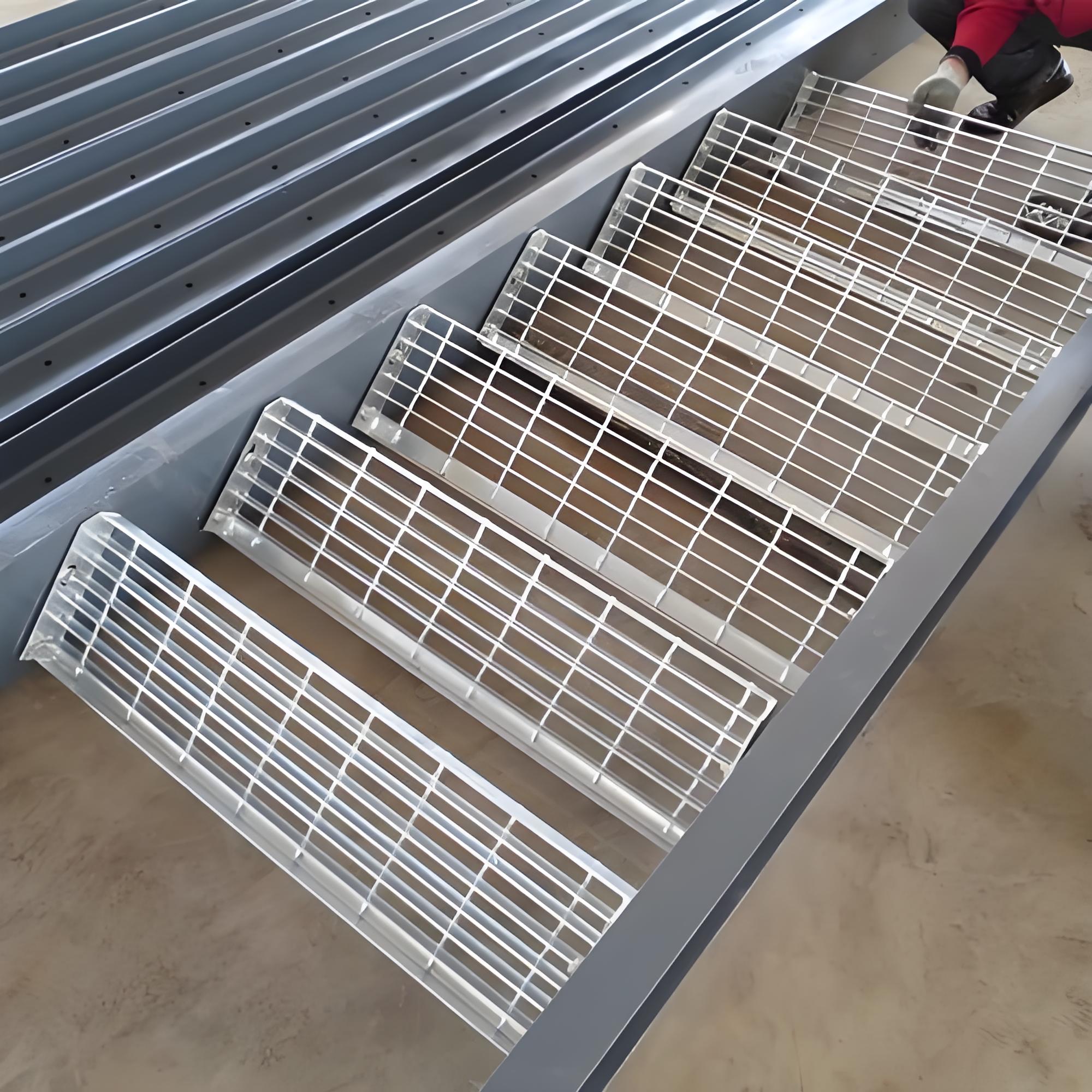
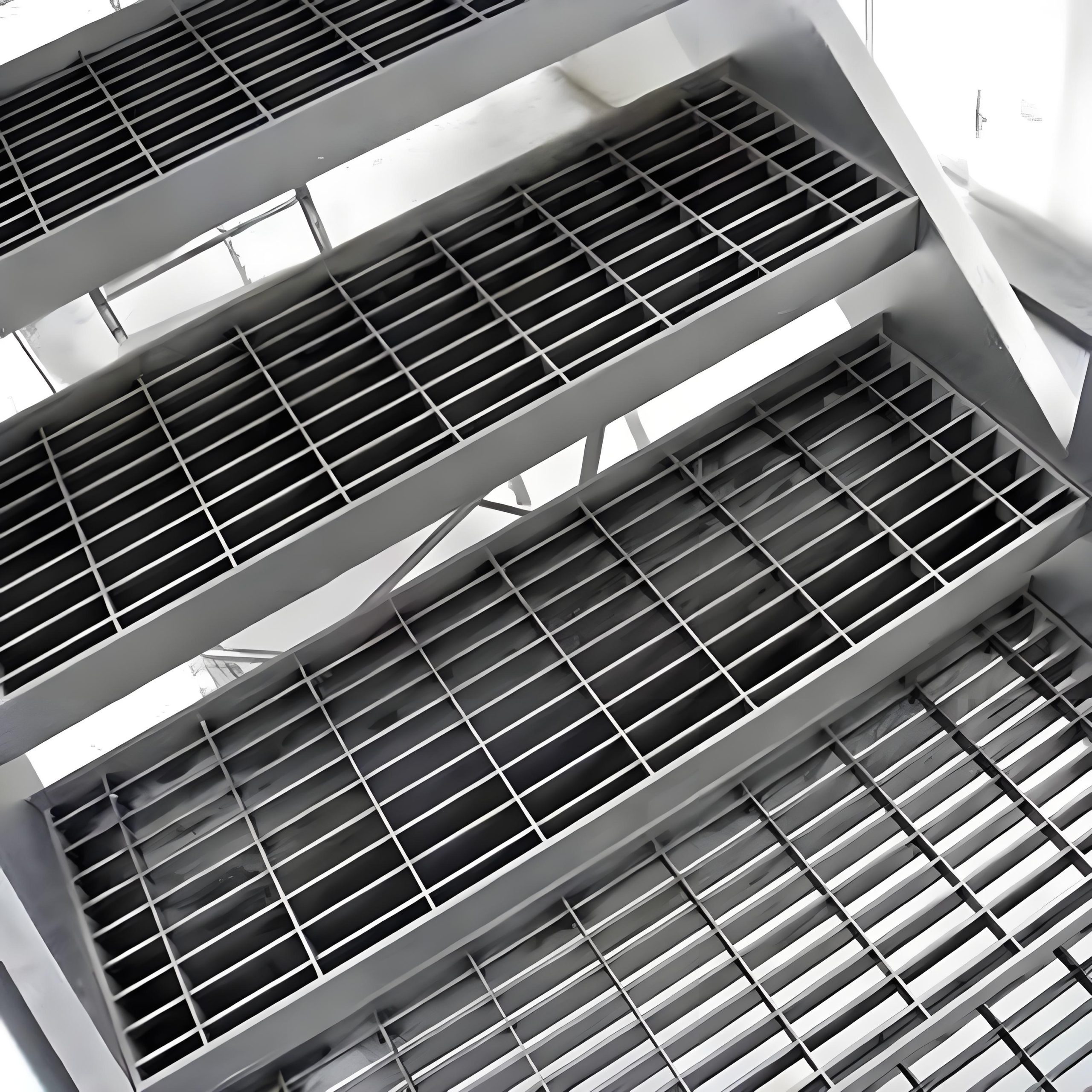
Stair tread refers to the horizontal stepping part of a staircase, usually matched with stair stringers and risers to form a complete passage. Industrial steel stair tread is mainly composed of bearing bars, cross bars, end plates, and anti-slip nosings, forming a stable overall structure through welding, plug-in, or press-locking technology. Its core design focuses on anti-slip performance, load capacity, and durability to ensure safe passage even in oily, wet, dusty, or outdoor weather conditions.
The standard structure includes a front nosing to strengthen the edge and improve friction, end plates on both sides for fixed installation, and a uniform grid or solid plate surface. Most stair tread is designed with an open grid structure, which can quickly drain water and remove snow and debris, avoiding the formation of slippery surfaces. Solid plate stair tread is more used in environments that require sealing or dust prevention, with holes or slots to ensure basic drainage.
During production, each stair tread is sized according to the actual step width, depth, and installation method, with pre-drilled holes or welded mounting plates to facilitate on-site installation. Carbon steel products are usually treated with hot-dip galvanizing for long-term rust prevention, while stainless steel products rely on their own corrosion resistance to adapt to high-humidity and chemical environments.
Welded steel grating stair tread is the most commonly used type, formed by resistance welding of bearing bars and twisted cross bars. It has high strength, good rigidity, and moderate cost, suitable for most industrial and municipal stairs. It can be equipped with serrated surface to enhance anti-slip effect, and is widely used in ordinary production areas, outdoor public stairs, and fire passages.
Serrated stair tread is specially designed with serrated notches on the bearing bars, which greatly improves the friction coefficient. It is very suitable for places with oil, water, or snow, such as oil refineries, marine platforms, food workshops, and outdoor steps. The anti-slip effect is stable and long-lasting, and will not fail due to wear.
Press-locked stair tread uses mechanical pressure to lock cross bars into bearing bars without welding. It has higher integrity, stronger resistance to vibration and torsion, and is suitable for heavy-duty and high-vibration environments such as power plants, steel mills, and port machinery stairs.
Solid plate stair tread is made of thick steel plate with checkered plate, punched holes, or anti-slip spraying. It has a closed surface, which can prevent small tools or debris from falling. It is commonly used in narrow stairs, indoor maintenance passages, and areas requiring high cleanliness.
Stainless steel stair tread is made of 304 or 316L stainless steel, with brushed or polished surface. It has excellent corrosion resistance and hygienic performance, and is widely used in food factories, pharmaceutical workshops, coastal facilities, ships, and high-end architectural stairs.
Aluminum alloy stair tread is light in weight and easy to install, with natural anti-rust ability. It is often used in rooftop stairs, temporary access platforms, and places where weight control is required, with good overall performance.
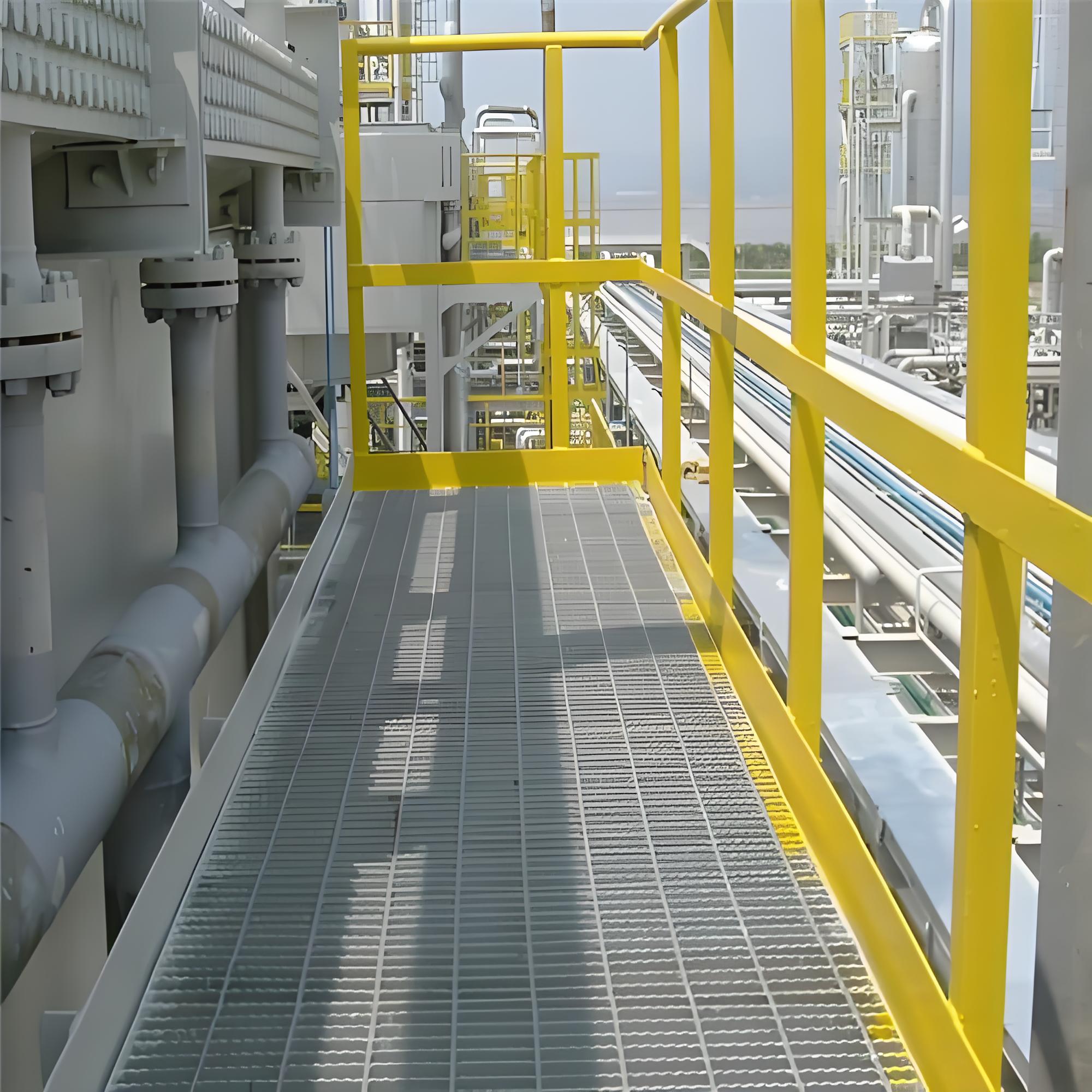
In the industrial field, stair tread is widely used in oil and gas platforms, chemical plants, power stations, mines, and manufacturing workshops. These places have heavy traffic, humid or corrosive media, and require high anti-slip and load-bearing performance. Steel stair tread can maintain stability for a long time and reduce the risk of slipping and falling.
Municipal and public buildings use stair tread in overpasses, subway stations, railway stations, stadiums, and fire escape stairs. It has strong weather resistance, can withstand wind, rain, and freezing environment, and ensures public safety in all weather conditions.
Marine and port applications include ship decks, dock stairs, offshore platforms, and coastal facilities. 316L stainless steel stair tread is the best choice here, which can resist salt spray and seawater corrosion without rusting or deformation for a long time.
Food, beverage, and pharmaceutical industries use stainless steel stair tread because of its smooth surface, easy cleaning, and resistance to detergent corrosion. It meets hygiene standards and does not hide dirt or bacteria, complying with industry regulatory requirements.
Commercial and residential buildings use stair tread in outdoor stairs, basement entrances, parking lot stairs, and emergency passages. It is durable, beautiful, and maintenance-free, providing safe passage for residents and users for a long time.
Logistics and storage centers use heavy-duty stair tread to adapt to high-frequency pedestrian flow and occasional small equipment passing. The structure is firm and not easy to deform, ensuring long-term stable use.
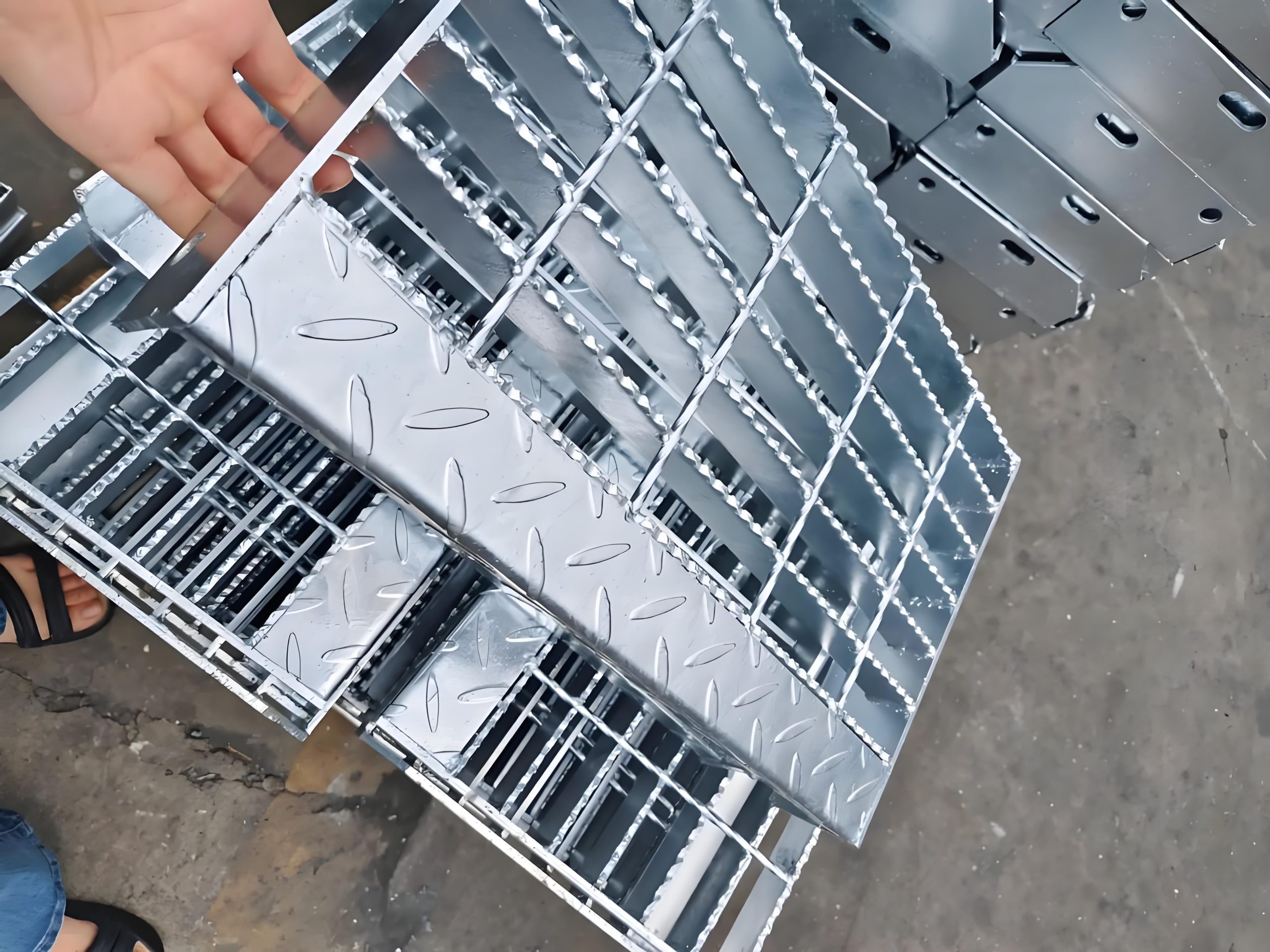
Excellent anti-slip performance is the biggest advantage of stair tread. Serrated surface, checkered plate, and raised nosing can provide high friction in wet, oily, and icy environments, greatly reducing the probability of slipping accidents.
Strong load-bearing capacity and good impact resistance enable stair tread to withstand long-term pedestrian flow and occasional heavy object extrusion without bending, cracking, or loosening. It fully meets industrial and public safety load standards.
Good drainage and self-cleaning performance: the open grating design allows water, mud, and debris to pass directly through the gap, avoiding water accumulation and keeping the tread surface dry and safe at all times.
Long service life and low maintenance cost: hot-dip galvanized carbon steel stair tread can be used for 15 to 30 years, and stainless steel products can last longer. Almost no daily maintenance is required, saving a lot of maintenance and replacement costs.
Light weight and easy installation: compared with concrete and cast iron structures, steel stair tread is lighter, easy to transport and locate, and can be quickly installed by bolting or welding, shortening construction period.
Strong customization ability: various specifications of width, depth, material, surface treatment, and installation form can be customized according to on-site needs, suitable for all kinds of straight stairs, turning stairs, and spiral stairs.
Fireproof and environmentally friendly: steel material is non-combustible, which is conducive to fire safety. At the same time, it can be 100% recycled, in line with green building and sustainable development requirements.
Material selection is the first step: carbon steel with hot-dip galvanizing is suitable for general industrial and outdoor environment; 304 stainless steel is used for humid and mildly corrosive places; 316L stainless steel is specially used for coastal, marine, and chemical environments.
Surface type selection: serrated surface is preferred for anti-slip requirements; smooth grating is used for ordinary environment; solid plate is used for closed and dust-proof requirements; checkered plate is used for places needing extra high friction.
Bearing bar specification determines load capacity: common heights are 25mm, 30mm, 32mm, 40mm, 50mm, thickness from 3mm to 6mm. Heavier traffic needs larger bearing bars to ensure safety.
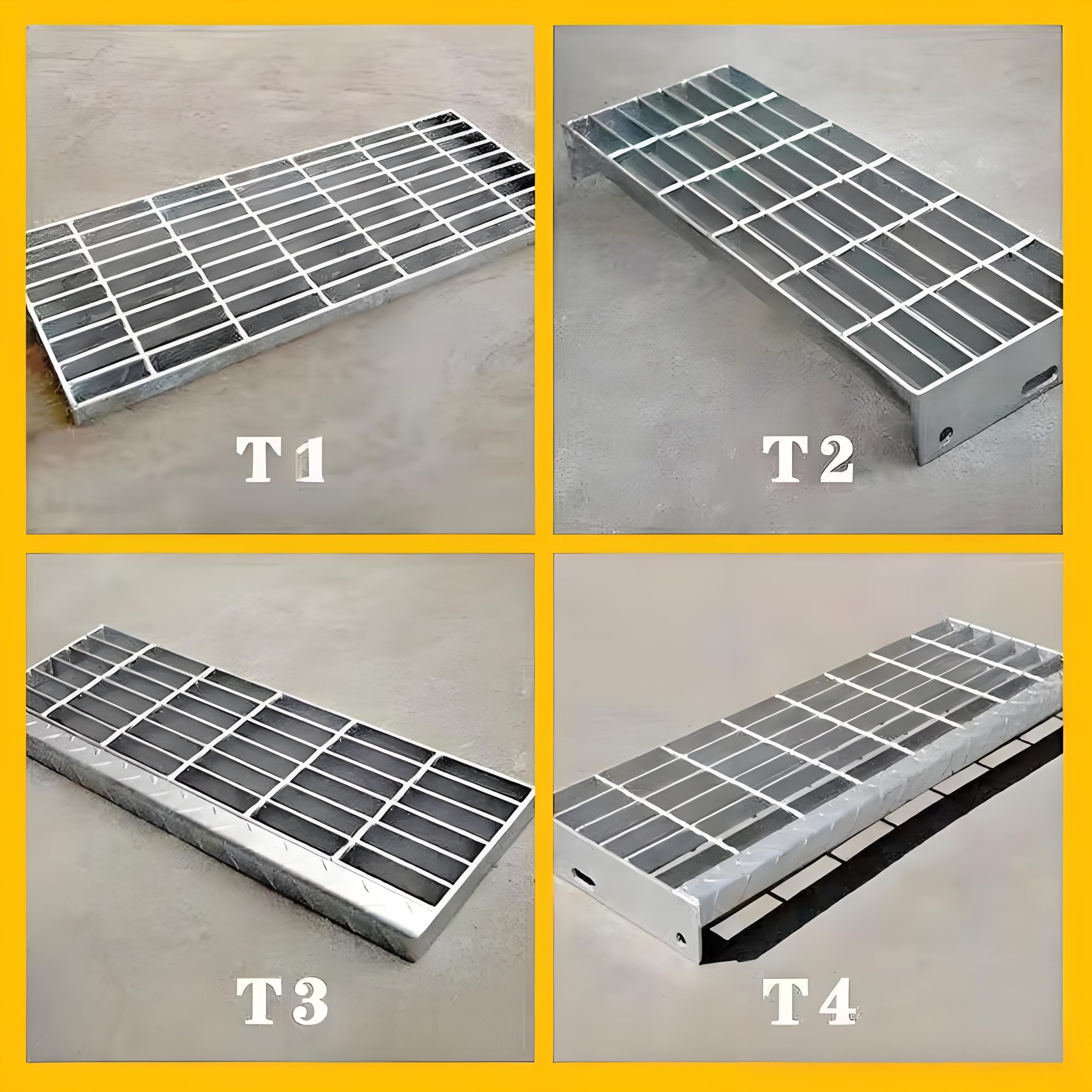
Standard size: conventional tread depth is 200mm to 300mm, width matches the stair width. Installation types include T1, T2, T3, T4, which are used for bolt fixing or direct welding respectively.
Load grade selection: light-duty for pedestrian-only stairs; medium-duty for industrial areas with occasional equipment; heavy-duty for ports, airports, and areas with vehicle crossing.
Environment adaptability: coastal and chemical areas must use stainless steel or heavy galvanizing; cold areas need materials resistant to freezing and thawing; food workshops need easy-cleaning stainless steel.
Raw material price is the core factor: stainless steel is much more expensive than galvanized carbon steel, and 316L is more expensive than 304. Steel market price fluctuation directly affects the overall reference price.
Specification and size: larger width, thicker bearing bars, and smaller spacing will increase material consumption and processing cost, resulting in higher reference price.
Surface treatment: hot-dip galvanizing is more durable but more costly than electro-galvanizing; polished and passivated stainless steel has higher processing cost than ordinary brushed surface.
Type and processing technology: press-locked and serrated stair tread is more expensive than ordinary welded type; solid plate and custom-shaped tread have higher processing cost.
Order quantity: large batch orders can reduce unit production cost and get a more favorable reference price; small batch and customized products have relatively higher unit price.
Transportation, packaging, and export requirements will also affect the final reference price, especially for cross-border orders.
All prices are for reference only, and the specific quotation depends on material, size, quantity, and market conditions at the time of ordering.
Anping County Chuansen Silk Screen Products Co., Ltd. is a professional manufacturer and supplier of stair tread, with many years of production experience and complete production equipment. The company is located in Anping, China’s wire mesh industry base, with mature technology in steel grating, serrated tread, stainless steel tread, and solid plate tread.
The company produces stair tread using high-quality carbon steel, 304, and 316L stainless steel, with hot-dip galvanizing, polishing, and passivation surface treatments. Products comply with international standards, with stable load-bearing performance, reliable anti-slip effect, and precise dimensions.
It can provide customized production according to customer drawings and on-site requirements, including size, load grade, surface type, installation form, and color. The technical team can provide selection suggestions and installation guidance to help customers choose the most suitable products.
Strict quality inspection is carried out throughout the production process to ensure that each stair tread has qualified welding, stable structure, and accurate size. The company has long-term supply experience for domestic and foreign customers, and its products are exported to Europe, North America, Southeast Asia, the Middle East, and other regions.
With competitive price, stable delivery cycle, and perfect after-sales service, Anping County Chuansen Silk Screen Products Co., Ltd. has become a trusted partner for many engineering contractors and industrial users.
What is the difference between serrated stair tread and ordinary stair tread?
Serrated stair tread is processed with serrated notches on the bearing bars, which has higher friction and stronger anti-slip ability, especially suitable for wet, oily, snowy, and outdoor environments. Ordinary stair tread has a smooth surface, lower cost, and is suitable for dry indoor and general pedestrian occasions. Both have similar load-bearing capacity, but serrated type is safer in harsh environments.
What material of stair tread is suitable for coastal areas?
Coastal areas have high salt spray and strong corrosion, so 316L stainless steel stair tread is the most suitable choice. It has excellent chloride corrosion resistance and can maintain long-term use without rust. If the budget is limited, heavy hot-dip galvanized carbon steel can also be used, but its service life will be shorter than that of 316L stainless steel.
Can stair tread be customized for special-sized stairs?
Yes, stair tread can be fully customized according to stair width, tread depth, installation space, and load requirements. Manufacturers can produce non-standard width, depth, bearing bar spacing, and installation fixing methods. Customers only need to provide size parameters or on-site drawings, and customized products can accurately match various straight, turning, and spiral stairs.
Please Feel free to give your inquiry in the form below.we will reply you in 24 hours.