

Custom carbon steel bar grating is rarely just a “special order” for the sake of it. In real projects, customization is often the normal way to buy the product, because standard panels do not always fit actual site conditions. A drainage trench may need cut corners, a platform may need openings around pipes, a stair tread may need nosing and side plates, and a machine access area may require a different load rating from the rest of the floor. That is why buyers looking for carbon steel bar grating suppliers usually care less about generic catalog pages and more about one practical issue: can the supplier produce the exact sizes, spacing, fabrication details, and surface treatment the project really needs. When custom work is involved, supplier capability matters just as much as material specification.
Standard grating panels are useful as a production base, but many projects do not use them in their original form. Customization becomes necessary when the required panel size is non-standard, when the load condition is different from normal pedestrian use, or when the panel shape has to match field obstacles. In other words, custom grating is usually driven by fit, function, or load.
Non-standard size is one of the most common reasons. A project may need 860 mm by 1230 mm panels instead of full-width stock panels. It may also need multiple different panel sizes to fit a platform layout, trench network, or access area. If the grating is supplied only in standard raw sheet dimensions, the installer will have to cut it on site, which often creates wasted material, damaged galvanizing, inconsistent edge quality, and extra labor cost.
Special load requirement is another major reason for customization. Not every area in a plant or building carries the same load. A normal walkway may be fine with a lighter grating, but a maintenance zone with wheeled carts, machine servicing, or dense worker traffic may need stronger bearing bars, tighter spacing, or shorter support spans. In these cases, standard light-duty grating can be the wrong product even if it is cheaper.
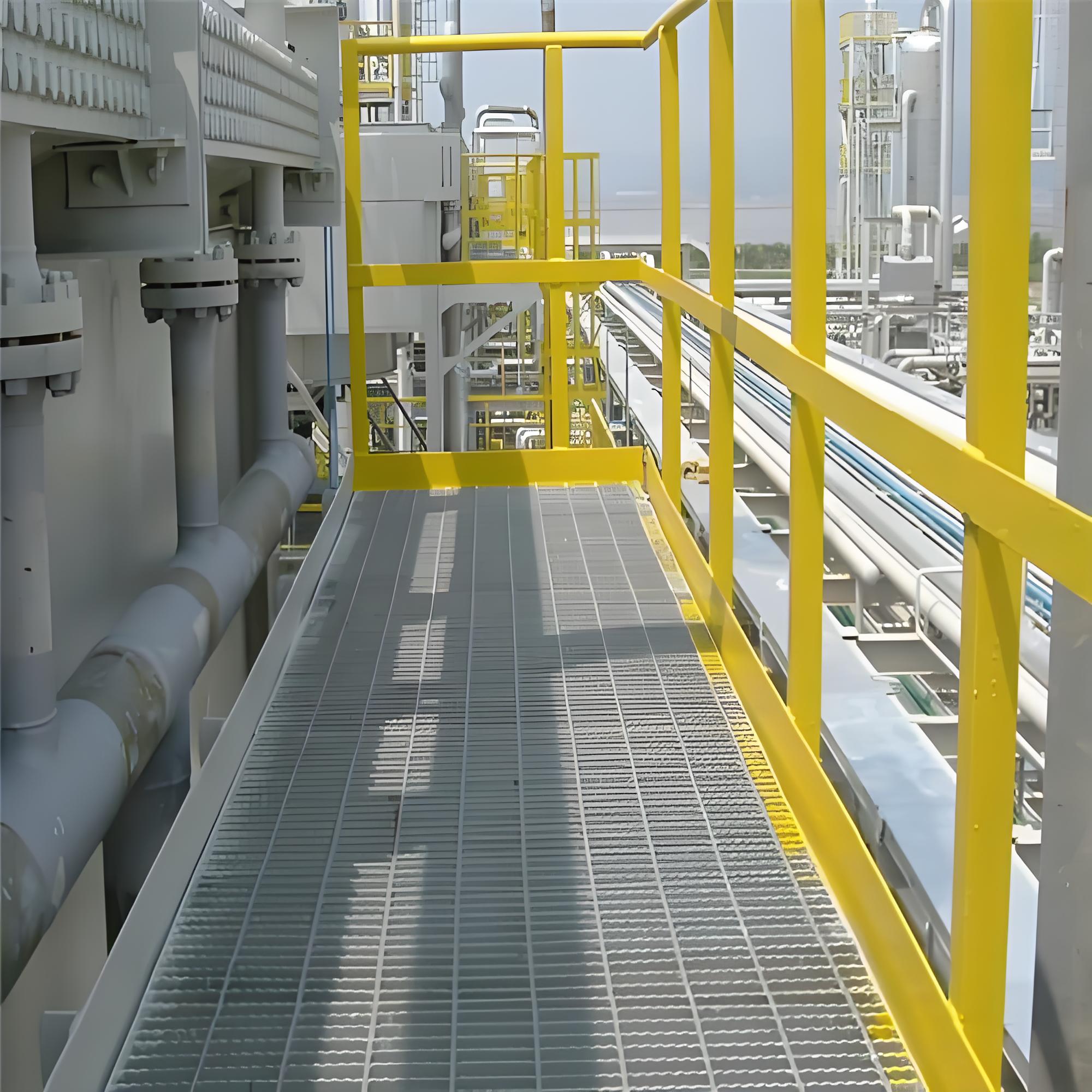
Irregular shape also makes customization necessary. A lot of grating is installed around columns, tanks, curved walls, support beams, pumps, and pipe penetrations. That means buyers often need notches, circular cutouts, fan-shaped segments, trapezoid panels, or edge trimming at specific angles. These are not unusual requests. They are very common in industrial fabrication.
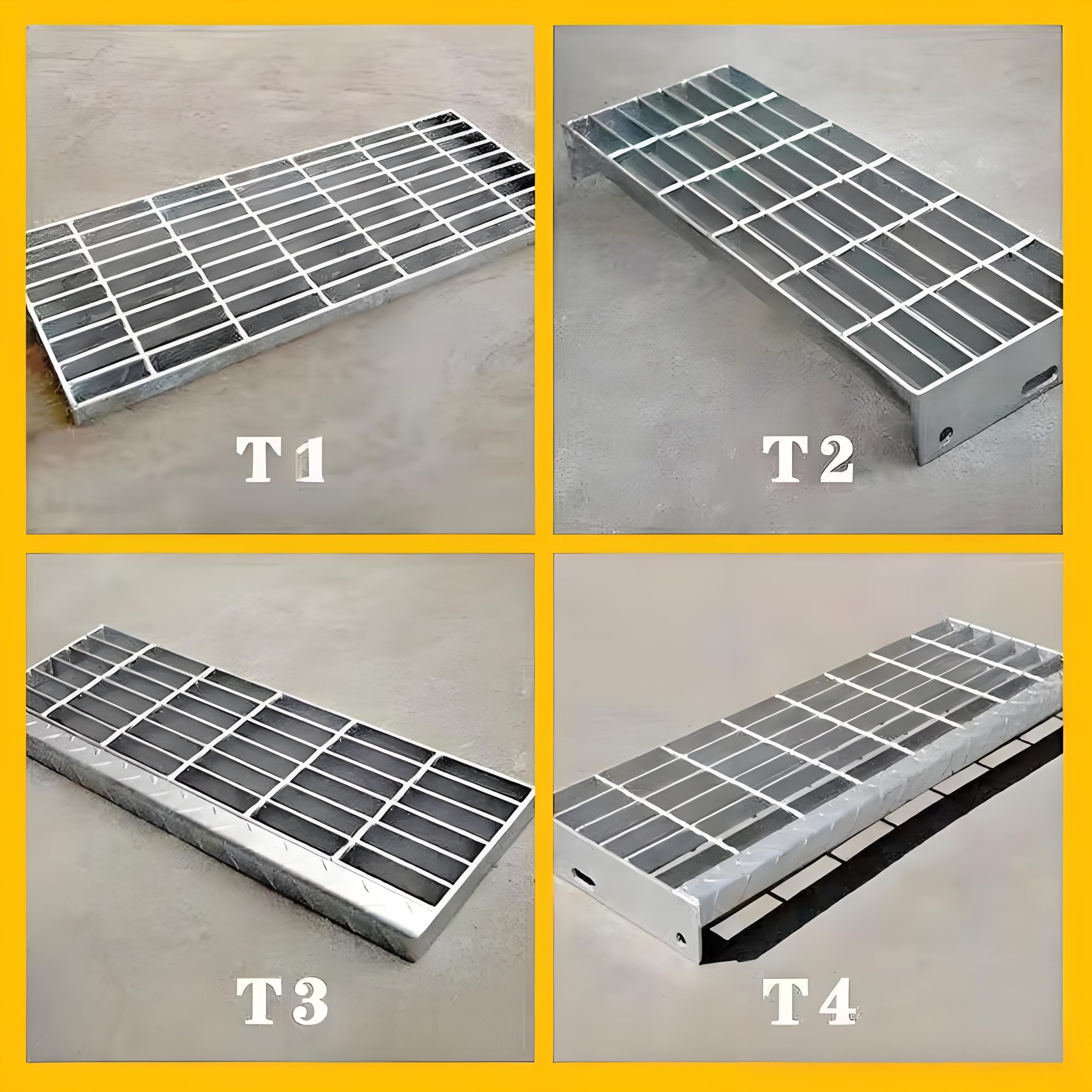
Typical custom application scenarios include stair treads with side plates and nosing, machine guards or fenced access flooring, trench and drainage channel covers, removable service hatches, and curved or segmented platform sections. A circular platform around a storage tank, for example, may require fan-shaped grating panels with precise radial dimensions. A wastewater trench may need lockable removable covers with frame compatibility. A machine service area may need panels with pipe openings and bolted fixing points already prepared in the factory.
So when a buyer says “custom grating,” it usually does not mean something exotic. It often means the project is real, site-based, and cannot be solved well by ordering plain stock sheets alone.
Not every grating supplier handles custom work at the same level. Some companies mainly resell standard panels and outsource fabrication later. Others have in-house equipment and can manage the process from raw material to finished panel. For buyers, this difference matters because it affects lead time, dimensional accuracy, communication, and problem-solving when drawings become more complicated.
The first thing to check is whether the supplier has its own processing equipment. For custom carbon steel bar grating, the important capabilities usually include cutting, welding, edge banding, punching, drilling, and forming. If a supplier can only supply plain panels and cannot handle precision cutting or welding details internally, the chance of delay or quality inconsistency becomes higher. In-house fabrication usually means better control over size tolerance and finishing sequence.
Minimum order quantity, or MOQ, is another practical point. Some suppliers accept very small custom batches, while others mainly focus on container-scale orders. For a project with only a few specially shaped covers or a short run of custom stair treads, MOQ can become a real issue. Buyers should ask early whether the supplier is willing to produce small quantities and how that affects the unit price.
For truly non-standard products, mold or tooling capability can matter as well. If the required spacing is unusual, or if the project needs a special serration pattern or unique locking detail, the supplier may need to modify fixtures or develop custom tooling. In some cases, that cost is small and absorbed into the order. In other cases, there is a separate mold or setup fee. That should be clarified before quoting is finalized.
Lead time is another key indicator of real capability. Standard customization, such as cutting normal welded grating panels to size and adding edge banding, usually has a manageable production cycle. Complex customization, such as curved layouts, irregular openings, heavy-duty panels, or special accessories, takes longer. A supplier that gives the same delivery promise for every kind of order may not be giving a realistic answer. Buyers should ask for separate timing on panel production, fabrication, surface treatment, inspection, and packing.
If you are comparing suppliers, the best approach is to look at whether they can explain the process clearly. A capable manufacturer such as Anping County Chuansen Silk Screen Products Co., Ltd. should be able to discuss raw panel production, custom cutting, hole positioning, edge treatment, and finishing order in practical terms rather than only offering a basic price list.
One of the biggest advantages of carbon steel bar grating is that the dimensional parameters are highly adjustable. The first major variable is the bearing bar specification. Common bearing bar heights range from 25 mm to 100 mm, and thickness commonly ranges from 3 mm to 6 mm. But within that range, buyers can request non-standard combinations if the load demand or fabrication layout makes it necessary. A 32×5 mm bar, a 40×3 mm bar, and a 50×5 mm bar may all suit different project needs even if they belong to the same product family.
Bearing bar center spacing is another important custom parameter. Common pitches include 12.5 mm, 15 mm, 20 mm, 30 mm, and 40 mm, but these are not the only possible options. If a project needs better small-item retention, heel safety, or a particular drainage pattern, the supplier may be able to provide custom spacing. However, buyers should understand that unusual spacing may affect production setup and cost.
Cross bar spacing is usually 50 mm or 100 mm, but it can also be adjusted when the design requires different rigidity, appearance, or open-area characteristics. A 50 mm cross bar pitch gives a tighter grid and often a more solid panel feel, while 100 mm keeps the panel more open and economical. In certain custom layouts, non-standard cross bar spacing may also be possible depending on the manufacturing method.
Single panel size is often the most obvious custom factor. Length and width can usually be cut to project dimensions, including mixed-size orders where every panel is different. This is common in industrial platforms, trench covers, and renovation work. The key is to define whether the stated dimension is overall finished size, support-to-support clear size, or nominal panel size before edging and fitting details are added.
Shape customization is also very common. Suppliers may produce round panels, fan-shaped sections, trapezoid panels, panels with notches, or panels with circular or rectangular openings. Openings can be made for pipes, cable runs, support posts, or drainage structures. The more complex the shape, the more important drawing clarity becomes, because even a small error in orientation or dimension can make a finished panel unusable on site.
From a buyer’s point of view, “custom size” should not be treated as just length and width. It includes bar size, spacing, support direction, trimming logic, and shape details. All of those dimensions affect both usability and price.
Beyond basic dimensions, carbon steel bar grating can also be customized in specification details that affect performance, safety, and appearance. One common option is serrated bearing bars. Serration can be provided on one side or both sides depending on the product design and application. The tooth height and tooth pitch may also be adjusted. This matters in slippery environments where anti-slip performance is more important than a plain walking surface.
Another choice is I-bar versus plain flat bar. I-bar grating uses a shaped bearing bar that reduces weight while keeping a good strength-to-weight ratio. It can be useful when lowering dead load is important, such as on suspended structures or where easier manual handling is desired. Plain flat bar grating is more traditional, generally more robust in feel, and widely used in standard industrial applications. The choice between the two should be based on load, appearance, and budget rather than habit alone.
Cross bar type can also vary. Twisted square bar is a very common option in welded grating because it gives a familiar appearance and practical structural connection. In some custom products, rectangular bars or even structural bar variations may be used. The cross bar type can affect both the final look and the fabrication method, especially in architectural or heavier-duty applications.
Grid type is another important specification layer. Welded grating is often the most economical and common type for industrial use. Press-locked grating gives a cleaner visual line and is often chosen when appearance matters more. Heavy-duty grating uses larger and thicker bearing bars and is intended for higher loads, vehicle traffic, or severe industrial use. If the buyer does not clearly state the required grid type, the quote may be based on a more basic product than the project actually needs.
These specification choices are not cosmetic details. They influence slip resistance, panel weight, open area, drainage behavior, fabrication complexity, and load performance. That is why a custom order should define not only size, but also the actual grating structure.
Custom grating work often continues well beyond cutting the panel to size. Edge treatment is one of the most common processing requirements. Buyers may ask for banding bars, end plates, or closure plates depending on where the panel will be installed and how much edge protection is needed. Proper edge finishing improves panel rigidity, protects cut ends, and gives a cleaner installed look.
Pre-installed connection details are another frequent request. These can include welded lugs, reserved bolt holes, clip slots, side plates, or support tabs. Adding these features in the factory is usually much better than modifying the grating at the job site. It saves installation time and reduces the risk of damaging the panel finish later.
Surface treatment can also be customized. Hot-dip galvanizing thickness may be specified according to project standards or service environment. Some buyers need thicker zinc protection for outdoor or corrosive use. Others may request special color painting after fabrication for area identification, visual control, or project appearance. Anti-slip coatings may also be added in certain applications, though buyers should check whether those coatings suit the actual wear and cleaning conditions.
Special functional details are common in drainage and access-cover projects. Hinged panels allow the grating to be flipped open for cleaning or maintenance. Locking devices can prevent theft or unauthorized opening. Embedded frames are often supplied together with the grating when the cover must fit into a concrete or steel support channel precisely. These added functions increase fabrication complexity but can solve very practical site problems.
The more processing steps a panel includes, the more important manufacturing sequence becomes. For example, cutting, welding, hole making, and galvanizing need to be arranged in the correct order to protect the finished quality. A buyer comparing quotations should always check whether the supplier is pricing a raw panel, a cut panel, or a fully fabricated finished product.
The first step in custom grating procurement is to provide drawings or field dimensions. CAD files are ideal, but many projects start with PDF markups or even hand-marked sketches if the geometry is simple. What matters is clarity. The supplier needs to know finished size, bearing bar direction, support points, cutouts, and any accessories required. If the site dimensions are uncertain, it is better to verify before production than to guess and correct later.
The second step is that the supplier prepares shop drawings and, where needed, a load calculation sheet. The shop drawing should show panel dimensions, bar direction, openings, edge treatment, and fixing details. For load-sensitive applications such as platforms, traffic channels, or public access covers, the load calculation is just as important as the drawing. It confirms whether the chosen bar size and spacing actually meet the project demand.
The third step is confirming material, specification, and surface treatment. This means more than simply saying “carbon steel grating.” The order should confirm bearing bar size, spacing, cross bar spacing, grating type, finish, and any required standard. If galvanizing is needed, buyers should also confirm whether zinc thickness or galvanizing standard is part of the requirement.
The fourth step is sampling when the customization is complex. For straightforward cut panels, a sample may not be necessary. But for unusual shapes, repeated special accessories, or high-risk fit-up situations, making one sample panel first can save a lot of time and cost later. This is especially helpful when the buyer is coordinating a large number of similar but non-standard units.
The fifth step is batch production and quality inspection. At this stage, the supplier should check size accuracy, weld quality, edge finishing, hole positions, and surface treatment condition. If the order includes mixed panel sizes, marking and identification also become important so that panels can be installed correctly at the site.
The sixth step is packing and shipment. Depending on the product and transport route, grating may be packed loose, on pallets, or in steel frames. Loose packing may reduce packing cost, but pallets or steel frames usually provide better protection and easier handling. Buyers should select packing based on transport distance, unloading conditions, and whether the panels include delicate custom accessories such as hinges or locks.
Many delays in custom grating orders come from incomplete inquiry information. A buyer may ask for “custom galvanized grating” without specifying the actual use, support span, or bar direction. That usually leads to back-and-forth communication and a quotation that has to be revised later. The more complete the inquiry, the more accurate the first quote will be.
The first piece of essential information is the use scenario and load requirement. Is the grating for a walkway, platform, drainage trench, machine pit, or stair tread? Will it carry only people, or also carts and equipment? Is the environment indoor, outdoor, wet, chemical, or coastal? These answers affect bar size, spacing, and finish.
The second required item is panel-by-panel size and quantity. For custom work, total square meters alone are not enough. The supplier needs to know the length, width, and number of each panel size. If every panel is different, provide a panel list or numbered drawing schedule. That makes both production and installation easier to manage.
The third item is bearing bar specification, spacing, and direction. Many buyers forget to indicate bar direction, but it matters because bearing bars must span the support correctly. If the orientation is wrong, the panel may not carry the load as intended even if the dimensions are correct. This is one of the most important details in any grating order.
The fourth item is the required surface treatment. State clearly whether the product should be black steel, electro-galvanized, hot-dip galvanized, or painted. If the environment is corrosive, add any zinc thickness or coating performance requirement if known. If color matters, specify it early instead of after the quote is issued.
The fifth item is whether the panel includes cutouts, holes, notches, curved edges, or any irregular shape. This is where simple sketches can still be useful. Even a hand-marked drawing can help the supplier understand the request, as long as dimensions are readable and reference points are clear.
For drawing format, CAD is usually the best because it reduces interpretation errors and speeds up shop drawing preparation. PDF is also common and workable. Hand-drawn marked sketches can work for simple pieces, especially in early inquiry stages, but they should still include actual dimensions, bar direction, and notes about openings or accessories.
Custom grating cost is not driven by one factor alone. The first and most obvious factor is whether the bearing bar size is standard or non-standard. If the project requires an uncommon bar combination, production may involve special sourcing or non-routine rolling and processing, which raises the cost. Standard bar sizes are always easier and cheaper to produce than unusual ones.
Uncommon spacing can also increase cost. If the bearing bar pitch or cross bar pitch differs from normal production settings, the supplier may need to adjust welding fixtures or tooling. That adds setup time and sometimes extra equipment preparation. For a large order, the cost impact may be manageable. For a small order, it can be significant on a per-piece basis.
Small-batch customization is almost always more expensive per unit than larger volume production. This is because programming, setup, cutting, drawing review, quality checks, and packing still take time even if only a few panels are ordered. In a small order, those fixed costs are spread over fewer square meters or fewer pieces.
Complex shape cutting is another major cost driver. Straight cuts are simple. Circular cutouts, angled edges, and irregular notches take more labor and often better equipment. Depending on thickness and precision requirement, suppliers may use plasma cutting or laser cutting. Laser cutting usually gives cleaner precision on suitable thickness ranges but may cost more, while plasma cutting is often more economical for heavier or rougher industrial work. Buyers should not choose the cutting method by name alone; they should choose based on tolerance, edge quality, and cost level needed.
Surface treatment also changes the price. Thick hot-dip galvanizing, special paint colors, anti-slip coatings, and additional corrosion-protection requirements all increase the final cost. As a rough market reference, a standard custom carbon steel grating order may fall somewhere around USD 25 to USD 60 per square meter for common fabricated galvanized products, while more complex heavy-duty or irregular pieces can rise well above that range depending on quantity and processing detail.
The best way to control cost is usually not to strip away necessary features. It is to standardize what can be standardized. Use common bar sizes where possible, group panels into repeatable dimensions, avoid overly complicated shape variation unless the site really requires it, and finalize the finish requirement early so the supplier can quote accurately the first time.
When selecting a custom grating supplier, ask first for real case photos or videos of similar work. A supplier that has previously made curved panels, trench covers with frames, custom stair treads, or heavy-duty cut panels should be able to show those examples clearly. This is often more useful than a generic brochure because it shows actual fabrication capability.
It is also wise to request load-related documentation for non-standard specifications. If the project uses unusual bearing bar sizes, special spacing, or custom heavy-duty panels, ask for a load calculation sheet or test reference. A supplier should be able to explain how the custom panel is expected to perform, not just say that it is “strong enough.”
Cutting precision and weld quality deserve close attention. Poor cutting can create fit problems at installation, especially for embedded frames, openings, or mating pieces. Weak or inconsistent welding can affect both appearance and structural performance. Ask the supplier how they control tolerance on custom shapes and how edge banding or welded details are inspected before finishing.
After-sales support matters more in custom work than in standard products. If there is a size mismatch, missing panel, or production error, what is the supplier’s policy for remake or补货? Buyers should clarify this before ordering. The cost of replacing one wrong custom panel can be far higher than replacing one standard stock piece, especially if it delays a site installation sequence.
Checking response quality is also part of supplier verification. A reliable supplier usually asks good questions: support span, load requirement, finish, packing, bar direction, installation method. If a seller issues a fast quote without asking any of these, there is a good chance the quote is based on assumptions that may not match the project later.
Can carbon steel bar grating be cut to any custom size?
In most cases, yes. Carbon steel bar grating can be cut to custom lengths and widths, and it can also be fabricated into irregular shapes such as trapezoids, fan sections, and panels with holes or notches. The real limit is not whether it can be cut, but how the cut affects edge finishing, load performance, and cost. For custom work, it is best to provide exact finished dimensions and support direction.
What information should I send to get an accurate custom grating quote?
You should provide the application, load requirement, panel sizes and quantities, bearing bar size, spacing, bearing bar direction, surface treatment, and any cutouts or special accessories such as hinges, holes, or frames. CAD drawings are ideal, but PDF drawings or clearly marked sketches can also work for early quotation. The more complete the information, the more accurate the quote and lead time will be.
How long does custom carbon steel grating production usually take?
For standard custom cutting and banding, production may take around 7 to 15 working days depending on quantity and galvanizing schedule. More complex orders with irregular shapes, special accessories, heavy-duty bars, or sample approval may take longer, often 15 to 30 working days or more. Packing method and surface treatment also affect delivery time, so buyers should confirm the timeline by production stage rather than asking only for one shipping date.