

When buyers compare carbon steel bar grating with stainless steel grating, the real question is not which one is “better” in a general sense. The right question is which one fits the actual job better. In some projects, carbon steel is the smarter choice because it offers high strength at a much lower starting cost. In other projects, stainless steel saves more money over time because it handles corrosion far better and needs very little maintenance. The difference becomes especially important in outdoor, coastal, chemical, food processing, and wastewater environments, where the wrong material choice can lead to early rust, repeated repairs, and expensive replacement. So if you are choosing between these two materials, the decision should be based on corrosion exposure, load demand, budget, service life, and maintenance expectations rather than on price alone.
The fastest way to understand the difference is to look at what each material is made of and how that affects performance. Carbon steel bar grating is mainly iron with carbon, plus small amounts of other elements depending on grade. Stainless steel grating is also iron-based, but it contains chromium and often nickel or molybdenum. That chemical difference is the root of almost every practical difference buyers care about.
In corrosion resistance, carbon steel is ordinary by itself. It needs protection such as hot-dip galvanizing or paint to avoid rusting. Stainless steel performs much better because chromium forms a passive oxide layer on the surface. That layer helps the steel protect itself from many types of corrosion without requiring a separate coating.
In initial purchase cost, carbon steel is usually the lower-cost option. For many standard grating specifications, stainless steel may cost about 2.5 to 4 times more than carbon steel, depending on grade, thickness, finish, and market conditions. That price gap is the main reason carbon steel is still widely used in industrial projects.
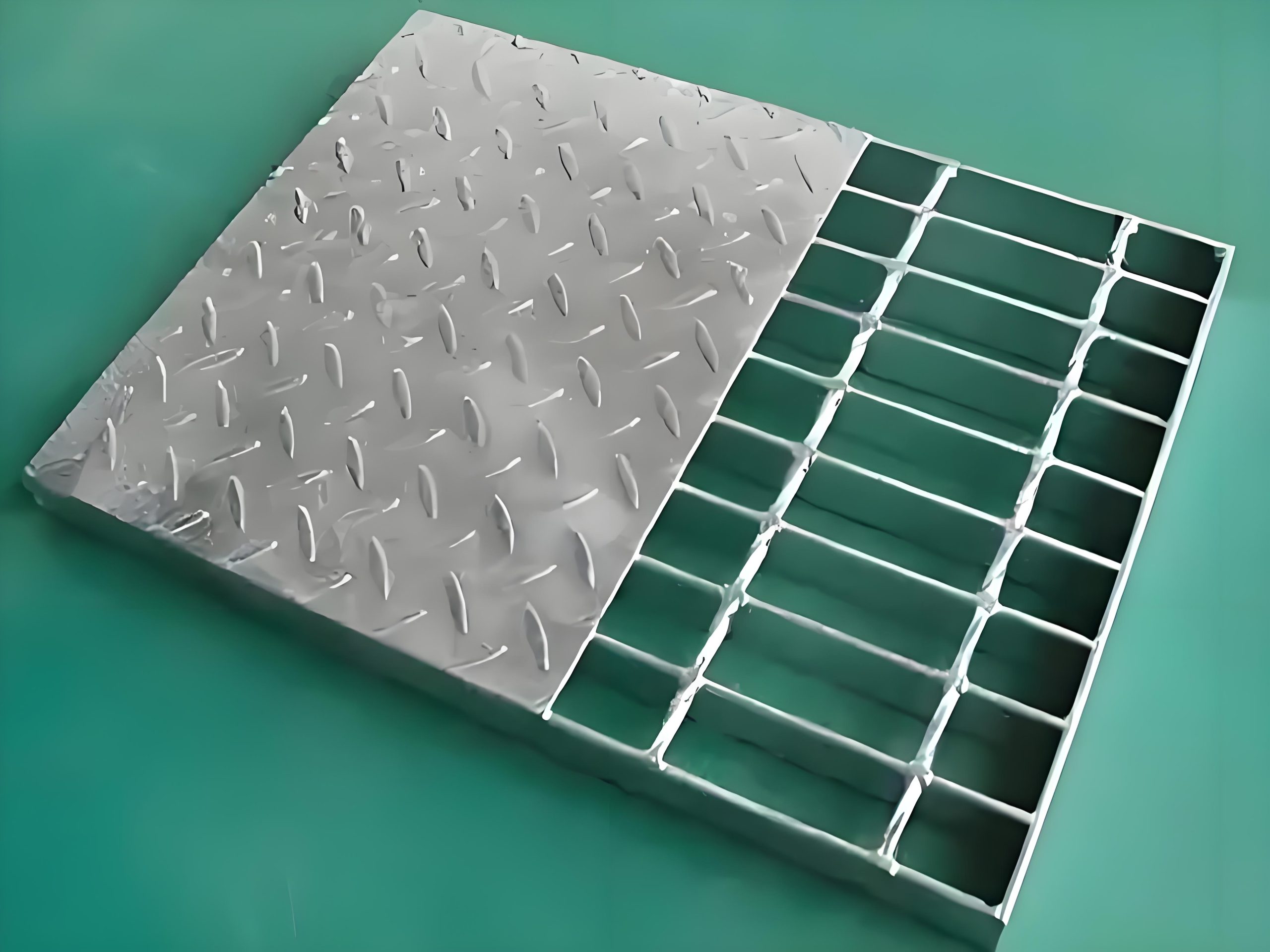
In strength, carbon steel usually has the advantage, especially in yield strength and tensile strength. It can also be heat treated in some forms to improve mechanical performance. Stainless steel still offers good strength and is more than sufficient for most platforms, walkways, and trench covers, but when heavy load is the top priority, carbon steel often gives more load capacity at the same section size.
In appearance, carbon steel normally needs a coating or finish because the raw surface is not suitable for long-term exposure in most environments. Stainless steel has a natural metallic finish and is often chosen when buyers want a cleaner, more refined appearance along with corrosion resistance.
If this comparison is reduced into simple buying language, it looks like this: carbon steel means lower upfront cost and higher structural strength, while stainless steel means higher corrosion resistance, cleaner appearance, and much lower maintenance over time.
For most buyers, corrosion resistance is the deciding factor. Carbon steel grating depends on surface protection. If it is black steel with no treatment, it can rust quickly in humid or outdoor conditions. If it is painted, the paint provides a barrier, but once the coating is scratched, worn, or chipped, rust starts at the damaged area. If it is hot-dip galvanized, the zinc coating gives much better protection and is the most common anti-corrosion treatment for industrial carbon steel grating. Even so, zinc is a sacrificial coating. It protects the base metal, but it is not permanent.
Stainless steel works differently. It does not rely on a separate applied coating. Its corrosion resistance comes from the chromium in the alloy. When exposed to oxygen, chromium forms a very thin passive film on the surface. If the surface is lightly damaged, that film can reform under suitable conditions. That is why stainless steel is often described as self-protecting, although that does not mean it is immune to all corrosion.
In normal dry indoor areas, the corrosion difference may not seem dramatic at first. Galvanized carbon steel can last well in a dry warehouse, equipment room, or indoor platform if moisture and chemicals are limited. Stainless steel will still resist corrosion better, but the extra cost may not always be justified if the environment is mild and maintenance is easy.
In outdoor humid conditions, the gap becomes clearer. Galvanized carbon steel can still perform well, but its life depends on zinc thickness, rain pattern, dirt retention, and local pollution. If water sits in certain areas, the coating can wear faster. Stainless steel generally performs much more reliably over a long service life, especially where regular maintenance is difficult.
In coastal or marine environments, carbon steel becomes much riskier. Salt in the air and chloride exposure accelerate coating breakdown and steel corrosion. Even well-galvanized grating has a shorter service life near the sea than in inland dry conditions. Stainless steel, especially grade 316, is the stronger choice here because molybdenum improves resistance to chlorides. Grade 304 may still show tea staining or localized corrosion in these conditions, so it is not always enough for marine exposure.
In chemical plants and wastewater facilities, stainless steel usually has a major advantage because these environments often combine moisture, chemical vapors, and cleaning cycles. Carbon steel coatings can fail at edges, welds, and damaged points, then rust spreads underneath. Stainless steel is much more stable, although the exact grade still matters depending on the chemicals involved.
If you put it in practical terms, carbon steel is only as corrosion-resistant as its coating system and maintenance routine. Stainless steel has built-in corrosion resistance, which is why it is often selected for long-term aggressive environments.
Carbon steel is usually stronger than stainless steel in raw structural terms. In many common grades, carbon steel offers higher yield strength and tensile strength, which means it resists bending and permanent deformation better under the same section size. This matters when the grating must carry heavy equipment, dense traffic, stored materials, or industrial loading over larger spans.
Stainless steel is not weak by any means. It still has good mechanical properties and can handle most industrial platform and walkway loads without trouble when properly specified. The point is simply that if both materials are made into the same grating size and spacing, carbon steel often carries a bit more load before reaching the same deflection or stress limit.
For example, if two gratings have the same bearing bar height, thickness, pitch, and span, the carbon steel version will usually have a somewhat higher allowable load value. The exact difference depends on steel grade and design standard, but it is often enough to matter in heavy-duty industrial projects such as mining, bulk handling, heavy machinery areas, or service platforms carrying concentrated loads.
A practical comparison can be stated like this. A standard carbon steel grating with 30 mm bearing bar height and 5 mm thickness may support a moderate to heavy industrial walkway load over a given span. A stainless steel grating of the same geometry may still be fully acceptable for normal foot traffic and platform use, but if the load margin is tight, the stainless version may need either a shorter span or a slightly larger bar section to match the same performance.
So in simplified table-style language: for the same grating size, carbon steel usually gives higher yield strength, higher tensile strength, and slightly higher load capacity; stainless steel gives good structural performance, but its main value is corrosion resistance rather than maximum strength per dollar.
This is why buyers should not assume stainless steel is automatically stronger just because it is more expensive. In most grating applications, the extra cost of stainless is paying for durability in corrosive conditions, not for superior load-bearing strength.
Initial purchase cost is where carbon steel clearly wins. If we use carbon steel grating as the baseline at 1.0, stainless steel grating often falls in the range of about 2.5 to 4.0 times that price. For example, a standard hot-dip galvanized carbon steel grating panel might be quoted around USD 30 to USD 55 per square meter in a normal industrial specification, while a stainless steel version in 304 or 316 may fall somewhere around USD 80 to USD 180 per square meter depending on grade, processing, and order volume.
That big price gap is why many projects start by considering carbon steel first. On a large platform area, the upfront savings can be substantial. For budget-sensitive projects, temporary facilities, and short-life installations, this can make perfect sense.
But initial cost is only part of the story. Carbon steel usually brings ongoing maintenance cost. If the project is in a corrosive environment, the galvanized coating may need inspection, patching, or repainting over time. Areas around welds, cut edges, bolted connections, and standing water points often require the earliest attention. If maintenance is delayed, corrosion can spread and shorten service life.
Stainless steel has a much lower maintenance burden in most applications. It generally does not need painting, zinc repair, or regular anti-rust treatment. In many service environments, the maintenance requirement is limited to cleaning or periodic washing, especially if appearance matters or if chloride contamination can build up on the surface.
Replacement cost changes the economics even more. In a mild indoor environment, galvanized carbon steel may last long enough that the lower initial cost remains the best financial choice. But in coastal, chemical, or wastewater environments, carbon steel can require earlier replacement. Once replacement labor, downtime, removal, disposal, and reinstallation are counted, the cheaper material may end up costing more.
A simple life-cycle example helps. Suppose galvanized carbon steel grating costs USD 40 per square meter installed, while stainless steel 316 costs USD 120 per square meter installed. Over 5 years in a mild indoor area, carbon steel may still be the cheaper option even with minor maintenance. Over 10 years in a wet industrial outdoor area, carbon steel may need coating repair and partial replacement, pushing total cost much higher. Over 20 years in a coastal or chemical environment, stainless steel often becomes the lower total-cost option because it avoids multiple maintenance cycles and replacement events.
So if buyers only compare the purchase price, carbon steel looks cheaper. If they compare the full life of the project, stainless can sometimes be the more economical choice, especially where corrosion is severe and access for repair is difficult.
Carbon steel grating is a very practical choice in dry indoor environments. If the area is sheltered, well ventilated, and not exposed to aggressive chemicals or constant moisture, galvanized or painted carbon steel can perform well for years at a much lower investment. Indoor mezzanines, equipment platforms, warehouse walkways, and mechanical rooms often fall into this category.
It also makes sense when the budget is limited and the project cycle is short. For temporary installations, short-term industrial expansions, or one-time-use structures, stainless steel may simply not provide enough financial return to justify the extra cost. Carbon steel gives solid structural performance and easier budget control.
For heavy-load industrial platforms, carbon steel is often the preferred solution. Mining sites, bulk material plants, heavy machine service areas, and equipment support walkways often prioritize strength, impact resistance, and cost efficiency. In these situations, carbon steel can be made with larger bearing bars to handle demanding loads at a more manageable price point.
Stainless steel should be the first choice in coastal and marine environments such as docks, offshore platforms, and seaside facilities. In these places, chloride exposure is constant and highly destructive to ordinary coatings. Grade 316 stainless steel is generally the safer specification here.
It is also strongly recommended for chemical plants, wastewater treatment facilities, and food processing factories. These sites may involve cleaning chemicals, organic residues, high humidity, wash-down procedures, or corrosive vapors. Stainless steel offers a cleaner and more stable long-term solution. In food plants, appearance and hygiene are often just as important as corrosion resistance, which further supports the use of stainless.
In outdoor facilities located in rainy or persistently damp regions, stainless steel is often worth considering even when the environment is not marine. The ability to reduce maintenance and preserve a neat metallic appearance over time can make it attractive for public works, utility plants, and exposed service walkways.
If the project wants long service life with minimal maintenance and a consistently clean look, stainless steel is usually the stronger candidate. If the main goal is to control budget while meeting structural demand in a non-aggressive environment, carbon steel remains highly competitive.
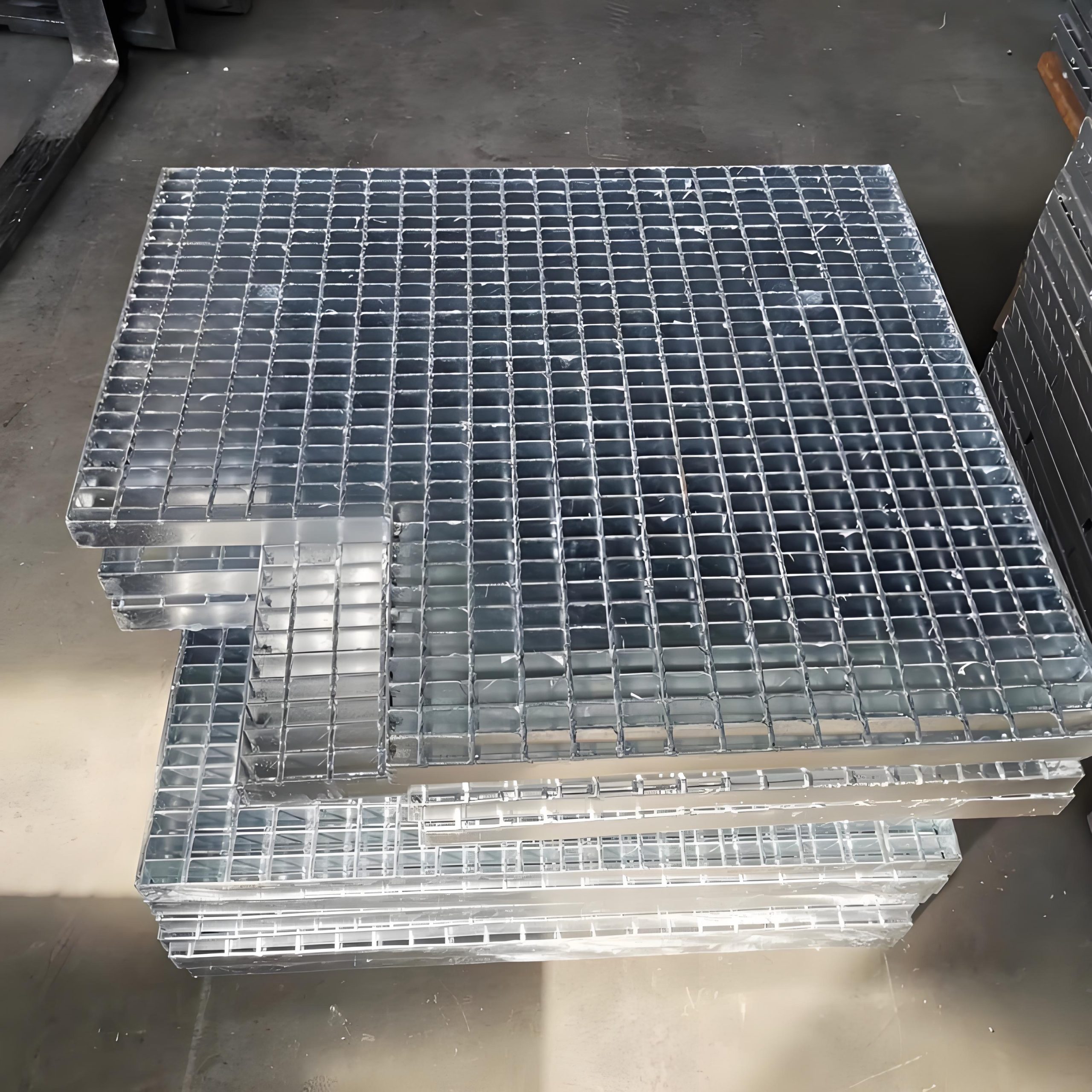
Carbon steel grating should not be used in exposed service without anti-rust protection unless the application is very temporary or the buyer fully accepts rapid oxidation. Hot-dip galvanizing is normally the best protection method because it covers the steel with a relatively thick zinc layer that protects the base metal over time. Painting can also be used, but in most industrial grating applications, paint alone is less durable than hot-dip galvanizing, especially on edges and under mechanical wear.
After installation, carbon steel grating should be checked regularly for coating damage. This is especially important at cut ends, welded repairs, support contact points, and areas where tools or materials are dragged across the surface. If the zinc or paint layer is broken and not repaired, rust can start locally and spread.
Stainless steel does not need a separate anti-corrosion coating, which is one of its biggest practical advantages. Still, “low maintenance” does not mean “ignore it completely.” In chloride-rich environments, especially coastal areas or places exposed to de-icing salts, surface deposits should not be allowed to build up for long periods. Periodic washing helps preserve the passive film and reduces the risk of pitting or staining.
Welding creates a major maintenance difference between the two materials. On carbon steel, welded or cut areas usually need zinc-rich repair treatment, paint repair, or re-galvanizing if full corrosion protection is required. Otherwise those areas become early rust points. On stainless steel, welding may affect the passive film and create heat tint. After welding, cleaning and passivation may be needed to restore maximum corrosion resistance, especially in more demanding environments.
So while stainless steel needs less routine anti-rust work, it still requires proper fabrication practice. And while carbon steel can be very durable, that durability depends heavily on maintaining its protective coating system.
In high-temperature service, carbon steel can sometimes be the more stable and practical choice, depending on the exact temperature and exposure conditions. Stainless steel is often associated with high performance, but some stainless grades can face sensitization and intergranular corrosion risk when exposed to certain temperature ranges, especially if welding and corrosive service are combined. Material grade selection matters a lot here.
In low-temperature environments, both materials can be used, but the designer should still verify toughness requirements and service conditions. Stainless steel generally performs well in cold service, though buyers should not assume every stainless grade behaves the same in every low-temperature application. Carbon steel can also be used successfully if the proper grade is chosen.
In acidic or alkaline environments, stainless steel 304 or 316 usually outperforms carbon steel, but buyers should be careful with broad assumptions. Not all acids are equally compatible with stainless steel. Some aggressive chemical combinations can still attack stainless, so the exact process medium must be checked. Carbon steel in these environments usually relies entirely on coating protection, which is often a weaker long-term solution.
In chloride environments such as seawater exposure, coastal spray, or areas where de-icing salt is common, 316 stainless steel should be treated as the preferred option. This is one of the most important selection rules in practice. Grade 304 may still corrode in chloride-rich conditions, especially if deposits remain on the surface. Carbon steel, even galvanized, is much more vulnerable over time.
The key lesson is that “corrosive environment” is not one single category. Heat, chemistry, moisture, chlorides, and cleaning methods all matter. A buyer who only asks whether the project is “indoor or outdoor” may miss the real risk factors.
A simple text-based decision process can make the choice easier. Start with the first question: will the grating remain in a wet, humid, or corrosive environment for a long time? If the answer is yes, stainless steel should be considered first. If the answer is no, move to the next question.
Second question: is the site coastal, marine, chemical, wastewater-related, or exposed to chlorides? If yes, choose stainless steel, and in most cases choose 316 rather than 304. If no, move to the next question.
Third question: is the budget sufficient, and is the goal to minimize maintenance for many years? If yes, stainless steel is often the better long-term solution even in moderately exposed conditions. If no, carbon steel with hot-dip galvanizing is usually the more economical route.
Fourth question: does the project require very high load capacity or a heavy-duty industrial platform at the lowest possible structural cost? If yes, carbon steel is often the stronger value choice because it provides high strength and can be upgraded with larger bearing bars more affordably than stainless steel.
In real procurement, this decision path works well because it reflects the actual order of priorities. Corrosion environment comes first, maintenance strategy comes second, budget comes third, and heavy load optimization comes fourth. Buyers who reverse that order often choose a material that looks cheap upfront but becomes expensive in operation.
If a buyer is still uncertain, the safest approach is to provide the exact service environment, span, expected load, cleaning method, and design life to the manufacturer. A supplier such as Anping County Chuansen Silk Screen Products Co., Ltd. can then quote the grating based on real use conditions instead of guesswork.
One common misunderstanding is the idea that stainless steel never rusts. That is not true. Stainless steel resists corrosion much better than carbon steel, but it can still stain, pit, or corrode under certain conditions, especially in chloride-rich environments. That is why 304 is not always suitable near seawater and why 316 is often preferred there.
Another misconception is that carbon steel is always the cheaper option. It is cheaper in initial purchase cost, yes, but that statement does not always hold true across the full service life. In harsh environments, maintenance and replacement can make carbon steel more expensive over time than stainless steel.
A third mistake is assuming stainless steel is stronger because it is more expensive. In fact, carbon steel usually has higher yield and tensile strength in common grating applications. Stainless steel costs more mainly because of alloy content and corrosion resistance, not because it is the strongest option.
There is also a very common belief that hot-dip galvanized carbon steel is basically as durable as stainless steel. That is not accurate. Galvanizing can greatly extend the life of carbon steel, but the zinc layer will gradually wear away, especially in aggressive environments. Depending on exposure, its protection may weaken significantly after around 10 to 15 years, sometimes sooner in coastal or chemical conditions.
Which is better for outdoor bar grating, galvanized carbon steel or stainless steel?
It depends on the environment. For ordinary outdoor inland use with moderate moisture, hot-dip galvanized carbon steel is often a cost-effective choice. For coastal, marine, or chemical outdoor conditions, stainless steel, especially 316, is usually the better long-term option because it resists chloride and moisture much more effectively.
How much more expensive is stainless steel grating than carbon steel grating?
As a rough industry reference, stainless steel grating often costs about 2.5 to 4 times more than carbon steel grating at the time of purchase. The exact difference depends on whether the comparison is against black steel, painted steel, or hot-dip galvanized steel, and also on whether the stainless grade is 304 or 316.
Can galvanized carbon steel replace stainless steel in coastal areas?
In most long-term coastal applications, it is not the ideal substitute. Galvanized carbon steel may work for short-term or lower-priority installations, but chloride exposure will consume the zinc coating faster and eventually lead to rusting of the base steel. For docks, offshore platforms, and seaside infrastructure, 316 stainless steel is usually the safer material choice.