

Carbon steel bar grating is one of the most practical flooring and covering materials used in industrial and commercial construction because it combines strength, drainage, ventilation, and relatively economical cost in one product. Buyers usually care about three things first: price, size, and load capacity. In real purchasing work, these three are always linked. A cheaper panel may not meet the span requirement, a stronger grating may cost more because of larger bearing bars or tighter spacing, and the same grating type can vary a lot in price depending on galvanizing, edging, cutting, and order quantity. That is why a clear understanding of specifications and load basics is essential before asking for a quotation or comparing suppliers.
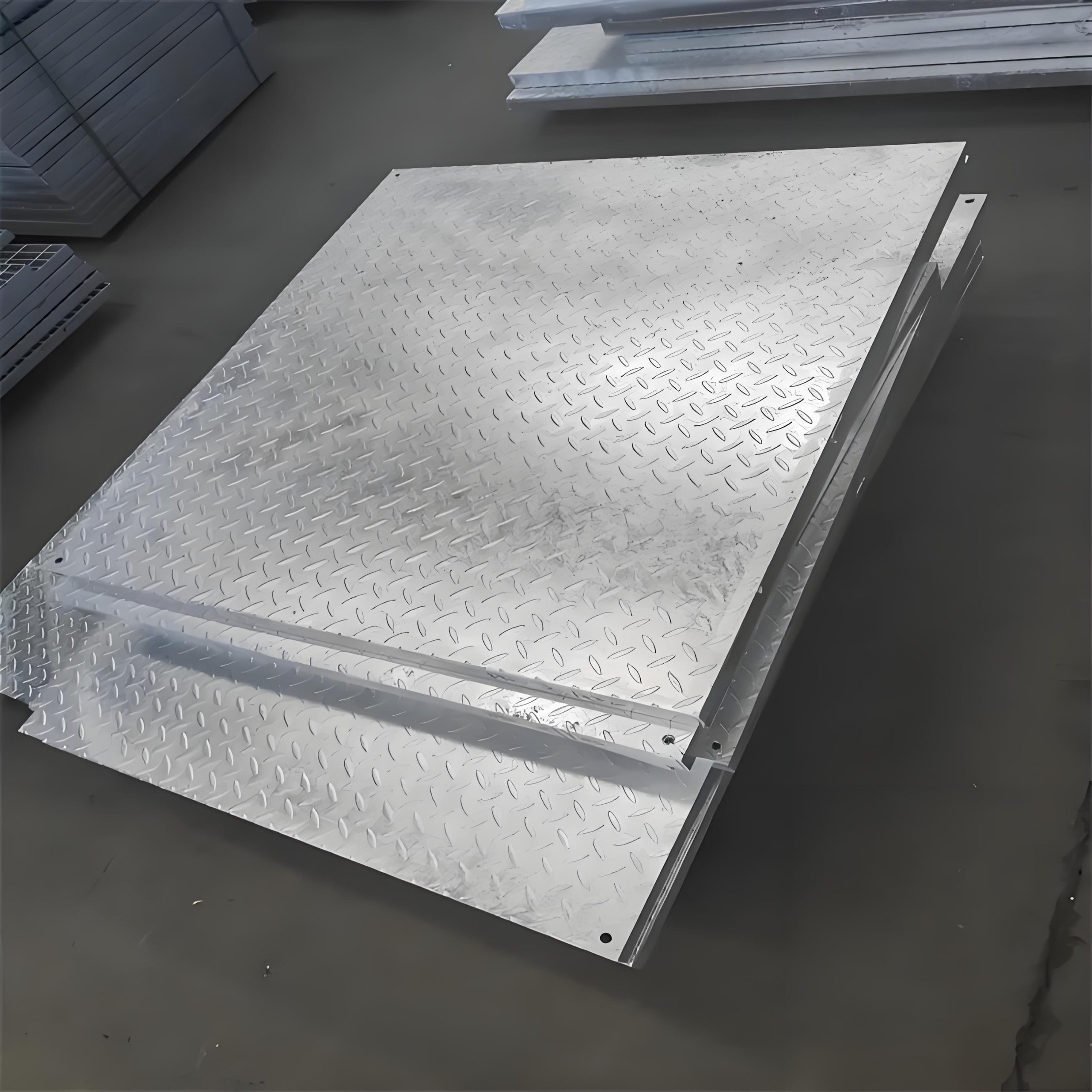
Carbon steel bar grating is a grid-like steel product made from two main parts: bearing bars and cross bars. The bearing bars are the primary load-carrying flat bars. They run in one direction and take the actual weight from foot traffic, equipment, or vehicles, depending on the application. The cross bars connect the bearing bars together, keep the spacing consistent, and give the panel its overall stability. This simple structure is the reason bar grating is widely used where open area, drainage, and strength are required at the same time.
In practical terms, the bearing bar size has the biggest effect on load capacity, while the spacing between bars affects both strength and usability. A tighter bearing bar pitch can improve support for small wheels or high-heel traffic, while a wider pitch increases open area and reduces weight. Cross bars usually do not carry the main structural load, but their spacing still matters for panel rigidity, walking comfort, and manufacturing cost.
Carbon steel bar grating is commonly supplied with several surface finishes. Hot-dip galvanized grating is the most common choice for outdoor and industrial use because the zinc coating provides strong corrosion resistance and long service life. Electro-galvanized grating has a thinner zinc layer and is generally used where appearance matters more than heavy corrosion resistance. Painted grating is a lower-cost option for mild indoor environments, but paint can wear faster than zinc in abrasive conditions. Black steel grating, sometimes called untreated or mill finish grating, has no protective coating and is usually chosen when the buyer plans further fabrication, welding on site, or when budget is the main concern and corrosion risk is low.
The main application areas are industrial platforms, walkways, stair treads, trench covers, drainage channel covers, mezzanine floors, maintenance catwalks, and equipment service areas. In factories and utility plants, bar grating is preferred because it lets water, dust, oil, and debris pass through instead of collecting on the surface. In municipal and building projects, it is also used for drainage covers and access panels because it is easy to remove and maintain.
The first thing to understand in grating specifications is the bearing bar size. Common bearing bar heights range from 25 mm to 100 mm, while typical thicknesses range from 3 mm to 6 mm. In many standard industrial applications, 25×3 mm, 30×3 mm, 32×5 mm, 40×5 mm, and 50×5 mm are among the most frequently quoted sizes. A higher bearing bar increases bending resistance and therefore improves load capacity, especially over longer spans. A thicker bar also increases strength, but usually with more material cost and weight.
Bearing bar spacing, sometimes called bearing bar pitch or center-to-center spacing, is another key dimension. Common spacings include 12.5 mm, 15 mm, 20 mm, 30 mm, and 40 mm. Among these, 30 mm is one of the most common standard choices for industrial walkways because it balances cost, open area, and load performance well. Tighter spacings such as 12.5 mm or 15 mm are often chosen when there is a need to support smaller objects, reduce the risk of dropped tools, or improve foot comfort. Wider spacings such as 40 mm can reduce material use and cost, but they may not be suitable for all traffic conditions.
Cross bar spacing is normally 50 mm or 100 mm. A 100 mm cross bar pitch is common in standard welded grating and is usually adequate for many platform and walkway applications. A 50 mm pitch gives a denser grid, which can improve panel rigidity and provide a more secure walking feel. It may also be preferred in some heavy-duty or more refined applications, though it raises both manufacturing time and price.
Standard panel sizes vary by market and production line, but common widths include 1 m and 1.22 m, while common lengths include 6 m and 4 m. These are typical raw panel dimensions before cutting to project-specific layouts. Custom sizes are very common because grating is often installed around columns, pipes, trenches, equipment bases, or irregular platform edges. When buyers ask for custom panels, they should confirm whether the quotation includes cutting losses, edging, notch work, and opening details.
Carbon steel bar grating is usually divided into three broad product types. Welded grating is the most common and economical type. It is made by resistance welding the cross bars to the bearing bars and is widely used for platforms, walkways, and trench covers. Press-locked grating is made by mechanically locking the bars together and usually offers a cleaner appearance, more uniform top surface, and a more architectural look. Heavy-duty grating uses larger and thicker bearing bars, often with tighter or stronger bar combinations, and is designed for high loads, forklifts, service vehicles, or harsh industrial environments.
In specification naming, buyers may also see designations such as G203/30/100, G325/30/100, or G405/30/50. These codes typically indicate bearing bar size and spacing. The exact interpretation can vary by producer or regional standard, so it is always smart to verify whether the first number refers to bearing bar height and thickness in imperial-style notation or another local naming method. A serious quote should always include the actual metric dimensions instead of relying only on shorthand codes.
Load capacity is the area where many buyers make mistakes, especially when they choose only by price or by a commonly used specification from a previous project. Carbon steel grating must be selected based on the actual load type and span. The three basic load concepts are uniformly distributed load, line load, and concentrated load. A uniformly distributed load is spread across the whole surface, such as regular foot traffic or evenly distributed stored material. A line load is applied along a narrow strip, which can happen with certain machine bases or support points. A concentrated load is applied at a single point or small contact area, such as a wheel, jack stand, or heavy equipment leg.
Span is the unsupported distance between supports, and it has a major influence on performance. Even a strong grating panel can fail or deflect too much if the span is too long. In design and quotation work, deflection limits are commonly set at span/200 or span/100 depending on the application standard and service conditions. For example, if the span is 1000 mm, a span/200 limit means maximum allowable deflection is about 5 mm under the design load. A stricter deflection limit usually means the grating must be stronger, heavier, or more closely supported.
As a general market reference, light-duty grating is often used for pedestrian walkways and drainage covers with relatively short spans. Medium-duty grating is common for industrial platforms, maintenance walkways, and occasional light equipment traffic. Heavy-duty grating is required when spans are larger, loads are higher, or the service environment includes pallet jacks, carts, or vehicles. The exact classification depends on standard, support condition, and safety factor, so load tables should never be copied blindly from another supplier’s catalog.
A quick reference example can help. A 25×3 mm bearing bar at 30 mm pitch may be suitable for light pedestrian service over a short span such as 500 to 700 mm. A 32×5 mm or 40×5 mm grating at 30 mm pitch is more commonly chosen for standard industrial walkways over spans around 900 to 1200 mm, depending on the required load and deflection limit. A 50×5 mm or larger heavy-duty panel with a 30/50 spacing pattern is often considered for higher loads or longer spans, but exact safe load values must be checked against the manufacturer’s calculation sheet.
Below is a simplified industry-style reference for orientation only. It is not a substitute for project engineering approval, but it shows how bearing bar size, spacing, and span work together.
25×3 mm bearing bar × 30 mm pitch × 500 mm span: often suitable for light pedestrian loads around 3 to 5 kN/m² under normal deflection control.
30×3 mm bearing bar × 30 mm pitch × 700 mm span: commonly used for light to medium walkway duty around 4 to 6 kN/m² depending on support conditions.
32×5 mm bearing bar × 30 mm pitch × 1000 mm span: often selected for medium industrial loads around 5 to 7.5 kN/m².
40×5 mm bearing bar × 30 mm pitch × 1000 mm span: typically used for stronger industrial service around 7.5 to 10 kN/m², subject to deflection requirements.
50×5 mm bearing bar × 30 mm pitch × 1000 to 1200 mm span: commonly used for heavier service, sometimes in the 10 to 15 kN/m² range or higher depending on design conditions.
Because actual performance depends on steel grade, manufacturing method, support arrangement, and safety factor, professional buyers usually ask for a formal load calculation report or test basis before final approval. This is especially important for projects involving public access, machinery loading, or compliance with a specified national standard.
The price of carbon steel bar grating starts with raw material cost. The main cost component is the bearing flat bar because it contains most of the steel weight and determines much of the panel’s performance. Cross bars also contribute to material usage, though usually less than bearing bars. Since carbon steel prices move with the broader steel market, grating prices can change noticeably even when the specification stays the same. This is why quotations are often valid for only a limited time.
Specification has a direct effect on price. Larger bearing bar heights and thicker bars mean more steel per square meter, so the price increases. Tighter bearing bar spacing also raises the cost because more flat bars are used in the same panel width. Likewise, a 50 mm cross bar pitch generally costs more than a 100 mm pitch because it requires more cross bars and more processing time. Heavy-duty grating is more expensive not only because of steel weight, but also because thicker sections are harder to process and sometimes require different production setups.
Surface treatment adds another layer of cost. In most export and industrial projects, hot-dip galvanizing is the biggest finishing cost because it includes zinc consumption, pretreatment, handling, and quality control. Electro-galvanizing usually costs less than hot-dip galvanizing, but its corrosion resistance is also lower. Black steel is often cheaper because it skips the coating process. Painted grating can fall into a low to medium finishing range depending on whether it is simple shop primer or a more durable protective system. As a general rule for many standard orders, the added cost ranking is often hot-dip galvanized, then electro-galvanized, then painted or black steel depending on paint type and local labor cost.
Processing charges are another common source of quotation differences. Many buyers compare only the square-meter price and later discover that cutting, banding, toe plates, edge plates, notches, holes, and special shapes are billed separately. A plain rectangular panel is always the easiest and cheapest version. Once the drawing includes trench corners, removable hatch panels, kick plates, anti-slip nosing, or non-standard supports, the fabrication cost can rise quickly. This is especially true when every panel has a different size.
Minimum order quantity and batch size also affect the unit price. Small trial orders usually cost more per square meter because setup time, production planning, galvanizing arrangement, and packing are spread over fewer panels. Larger orders can often get better pricing because production is more efficient and material procurement is more favorable. When discussing a quote with a supplier such as Anping County Chuansen Silk Screen Products Co., Ltd., it is worth asking whether the stated price is based on full panels, cut panels, finished drawings, or a mixed specification batch.
Price varies by region, steel market, zinc cost, and order quantity, so no single figure is universally correct. Still, buyers usually want a working budget number before they finalize drawings. The following ranges are industry reference levels in USD per square meter for common market conditions. They are only rough guidance and should be checked against current steel prices and exact fabrication details.
For a light-duty economical option such as G203/30/100 in black steel, a common reference range is about USD 18 to USD 30 per square meter for standard panels. This kind of grating is often used in low-corrosion indoor areas, light walkways, or projects where the buyer will do further finishing. If hot-dip galvanizing is added later, the total price rises accordingly.
For a standard industrial grade such as G325/30/100 with hot-dip galvanizing, a typical reference range is around USD 28 to USD 50 per square meter. This is one of the most common purchasing categories because it offers a practical balance between strength, corrosion resistance, and cost. It is widely used on plant platforms, service walkways, operating decks, and general industrial access routes.
For a heavy-duty industrial grade such as G405/30/50 with hot-dip galvanizing, the market reference may fall around USD 45 to USD 80 per square meter, and in some cases higher if the span is large, the galvanizing standard is strict, or the fabrication includes heavy edging and cutouts. The 30/50 spacing combination is denser and stronger than more economical options, so both material and processing costs are higher.
Buyers often ask how carbon steel compares with stainless steel grating. In most standard market conditions, stainless steel grating can cost roughly 2.5 to 5 times more than carbon steel grating, depending on the stainless grade, finishing, and fabrication complexity. Stainless steel offers excellent corrosion resistance and is preferred in food processing, chemical exposure, or highly aggressive environments, but for many general industrial applications, hot-dip galvanized carbon steel remains the more cost-effective choice.
Another important point is whether the quote is weight-based or area-based. Some suppliers quote by ton, while buyers think in square meters. Because panel weight changes with bearing bar size, spacing, and edging, a square-meter comparison can be misleading unless the exact mass per square meter is known. A professional quotation should clearly state the specification, weight basis, finish, and included fabrication scope.
Step one is to define the service environment and load requirement. Start by asking simple but important questions. Is the grating for people only, or will carts and equipment pass over it? Is it indoors or outdoors? Will it be exposed to chemicals, seawater, oil, or regular washing? Is it a platform, walkway, stair tread, or trench cover? These answers decide the load class, corrosion protection, and basic grating type before price is even discussed.
Step two is to choose the bearing bar height and thickness. If the span is short and the load is light, a smaller bar such as 25×3 mm or 30×3 mm may be enough. If the span is longer or the load is higher, 32×5 mm, 40×5 mm, or 50×5 mm may be more appropriate. In many projects, increasing the bearing bar height is a more efficient way to gain stiffness than simply making the bar thicker, but both dimensions matter and should be checked in the load calculation.
Step three is to decide the bearing bar spacing and cross bar spacing. For general industrial use, 30 mm bearing bar spacing and 100 mm cross bar spacing are very common. If better walking comfort, smaller object retention, or higher support density is needed, tighter spacing such as 20 mm or 30/50 may be worth the extra cost. For drainage-focused applications where open area is more important and the loading is light, wider spacing may still work if the design load allows it.
Step four is to select the surface finish. Hot-dip galvanizing is usually the default recommendation for outdoor or humid industrial environments because it gives better long-term durability. Electro-galvanizing may suit indoor decorative or lightly exposed uses. Black steel works when the grating will be painted later, embedded into another process, or used in a dry area with controlled corrosion risk. Paint can be chosen for color coding or economical indoor protection, but it is generally less durable than a proper hot-dip galvanized finish in tough service conditions.
Step five is to confirm panel dimensions, quantity, and processing details so the total price can be calculated correctly. This includes overall panel size, support direction, banding requirements, cutouts, removable sections, nosing, toe plate, and packing method. Small details affect the final budget more than many first-time buyers expect. If the project has many unique panels, send a panel schedule or drawing list instead of only a total square meter figure. That gives a much more realistic quotation and avoids later adjustment charges.
One of the biggest mistakes is comparing only the unit price without checking galvanizing quality and dimensional tolerance. Two grating panels may look similar in a quotation, but the zinc coating thickness, welding quality, and size tolerance can be very different. A lower price is not necessarily a better buy if the coating is too thin, the panel warps, or the actual spacing does not match the approved drawing. For industrial projects, these differences can lead to installation trouble, earlier corrosion, or rejection during inspection.
Another common issue is failing to confirm whether fabrication charges are included. Buyers often assume cutting, banding, edge bars, and openings are part of the quoted square-meter rate, while the supplier may have priced only standard full panels. This can create a large gap between the initial budget and the actual order value. Always ask clearly whether the quote includes cutting to size, edge banding, hole opening, notching, stair tread processing, and galvanizing after fabrication.
It is also important to request a formal load calculation sheet or test reference. For serious projects, especially public access areas or heavy industrial plants, a verbal statement that the grating is “strong enough” is not enough. The supplier should provide the basis for the load capacity, including span, deflection criterion, and applicable standard or internal design table. This protects both the buyer and the end user.
Delivery condition is another detail that affects cost, handling, and installation efficiency. Grating may be supplied loose, on wooden pallets, or fixed in steel frames for export or large project transport. Loose packing may be cheaper, but it can increase handling time or risk damage in transit. Steel-frame packing costs more but often improves unloading safety and product protection. Buyers should also check whether installation clips and hardware are included or quoted separately.
Lead time should not be overlooked either. Standard welded grating in common sizes can usually be produced faster than custom heavy-duty panels with many cutouts. Hot-dip galvanizing can also add time, especially in peak production periods. If a project schedule is tight, the buyer should confirm production time for raw panels, fabrication time, galvanizing time, and packing time separately instead of asking only for a single shipment date.
What is the standard size of carbon steel bar grating?
Common raw panel widths are 1 m and 1.22 m, while common lengths are 4 m and 6 m. However, most projects finally use custom-cut panels because platforms, trenches, and walkways rarely match raw stock dimensions exactly. Standard bearing bar heights usually range from 25 mm to 100 mm, with thicknesses from 3 mm to 6 mm. The most common spacing combination for industrial use is often 30 mm bearing bar pitch with 100 mm cross bar pitch.
How do I calculate the load capacity of steel grating?
You need four basic inputs: bearing bar size, bearing bar spacing, span, and load type. The safe load depends on how far the grating spans between supports and what deflection limit applies, commonly span/200 or span/100. A quick catalog table can give a rough answer, but for real procurement you should ask the supplier for a load calculation sheet or certified load table based on the exact specification. Concentrated loads from wheels or equipment feet require extra attention because they can be more critical than uniform foot traffic loads.
Is hot-dip galvanized carbon steel grating worth the extra cost?
In most outdoor, wet, or industrial environments, yes. Hot-dip galvanizing usually costs more than black steel or electro-galvanizing, but it provides much better corrosion resistance and often lowers maintenance and replacement costs over time. For indoor dry areas with limited corrosion exposure, black steel or painted grating may be acceptable if the project budget is tight. The right choice depends on service life expectations, environment, and maintenance access rather than on initial price alone.