
Finding a reliable steel bar grating supplier or factory is not just about getting a low quote. For most buyers, the real question is whether the supplier can deliver the right product quality, meet the required load and finish standards, and keep delivery stable when the project schedule gets tight. In actual procurement, “best” usually means a factory that can balance material quality, manufacturing accuracy, coating durability, export handling, and communication efficiency. A supplier that works well for a simple trench cover order may not be the right choice for a large industrial platform project, so buyers need a practical way to compare factories based on real performance, not just catalog claims.
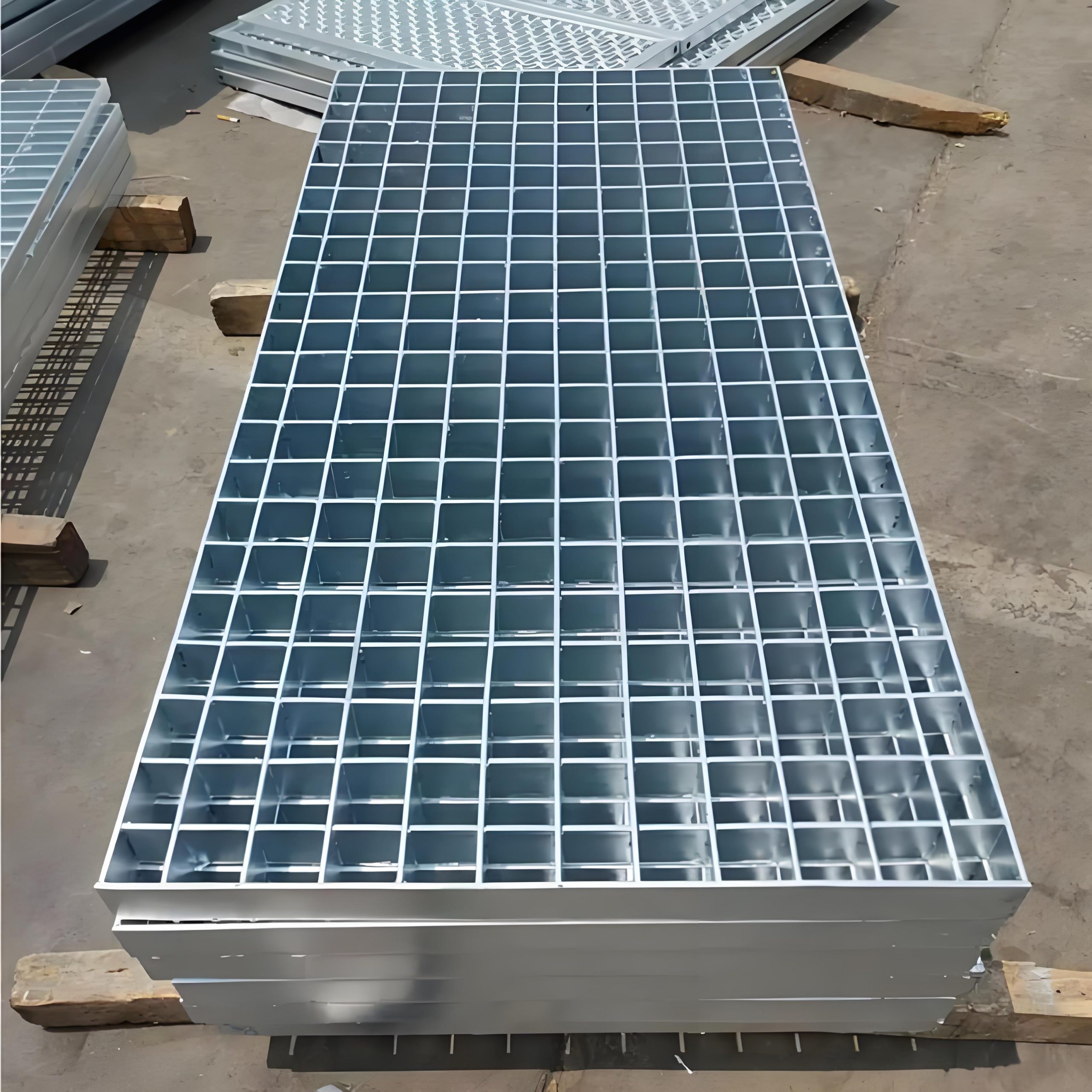
The first thing serious buyers look at is material quality. Steel bar grating is commonly produced in carbon steel and stainless steel, and the right material depends heavily on the use environment. Carbon steel is the mainstream option for industrial walkways, platforms, trenches, and general construction because it gives good strength at a reasonable price. Stainless steel is more expensive, but in corrosive environments such as chemical plants, food facilities, marine areas, and wastewater systems, it can be the more practical long-term choice.
When evaluating carbon steel grating, buyers should not stop at asking whether it is “mild steel” or “galvanized steel.” What really matters is the consistency of the raw flat bar, the actual bar thickness, the dimensional tolerance, and the zinc coating performance after fabrication. A supplier that understands quality will be able to explain the steel specification, bearing bar thickness range, and coating control rather than giving only a basic one-line answer.
Galvanized layer thickness is especially important for outdoor and industrial use. Hot-dip galvanized steel bar grating is popular because it provides broad corrosion protection and is widely accepted in the market. But not all galvanizing results are equal. Buyers should pay attention to whether the coating is even, whether the weld areas are properly protected, and whether the zinc layer is thick enough for the intended service life. A factory may offer a low price, but if the galvanizing is thin or inconsistent, the replacement cost later can be much higher than the initial savings.
The second major criterion is manufacturing process. Good steel bar grating is not only about raw material; it is also about how the bars are joined and how accurately the panel is fabricated. Welding strength matters because the cross bars and bearing bars must stay stable under load, handling, and installation. Weak welding can lead to loose joints, distorted panels, and early performance issues. Buyers should ask whether the factory uses pressure welding, manual welding, or a mixed process depending on the product type.
Flatness is another practical sign of manufacturing quality. A grating panel that is not flat can cause installation trouble, unstable walking surfaces, and additional site adjustment. This becomes even more important when the product is used for industrial flooring, stair treads, or modular platform systems. Better factories usually control flatness more carefully by using stable equipment, accurate cutting, and proper handling during galvanizing and packaging.
Opening accuracy is also easy to overlook, but it directly affects fit, drainage performance, and visual consistency. If the bar spacing is uneven or the cut-outs are inaccurate, the panel may not fit support frames properly. For trench covers, access flooring, and platform systems with repeated module sizes, consistent opening and panel dimensions make installation much smoother.
The third major evaluation point is compliance and certification. ISO 9001 is one of the most common indicators that a factory works with documented quality management procedures. That does not automatically mean every product is perfect, but it usually suggests a more organized production and inspection process. Buyers working on export projects also often ask whether the supplier can produce according to ANSI/NAAMM standards or relevant EN standards depending on the destination market.
A reliable factory should be familiar with load classes, dimensional tolerances, galvanizing requirements, and standard references used by project consultants and contractors. In practice, buyers are not just purchasing steel panels; they are purchasing confidence that the product will pass project review and perform as expected after installation.
One thing that strong suppliers and factories usually have in common is stable production capacity combined with reasonable inventory planning. This does not mean they keep every possible size in stock, because steel bar grating is often customized. It means they are prepared for repeated standard specifications, common bearing bar sizes, and high-demand panel formats that can be shipped quickly when projects need fast turnaround.
For many buyers, speed matters almost as much as price. If a supplier can provide common specifications from stock or semi-finished inventory, the buyer can avoid weeks of waiting for standard products. This is especially useful for replacement orders, maintenance projects, and urgent construction schedules. A factory with better stock and scheduling control is usually more dependable than one that gives attractive prices but cannot commit to a realistic ship date.
Customization ability is another shared advantage among better suppliers. In real-world projects, buyers often need more than standard grating panels. They may need custom spacing, heavier bearing bars, non-standard widths, irregular cut-outs, frame options, kick plates, stair treads, or removable trench covers. A capable supplier should be able to handle variations in bar spacing, load class, edge banding, and supporting frame style without turning every custom request into a major problem.
This kind of flexibility is particularly important for engineering contractors and distributors serving different industries. One project may need light-duty pedestrian walkway grating, while another may need heavy-duty grating for industrial traffic or concentrated loading. A better supplier can help match the right grating structure to the actual use condition instead of pushing one standard product for every application.
Surface treatment capability is also a big part of supplier strength. Hot-dip galvanizing is still the most common finish for carbon steel grating because of its corrosion resistance and broad market acceptance. However, some projects ask for electro-galvanizing, painted finish, or special coating systems depending on cost, appearance, or environmental conditions. A supplier with broader finishing options can be more useful, especially when a project includes different installation zones with different corrosion risks.
That said, buyers should understand the difference between these finishes. Hot-dip galvanizing generally provides better long-term corrosion resistance than electro-galvanizing or standard paint systems in outdoor industrial conditions. Electro-galvanizing may be chosen for lighter-duty indoor applications where appearance and lower cost matter more than long-term exposure performance. Paint may be selected for color coding or lower-cost indoor use, but it is usually not the first choice for aggressive outdoor service.
Leading factories also tend to be stronger in communication and technical support. They ask the right questions early: load requirement, support spacing, service environment, finish requirement, and destination market standard. That matters because many grating procurement problems start with unclear specifications, not with production itself. A supplier that checks details before production helps reduce errors, rework, and project delay.
In the North American market, buyers often focus on durability, code familiarity, and project support capability. Suppliers serving this market are generally expected to understand local industrial requirements, load considerations, and documentation standards. Many buyers in North America also place strong value on supplier responsiveness, clear technical communication, and the ability to coordinate with contractors, fabricators, and end users during project execution.
North American sourcing is often preferred for projects where compliance documentation, local coordination, and replacement support are critical. This is common in municipal work, plant maintenance, and industrial platform upgrades. The strength of this market is often reliability and practical service support. The trade-off is that pricing may be higher than high-volume import sourcing, especially for standard galvanized grating ordered in large quantities.
In Europe, the market is often associated with precision manufacturing and strict quality expectations. Buyers working in Europe or on European-standard projects usually pay closer attention to tolerances, finish consistency, fabrication details, and standard compliance. This is particularly important in infrastructure, architectural steelwork, specialty industrial systems, and projects where visual finish matters in addition to function.
European suppliers and factories are often strong in controlled production, engineering discipline, and detailed product documentation. For projects that require exact fit, special alloys, or tighter quality records, this can be a real advantage. On the other hand, buyers should expect higher production cost and, in some cases, less pricing flexibility compared with larger export-oriented suppliers in Asia.
In Asia, especially in China, the steel bar grating market is known for scale, export experience, and price competitiveness. Many factories are set up for large-volume production and international shipment, which makes this region especially attractive for importers, distributors, EPC contractors, and buyers with repeating bulk demand. These factories often have a wide range of manufacturing capability, from standard welded grating to custom trench covers, stair treads, and special fabricated panels.
The main strength of Chinese supply is usually the balance between cost and production capacity. Buyers can often get competitive pricing, broad customization, and flexible production planning in one place. For example, Anping County Chuansen Silk Screen Products Co., Ltd. would typically be evaluated by international buyers based on whether it can maintain stable raw material quality, accurate fabrication, reliable galvanizing, and export-ready packaging across multiple orders, not just on low price alone.
Still, buyers should not assume all Asian suppliers are the same. Some are excellent at standard industrial grating but weak in special documentation or corrosion-sensitive applications. Others are strong in export handling but less capable in small customized runs. The smart approach is to compare each factory by process control, communication, and proven project experience rather than by region alone.
One of the most effective ways to verify a supplier is through a factory audit, either in person or by video. A physical visit gives the clearest picture of actual manufacturing conditions, equipment, workflow, storage, and inspection practices. Buyers can see whether raw materials are organized properly, whether welding and cutting equipment match the supplier’s claims, and whether the packaging area is prepared for export handling.
If an in-person visit is not practical, a structured video audit is still useful. During a video audit, buyers should ask to see raw material stock, production lines, welding or press-welding equipment, galvanizing or post-treatment process coordination, finished goods area, and packaging area. It is better to request a real-time walk-through than rely only on polished presentation materials. Real-time factory viewing makes it easier to judge whether the supplier has genuine production capability or is mainly acting as a trader with limited control.
Customer cases and project applications are another strong verification tool. Buyers should ask what kinds of projects the supplier has already served. Has the factory supplied grating for industrial platforms, trench covers, stair treads, refinery walkways, municipal drainage, or offshore-related environments? A supplier with relevant application history is generally more likely to understand the technical details that matter in those jobs.
Project examples are useful because they show more than product photos. They reveal whether the supplier can handle repeated module sizes, custom notching, anti-slip requirements, edge frames, and field installation needs. A supplier that has already served industrial or infrastructure applications is often better prepared than one offering only generic product descriptions.
Samples are also very valuable in the buying process. A good sample can help buyers check bar spacing consistency, weld firmness, flatness, cut accuracy, edge finish, and galvanizing appearance. Even a small sample can expose a lot about the supplier’s manufacturing discipline. If the supplier hesitates to provide a representative sample or avoids quality discussion, that is usually a warning sign.
Third-party testing reports add another level of confidence. Buyers can request reports for raw material composition, coating thickness, dimensional checks, or other relevant product characteristics depending on the project. Not every order needs full third-party inspection, but for larger or more demanding projects, independent verification is often worth the cost. It helps reduce disputes and gives the buyer a more objective basis for supplier comparison.
Practical buyers also check how clearly the supplier handles technical documents. Can the factory review drawings carefully? Can it confirm tolerances and load-related details before production? Can it prepare packing lists and mark bundles clearly for receiving and installation? Real capability shows up in these details, not only in the quotation sheet.
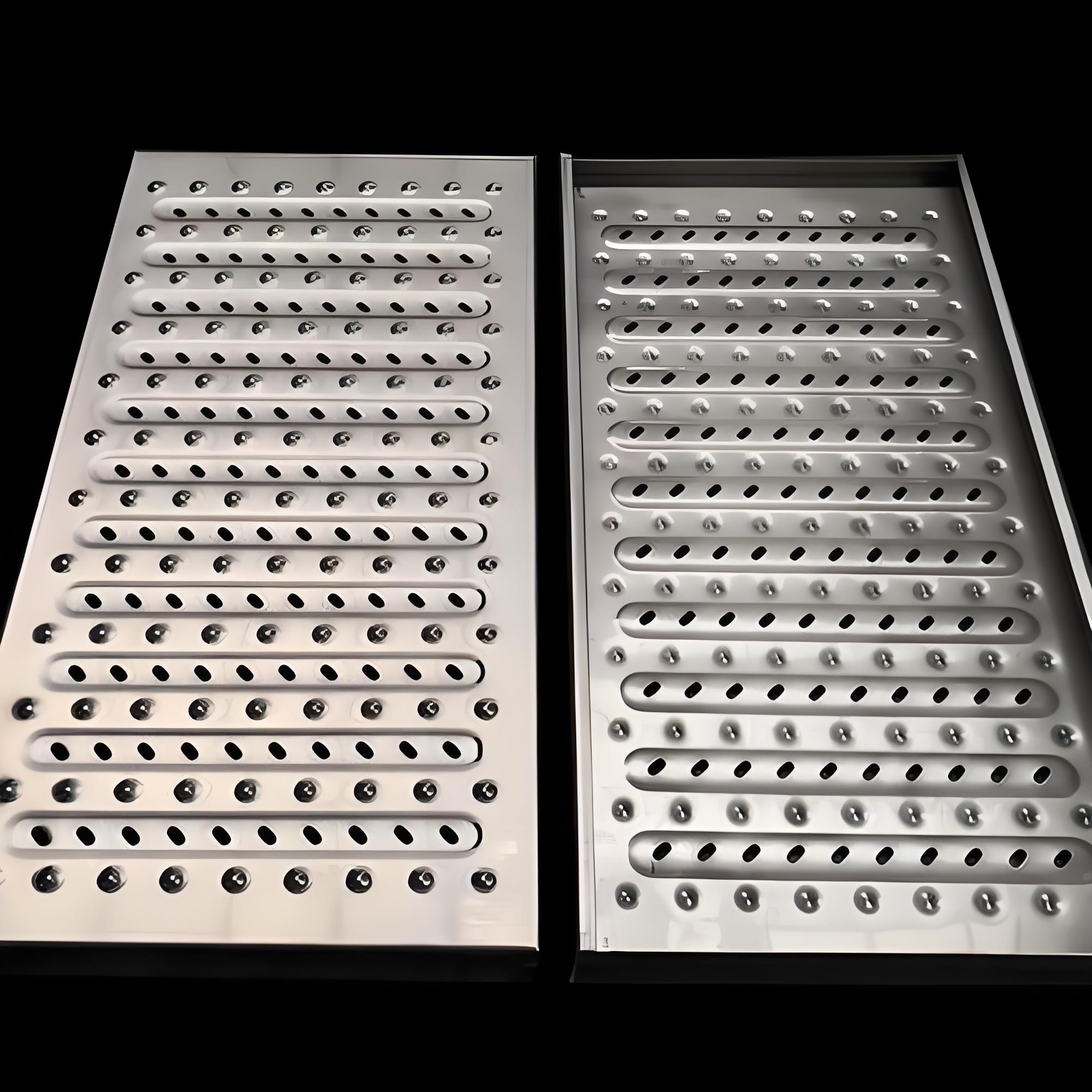
For large engineering projects, buyers usually need a supplier with stable export qualifications, strong production scheduling, and a proven ability to handle volume without losing control of quality. These projects often involve multiple panel sizes, strict delivery windows, and detailed documentation. In this case, it is usually safer to work with a larger factory that has experience in container shipment, project-based packing, and batch traceability.
Large projects also tend to be less tolerant of delivery failure. A small delay in grating supply can affect steel structure installation, flooring completion, or commissioning schedules. That is why buyers for big projects should pay close attention not only to production capacity but also to raw material procurement planning, galvanizing coordination, and shipment organization. A lower-priced supplier may look attractive, but if it cannot manage schedule risk, it may not be the right fit.
For small and medium custom orders, flexibility becomes more important. Many buyers in this category need mixed specifications, lower minimum order quantity, and shorter communication cycles. They may be sourcing for maintenance, distributor restocking, or small contractor jobs. In these situations, a supplier with flexible production planning and lower MOQ is usually more useful than a large factory focused mainly on full-container orders.
The best supplier for small-batch work is usually one that can process custom drawings efficiently, tolerate mixed-size production, and communicate quickly about revisions. Some buyers only need a few stair treads, custom trench covers, or replacement grating panels. For them, responsiveness and customization efficiency may matter more than large-scale capacity.
For special environments such as marine, chemical, or highly corrosive industrial conditions, buyers should focus on suppliers with real experience in stainless steel or corrosion-resistant solutions. This is not an area where a buyer should simply pick the cheapest option. In harsh environments, wrong material selection can lead to rapid corrosion, safety risk, and expensive replacement.
A supplier that is truly suitable for special environments should be able to discuss stainless steel grades, fabrication cleanliness, surface finish, and expected corrosion behavior in practical terms. It should also be honest about what galvanized carbon steel can and cannot do in certain applications. In many cases, stainless steel has a higher initial cost but lower lifetime risk, especially where maintenance access is difficult.
Buyers should also think about the end use. A walkway panel, a drainage cover, and a heavy-duty platform panel may all be called “steel bar grating,” but they do not necessarily require the same supplier strengths. Matching the supplier to the job is usually a better strategy than looking for one generic “best” option for every scenario.
Price is usually the first comparison point, but it needs context. In the international market, standard carbon steel bar grating with hot-dip galvanizing may roughly fall in the range of USD 850 to USD 1,500 per ton depending on steel price, bar size, spacing, coating requirement, order volume, and fabrication complexity. Stainless steel grating is typically much more expensive and varies heavily by grade and structure. Buyers should always confirm whether the quoted price includes edge banding, cut-outs, galvanizing, marking, and export packaging.
MOQ is another important purchasing factor. Some factories are comfortable with small trial orders, while others prefer tonnage-based orders for better production efficiency. If the buyer needs mixed specifications or low-volume replacement panels, MOQ flexibility can matter more than the lowest unit price. A supplier with a low MOQ may charge a bit more per ton, but the total order may still make better sense for the buyer’s real need.
Lead time should also be compared carefully. Standard production lead time for custom grating often falls around 2 to 5 weeks, but larger or more complex orders can take longer, especially if galvanizing capacity is tight. Buyers should ask whether lead time starts after payment, after drawing approval, or after material confirmation. This detail often affects project planning more than buyers expect.
Galvanizing method must be clearly defined. Buyers should check whether the supplier is quoting true hot-dip galvanizing after fabrication, electro-galvanizing, or painted finish. These are not interchangeable in performance or price. Hot-dip galvanizing is usually the preferred option for outdoor industrial use. Electro-galvanizing may be acceptable for lighter indoor applications. Paint may be used where color identification or lower cost is the priority, but it usually offers less corrosion protection than hot-dip galvanizing.
Packaging standard is another comparison point that affects real delivered value. Good export packaging should keep bundles stable, reduce rubbing damage, make unloading easier, and allow bundle identification at the destination. Steel bar grating is heavy, and poor packing can create damage, confusion, and unloading issues. Buyers should ask whether products are steel-strapped, marked by bundle, and prepared for container transport.
Payment terms also deserve attention. A very low quote with rigid payment terms may not be as attractive as a slightly higher quote from a supplier with better commercial flexibility and clearer production control. Buyers should compare payment conditions together with quality records, schedule confidence, and shipping support instead of treating them as separate issues.
What is the usual lead time for custom steel bar grating orders?
For most custom orders, the common lead time is around 2 to 6 weeks after drawing approval, depending on quantity, fabrication complexity, and surface treatment schedule. Large project orders, stainless steel products, or mixed custom sizes may take longer. Buyers should always confirm whether the promised lead time includes galvanizing, inspection, packing, and shipment preparation.
Can I buy steel bar grating in small quantities, or do factories only accept bulk orders?
Many factories can accept small or medium orders, but the minimum order quantity varies. Some suppliers focus on bulk production and may have a higher MOQ, while others are more flexible for maintenance orders, replacement panels, or sample batches. Buyers needing small quantities should ask early about MOQ, price impact, and whether custom sizes can be mixed in one order.
How can I tell if a steel bar grating supplier is really experienced in export business?
Look at practical details. An experienced export supplier should be able to explain packing method, bundle marking, weight control for containers, inspection records, and shipment document preparation. It should also understand destination market standards and be comfortable discussing previous export project types. Clear communication about logistics and documentation is often one of the strongest signs that the supplier has real export experience.
