
When buyers search for the best flat steel bar grating factories, they are usually not looking for a fancy company profile. They want to know which factories can make stable-quality grating, deliver on time, handle custom sizes, and match the real service conditions of a project. In this market, “best” does not simply mean the lowest price or the biggest workshop. It usually means a factory that understands load requirements, material selection, galvanizing quality, fabrication tolerances, export packaging, and the practical difference between a walkway panel and a trench cover. The right factory for an industrial platform may not be the right one for a corrosive marine project, so buyers need a clear way to compare manufacturers beyond basic quotations.
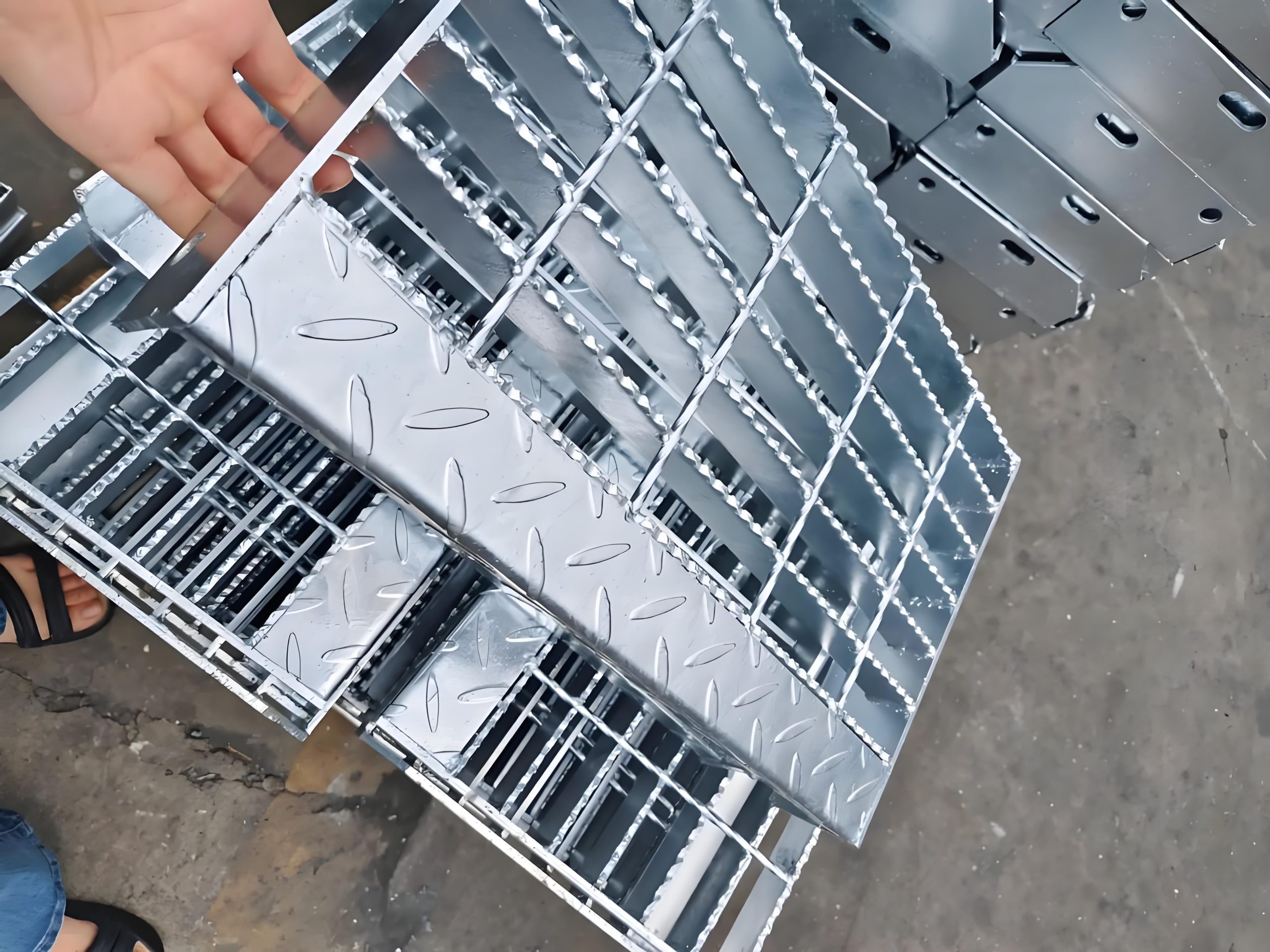
The first thing to check is material grade. Flat steel bar grating is commonly made from carbon steel or stainless steel, and the right choice depends on the application environment, budget, and expected service life. Carbon steel is widely used because it offers good strength and competitive cost. For many industrial floors, walkways, and trench covers, galvanized carbon steel is the standard option. Stainless steel is more expensive, but it is often the better long-term choice in food processing, chemical plants, wastewater treatment, and marine areas where corrosion resistance matters more than initial price.
Within carbon steel itself, buyers should still ask about the bar quality, thickness consistency, and whether the factory uses suitable raw material standards. A grating panel may look acceptable at first glance, but poor raw steel can lead to weak welds, dimensional instability, and faster corrosion after installation. Good factories can clearly explain what steel grade they use, what thickness tolerance they allow, and how they control flatness during production.
Load capacity and span design are equally important. A good flat steel bar grating factory does not just ask for panel size; it asks how the product will be used. Is it for pedestrian traffic only, hand carts, forklifts, or vehicle loading? What is the support spacing? Will the panel be fixed at two ends or supported on four sides? The same grating pitch and bar depth can perform very differently depending on span and support conditions. Factories that understand engineering basics can recommend a more suitable bearing bar size and spacing instead of simply copying an old drawing.
Many buyers focus heavily on weight because it affects steel cost, but a lighter panel is not always the smarter purchase. If the bearing bars are too shallow or too thin for the actual span, the panel may deflect too much under load, become uncomfortable to walk on, or fail inspection. A reliable factory can provide loading data, deflection references, and basic selection support so the buyer can avoid over-design and under-design at the same time.
Slip resistance and surface treatment also play a major role in defining quality. In dry indoor areas, plain flat bar grating may be enough. In oily workshops, outdoor platforms, rain-exposed stairs, and treatment plants, anti-slip performance becomes much more important. Serrated bearing bars are often selected to improve traction, especially for stairs and sloped walkways. Factories that understand practical use will discuss this early instead of waiting for the buyer to discover the need after fabrication.
As for finishing, hot-dip galvanizing remains the most common protective treatment for carbon steel grating. It gives broad corrosion protection and is widely accepted for outdoor and industrial use. However, galvanizing quality depends on coating thickness, surface preparation, venting details, and post-treatment handling. Poor galvanizing can create ash, drip marks, blocked openings, or thin-coating areas around welds. Painted grating is sometimes used where budget is limited or where color marking is needed, but paint generally does not offer the same durability as galvanizing in harsh outdoor conditions.
For projects with strict hygiene or chemical exposure requirements, stainless steel grating may be left untreated or receive surface finishing suitable for the process environment. The best factories are not the ones that say one option fits all; they are the ones that help buyers choose material and finish based on actual service conditions.
One of the clearest signs of a strong flat steel bar grating factory is the production equipment it uses. Modern factories often rely on high-pressure welding machines to lock cross bars and bearing bars together with consistent weld strength and production speed. This matters because manual or unstable welding can cause uneven panel geometry, weak joints, and inconsistent spacing. For standard press-welded grating, automated equipment usually brings better repeatability than purely hand-based fabrication.
Automatic punching and cutting lines also matter, especially for projects that include large quantities of trench covers, stair treads, or repeated custom panel sizes. These lines help improve dimensional accuracy and reduce edge distortion. A factory with good machinery can usually maintain tighter tolerances on panel width, panel length, bearing bar spacing, and banding fit-up. That becomes especially important when panels need to fit pre-installed support frames on site.
Another shared trait is certification and standard awareness. Serious buyers often look for factories that understand ISO quality systems and can produce according to recognized standards such as ANSI, NAAMM, or other regional requirements. Certification alone does not guarantee excellent quality, but it is a useful sign that the factory is used to documented procedures, inspection records, and repeatable production controls. Factories that regularly export usually understand the difference between domestic practice and project-based compliance documents required by international buyers.
Customization ability is another major indicator. In real projects, grating is rarely all standard stock size. Buyers may need specific lengths, non-standard bearing bar spacing, kick plates, toe plates, edge banding, cut-outs for columns, notch details, hinged trench covers, or stair treads with nosing and side plates. A leading factory can handle these without making the process unnecessarily slow or expensive. Customization does not only mean “we can do special sizes”; it means the factory can convert drawings into practical production plans with controlled tolerances.
Factories with good customization capacity also communicate more clearly during the quotation stage. They can tell the buyer which dimensions are efficient to produce, which designs may increase waste, and how to adjust the specification without affecting function. That kind of feedback is often more valuable than a slightly lower unit price because it can reduce total project cost, improve installation efficiency, and avoid site modification later.
Packaging is another shared trait buyers often overlook. Strong factories know that steel grating is heavy, abrasive, and easy to damage surrounding cargo if packed poorly. Export-ready packaging should consider stacking method, bundle stability, steel strip positioning, pallet support if required, and product identification. Better packaging reduces damage claims and makes unloading easier at the destination.
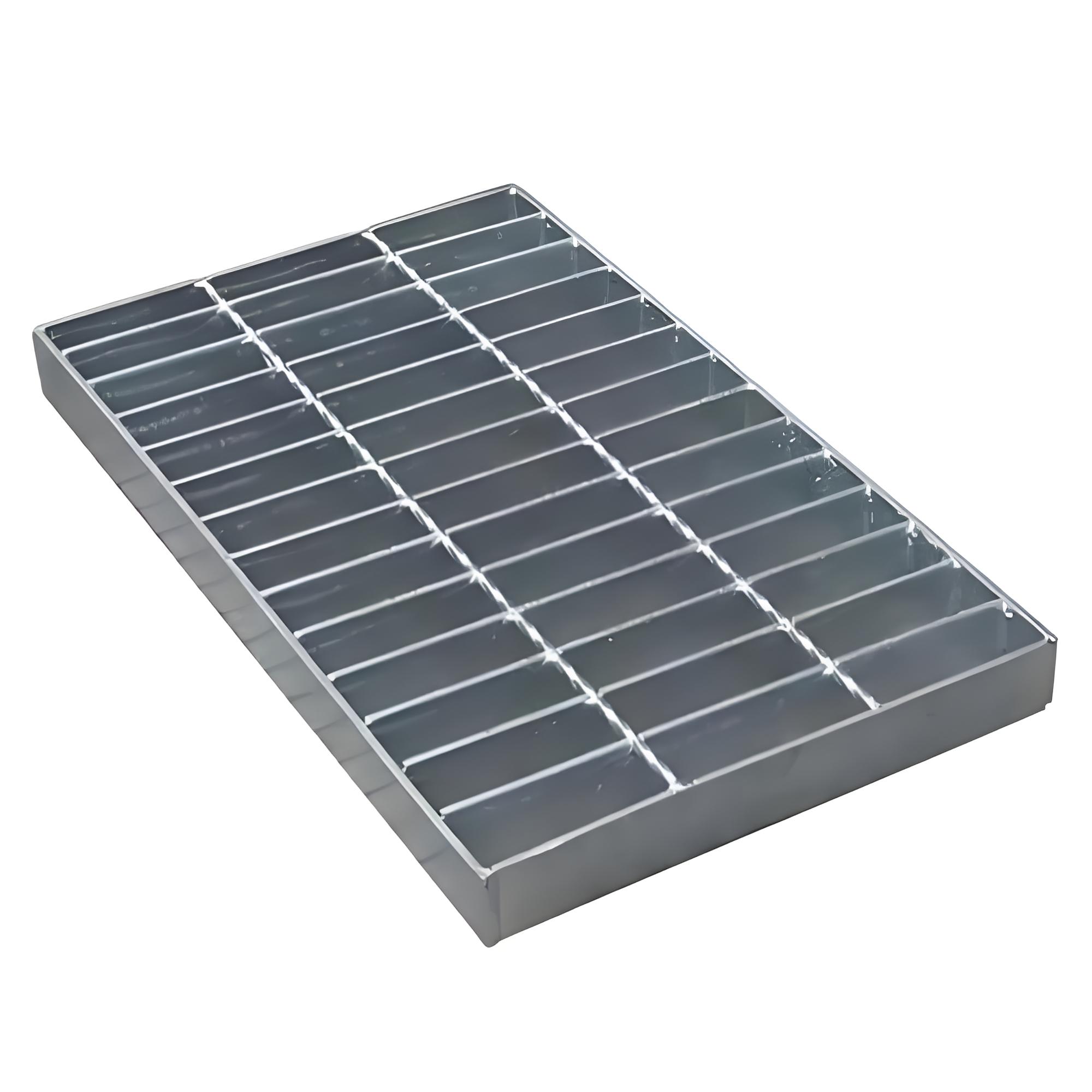
In North America, buyers often pay attention to suppliers that offer a balance between compliance, practical support, and reasonable pricing. These factories or supply partners are often valued for their understanding of local load standards, project documentation, and communication efficiency. They may not always be the lowest-cost option, but they are often preferred for municipal works, industrial retrofits, and projects where certification paperwork and schedule control matter. For buyers who need smaller lot sizes, replacement panels, or faster local coordination, this type of supplier can be attractive.
North American market participants are also often strong in after-sales coordination. If a panel does not fit or a project has revision drawings, buyers may get faster response compared with long-distance sourcing. The trade-off is price. In many cases, local or regional sourcing can be significantly higher than volume imports, especially for large-tonnage standard galvanized grating.
European precision-focused manufacturers are usually known for tighter fabrication control, detailed engineering support, and strong consistency in specialty applications. Buyers looking at wastewater plants, architectural metalwork, food-grade applications, or high-spec industrial environments often value this type of factory. European producers may place more emphasis on finish details, exact tolerances, and project-specific technical documentation. This can be useful where installation interfaces are strict and visual quality matters along with mechanical performance.
The challenge with European precision manufacturing is usually cost and, in some cases, longer lead time for heavily customized items. For projects where function is straightforward and volume is high, buyers may decide that the added precision is not necessary. But for complex systems, unusual alloys, or projects with stricter audit requirements, these factories can be a better match.
Asian large-scale export factories are often the first choice for buyers focused on volume, price efficiency, and broad customization capacity. Many of these factories are set up for container-based shipments and can produce standard bar grating, trench cover panels, stair treads, and welded mesh-related items in large quantities. Their advantage is usually manufacturing scale, flexible fabrication, and experience with different market preferences. For importers, EPC contractors, and distributors buying regular volumes, this type of factory can be highly competitive.
However, buyers should not assume all large export factories offer the same quality. Some are strong in standard industrial grating but weaker in documentation or special tolerances. Others may be good at galvanized carbon steel but less experienced in stainless steel fabrication. That is why buyer evaluation must go beyond capacity claims. A company such as Anping County Chuansen Silk Screen Products Co., Ltd. would normally be judged not only by output scale, but also by how consistently it controls material, welding, galvanizing, and export handling across different orders.
The most direct way to verify a factory is to review real customer cases and project references. Buyers should ask what kinds of applications the factory has already supplied: industrial platforms, refinery walkways, municipal drains, offshore access systems, or stair tread packages. A factory that has supplied similar products to similar environments is usually a safer choice than one offering only generic brochure claims. References help show whether the factory understands practical requirements such as anti-slip surface selection, edge banding details, or panel marking for site installation.
Product testing reports are another important checkpoint. Buyers should ask whether the factory can provide material certificates, galvanizing inspection data, dimensional inspection records, and, when relevant, load performance references. Even if every project does not require third-party testing, a factory used to preparing such records generally has a more disciplined quality system. The point is not to collect paperwork for its own sake, but to confirm that production quality is measurable and not based only on visual judgment.
Warranty terms also tell buyers a lot. A short or vague warranty may indicate the factory is unwilling to stand behind corrosion performance, weld integrity, or dimensional fit. A realistic warranty should match the product type, finish, and service environment. Buyers should be careful with exaggerated promises, especially in corrosive locations where coating life depends heavily on installation conditions and maintenance. A good factory usually gives practical warranty language instead of unrealistic claims.
Export experience is another strong indicator. Flat steel bar grating is heavy and often shipped in mixed sizes, which means documentation, packing, loading plans, and customs coordination all matter. Factories with export experience understand commercial packing, gross weight planning, container loading efficiency, and the need for clear bundle marking. They are also more likely to prepare invoices, packing lists, and specification records in a way that helps import clearance and warehouse receiving.
Logistics capability should not be judged only by whether the factory can “book shipment.” Buyers should ask whether the factory can consolidate mixed products, manage urgent partial deliveries, support FOB or CIF terms when needed, and coordinate production with vessel schedules. If a project has strict installation sequencing, shipment timing can be just as important as manufacturing speed.
Sample evaluation can also be useful. A small sample or trial batch can reveal a lot about weld quality, cutting accuracy, galvanizing finish, and communication efficiency. Even experienced buyers sometimes skip this step when price looks attractive, but a sample often exposes issues earlier and at much lower cost than a full container dispute.
For industrial platforms, walkways, and stair treads, buyers should prioritize factories with solid knowledge of load-bearing design and anti-slip options. These applications are directly tied to worker safety, so the right bearing bar depth, bar spacing, and panel support assumptions matter more than minor savings in steel weight. For stair treads in particular, buyers should confirm whether the factory can provide nosing, side plates, hole punching, and consistent tread dimensions for easier installation.
Industrial walkway projects often involve repeated panel sizes plus some cut-outs around structures, pipe penetrations, and columns. Factories that can combine efficient mass production with accurate custom cutting are usually the better fit. In these cases, a factory’s drawing conversion ability can save a lot of site labor. If the project is outdoors or exposed to water, serrated bars and hot-dip galvanizing are often worth the additional cost.
For drainage trench covers, the selection focus changes slightly. Buyers should pay closer attention to fit accuracy, frame compatibility, edge strength, and handling convenience. Trench cover panels are often opened for maintenance, so dimensions must be consistent and edges should be properly banded to avoid deformation. In pedestrian or municipal areas, appearance and safety also become more important, and the opening size may need to balance drainage performance with heel-safe or public-area considerations.
For chemical plants, corrosion resistance becomes a central issue. In these settings, buyers should choose factories that understand coating durability, stainless steel fabrication practice, and the limitations of standard carbon steel in aggressive atmospheres. It is not enough for a factory to simply offer stainless steel as an option; it should also understand suitable grades, welding cleanliness, and how corrosion risk changes at welds and cut edges.
For marine environments, the selection standard becomes even stricter. Salt spray, standing moisture, and maintenance difficulty can quickly expose weaknesses in surface treatment. Buyers should ask whether the factory has supplied similar coastal or offshore projects, what finish recommendations it makes, and how it handles packaging to reduce coating damage during transport. In many marine cases, paying more for stronger corrosion resistance can be the more economical decision over the service life.
If a buyer is sourcing for multiple applications in one project, it may be practical to work with a factory that can split the specification by zone instead of forcing one product type everywhere. For example, standard galvanized carbon steel may be fine for general walkways, while stainless steel or heavier-duty galvanizing is better in washdown or splash zones. A flexible factory can help optimize this mix.
Price is usually the first comparison point, but buyers should compare it carefully. Flat steel bar grating prices vary based on raw material, bearing bar size, spacing, surface treatment, and order quantity. As a rough industry reference, standard galvanized carbon steel bar grating may range around USD 900 to USD 1,500 per ton in many international trading situations, while stainless steel grating can be much higher depending on grade and fabrication complexity. Buyers should confirm whether the quoted price includes banding, galvanizing, cutting, marking, and packing, because these items can change the total landed cost.
Lead time is another key dimension. For standard specifications in normal volumes, many factories may quote around 2 to 5 weeks for production, while customized or large export orders may require 4 to 8 weeks or more depending on galvanizing queue and season. Buyers should ask whether the lead time starts from deposit, drawing approval, or raw material allocation. That detail can affect project scheduling more than expected.
Minimum order quantity matters especially for distributors and maintenance buyers. Some factories are efficient only with full-tonnage orders, while others can support smaller trial batches or mixed-size bundles. A low MOQ may be convenient, but buyers should still check whether it causes a significant unit price increase. For long-term cooperation, it is useful to understand the factory’s normal batch economics rather than negotiating only one order at a time.
Galvanizing method must be clearly confirmed. Buyers should verify whether the quote refers to true hot-dip galvanizing after fabrication, pre-galvanized raw material, or another coating system. These are not interchangeable in service performance. If a project specification calls for hot-dip galvanizing, the buyer should also ask about coating thickness control and whether the factory has experience managing galvanizing deformation on larger panels.
Packaging standard is often underestimated until cargo arrives damaged. Buyers should compare whether bundles are steel-strapped, whether lifting points are stable, whether panel tags are durable, and whether there is any protection for mixed-product shipments. Good packaging does not need to be luxurious, but it should be planned for sea transport, warehouse handling, and site identification.
Communication quality is also part of procurement comparison, even though it is not always listed in quotations. Buyers should notice how quickly the factory asks technical questions, whether drawings are reviewed carefully, and whether revisions are tracked clearly. In practice, a slightly higher-priced factory with better communication can save more money by reducing fabrication mistakes and installation delays.
When comparing factories side by side, many buyers create a simple internal checklist covering price, lead time, MOQ, galvanizing approach, packaging level, documentation support, and export experience. This kind of comparison is more useful than looking at unit price alone because steel grating procurement problems usually come from specification gaps, not from the panel itself.
What is the average delivery time for custom flat steel bar grating orders?
For standard custom orders, many factories need about 3 to 6 weeks for production after drawing confirmation, depending on quantity, cutting complexity, and galvanizing schedule. Large export orders, mixed panel sizes, or stainless steel fabrication may take longer. Buyers should confirm whether the quoted lead time includes surface treatment, inspection, and packing, not just workshop fabrication.
Can flat steel bar grating be supplied from stock, or is it mostly made to order?
Some common sizes may be available in stock in certain markets, especially standard walkway panels and basic stair treads, but a large share of industrial grating is made to order because span, width, bearing bar size, and support details vary from project to project. If fast delivery is important, buyers should ask early whether standard specifications can be matched from inventory or whether production is required.
How do buyers compare quotations if one factory is cheaper but another offers better galvanizing and packaging?
The smarter comparison is total usable value, not just ex-works unit price. Buyers should review whether the lower quote includes the same steel size, same welding method, same galvanizing process, same banding details, and the same export packing standard. A cheaper quote can become more expensive if coating quality is poor, panels arrive damaged, or site fitting problems create delays. For grating used outdoors or in industrial environments, galvanizing quality and packaging reliability often have a direct effect on service life and project cost.
