

Custom welded steel bar grating In real projects, customization usually happens because the site layout is not standard, the load requirement is higher than normal, the opening shape is irregular, or the installation method needs to match existing steelwork or concrete channels. That is why buyers looking for welded steel bar grating suppliers often care less about a basic catalog and more about whether the supplier can handle custom sizes, special specifications, drawing conversion, fabrication details, and reliable delivery. A supplier may offer a long list of standard grating panels, but the real test is whether they can turn a site drawing into a usable, installable product without repeated correction, dimensional mismatch, or load risk.
Customization is needed because many grating applications simply do not fit standard panel sizes or standard load assumptions. In industrial construction, support beams may not be evenly spaced, drainage trenches may turn at angles, machine bases may interrupt panel lines, and access routes may require cut-outs around pipes or columns. In those cases, standard stock panels still need secondary processing, and sometimes a fully custom panel is the better solution from the start.
Another major reason for customization is load performance. A standard walkway panel may be fine for light foot traffic, but it may not be suitable for a machine maintenance platform, a forklift crossing area, or a cover above a deep service trench. Buyers often need a custom combination of bearing bar height, thickness, spacing, and edge reinforcement to meet a specific span and load target.
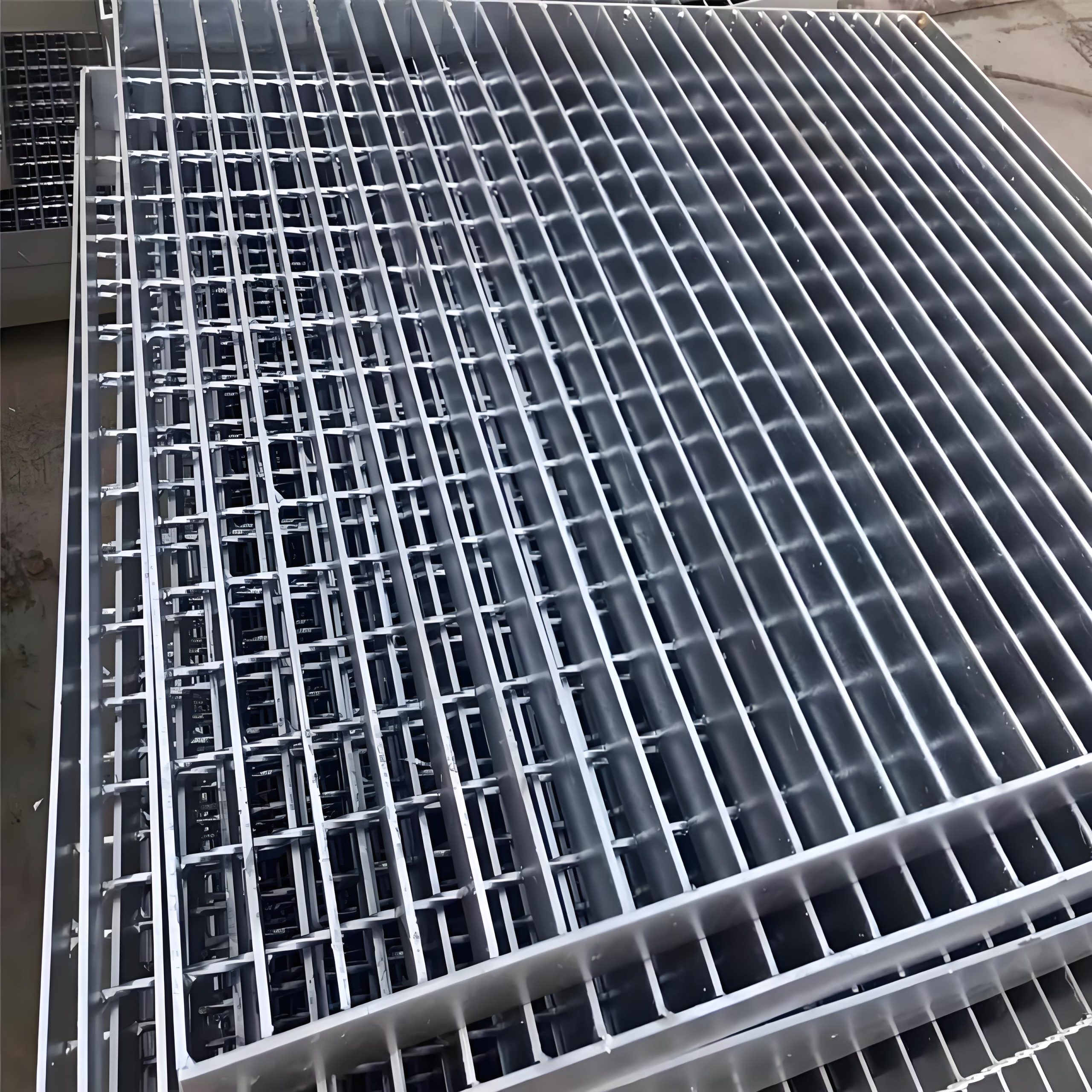
Shape is also a common trigger for custom production. Not every project uses plain rectangular grating. Circular openings, fan-shaped platform sectors, trapezoid decks, triangular infill pieces, curved edges, and notched panels are common in tanks, towers, stair landings, treatment plants, and equipment platforms. These shapes require accurate cutting, edge treatment, and sometimes trial fitting before mass production.
Typical custom scenarios include stair treads with side plates and bolt holes, machine guards with precise openings, trench drain covers with frames and hinges, curved platform sections around tanks, and anti-slip walkway panels with serrated bearing bars. In all of these cases, the grating is not just a metal panel. It becomes part of a larger installation system, so the supplier’s custom ability matters as much as the base material.
When comparing welded steel bar grating suppliers, the first thing to check is whether they have their own processing equipment. A supplier that can only resell standard panels is very different from one that can cut, weld, band, punch, and bend in-house. Key equipment normally includes cutting machines, welding stations, banding facilities, hole-making equipment, and bending or forming tools for special shapes. Without these capabilities, customization often gets outsourced, which can create quality variation and longer lead times.
Minimum order quantity is another practical checkpoint. Some suppliers accept small custom runs, while others only work efficiently on volume orders. This matters a lot for buyers who need only a few special pieces for a repair project or a pilot installation. A supplier should clearly state whether there is a MOQ for standard custom panels, shaped parts, or special material grades.
Non-standard mold development is also worth asking about. If a custom spacing, uncommon cross bar pattern, or special profile is required, the supplier may need to adjust welding fixtures or prepare dedicated tooling. That can increase cost. Buyers should ask upfront whether mold or fixture development is required, how much it costs, and whether the charge is one-time or repeated on later orders.
Drawing handling ability is often overlooked, but it is one of the most important supplier evaluation points. A capable supplier should be able to work from CAD files, PDFs, or even clearly dimensioned hand sketches. In many overseas procurement cases, buyers send mixed information: some parts are in DWG, some in PDF, and some in marked-up site photos. A supplier that can convert this into a clean fabrication drawing is far more useful than one that only waits for perfect drawings.
Lead time is where real custom capability becomes visible. Standard custom work, such as cutting common grating sizes and adding banding, is usually much faster than complex custom work involving irregular shapes, hinges, frames, bending, or heavy-duty manual welding. Buyers should ask for separate lead times for normal customization and complicated fabrication. That gives a more realistic project schedule.
The most basic custom size parameter is the bearing bar specification. In welded steel bar grating, the load-bearing flat bar usually ranges from 25 mm to 100 mm in height and from 3 mm to 6 mm in thickness. Common combinations are widely available, but non-standard combinations can also be made depending on the supplier’s raw material and fabrication setup. If the project needs a specific span-load balance, a custom bar combination may be more practical than forcing a standard size into the design.
Bearing bar center spacing is another major customization point. Standard options include 12.5 mm, 15 mm, 20 mm, 30 mm, and 40 mm, but custom spacing is possible when opening size, drainage rate, or safety requirements are unusual. For example, a drainage cover may need a spacing that balances water flow with debris interception, while a walkway in a high-heel pedestrian area may need a tighter opening than standard industrial grating.
Cross bar spacing is commonly 50 mm or 100 mm, but special intervals such as 30 mm, 76 mm, or other project-specific dimensions can be produced. Custom cross bar spacing is often used when a customer needs greater panel stiffness, a specific visual pattern, or compatibility with an existing design standard.
Single panel size is usually highly flexible. Length and width can be cut to requirement, although the maximum processing size depends on the supplier’s welding line, galvanizing capacity, and handling equipment. Buyers should ask not only for the finished panel size, but also for the supplier’s practical manufacturing limit. A very large one-piece panel may be technically possible but difficult to galvanize, transport, or install.
Irregular shapes are also part of the size customization range. Round panels, fan-shaped sections, trapezoid pieces, triangular fillers, curved grating, panels with cut corners, pipe cut-outs, and access openings are all common. These shapes should be dimensioned carefully, because even small site measurement errors can create installation gaps that are difficult to correct later.
Custom welded steel bar grating is not limited to changing panel length and width. The actual product specification can also be customized in several ways. One important area is the bearing bar type. Flat plain bars are the most common, but serrated bars are often selected for anti-slip performance. Depending on the project, serration can be single-sided or double-sided. I-bar and T-bar options may also be considered in some designs where weight reduction or profile behavior matters.
The cross bar type can also be selected based on production style and end use. Twisted square bar is the most common because it locks well into welded grating and gives a familiar industrial appearance. Rectangular bar and round bar are also used in certain custom projects where visual style, structural detail, or matching with existing systems is important.
Grid type is another customization area. Pressure-welded grating is standard for many industrial applications because it is efficient and consistent. Manual welded grating is often used for low-volume custom work, irregular panels, and cases where the shape or bar combination does not fit an automatic welding line. Heavy-duty welded grating can be made using larger bars and stronger fabrication methods where standard light or medium-duty production is not enough.
Surface treatment can also be customized beyond a simple “galvanized or not” choice. Buyers may request a certain hot-dip galvanizing thickness, electro-galvanizing, black steel for later site coating, special paint colors, anti-slip coatings, or epoxy coating systems. In corrosive or marine environments, a thicker protective treatment may be needed. In visible commercial projects, color consistency may matter more than in industrial plants.
Edge treatment is one of the most common fabrication requests. A panel may need banding bars around all four sides, end plates for load transfer, closure plates for appearance or safety, or bent edges to fit a frame or create a lip. These details affect not only appearance, but also panel stiffness, lifting strength, and installation fit.
Pre-installed connection parts are another frequent requirement. Some projects need welded lugs, bolt holes, clip slots, embedded plates, or prefabricated mounting tabs. Adding these features at the factory is usually cleaner and more accurate than trying to modify the grating on site. It also helps reduce installation time.
Special functional features can make a custom grating panel much more practical. Drain covers may need hinges, latches, lock systems, recessed frames, or lifting handles. Service access panels may need removable sections with alignment tabs. Machine-area grating may need anti-rattle fittings or specific support details. These are small components, but they can determine whether the finished system actually works in daily use.
Bending and forming are also possible for some custom projects. Curved grating panels are often used around tanks or circular platforms, while angle-bent panels may be used for transitions, trench edges, or shaped architectural details. Buyers should confirm whether the grating will be bent after welding, formed in sections, or fabricated from smaller pieces, because the method affects both cost and appearance.
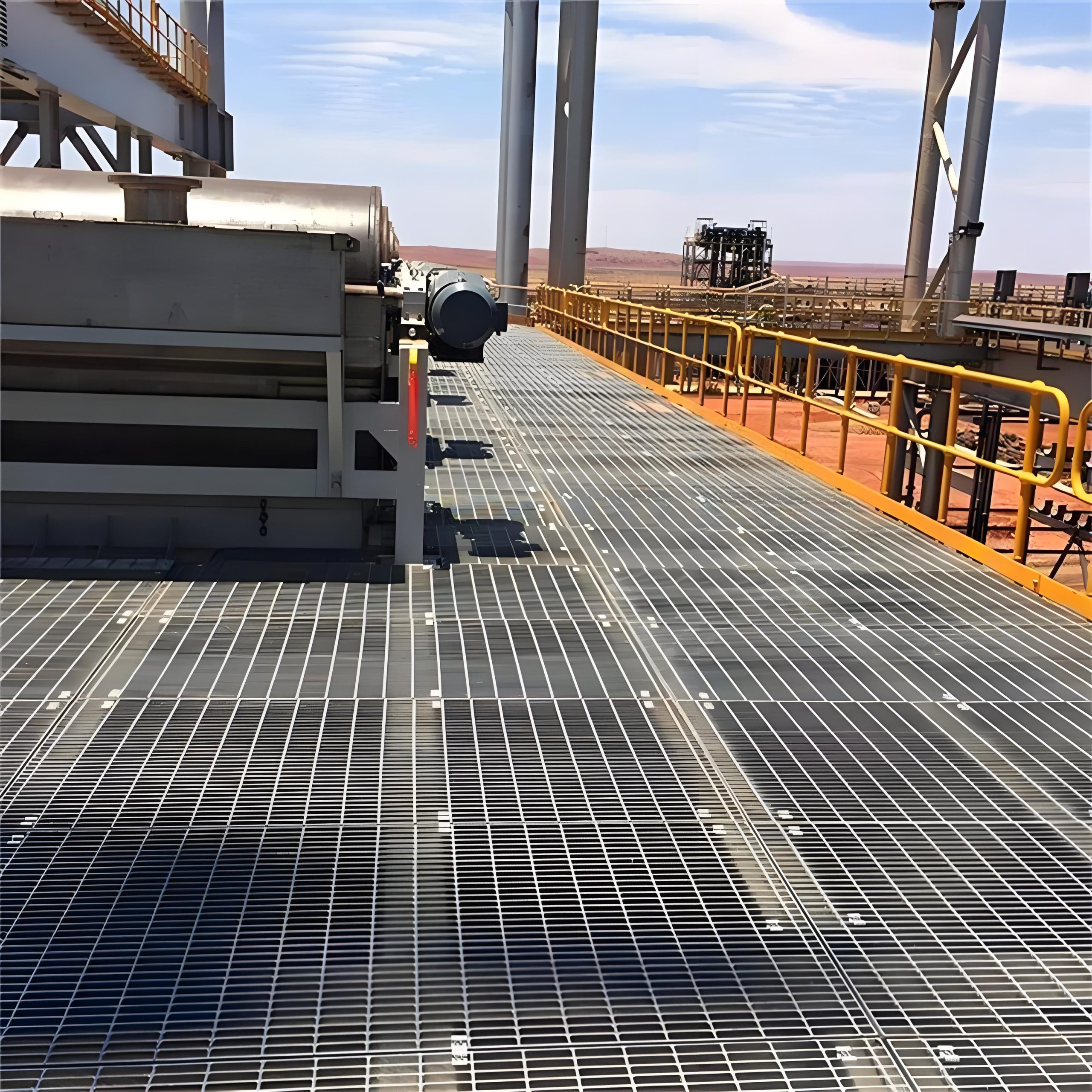
The first step in any custom grating order is for the customer to provide drawings or measured site dimensions. A clear CAD drawing is ideal, but a PDF, marked sketch, or dimensioned hand drawing can also work if the information is complete. For irregular or critical parts, site templates may be necessary.
The second step is for the supplier to prepare a fabrication drawing and, where needed, a load calculation sheet. This is especially important when the grating is used on platforms, covers, or access routes with defined loading requirements. The fabrication drawing should show bar direction, spacing, cut-outs, banding, openings, and fixing points clearly.
The third step is to confirm material grade, specification, surface treatment, and tolerance. This is where many ordering mistakes can be avoided. Buyers should not assume that “galvanized steel grating” automatically means the right coating thickness, or that “standard tolerance” means the same thing for every supplier.
The fourth step is sample approval. For simple custom cuts, a formal sample may not be necessary. For complicated shapes, repeated units, or high-value assemblies, sampling is strongly recommended. A sample can reveal problems with fit, finish, or interpretation before the supplier starts mass production.
The fifth step is batch production with in-process quality inspection. Good suppliers do not wait until the final day to check dimensions. They inspect welding quality, spacing accuracy, cut geometry, and assembly details during production. This is especially important for custom grating with multiple part types.
The sixth step is packaging and shipment. Depending on product type and shipping route, the supplier may use loose bundling, pallets, steel frames, or wooden cases. The packaging method should match the product complexity. Small shaped parts, galvanized covers with hinges, and precision custom panels usually need better protection than simple rectangular stock panels.
To get an accurate quotation and usable production drawing, buyers should provide a full set of technical information rather than only a rough size. The first required item is the application and load requirement. A supplier needs to know whether the grating is for a walkway, platform, trench cover, machinery zone, or decorative use, and the load should be stated in kN/m² or kg/m² if possible.
Each panel’s length, width, and quantity should be listed clearly. If there are many different panel sizes, a cutting schedule is often better than a simple verbal description. For custom drainage covers or framed assemblies, buyers should specify whether dimensions refer to the clear opening, panel size, or outer frame size.
The bearing bar specification, spacing, and direction must be confirmed. Bar direction matters because the bearing bars carry the load. If the orientation is wrong, the panel may not perform as intended even if the steel size looks correct on paper. Buyers should also note the walking direction or span direction where relevant.
Cross bar spacing, surface treatment, and coating thickness requirements should also be provided. If the project requires hot-dip galvanizing to a specific standard or thickness range, that should be stated clearly. The same applies to paint systems, epoxy coatings, or anti-slip finishes.
Any cut-outs, holes, shaped edges, bending, hinges, handles, or frame details must be shown in the drawing. This is where many quotation changes happen. A supplier can price a simple rectangular panel quickly, but once openings and accessories are added, labor time changes a lot.
For drawing format, CAD files in .dwg are usually the most convenient, but PDF drawings are also widely accepted. Hand sketches can work if dimensions are clearly marked. If the part is highly irregular, a 1:1 template or site pattern can save time and reduce mistakes.
Non-standard bearing bar sizes can raise cost because they may require special rolling, non-stock material sourcing, or lower production efficiency. Standard bar sizes are almost always more economical. If a project can work with a common section, that usually helps control cost without sacrificing performance.
Uncommon spacing can also increase price. If the bearing bar or cross bar spacing falls outside the supplier’s regular setup, they may need to adjust welding fixtures, modify tooling, or switch to more manual processing. That means more labor and lower output speed.
Small quantity custom orders tend to have a higher unit cost because setup time, drawing work, and fabrication labor are spread over fewer pieces. A one-off custom drain cover can cost much more per square meter than a batch of standard walkway panels, even if the material weight is similar.
Complex shape cutting is another major factor. As a rough industry reference, laser cutting is usually more expensive than plasma cutting, and plasma cutting is usually more expensive than simple saw cutting. The right method depends on the material thickness, edge quality requirement, and shape complexity. Buyers do not always need the most expensive cutting method, but they should understand why the price changes.
Special finishes also increase cost. Heavy galvanizing, colored paint, epoxy coating, and anti-slip coatings all add material and labor. Stainless steel custom grating is usually in a much higher price range than carbon steel. For basic budgeting, custom carbon steel welded grating may fall roughly in the range of USD 18 to USD 45 per square meter for simpler configurations, while heavy-duty or highly fabricated custom pieces can go much higher. Stainless custom work may easily exceed USD 80 per square meter depending on grade and fabrication complexity.
Urgent lead times can create rush charges as well. If a buyer needs production ahead of the normal queue, the supplier may need overtime, priority scheduling, or special raw material procurement. Rush work is possible, but it is rarely free.
A practical way to screen a supplier is to ask for photos or videos of previous custom projects. Standard product photos are easy for any trader to provide, but actual custom case evidence says much more about fabrication ability. Look for projects with irregular cuts, framed covers, hinged assemblies, or bent panels similar to your own job.
For non-standard grating specifications, ask for load test reports or calculation references. A supplier should be able to support special load claims with more than just a sales statement. This is especially important for platforms, access covers, and any location where safety is tied to load performance.
Cutting accuracy and welding quality should also be checked. For custom grating, dimensional precision often matters more than for ordinary stock panels. Ask what cutting tolerance the supplier can maintain, such as ±1 mm or ±2 mm on key dimensions, and how they control panel squareness and edge finish.
Buyer reviews, project references, or recommendation letters can also help, especially for export orders. While references should never replace technical review, they can reveal whether the supplier handles communication, packaging, and after-sales support in a practical way.
After-sales support should be confirmed before ordering. If there is a size mismatch, who pays for replacement or rework? Is there a stated warranty period? What happens if a custom panel arrives with incorrect openings or attachment details? These issues matter more in custom orders than in standard stock supply. If you are discussing a project with Anping County Chuansen Silk Screen Products Co., Ltd., the same questions should still be asked clearly and documented in the order confirmation.
One common issue is uneven bearing bar spacing. This usually affects both appearance and performance, especially in projects where multiple panels must align visually. Buyers can reduce this risk by asking the supplier to confirm the use of CNC automatic welding equipment where applicable and to provide a factory inspection report showing spacing control.
Another frequent problem is burrs or rough edges after cutting. These edges can create handling hazards and poor fit, especially around shaped openings. The practical solution is simple: specify deburring and grinding in the order, especially for cut-outs, handle zones, and exposed edges.
Hot-dip galvanizing distortion is a real issue on custom panels, particularly long or irregular shapes. Buyers should ask the supplier how they control galvanizing temperature, panel support, cooling speed, and straightening after galvanizing. A practical process note may include temperature control around normal galvanizing practice, careful immersion, slow cooling, and post-galvanizing leveling where needed.
Irregular parts that do not fit tightly on site are another common frustration. The best prevention is to provide an accurate site template or a 1:1 layout for difficult pieces. For multi-part assemblies, pre-assembly at the factory can catch problems before shipment. This is far cheaper than site correction after delivery.
Delivery delays are also common in custom fabrication because custom orders depend on drawing approval, material preparation, processing, finishing, and packaging. Buyers should put lead time milestones and delay responsibility into the contract. It also helps to work with suppliers that keep common raw materials in stock rather than ordering everything only after payment.
Have you measured the installation size on site instead of relying only on an old drawing?
Site measurement is strongly recommended for custom grating, especially for retrofit work, drainage trench covers, irregular structures, and replacement panels. Old drawings often do not reflect field changes, concrete deviation, or steelwork adjustment.
Have you clearly defined the load rating and maximum span?
This is essential because the bearing bar size, spacing, and panel type depend on actual loading and support conditions. Without a clear load target and span, the supplier can only guess, and that increases the risk of under-design or overspending.
Have you confirmed the relationship between bearing bar direction and walking or span direction?
The bearing bars must run in the load-carrying direction. If the orientation is wrong, the panel may not achieve the expected strength. This detail should be shown clearly on the fabrication drawing.
Have you considered dimensional change after hot-dip galvanizing?
For custom work, small dimensional change after galvanizing should be considered, especially where tight fit is required. A practical allowance of about 0.1% to 0.3% may need to be discussed depending on the part geometry and tolerance demand.
Have you checked the supplier’s MOQ and sample fee for custom work?
Custom projects often have different MOQ rules from standard grating. Some suppliers charge separately for sample fabrication, fixture setup, or drawing conversion. Clarifying these points early avoids later price disputes.
Have you written tolerance standards into the contract?
Yes, this should be done whenever fit matters. Many buyers use length and width tolerance around ±3 mm to ±5 mm and flatness tolerance around ±3 mm per meter, but the correct value depends on project requirements. If tolerance is not written, disagreements become much harder to resolve.
What should I send a welded steel bar grating supplier for a custom quote?
Send the application, load requirement, panel dimensions, quantity, bearing bar size, bearing bar spacing, cross bar spacing, surface treatment, and all cut-outs or special features. A DWG file is best, but a PDF or dimensioned hand sketch can also work if the information is complete.
Can welded steel bar grating be made in irregular shapes like circles or curved sections?
Yes. Suppliers can fabricate round, fan-shaped, trapezoid, triangular, curved, notched, and holed panels, but the accuracy depends heavily on the drawing quality and cutting method. For critical fit, a template or sample approval is often recommended.
How long does custom welded steel bar grating usually take to produce?
Simple custom cutting based on standard material may take only a short production cycle, while complex custom work with frames, hinges, bending, or non-standard spacing takes longer. The real lead time depends on drawing approval, material availability, processing complexity, galvanizing schedule, and packing method. Buyers should ask for a separate estimate for standard custom work and complex custom work.