
Home > Products > Steel Grating > 19-W-4 Standard-Duty Welded Steel Bar Grating
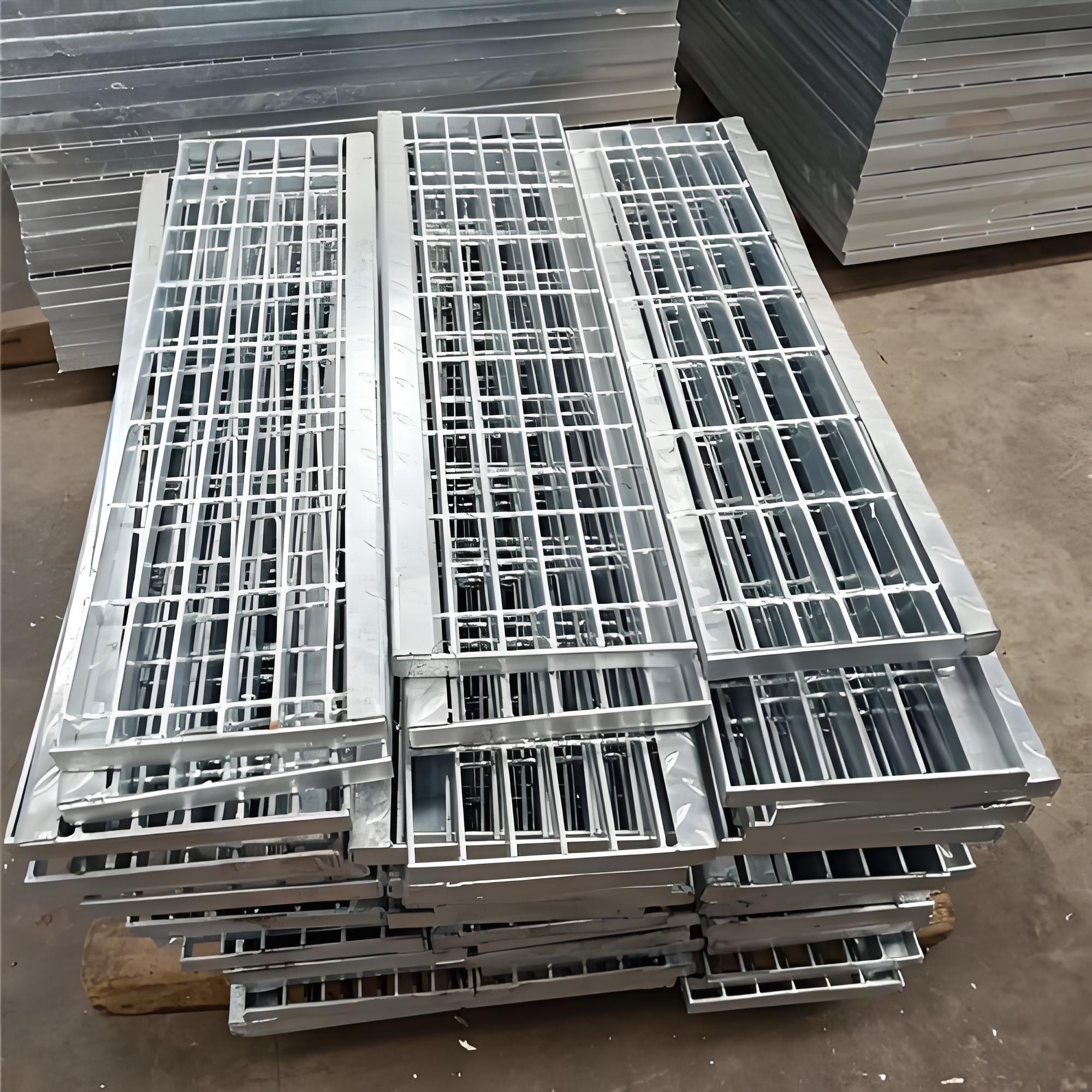
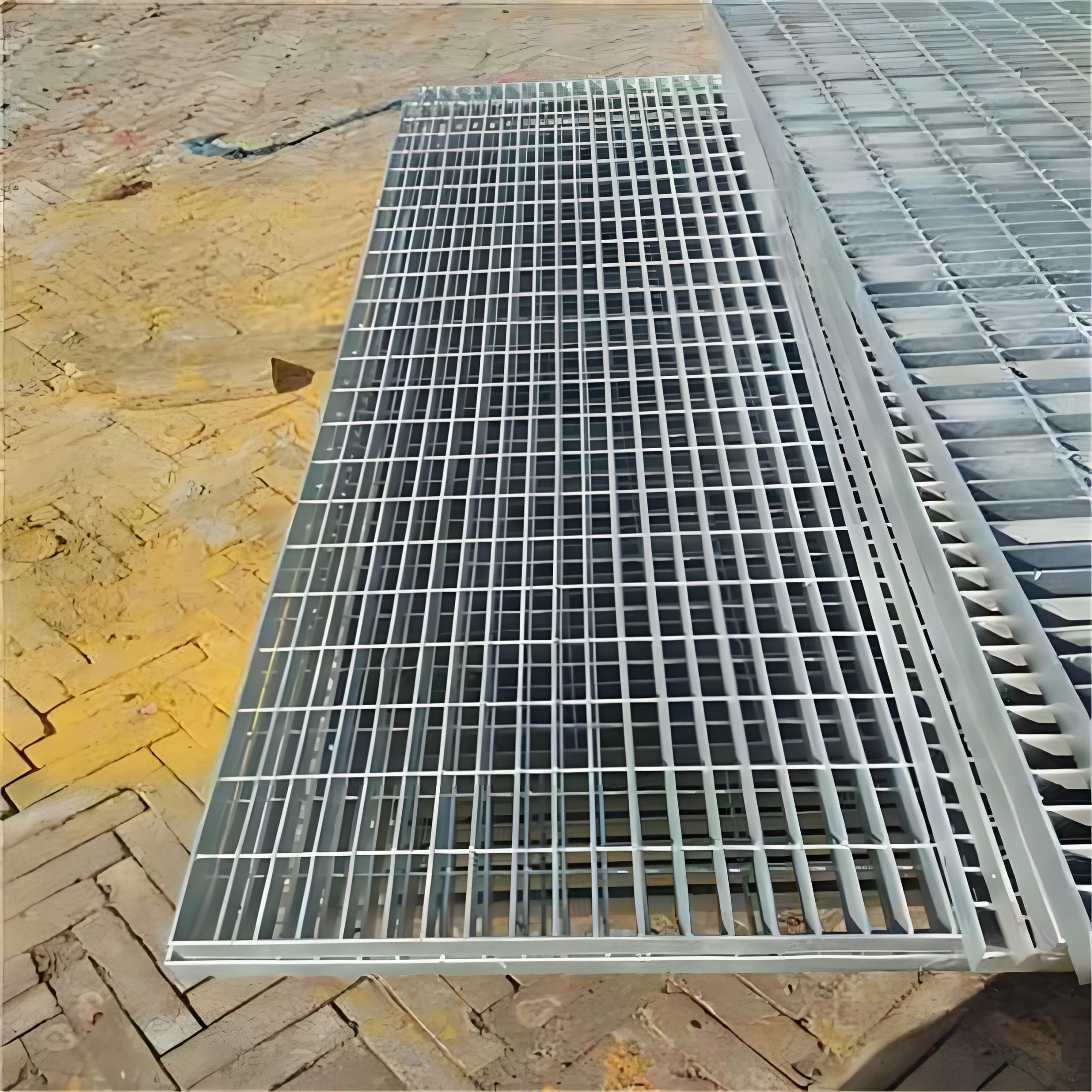
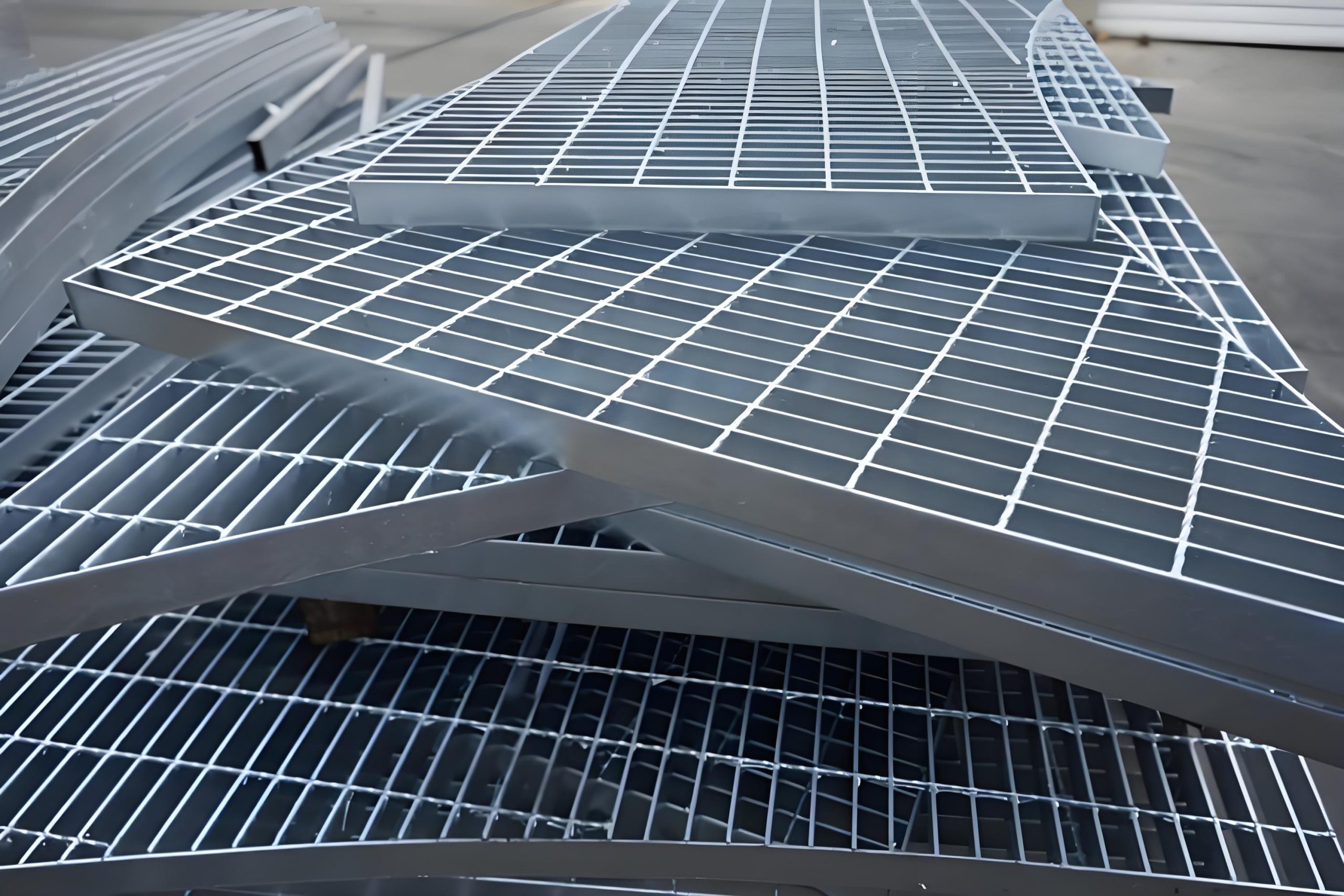
19-W-4 standard-duty welded steel bar grating is one of the most widely used steel grating specifications for industrial flooring, platforms, walkways…
19-W-4 standard-duty welded steel bar grating is one of the most widely used steel grating specifications for industrial flooring, platforms, walkways, catwalks, trench covers, drainage covers, stair treads, equipment access areas, and general factory projects. The term 19-W-4 describes the grating spacing and manufacturing method: bearing bars are spaced at 19/16 inch centers, the grating is welded construction, and cross bars are spaced at 4 inch centers. This specification offers a practical balance between load capacity, open area, drainage performance, ventilation, walking safety, fabrication flexibility, and cost. For buyers, engineers, and project contractors, the key is not only knowing what 19-W-4 means, but also choosing the correct bearing bar size, material, surface type, span direction, panel size, and surface treatment according to the actual load and working environment.
19-W-4 standard-duty welded steel bar grating is commonly selected for industrial projects because it provides strong load-bearing performance with a relatively open and economical structure. It is used in many areas where workers, maintenance teams, light carts, equipment access platforms, and drainage systems require a stable walking or covering surface. Compared with solid steel plate, welded steel bar grating is lighter, easier to drain, easier to ventilate, and more convenient for cleaning. Compared with many special heavy-duty grating patterns, 19-W-4 is usually more economical and easier to source for standard industrial use.
In practical projects, 19-W-4 steel bar grating can be supplied as standard panels or custom fabricated pieces. A buyer may need full-size grating panels for platform flooring, cut-to-size panels for trench covers, banded panels for walkways, notched panels around columns, or stair treads with nosing plates and end plates. The same 19-W-4 spacing can be used in different forms, but the bearing bar size and span must be selected according to the load condition.
For industrial flooring, 19-W-4 grating is often used where workers need safe access around machines, tanks, pipes, conveyors, and maintenance areas. For drainage and trench cover applications, the open structure allows water, debris, and air to pass through the cover while maintaining a strong surface. For outdoor platforms and stairs, hot-dip galvanized 19-W-4 grating is often preferred because it provides corrosion resistance in rain, humidity, and general industrial environments.
| Product Name | 19-W-4 Standard-Duty Welded Steel Bar Grating |
| Construction Type | Welded steel bar grating |
| Bearing Bar Spacing | 19/16 inch center-to-center, equal to approximately 1-3/16 inch |
| Cross Bar Spacing | 4 inch center-to-center |
| Common Surface | Smooth or serrated |
| Common Materials | Carbon steel, hot-dip galvanized steel, stainless steel |
| Typical Uses | Walkways, platforms, flooring, catwalks, trench covers, drainage covers, stair treads |
The specification 19-W-4 is a common way to describe welded steel bar grating. Each part of the code has a specific meaning. Understanding this code helps buyers avoid ordering the wrong spacing or the wrong grating type.
The number 19 refers to the bearing bar spacing. In 19-W-4 steel bar grating, bearing bars are spaced at 19/16 inch centers. This is also commonly expressed as approximately 1-3/16 inch center-to-center. Bearing bars are the main load-carrying bars in the grating panel. They run in one direction and must span across the support opening. The spacing affects load distribution, walking comfort, open area, drainage performance, and material weight.
The letter W means welded construction. In welded steel bar grating, cross bars are welded to the bearing bars under pressure and heat to form a rigid panel. Welded grating is widely used in industrial flooring and platform applications because it provides stable construction, good strength, and economical production for standard grating panels.
The number 4 refers to cross bar spacing. In 19-W-4 grating, cross bars are spaced at 4 inch centers. Cross bars help hold bearing bars in position and provide lateral stability. They are not the main load-bearing members in the same way as bearing bars, but they are important for keeping the panel stable and maintaining spacing.
When buyers request steel grating, simply saying “standard grating” is not enough. Different spacing patterns can change walking feel, drainage opening, price, weight, and load behavior. 19-W-4 is a common standard-duty welded steel bar grating pattern, but it must still be matched with bearing bar size, material, surface treatment, and span direction. A correct specification should include the grating type, bearing bar size, bearing bar spacing, cross bar spacing, surface, finish, panel size, and quantity.
| Specification Part | Meaning | Practical Importance |
| 19 | Bearing bars spaced at 19/16 inch centers | Controls the main spacing, open area, and load distribution |
| W | Welded construction | Indicates the grating is made by welding cross bars to bearing bars |
| 4 | Cross bars spaced at 4 inch centers | Controls lateral stability and cross bar layout |
| Standard-duty | General industrial load category | Suitable for walkways, platforms, drainage covers, and many access areas |
Standard-duty welded steel bar grating is designed for common industrial and commercial applications where the load is moderate rather than extremely heavy. It is widely used for walking surfaces, maintenance platforms, drainage trench covers, mezzanine floors, equipment access panels, catwalks, stair treads, and general facility construction.
Bearing bars are the vertical flat bars that carry the main load. In a 19-W-4 grating panel, the bearing bars should be placed so that they span across the support distance. This is a critical point. If the bearing bars are installed parallel to the trench or platform support instead of spanning across it, the grating will not perform as intended. The load capacity depends heavily on bearing bar height, thickness, material strength, and clear span.
Cross bars are welded across the bearing bars to hold the structure together. In 19-W-4 grating, the cross bars are spaced at 4 inch centers. They help maintain bearing bar alignment and provide panel stability during handling, installation, and service. Although bearing bars carry most of the load, cross bars are important for keeping the grating rigid and usable.
One of the main features of 19-W-4 steel bar grating is its open structure. It allows water, air, light, dust, small debris, and heat to pass through the panel. This makes it practical for industrial flooring, drainage covers, outdoor platforms, catwalks, and utility areas. In places where water accumulation is a problem, grating is often more practical than solid steel plate.
Standard-duty welded steel bar grating can be cut, banded, notched, framed, and fabricated into different shapes. This is useful for projects with columns, pipes, equipment bases, trench openings, curved edges, or access holes. Manufacturers can provide panels according to drawings, with bearing bar direction and support details confirmed before production.
The spacing of 19-W-4 grating is one of the main reasons this specification is widely used. It provides a balance between open area and walking support. The bearing bar spacing of 19/16 inch gives enough opening for drainage and ventilation while still providing a practical walking surface for many industrial applications.
In 19-W-4 welded steel bar grating, bearing bars are spaced at 19/16 inch centers. This means the center of one bearing bar to the center of the next bearing bar is 19/16 inch. The actual clear opening between bars depends on bearing bar thickness. If the bearing bar is thicker, the clear opening becomes smaller. If the bar is thinner, the clear opening is larger.
Bearing bar spacing affects several factors. Closer spacing generally improves walking comfort and support for small objects or narrow wheels, but it increases material weight and cost. Wider spacing improves open area and reduces weight, but may not be suitable for all walking or wheel conditions. 19-W-4 is popular because it provides a practical middle ground for many industrial uses.
The cross bar spacing of 19-W-4 grating is 4 inch centers. Cross bars are usually welded perpendicular to the bearing bars. The 4 inch spacing provides enough stability for standard-duty panels while keeping the grating economical. In applications requiring different surface feel or closer cross bar support, other grating patterns may be selected, but 19-W-4 remains a common industrial choice.
For walkways and platforms, 19-W-4 grating provides good drainage and ventilation while maintaining a stable walking surface. For trench covers, the spacing allows water to enter the channel efficiently. For stair treads, the spacing can be combined with serrated bearing bars and nosing plates to improve slip resistance. For small-wheel carts, heel-safe areas, or public pedestrian zones, buyers should check whether the opening size meets the project’s safety requirement.
| Spacing Item | 19-W-4 Value | Effect on Use |
| Bearing bar spacing | 19/16 inch center-to-center | Balances walking support, drainage, open area, and cost |
| Cross bar spacing | 4 inch center-to-center | Provides panel stability and standard welded grating structure |
| Open area | Depends on bar thickness and spacing | Supports drainage, ventilation, and light transmission |
| Walking comfort | Suitable for many industrial areas | Should be checked for public access, small wheels, or special safety needs |
The 19-W-4 specification defines spacing and welded construction, but it does not define one fixed bearing bar size. Bearing bar size must be selected according to load and span. A 19-W-4 grating panel made with 1 inch x 1/8 inch bearing bars is not the same as one made with 1-1/2 inch x 3/16 inch bearing bars. The spacing may be the same, but the load capacity and weight are different.
Bearing bar height is a major factor in load capacity. Taller bearing bars can resist bending better across longer spans. For example, a 1 inch high bearing bar is generally used for lighter-duty applications and shorter spans, while 1-1/4 inch, 1-1/2 inch, or 2 inch high bearing bars may be selected when higher load capacity or longer span is required.
Bearing bar thickness also affects strength, durability, and weight. Common thicknesses include 1/8 inch, 3/16 inch, and sometimes heavier options for stronger applications. A thicker bearing bar increases material weight and cost, but it can improve load resistance and service life in demanding conditions.
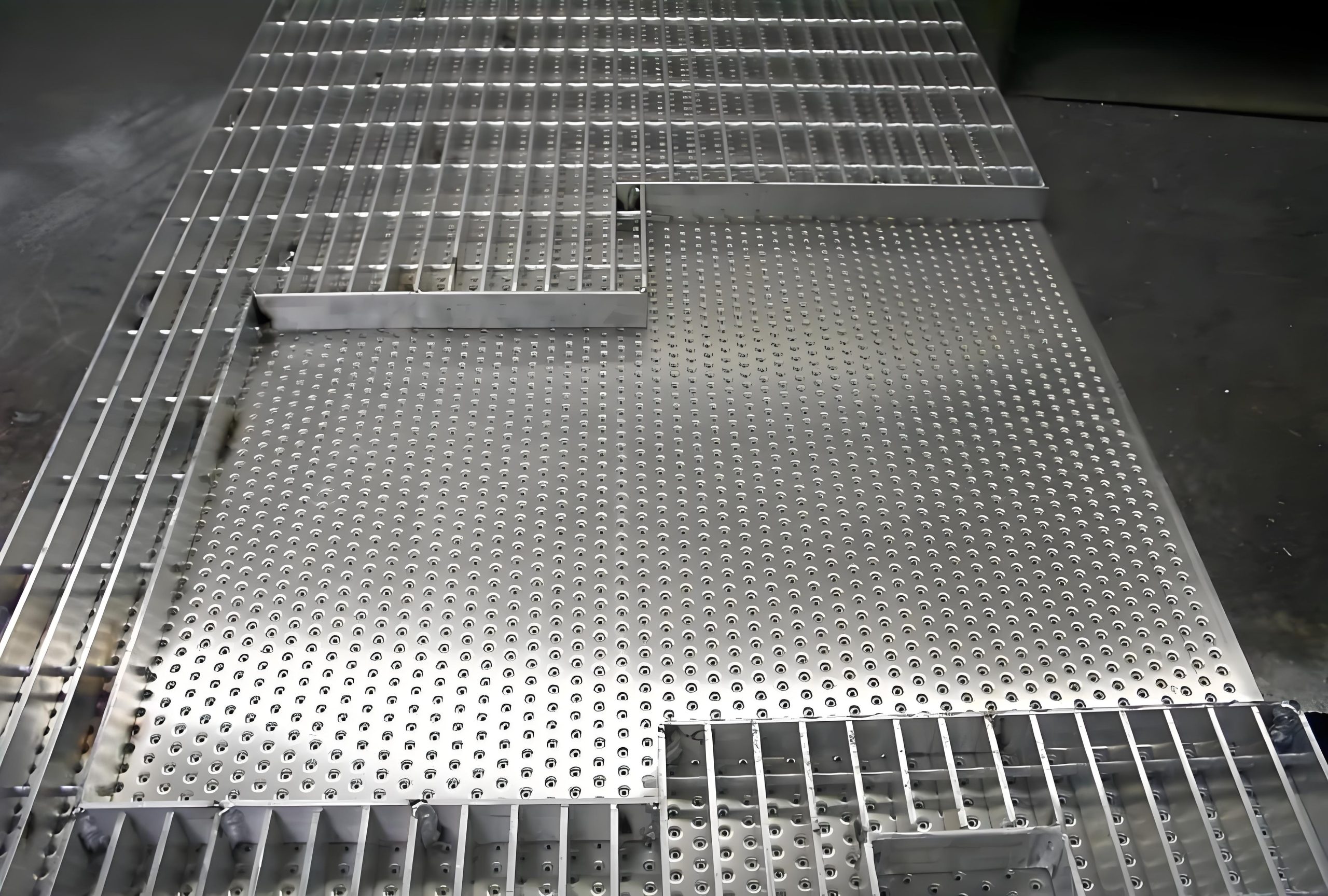
For standard-duty 19-W-4 welded steel bar grating, common bearing bar sizes may include 1 inch x 1/8 inch, 1 inch x 3/16 inch, 1-1/4 inch x 1/8 inch, 1-1/4 inch x 3/16 inch, 1-1/2 inch x 1/8 inch, and 1-1/2 inch x 3/16 inch. The final selection should be based on span, live load, deflection requirement, traffic type, and support condition.
| Bearing Bar Size | Typical Use | Selection Note |
| 1 inch x 1/8 inch | Light-duty walkways, short spans, drainage covers | Economical option for lighter loads |
| 1 inch x 3/16 inch | General access areas and moderate loads | Higher strength than 1/8 inch thickness |
| 1-1/4 inch x 1/8 inch | Platforms, catwalks, industrial flooring | Improved span performance with moderate weight |
| 1-1/4 inch x 3/16 inch | Stronger standard-duty applications | Good for more demanding walkway and floor use |
| 1-1/2 inch x 1/8 inch | Longer spans and platform flooring | Taller bar improves bending resistance |
| 1-1/2 inch x 3/16 inch | Heavier standard-duty industrial areas | Suitable when higher load and durability are required |
| 2 inch or heavier | Long spans or stronger industrial applications | May move toward heavier-duty design depending on load |
When requesting a quotation, buyers should not only write “19-W-4 grating.” A complete inquiry should include bearing bar size, surface type, material, finish, panel size, quantity, and intended use. If the buyer is unsure of bearing bar size, the supplier should ask for clear span and load requirement before recommending a specification.
19-W-4 welded steel bar grating can be supplied with smooth bearing bars or serrated bearing bars. The correct surface depends on the working environment and slip risk. Smooth grating is common for dry industrial areas, general platforms, and areas where workers need a stable open surface. Serrated grating is selected when better traction is needed.
Smooth surface 19-W-4 grating uses bearing bars with a plain top edge. It is economical, easy to clean, and suitable for many general industrial applications. It is commonly used for indoor platforms, mezzanine floors, equipment access areas, drainage covers, and general walkways where the surface is not frequently wet or oily.
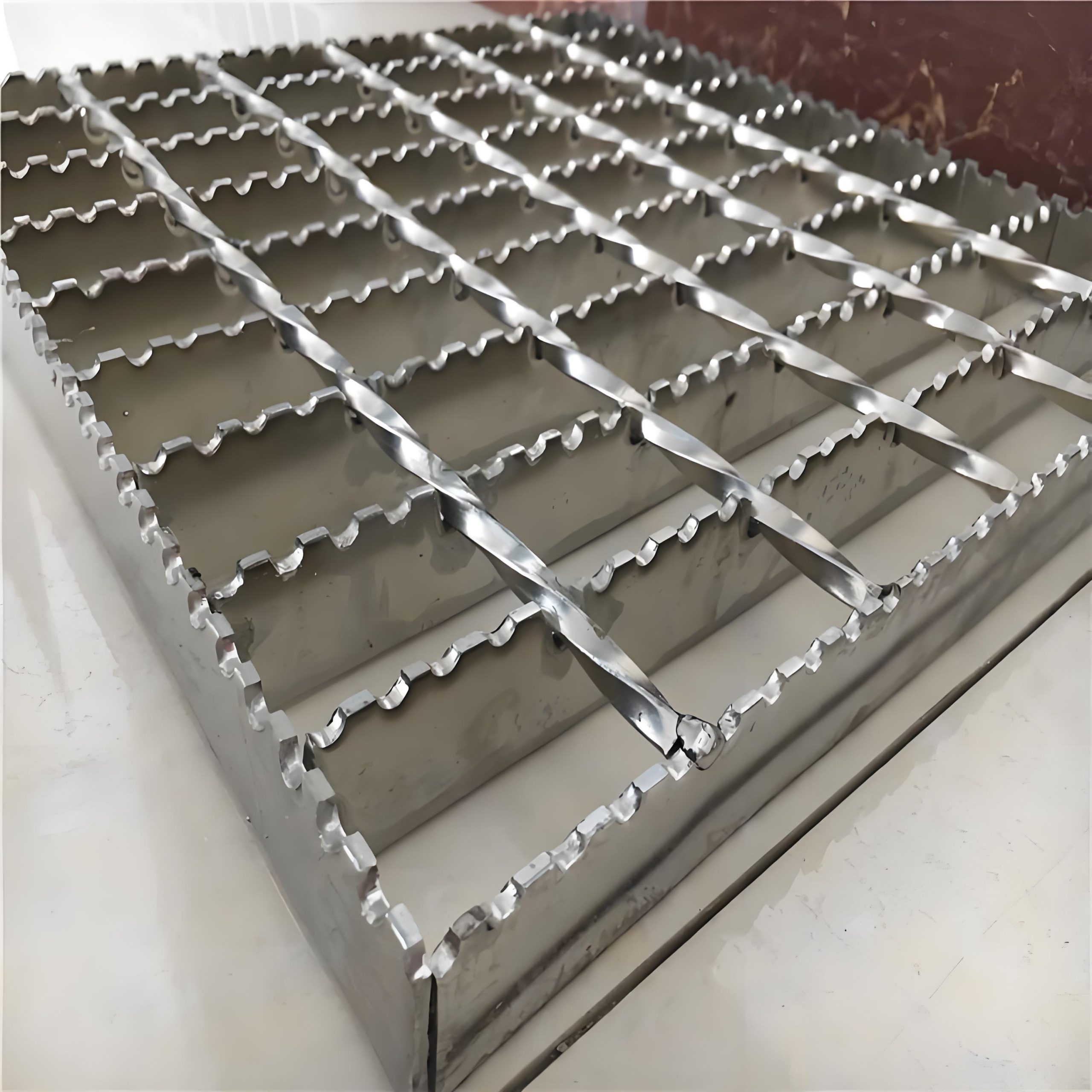
Serrated 19-W-4 grating has notched bearing bars that improve slip resistance. It is suitable for outdoor platforms, wet walkways, wastewater areas, washing zones, oily industrial floors, stair treads, and locations where workers may walk across the grating in rain or with slippery footwear. Serrated grating usually costs slightly more than smooth grating, but the added safety may be important in many industrial environments.
If the grating is used in a dry indoor area with limited slip risk, smooth 19-W-4 grating is often enough. If the grating is used outdoors, near drainage channels, on stairs, around wash-down areas, or in oily factories, serrated grating is usually a better choice. For stair treads, serrated bearing bars combined with nosing plates can improve safety.
| Surface Type | Main Advantage | Suitable Application |
| Smooth 19-W-4 grating | Economical, clean, easy to fabricate | Indoor platforms, general flooring, dry access areas |
| Serrated 19-W-4 grating | Better anti-slip performance | Outdoor walkways, stairs, wet floors, drainage areas, industrial platforms |
| Galvanized serrated grating | Anti-slip plus corrosion protection | Outdoor industrial platforms, catwalks, trench covers |
| Stainless serrated grating | Anti-slip plus corrosion resistance | Food plants, chemical areas, coastal environments |
Material selection affects strength, corrosion resistance, surface appearance, price, and service life. 19-W-4 welded steel bar grating can be produced from carbon steel, hot-dip galvanized carbon steel, or stainless steel. Each material is suitable for different project conditions.
Carbon steel is the most common and economical material for welded steel bar grating. It provides good strength and is suitable for many indoor industrial uses. Carbon steel grating can be supplied as untreated black steel, painted steel, or hot-dip galvanized steel. For dry indoor areas, painted or untreated carbon steel may be used depending on project requirements. For outdoor or wet areas, hot-dip galvanizing is normally recommended.
Hot-dip galvanized 19-W-4 grating is widely used in outdoor industrial projects because it combines carbon steel strength with zinc corrosion protection. Galvanizing protects the surface, including welded areas and cut edges, helping extend service life in rain, humidity, and general industrial environments. It is commonly used for outdoor platforms, drainage covers, catwalks, stair treads, trench covers, walkways, and utility access areas.
Stainless steel 19-W-4 grating is selected for corrosive, hygienic, or clean environments. Stainless steel 304 is suitable for many humid indoor and commercial applications. Stainless steel 316 is more suitable for coastal, chemical, wastewater, marine, and chloride-containing environments. Stainless steel grating costs more than carbon steel or galvanized steel, but it may provide better long-term performance where corrosion is a serious concern.
The best material depends on the site. Indoor dry areas can often use carbon steel. Outdoor industrial environments usually require hot-dip galvanized steel. Food processing, chemical plants, coastal sites, and wastewater areas may require stainless steel. Buyers should describe the working environment clearly so the supplier can recommend the proper material and surface finish.
| Material Option | Advantages | Typical Use | Important Note |
| Carbon steel | Economical and strong | Indoor industrial floors, platforms, dry areas | Needs coating or galvanizing for wet environments |
| Painted carbon steel | Basic protection and color option | Indoor or low-corrosion areas | Paint may wear in high-traffic or wet conditions |
| Hot-dip galvanized steel | Good corrosion resistance with strong structure | Outdoor platforms, trench covers, drainage covers, catwalks | Common choice for general outdoor industrial projects |
| Stainless steel 304 | Good corrosion resistance and clean appearance | Food plants, commercial areas, humid indoor projects | Not the best choice for high chloride exposure |
| Stainless steel 316 | Better corrosion resistance in harsh environments | Coastal, chemical, marine, wastewater projects | Higher cost but better long-term corrosion performance |
Load capacity is one of the most important considerations when selecting 19-W-4 standard-duty welded steel bar grating. The same 19-W-4 spacing can be used in light-duty or stronger applications depending on bearing bar size, material, span, and support condition. A grating panel should never be selected by spacing alone.
Industrial walkways usually carry workers, tools, and occasional maintenance items. For these applications, 19-W-4 standard-duty grating is often suitable when the bearing bar size and span are properly selected. Anti-slip surface may be required for outdoor or wet walkways. If the walkway is elevated, edge banding, toe plates, handrails, and safe installation details should also be considered as part of the overall access system.
Platforms may carry workers, equipment, maintenance parts, or temporary loads. The grating must be selected according to the maximum expected load and support spacing. For large platforms, the grating layout should be coordinated with supporting beams so that bearing bars span correctly. The support direction must be clearly marked in drawings.
When 19-W-4 grating is used as a drainage cover or trench cover, the load may come from pedestrians, carts, forklifts, or vehicles. Pedestrian drainage covers may use lighter bearing bars. Forklift or vehicle trench covers need stronger bearing bars and more careful support design. If the clear trench opening is wide, a heavier bar size or additional support may be needed.
Span is the clear distance between supports. Longer spans require stronger bearing bars. Even if a grating does not break, excessive deflection can make the surface feel unsafe, create vibration, and reduce service life. For platforms and trench covers, deflection should be considered together with load capacity. A professional supplier should ask for span and load before recommending a bearing bar size.
| Application | Typical Load Concern | Selection Focus |
| Pedestrian walkway | Workers and light tools | Walking safety, anti-slip surface, suitable bearing bar size |
| Industrial platform | Workers, equipment access, maintenance loads | Span direction, support beam layout, deflection control |
| Catwalk | Narrow access path and elevated walking | Panel stability, banding, toe plate compatibility |
| Drainage cover | Water flow plus walking or wheel load | Open area, support seating, bearing bar direction |
| Trench cover | Pedestrian, cart, forklift, or vehicle crossing | Clear opening, wheel load, frame support, fixing method |
| Stair tread | Foot traffic and slip resistance | Serrated surface, nosing plate, end plate, bolt holes |
19-W-4 welded steel bar grating is used in many industrial applications because it can be fabricated into different product forms. The same base grating pattern can serve as flooring, catwalk panels, drainage trench covers, machine access platforms, or stair treads depending on fabrication details.
For industrial flooring, 19-W-4 grating provides a strong and open walking surface. It allows light and air to pass through, which is useful for mezzanines, equipment platforms, and multi-level industrial structures. Flooring panels are usually supported by beams or steel frames. Bearing bar direction should follow the structural design so that bars span between supports.
Catwalks and maintenance walkways often use 19-W-4 grating because it offers good traction, drainage, and visibility. In elevated applications, safety is important. The grating should be properly fixed to the support structure, and the edges should be banded where needed. Serrated grating may be selected for outdoor catwalks or areas exposed to water and oil.
19-W-4 grating is commonly used as trench covers and drainage covers because water can pass through the openings. The grating can be supplied as removable panels with banded edges. For road or forklift crossings, stronger bearing bars and frames may be required. For pedestrian drainage channels, standard-duty grating may provide a good balance of safety, drainage, and cost.
19-W-4 grating can be fabricated into stair treads by adding end plates and nosing. Serrated bearing bars are often used for stair treads to improve slip resistance. The nosing plate provides a more visible and reinforced front edge. Bolt holes in the end plates allow the stair treads to be installed onto stair stringers.
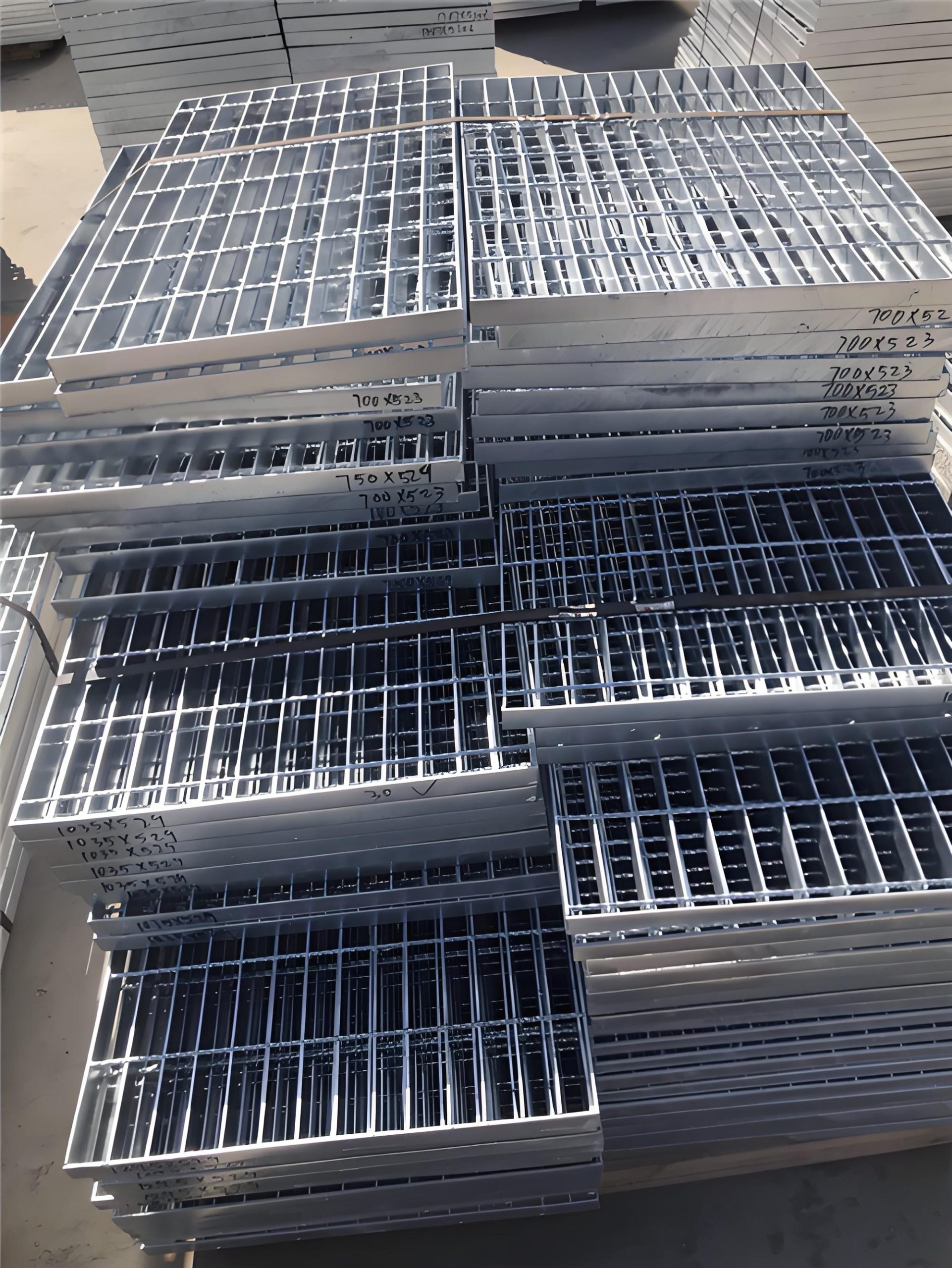
Equipment platforms in factories, power plants, water treatment plants, and processing facilities often use welded steel bar grating because it is durable and easy to maintain. 19-W-4 is suitable for many standard-duty access platforms, but the actual bearing bar size should be selected according to load and span.
| Product Form | Fabrication Details | Common Use |
| Flooring panel | Standard panel, cut-to-size, banded edges | Industrial floors, platforms, mezzanines |
| Catwalk panel | Banded, fixed to steel supports, optional serrated surface | Maintenance access, pipe racks, elevated walkways |
| Trench cover | Cut-to-size, banded, removable, optional frame | Drainage channels, cable trenches, utility trenches |
| Stair tread | End plates, nosing plate, bolt holes, serrated surface | Industrial stairs and access ladders |
| Drainage cover | Open grating structure, galvanized finish, custom size | Factory drainage, outdoor channels, municipal drains |
Hot-dip galvanized 19-W-4 steel grating is one of the most practical choices for outdoor industrial use. Steel grating used outdoors is exposed to rain, humidity, dust, temperature changes, and general corrosion conditions. Without proper protection, carbon steel grating can rust, especially at welded joints and cut edges. Hot-dip galvanizing helps protect the steel and extend service life.
Hot-dip galvanizing coats the steel surface with zinc after fabrication. This means the bearing bars, cross bars, weld points, banding, and many cut areas receive corrosion protection. For welded steel grating, galvanizing is especially useful because the product has many edges and intersections. A painted surface may not protect these details as effectively in outdoor wet environments.
Hot-dip galvanized 19-W-4 grating is used for outdoor platforms, catwalks, stair treads, drainage covers, trench covers, pedestrian walkways, industrial yards, utility access points, and equipment maintenance areas. It is suitable for many general outdoor projects, but highly corrosive environments may require stainless steel or additional corrosion protection.
Good galvanizing quality depends on proper fabrication and surface preparation. The grating should be welded cleanly, and panel design should allow zinc to flow and drain. After galvanizing, the supplier should check for sharp zinc points, excessive lumps, uncoated areas, deformation, and general finish quality. For cut-to-size grating, fabrication should ideally be completed before galvanizing so the cut edges are protected.
| Outdoor Condition | Recommended Finish | Reason |
| General outdoor platform | Hot-dip galvanized | Good corrosion protection for rain and humidity |
| Factory yard drainage | Hot-dip galvanized | Suitable for water exposure and industrial use |
| Coastal area | Stainless steel 316 or enhanced protection | Salt exposure can accelerate corrosion |
| Chemical plant | Stainless steel or special coating depending on chemicals | Chemical exposure may exceed normal galvanizing protection |
| Wastewater area | Stainless steel or galvanized steel depending on water chemistry | Corrosion conditions should be checked before selection |
19-W-4 welded steel bar grating can be supplied in standard panel sizes or cut and fabricated according to project drawings. Standard panels are useful for stock supply and general industrial flooring, while custom cutting is needed for real construction sites where openings, supports, columns, pipes, and equipment bases must be considered.
Standard grating panels are often supplied in larger sizes and then cut to the required dimensions. This can be economical for projects that need many panels with repeated dimensions. Standard panels are useful for distributors, stockists, fabrication shops, and contractors who perform cutting locally.
Custom cut 19-W-4 grating is preferred when the buyer wants panels ready for installation. The manufacturer can cut panels according to drawings, add edge banding, notch around obstacles, drill holes, prepare stair treads, and apply surface treatment. Custom fabrication reduces site labor and helps improve installation accuracy.
When ordering custom panels, bearing bar direction must be clearly marked. The load capacity depends on the bearing bars spanning between supports. If the panel is cut with the wrong bar direction, the product may not match the structural requirement. Drawings should show bearing bar direction, panel size, and support layout.
Large panels can reduce the number of joints, but they may be difficult to handle, transport, or install. Smaller panels are easier to lift and replace but require more support points and may create more joints. For trench covers and removable access panels, panel weight should be considered carefully. If workers need to lift panels manually, smaller sections or lifting handles may be needed.
| Panel Option | Advantage | Best Use |
| Standard full panels | Economical for stock and repeated cutting | Distributor stock, large flooring areas, local fabrication |
| Cut-to-size panels | Ready for installation | Platforms, trench covers, walkways, project orders |
| Banded panels | Improved edge strength and appearance | Walkways, removable panels, trench covers |
| Notched panels | Fits around columns, pipes, and obstacles | Industrial platforms and equipment areas |
| Stair tread fabrication | Includes end plates and nosing | Industrial stairs and access systems |
Fabrication support is important for industrial grating projects because standard panels often need to be adjusted before installation. A manufacturer that can provide welding, banding, notching, stair tread fabrication, frame fabrication, and surface finishing can reduce buyer workload and installation problems.
In welded steel bar grating, welding quality affects panel strength and stability. Cross bars must be securely welded to bearing bars. For fabricated panels, additional welding may be required for banding, toe plates, frames, clips, stair tread end plates, and reinforcement. Good welding reduces the risk of loose bars, weak edges, and long-term fatigue.
Banding means welding a flat bar around the edge of the grating panel. It closes the open bar ends, improves appearance, strengthens the panel perimeter, and reduces sharp edges. Banded 19-W-4 grating is commonly used for walkways, platforms, trench covers, stair treads, and removable access panels.
Notching is used when grating panels need to fit around columns, pipes, posts, machine bases, wall corners, or structural supports. Accurate notching helps the panel fit the site without excessive gaps. The notched area may need additional banding to maintain strength and safe edges.
Some 19-W-4 grating applications require frames or fixing clips. Trench covers may need angle frames for seating. Platform panels may need clips to secure them to steel beams. Stair treads need end plates and bolt holes. These details should be confirmed before production so the panels arrive ready for installation.
| Fabrication Service | Purpose | Common Application |
| Cutting | Adjusts panels to required size | Platform flooring, trench covers, walkways |
| Banding | Closes edges and improves strength | Banded panels, removable covers, stair treads |
| Notching | Fits around obstacles | Pipe areas, columns, machine bases |
| Stair tread fabrication | Adds nosing and end plates | Industrial stairs |
| Frame fabrication | Provides stable support | Trench covers and drainage covers |
| Clip preparation | Supports panel fixing | Platforms, walkways, catwalks |
Choosing 19-W-4 grating requires matching the bearing bar size with the span and load. The spacing code alone does not define the full strength of the product. Buyers should identify the clear span, support direction, expected load, surface condition, and material environment before confirming a specification.
The clear span is the unsupported distance between bearing supports. In platform flooring, it may be the distance between support beams. In trench covers, it may be the clear opening of the trench. The longer the span, the stronger the bearing bar must be. Buyers should provide the clear span rather than only the outside panel size.
The load may come from pedestrians, workers, carts, equipment, forklifts, or vehicles. Standard-duty 19-W-4 grating is suitable for many pedestrian and industrial access applications, but not every 19-W-4 panel is suitable for wheel loads or heavy traffic. Forklift and vehicle applications require special attention because wheel loads are concentrated.
After span and load are known, the bearing bar height and thickness can be selected. Short spans and light loads may use smaller bars. Longer spans or heavier loads may require larger bars. If the load is too high for standard-duty grating, a heavy-duty grating specification may be needed.
Choose smooth surface for dry general areas and serrated surface for wet, oily, outdoor, or stair applications. Surface safety should be considered together with drainage and cleaning needs.
Use carbon steel for economical indoor applications, hot-dip galvanized steel for outdoor and general industrial environments, and stainless steel for corrosive or hygienic environments. Surface finish should match the exposure condition.
Before ordering, confirm panel dimensions, bearing bar direction, banding, notching, cut-outs, frames, clips, stair tread details, and packaging. These details affect installation success.
| Selection Step | Question to Answer | Why It Matters |
| Confirm span | What is the clear distance between supports? | Determines bearing bar strength requirement |
| Confirm load | Will it carry pedestrians, carts, forklifts, or vehicles? | Determines whether standard-duty grating is enough |
| Choose bearing bar | What height and thickness are needed? | Controls load capacity, deflection, weight, and price |
| Choose surface | Smooth or serrated? | Affects slip resistance and safety |
| Choose material | Carbon steel, galvanized steel, or stainless steel? | Affects corrosion resistance and cost |
| Confirm fabrication | Cutting, banding, notching, frames, clips, stair treads? | Ensures correct installation |
Quality control is important because 19-W-4 welded steel bar grating is often used as a walking or load-bearing surface. Poor quality can cause safety issues, installation problems, noise, deformation, corrosion, and early replacement. A professional manufacturer should inspect material, welding, spacing, flatness, dimensions, surface treatment, and packaging before shipment.
Welded grating depends on strong connections between bearing bars and cross bars. Weak welds can lead to loose cross bars, unstable panels, or reduced service life. For fabricated panels, banding welds, frame welds, stair tread end plate welds, and handle welds should also be checked.
Flatness is important for walkways, platforms, trench covers, and stair treads. Warped panels can create trip hazards, unstable seating, and installation difficulty. Welding and hot-dip galvanizing can affect flatness, so panels should be inspected after fabrication and finishing.
Custom grating panels must match the drawings. Width, length, diagonal, bearing bar direction, notching position, frame fit, and bolt hole location should be checked. For trench covers, incorrect size may cause unsafe gaps or prevent installation. For platform panels, wrong bearing bar direction can reduce load capacity.
Surface finish should match the material and project requirement. Hot-dip galvanized grating should have proper zinc coverage and safe edges. Painted grating should have consistent coating. Stainless steel grating should be free from serious contamination and sharp burrs. Serrated grating should be inspected for safe handling and consistent surface quality.
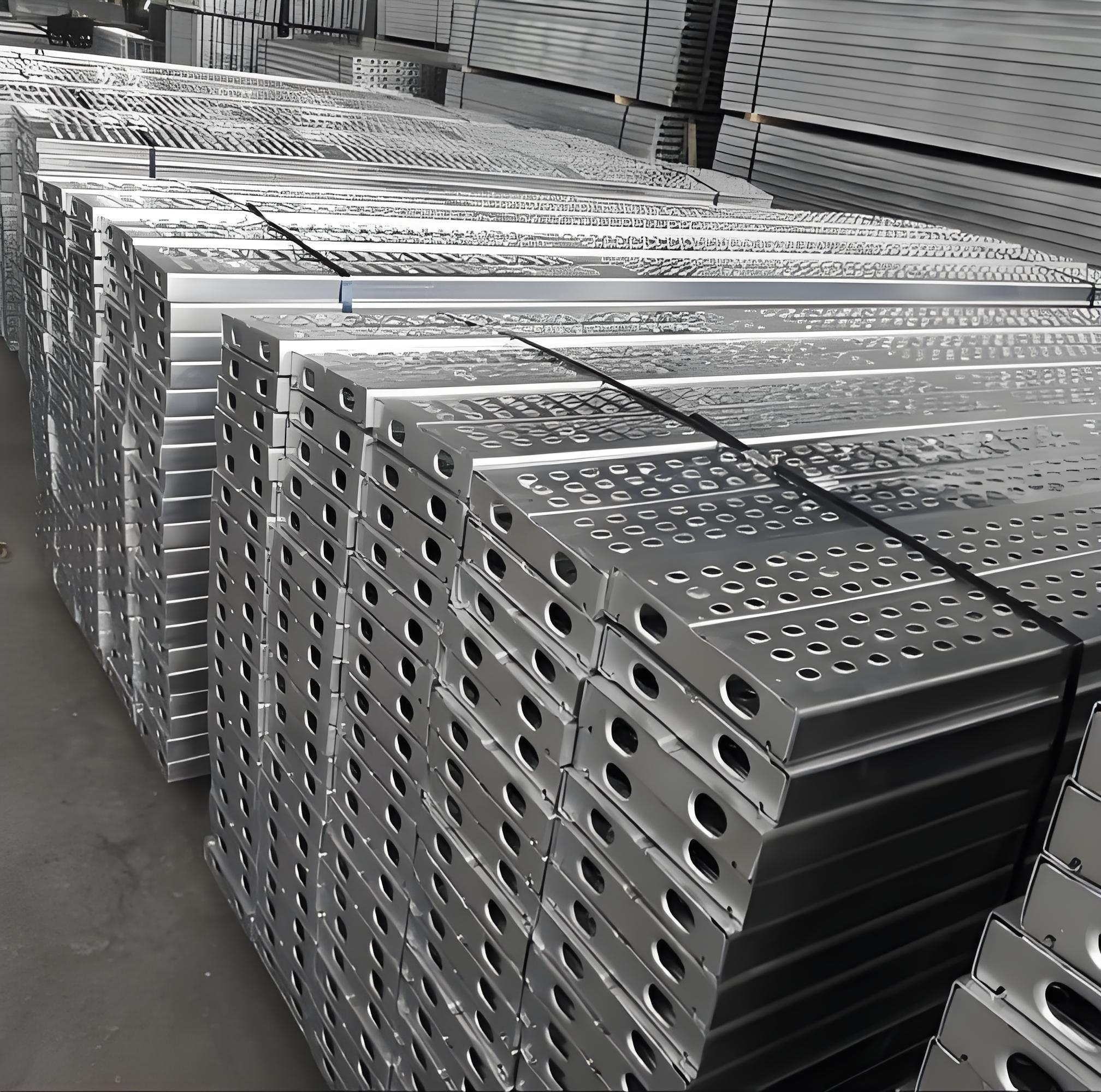
Steel bar grating panels are heavy and can be damaged if stacked poorly. Export packaging should protect the panels from bending, rubbing, coating damage, and mixed-size confusion. Labels and packing lists are especially important for custom projects with many panel sizes.
| Quality Item | Inspection Focus | Potential Problem if Ignored |
| Material | Bar size, material grade, thickness | Wrong strength, corrosion issue, unstable quality |
| Welding | Cross bar welds, banding welds, frame welds | Loose bars, weak panels, early failure |
| Spacing | Bearing bar and cross bar spacing | Wrong specification or poor panel consistency |
| Flatness | Panel distortion and levelness | Trip hazard, rocking, difficult installation |
| Dimensions | Length, width, diagonal, notches, holes | Incorrect fit at job site |
| Surface finish | Galvanizing, painting, stainless finish, burrs | Rust, rough surface, unsafe handling |
| Packaging | Stacking, labels, protection | Shipping damage or installation confusion |
To receive an accurate quotation, buyers should provide complete information. A request that only says “19-W-4 grating price” may not be enough because the final price depends on bearing bar size, material, finish, panel size, fabrication, and quantity. Clear information helps the supplier recommend the right product and calculate cost accurately.
The buyer should provide bearing bar size, grating spacing, material, finish, surface type, panel dimensions, quantity, and application. If the buyer does not know the bearing bar size, the clear span and load condition should be provided so the supplier can recommend a suitable option.
If the grating needs cutting, banding, notching, stair tread fabrication, frames, clips, or special packing, these details should be included in the inquiry. Drawings are helpful for custom fabrication. For platform projects, drawings should show bearing bar direction and support beam layout.
For export orders, the destination port, delivery term, packing requirement, and project schedule should be confirmed. Heavy grating panels require suitable packaging to prevent deformation and surface damage during transportation.
ApplicationWalkway, platform, trench cover, drainage cover, stair tread, catwalk
| Quotation Item | Information to Provide |
| Grating specification | 19-W-4 welded steel bar grating |
| Bearing bar size | For example, 1 inch x 1/8 inch, 1-1/4 inch x 3/16 inch, or project-specific size |
| Surface type | Smooth or serrated |
| Material | Carbon steel, galvanized steel, stainless steel 304, stainless steel 316 |
| Finish | Black, painted, hot-dip galvanized, pickled, passivated, polished |
| Panel size | Width, length, and bearing bar direction |
| Load and span | Clear span, support condition, pedestrian load, cart load, forklift load, vehicle load |
| Fabrication | Cutting, banding, notching, stair tread end plates, frames, clips |
| Quantity and delivery | Total panels, square meters, destination, delivery term, required lead time |
For industrial buyers, working with a manufacturer can be helpful because 19-W-4 standard-duty welded steel bar grating often needs project-specific fabrication. Anping County Chuansen Silk Screen Products Co., Ltd. can supply welded steel bar grating for platforms, walkways, drainage trench covers, stair treads, catwalks, industrial flooring, and custom access panels. The production focus is to match grating spacing, bearing bar size, material, surface finish, and fabrication details with the actual project requirement.
For standard panel supply, the factory can provide common welded grating panels for stock or further cutting. For custom projects, panels can be cut to size, banded, notched, galvanized, and packed according to drawings. For stair tread projects, grating can be fabricated with nosing plates, end plates, and bolt holes. For trench cover projects, grating can be made with banded edges, support frames, lifting holes, or removable panel layouts.
A practical supplier should confirm the working condition before production. For example, a walkway project needs safe walking surface and correct support span. A drainage cover needs open area and corrosion protection. A stair tread needs anti-slip nosing and correct bolt hole spacing. A forklift crossing needs stronger load design. By confirming these details early, the supplier can reduce installation problems and help the buyer avoid under-designed or over-priced grating.
What does 19-W-4 grating mean?
19-W-4 grating means welded steel bar grating with bearing bars spaced at 19/16 inch centers and cross bars spaced at 4 inch centers. The number 19 refers to the bearing bar spacing, W means welded construction, and 4 refers to the cross bar spacing. This specification is commonly used for standard-duty industrial flooring, walkways, platforms, trench covers, drainage covers, catwalks, and stair treads.
Is 19-W-4 steel grating good for walkways?
Yes, 19-W-4 steel grating is commonly used for industrial walkways when the bearing bar size and support span are properly selected. It provides a stable walking surface with good drainage and ventilation. For outdoor, wet, oily, or stair applications, serrated 19-W-4 grating may be a better choice because it improves slip resistance. For public pedestrian areas or small-wheel traffic, the opening size and safety requirements should be checked before selection.
Can 19-W-4 grating be used as trench covers?
Yes, 19-W-4 welded steel bar grating can be used as trench covers and drainage covers. It allows water and air to pass through while providing a load-bearing surface. For pedestrian trench covers, standard-duty 19-W-4 grating is often suitable when the span is not too large. For forklift, vehicle, or heavy-duty trench covers, the supplier should check the clear opening, wheel load, bearing bar size, frame support, and fixing method before confirming the final specification.
Please Feel free to give your inquiry in the form below.we will reply you in 24 hours.