

01 / APPLICATION OVERVIEW
Stair Tread Steel Grating for Safe and Durable Access
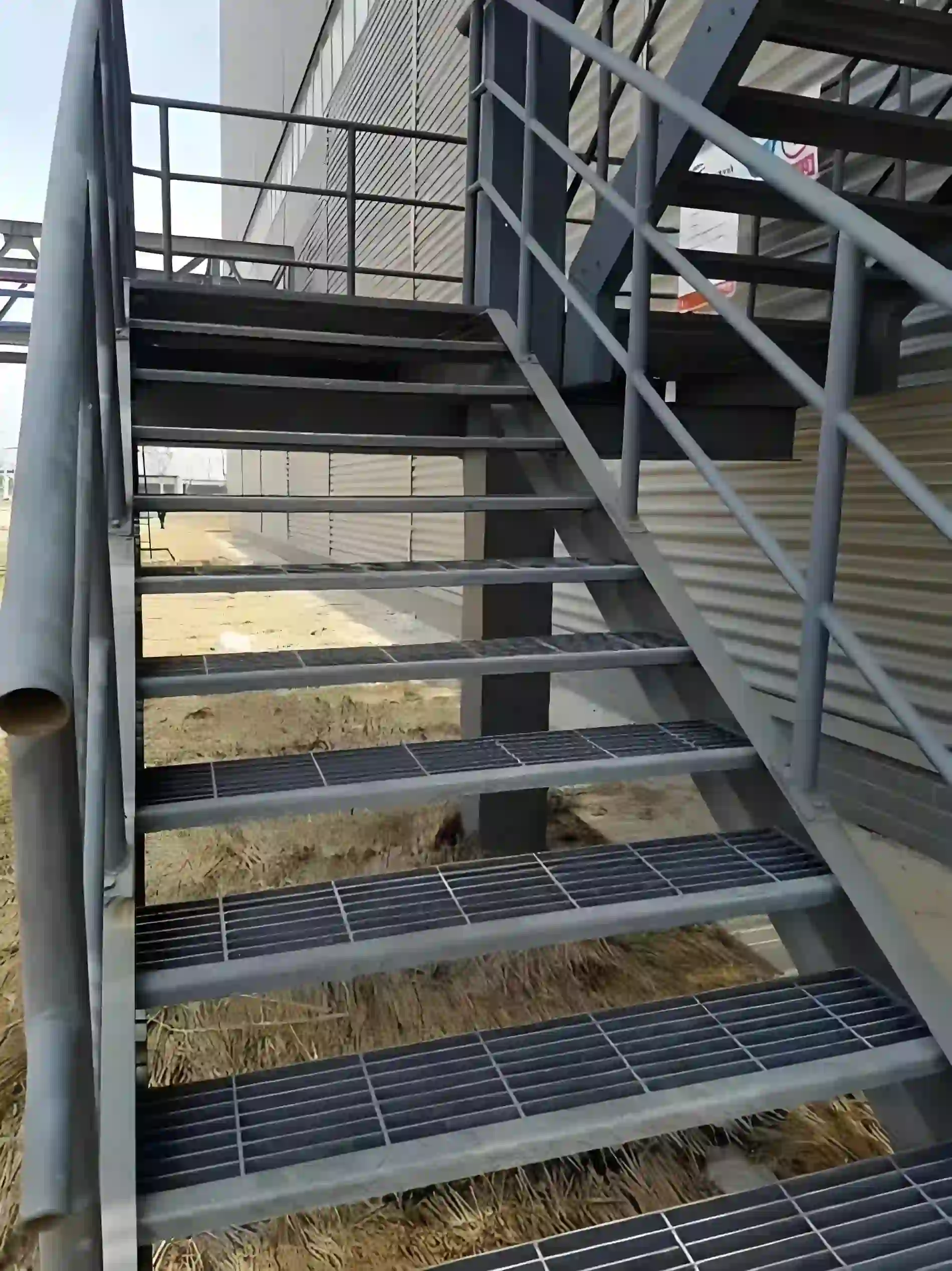
Steel grating stair treads provide durable, free-draining access between levels in industrial plants, utility structures, and external steel stairways.
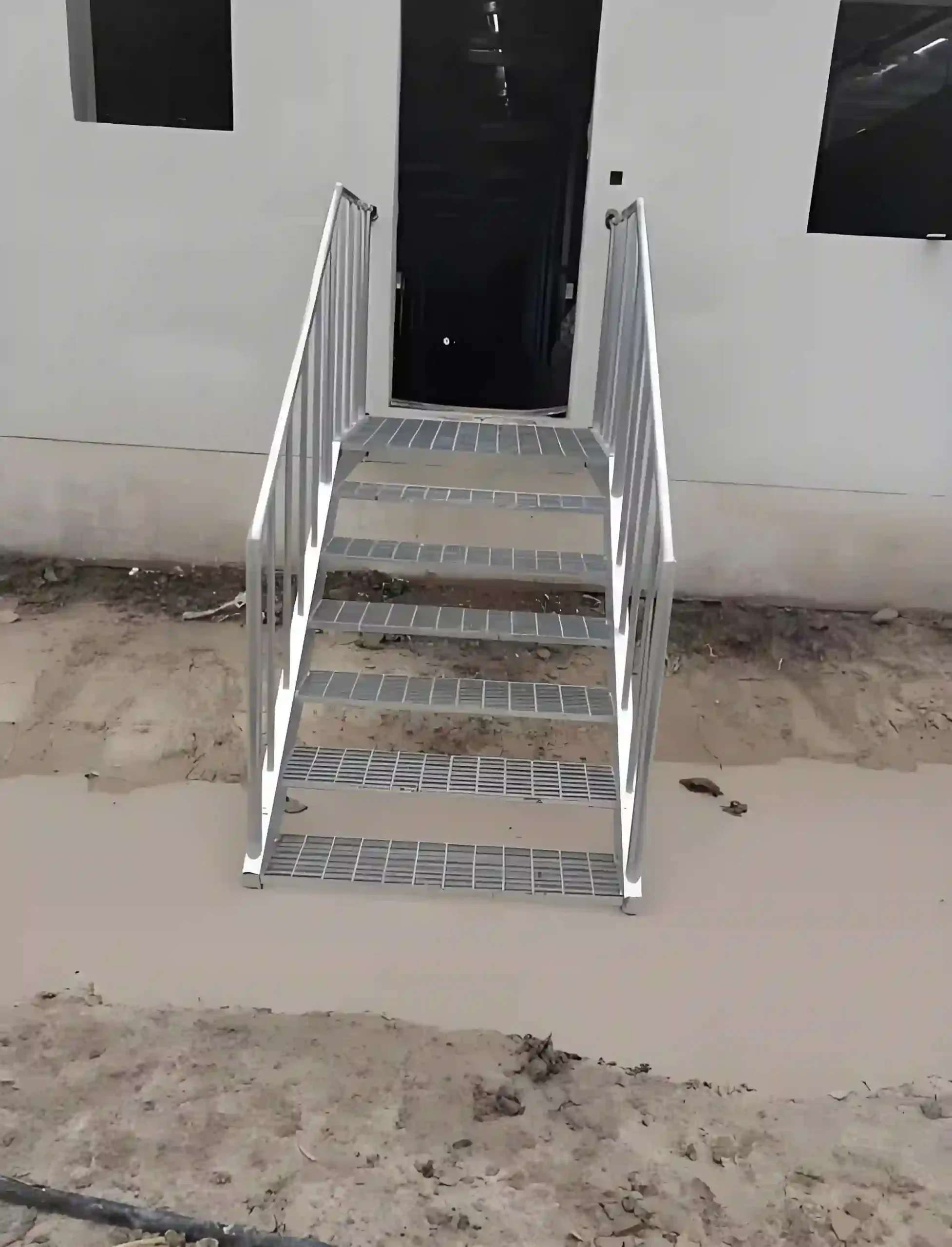
They are installed on process stairs, equipment access towers, maintenance platforms, mezzanines, and emergency routes where personnel require secure footing and reliable load capacity.
Engineering selection should consider tread width, stair stringer spacing, design load, bearing bar direction, bar size and spacing, nosing type, slip exposure, surface treatment, and fixing details.
Discuss Your Walkway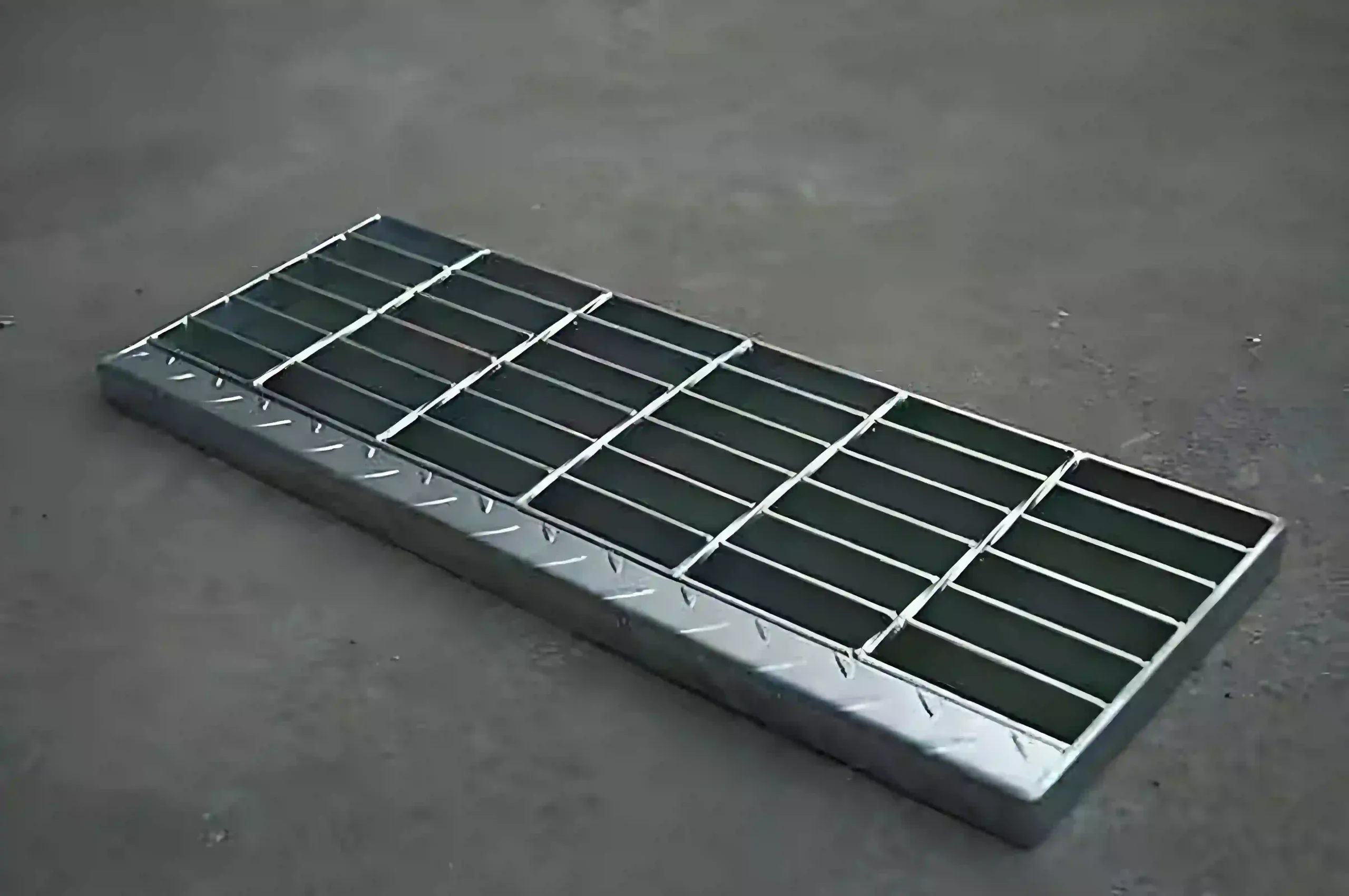
02 / APPLICATION SCENARIOS & REQUIREMENTS
Application Scenarios & Project Requirements
Review the operating conditions, users, loads, environment and project requirements before selecting the appropriate steel grating specification.
Process Plant Stairs
Grating treads provide access between operating platforms, vessels, and process equipment. Their open construction allows rain, wash water, and minor debris to pass through the stair surface.
Equipment Access Towers
Steel grating treads are used in stair towers serving tanks, silos, conveyors, and elevated machinery. End plates and fixing holes can be fabricated to match the approved stringer arrangement.
Industrial Mezzanine Stairs
Grating stair treads provide regular personnel access to production floors, storage mezzanines, and service decks while allowing light and ventilation to pass through the stair assembly.
Outdoor Utility Stairways
Hot-dip galvanized treads are suitable for external stairs at water facilities, power plants, and utility structures. Serrated bearing bars and anti-slip nosing may be specified for wet conditions.
03 / SPECIFICATIONS & PRODUCT OPTIONS
Common Specifications & Available Options
Compare materials, bearing bar sizes, spacing, surface types, finishes and panel dimensions to match the requirements of the application.
Specifications
| Parameter | Specification / Options |
|---|---|
| Material | Carbon steel manufactured to the project-specified structural grade. |
| Surface treatment | Hot-dip galvanized after fabrication, painted, or supplied untreated for project-applied coating. |
| Bearing bar size |
25 × 3, 30 × 3, 30 × 5, 32 × 5, or 40 × 5 mm. Height × thickness; final selection depends on tread span and design load. |
| Bearing bar spacing | 30 or 40 mm, with closer spacing available where required by the project specification. |
| Cross bar spacing | 50 or 100 mm. |
| Tread dimensions | Width and depth manufactured to match the stair geometry and clear distance between stringers. |
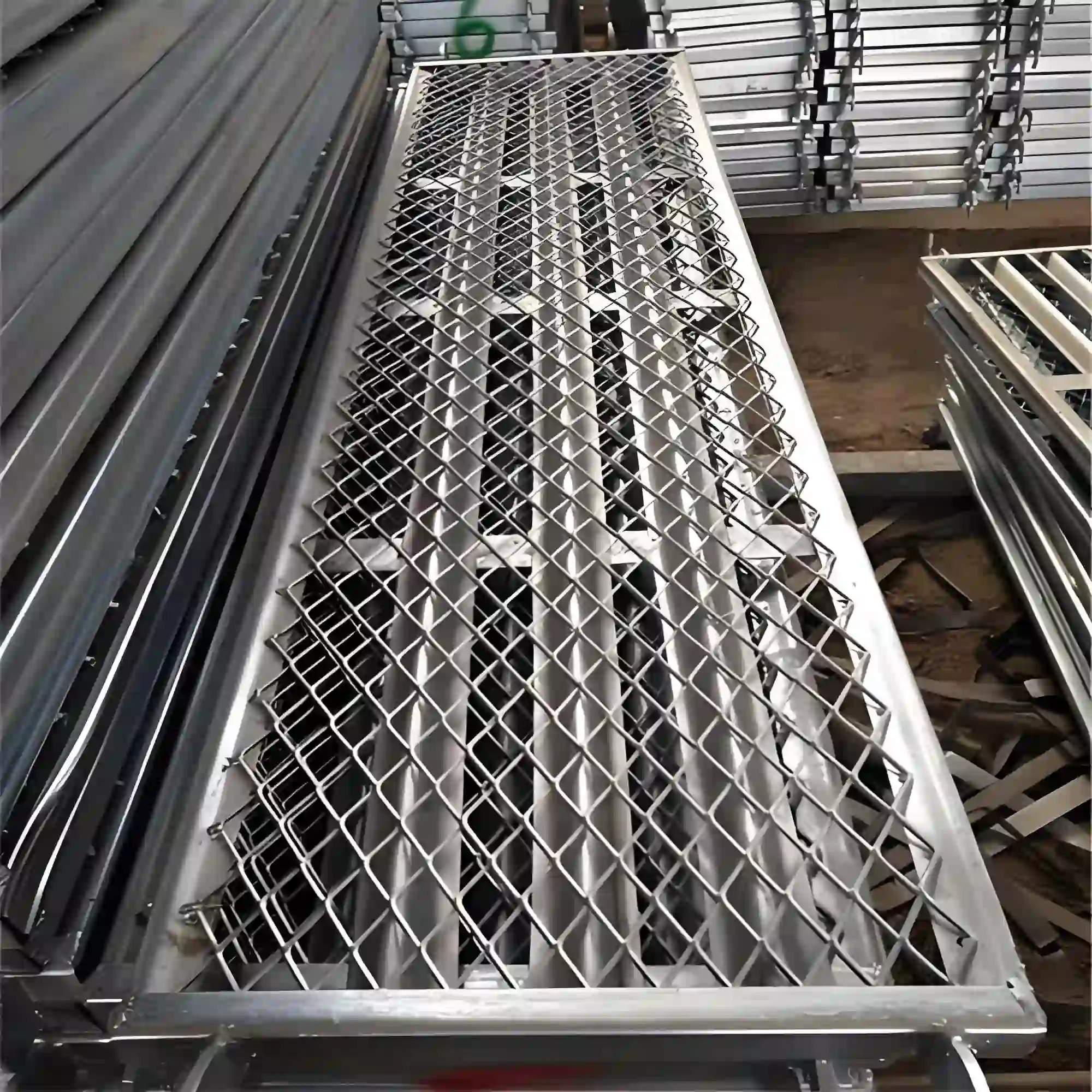
| Walking surface | Plain or serrated bearing bars selected according to the expected slip exposure. |
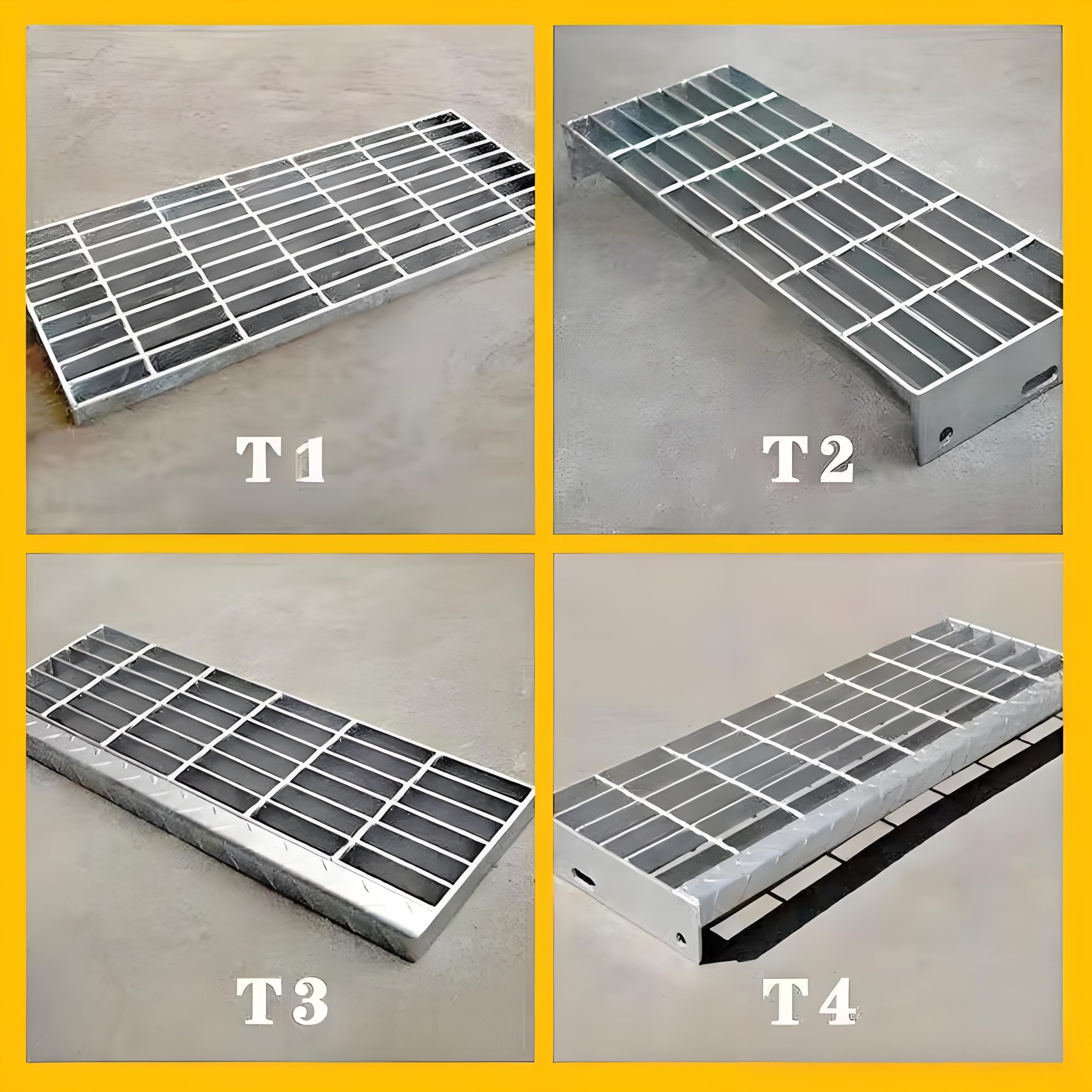
| Nosing | Checkered plate, perforated anti-slip plate, or project-specified contrasting nosing. |
| End plates | Welded end plates with punched or drilled fixing holes to suit the stair stringers. |
| Bearing direction | Bearing bars run across the tread width and span between the stair stringers. |
| Custom fabrication | Tread length, depth, nosing, end plates, hole positions, and surface treatment produced according to approved stair drawings. |
Need a different size? Send your layout for a custom panel review.
Request Your SpecificationThe sizes above are reference examples, not approved combinations for every span. Confirm the bearing direction, loads, clear span and material before ordering. Panel size does not indicate the allowable unsupported span.
WHY USE STEEL GRATING?
Advantages for Steel Grating Applications
Reliable Load Support
Bearing bar depth, thickness, and spacing can be selected for the tread span and specified personnel or maintenance loads.
Positive Footing
Serrated bearing bars and anti-slip nosing provide additional surface edges where rain, wash water, oil, or process residue may affect footing.
Open Surface Drainage
The grating openings allow water and small loose material to pass through, reducing accumulation on each stair tread.
Visible Tread Edge
A defined nosing identifies the leading edge of each tread and can incorporate a contrasting finish where greater step visibility is required.
Corrosion Protection
Hot-dip galvanizing after fabrication coats the tread, end plates, welded areas, and edges for extended service in outdoor and humid environments.
Accurate Stair Fit
Tread dimensions, end plates, and fixing holes can be fabricated to approved stair drawings, reducing modification during site installation.
04 / INSTALLATION & PROJECT PHOTOS
Installation Guidance & Application Photos
Review the panel layout, support conditions, fixing methods and fabrication details before installation, and refer to the application photos for practical examples.
-
Verify the Stair Structure
Check stringer spacing, tread elevations, stair pitch, support condition, and design loads against the approved drawings. Confirm that fixing surfaces are aligned and complete before installation.
-
Match and Orient Treads
Match tread identification to the stair schedule and place the nosing at the leading edge. Verify that bearing bars span between stringers and that end-plate holes align correctly.
-
Install the Fasteners
Secure both end plates with the project-specified bolts, washers, and locking components. Tighten fasteners evenly without distorting the tread or damaging the protective coating.
-
Inspect the Stairway
Check tread alignment, consistent nosing positions, fastener security, surface condition, and clearance between adjacent components. Correct rocking treads and repair damaged galvanized areas using the approved method.
05 / RELATED REFERENCE & FAQ
Frequently Asked Questions
How is the correct steel grating stair tread selected?
Selection depends on the clear span between stringers, design load, tread depth, bearing bar size and spacing, walking conditions, nosing requirement, and environmental exposure. The final tread must also match the stair geometry and applicable access standards.
Should industrial stair treads use plain or serrated grating?
Plain grating may be suitable for dry internal stairs. Serrated grating is commonly considered where rain, wash water, oil, or process contamination increases slip risk. The decision should follow the project’s safety assessment and operating conditions.
Why is nosing fitted to a grating stair tread?
Nosing reinforces and identifies the leading edge of the tread. Checkered or perforated nosing can provide additional traction, while a contrasting finish may improve step-edge visibility in industrial access routes.
Can the tread dimensions and fixing holes be customized?
Yes. Tread width, depth, bearing bar arrangement, end-plate dimensions, hole diameter, hole spacing, and nosing type can be manufactured from approved stair drawings. Accurate stringer and bolt-position information is required before production.
How are steel grating stair treads attached to stringers?
Treads are normally supplied with welded end plates and secured to the stair stringers using bolts. Fastener grade, diameter, locking method, and corrosion protection should comply with the structural drawings and project specification.
What should be checked after stair tread installation?
Inspect tread alignment, nosing orientation, bolt tightness, surface damage, and consistency of the stair rise and going. Each tread should sit firmly without rocking, and any damaged protective coating should be repaired promptly.
06 / PROJECT ENQUIRY
Tell Us About Your Walkway
Share your layout and operating requirements so our team can review the grating, fabrication and supply scope.
Send Drawings by Email Discuss on WhatsAppThe email button opens your mail app. Attach your drawings before sending.
Include these details
- Application location and exposure conditions
- Drawings, panel dimensions and quantities
- Support layout, clear span and design loads
- Material, finish and walking-surface requirements
- Cut-outs, fixings and removable access sections
- Destination, required delivery date and project standards
Already have a specification? Send it with your enquiry.