

When buyers compare serrated steel bar grating with plain steel bar grating, the real question is usually not which one is universally better, but which one matches the actual job site. A dry indoor warehouse aisle and an offshore walkway do not need the same surface. Serrated grating is designed to improve shoe-to-surface grip in slippery conditions, while plain grating is chosen more often for smooth traffic, easy cleaning, and lower cost. If you are selecting grating for platforms, trenches, stairs, catwalks, or process areas, the right choice depends on slip risk, load demand, cleaning needs, and budget.
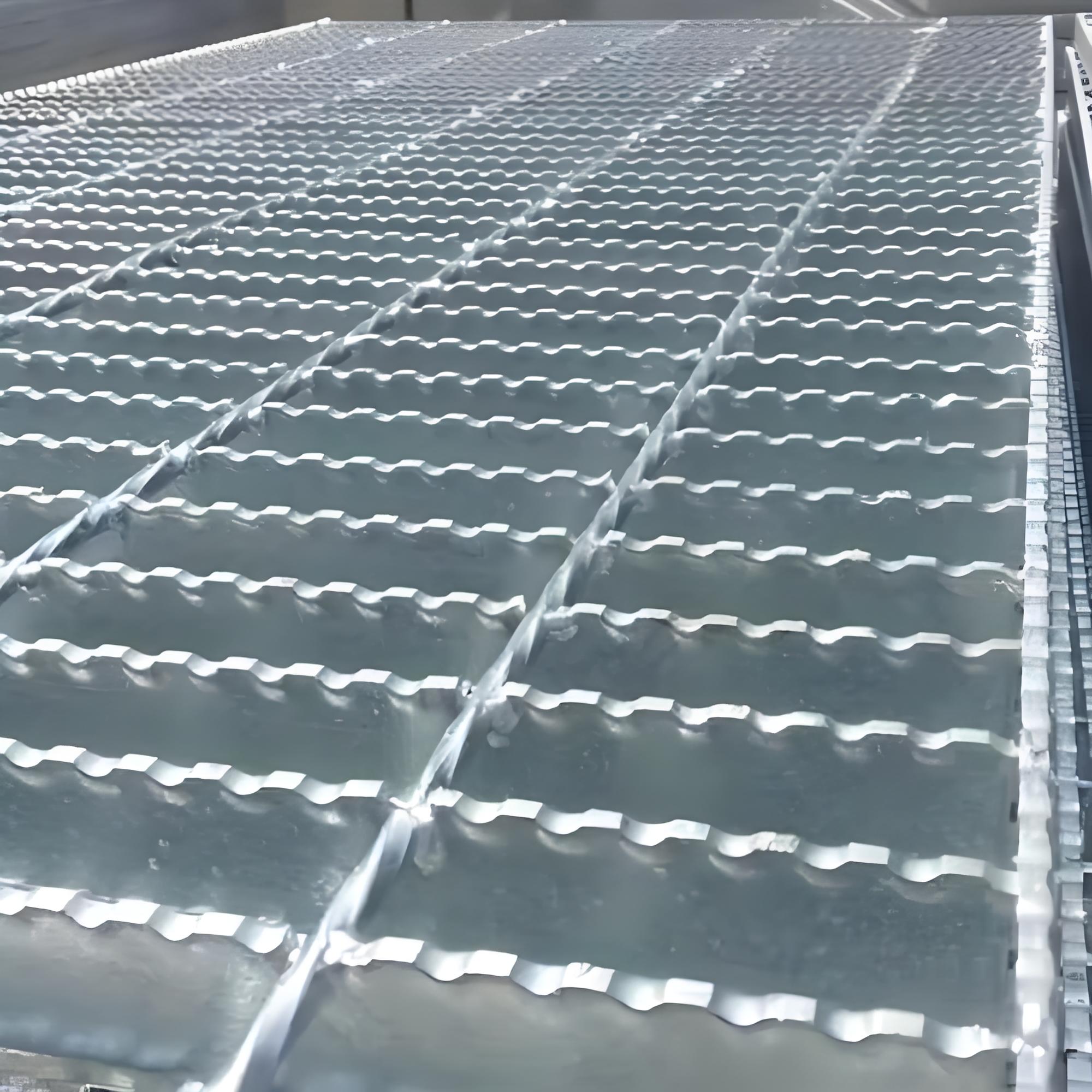
The most visible difference is the top edge of the bearing bars. Serrated steel bar grating has notched teeth cut into the top surface of the load-bearing bars. Plain grating has a flat, smooth top edge. That surface detail may look minor on paper, but in use it changes how the grating behaves under foot traffic, especially when the surface is wet or contaminated.
In practical terms, serrated grating works by adding mechanical bite. The teeth help the sole of a boot, work shoe, or safety shoe engage with the steel surface instead of relying only on basic friction. Plain grating depends much more on direct surface-to-shoe friction. That is fine in clean, dry conditions, but it becomes less reliable when water, oil, slurry, frost, or mud reduces contact stability.
For environment suitability, the general rule is simple. Serrated grating is better for wet, oily, icy, outdoor, and process-heavy areas. Plain grating is better for dry and clean indoor spaces where the risk of slipping is low and where users may prefer a flatter walking surface.
If you want a quick side-by-side comparison, think of it this way: surface profile: serrated edge versus flat edge; anti-slip method: mechanical interlock versus friction reliance; best use: harsh, slippery service versus ordinary, dry service; cleaning: serrated is slightly harder to wash thoroughly because dirt can lodge around the teeth, while plain is easier to wipe or hose clean.
Neither type is automatically “higher quality” than the other. They serve different priorities. Serrated grating is a safety-first surface option. Plain grating is a cost-efficient, standard-purpose option that performs very well where contamination and slipping are not major concerns.
This is the area where serrated grating usually has the clearest advantage. The teeth on the bearing bars create a more aggressive contact point for footwear. Even when the surface has water, light oil, melting snow, mud, or chemical residue, the teeth help interrupt the slippery film and improve grip. That is why serrated grating is commonly specified in industrial platforms, outdoor access walkways, marine settings, and stair treads.
Plain grating still offers decent traction in dry conditions because the open-bar structure naturally provides some edge contact and drainage. On a clean indoor floor or a dry mechanical room walkway, plain grating can perform perfectly well. The issue starts when the top surface becomes coated. A flat top bar with oil or frost on it loses traction much faster than a serrated one.
In field use, the difference is usually most noticeable on stairs, sloped ramps, and elevated walkways. On a horizontal, dry platform, many people may not feel a dramatic contrast. But on downward steps, incline movement, or emergency exit routes exposed to rain, the additional grip from serrations becomes much more valuable.
As a practical data reference, many ramp-style slip tests and site comparisons show that serrated grating can maintain stable footing at steeper slip angles than plain grating under wet or oily conditions. Typical reference ranges often place plain grating in the lower slip resistance range when contaminated, while serrated grating may improve the safe slip angle by roughly 3 to 8 degrees depending on shoe type, contamination level, and tooth geometry. In dry tests, the gap is smaller. In wet or oily tests, the gap becomes more significant.
Buyers should also understand that anti-slip performance is not controlled by grating type alone. Footwear, bar spacing, cleaning frequency, ice buildup, and traffic direction all matter. Still, if the site team already knows the surface will repeatedly see cooling liquid, lubricants, wash-down water, rain, or winter icing, serrated grating is usually the safer call.
A common question is whether serrated grating is weaker because material is cut away to form the teeth. In most standard industrial applications, when the same bearing bar size, thickness, depth, spacing, and support span are used, the load capacity of serrated and plain grating is generally very close. The reason is simple: the serration is made on the top edge and usually does not remove enough section depth to create a major structural penalty.
That said, the answer should not be oversimplified. Any machining or notching changes the local cross-section slightly. If the serration pattern is deep, aggressive, or non-standard, there can be some effect on the effective top section. In normal production practice, however, serrated grating is designed so that the anti-slip benefit is gained without meaningfully compromising the working load class required for common platforms and walkways.
For engineering selection, the more important factors remain bearing bar depth, bar thickness, center spacing, cross bar spacing, span direction, and support condition. If a project needs high load performance over a longer span, the buyer should focus first on bar size and spacing rather than on whether the top edge is serrated or plain.
As a general recommendation, both types can be used for typical pedestrian walkways, maintenance platforms, trench covers, and many stair applications. For heavier rolling loads, pallet jacks, carts, or equipment movement, designers should check not only the load table but also the comfort and wheel interaction of the surface. Small hard wheels do not always move as smoothly over serrated bars as they do over flatter or more closely spaced surfaces.
For longer spans or higher load ratings, it is wise to ask the grating manufacturer for the allowable load and deflection table based on exact bearing bar dimensions. In many projects, a plain grating panel and a serrated grating panel built from the same base bar profile will be specified under the same nominal load class. The real distinction remains surface safety rather than dramatic structural difference.
Serrated grating is the better fit for industrial platforms where coolant, hydraulic oil, lubricants, or process liquids may spill onto the walking surface. In these environments, slip prevention is not a nice extra; it is part of daily operational safety. Workers carrying tools or moving quickly between stations need more grip, not just more steel.
It is also highly suitable for outdoor walkways, footbridges, access ramps, rooftop service paths, and exposed catwalks. Rainwater, snow, frost, and seasonal ice all reduce the reliability of plain surfaces. Serrated bars improve underfoot confidence, especially in cold climates or places where drainage cannot remove all moisture instantly.
Offshore platforms, chemical plants, wastewater facilities, and marine terminals are typical high-priority applications for serrated grating. These environments combine moisture, corrosive agents, and a high slip risk. In those cases, buyers often pair serrated surface geometry with galvanized carbon steel or stainless steel material selection depending on corrosion exposure.
Stair treads are another strong use case for serrated grating. People naturally apply force differently on stairs than on level walkways. The foot lands at an angle, body weight shifts forward, and the risk increases when descending. A serrated tread edge helps reduce the chance of a slip during routine use or emergency evacuation.
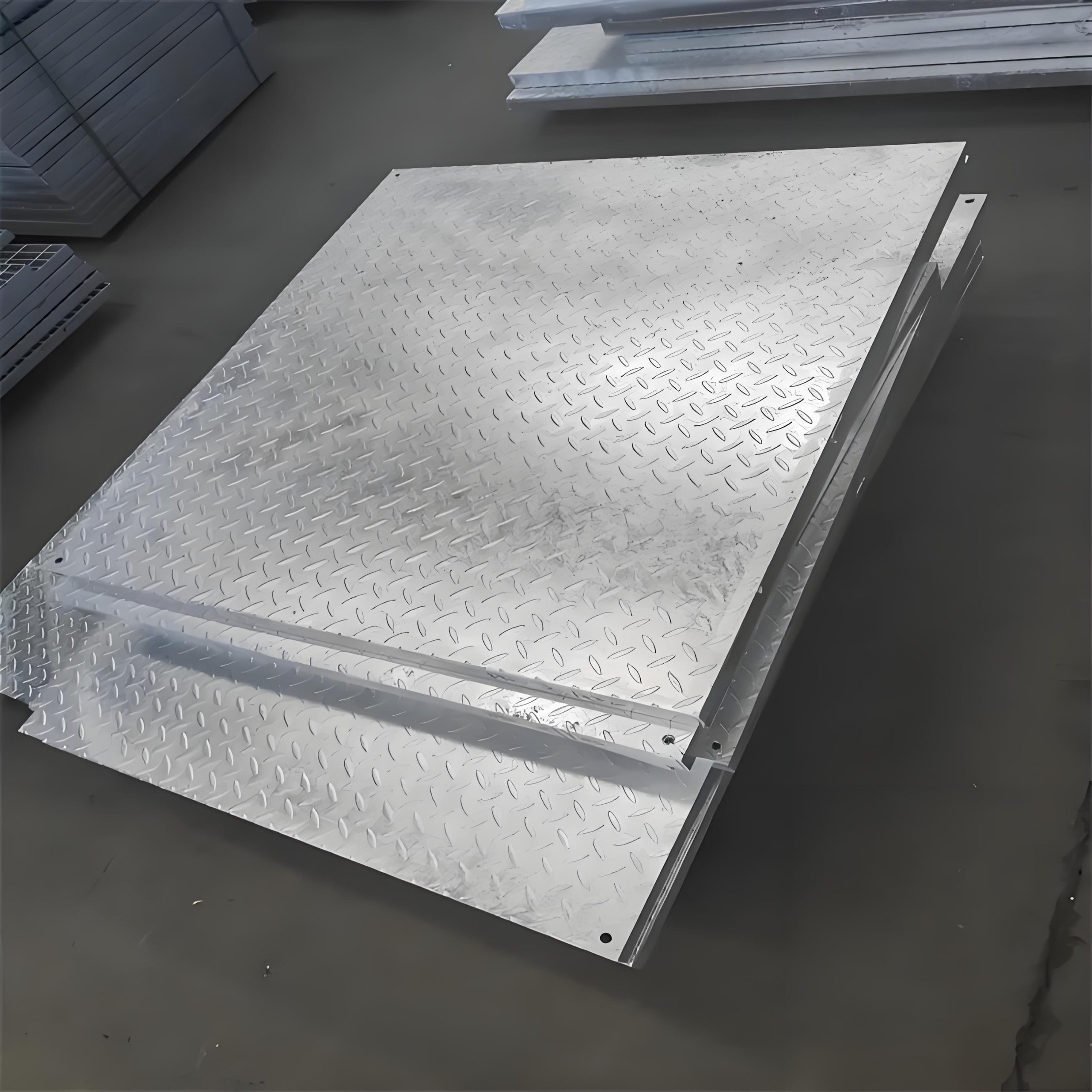
Plain grating is more suitable for indoor dry walkways, mezzanine aisles, warehouse rack service corridors, and utility spaces with low contamination risk. If the environment is stable, dry, and regularly cleaned, plain grating can provide enough performance at a lower cost.
It is also commonly chosen for trench covers and drainage channel covers where a relatively flatter top surface is preferred. In some projects, users want less aggressive contact under wheels, carts, or maintenance equipment. A plain top can also be easier to clean in facilities where hygiene, dust control, or visual neatness matters.
Facilities that prioritize a cleaner-looking surface or need easier wash-down may prefer plain grating. Food handling support zones, packaging areas, or clean utility corridors sometimes lean toward plain grating if slip exposure is limited and sanitation routines are frequent.
Finally, budget-sensitive projects in dry environments often select plain grating simply because it gives reliable structural performance without paying extra for anti-slip machining that may not be needed. That is a valid decision as long as the site risk has been judged correctly.
From a safety standpoint, slip resistance is not just a comfort issue. It can relate directly to workplace compliance and injury prevention. OSHA in the United States does not usually prescribe one exact grating pattern for every application, but it does require walking-working surfaces to be kept in a safe condition and to provide protection against slipping hazards where relevant. In practice, if a surface is regularly wet or oily, a more slip-resistant grating type is often the smarter compliance-oriented choice.
Different industries also develop their own selection habits based on operating risk. In petrochemical plants, refineries, and power generation facilities, serrated grating is frequently recommended for exterior platforms, process zones, and access stairs because liquids, condensation, and outdoor weather are routine realities. In marine and offshore use, the preference for serrated surfaces is even stronger due to salt spray, humidity, and wave-driven wetness.
In food processing, the decision can be more balanced. Some areas require easy wash-down and frequent sanitation, which may support plain grating if the floor design, drainage, and traffic pattern reduce slip exposure. But if the area sees grease, water, or slurry, serrated grating may still be the better safety option despite the extra cleaning effort.
You may also hear buyers ask about slip resistance classes such as R10, R11, R12, or R13. These ratings are more commonly associated with ramp-based slip testing of flooring systems under specific test conditions. They are useful as a reference point when discussing relative slip resistance. In general terms, higher ratings indicate better slip resistance under more demanding contaminated conditions. Serrated steel surfaces are often selected when the project target is closer to high-grip performance, while plain grating may align with lower-risk environments.
However, buyers should not assume every serrated grating automatically carries a certified R-rating unless it has actually been tested under the relevant method. If certification is important, ask for the test basis, the product sample specification, and whether galvanizing, painting, or wear over time may affect the result. Compliance decisions should be based on actual project documents, local code, and jobsite risk rather than product assumption alone.
Plain grating is usually cheaper to produce because it follows a standard manufacturing process with fewer machining steps. Serrated grating requires additional processing to create the teeth on the bearing bars, which adds labor, tooling wear, and sometimes slightly tighter production control. Because of that, serrated grating generally carries a higher unit price.
As a broad industry reference, plain galvanized steel bar grating for standard industrial sizes may fall around USD 18 to USD 45 per square meter in basic export-oriented volume ranges, while serrated versions of similar specification may come in roughly 8% to 20% higher depending on bar size, coating, quantity, and fabrication details. Heavy-duty panels, special materials, or custom banding will move pricing beyond those ranges. These numbers are only market references, not fixed quotations.
From a lifecycle point of view, the cheaper option upfront is not always the cheaper option over time. In slip-prone environments, plain grating can become a hidden cost if it contributes to more cleaning intervention, anti-slip retrofits, work restrictions in bad weather, or higher accident risk. Serrated grating often keeps its anti-slip function longer because the surface geometry is built into the steel itself rather than added as a coating.
Wear behavior also matters. A plain top bar may become smoother over years of traffic, especially in abrasive environments. As the surface polishes, traction may decline. Serrated bars also wear, but the profile usually continues to provide grip for a longer service period unless the teeth are severely rounded by heavy abuse.
Cleaning is where plain grating has an advantage. Flat-top bars are easier to sweep, mop, pressure wash, or visually inspect. Serrations can trap small debris, grease residue, or sludge more easily, particularly in sticky industrial process zones. So if the facility depends on frequent, fast cleaning cycles, plain grating may reduce maintenance effort.
Buyers should treat this as a trade-off. Serrated means higher purchase cost and potentially slightly harder cleaning, but usually stronger long-term slip resistance. Plain means lower initial cost and easier cleaning, but less protection when conditions become wet or oily.
Start with the first question: does the environment involve water, oil, ice, snow, mud, slurry, or regular moisture? If the answer is yes, serrated grating should be the default starting point. That single factor often decides the issue because slip risk changes the whole safety profile of the surface.
If the answer is no, move to the second question: will people be walking on slopes, climbing stairs, or pushing loads across the surface? If yes, serrated grating is still usually the better choice because traction becomes more important when body movement is not fully level. Stairs are a classic example where serrated surfaces often outperform plain ones in real-world safety.
If the area is flat, dry, and not contamination-prone, ask the third question: is the project more sensitive to budget or to added safety margin? If budget is the priority and the environment is reliably dry, plain grating is often enough. If safety margin is the priority, especially in mixed-use industrial space where future conditions may change, serrated grating is the more cautious option.
You should also consider traffic type. If the surface mainly supports pedestrian traffic with work boots, serrated grating is easy to justify in rough service areas. If the area needs frequent rolling traffic with small wheels or requires a smoother top appearance, plain grating may be more practical.
Lastly, think about cleaning and site discipline. If management knows the area will stay clean, dry, and controlled, plain grating makes sense. If actual operations tend to be messy, exposed, or unpredictable, serrated grating gives you more safety buffer. Many buyers who first choose plain grating for cost reasons later switch to serrated in the next phase after seeing real site conditions.
Is serrated steel grating always better than plain steel grating?
No. Serrated grating is better mainly when slip resistance is a real concern. If the application is indoors, dry, clean, and cost-sensitive, plain grating is often the more practical choice. The “better” option depends on whether the project needs extra traction or simply reliable structural coverage at lower cost.
Does serrated steel grating reduce load capacity compared with plain grating?
In most standard specifications, the difference is minimal when both products use the same bearing bar size, thickness, spacing, and span. The serration is usually cut in a way that does not significantly weaken the panel for normal industrial use. Load selection should still be checked against the manufacturer’s load table for the exact product.
How much more expensive is serrated bar grating than plain bar grating?
As a general market reference, serrated grating is often around 8% to 20% more expensive than plain grating of similar material and size, mainly because of the extra processing. The exact gap depends on steel price, galvanizing, panel size, quantity, and fabrication complexity. For procurement planning, it is best to compare total installed value, not just unit price, especially in slip-prone environments.