
Home > Products > Trench Cover > safety trench cover
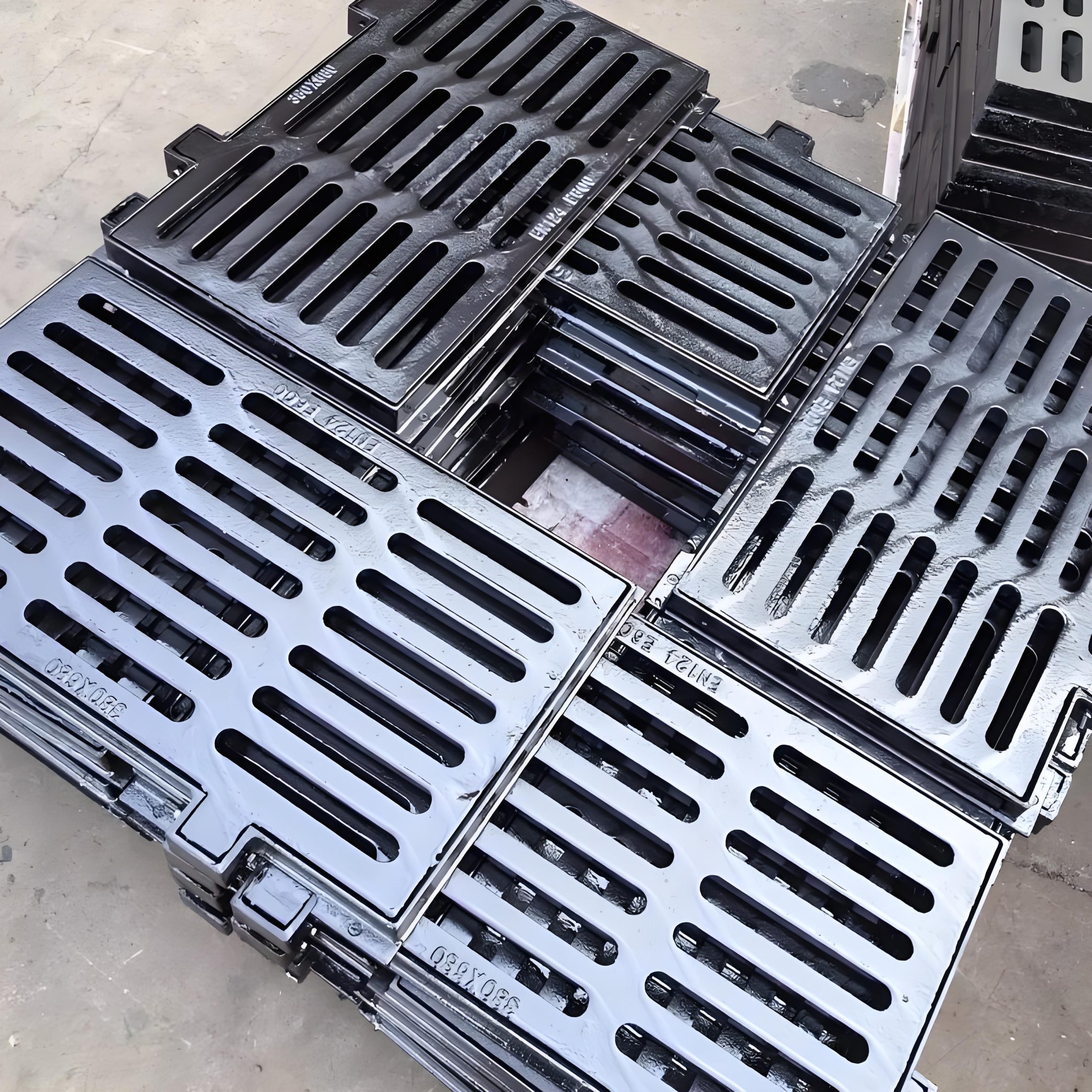
A safety trench cover is used to protect open trenches, drainage channels, cable trenches, excavation openings, utility pits, floor channels, and temp…
A safety trench cover is used to protect open trenches, drainage channels, cable trenches, excavation openings, utility pits, floor channels, and temporary construction gaps where workers, pedestrians, carts, forklifts, or vehicles may pass. Its main purpose is to reduce fall hazards, trip hazards, slipping risks, cover movement, load failure, and unsafe access around trenches. A suitable safety trench cover should be selected according to trench width, load capacity, material, surface design, anti-slip performance, edge condition, fixing method, visibility, corrosion environment, and whether the cover needs to be removable for maintenance or fixed for long-term service.
Safety trench covers are used in many jobsite and industrial environments where an open trench must be temporarily or permanently protected. In construction sites, they may cover excavation trenches, cable laying routes, pipeline trenches, and temporary floor openings. In drainage projects, they cover channels while allowing water flow or maintenance access. In industrial sites, they are used over utility trenches, workshop floor drains, service pits, equipment channels, and access openings.
The correct safety trench cover depends on how the trench is used. A pedestrian cover for a walkway does not need the same structure as a forklift cover in a warehouse. A drainage grating cover does not perform the same function as a solid plate cover for a cable trench. A temporary construction cover may need high visibility and quick relocation, while a permanent industrial cover may need hot-dip galvanizing, bolt fixing, frames, or anti-slip surface treatment.
A trench cover is not only a cover plate. It is part of site safety control. If the cover is too weak, too slippery, too small, poorly supported, or not fixed properly, it can create a new hazard instead of solving the original trench hazard. For this reason, buyers should choose safety trench covers based on the real site condition, not only on the lowest price.
| Site Type | Common Trench Cover Requirement | Main Safety Focus |
|---|---|---|
| Construction site | Temporary cover for excavation, cables, pipes, or ground openings | High visibility, load capacity, anti-slip surface, stable placement |
| Factory floor | Permanent or removable cover over utility and drainage trenches | Strength, fit, edge safety, cart or forklift load support |
| Drainage channel | Open grating or slotted cover for water flow | Drainage, anti-slip surface, corrosion resistance |
| Road or vehicle area | Heavy-duty cover for wheel loads | Vehicle load design, frame support, movement prevention |
| Electrical or cable trench | Solid, composite, or insulated cover for protected access | Non-conductive options, removable design, closed surface |
Safety performance matters because trench openings create direct hazards. Workers or pedestrians can fall into open trenches. Vehicles can sink into unsupported openings. Small wheels can get caught in unsuitable openings. Wet surfaces can create slipping risks. Covers that move under load can cause sudden accidents. A good trench cover should reduce these risks by combining strength, stability, surface traction, edge safety, and correct installation.
The first purpose of a safety trench cover is to prevent people, tools, and equipment from falling into the trench. This is especially important in construction sites, factories, warehouses, public walkways, and maintenance areas where people may not always see the trench clearly.
A trench cover must support the expected load. If a pedestrian cover is used in a forklift area, it may bend or fail. If a temporary light-duty cover is used where vehicles pass, the risk becomes much higher. Load performance must match the actual use condition.
A cover may be strong enough but still unsafe if the surface is slippery or the edge is raised too high. Anti-slip surfaces, flush installation, chamfered edges, warning color, and correct fit help reduce trip and slip hazards.
A cover that moves, rocks, lifts, or slides can be dangerous. Stable fixing methods, proper seating, frames, bolts, clips, anti-movement lugs, or rubber pads may be required depending on the application.
| Safety Risk | Possible Cause | Trench Cover Design Response |
|---|---|---|
| Fall hazard | Open trench or cover gap | Correct cover size, proper support, no unsafe openings |
| Load failure | Insufficient thickness or wrong material | Select cover according to load and span |
| Slip hazard | Smooth or wet surface | Use anti-slip pattern, serrated grating, or textured surface |
| Trip hazard | Raised edge, poor fit, uneven support | Use flush design, edge treatment, and accurate dimensions |
| Cover movement | No fixing, poor seating, vibration, wheel impact | Use bolts, frames, locking parts, clips, or anti-movement design |
Safety trench covers are available in several types. The correct type depends on whether the cover is temporary or permanent, whether water needs to drain through it, whether vehicles pass over it, whether the area requires electrical insulation, and whether the cover needs regular removal for maintenance.
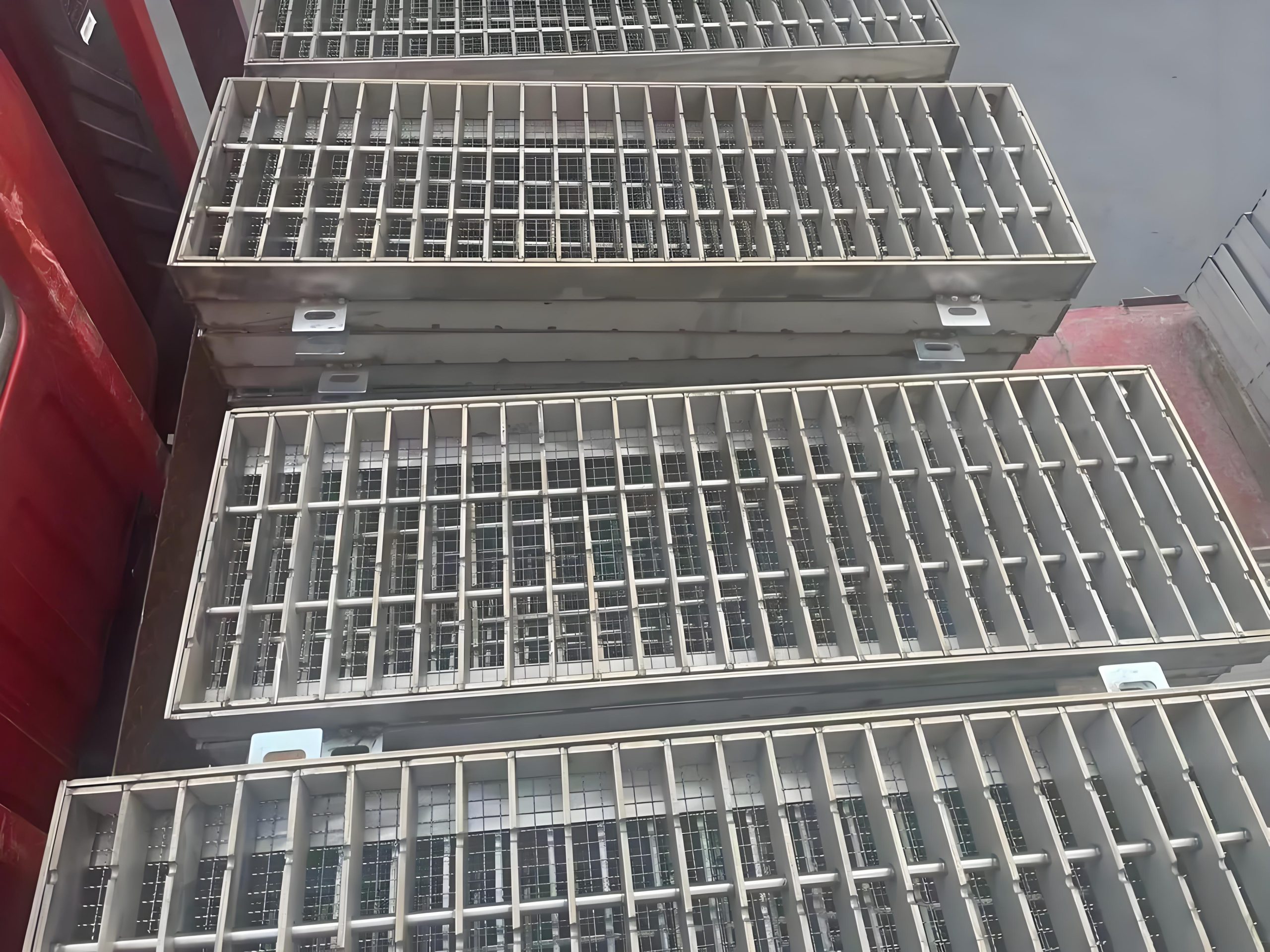
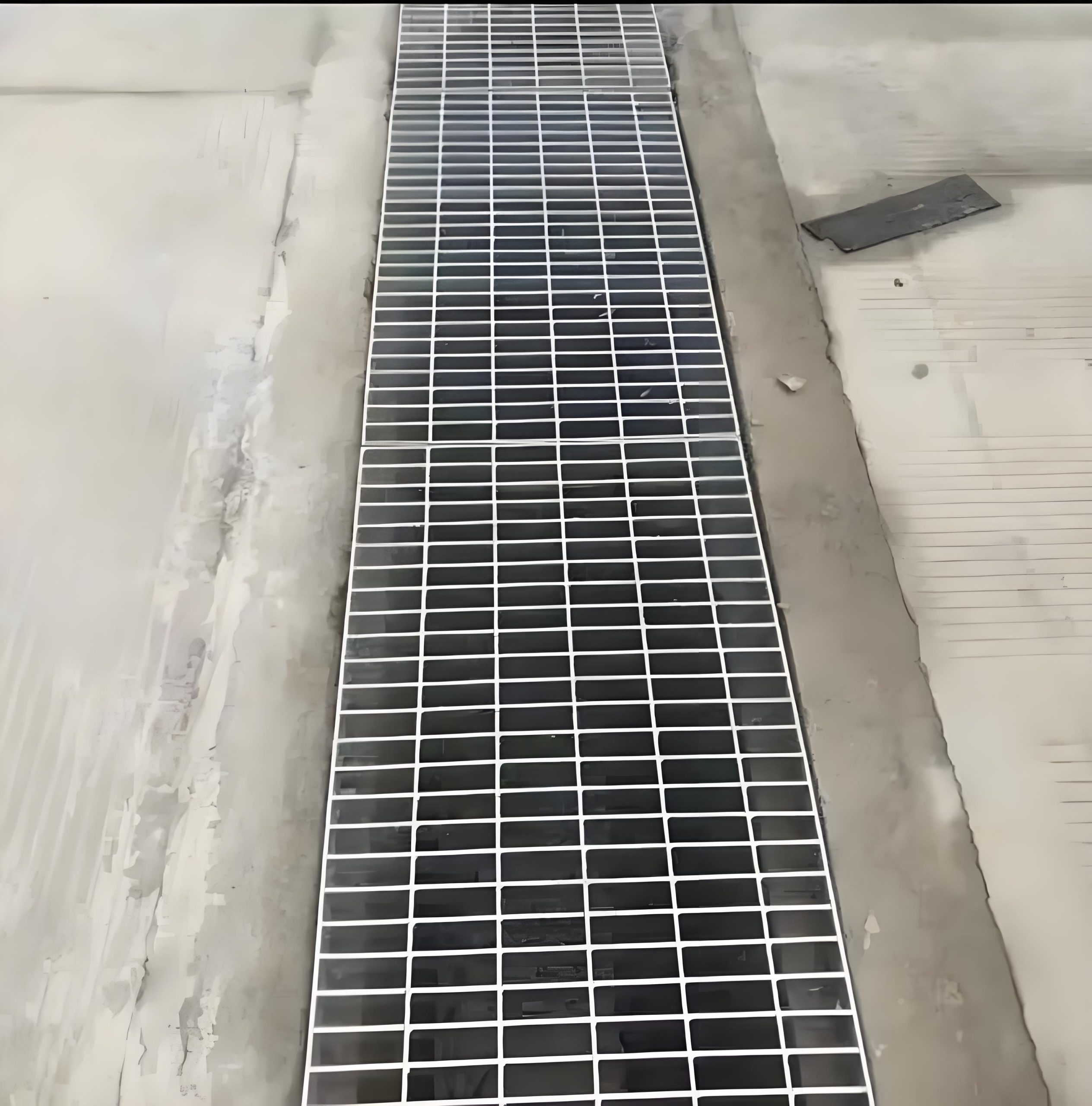
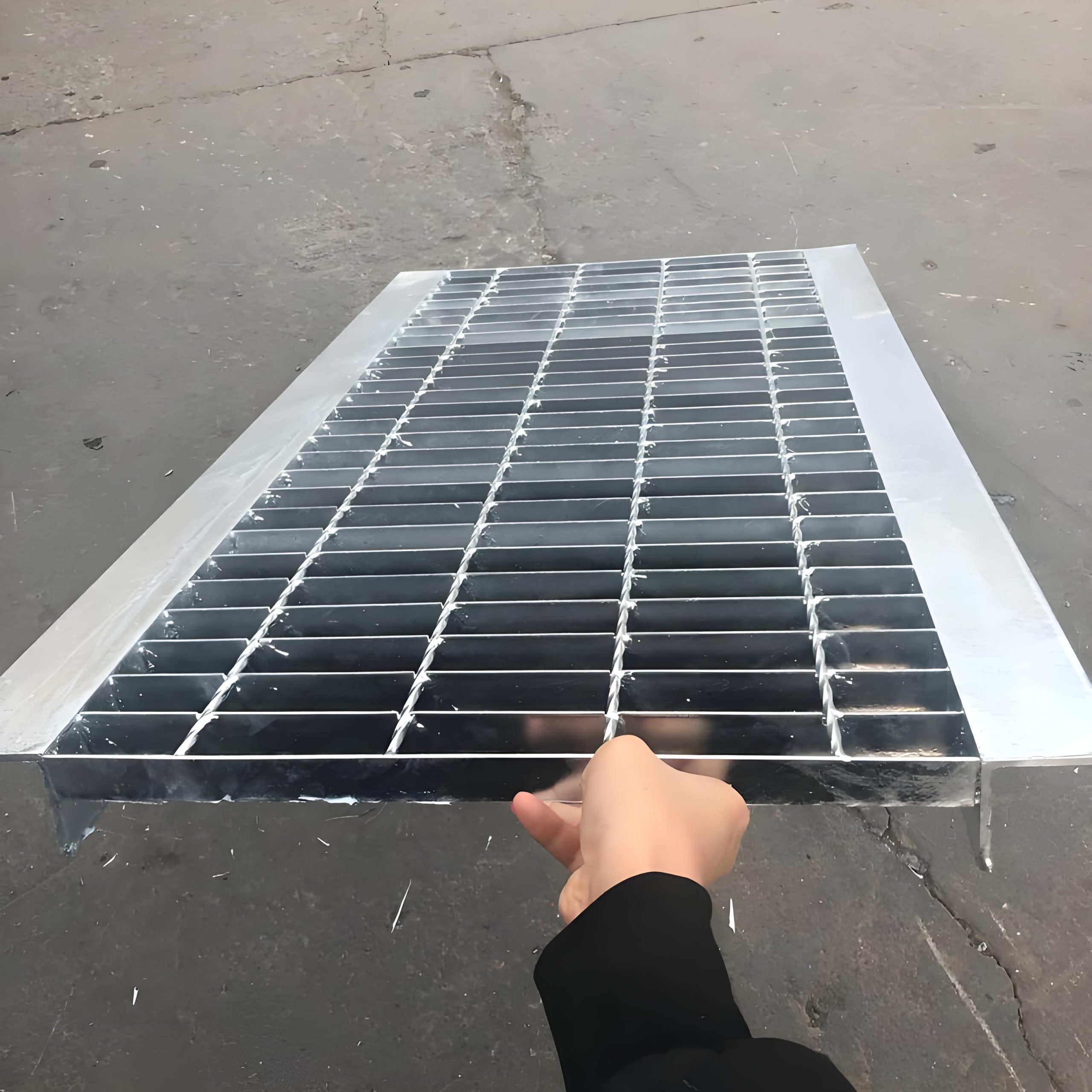
Steel grating trench covers are used where drainage, ventilation, and easy inspection are important. They are common in drainage channels, water treatment plants, factories, workshops, outdoor industrial areas, and municipal drainage systems. The open-grid structure allows water to pass through while supporting foot traffic or heavier loads when designed correctly.
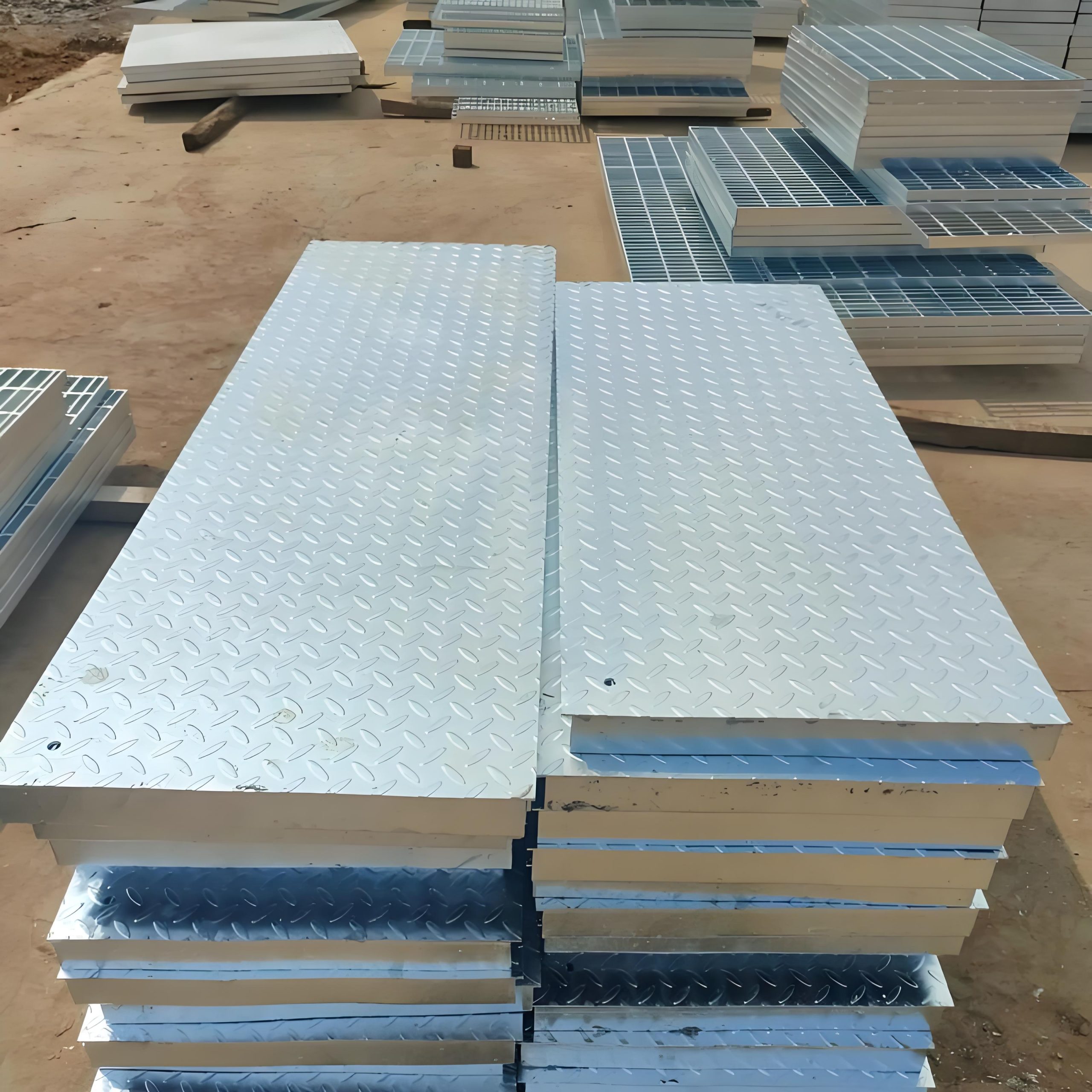
Chequered plate trench covers are solid steel plates with raised anti-slip patterns. They are suitable for cable trenches, workshop floor openings, service channels, and areas where a closed surface is required. The raised pattern improves traction compared with smooth steel plate.
Composite trench covers are often used in electrical, telecom, utility, and maintenance applications. They are lightweight, non-conductive, corrosion resistant, and easier to handle than many concrete or heavy steel covers. They are useful where workers need repeated trench access.
Solid steel plate trench covers are selected when full coverage and high strength are required. They can support carts, forklifts, or vehicles when designed with proper thickness and support. However, they do not allow drainage unless slots or holes are added.
Temporary construction trench covers may be made from steel plate, composite material, or engineered cover boards. They should be clearly visible, stable, anti-slip, and rated for the expected site traffic. Temporary does not mean low safety; the cover still needs to match site loads.
| Trench Cover Type | Main Feature | Suitable Application |
|---|---|---|
| Steel grating trench cover | Open grid for drainage and ventilation | Drainage channels, factories, outdoor trenches |
| Chequered plate trench cover | Solid anti-slip steel plate | Workshops, cable trenches, service pits |
| Composite trench cover | Lightweight, non-conductive, corrosion resistant | Electrical, telecom, utility, and maintenance trenches |
| Solid steel plate cover | Closed and strong surface | Heavy-duty floor openings, vehicle areas, temporary access |
| Framed trench cover | Stable seating with support frame | Road drains, forklift routes, permanent installations |
Load capacity is one of the most important safety factors for trench covers. The cover must support the actual traffic over the trench. Pedestrian traffic, carts, forklifts, cars, trucks, and construction equipment all create different load conditions.
Pedestrian trench covers are used in walkways, construction access paths, public areas, factories, kitchens, and maintenance zones. They should support walking loads, avoid excessive deflection, provide anti-slip surface, and have safe edge design.
Small wheels can create concentrated loads. A cover that is strong enough for walking may still bend under carts, trolleys, pallet jacks, or cleaning machines. For these applications, wheel size and load should be considered.
Forklifts create high wheel loads and repeated impact. A forklift-rated trench cover usually needs heavy-duty steel grating, thick steel plate, reinforced composite design, or a framed system. The trench support frame must be strong enough to transfer the wheel load safely.
Vehicle trench covers require project-specific load design. Cars, trucks, service vehicles, and construction vehicles have different axle loads and wheel contact areas. Covers used in vehicle areas should not be selected from pedestrian specifications.
| Load Area | Typical Traffic | Safety Design Focus |
|---|---|---|
| Pedestrian | Workers, pedestrians, maintenance staff | Stable walking surface, anti-slip texture, safe openings |
| Light equipment | Carts, trolleys, cleaning machines | Wheel load, deflection control, stronger support |
| Forklift | Forklifts and pallet handling equipment | Heavy-duty design, frame strength, repeated load resistance |
| Vehicle | Cars, service vehicles, trucks | Axle load, wheel load, impact, installation frame |
| Construction site | Workers, temporary equipment, site traffic | Clear marking, anti-slip surface, rated load selection |
Anti-slip surface design is important because trench covers are often installed in wet, dusty, oily, muddy, or outdoor environments. A strong cover can still be unsafe if workers slip on it. Surface traction should match the site condition.
Serrated steel grating uses toothed bearing bars to improve grip. It is suitable for wet drainage channels, outdoor trenches, water treatment plants, industrial platforms, and workshop areas where water or oil may be present.
Chequered plate has raised patterns that provide better traction than smooth steel plate. It is commonly used for solid trench covers in workshops, cable trenches, maintenance areas, and temporary access routes.
Composite safety trench covers can be molded with anti-slip texture, raised ribs, or roughened surface. This is useful for outdoor utility trenches, electrical areas, and pedestrian access zones.
Some trench covers may use special anti-slip coating or surface treatment. This can improve traction, but the coating must be suitable for the environment and traffic level. Worn coatings should be inspected and maintained.
| Anti-Slip Option | Main Benefit | Suitable Use |
|---|---|---|
| Serrated steel grating | Strong traction through toothed bearing bars | Wet drainage channels, outdoor industrial trenches |
| Chequered steel plate | Raised pattern improves grip on solid covers | Workshops, cable trenches, service floors |
| Textured composite surface | Non-metallic anti-slip walking surface | Electrical, telecom, and utility trenches |
| Anti-slip coating | Improves friction on selected cover surfaces | Special safety areas and temporary covers |
Edge design is an important part of safety trench cover performance. Many trench cover accidents are not caused by complete structural failure, but by raised edges, uneven placement, gaps, rocking panels, or poor transitions between the cover and surrounding floor.
Where possible, the trench cover should sit flush with the surrounding floor. A flush surface reduces trip hazards and makes it easier for carts, trolleys, and workers to pass over the trench.
Temporary trench covers or covers placed over existing floor surfaces may need beveled edges. A beveled edge reduces the sudden height change and helps prevent trips.
If the cover is too small, it may leave dangerous gaps. If it is too large, it may not sit correctly or may interfere with surrounding surfaces. Accurate sizing is essential for safety.
The cover should sit properly on the support ledge or frame. Uneven support can cause rocking, noise, and movement. For heavy-duty covers, proper frame design is necessary.
| Edge Safety Item | Risk If Poorly Designed | Recommended Design |
|---|---|---|
| Raised edge | Trip hazard for pedestrians | Use flush installation or beveled edge |
| Open gap | Foot, wheel, or tool may enter gap | Use correct cover size and support ledge |
| Sharp edge | Hand injury during lifting or maintenance | Deburr, band, or finish edges properly |
| Rocking panel | Noise, instability, and sudden movement | Use flat support, frame, pads, or fixing parts |
| Uneven transition | Cart or trolley movement problem | Control plate height and floor level matching |
A safety trench cover must remain stable during use. If it moves, slides, lifts, or rattles under traffic, it can become dangerous. Fixing method should be selected according to whether the cover is temporary, removable, fixed, or exposed to vehicles.
Some trench covers are designed to sit on ledges without permanent fixing. This is practical for drainage and inspection areas, but the cover must fit properly and should not move under normal use.
Bolted trench covers are secure but still removable. This is useful in workshops, public areas, industrial floors, and vibration areas where movement must be controlled but maintenance access is still required.
Welding provides permanent fixing for steel trench covers. It may be used where the trench does not require regular access. If galvanized covers are welded after galvanizing, the damaged zinc coating should be repaired.
Frames, locating lugs, stops, clips, and brackets can prevent sliding or lifting. These details are especially useful for road drains, forklift areas, and removable trench covers exposed to repeated traffic.
Hinged trench covers remain connected to the frame when opened. They are useful where frequent inspection is required and where loose covers could be misplaced or create hazards.
| Fixing Method | Main Advantage | Suitable Application |
|---|---|---|
| Loose removable placement | Easy to lift and clean | Light-duty drainage and inspection trenches |
| Bolted fixing | Secure but removable | Factories, public areas, maintenance trenches |
| Welded fixing | Permanent and strong | Non-removable steel trench covers |
| Frame with locating stops | Prevents sliding and improves seating | Vehicle areas and heavy-duty trench covers |
| Hinged cover | Convenient repeated access | Utility pits, inspection channels, service trenches |
Safety trench covers can be made from different materials depending on load, environment, handling requirement, electrical safety, corrosion resistance, and budget. Common options include carbon steel, hot-dip galvanized steel, stainless steel, aluminum, composite material, and concrete.
Carbon steel is strong, economical, and easy to fabricate. It is suitable for many industrial trench covers, temporary plates, workshop covers, and heavy-duty applications. It needs surface treatment if used outdoors or in wet environments.
Hot-dip galvanized steel provides corrosion protection for outdoor and drainage applications. It is common for grating trench covers, steel frames, industrial floor covers, and municipal drainage covers.
Stainless steel is used where corrosion resistance, hygiene, or chemical resistance is important. It is common in food plants, commercial kitchens, chemical areas, wastewater systems, marine projects, and coastal sites.
Composite trench covers are lightweight, corrosion resistant, and generally non-conductive. They are useful for electrical trenches, telecom channels, utility trenches, and sites requiring frequent manual handling.
Aluminum is lightweight and corrosion resistant in many environments. It can be used for light-duty access covers, rooftop trenches, and areas where easy removal is important. Load capacity must be checked carefully.
| Material | Main Advantage | Typical Safety Trench Cover Use |
|---|---|---|
| Carbon steel | Strong and economical | Temporary covers, industrial floors, heavy-duty plates |
| Hot-dip galvanized steel | Good outdoor corrosion resistance | Drainage trenches, factory yards, municipal covers |
| Stainless steel | High corrosion resistance and clean surface | Food, chemical, kitchen, marine, wastewater areas |
| Composite | Lightweight and non-conductive | Electrical cable trenches and utility access |
| Aluminum | Lightweight and corrosion resistant | Light-duty access and rooftop trench covers |
Different trench cover options solve different safety problems. Buyers should choose the product type according to drainage, load, surface coverage, electrical safety, and maintenance needs.
Steel grating covers are best when water drainage and ventilation are required. They are widely used for drainage trenches and wet industrial areas. Serrated grating can improve anti-slip safety.
Chequered plate covers provide a solid surface with raised pattern traction. They are suitable for cable trenches, workshops, service channels, and areas where small objects must not fall through.
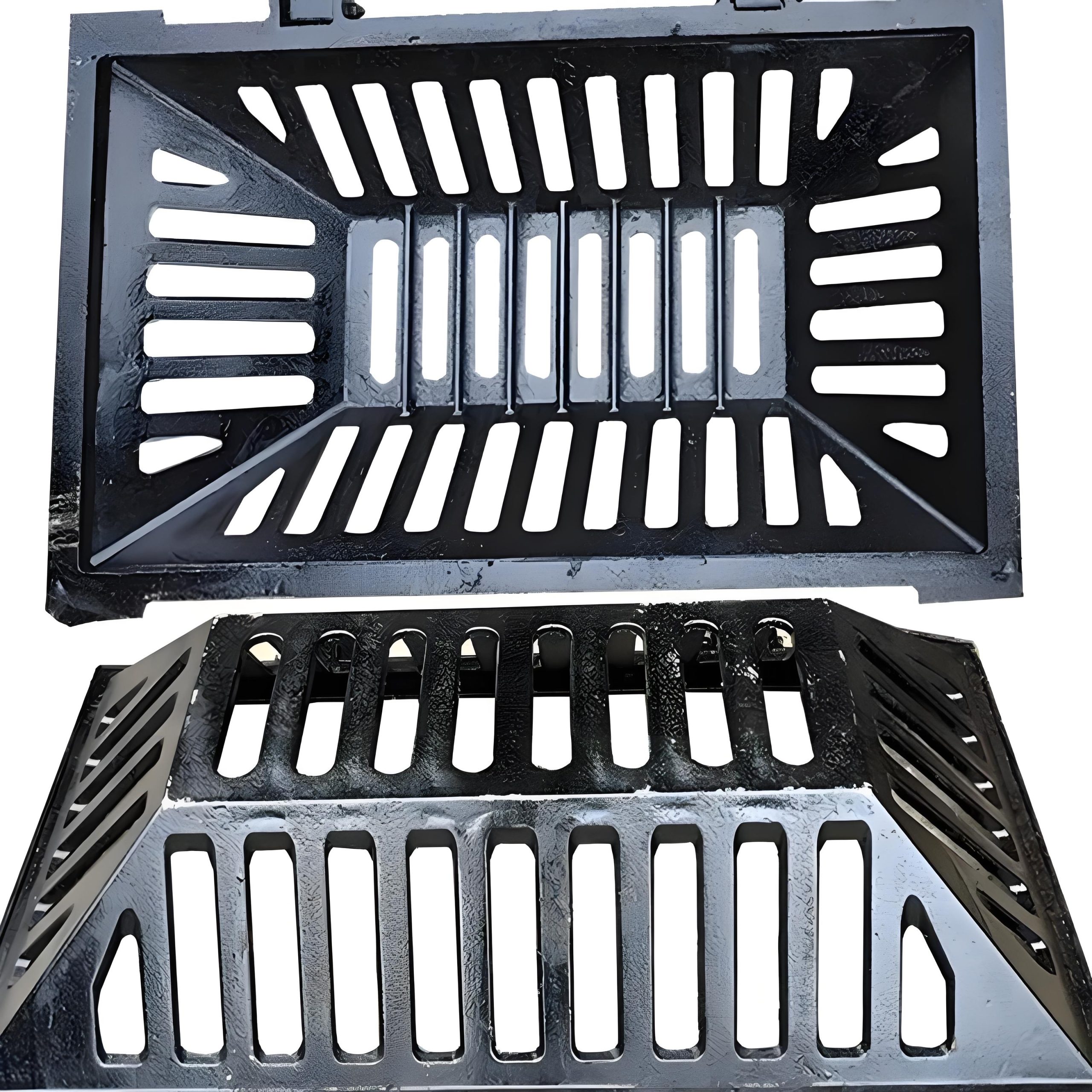
Composite covers are useful where lightweight handling, corrosion resistance, and non-conductive performance are important. They are often used in electrical, telecom, and utility trench systems.
Solid plate covers provide full coverage and can be designed for high load capacity. They are used in temporary access, construction sites, vehicle areas, and closed service trenches. Surface treatment or anti-slip pattern should be considered.
| Cover Option | Best Advantage | Main Limitation |
|---|---|---|
| Steel grating cover | Excellent drainage and ventilation | Small objects may fall through openings |
| Chequered plate cover | Anti-slip solid walking surface | Limited drainage unless holes or gaps are added |
| Composite cover | Lightweight, non-conductive, corrosion resistant | Load grade must be confirmed for vehicles |
| Solid steel plate cover | Strong closed coverage | Can be heavy and slippery if surface is smooth |
Size, span, and thickness selection determine whether a safety trench cover can perform correctly. A cover must be large enough to sit safely on the support edges, strong enough to carry the expected load, and practical enough for installation and maintenance.
The clear trench span is the unsupported opening the cover must bridge. This is one of the most important dimensions. Wider spans need stronger covers, thicker plates, larger grating bearing bars, reinforced composite structures, or support frames.
The cover should overlap the trench support ledge properly. If the bearing area is too small, the cover may slip, rotate, or overload the edge. The support ledge should also be strong enough for the expected load.
For solid steel or chequered plate covers, thickness affects strength and deflection. For grating covers, bearing bar height and thickness are more important than overall cover thickness. For composite covers, thickness and rib structure both matter.
Long panels reduce joints but are harder to lift. Shorter panels are easier for maintenance but require more pieces. For removable trench covers, the weight of each panel should be manageable for safe handling.
| Selection Item | Why It Matters | Buyer Should Confirm |
|---|---|---|
| Clear span | Controls bending and load capacity | Actual open width between supports |
| Support ledge | Controls seating and load transfer | Ledge width and frame strength |
| Cover thickness | Affects strength and deflection | Load type and span requirement |
| Panel length | Affects handling and maintenance | Preferred removable section length |
| Cover fit | Prevents gaps, rocking, and trip hazards | Exact trench size and tolerance |
Visibility is important for safety trench covers, especially in construction sites, temporary access routes, public areas, and industrial yards. A cover may be structurally safe, but if workers or pedestrians cannot see the trench area clearly, the risk remains.
Temporary trench covers may use bright colors such as yellow or orange to make the covered area visible. Composite trench covers can often be molded in warning colors. Steel covers may use paint or warning strips.
Warning markings can identify trench covers, load limits, lifting points, no-parking zones, electrical cable routes, or restricted access areas. These markings are useful in construction and utility projects.
Outdoor sites, road edges, and night work areas may use reflective strips to improve visibility. This helps vehicles and workers identify trench covers in low-light conditions.
For large projects, trench covers may need panel numbers, direction marks, or installation location labels. This helps workers reinstall covers correctly after maintenance.
| Visibility Feature | Function | Suitable Use |
|---|---|---|
| Warning color | Makes cover easy to notice | Construction sites and temporary access routes |
| Reflective strip | Improves night and low-light visibility | Outdoor roadsides and work zones |
| Load marking | Shows intended use limit | Temporary covers and vehicle areas |
| Panel numbering | Helps correct reinstallation | Large industrial and utility projects |
| Electrical warning mark | Identifies cable trench or utility risk | Substations and electrical trenches |
Safety trench covers can be removable or fixed. The right choice depends on whether the trench needs regular inspection, cleaning, cable access, drainage maintenance, or permanent protection.
Removable trench covers are suitable for drainage channels, cable trenches, inspection pits, utility channels, and maintenance areas. They should be light enough or designed with lifting holes, handles, or lifting points so workers can remove them safely.
Fixed trench covers are used where the trench does not need frequent access or where movement prevention is more important. They may be welded, bolted, clipped, or locked to the support frame.
If covers are opened often, removable design is usually better. Panel weight, handle position, edge finish, and anti-slip surface become more important. If the cover is rarely opened, bolted or fixed installation may reduce movement and improve safety.
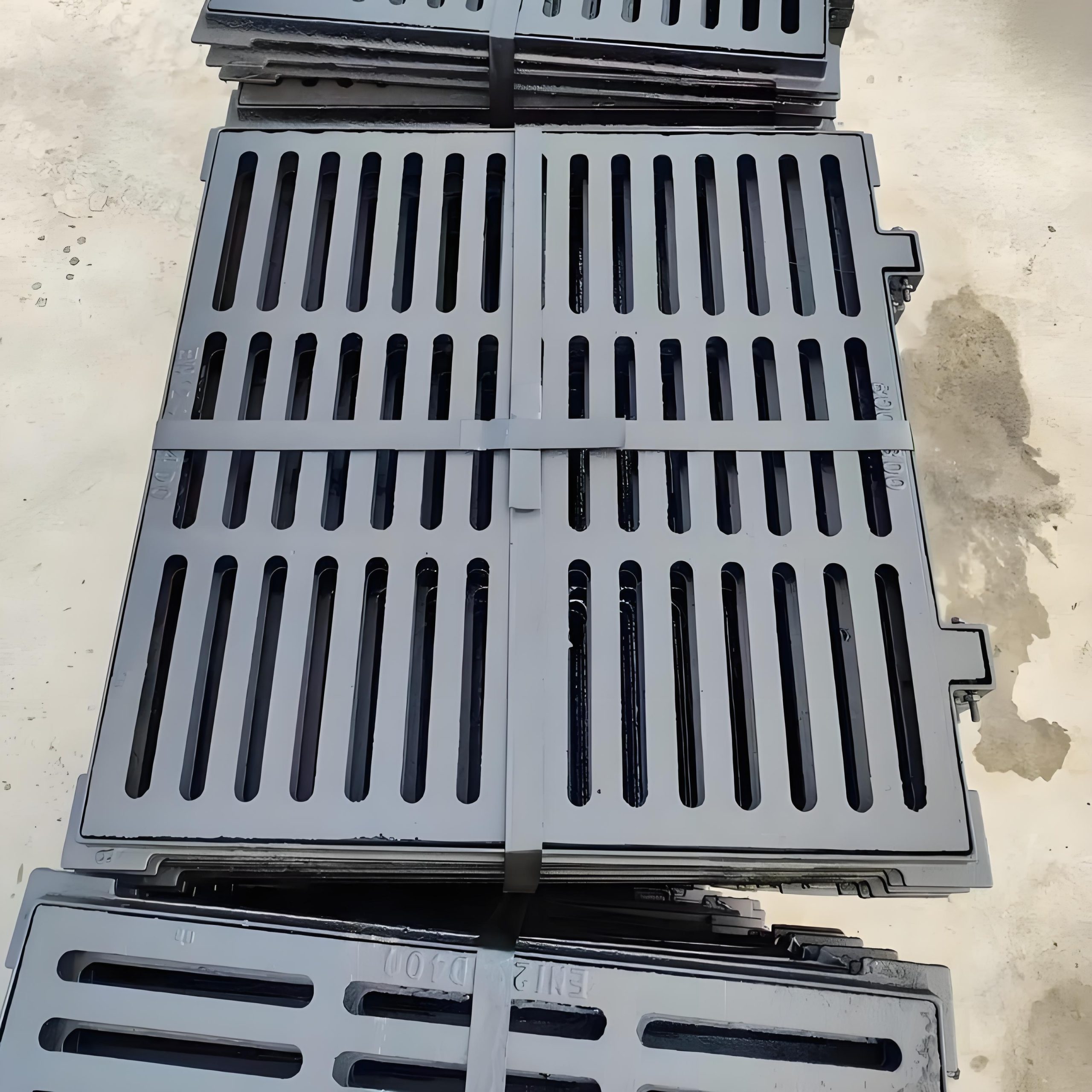
Public or outdoor covers may need anti-theft fixing, locking bolts, hinges, or special fasteners. These details help prevent unauthorized removal and reduce safety risks.
| Cover Design | Main Advantage | Best Application |
|---|---|---|
| Removable cover | Easy cleaning and inspection | Drainage channels, cable trenches, utility access |
| Bolted cover | Secure but still removable | Industrial floors and public areas |
| Welded cover | Permanent and strong | Non-access trench protection |
| Hinged cover | Convenient repeated access | Inspection pits and maintenance channels |
| Locked cover | Prevents unauthorized removal | Municipal, public, and outdoor utility projects |
Quality control is essential for safety trench covers because they are used to protect people and equipment from trench hazards. A reliable manufacturer should inspect material, dimensions, welding, surface finish, load performance, edge treatment, packing, and accessories before delivery.
The material grade, plate thickness, grating bearing bar size, composite thickness, rib structure, and surface treatment should be checked according to the order requirement. Wrong material or reduced thickness can affect safety.
For steel grating, chequered plate, and framed trench covers, welding quality should be checked carefully. Weak welds, poor reinforcement, loose frames, or rough handles can create safety risks.
Length, width, diagonal difference, support contact, hole position, handle position, frame size, and cover flatness should be inspected. Accurate fit reduces rocking, gaps, and trip hazards.
Anti-slip surface, galvanizing, painting, stainless finish, composite texture, burrs, sharp edges, coating damage, and warning markings should be reviewed before shipment. Surface defects can affect both safety and service life.
For heavy-duty, forklift, vehicle, or public access covers, load performance should be reviewed before production. A safe trench cover requires both a suitable cover and a suitable support frame.
| Quality Control Item | What to Check | Safety Purpose |
|---|---|---|
| Material | Steel grade, composite formulation, plate thickness, bar size | Ensures correct strength and durability |
| Welding | Grating welds, frame welds, handles, reinforcement | Prevents structural weakness |
| Dimensions | Length, width, support fit, holes, flatness | Reduces gaps, rocking, and installation problems |
| Surface finish | Anti-slip pattern, galvanizing, coating, burrs, sharp edges | Improves walking safety and corrosion resistance |
| Fixing parts | Bolts, locks, clips, hinges, lifting handles | Prevents movement and improves maintenance safety |
| Packing | Labels, bundle protection, accessory packing | Reduces transport damage and site confusion |
What is a safety trench cover used for?
A safety trench cover is used to cover open trenches, drainage channels, cable trenches, excavation openings, utility pits, and floor channels to reduce fall hazards, trip hazards, slipping risks, and unsafe access. It allows workers, pedestrians, carts, forklifts, or vehicles to pass over the trench safely when the cover is designed for the correct load.
How do I choose the right safety trench cover?
Choose the right safety trench cover by confirming trench width, clear span, support ledge, load condition, material, surface type, anti-slip requirement, edge design, fixing method, visibility marking, and maintenance access needs. Pedestrian areas can use lighter covers, while forklift and vehicle areas require heavy-duty covers with proper frame support and load review.
Which safety trench cover is best for outdoor use?
For outdoor use, hot-dip galvanized steel grating covers, galvanized chequered plate covers, stainless steel covers, or weather-resistant composite covers are common options. The best choice depends on drainage needs, corrosion exposure, load requirement, anti-slip safety, and whether the cover needs to be removable. For wet drainage areas, galvanized serrated steel grating is often practical; for electrical trenches, composite covers may be preferred because they are lightweight and non-conductive.
Please Feel free to give your inquiry in the form below.we will reply you in 24 hours.