
Home > Products > Trench Cover > sidewalk trench cover
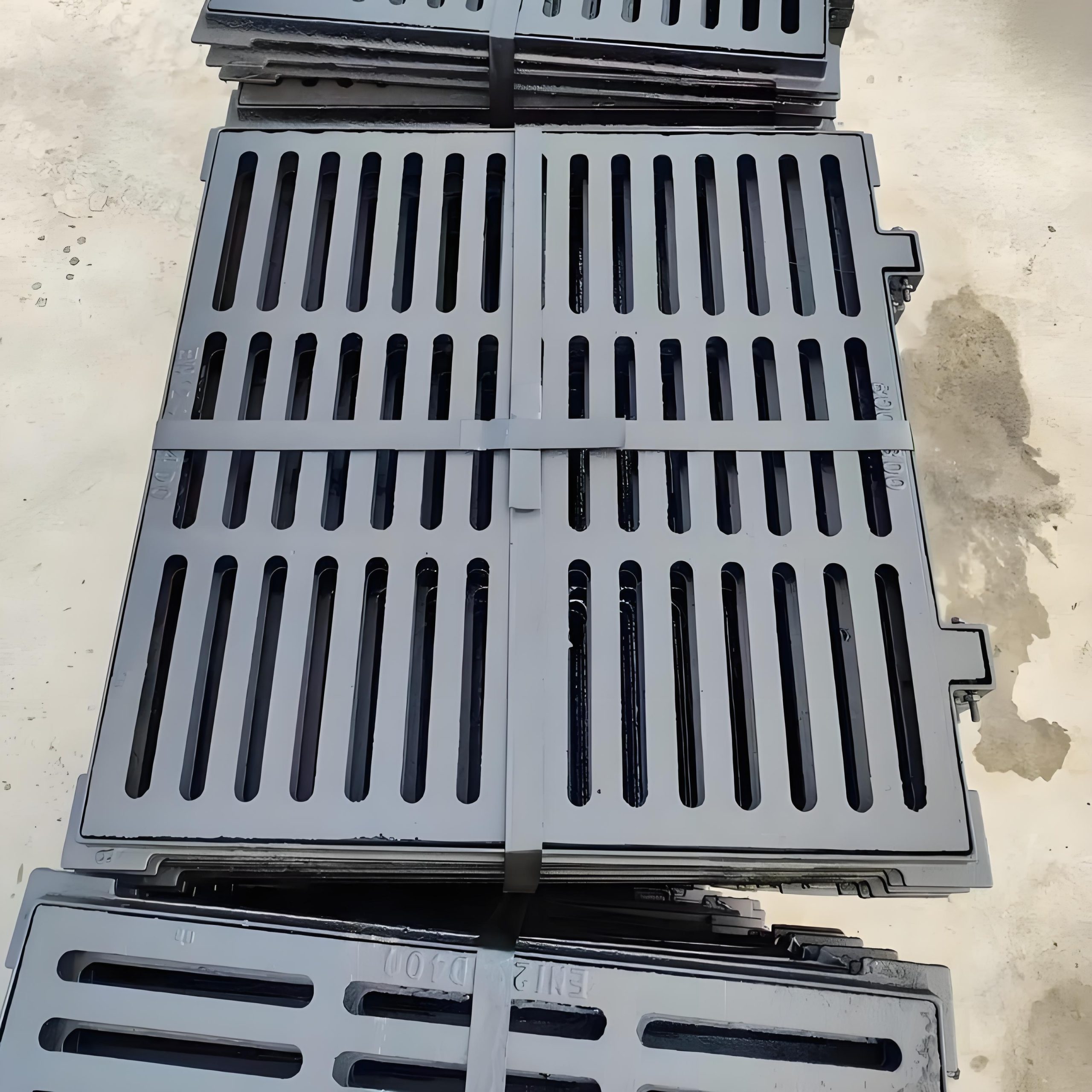
Sidewalk trench cover is used to cover drainage channels, cable trenches, utility openings, inspection trenches, construction cuts, service pits, and …
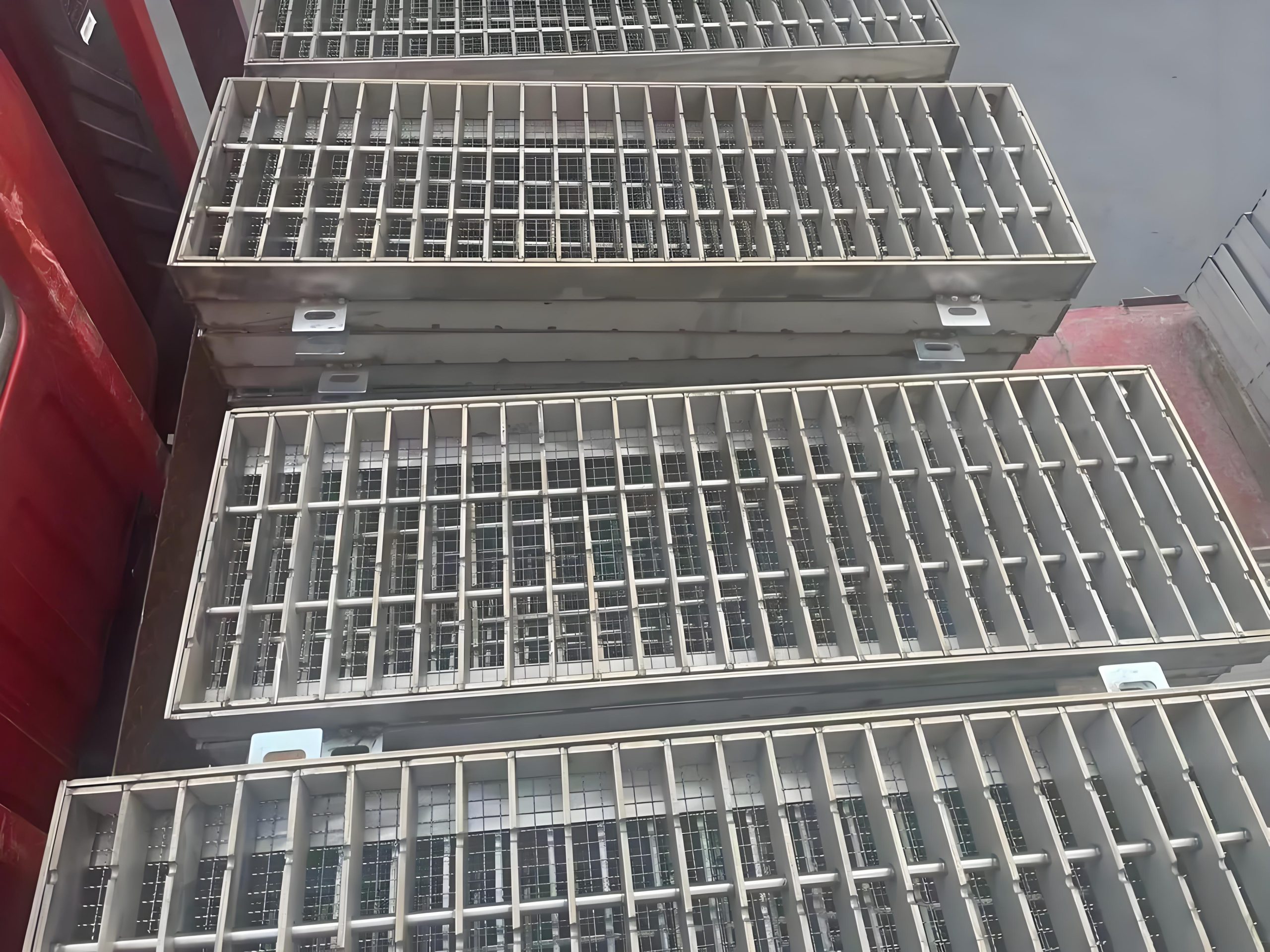
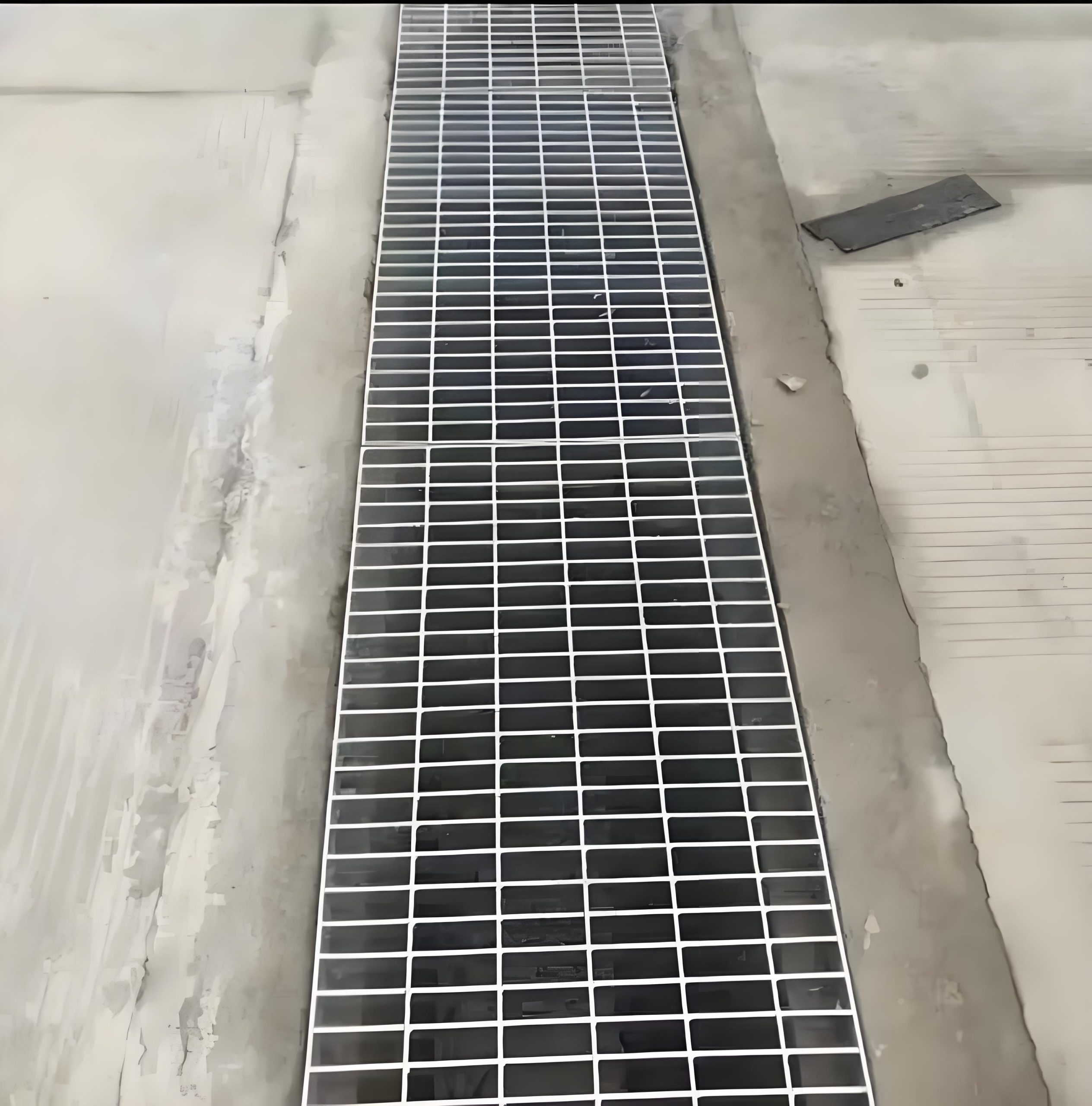
Sidewalk trench cover is used to cover drainage channels, cable trenches, utility openings, inspection trenches, construction cuts, service pits, and access channels in pedestrian walkways and urban areas. Its main purpose is to create a safe walking surface while protecting the trench below and allowing drainage, ventilation, or maintenance access when required. Compared with heavy road trench covers, sidewalk trench covers usually focus more on pedestrian safety, anti-slip surface, flush installation, edge protection, corrosion resistance, and easy inspection. For buyers, the correct sidewalk trench cover should be selected according to trench width, expected load, material, plate thickness, grating bar size, surface design, installation method, weather exposure, maintenance frequency, and local sidewalk safety requirements.
A sidewalk trench cover is designed for pedestrian environments where people walk, stand, push strollers, use bicycles, move hand carts, or pass with light service equipment. These covers are commonly used in sidewalks, parks, commercial streets, public squares, residential areas, school paths, municipal walkways, subway entrances, utility corridors, and drainage channels beside buildings.
In urban areas, trench covers are highly visible and frequently used by the public. This means the product must do more than simply cover an opening. It must sit flat, avoid sharp edges, prevent unsafe gaps, resist slipping, allow proper drainage, and remain stable under repeated use. A poorly fitted sidewalk trench cover can create trip hazards, noise, rocking, water accumulation, or safety complaints.
Sidewalk trench covers are different from industrial road covers because the main users are pedestrians. The design must consider shoes, bicycles, small wheels, mobility aids, cleaning carts, and occasional light maintenance vehicles. The cover should not have large openings that trap heels, wheels, or walking sticks. It should also be easy to identify, maintain, and remove when utility inspection is needed.
| Urban Area | Sidewalk Trench Cover Requirement | Main Design Focus |
|---|---|---|
| Pedestrian sidewalk | Safe walking surface over utility or drainage trench | Anti-slip surface, flush fit, small safe openings |
| Urban drainage channel | Water flow with pedestrian safety | Drainage opening, grating spacing, corrosion resistance |
| Commercial street | Clean appearance and stable installation | Flatness, finish, edge protection, noise control |
| Utility access trench | Removable cover for inspection | Lifting holes, panel size, secure seating |
| Park or public square | Long-term weather resistance and safe access | Material durability, anti-slip texture, maintenance access |
Sidewalk trench covers are used in public and private projects where a trench or channel crosses a walking area. The application determines whether the cover should be made from steel grating, chequered plate, composite material, galvanized steel, stainless steel, cast iron, or another material.
Sidewalk drainage channels use trench covers to remove rainwater from walking surfaces. Steel grating or slotted covers are often used because they allow water to pass into the channel. The opening size must be safe for pedestrians and small wheels.
Utility trenches may contain cables, pipes, communication lines, or service ducts. These covers often need to be removable for inspection. Solid plate, chequered plate, composite cover, or framed cover systems may be used depending on safety and access requirements.
Building entrances, shopping streets, and public plazas often require trench covers with clean appearance and safe walking surface. Stainless steel, galvanized steel, or composite covers may be selected depending on design and environment.
During sidewalk repair or underground utility work, temporary trench covers are used to allow safe pedestrian passage. These covers should have clear markings, anti-slip surfaces, stable placement, and edges that reduce trip hazards.
In parks, schools, and public walkways, trench covers should be safe for children, elderly pedestrians, bicycles, and maintenance carts. Surface texture, edge fit, and opening size are especially important.
| Application | Recommended Cover Type | Key Requirement |
|---|---|---|
| Sidewalk drainage | Steel grating or slotted trench cover | Drainage flow and pedestrian-safe openings |
| Utility trench | Solid plate, composite, or framed cover | Removable access and closed protection |
| Commercial walkway | Galvanized, stainless steel, or decorative cover | Appearance, flatness, anti-slip surface |
| Temporary sidewalk work | Temporary steel or composite trench cover | High visibility and stable placement |
| Public park walkway | Composite, galvanized, or stainless cover | Weather resistance and safe walking surface |
Sidewalk trench covers are mainly designed for pedestrian traffic, but many sidewalks may also face bicycles, scooters, maintenance carts, cleaning machines, wheelchairs, strollers, and occasional light service vehicles. The cover must match the actual load condition, not only the visible trench size.
Pedestrian load is the basic requirement for sidewalk trench covers. The cover should feel stable under foot and should not bend, rock, or shift when people walk across it. It should also have safe openings and a non-slippery surface.
Bicycles, scooters, strollers, luggage wheels, and mobility aids can be affected by opening size and surface gaps. For sidewalk grating covers, bar spacing and slot direction should be selected carefully to reduce wheel trapping risk.
Sidewalk maintenance may involve cleaning carts, hand trucks, small utility trolleys, or landscaping equipment. These loads are more concentrated than foot traffic and may require stronger cover plates or closer support spacing.
Some sidewalk trench covers may be exposed to light service vehicles, emergency maintenance vehicles, or occasional parking pressure. In these areas, a stronger framed cover, thicker plate, heavy-duty grating, or reinforced composite cover may be required.
| Load Type | Common Situation | Design Focus |
|---|---|---|
| Pedestrians | Normal sidewalk walking traffic | Anti-slip surface, stable fit, safe openings |
| Bicycles and scooters | Urban sidewalks and shared paths | Opening direction and gap size control |
| Strollers and wheelchairs | Public walkways and commercial entrances | Smooth transition and no wheel trapping |
| Maintenance carts | Cleaning, landscaping, and utility work | Wheel load and deflection control |
| Light vehicles | Occasional service or emergency access | Reinforced cover and frame support |
Anti-slip surface design is essential for sidewalk trench covers because outdoor pedestrian areas can become wet, dusty, muddy, icy, or covered with leaves. The cover surface should provide enough traction for public walking conditions.
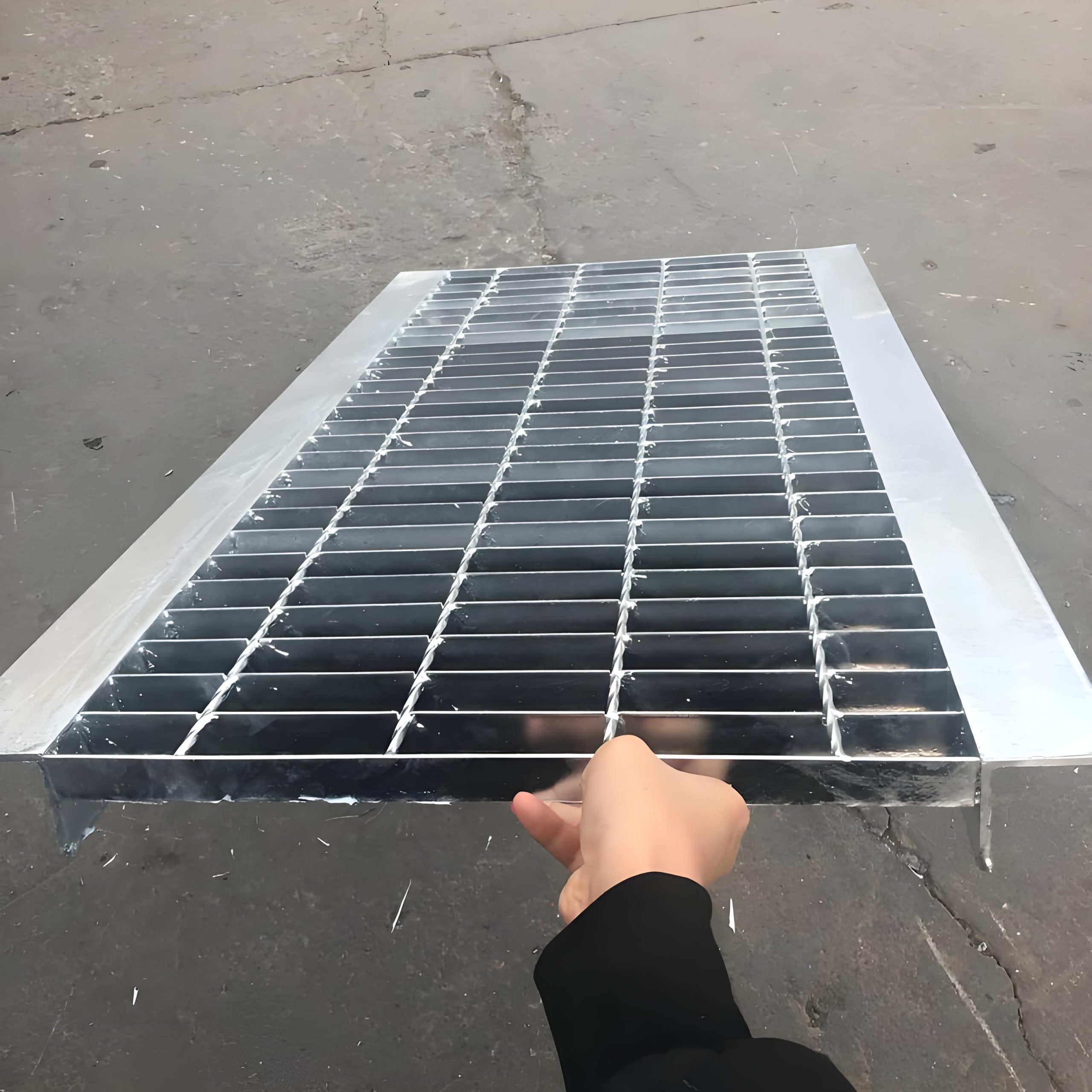
Serrated steel grating trench covers use toothed bearing bars to improve grip. They are suitable for wet sidewalk drainage channels, outdoor walkways, public drainage areas, and industrial pedestrian routes. However, opening size must still be pedestrian-safe.
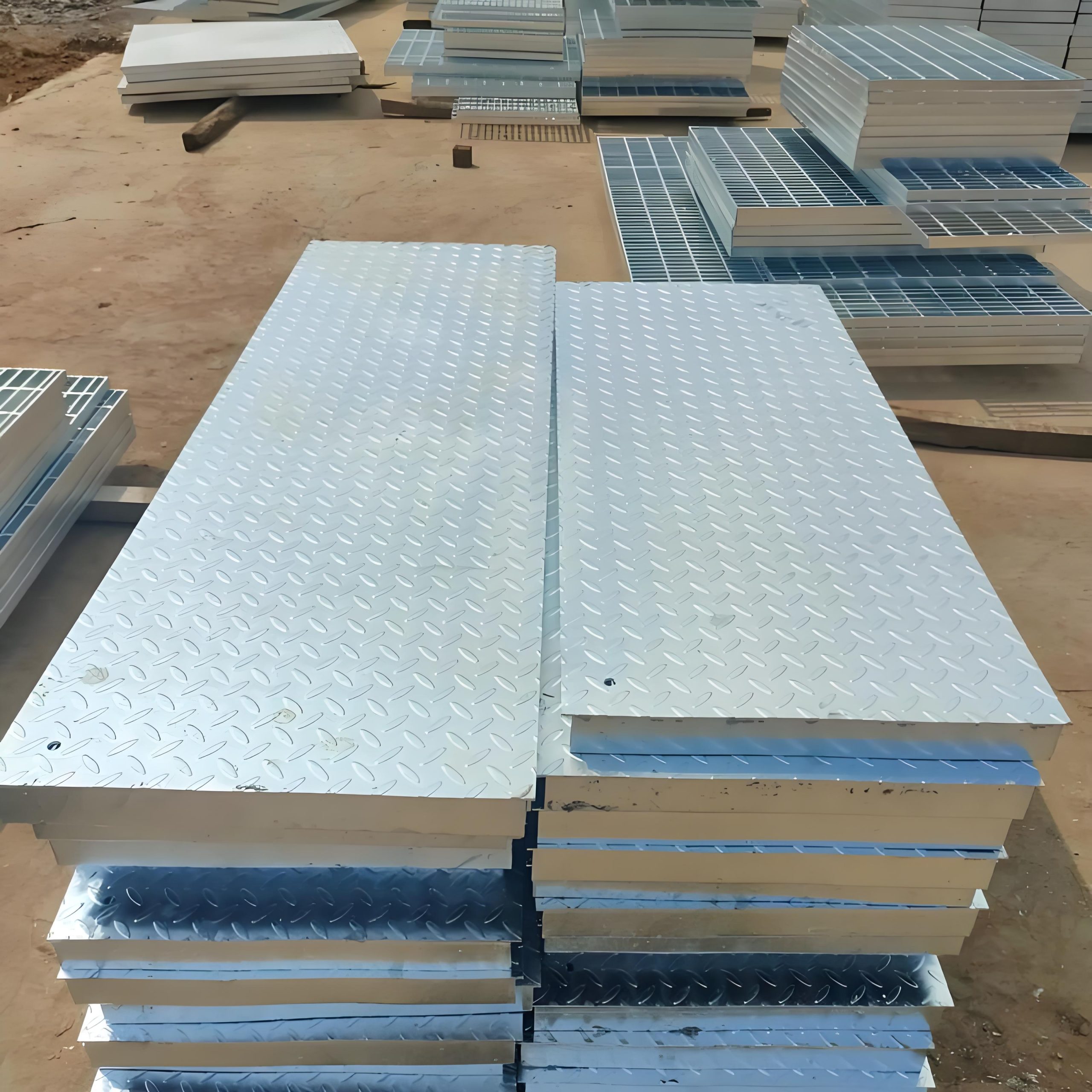
Chequered plate trench covers have raised patterns that provide better traction than smooth steel plate. They are suitable for solid sidewalk covers, utility trenches, temporary pedestrian covers, and areas where small objects should not fall into the trench.
Composite sidewalk trench covers can be molded with anti-slip textures, raised ribs, warning patterns, or roughened surfaces. They are lightweight and useful for utility trenches, cable channels, and removable access covers.
Some covers may use anti-slip coating or textured paint. This can improve surface friction, but the coating must be suitable for outdoor wear, cleaning, and weather exposure. If the coating wears down, maintenance may be needed.
| Anti-Slip Option | Main Benefit | Suitable Sidewalk Use |
|---|---|---|
| Serrated steel grating | Improves grip in wet drainage areas | Outdoor drains and public drainage channels |
| Chequered steel plate | Solid anti-slip walking surface | Utility trenches and temporary sidewalk covers |
| Textured composite cover | Lightweight and non-metallic anti-slip surface | Cable trenches and maintenance access points |
| Anti-slip coating | Adds surface friction | Temporary pedestrian covers and special safety zones |
Plate thickness, span, and structural strength must be selected according to trench width and load. A sidewalk trench cover that is too thin may bend, rattle, or feel unstable. A cover that is too heavy may be difficult to remove for maintenance. The best design balances safety, weight, cost, and access needs.
The clear trench span is the unsupported opening between both sides of the trench. This dimension is more important than the total cover width. A wider span requires a stronger plate, larger grating bars, thicker composite structure, or additional frame support.
For solid steel or chequered plate covers, thickness directly affects load capacity and deflection. Thicker plates provide better strength but also increase weight and cost. For pedestrian sidewalk covers, thickness should be selected to provide stable walking without unnecessary over-weight.
For steel grating sidewalk covers, bearing bar height, thickness, spacing, and direction determine strength. Bearing bars should span across the trench opening. If installed in the wrong direction, load capacity may be reduced.
Composite trench covers often rely on thickness, internal ribs, reinforced fibers, and molded structure. Buyers should confirm load grade, span, and support ledge before ordering.
| Design Item | Why It Matters | Buyer Should Confirm |
|---|---|---|
| Clear span | Controls bending and load selection | Actual trench opening width |
| Support ledge | Provides seating and load transfer | Ledge width and frame condition |
| Plate thickness | Affects strength, weight, and cost | Pedestrian or light vehicle load requirement |
| Grating bar size | Controls strength of grating covers | Bearing bar size, spacing, and direction |
| Panel length | Affects handling and maintenance access | Preferred removable section size |
Sidewalk trench covers can be made from steel grating, chequered plate, composite material, solid steel plate, stainless steel, galvanized steel, or cast material. The correct option depends on drainage, pedestrian safety, maintenance, appearance, and budget.
Steel grating covers are suitable when drainage is required. They allow water to pass through into the trench and are commonly used for sidewalk drainage channels, parks, public walkways, and municipal drainage areas. The opening size should be safe for pedestrians and small wheels.
Chequered plate covers are solid steel covers with raised patterns. They are useful for utility trenches, temporary construction covers, cable trenches, and areas where a closed surface is required. The raised pattern improves traction.
Composite covers are lightweight, corrosion resistant, and generally non-conductive. They are useful for cable trenches, utility access, telecom channels, electrical areas, and maintenance-heavy sidewalk trenches.
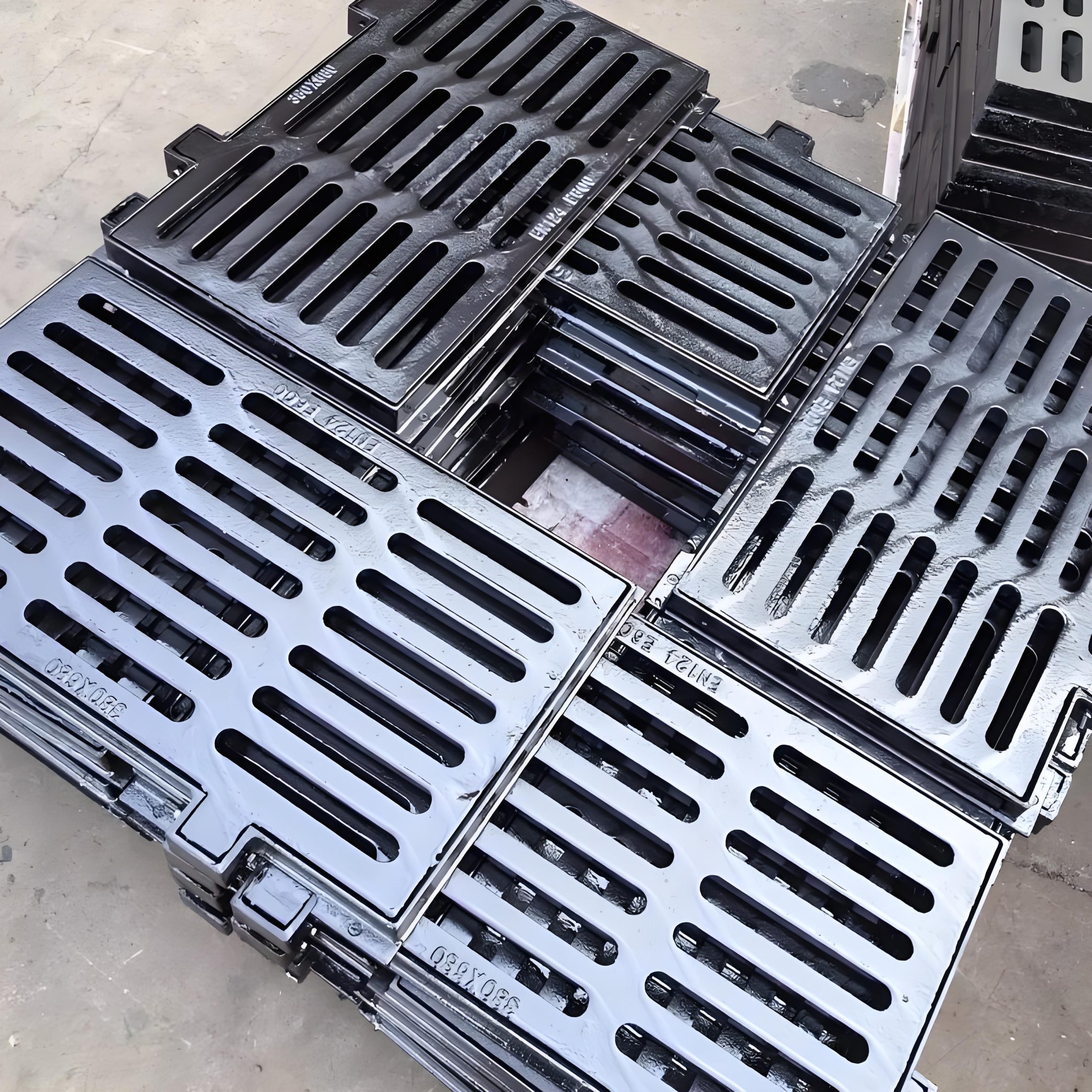
Stainless steel covers may be used in decorative urban areas, coastal sidewalks, commercial entrances, food-related outdoor areas, or locations requiring higher corrosion resistance and cleaner appearance.
| Cover Option | Main Advantage | Best Use | Important Note |
|---|---|---|---|
| Steel grating | Excellent drainage and ventilation | Sidewalk drains and wet public areas | Control opening size for pedestrian safety |
| Chequered plate | Solid anti-slip surface | Utility trenches and temporary covers | Limited drainage unless holes or slots are added |
| Composite cover | Lightweight and non-conductive | Cable, telecom, and utility trenches | Confirm load grade and UV resistance |
| Galvanized steel | Good outdoor corrosion protection | Municipal drainage and urban walkways | Repair coating if cut or welded after galvanizing |
| Stainless steel | High corrosion resistance and clean appearance | Coastal, commercial, and architectural areas | Higher cost than carbon steel |
Sidewalk trench covers are usually installed outdoors and exposed to rain, moisture, dust, sunlight, cleaning water, salt, mud, and temperature changes. Material and surface treatment should be selected for long-term durability.
Hot-dip galvanized steel trench covers are common for outdoor sidewalks because zinc coating protects carbon steel from corrosion. Galvanizing is practical for steel grating covers, frames, and many chequered plate covers.
Stainless steel is suitable for coastal sidewalks, commercial buildings, wet urban environments, and places where appearance and corrosion resistance are important. 304 may be used for general environments, while 316 may be selected for coastal or chloride exposure.
Composite sidewalk trench covers resist rust and are useful for electrical or utility trenches. For outdoor use, buyers should confirm UV resistance, surface wear resistance, flame retardant requirement, and load grade.
Painted steel may be used for temporary covers or low-corrosion areas. However, paint can wear or chip under pedestrian and maintenance traffic. Long-term outdoor use usually requires better protection.
| Material or Finish | Weather Resistance | Typical Use | Maintenance Note |
|---|---|---|---|
| Black steel | Low | Temporary or indoor use | Rusts quickly outdoors without coating |
| Painted steel | Basic | Temporary sidewalk covers | Paint may wear or chip |
| Hot-dip galvanized steel | Good | Outdoor sidewalk drains and municipal covers | Check coating damage after cutting or welding |
| Stainless steel | Very good depending on grade | Coastal, commercial, and architectural sidewalks | Clean surface regularly in aggressive environments |
| Composite | Good if UV-resistant grade is selected | Utility and electrical sidewalk trenches | Confirm outdoor formulation and load rating |
Sidewalk trench covers may need to provide drainage, ventilation, or removable access depending on the trench function. A drainage trench cover and a cable trench cover are not the same product. Buyers should define the purpose before selecting the cover type.
If the trench collects rainwater or surface runoff, the cover should allow water to enter the channel. Steel grating, slotted covers, perforated plates, or special drainage openings may be used. The openings should not create pedestrian hazards.
Utility trenches may need ventilation to reduce moisture or heat buildup. Grating and perforated covers provide better air movement than solid plates. However, cable protection and debris control should also be considered.
Sidewalk trenches often need cleaning, inspection, or utility maintenance. Removable covers should have manageable panel size, lifting holes, handles, or tool slots. Heavy covers should be designed for safe lifting.
Open grating allows water and debris to enter the channel. This can help drainage, but it may require regular cleaning. For cable trenches, closed covers may be better because they prevent stones, leaves, and trash from falling inside.
| Requirement | Recommended Cover Design | Buyer Note |
|---|---|---|
| Fast sidewalk drainage | Steel grating or slotted trench cover | Control opening size for pedestrian safety |
| Cable protection | Solid, composite, or chequered plate cover | Prevent debris from entering the trench |
| Ventilation | Grating or perforated cover | Useful for utility channels |
| Regular cleaning | Removable panels with lifting points | Keep panel weight manageable |
| Public safety | Flush fit and anti-slip surface | Avoid gaps, rocking, and sharp edges |
Many sidewalk trench covers need custom dimensions because urban trenches are not always built to standard sizes. Custom size, edge treatment, lifting handles, frames, and panel numbering can improve installation safety and maintenance efficiency.
Custom sidewalk trench covers are made according to clear trench width, total trench length, frame dimensions, support ledge, and preferred panel size. Accurate sizing reduces rocking, unsafe gaps, and installation delays.
Edges should be smooth, safe, and suitable for public walking areas. Sharp edges should be removed. Exposed steel grating edges may need banding. Solid plate covers may need chamfered, beveled, or finished edges to reduce trip hazards.
Removable sidewalk trench covers may need recessed handles, lifting holes, pull slots, or tool lifting points. Raised handles should be avoided in pedestrian areas unless they are outside the walking path, because they can create trip hazards.
For long sidewalk projects, panel numbering helps maintenance workers reinstall covers in the correct location. This is useful when panel sizes vary along the trench line.
| Custom Feature | Purpose | Recommended Use |
|---|---|---|
| Custom panel size | Matches trench and frame dimensions | Municipal and project-based sidewalks |
| Edge banding | Closes grating edges and improves safety | Steel grating sidewalk covers |
| Beveled edge | Reduces trip risk at height transitions | Temporary or surface-mounted covers |
| Recessed lifting handle | Supports maintenance access without raised hazard | Utility and inspection trench covers |
| Lifting hole | Allows tool-assisted removal | Heavier covers and inspection panels |
| Panel numbering | Helps correct reinstallation | Long trench lines and mixed-size projects |
Sidewalk trench covers can be fixed or removable. The right choice depends on whether the trench needs regular inspection, cleaning, cable access, drainage maintenance, or permanent public safety protection.
Removable covers are suitable for drainage channels, utility trenches, cable trenches, telecom routes, and inspection points. They should be easy to lift, but also stable during normal pedestrian use. Removable does not mean loose or unsafe.
Fixed covers are used when the trench does not need frequent access or when public safety and anti-theft protection are more important. Fixed covers may be bolted, clipped, welded, hinged, or locked to the frame.
Bolted covers provide a balance between security and access. They prevent unauthorized removal and reduce movement, while still allowing maintenance workers to remove the cover when required.
Hinged sidewalk trench covers are useful for utility access points that require repeated opening. Hinges keep the cover attached and reduce the risk of misplaced panels. The hinge should not create a pedestrian hazard.
| Cover Design | Main Advantage | Suitable Application |
|---|---|---|
| Loose removable cover | Easy to open for cleaning | Low-risk drainage channels and private areas |
| Bolted removable cover | Secure but serviceable | Urban sidewalks and public utility trenches |
| Fixed cover | Reduces unauthorized movement | Permanent public walkway protection |
| Hinged cover | Convenient repeated inspection | Utility access and municipal maintenance points |
| Locked cover | Improves security | Public areas and anti-theft applications |
Installation method affects sidewalk trench cover safety, stability, maintenance, and appearance. The cover should sit firmly and should not move, lift, rattle, or create uneven transitions under pedestrian or light vehicle movement.
A frame provides stable seating for the trench cover. Steel angle frames, embedded frames, concrete ledges, or prefabricated support frames may be used. A good frame improves load transfer and reduces movement.
Anchor bolts can secure the cover or frame to the surrounding sidewalk structure. They are useful in public areas where covers must not be removed easily or shifted by use.
Clips, locks, and anti-theft fasteners can prevent cover movement and unauthorized removal. These are useful for municipal areas, commercial streets, and high-traffic sidewalks.
For sidewalks, flush installation is important. The cover surface should match the surrounding pavement height as closely as possible. Uneven height can create trip hazards, wheelchair access problems, and poor appearance.
Temporary sidewalk trench covers used during construction should include warning color, anti-slip surface, stable placement, and beveled or ramped edges if they sit above the walking surface.
| Installation Method | Main Benefit | Suitable Use |
|---|---|---|
| Frame seating | Stable support and accurate positioning | Permanent sidewalk trench covers |
| Anchor bolts | Prevents movement and unauthorized removal | Public walkways and urban utility trenches |
| Clips or locking parts | Secure but serviceable fixing | Drainage grating and removable covers |
| Flush installation | Reduces trip hazard | All pedestrian sidewalk applications |
| Temporary surface placement | Fast construction protection | Short-term roadwork and sidewalk repair |
Sidewalk trench covers must protect pedestrians from fall hazards, trip hazards, slipping, wheel trapping, sharp edges, and unstable covers. Safety features should be considered before production and installation.
If the cover is a grating or slotted design, openings should be safe for pedestrian traffic. Large gaps can catch heels, bicycle tires, cane tips, or stroller wheels. The opening direction should also be considered in walking and cycling areas.
The cover should be flush with the surrounding sidewalk. If surface-mounted temporary covers are used, beveled edges or ramped edges can help reduce trip risk. Uneven installation should be avoided.
Edges should be deburred, banded, rounded, or finished. Sharp steel edges, rough composite edges, cracked concrete corners, or damaged galvanized coating can create handling and walking hazards.
Sidewalk trench covers should not rock, shift, lift, or rattle. Accurate fit, frames, clips, bolts, rubber pads, or locating stops can improve stability.
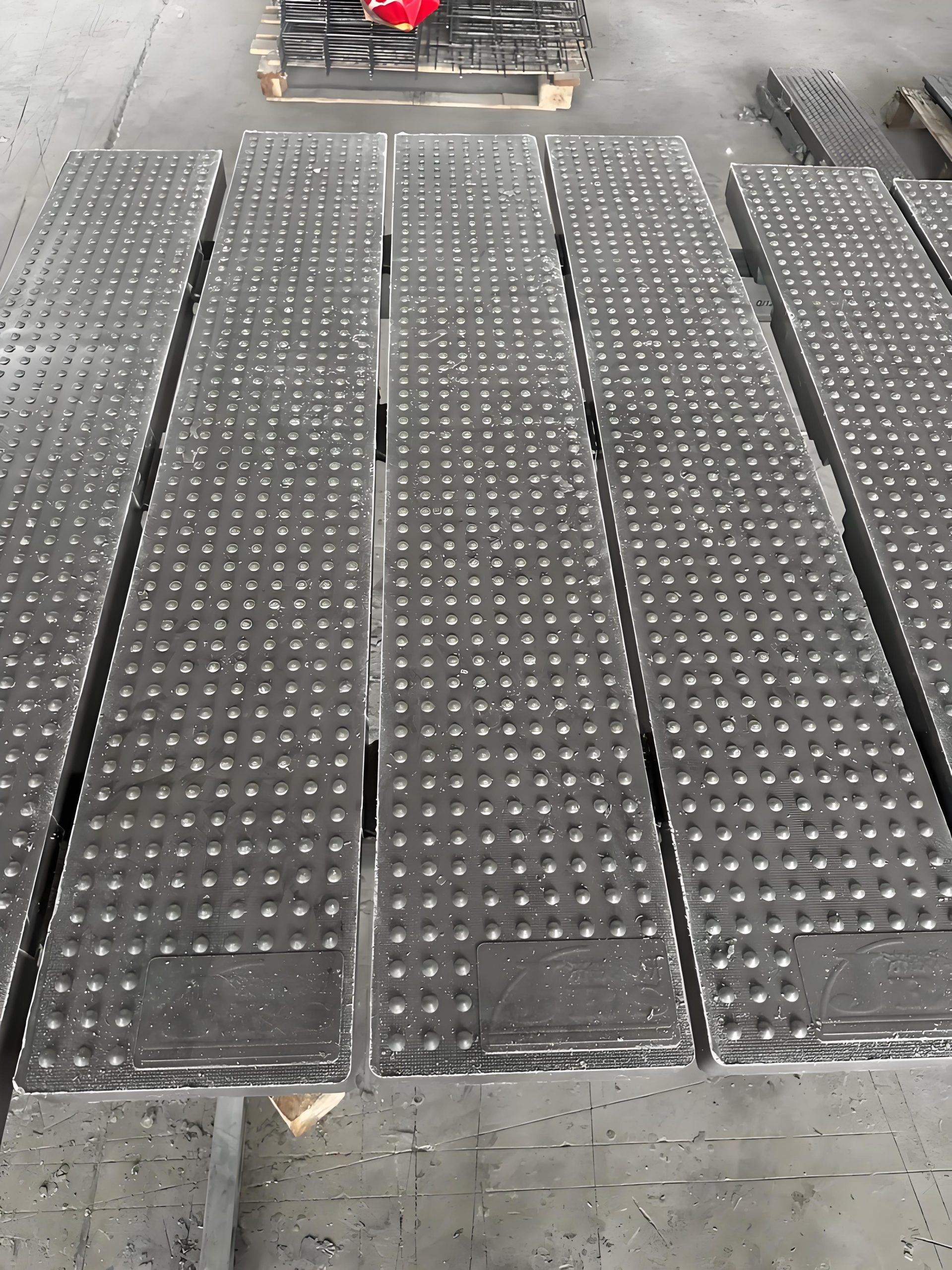
Temporary covers or utility access covers may need color marking, warning strips, panel labels, or visible edges. This is especially useful in construction zones or low-light areas.
| Safety Feature | Hazard Reduced | Recommended Design |
|---|---|---|
| Flush surface | Trip hazard | Match cover height with sidewalk level |
| Anti-slip texture | Slip hazard | Use serrated, chequered, textured, or coated surface |
| Safe opening size | Heel, cane, bicycle, or small wheel trapping | Control grating and slot spacing |
| Edge finishing | Cuts, trips, and handling injuries | Deburr, band, chamfer, or round exposed edges |
| Secure fixing | Cover movement and lifting | Use frame, bolts, clips, locks, or locating stops |
Quality control is essential because sidewalk trench covers are used in public walking areas. Poor quality can cause safety risks, installation problems, rust, rocking, sharp edges, blocked drainage, or public complaints. A reliable supplier should inspect material, size, strength, welding, surface finish, flatness, edge treatment, packing, and accessories before delivery.
The manufacturer should confirm steel grade, plate thickness, grating bar size, composite formulation, galvanizing requirement, stainless grade, or other material details according to the order. Wrong material can reduce strength or durability.
Length, width, thickness, diagonal difference, hole position, frame fit, edge clearance, and support seating should be checked. Sidewalk covers require accurate fit to prevent gaps and rocking.
Flatness is important for pedestrian safety. Warped or twisted covers can create trip hazards or unstable walking surfaces. Solid plates, grating panels, and composite covers should sit evenly on their supports.
Anti-slip texture, galvanizing, paint, stainless finish, composite surface, burrs, sharp zinc points, scratches, cracks, and coating damage should be inspected. Outdoor covers should have suitable surface protection.
The supplier should confirm whether the cover is designed for pedestrians, bicycles, cleaning carts, or light vehicles. The load should match the trench span and support frame.
| Quality Control Item | What to Check | Why It Matters |
|---|---|---|
| Material | Steel grade, stainless grade, composite type, plate thickness | Ensures strength and durability |
| Dimensions | Length, width, thickness, diagonal, frame fit | Prevents gaps, rocking, and installation issues |
| Flatness | Warping, twisting, uneven seating | Improves pedestrian safety |
| Surface finish | Anti-slip pattern, coating, galvanizing, burrs, cracks | Improves safety and weather resistance |
| Welding and fabrication | Frames, banding, handles, lifting holes, clips | Improves structural reliability |
| Packing and labels | Panel numbers, bundle protection, accessory packing | Reduces delivery damage and installation confusion |
What is a sidewalk trench cover used for?
A sidewalk trench cover is used to cover drainage channels, cable trenches, utility openings, inspection trenches, construction cuts, and service channels in pedestrian walkways and urban areas. It creates a safer walking surface while protecting the trench below and allowing drainage, ventilation, or maintenance access when needed.
What is the best material for sidewalk trench covers?
The best material depends on the application. Hot-dip galvanized steel is practical for outdoor sidewalk drainage and municipal covers. Stainless steel is suitable for coastal, commercial, or architectural areas. Composite covers are lightweight, corrosion resistant, and useful for cable or utility trenches. Chequered steel plate is suitable when a solid anti-slip surface is required.
How do I choose a safe sidewalk trench cover?
Choose a safe sidewalk trench cover by confirming trench width, support ledge, pedestrian load, bicycle or small wheel use, material, anti-slip surface, opening size, edge design, corrosion resistance, and installation method. The cover should sit flat, avoid sharp edges, prevent unsafe gaps, resist slipping, and remain stable during daily pedestrian use.
Please Feel free to give your inquiry in the form below.we will reply you in 24 hours.