
Home > Products > Trench Cover > Chequered Plate Trench Cover/DIN 59220/EN 10025
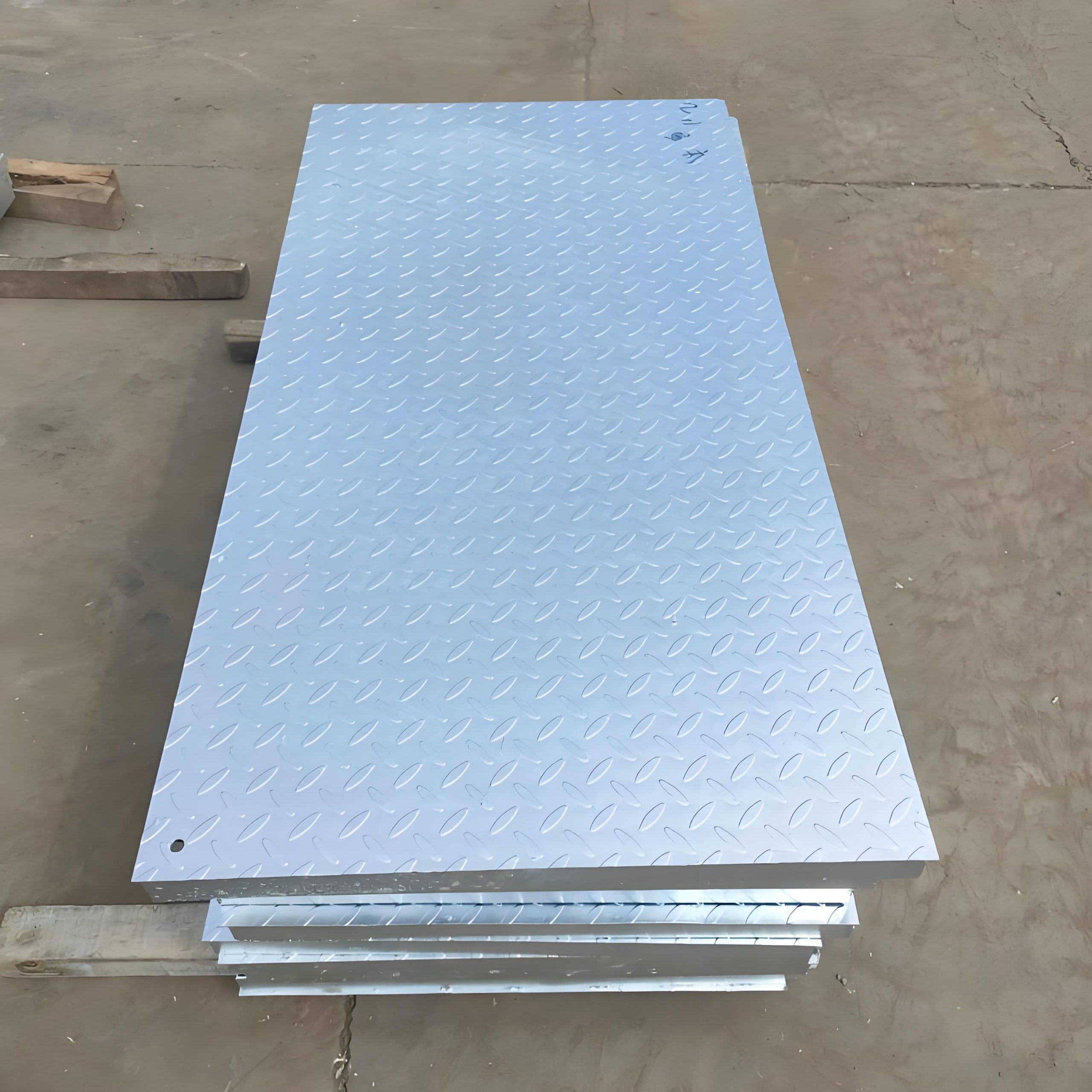
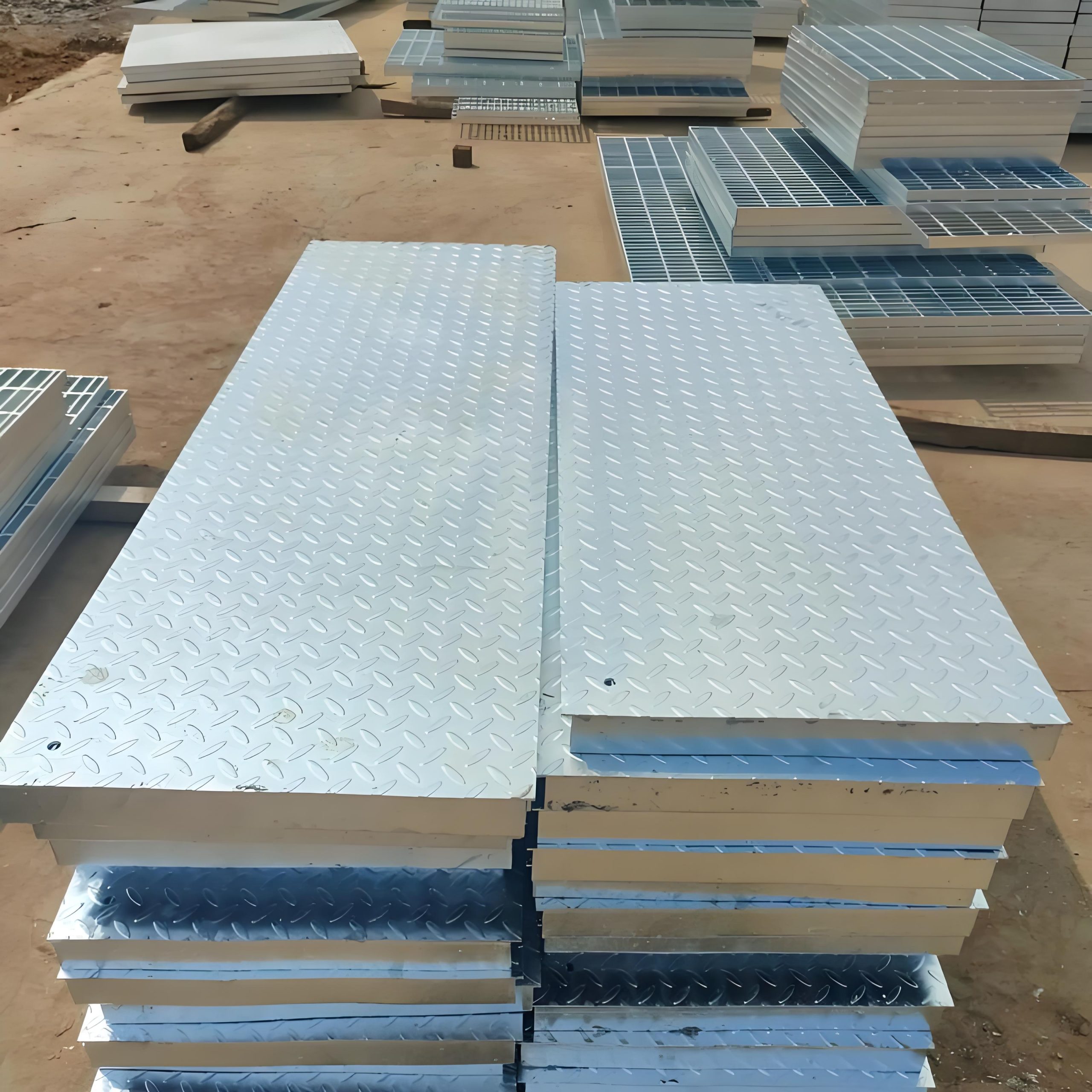
Chequered plate trench cover is a solid steel cover plate with raised anti-slip patterns, commonly used over drainage trenches, cable channels, inspec…
Chequered plate trench cover is a solid steel cover plate with raised anti-slip patterns, commonly used over drainage trenches, cable channels, inspection pits, workshop floor openings, service trenches, industrial access areas, and outdoor drainage systems. When buyers specify DIN 59220 / EN 10025, they usually want a chequered steel plate cover made with a recognized raised pattern and structural steel material such as S235, S275, or S355. DIN 59220 is commonly associated with chequered steel plate patterns, while EN 10025 is widely used for hot-rolled structural steel grades used in construction and engineering applications. For project buyers, the important points are plate thickness, trench span, load capacity, anti-slip pattern, steel grade, galvanizing, welding, edge reinforcement, removable design, and accurate fabrication according to drawings.
A chequered plate trench cover is designed to close an open trench while providing a safer walking or rolling surface. The raised pattern on the top face improves traction compared with a smooth steel plate. This makes it useful in factories, workshops, drainage channels, maintenance areas, warehouses, production floors, loading zones, and outdoor industrial sites.
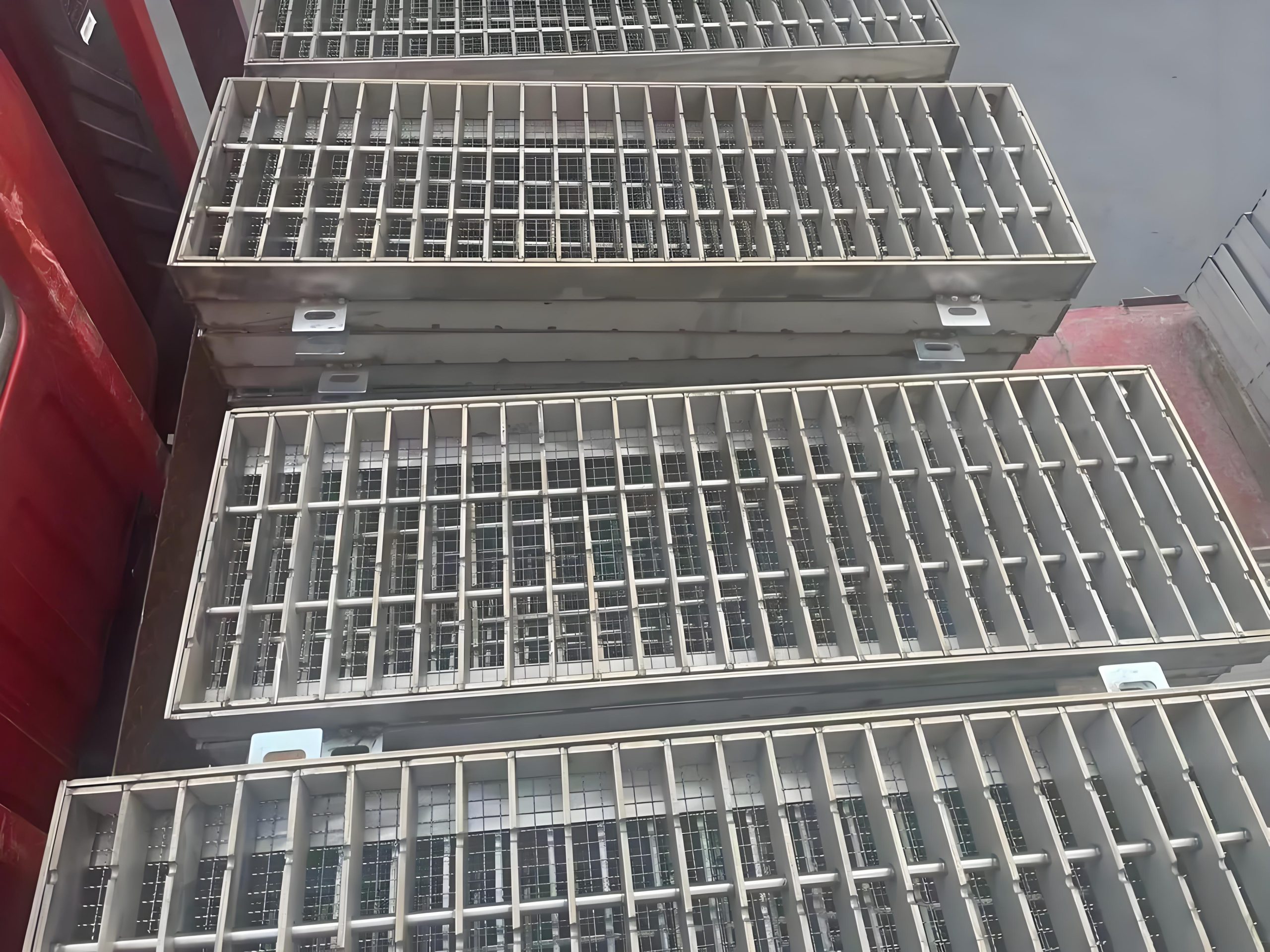
Unlike steel grating trench covers, chequered plate trench covers provide a closed surface. This is useful when buyers need to prevent small tools, parts, stones, dust, or debris from falling into the trench. It is also practical for cable trenches, machine service pits, inspection channels, and areas where a continuous walking or rolling surface is required.
Chequered plate trench covers are often selected when the project needs anti-slip surface, solid coverage, strong load support, easy removal, and custom fabrication. They can be supplied as loose removable plates, framed trench covers, hinged covers, bolted covers, or welded fixed covers depending on the project requirement.
| Project Area | Why Chequered Plate Trench Cover Is Used | Key Design Point |
|---|---|---|
| Factory floor trenches | Provides safe access over service channels | Plate thickness, anti-slip surface, support ledge |
| Drainage channels | Covers open channels while allowing access for cleaning | Removable section size and drainage layout |
| Cable trenches | Prevents objects from falling into cable routes | Closed plate design and removable installation |
| Workshops | Supports workers, carts, and small equipment movement | Load capacity and plate deflection control |
| Outdoor areas | Needs corrosion protection and surface traction | Hot-dip galvanizing and edge protection |
DIN 59220 is commonly referenced for steel chequered plates with raised patterns. In practical purchasing, buyers may use this standard reference to describe the chequered plate surface type, pattern expectation, and steel plate product form. For trench cover plates, DIN 59220 is usually related to the plate pattern and chequered plate supply condition, while the trench cover’s final load capacity still depends on plate thickness, trench width, support frame, installation method, and steel grade.
DIN 59220 can help define the chequered plate product, but a trench cover is a fabricated component. A finished trench cover may include cutting, edge trimming, bending, welding, reinforcement ribs, frames, lifting holes, handles, hinges, bolts, and hot-dip galvanizing. These fabrication details should be confirmed separately on drawings.
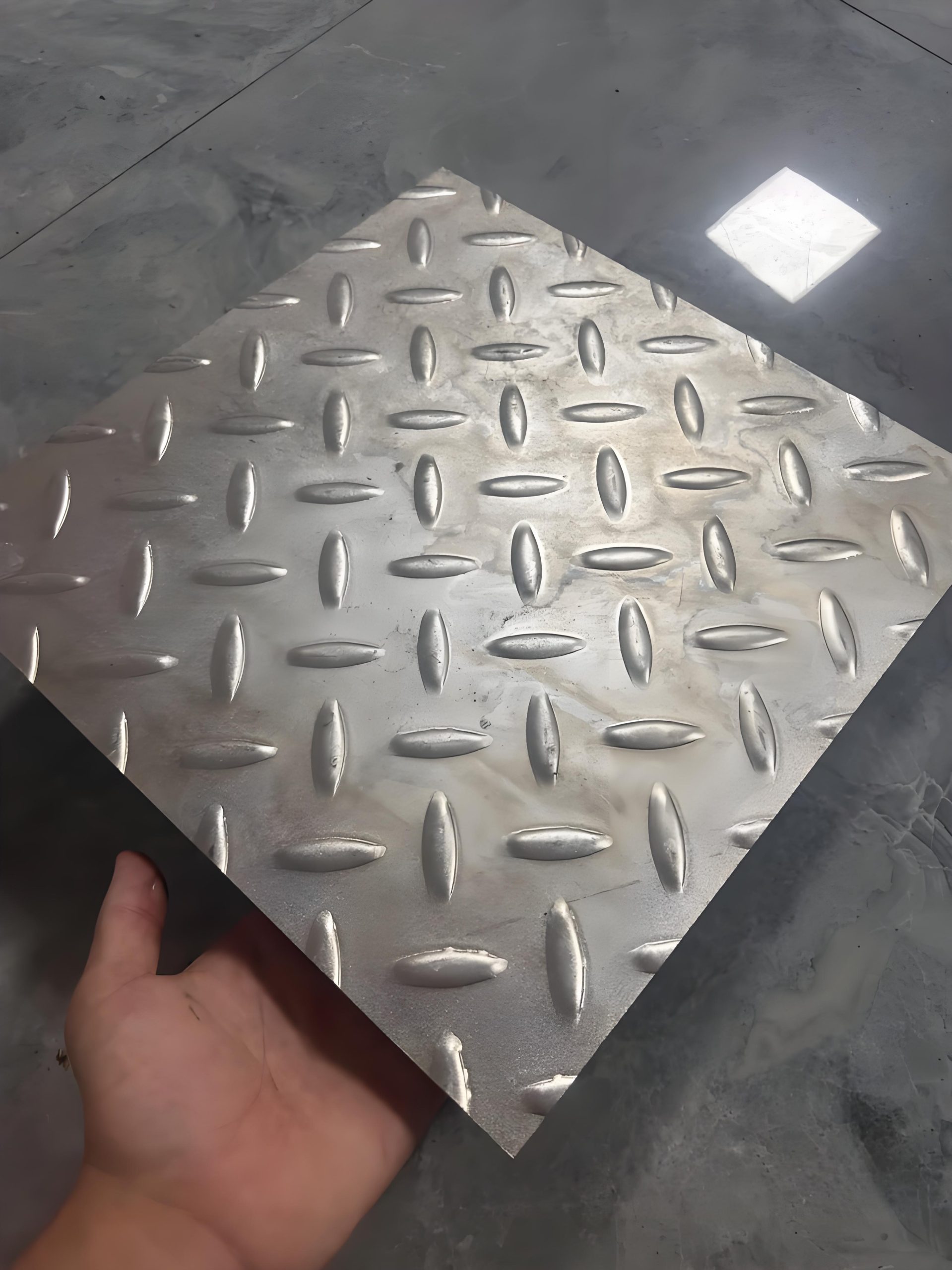
Chequered plate products are commonly supplied with raised patterns such as diamond or tear pattern depending on regional availability and supplier source. Some references note steel chequered plate thickness ranges from 3 mm to 10 mm under DIN 59220 supply practice, but trench cover design may require other project-specific thicknesses or reinforcement depending on load and span.
When specifying DIN 59220 chequered plate trench cover, buyers should clarify plate thickness, base plate thickness, pattern type, steel grade, cover size, trench clear span, support condition, surface finish, and whether the cover must be removable or fixed.
| DIN 59220 Related Item | Practical Meaning for Trench Cover | Buyer Note |
|---|---|---|
| Chequered plate pattern | Raised anti-slip surface on the plate | Confirm diamond, tear, or available pattern |
| Plate thickness | Base steel thickness used for cover strength | Select according to trench span and load |
| Pattern height | Raised surface profile above the base plate | Affects traction and actual overall thickness |
| Steel grade | Usually confirmed by EN 10025 or project requirement | S235, S275, and S355 are common options |
| Fabricated cover design | Cutting, welding, bending, handles, frames | Must be confirmed by drawings, not only DIN reference |
EN 10025 is commonly used for hot-rolled structural steels in European project specifications. For chequered plate trench covers, buyers may specify EN 10025 material grades such as S235, S275, or S355 depending on strength requirement, fabrication method, and project standard. These grades are widely used in construction, mechanical engineering, and structural steel applications.
S235 is a common structural steel grade used for general fabrication and moderate load applications. It is often selected for pedestrian trench covers, workshop covers, cable trench plates, and general industrial cover plates where high strength is not the main requirement.
S275 provides higher strength than S235 and can be selected when the trench cover needs better load performance without moving to a heavier-duty grade. It is suitable for many industrial floor covers, trolley areas, and medium-duty service trenches.
S355 provides higher strength than S235 and S275. It is commonly used when higher load capacity, longer span, or stronger structural performance is required. For forklift areas, vehicle zones, loading bays, and heavy trench covers, S355 may be considered together with suitable plate thickness and reinforcement design.
| EN 10025 Grade | General Strength Level | Typical Trench Cover Use | Buyer Note |
|---|---|---|---|
| S235 | General structural steel | Pedestrian covers, cable trenches, light industrial covers | Economical option for moderate load areas |
| S275 | Medium structural strength | Workshops, carts, service trenches, stronger floor covers | Useful when S235 is not enough |
| S355 | Higher structural strength | Forklift zones, vehicle areas, heavy-duty covers | Requires span and load review |
The main surface advantage of chequered plate trench covers is anti-slip performance. The raised pattern gives the top surface more grip than a smooth steel plate. This is useful in areas where workers may walk across the cover with wet shoes, dusty soles, oily footwear, or work boots.
The raised chequered pattern creates extra surface texture. This helps reduce slipping risk in workshops, warehouses, outdoor areas, drainage zones, and maintenance passages. It is especially useful where a solid cover is required but a smooth steel plate would be too slippery.
For visible or high-traffic areas, pattern direction and consistency should be controlled. If several cover plates are installed side by side, consistent pattern direction improves appearance and reduces uneven walking feel.
Chequered plate improves traction, but it does not completely eliminate slipping risk in oily or greasy areas. For high-risk areas, buyers may need additional anti-slip coating, serrated edge strips, drainage slots, or regular cleaning procedures.
| Anti-Slip Design Point | Purpose | Application Note |
|---|---|---|
| Raised chequer pattern | Improves foot grip compared with smooth plate | Useful for walkways, workshops, and industrial floors |
| Pattern height | Affects traction and surface feel | Confirm with plate supplier when project requires it |
| Pattern consistency | Improves appearance and walking uniformity | Important for long trench lines |
| Surface cleaning | Removes oil, mud, and grease | Still required in wet or oily environments |
| Additional anti-slip treatment | Improves grip in high-risk zones | Used when chequer pattern alone is not enough |
Plate thickness selection is critical for chequered plate trench covers. The cover must support the expected load without excessive bending. The required thickness depends on trench clear width, support ledge width, load type, steel grade, cover length, and whether reinforcement ribs or frames are used.
The clear span is the unsupported opening between trench supports. A cover plate may be wider than the trench because it sits on ledges, but the actual bending span is the clear opening. Buyers should provide clear trench width and support ledge size before requesting a quotation.
Pedestrian trench covers can usually use lighter plate thickness than vehicle covers, but they still need enough stiffness to feel stable under foot. If the plate flexes too much, it can feel unsafe and create noise during walking.
Forklift and vehicle areas require thicker plates, stronger steel grades, or reinforcement. Wheel loads are concentrated and repeated. A cover plate designed only for pedestrians should not be used in forklift or road areas.
If a trench is wide but the buyer wants to avoid an excessively thick plate, reinforcement ribs, welded stiffeners, or a support frame may be considered. Reinforcement should be designed carefully so the cover remains stable and serviceable.
| Trench Use | Common Design Direction | Important Check |
|---|---|---|
| Pedestrian trench cover | Moderate chequered plate thickness | Walking stability and anti-slip surface |
| Workshop trolley area | Thicker plate or reinforced cover | Wheel load and deflection control |
| Forklift area | Heavy plate, S355 option, or reinforced frame | Concentrated wheel load and repeated traffic |
| Vehicle trench cover | Project-specific heavy-duty design | Vehicle type, axle load, frame strength |
| Removable maintenance cover | Balance thickness and piece weight | Workers must be able to lift or remove safely |
Load capacity design for chequered plate trench covers should be based on actual use. A cover used in a pedestrian walkway is different from a cover used in a forklift route or vehicle access area. The design must consider both the cover plate and the support structure.
Pedestrian trench covers are used in walkways, workshops, factory floors, kitchens, and maintenance areas. The main concerns are safe walking, surface traction, cover fit, and moderate deflection control.
Carts and pallet jacks create more concentrated loads than foot traffic. If wheels pass across the cover frequently, plate thickness and support design should be checked. A thin plate may bend or create noise under repeated wheel movement.
Forklift loads are highly concentrated through the tires. For forklift trench covers, buyers should provide forklift weight, wheel load, tire size if available, traffic frequency, trench width, and support frame details. Stronger steel grade or reinforcement may be needed.
Vehicle trench covers require project-specific design. Cars, trucks, service vehicles, and road traffic create different load conditions. The frame and surrounding concrete or steel support must be designed to transfer load safely.
| Load Type | Design Risk | Required Information |
|---|---|---|
| Pedestrian | Plate vibration, bending, slipping | Trench width, plate size, surface requirement |
| Cart or trolley | Wheel indentation and repeated bending | Wheel load, traffic frequency, channel span |
| Pallet jack | Small wheel contact and local stress | Wheel size, loading weight, support frame |
| Forklift | High concentrated load and fatigue | Forklift weight, wheel load, trench span, frame details |
| Vehicle | Heavy load, impact, frame failure | Vehicle type, axle load, installation drawing |
S235, S275, and S355 are common structural steel grade options under EN 10025 project specifications. For chequered plate trench covers, the steel grade should be selected according to load requirement, plate thickness, span, fabrication method, and cost target.
S235 is often used for general-purpose trench covers where the load is mainly pedestrian or light industrial service. It is economical and suitable for many covers when the thickness and support span are properly selected.
S275 can be selected for stronger workshop covers, trolley areas, service trenches, and moderate industrial floors. It gives buyers a higher strength option without moving directly to the heavier project cost of stronger steel or reinforcement.
S355 is suitable for higher load areas such as forklift routes, vehicle zones, loading areas, and wider spans. It should be used together with correct thickness, reinforcement, and support frame design. A higher grade alone cannot compensate for a weak support frame or excessive span.
| Steel Grade | Typical Use Level | Common Trench Cover Application | Cost Note |
|---|---|---|---|
| S235 | General structural use | Pedestrian covers, cable trench covers, light workshop plates | Economical for moderate loads |
| S275 | Medium strength use | Workshop floors, trolley areas, stronger drainage covers | Balanced strength and cost |
| S355 | Higher strength use | Forklift areas, vehicle covers, wider spans | Higher material cost but better strength performance |
Chequered plate trench covers are often custom fabricated because trench openings vary by project. Custom processing may include cutting, bending, welding, edge reinforcement, lifting holes, handles, bolt holes, frames, hinges, and anti-theft fixing.
Cover plates should be cut according to the trench opening and support ledge. The plate must be large enough to sit securely on the frame but not so large that it interferes with surrounding floor levels, machines, walls, or drains.
Some trench covers may require bent edges or formed lips to improve stiffness, positioning, or safe handling. Bending can help strengthen the cover but must be planned according to plate thickness and pattern direction.
Welded ribs, flat bars, angle frames, or reinforcement channels can be added under the cover plate to improve load capacity. Reinforcement is useful for wider spans, forklift areas, or removable heavy-duty covers.
Edges are important because trench covers are handled, lifted, and loaded repeatedly. Reinforced edges help reduce deformation and improve contact with the support frame. For removable plates, smooth and safe edges also protect workers during maintenance.
| Custom Fabrication Item | Purpose | Common Application |
|---|---|---|
| Cut-to-size plate | Matches trench opening and frame | All custom trench cover projects |
| Bent edge or formed lip | Improves stiffness and positioning | Removable covers and floor-level covers |
| Welded stiffeners | Improves load capacity | Wide trenches and forklift areas |
| Edge reinforcement | Reduces edge deformation | Heavy-duty and removable covers |
| Lifting holes or handles | Allows easier removal | Inspection and drainage trenches |
| Frame welding | Provides stable seating | Vehicle and industrial floor trench covers |
Hot-dip galvanizing is commonly used for carbon steel chequered plate trench covers installed outdoors or in wet environments. The zinc coating protects the steel surface and helps reduce corrosion from rain, humidity, drainage water, mud, and industrial exposure.
Chequered plate trench covers often sit close to water, dirt, and floor moisture. If untreated carbon steel is used outdoors, rust can develop quickly. Hot-dip galvanizing provides a practical corrosion protection option for industrial drainage covers and outdoor trench plates.
For better protection, cutting, welding, bending, drilling, and reinforcement should usually be completed before hot-dip galvanizing. This allows zinc coating to cover cut edges, welds, holes, and reinforcement areas.
If galvanized trench covers are cut, drilled, or welded after galvanizing, the damaged coating should be repaired with zinc-rich paint or another approved repair method. Otherwise, exposed steel can corrode at modified areas.
Hot-dip galvanized chequered plate trench covers are suitable for outdoor factory yards, drainage channels, loading zones, municipal trenches, service platforms, utility covers, and industrial maintenance areas.
| Surface Option | Corrosion Protection | Price Level | Suitable Use |
|---|---|---|---|
| Black steel | Low | Lower | Temporary or dry indoor trenches |
| Painted steel | Basic | Medium | Indoor or low-corrosion areas |
| Hot-dip galvanized steel | Good outdoor protection | Medium to high | Outdoor drainage and industrial floor covers |
| Stainless steel | High depending on grade | High | Food, chemical, coastal, and hygienic areas |
Chequered plate trench covers and steel grating trench covers are both used for trench protection, but their functions are different. The right choice depends on whether the project needs a closed surface or open drainage.
Chequered plate trench covers provide a solid surface with raised anti-slip pattern. They are suitable for cable trenches, service pits, machine floor openings, areas where small objects must not fall through, and places where carts or wheels need a continuous surface.
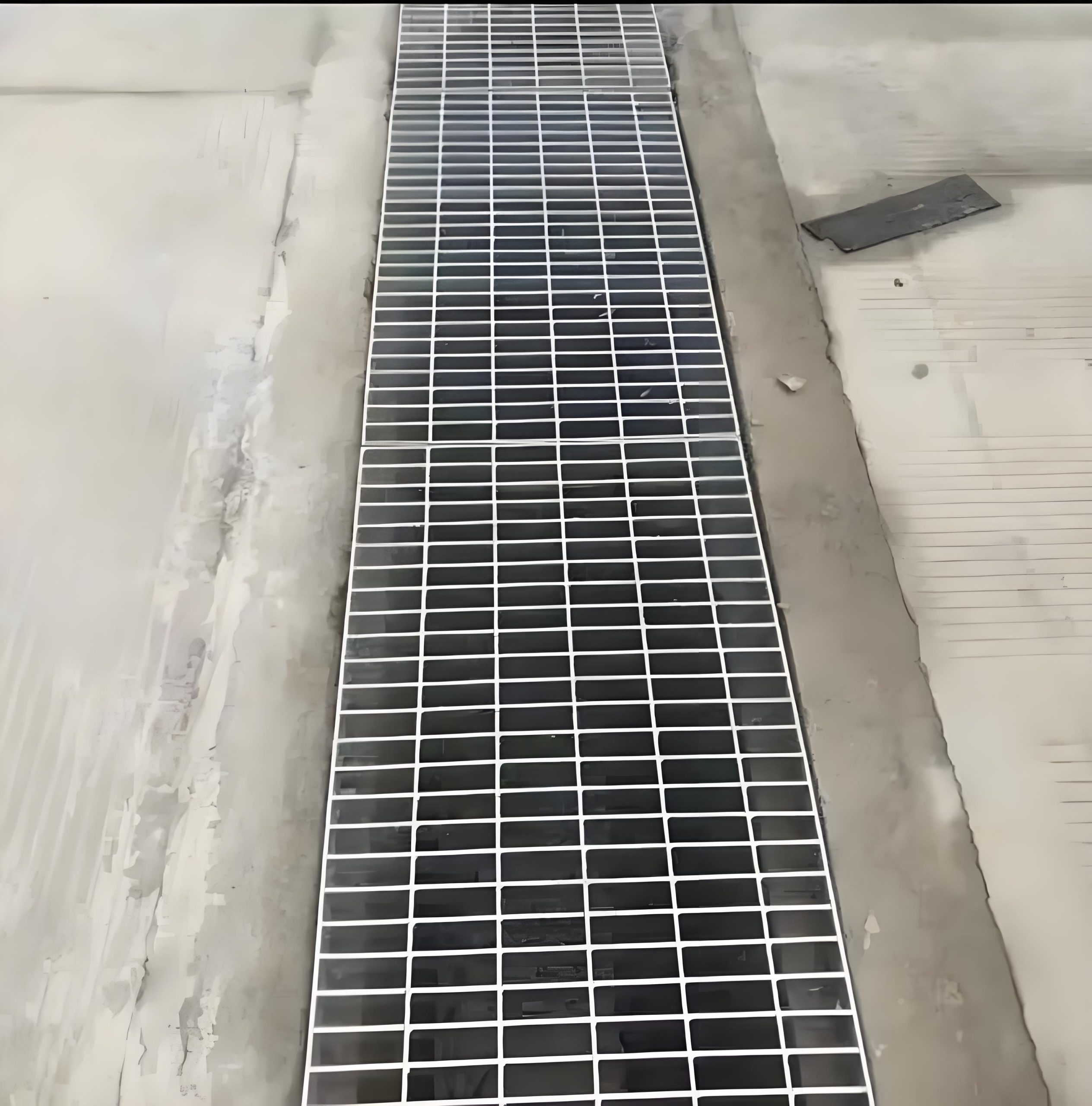
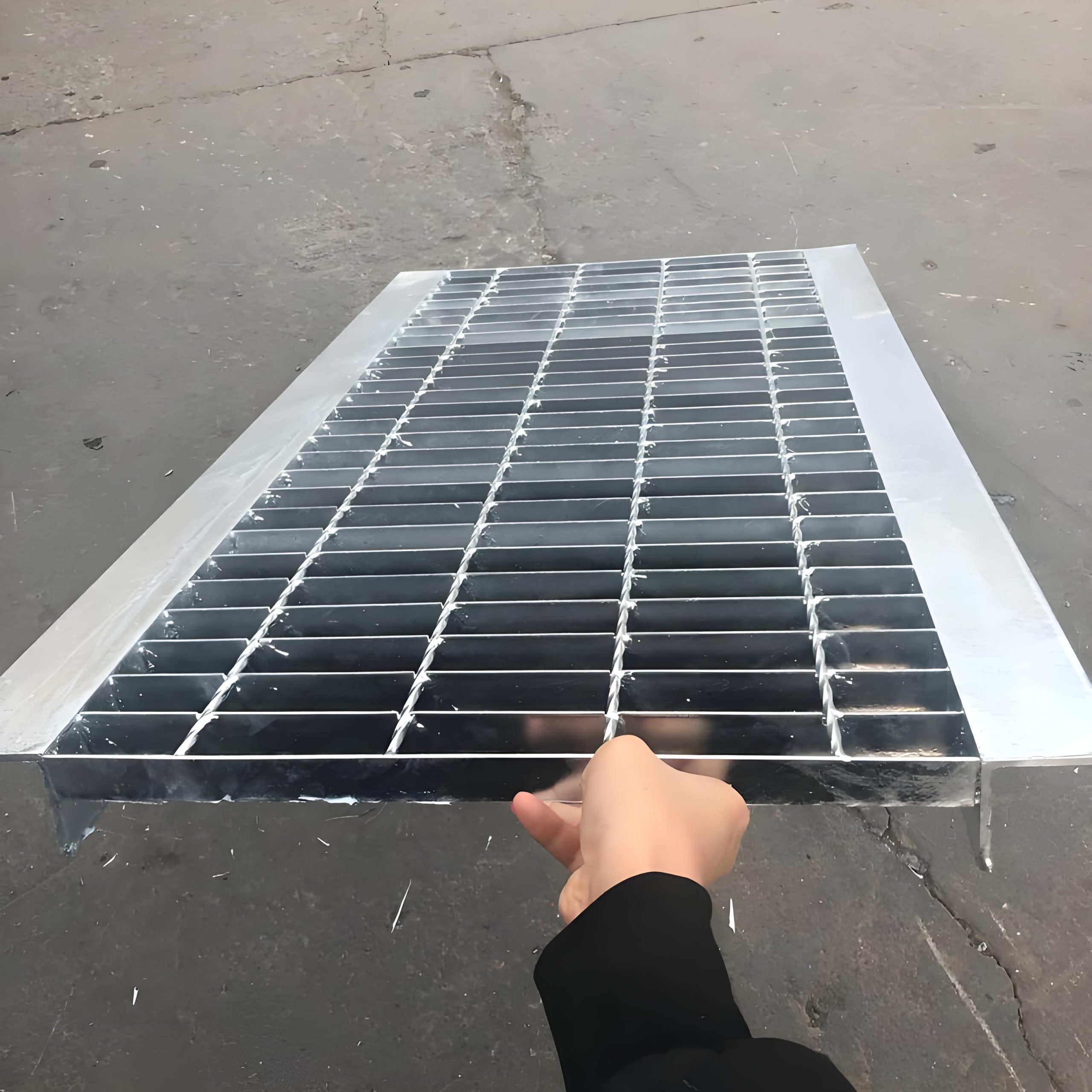
Steel grating trench covers provide open area for drainage and ventilation. They are suitable for water drainage channels, outdoor trenches, wet industrial floors, water treatment plants, and areas where liquid must pass quickly into the channel.
If the project needs fast water drainage, steel grating is usually better. If the project needs a closed walking or rolling surface, chequered plate is usually better. Some projects combine both: grating for drainage sections and chequered plate for access or cable trench sections.
| Comparison Item | Chequered Plate Trench Cover | Steel Grating Trench Cover |
|---|---|---|
| Surface | Solid raised-pattern plate | Open-grid bearing bar structure |
| Drainage | Limited unless slots or holes are added | Excellent water flow |
| Small object protection | Prevents objects from falling through | Small objects may fall into the trench |
| Wheel movement | Provides continuous rolling surface | Depends on opening size and wheel type |
| Weight | Can be heavy when thick plate is used | Often lighter for drainage use |
| Best application | Cable trenches, service pits, workshop floor covers | Drainage channels, wet areas, outdoor trenches |
Installation method affects safety, maintenance, drainage access, and long-term performance. Chequered plate trench covers can be installed as removable covers, bolted covers, welded covers, hinged covers, or framed cover systems.
Removable covers sit on support ledges or frames. This method is suitable when the trench needs regular cleaning, inspection, or cable maintenance. Panel size and weight should be controlled so workers can remove the covers safely.
Bolted covers are fixed to the frame but can be removed when needed. This is useful in areas where covers must not move under traffic or vibration. Bolt holes should be accurately processed before surface treatment.
Welded covers provide permanent fixing. They are suitable for trenches that do not require regular access. If the cover is hot-dip galvanized, welding after galvanizing will damage the zinc coating at weld points, so repair is required.
Hinged trench covers are useful for repeated inspection. They reduce the risk of misplaced covers and make maintenance easier. Hinges, locking devices, and reinforcement should be designed according to plate weight and opening frequency.
A frame helps position the cover and transfer load to the surrounding structure. Frames are recommended for vehicle areas, forklift zones, and covers that need stable seating under repeated traffic.
| Installation Method | Main Advantage | Suitable Application |
|---|---|---|
| Removable placement | Easy cleaning and inspection | Drainage trenches, cable channels, service pits |
| Bolted fixing | Secure but removable | Industrial floor covers and vibration areas |
| Welded fixing | Permanent and strong | Non-removable service covers |
| Hinged cover | Convenient repeated access | Inspection pits and utility trenches |
| Framed installation | Stable seating and load transfer | Forklift routes, road drains, heavy-duty covers |
Drainage, inspection, and maintenance requirements should be confirmed before choosing chequered plate trench covers. A solid chequered plate cover is useful for closed coverage, but it may not allow enough water flow unless drainage holes, slots, gaps, or removable sections are designed.
If the trench must collect water from the floor surface, chequered plate alone may not be enough. The cover may need slots, holes, side gaps, or a different grating section. For fast drainage, steel grating trench covers may be more suitable.
Cable trenches, pipe trenches, and service pits often require inspection. Covers should be removable, clearly arranged, and easy to lift. Heavy plates should include lifting holes or handles.
If the cover is removed often, plate weight and edge design become important. Very thick covers may be strong but difficult to lift. Smaller cover sections can be easier to handle, but they require more joints and more careful layout.
Loose trench covers can rattle when people or vehicles pass over them. Proper frame seating, rubber pads, bolt fixing, or accurate fabrication can reduce noise and movement.
| Requirement | Design Response | Buyer Note |
|---|---|---|
| Water drainage | Add slots, holes, gaps, or use grating sections | Solid plate blocks drainage unless designed otherwise |
| Regular inspection | Use removable panels with lifting holes or handles | Control plate weight for safe handling |
| Cable protection | Use closed chequered plate surface | Prevents objects from falling into cable trench |
| Vehicle movement | Use framed and reinforced cover design | Check wheel load and support frame |
| Noise control | Use accurate fit, bolts, pads, or frame support | Important in workshops and public areas |
Surface finish, pattern height, and safety performance should be controlled during production and before delivery. A trench cover plate may be strong enough but still unsuitable if it has sharp edges, poor coating, uneven surface, excessive warping, or unsafe lifting details.
Chequered plate trench covers may be supplied as black steel, painted steel, hot-dip galvanized steel, or stainless steel depending on the project. The surface should be checked for burrs, sharp corners, coating defects, zinc buildup, scratches, and deformation.
The raised pattern provides traction, but the actual pattern form may vary by supplier and plate source. Buyers with strict project requirements should confirm pattern type, pattern direction, and plate thickness before production.
Cut edges should be deburred or treated properly. Removable trench covers are handled by workers, so sharp edges can create safety problems. Edge reinforcement or bent edges can improve safety and durability.
Cover plates should sit flat on the support frame. Warped or twisted covers can rock, create noise, and cause trip hazards. Flatness control is especially important for long trench lines and vehicle areas.
| Quality Control Item | What to Check | Why It Matters |
|---|---|---|
| Pattern surface | Raised pattern consistency and direction | Improves anti-slip performance and appearance |
| Plate thickness | Base thickness and project tolerance | Controls load capacity and deflection |
| Edges | Burrs, sharp corners, cut quality | Improves handling safety |
| Surface treatment | Galvanizing, paint, coating coverage, bare spots | Improves corrosion resistance |
| Flatness | Warping, twisting, rocking | Ensures stable installation |
| Welded parts | Stiffeners, frames, handles, hinges | Ensures fabricated parts are secure |
To receive an accurate quotation for Chequered Plate Trench Cover / DIN 59220 / EN 10025, buyers should provide complete trench dimensions, load requirements, plate specification, steel grade, surface finish, fabrication details, and quantity. Without these details, suppliers can only provide a rough estimate.
Buyers should provide clear trench width, trench length, support ledge width, frame dimensions, required cover width, preferred panel length, and whether the cover must sit flush with the surrounding floor.
State whether the plate should follow DIN 59220 chequered plate pattern and whether the steel material should be EN 10025 S235, S275, S355, or another grade. If certificates are required, this should be mentioned before quotation.
Confirm whether the cover is used for pedestrians, carts, pallet jacks, forklifts, cars, trucks, or other loads. For forklifts and vehicles, wheel load and support frame details are important.
Buyers should state whether the covers need cutting, bending, welding, reinforcement ribs, frames, handles, lifting holes, hinges, bolt holes, anti-theft devices, drainage slots, or custom shapes.
Confirm black finish, painted finish, hot-dip galvanized finish, stainless finish, or other treatment. Also provide quantity, destination, packing requirement, delivery terms, and any export document requirements.
| Quotation Information | Details Buyers Should Provide |
|---|---|
| Trench size | Clear width, total length, support ledge, frame size, required cover size |
| Plate requirement | DIN 59220 chequered plate, pattern type, plate thickness |
| Steel grade | EN 10025 S235, S275, S355, or specified material grade |
| Load condition | Pedestrian, cart, pallet jack, forklift, vehicle, truck, equipment load |
| Installation method | Removable, bolted, welded, hinged, framed, anti-theft fixing |
| Custom fabrication | Cutting, bending, welding, stiffeners, handles, holes, drainage slots |
| Surface finish | Black, painted, hot-dip galvanized, stainless steel finish |
| Order details | Quantity, packing method, destination, delivery terms, certificates |
What is a chequered plate trench cover?
A chequered plate trench cover is a solid steel cover plate with raised anti-slip patterns used to cover drainage trenches, cable channels, inspection pits, workshop floor openings, service trenches, and industrial access areas. It provides a safer walking or rolling surface while protecting the trench below.
What does DIN 59220 mean for chequered plate trench covers?
DIN 59220 is commonly referenced for steel chequered plates with raised surface patterns. For trench covers, it helps describe the chequered plate product and surface pattern, but the finished cover design must still confirm thickness, steel grade, load capacity, support span, edge reinforcement, surface finish, and installation method.
Is chequered plate better than steel grating for trench covers?
Chequered plate is better when the trench needs a closed surface, anti-slip walking area, cable protection, or continuous rolling surface. Steel grating is better when the trench must provide fast drainage, ventilation, and lighter removable panels. The best choice depends on drainage needs, load condition, trench width, maintenance access, and project environment.
Please Feel free to give your inquiry in the form below.we will reply you in 24 hours.