
Industrial grating manufacturers prices are not fixed numbers but the result of a multi-layer cost system combining raw materials, engineering design, fabrication methods, global steel market fluctuations, and supply chain conditions. In real industrial procurement practice, different manufacturers may quote significantly different prices for the same grating specification, which is mainly caused by differences in production efficiency, material sourcing strategy, certification level, and project execution capability. Therefore, understanding how industrial grating pricing is formed is essential for accurate cost evaluation and supplier comparison.
Industrial grating is typically priced using three systems: per kilogram, per square meter, and engineering project quotation. The selection of pricing method depends on material type and application complexity. Standard carbon steel grating is usually calculated per square meter, while stainless steel and alloy-based grating are more often priced by weight due to fluctuating raw material costs.
Global industrial grating pricing is strongly influenced by steel commodity markets, energy costs, labor rates, and logistics expenses. When steel prices increase, manufacturers adjust quotations immediately, especially for large-volume infrastructure and industrial platform projects where material consumption is significant.
| Pricing Model | Application Scenario | Main Cost Driver |
|---|---|---|
| Per kg pricing | Alloy / high-performance grating | Raw material volatility |
| Per m² pricing | Standard steel grating | Fabrication efficiency |
| Project quotation | Engineering construction projects | Design + installation complexity |
Raw material is the most significant cost component in industrial grating manufacturing. Carbon steel provides the most economical solution and is widely used in general industrial platforms. Stainless steel grades such as 304, 316, and 316L increase cost due to nickel and chromium content, but offer superior corrosion resistance and longer service life.
When industrial environments require high temperature resistance, chemical stability, or marine corrosion resistance, nickel-based alloys or high-alloy stainless steels may be used. These materials significantly increase cost due to both raw material pricing and more complex processing requirements.
Welded grating is the most cost-efficient method due to automated resistance welding technology and high production speed. Press-locked grating requires precision slotting and mechanical locking, increasing labor and equipment cost. Riveted structures are used in specialized engineering cases and generally have higher fabrication cost due to manual assembly requirements.
The level of automation directly affects unit price. Fully automated production lines reduce labor cost and ensure consistent quality, while semi-manual production increases cost but allows more flexible customization for complex projects.
Different steel grades directly determine base material cost. Even within stainless steel categories, variations in carbon content, molybdenum addition, and nickel percentage can significantly change pricing. Higher specification requirements usually lead to higher procurement cost and stricter production control.
Industrial environments such as chemical plants, offshore platforms, and food processing facilities require higher-grade materials to ensure safety and durability, which naturally increases total project cost.
Load capacity is a major engineering factor in pricing. Light-duty grating used for pedestrian walkways requires less material, while heavy-duty grating designed for forklifts or industrial vehicles requires thicker bearing bars and reduced spacing, increasing both material usage and fabrication complexity.
Span length, reinforcement bars, and bearing bar thickness directly influence steel consumption. Larger spans and higher load requirements significantly increase production cost due to structural reinforcement needs.
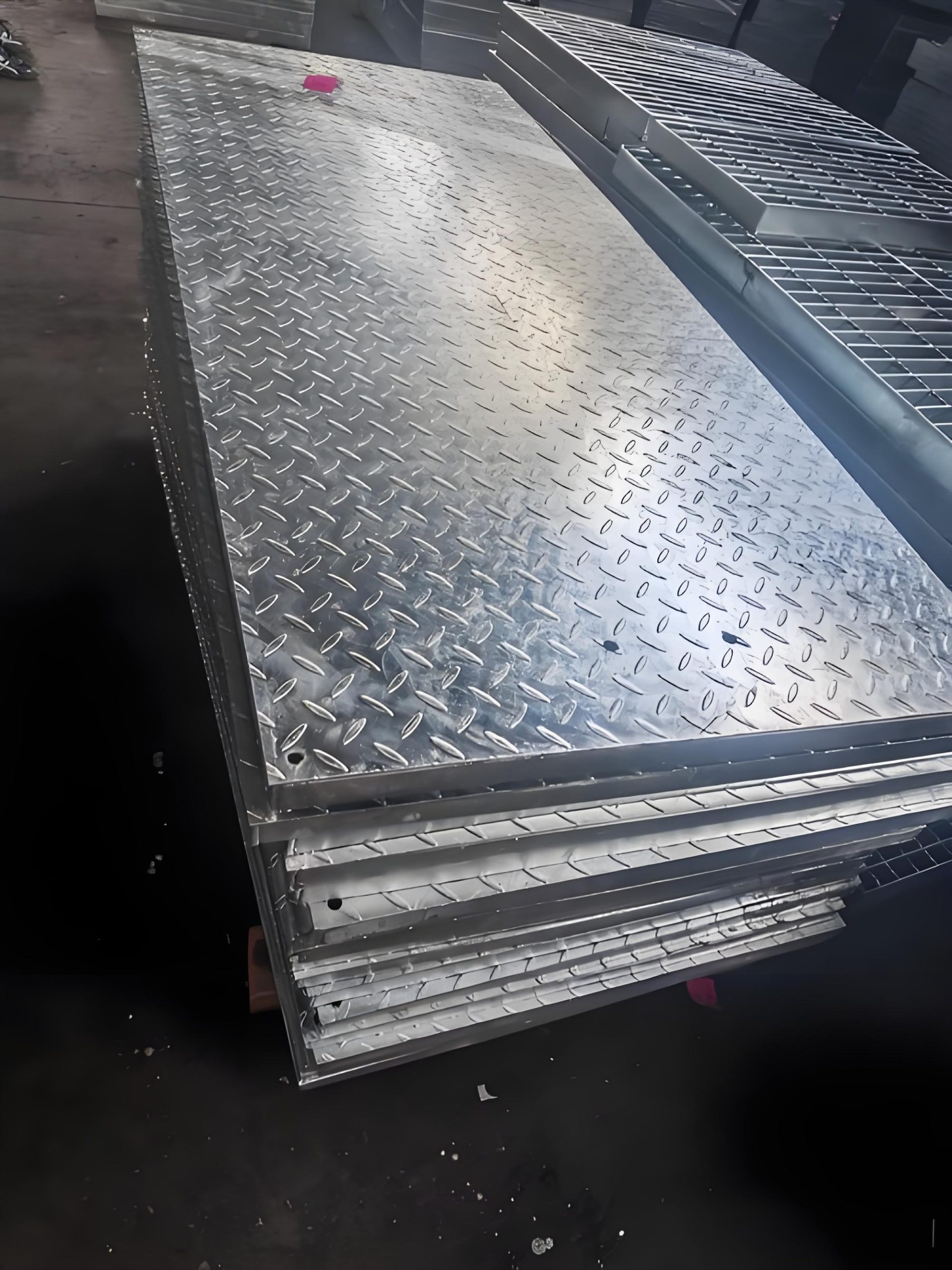
Hot-dip galvanizing is the most common surface treatment for carbon steel grating, providing corrosion resistance at moderate cost. Powder coating adds aesthetic and protective value, while pickling and polishing are used mainly for stainless steel applications requiring hygiene or smooth surface finishing.
Thicker galvanizing layers improve durability but increase processing time and zinc consumption, directly affecting final price. Coastal and chemical environments often require enhanced coating specifications.
Standard panel sizes benefit from optimized cutting, reduced waste, and higher production efficiency, resulting in lower unit cost. Custom fabrication requires additional cutting, welding, and layout adjustments, increasing both labor and material loss costs.
Higher waste rates in custom designs directly increase cost per square meter, especially for irregular shapes or project-specific structural requirements.
Large-volume orders significantly reduce unit cost because fixed production setup costs are distributed across more units. Small batch orders carry higher per-unit cost due to lower production efficiency and setup frequency.
Long-term supply agreements help stabilize pricing and reduce risk from steel market fluctuations, offering more predictable budgeting for large projects.
Manufacturing costs vary significantly across regions. China generally offers lower pricing due to integrated supply chains, large-scale production capacity, and competitive labor costs. Europe and the United States typically have higher pricing due to stricter regulatory requirements, higher labor costs, and certification standards.
Manufacturers such as :contentReference[oaicite:0]{index=0} provide cost-efficient production with export capability, allowing international buyers to balance cost and technical requirements effectively.
Industrial grating that requires ISO certification, load testing, or dimensional tolerance verification involves additional production steps. These processes increase manufacturing cost but ensure compliance with international engineering standards.
Mill Test Certificates (MTC), third-party inspection reports, and traceability documentation add administrative and testing costs, particularly for government or large infrastructure projects.
Fabrication complexity directly affects labor cost. Additional cutting, edge sealing, anti-slip serration processing, and welding reinforcement increase production time and material usage, leading to higher unit pricing.
Highly customized industrial grating designs require engineering drawings, production adjustments, and additional quality control steps, all of which increase total cost.
Sea freight is the most economical shipping method for bulk orders, while air freight is used for urgent deliveries but significantly increases cost. Transportation distance and fuel surcharges also affect final delivered pricing.
Steel pallets, anti-corrosion wrapping, and reinforced bundling are required for international shipping, especially for long-distance ocean transport, adding additional packaging cost.
Factory direct pricing eliminates intermediary margins and provides better control over customization, technical support, and production scheduling.
Trading companies often add service fees and profit margins but may offer advantages in logistics coordination, smaller order handling, and multi-supplier sourcing flexibility.
Steel price fluctuations directly influence industrial grating cost. When raw steel prices rise, manufacturers adjust quotations quickly to maintain profit stability, especially for large-volume contracts.
Long-term contracts, fixed-price agreements, and forward purchasing strategies are commonly used by industrial buyers to reduce risk from market volatility.
Why do industrial grating manufacturers offer different prices for the same specification?
Price differences come from variations in raw material sourcing, production efficiency, certification level, labor cost, and regional manufacturing conditions. Even small differences in steel grade or coating requirements can significantly change pricing.
What is the most important factor affecting industrial grating price?
Raw material cost is the most influential factor, followed closely by structural design requirements and surface treatment methods. These three elements usually determine the majority of total production cost.
How can buyers reduce industrial grating procurement cost?
Buyers can reduce cost by selecting standard sizes, optimizing load requirements based on actual application, increasing order volume, and sourcing directly from manufacturers to avoid intermediary markups.
