
Galvanized steel grating weight is usually calculated by square meter, piece, or total project quantity. In common industrial use, galvanized steel grating weight may range from about 20 kg/m² to more than 100 kg/m², depending on bearing bar size, bearing bar spacing, cross bar spacing, panel size, steel grade, surface type, edge banding, and hot-dip galvanizing weight. For buyers, engineers, contractors, and distributors, understanding galvanized steel grating weight is important because it affects load design, installation handling, transportation cost, quotation comparison, and long-term project safety.
Galvanized steel grating weight refers to the actual or theoretical weight of steel grating after fabrication and hot-dip galvanizing. It is usually expressed as kg/m², kg/piece, kg/bundle, or total shipment weight. The weight is not fixed because galvanized steel grating can be produced with different bearing bar sizes, spacing, cross bar types, panel dimensions, and surface treatments.
A light-duty grating panel for a pedestrian walkway may weigh around 20-35 kg/m², while a heavy-duty galvanized steel grating for industrial platforms, trench covers, or vehicle-access areas may weigh 60 kg/m², 80 kg/m², or even higher.
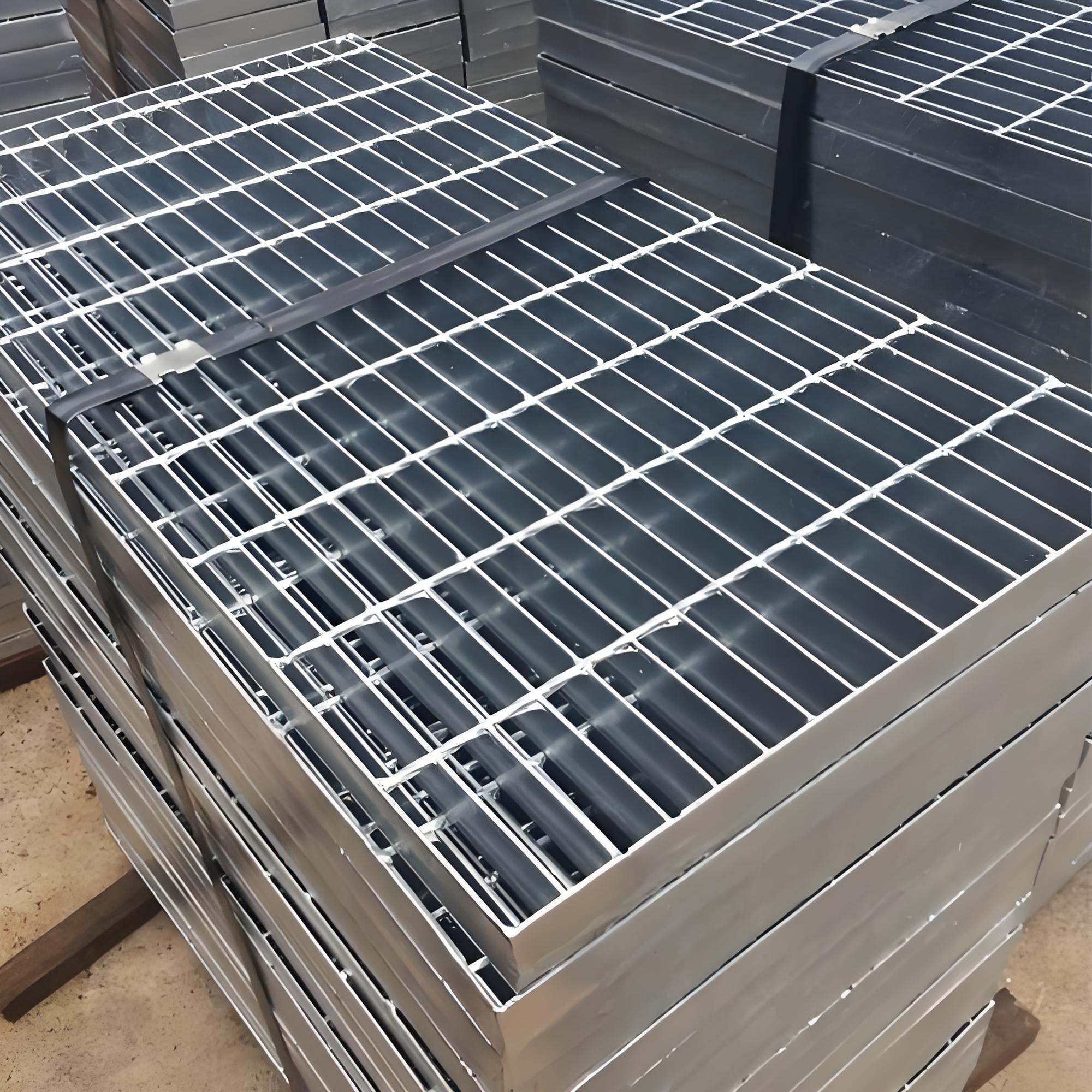
Galvanized steel grating is not like a solid steel plate with one simple thickness. It is an open-grid product made from bearing bars and cross bars. The number of steel bars used in one square meter changes according to bar spacing. The heavier the bearing bar and the closer the spacing, the higher the weight.
| Weight Expression | Meaning | Common Use |
|---|---|---|
| kg/m² | Weight per square meter | Quotation, specification comparison, project estimation |
| kg/piece | Weight of one grating panel | Installation handling, packing, lifting arrangement |
| kg/bundle | Weight of one packed bundle | Forklift handling, warehouse storage, loading plan |
| Total weight | Weight of the complete order | Shipping cost, container loading, project procurement |
Steel grating weight is not only a purchasing number. It directly affects project design, structural load, transportation cost, installation method, and safety. If the weight is underestimated, the support structure, lifting method, or shipping plan may be wrong. If the weight is overestimated, the buyer may choose an unnecessarily heavy and expensive specification.
The weight of galvanized steel grating becomes part of the dead load on platforms, beams, frames, trench supports, or stair structures. Engineers need the correct grating weight to check whether the supporting steel structure is strong enough. For large platforms, even a small difference in kg/m² can become a large difference in total structural load.
Panel weight affects how workers lift, move, and install the grating. A small drainage cover may be handled manually, but a large industrial platform panel may require a forklift, crane, or lifting device. If the panel is too heavy, installation becomes slower and more risky.
Galvanized steel grating is usually priced and shipped according to weight and volume. The total weight affects truck loading, container loading, sea freight, inland transportation, and export packing. Buyers who understand grating weight can estimate logistics cost more accurately.
When comparing suppliers, weight is a useful way to identify specification differences. If two suppliers quote the same square meters but the total weight is very different, the bearing bar size, spacing, cross bar type, or fabrication scope may not be the same.
| Project Area | Why Weight Matters |
|---|---|
| Platform design | Weight affects dead load and support beam design |
| Installation | Heavier panels require better lifting and fixing arrangements |
| Transport | Total weight affects freight cost and loading plan |
| Cost control | Heavier specifications usually mean higher material and galvanizing cost |
| Safety | Correct weight helps match load capacity and support conditions |
The weight of galvanized steel grating is affected by many factors. The most important ones are bearing bar height, bearing bar thickness, bearing bar spacing, cross bar spacing, cross bar size, panel length, panel width, edge banding, surface type, and galvanizing coating. Custom fabrication details can also change the final weight.
The bearing bar is the main load-carrying part of the grating. Larger bearing bars use more steel and increase weight. For example, a grating made with 40 mm x 5 mm bearing bars will be much heavier than one made with 25 mm x 3 mm bearing bars.
Closer bearing bar spacing means more bearing bars in the same area. This increases weight, strength, and cost. Wider spacing reduces weight but may also reduce load capacity and walking comfort.
Cross bars are smaller than bearing bars, but they still add weight. Closer cross bar spacing or larger cross bars will increase the total weight of the panel.
The larger the panel area, the heavier the panel. Panel weight is usually calculated by multiplying weight per square meter by panel area, then adding banding or special fabrication weight when required.
Hot-dip galvanizing adds zinc coating to the steel surface. The zinc layer increases the final weight slightly. The exact increase depends on coating thickness, surface area, steel shape, and galvanizing quality.
| Factor | Effect on Weight | Buyer Note |
|---|---|---|
| Bearing bar height | Higher bars increase weight | Needed for longer spans and heavier loads |
| Bearing bar thickness | Thicker bars increase weight significantly | Improves strength and durability |
| Bearing bar spacing | Closer spacing increases weight | Improves load capacity and walking comfort |
| Cross bar spacing | Closer spacing adds weight | Improves grid stability |
| Panel size | Larger panels weigh more per piece | Affects lifting and packing |
| Galvanizing coating | Adds zinc weight | Usually increases final weight slightly |
Bearing bar height and thickness have the largest influence on galvanized steel grating weight. The bearing bars are the main steel quantity in the panel, so changing the bearing bar size can quickly increase or reduce the kg/m² weight.
A higher bearing bar increases the steel cross-section. It also improves load capacity and reduces deflection over a longer span. For example, 40 mm high bearing bars are heavier and stronger than 25 mm high bearing bars when the thickness and spacing are the same.
Thickness also has a major effect. A 30 mm x 5 mm bearing bar uses much more steel than a 30 mm x 3 mm bearing bar. This means higher strength, but also higher weight, higher raw material cost, higher galvanizing cost, and higher transportation weight.
| Bearing Bar Size | Relative Weight Level | Typical Application |
|---|---|---|
| 20 x 3 mm | Light | Light-duty walkways, small covers, indoor access areas |
| 25 x 3 mm | Light to medium | General pedestrian platforms and light maintenance walkways |
| 30 x 3 mm | Medium | Common industrial walkways and platform grating |
| 30 x 5 mm | Medium to heavy | Stronger platforms, trench covers, frequent-use walkways |
| 40 x 5 mm | Heavy | Longer spans, heavy-duty platforms, stronger drainage covers |
| 50 x 5 mm | Very heavy | Heavy-duty grating, vehicle areas, demanding industrial floors |
When selecting bearing bar size, the goal is not to choose the heaviest grating. The correct choice is the specification that meets the load and span requirement without unnecessary steel consumption.
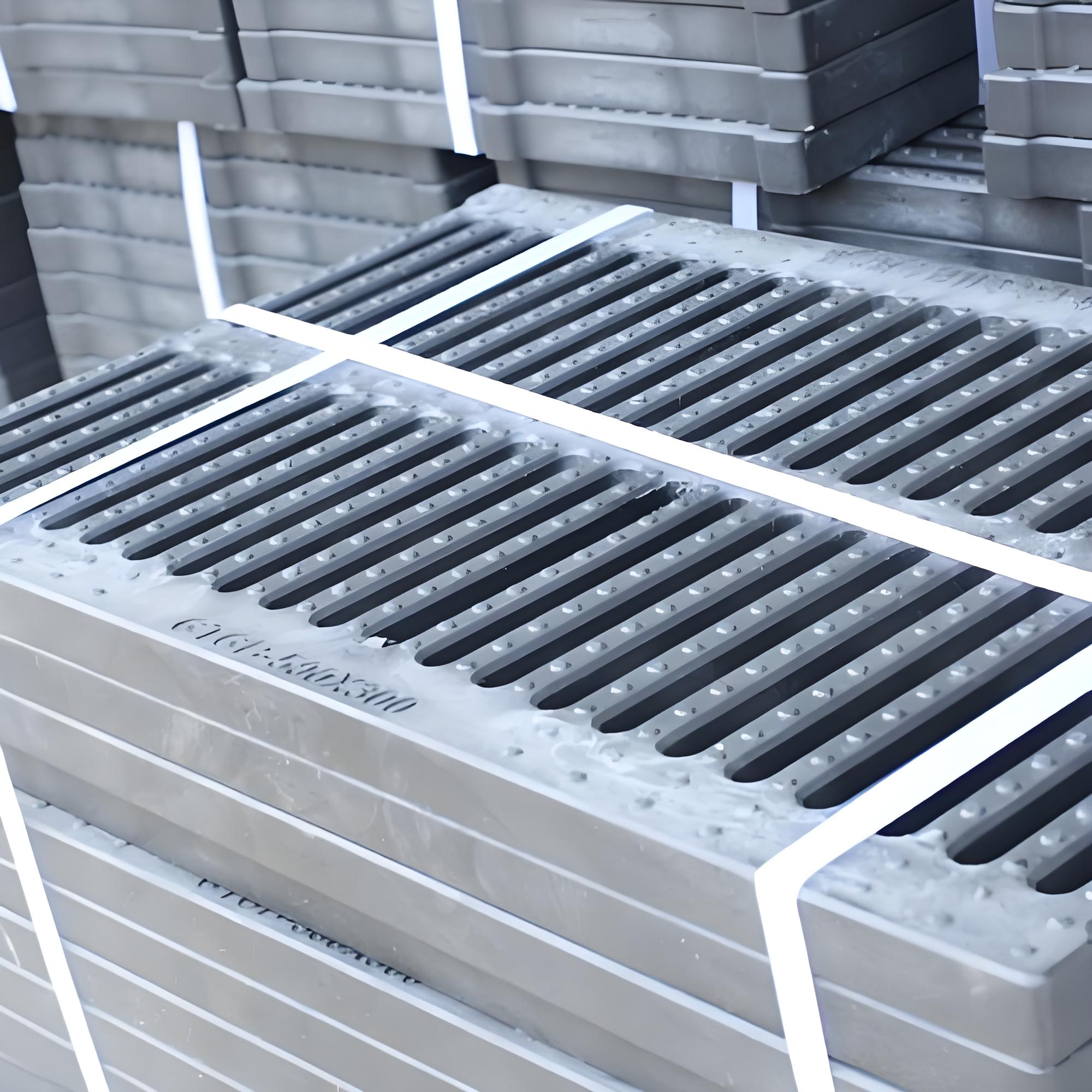
Bearing bar spacing has a direct effect on galvanized steel grating weight. The spacing determines how many bearing bars are used in one meter of grating width. Closer spacing means more bearing bars, higher weight, higher load capacity, and higher cost.
If the bearing bar spacing is 30 mm, there are more bearing bars per square meter than a grating with 40 mm spacing. This increases the weight and improves strength. For walkways, closer spacing also makes the surface feel more stable under foot.
Wider bearing bar spacing reduces steel quantity and weight. It also increases open area, which can improve drainage and ventilation. However, wider spacing may not be suitable for areas requiring higher load capacity, smaller openings, better walking comfort, or support for small wheels.
| Bearing Bar Spacing | Weight Effect | Performance Effect | Common Use |
|---|---|---|---|
| 25 mm | Higher weight | Better walking comfort and smaller openings | Special walkways, public access, close-mesh areas |
| 30 mm | Medium to high weight | Strong load performance | Industrial platforms, walkways, trench covers |
| 34 mm | Medium weight | Balanced open area and strength | General galvanized steel grating |
| 40 mm | Lower weight | More open area and lower material use | Drainage areas and economical panels |
Cross bars are usually smaller than bearing bars, but they still contribute to total galvanized steel grating weight. Cross bars connect the bearing bars and keep the panel stable. Their spacing, diameter, shape, and material all influence the final weight.
Closer cross bar spacing means more cross bars in the panel. This increases weight slightly and improves grid stability. It may be preferred for stair treads, walkways, and panels that need a tighter structure.
Wider cross bar spacing reduces the number of cross bars, which lowers weight and cost. It is common in many standard industrial grating panels where 100 mm cross bar spacing is acceptable.
Cross bars may be twisted square bars, round bars, or flat bars. Twisted square bars are common in welded steel grating. Different cross bar types have different weights, and they may also affect appearance and manufacturing method.
| Cross Bar Spacing | Weight Level | Common Application |
|---|---|---|
| 50 mm | Higher cross bar weight | Stair treads, tighter grid panels, special walkways |
| 76 mm | Medium cross bar weight | General platform grating and maintenance walkways |
| 100 mm | Lower cross bar weight | Common industrial grating, drainage covers, outdoor platforms |
In most galvanized steel grating weight calculations, the bearing bars account for the largest part of the total weight. Cross bars add less weight than bearing bars, but they should not be ignored when estimating accurate shipment weight.
Panel length and width determine the area of each galvanized steel grating panel. Once the weight per square meter is known, the approximate panel weight can be calculated by multiplying the area by the kg/m² value. Edge banding, toe plates, cut-outs, and galvanizing allowance should then be considered.
The basic relationship is simple: larger area means heavier panel. A 1 m x 1 m panel is one square meter. A 1 m x 2 m panel is two square meters. If the grating specification weighs 35 kg/m², then a 1 m x 2 m panel will weigh about 70 kg before adding special fabrication details.
A large panel may reduce the number of joints on a platform, but it can become difficult to lift and install. Smaller panels are easier to handle and remove, especially for trench covers and maintenance areas. However, using too many small panels can increase installation time and fixing accessories.
| Panel Size | Area | If Weight Is 30 kg/m² | If Weight Is 50 kg/m² |
|---|---|---|---|
| 500 x 1000 mm | 0.5 m² | About 15 kg | About 25 kg |
| 600 x 1000 mm | 0.6 m² | About 18 kg | About 30 kg |
| 1000 x 1000 mm | 1.0 m² | About 30 kg | About 50 kg |
| 1000 x 2000 mm | 2.0 m² | About 60 kg | About 100 kg |
| 1000 x 3000 mm | 3.0 m² | About 90 kg | About 150 kg |
This table is useful for quick estimation, but the actual panel weight should be confirmed by the supplier according to the exact grating specification and fabrication details.
Hot-dip galvanizing adds zinc coating to the surface of the steel grating. This coating increases the final weight of the grating compared with the black steel weight before galvanizing. The increase is usually not as large as changing bearing bar size, but it still affects final shipment weight and quotation.
During hot-dip galvanizing, zinc bonds to the steel surface and forms a protective coating. Because steel grating has many bars, edges, openings, and welded areas, the total surface area is relatively large. More surface area means more zinc coating, so galvanized grating weighs slightly more than untreated steel grating.
For quick project estimation, some factories add a galvanizing allowance to the black grating weight. The exact percentage depends on coating thickness, steel surface condition, grating structure, and galvanizing process. A practical estimate may use a small percentage increase, but final weight should be based on actual factory calculation or weighing.
Because hot-dip galvanizing adds zinc and processing cost, heavier grating usually costs more to galvanize. A heavy-duty grating panel has more steel surface and more total weight, so the galvanizing cost is higher than a light-duty panel.
| Item | Effect on Final Weight | Practical Meaning |
|---|---|---|
| Steel base weight | Main part of grating weight | Determined by bar size and spacing |
| Zinc coating | Adds extra weight | Improves corrosion resistance |
| Coating thickness | Thicker coating increases zinc weight | Important for outdoor service life |
| Surface area | More surface area holds more zinc | Open grating has many edges and contact surfaces |
The following table gives general weight references for common galvanized steel grating specifications. These values are approximate and may vary depending on cross bar type, bar spacing, banding, galvanizing thickness, manufacturing method, and factory calculation method. They should be used for early selection and quotation comparison, not as final engineering values.
| Common Specification | Bearing Bar Spacing | Cross Bar Spacing | Approximate Galvanized Weight | Typical Use |
|---|---|---|---|---|
| 20 x 3 mm | 30 mm | 100 mm | About 19-23 kg/m² | Light-duty covers and pedestrian access |
| 25 x 3 mm | 30 mm | 100 mm | About 23-28 kg/m² | Walkways and light platforms |
| 30 x 3 mm | 30 mm | 100 mm | About 28-34 kg/m² | Common platform and walkway grating |
| 30 x 5 mm | 30 mm | 100 mm | About 42-48 kg/m² | Industrial platforms and trench covers |
| 40 x 5 mm | 30 mm | 100 mm | About 55-65 kg/m² | Heavy-duty platforms and longer spans |
| 50 x 5 mm | 30 mm | 100 mm | About 68-80 kg/m² | Heavy-duty industrial floors and strong trench covers |
If the bearing bar spacing changes from 30 mm to 40 mm, the weight will usually decrease because fewer bearing bars are used per square meter. If the spacing changes from 30 mm to 25 mm, the weight will usually increase. This is why full specification details are necessary before confirming galvanized steel grating weight.
Light-duty and heavy-duty galvanized steel grating have very different weight ranges because they are designed for different loads and spans. Light-duty grating is used mainly for pedestrian access and short spans. Heavy-duty grating is used for higher loads, longer spans, industrial equipment access, vehicle areas, and stronger trench covers.
Light-duty galvanized steel grating usually uses smaller bearing bars, such as 20 x 3 mm or 25 x 3 mm. It is suitable for pedestrian walkways, small drainage covers, light maintenance platforms, and areas where loads are not heavy. Its lower weight makes it easier to handle and more economical.
Medium-duty grating is common in industrial platforms and general walkways. Specifications such as 30 x 3 mm or 30 x 5 mm are widely used because they balance weight, load capacity, and cost. This category is often selected for factory flooring, equipment access, and outdoor walkways.
Heavy-duty galvanized steel grating uses deeper and thicker bearing bars such as 40 x 5 mm, 50 x 5 mm, or larger. It has higher weight but also stronger load capacity. It may be required for forklift areas, vehicle traffic, heavy trench covers, large spans, or platforms carrying equipment loads.
| Grating Duty Level | Typical Weight Range | Common Bearing Bar | Typical Application |
|---|---|---|---|
| Light duty | About 18-30 kg/m² | 20 x 3 mm, 25 x 3 mm | Pedestrian access, light covers, small walkways |
| Medium duty | About 30-50 kg/m² | 30 x 3 mm, 30 x 5 mm | Industrial platforms, walkways, general trench covers |
| Heavy duty | About 55-100 kg/m² or higher | 40 x 5 mm, 50 x 5 mm or heavier | Heavy platforms, vehicle areas, strong drainage covers |
Platforms and walkways usually need a balance between safe load capacity, reasonable weight, drainage, and installation convenience. The grating should be strong enough for workers, tools, maintenance activity, and sometimes small carts. At the same time, it should not be so heavy that installation becomes difficult or the steel structure is overloaded.
For ordinary pedestrian walkways, galvanized steel grating weight often falls in the range of about 25-45 kg/m², depending on the span and specification. Outdoor walkways may use serrated galvanized steel grating for better anti-slip performance, which may add slightly to processing cost but does not always create a major weight difference unless the bar size also changes.
Industrial platforms may use medium-duty or heavy-duty grating. A common platform grating specification may weigh around 30-50 kg/m². If the platform has longer spans or heavier maintenance loads, the weight may increase to 55 kg/m² or more.
| Application | Common Specification Reference | Approximate Weight Range | Selection Focus |
|---|---|---|---|
| Light service walkway | 25 x 3 mm or 30 x 3 mm | About 25-35 kg/m² | Walking comfort and economical weight |
| Outdoor walkway | 30 x 3 mm or 30 x 5 mm serrated | About 30-48 kg/m² | Anti-slip surface and corrosion resistance |
| Industrial platform | 30 x 5 mm or 40 x 5 mm | About 42-65 kg/m² | Load capacity and deflection control |
| Heavy maintenance platform | 40 x 5 mm, 50 x 5 mm or stronger | About 55-80 kg/m² or higher | Higher load, longer span, stronger support |
For platform and walkway projects, the bearing bar direction must be confirmed. The bearing bars should span between support beams. If the grating is installed in the wrong direction, the weight may be correct but the load performance may be wrong.
Drainage covers made from galvanized steel grating need to support pedestrian traffic, carts, forklifts, or vehicles while allowing water to pass through. Their weight depends on trench width, support ledge, load requirement, bearing bar direction, and whether the cover is removable.
Pedestrian drainage covers are usually lighter than vehicle-access covers. They may use 25 x 3 mm, 30 x 3 mm, or similar bearing bars depending on span. Smaller panels are easier to remove for cleaning and maintenance.
Industrial trench covers may need stronger bearing bars because they can be exposed to tool carts, maintenance traffic, factory equipment, or occasional wheel loads. A common range may be around 35-65 kg/m², depending on load and span.
If vehicles, forklifts, or heavy carts pass over the drainage cover, heavy-duty galvanized steel grating is usually required. The weight may be much higher than standard walkway grating. The support frame must also be designed properly.
| Drainage Cover Type | Common Weight Range | Design Requirement |
|---|---|---|
| Pedestrian trench cover | About 25-40 kg/m² | Walking safety, drainage, easy removal |
| Factory drainage cover | About 35-65 kg/m² | Higher load capacity and corrosion resistance |
| Forklift-access cover | Often 60 kg/m² or higher | Heavy-duty bars, strong support frame, clear load confirmation |
| Roadside or vehicle cover | Customized | Must be designed according to vehicle load and support structure |
For removable trench covers, piece weight is very important. If each panel is too heavy, maintenance workers may have difficulty lifting it. In this case, using shorter panel lengths, lifting holes, handles, or mechanical lifting support may be necessary.
Galvanized steel grating stair treads are usually smaller than platform panels, but their weight still matters for installation and stair structure design. A stair tread normally includes grating, side plates, bolt holes, and sometimes anti-slip nosing. These additional parts increase the final piece weight.
Stair tread weight depends on tread width, tread length, bearing bar size, spacing, nosing type, side plate thickness, and galvanizing coating. A wider and longer stair tread naturally weighs more. A tread with checker plate nosing and heavy side plates will weigh more than a simple grating tread.
Common stair tread widths may range from about 240 mm to 350 mm, while common lengths may range from 600 mm to 1200 mm or more. The correct size should match stair stringer spacing, step design, load requirement, and walking comfort.
| Stair Tread Size Reference | Approximate Piece Weight Range | Typical Use |
|---|---|---|
| 240 x 600 mm | About 5-10 kg/piece | Narrow industrial stairs and light access |
| 255 x 800 mm | About 8-14 kg/piece | Common steel stairs and platform access |
| 305 x 1000 mm | About 12-22 kg/piece | Industrial stairs and outdoor access stairs |
| 325 x 1200 mm | About 18-30 kg/piece | Wider stair systems and heavy-duty access |
The values above are general references. Actual stair tread weight should be calculated from the selected bearing bar size, grating specification, side plate design, nosing type, and galvanizing allowance.
Galvanized steel grating weight can be estimated by calculating the weight of bearing bars, cross bars, edge banding, accessories, and zinc coating. For quick quotation, suppliers often use weight tables based on standard specifications. For custom projects, calculation from drawings is more accurate.
A simplified calculation method is:
Panel weight = grating weight per square meter x panel area + banding weight + accessory weight + galvanizing allowance
Panel area can be calculated as:
Panel area = panel length x panel width
For example, if a galvanized steel grating specification weighs about 35 kg/m² and the panel size is 1 m x 2 m, the basic panel weight is:
35 kg/m² x 2 m² = about 70 kg
If the panel has heavy banding, special side plates, lifting holes, toe plates, or a thicker galvanized coating, the final weight may be higher.
For rough estimation, the bearing bar weight per square meter can be calculated based on steel density, bar size, and spacing:
Bearing bar weight per m² ≈ 7.85 x bearing bar height x bearing bar thickness ÷ bearing bar spacing
In this formula, bearing bar height, thickness, and spacing are in millimeters. This gives an approximate kg/m² value for the bearing bars only. Cross bars, banding, and galvanizing must still be added.
If the bearing bar is 30 mm x 3 mm and the bearing bar spacing is 30 mm:
Bearing bar weight ≈ 7.85 x 30 x 3 ÷ 30 = 23.55 kg/m²
After adding cross bars, banding, and galvanizing allowance, the finished galvanized steel grating may be around 28-34 kg/m² depending on the exact cross bar type and factory process.
| Calculation Step | What to Calculate | Important Detail |
|---|---|---|
| Step 1 | Confirm bearing bar size | Height and thickness have major influence on weight |
| Step 2 | Confirm bearing bar spacing | Closer spacing increases number of bars |
| Step 3 | Add cross bar weight | Depends on cross bar size and spacing |
| Step 4 | Add banding and accessories | Required for many custom panels and stair treads |
| Step 5 | Add galvanizing allowance | Zinc coating increases final weight |
| Step 6 | Multiply by panel area and quantity | Used for total order weight and shipping calculation |
Galvanized steel grating weight affects the project beyond material price. It influences transportation cost, container loading, site handling, installation efficiency, lifting safety, and structural support design. For large projects, a small weight difference per square meter can become a major cost difference across the total quantity.
Heavier galvanized steel grating increases freight cost. For export orders, the total weight affects container loading limits, inland trucking, port handling, and shipping cost. A quotation with a lower unit price may not always be cheaper if the specification is too heavy for the project requirement.
Heavier panels are harder to move and install. Workers may need forklifts, cranes, lifting hooks, or more labor. For maintenance covers that need to be opened regularly, excessive piece weight can create long-term handling problems.
The grating weight becomes dead load on the steel structure. Engineers must include this load when designing beams, frames, platforms, stairs, and trench supports. If the grating is replaced with a heavier specification later, the support structure should be checked again.
Very light grating may be easier to install, but it may not provide enough load capacity for some industrial areas. Very heavy grating may be strong, but it can be difficult to remove for maintenance. The best design balances weight, strength, safety, and operation convenience.
| Weight Impact Area | Possible Problem If Ignored | Practical Recommendation |
|---|---|---|
| Shipping | Higher freight cost or container overweight risk | Confirm total theoretical and actual weight before shipment |
| Installation | Panels too heavy for manual handling | Choose reasonable panel size and prepare lifting method |
| Support design | Underestimated dead load on beams or frames | Provide kg/m² weight to structural engineers |
| Maintenance | Removable covers become difficult to lift | Use shorter panels, handles, or lifting holes when needed |
| Cost control | Over-designed grating increases material cost | Select weight based on real load and span requirements |
Project drawings are the most reliable basis for confirming galvanized steel grating weight. A complete drawing should show panel size, bearing bar direction, bearing bar specification, spacing, cross bar spacing, cut-outs, banding, stair tread details, trench cover frame, and quantity. Without these details, weight can only be estimated roughly.
A panel list should include each panel number, length, width, quantity, and location. This allows the supplier to calculate the weight of each panel and the total project weight. For large platform projects, panel numbering also helps installation on site.
The bearing bar direction affects both load capacity and cutting calculation. In most cases, the bearing bars should span between support beams. The drawing should clearly show this direction to avoid manufacturing mistakes.
Cut-outs reduce some steel weight, but edge banding around openings may add weight back. For accurate weight calculation, the drawing should show pipe openings, column notches, equipment cut-outs, handrail holes, and irregular shapes.
Banding bars, toe plates, kick plates, stair tread side plates, nosing, lifting holes, hinges, handles, and fixing accessories all affect final weight. These details should be included in the drawing or inquiry sheet.
If the grating is hot-dip galvanized after fabrication, zinc coating allowance should be included. If the grating is painted, powder coated, or stainless steel, the weight calculation may be different.
| Drawing Information | Needed for Weight Calculation? | Reason |
|---|---|---|
| Panel length and width | Yes | Determines panel area and piece weight |
| Bearing bar size | Yes | Main factor affecting kg/m² weight |
| Bearing bar spacing | Yes | Determines number of bearing bars |
| Cross bar size and spacing | Yes | Affects total grid weight |
| Cut-outs and notches | Yes | Changes steel quantity and banding requirement |
| Banding and toe plates | Yes | Adds extra steel weight |
| Hot-dip galvanizing | Yes | Adds zinc coating weight |
| Quantity | Yes | Determines total project weight and shipping weight |
For procurement, the best way to avoid weight errors is to send complete drawings and ask the supplier for both theoretical weight and estimated actual shipping weight. The theoretical weight is useful for design and quotation comparison, while the actual shipping weight is useful for logistics and freight planning.
How much does galvanized steel grating weigh?
Galvanized steel grating commonly weighs about 20-100 kg/m² depending on bearing bar size, bar spacing, cross bar spacing, panel size, and galvanizing coating. Light-duty walkway grating may be around 20-35 kg/m², while heavy-duty grating for industrial platforms or trench covers may be 60 kg/m² or higher.
How do you calculate steel grating weight?
Steel grating weight can be calculated by adding the weight of bearing bars, cross bars, edge banding, accessories, and galvanizing coating. A simple method is to use the grating weight per square meter multiplied by panel area, then add banding and galvanizing allowance. For accurate results, the supplier should calculate weight according to the exact drawing and specification.
Does galvanizing increase steel grating weight?
Yes, hot-dip galvanizing increases steel grating weight because zinc coating is added to the steel surface. The increase depends on coating thickness, surface area, steel shape, and galvanizing process. Although the increase is usually smaller than the effect of bearing bar size or spacing, it should still be included when estimating final shipping weight.
