
Serrated Galvanized Steel Grating: Anti-Slip Hot-Dip Galvanized Grating for Walkways, Platforms, Stairs, Drainage Covers, and Outdoor Access Areas
Serrated galvanized steel grating is a strong, anti-slip, corrosion-resistant metal grating product used in industrial platforms, walkways, stair treads, trench covers, bridge access areas, drainage systems, and outdoor maintenance zones. It combines the high load capacity of steel bar grating, the improved traction of a serrated bearing bar surface, and the long-term corrosion protection of hot-dip galvanizing. For factories, contractors, distributors, and engineering buyers, serrated galvanized steel grating is often selected when safety, drainage, durability, and outdoor service life are all important.
Serrated galvanized steel grating is a type of steel bar grating made with serrated bearing bars and protected by a hot-dip galvanized surface. The serrated surface provides better slip resistance than plain grating, while the galvanized zinc coating helps protect the steel from rust in outdoor, wet, humid, or industrial environments.
In simple terms, this product answers two important project needs at the same time: safer walking performance and better corrosion resistance. That is why it is widely used in areas where workers may walk on wet, oily, dusty, or exposed surfaces.
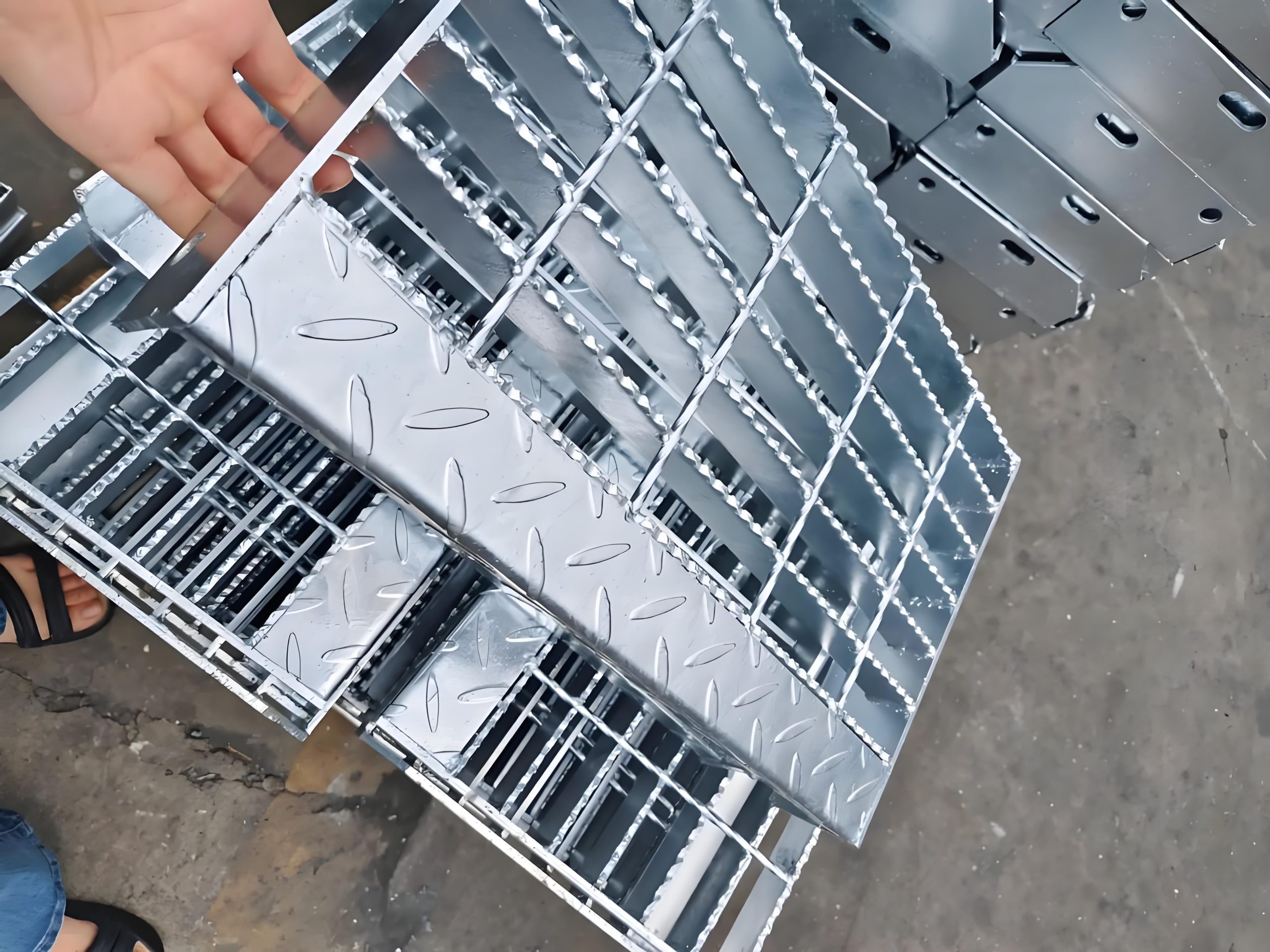
A typical serrated galvanized steel grating panel consists of bearing bars, cross bars, and sometimes edge banding. The bearing bars carry the main load. The cross bars connect and stabilize the structure. The serrated top edge of the bearing bar improves traction. After fabrication, the complete panel is usually hot-dip galvanized to form a protective zinc coating on the steel surface.
| Component | Function | Importance |
|---|---|---|
| Serrated bearing bar | Carries the main load and provides anti-slip surface | Determines load capacity and walking safety |
| Cross bar | Connects bearing bars and keeps spacing stable | Improves panel rigidity and structure consistency |
| Edge banding | Closes panel edges and improves handling | Useful for custom panels, trench covers, and stair treads |
| Hot-dip galvanized coating | Protects steel from corrosion | Extends service life in outdoor and wet areas |
The most recognizable feature of serrated steel grating is the toothed surface on the upper edge of the bearing bars. Compared with plain steel grating, serrated grating offers better grip under many site conditions. This is especially useful in industrial areas where water, oil, mud, dust, grease, or chemical residue may appear on the walking surface.
The serrations are formed along the top edge of the bearing bars. These small teeth create more friction between the grating surface and footwear. When workers walk across the panel, the serrated profile helps reduce the risk of slipping, especially when the surface is wet or slightly contaminated.
The open grid design also improves safety. Water, rain, snow, mud, and debris can pass through the openings instead of staying on the walking surface. This makes serrated galvanized grating suitable for platforms, drainage areas, outdoor stairs, catwalks, and bridge maintenance walkways.
In chemical plants, wastewater treatment facilities, power stations, shipyards, mining sites, and oil-related facilities, working surfaces can become slippery very quickly. Serrated galvanized steel grating is often used because it provides both traction and drainage while maintaining high strength.
Galvanized steel grating is widely used outdoors because the zinc coating protects carbon steel from rust. For serrated steel grating, hot-dip galvanizing is especially common because the product is often installed in wet, exposed, or industrial environments.
Hot-dip galvanizing is a process in which fabricated steel grating is immersed in molten zinc. The zinc reacts with the steel surface and forms a protective coating. This coating covers the bearing bars, cross bars, welded joints, edges, and many internal contact areas of the grating panel.
Serrated grating has a more complex surface than plain grating because of the toothed bar profile. A good galvanizing process helps protect the exposed steel surface, including the serrated top edges. This is important because walkway grating often faces moisture, foot traffic, weather changes, and industrial pollution.
Compared with untreated carbon steel, hot-dip galvanized grating requires less maintenance. It is commonly used in outdoor walkways, drainage channels, bridge access areas, industrial platforms, and service stairs because it can handle long-term exposure better than painted-only steel in many environments.
| Surface Option | Main Benefit | Typical Use |
|---|---|---|
| Untreated carbon steel | Lower initial cost | Temporary or indoor dry areas |
| Painted steel grating | Color options and basic protection | Indoor platforms or low-corrosion areas |
| Hot-dip galvanized steel grating | Strong corrosion resistance and outdoor durability | Walkways, stairs, trench covers, bridges, industrial platforms |
| Stainless steel grating | Higher corrosion resistance in harsh environments | Marine, food, chemical, and high-corrosion projects |
The most common material for serrated galvanized steel grating is carbon steel. Carbon steel provides strong mechanical performance, good weldability, and economical cost. After hot-dip galvanizing, it becomes suitable for many outdoor and industrial applications.
Carbon steel is the standard material for most serrated galvanized grating panels. It is strong, easy to fabricate, and suitable for welding. For platforms, walkways, stair treads, trench covers, and drainage areas, carbon steel grating with hot-dip galvanizing is often the most practical choice.
Mild steel is commonly used where the load requirement is moderate and the project needs a cost-effective grating solution. It can be manufactured into serrated bearing bars, welded into panels, and galvanized after fabrication.
Low-carbon steel is often preferred because it is easier to cut, weld, press, and galvanize. Good raw material quality helps reduce deformation, welding defects, and surface problems during production.
If the project environment is highly corrosive, such as coastal areas, chemical plants, food processing zones, or marine facilities, stainless steel serrated grating may be considered instead of galvanized carbon steel. However, stainless steel grating has a higher material cost, so many buyers still choose galvanized carbon steel when the environment allows it.
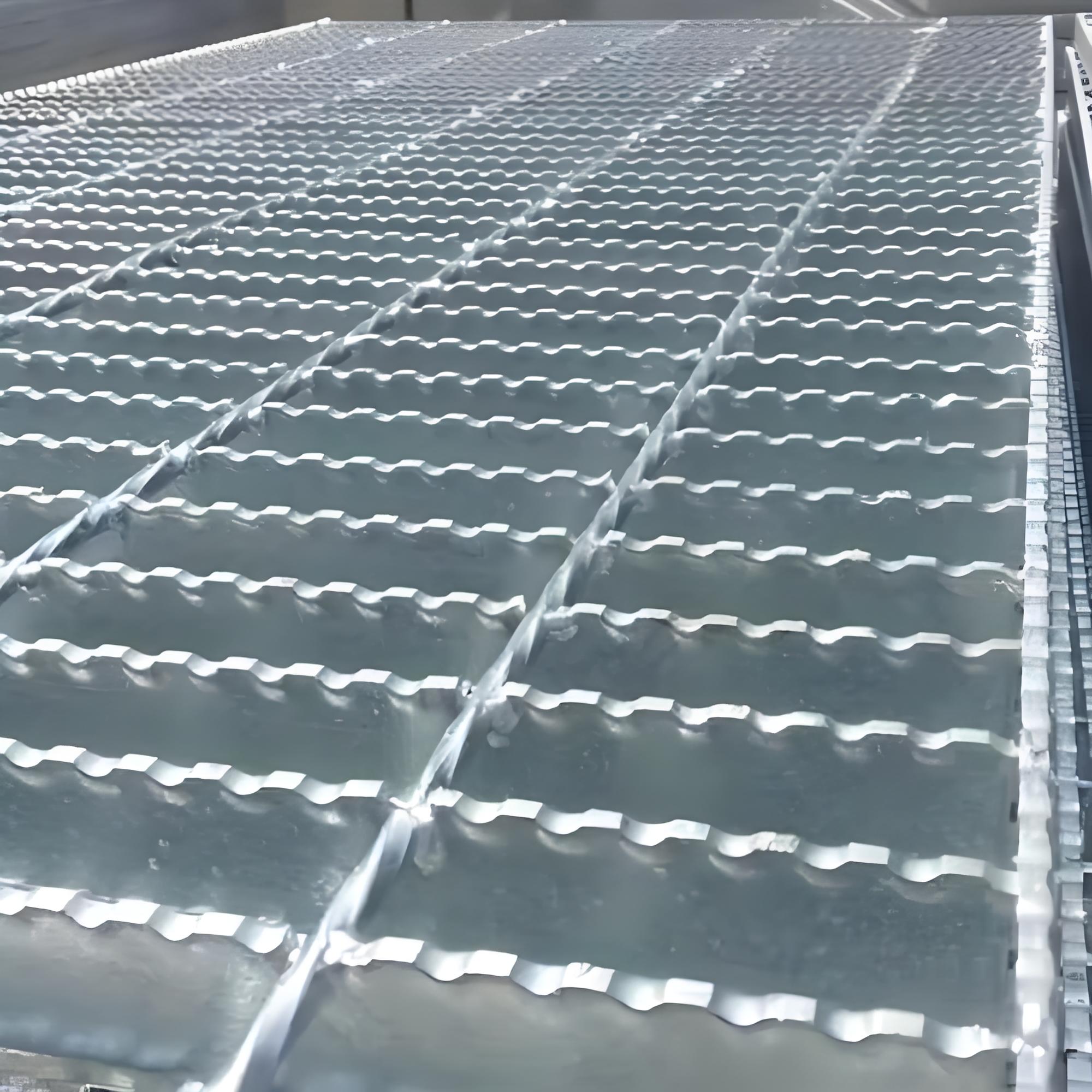
Serrated galvanized steel grating specifications are usually described by bearing bar size, bearing bar spacing, cross bar spacing, panel size, surface type, and treatment method. The bearing bar size and spacing have a direct influence on strength, weight, opening area, cost, and walking comfort.
The bearing bar height is one of the main factors affecting load capacity. A deeper bearing bar can carry more load over a longer span. The bearing bar thickness also affects strength and durability. Common thicknesses include 3 mm, 4 mm, and 5 mm, while common heights may include 20 mm, 25 mm, 30 mm, 32 mm, 40 mm, and 50 mm, depending on project requirements.
Bearing bar spacing affects the open area and load performance. Closer spacing usually improves load capacity and walking comfort, but it also increases steel weight and price. Wider spacing reduces weight and allows better drainage, but it may not be suitable for every walkway or public access area.
Cross bar spacing helps maintain the grid structure and panel stability. Common cross bar spacing can be selected according to factory standards, project drawings, or customer requirements. For industrial walkway grating, cross bar spacing is often chosen to balance stability, manufacturing efficiency, and cost.
| Specification Item | Common Options | Selection Advice |
|---|---|---|
| Bearing bar height | 20 mm, 25 mm, 30 mm, 32 mm, 40 mm, 50 mm | Use deeper bars for longer spans or heavier loads |
| Bearing bar thickness | 3 mm, 4 mm, 5 mm or customized | Thicker bars improve strength and service durability |
| Bearing bar spacing | 30 mm, 34 mm, 40 mm or customized | Closer spacing improves walking comfort and load performance |
| Cross bar spacing | 50 mm, 76 mm, 100 mm or customized | Choose based on panel stability and project standard |
| Surface type | Serrated top surface | Recommended for wet, oily, outdoor, and industrial access areas |
The load capacity of serrated galvanized steel grating depends on the bearing bar size, spacing, span, steel grade, panel width, support method, and installation direction. A professional supplier should not recommend grating only by panel size. The clear span and load requirement must be confirmed first.
The bearing bars are the main load-carrying members. During installation, the bearing bars should span between supports. If the panel is installed with the bearing bars in the wrong direction, the actual load capacity may be much lower than expected.
The longer the unsupported span, the stronger the grating must be. For pedestrian walkways, the grating should not only carry the required load but also feel stable under foot. Excessive deflection can make workers uncomfortable and may create safety concerns.
Walkway grating may need to support uniform pedestrian load, maintenance workers, tool carts, equipment parts, or concentrated point loads. In industrial areas, concentrated loads are often more important than buyers expect. A reliable factory should help evaluate whether the selected specification is suitable for the real working condition.
| Load Factor | Effect on Grating Selection |
|---|---|
| Clear span | Longer span requires deeper or thicker bearing bars |
| Bearing bar spacing | Closer spacing improves load distribution and walking comfort |
| Bar thickness | Thicker bars improve strength and resistance to deformation |
| Support condition | Proper support length improves safety and stability |
| Installation direction | Bearing bars must span correctly between supports |
The serrated surface is one of the main reasons buyers choose serrated galvanized steel grating instead of plain steel grating. The toothed profile increases friction and helps improve traction under wet, oily, muddy, or dusty conditions.
The small serrations on the bearing bar edge help footwear grip the surface more effectively. This is especially useful for outdoor walkways, stairs, platforms near machinery, and areas where workers may carry tools or materials.
In water treatment plants, drainage areas, bridges, shipyards, and outdoor platforms, rainwater and moisture can make plain surfaces slippery. Serrated galvanized grating reduces this risk by combining drainage openings with a toothed walking surface.
Stair treads and inclined walkways require stronger anti-slip performance than flat platforms. Serrated grating is often used for stair treads because every step needs reliable traction. Additional nosing can be added to the front edge for better visibility and grip.
Serrated galvanized steel grating is not limited to heavy industrial areas. It can also be used in municipal walkways, outdoor service passages, maintenance decks, roof access routes, and public utility zones where safe access is important.
The service life of serrated galvanized steel grating depends heavily on the hot-dip galvanized coating quality, coating thickness, steel surface preparation, installation environment, and maintenance condition. A thicker and more uniform zinc coating usually provides longer corrosion protection, especially in outdoor or humid areas.
The zinc coating acts as a protective barrier between the steel and the environment. When the coating is thicker and properly bonded, it can protect the steel for a longer time. However, coating thickness should be controlled properly because excessive zinc buildup may affect appearance, drainage openings, or installation fit.
Galvanized steel grating used indoors in dry conditions can last much longer than grating installed in coastal, chemical, or highly polluted environments. Moisture, salt, industrial fumes, acidic liquids, and continuous abrasion can shorten service life.
Even though hot-dip galvanized grating is low-maintenance, regular inspection is still useful. Areas with heavy traffic, chemical exposure, or damaged coating should be checked. If local coating damage occurs during cutting or installation, repair treatment may be needed to maintain corrosion protection.
| Environment | Corrosion Risk | Recommended Consideration |
|---|---|---|
| Indoor dry platform | Low | Galvanized coating provides strong long-term protection |
| Outdoor walkway | Medium | Hot-dip galvanized grating is commonly suitable |
| Drainage channel | Medium to high | Confirm water quality, exposure, and maintenance access |
| Coastal area | High | Consider heavier galvanizing, stainless steel, or special coating systems |
| Chemical plant | High | Confirm chemical exposure before choosing material |
The production process of serrated galvanized steel grating includes raw material preparation, serrated bearing bar forming, cutting, welding or press-locking, edge banding, surface cleaning, hot-dip galvanizing, inspection, and packing. Each step affects the final strength, appearance, and installation accuracy.
Before production, the factory checks the steel flat bars, cross bars, and other materials. Important items include bar size, steel grade, straightness, surface condition, and quantity. Stable raw material quality helps ensure consistent grating quality.
The bearing bars are processed to form serrated teeth along the top edge. The serration should be consistent enough to provide reliable anti-slip performance without weakening the bearing bar structure.
The factory cuts bearing bars and cross bars according to panel dimensions. For custom projects, cutting must follow drawings, panel numbers, and layout plans. Accurate cutting reduces welding errors and helps the finished panels fit the steel structure on site.
Most galvanized serrated steel grating is welded. Cross bars are welded to bearing bars to form a stable grid. Welding quality is important because loose cross bars can affect panel strength and long-term stability.
Banding bars are added to panel edges when required. For trench covers, stair treads, platform panels, and custom grating, edge banding improves appearance and handling safety. The factory may also process cut-outs, notches, bolt holes, lifting holes, and special shapes before galvanizing.
After fabrication, the grating is cleaned and hot-dip galvanized. Galvanizing after fabrication is important because welded joints, cut edges, serrated profiles, and banding areas need corrosion protection.
The finished panels are inspected for dimensions, welding quality, coating condition, panel flatness, edge treatment, and quantity. Export orders are usually bundled with steel straps, protected by pallets, marked with panel numbers, and loaded according to packing plans.
Serrated galvanized steel grating can be supplied as standard panels or custom-fabricated panels. Standard panels are suitable for stock, resale, and simple cutting. Custom panels are used for platforms, trench covers, stair treads, bridge walkways, and industrial access systems that need accurate dimensions.
Standard rectangular panels are easy to produce, transport, and install. They are commonly used for general walkways, industrial platforms, equipment access areas, and stock supply. Buyers can cut panels on site if the project is simple, but factory cutting is usually cleaner and more accurate.
Custom panels are produced according to project drawings. The factory can control dimensions, bearing bar direction, banding, cut-outs, and panel numbering. Custom fabrication reduces site work and helps improve installation speed.
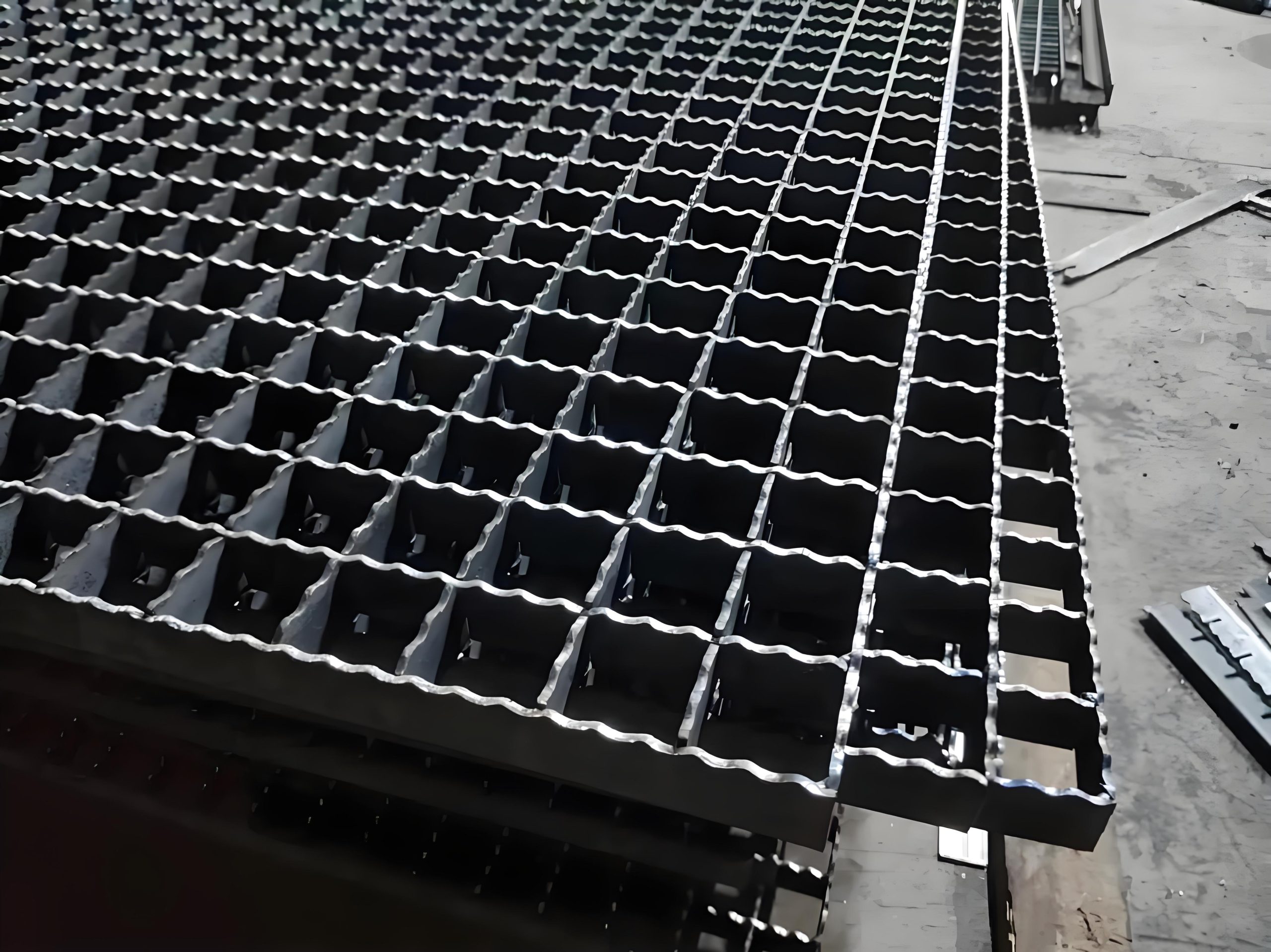
Many industrial platforms include pipes, columns, tanks, equipment bases, valves, and structural frames. Serrated galvanized steel grating can be fabricated with notches, openings, round holes, corner cuts, and special shapes to fit around these obstacles.
Serrated galvanized grating is commonly made into stair treads. Stair treads may include side plates, bolt holes, front nosing, and banded edges. Serrated stair treads are widely used in factories, outdoor stairs, towers, platforms, and maintenance structures.
| Panel Type | Features | Common Application |
|---|---|---|
| Standard panel | Regular size, simple rectangular shape | Stock, resale, general platform flooring |
| Custom panel | Produced according to project drawings | Industrial platforms, bridge access, equipment walkways |
| Trench cover | Designed for drainage channels or cable trenches | Factories, roadsides, municipal drainage, workshops |
| Stair tread | Includes side plates, bolt holes, and anti-slip surface | Steel stairs, towers, outdoor access systems |
| Shaped grating | Cut-outs, notches, round openings, irregular edges | Platforms around pipes, machines, tanks, and columns |
Proper installation is important for the safety and service life of serrated galvanized steel grating. Even a strong grating panel can create problems if it is installed with the wrong support direction, insufficient fixing, unstable support, or poor alignment.
Grating clips are commonly used when panels need to be removable. They hold the grating to the support structure without welding. Clip installation is suitable for maintenance platforms, trench covers, equipment access areas, and locations where panels may need to be lifted for inspection.
Welding can provide a strong permanent connection between the grating and support structure. It is often used where panels do not need to be removed. However, welding may damage the galvanized coating at the weld points, so repair treatment should be applied after installation.
Bolting is used for stair treads, framed panels, removable covers, and some heavy-duty applications. Bolt holes can be prepared in the factory according to drawings. Bolted installation provides stable fixing and allows future removal when needed.
For trench covers and drainage channels, grating panels are often installed into steel frames or support ledges. The frame helps position the panel and transfers load to the surrounding structure. Proper frame size and bearing length are important for safe use.
| Installation Method | Main Advantage | Suitable Use |
|---|---|---|
| Clips | Removable and easy to install | Maintenance platforms, removable covers, walkways |
| Welding | Strong permanent fixing | Industrial platforms and fixed access areas |
| Bolts | Secure and removable | Stair treads, framed panels, heavy-duty covers |
| Support frame | Good positioning and load transfer | Trench covers, drainage covers, channel grating |
Serrated galvanized steel grating is widely used in industrial environments because it provides strength, drainage, ventilation, anti-slip performance, and corrosion resistance. It is especially useful in areas where workers need safe access to equipment, machines, pipes, valves, tanks, or elevated structures.
Industrial platforms often require flooring that is strong but not too heavy. Serrated galvanized steel grating provides a reliable walking surface while allowing air, light, water, and debris to pass through. This makes it suitable for power plants, chemical plants, mining facilities, cement plants, steel mills, water treatment plants, and manufacturing workshops.
Maintenance walkways are used around machines, conveyors, tanks, boilers, and pipe systems. Serrated grating helps workers move safely during inspection and repair. The galvanized coating helps the panels resist corrosion caused by moisture and industrial exposure.
Catwalks often require lightweight flooring with high strength. Compared with solid steel plate, grating reduces weight and allows drainage. Serrated galvanized grating also improves footing on elevated walkways, especially in outdoor or dusty environments.
Serrated galvanized steel grating is one of the most common materials for industrial stair treads. The serrated surface improves slip resistance, while the open grid allows rainwater, dust, and debris to pass through. Stair treads can be supplied with side plates, bolt holes, and front nosing for easier installation and safer use.
Serrated galvanized steel grating is also widely used outside industrial buildings. Its open grid, anti-slip profile, and galvanized coating make it practical for drainage, bridge service areas, municipal access, outdoor walkways, and exposed maintenance zones.
Drainage covers need to allow water flow while supporting pedestrian or vehicle-related loads. Serrated galvanized grating is suitable because it provides drainage openings and a safer walking surface. For trench covers, the factory should confirm trench width, support ledge, load level, bearing bar direction, and whether the cover needs to be removable.
Bridge maintenance walkways and service platforms are often exposed to rain, wind, dust, and temperature changes. Galvanized serrated grating is used because it drains quickly, reduces water accumulation, and provides better grip for maintenance workers.
Outdoor platforms around tanks, towers, water systems, and industrial equipment require corrosion-resistant and anti-slip flooring. Hot-dip galvanized serrated grating is often preferred because it offers a practical balance between safety, strength, and cost.
Municipal projects may use serrated galvanized grating for utility covers, service paths, drainage channels, pedestrian maintenance areas, and public works. For public access areas, opening size, heel safety, surface smoothness, and edge treatment should be carefully reviewed.
The price of serrated galvanized steel grating depends on raw material cost, bearing bar size, spacing, panel weight, galvanizing cost, fabrication complexity, order quantity, packing method, and shipping distance. A lower price is not always the better choice if the specification is lighter or the coating quality is poor.
Steel price changes directly affect grating cost. Since serrated galvanized grating is usually made from carbon steel, the market price of steel flat bars and cross bars is an important factor in the final quotation.
Heavier bearing bars increase load capacity but also increase material cost. A panel made with 40 mm x 5 mm bearing bars will cost more than a lighter panel with smaller bearing bars. Buyers should compare quotations based on the same specification, not only the same square meter quantity.
Closer bearing bar spacing means more steel bars per panel. This increases weight, strength, and price. Wider spacing may be cheaper but may not meet load or walking comfort requirements.
Serrated bearing bars require additional processing compared with plain bars. This can slightly increase production cost, but it provides better anti-slip performance, which is important in many industrial and outdoor projects.
Galvanizing cost depends on panel weight, zinc consumption, surface area, coating requirements, and local galvanizing conditions. Good galvanizing improves service life, so buyers should not reduce cost by ignoring coating quality.
Standard rectangular panels are usually more economical. Cut-outs, irregular shapes, banding, stair tread side plates, nosing, bolt holes, lifting holes, and special marking all add labor and processing cost.
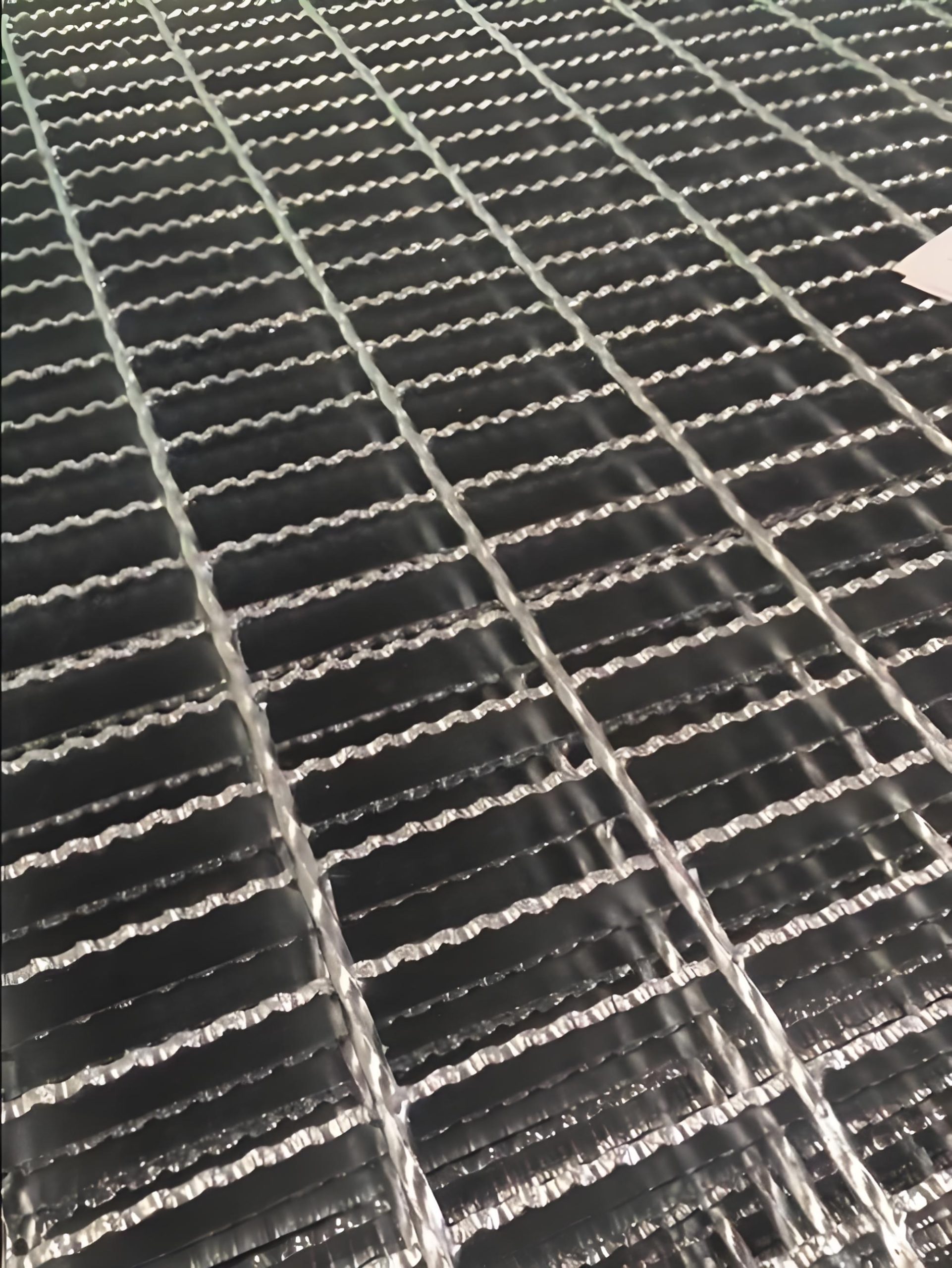
Larger orders often have better unit prices because production setup, raw material purchasing, galvanizing arrangement, and packing can be planned more efficiently. Export packing, palletizing, labels, and container loading plans may also affect total cost.
| Price Factor | Cost Impact | Buyer Advice |
|---|---|---|
| Material price | Steel market changes affect quotation | Confirm validity period of price offer |
| Bearing bar size | Larger bars increase weight and price | Select according to load and span |
| Bar spacing | Closer spacing increases material use | Balance safety, walking comfort, and cost |
| Serrated surface | Additional processing compared with plain grating | Use where anti-slip performance is important |
| Galvanizing | Adds coating cost but improves service life | Recommended for outdoor and wet environments |
| Custom fabrication | Cut-outs, holes, and special shapes increase labor | Provide clear drawings to avoid rework |
Choosing a reliable serrated galvanized steel grating supplier is important because the product is related to worker safety, installation accuracy, corrosion resistance, and long-term project performance. A qualified supplier should be able to provide stable production quality, clear technical communication, suitable specifications, and proper packing for delivery.
A reliable supplier should have experience in producing serrated steel grating, welded bar grating, stair treads, trench covers, platform panels, and custom fabricated grating. Production capability should include cutting, welding, serrated bar processing, banding, drilling, notching, galvanizing coordination, and final inspection.
The supplier should understand load capacity, clear span, bearing bar direction, bar spacing, cross bar spacing, galvanized surface requirements, and installation methods. If a buyer provides incomplete information, a professional supplier should help confirm the missing details before production.
For custom projects, drawing support is very important. The supplier should be able to read CAD drawings, prepare panel lists, mark panel numbers, confirm cut-outs, and produce grating according to site layout.
Since hot-dip galvanizing is one of the main advantages of this product, the supplier should control coating appearance, zinc coverage, sharp edges, blocked openings, excessive zinc buildup, and surface defects. Good galvanizing quality helps improve both service life and installation appearance.
When comparing different suppliers, buyers should check whether the quotation includes the same material, bearing bar size, bearing bar spacing, cross bar spacing, serrated surface, hot-dip galvanizing, banding, accessories, packaging, and delivery terms. A lower price may come from a lighter specification or incomplete scope.
For international buyers, export packing matters. Serrated galvanized grating panels are heavy and can damage each other if poorly packed. A reliable supplier should provide strong bundling, pallet support, clear marks, packing lists, and loading photos when required.
| Supplier Selection Point | What to Confirm |
|---|---|
| Production experience | Experience with serrated grating, galvanized grating, stair treads, and trench covers |
| Specification support | Ability to recommend bar size, spacing, and surface type based on project use |
| Drawing capability | CAD support, panel numbering, cut-outs, and custom fabrication |
| Quality inspection | Material checking, welding inspection, dimension control, and galvanizing review |
| Packing quality | Strong bundles, pallets, labels, and container loading support |
| Communication | Clear quotation, fast confirmation, production updates, and complete documents |
A good serrated galvanized steel grating supplier should not only sell panels. It should help buyers choose suitable specifications, avoid wrong installation directions, control coating quality, and deliver grating that matches the project drawings and working environment.
What is serrated galvanized steel grating used for?
Serrated galvanized steel grating is used for industrial platforms, walkways, stair treads, drainage trench covers, bridge maintenance paths, outdoor access areas, and equipment service platforms. It is selected when a project needs both anti-slip performance and corrosion resistance.
Is serrated grating better than plain grating?
Serrated grating is better than plain grating in wet, oily, dusty, or outdoor areas because the toothed bearing bar surface improves traction. Plain grating may still be suitable for dry indoor platforms, but serrated galvanized grating is usually safer for harsher walking conditions.
How long does galvanized serrated steel grating last?
The service life of galvanized serrated steel grating depends on coating quality, coating thickness, environment, traffic, and maintenance. In dry or normal outdoor environments, hot-dip galvanized grating can provide long-term corrosion protection. In coastal, chemical, or highly corrosive areas, the material and coating system should be reviewed more carefully before ordering.
