
Galvanized steel grating is widely used for industrial platforms, walkways, stair treads, trench covers, drainage systems, bridge access areas, factory floors, and outdoor service zones. To buy galvanized steel grating correctly, buyers should compare not only the unit price, but also the steel specification, galvanizing quality, custom fabrication ability, drawing support, packing method, delivery experience, and long-term project reliability.
Galvanized steel grating is a metal grid panel made from steel bearing bars and cross bars, then protected by a zinc coating. The open-grid structure allows water, air, light, dust, and debris to pass through, while the steel bars provide load capacity. It is commonly used as flooring, access panels, covers, stairs, and safety walking surfaces in industrial and outdoor environments.
For procurement, the phrase “galvanized steel grating” is not enough for accurate quotation. A buyer should confirm whether the product is welded grating, press-locked grating, serrated grating, plain grating, heavy-duty grating, stair tread grating, or trench cover grating. Each type has different structure, cost, load performance, and application suitability.
| Type | Main Feature | Typical Application |
|---|---|---|
| Welded galvanized steel grating | Cross bars are welded to bearing bars for a strong grid structure | Industrial platforms, walkways, drainage covers, general flooring |
| Press-locked galvanized steel grating | Bars are pressed and locked together with a neat appearance | Commercial walkways, architectural areas, public access platforms |
| Serrated galvanized steel grating | Toothed bearing bar surface for better slip resistance | Wet areas, outdoor stairs, oily platforms, drainage zones |
| Heavy-duty galvanized steel grating | Uses deeper and thicker bearing bars for higher loads | Forklift areas, vehicle access zones, heavy trench covers |
| Galvanized stair tread grating | Grating panels with side plates, bolt holes, and nosing options | Industrial stairs, platform access, outdoor steps |
Galvanized steel grating can be supplied with plain surface or serrated surface. Plain grating is suitable for dry walking areas and general platforms. Serrated grating is better for wet, oily, outdoor, or slippery locations. The zinc coating may come from hot-dip galvanizing or electro-galvanizing, but for most outdoor industrial projects, hot-dip galvanized steel grating is the more common choice because it provides stronger corrosion protection.
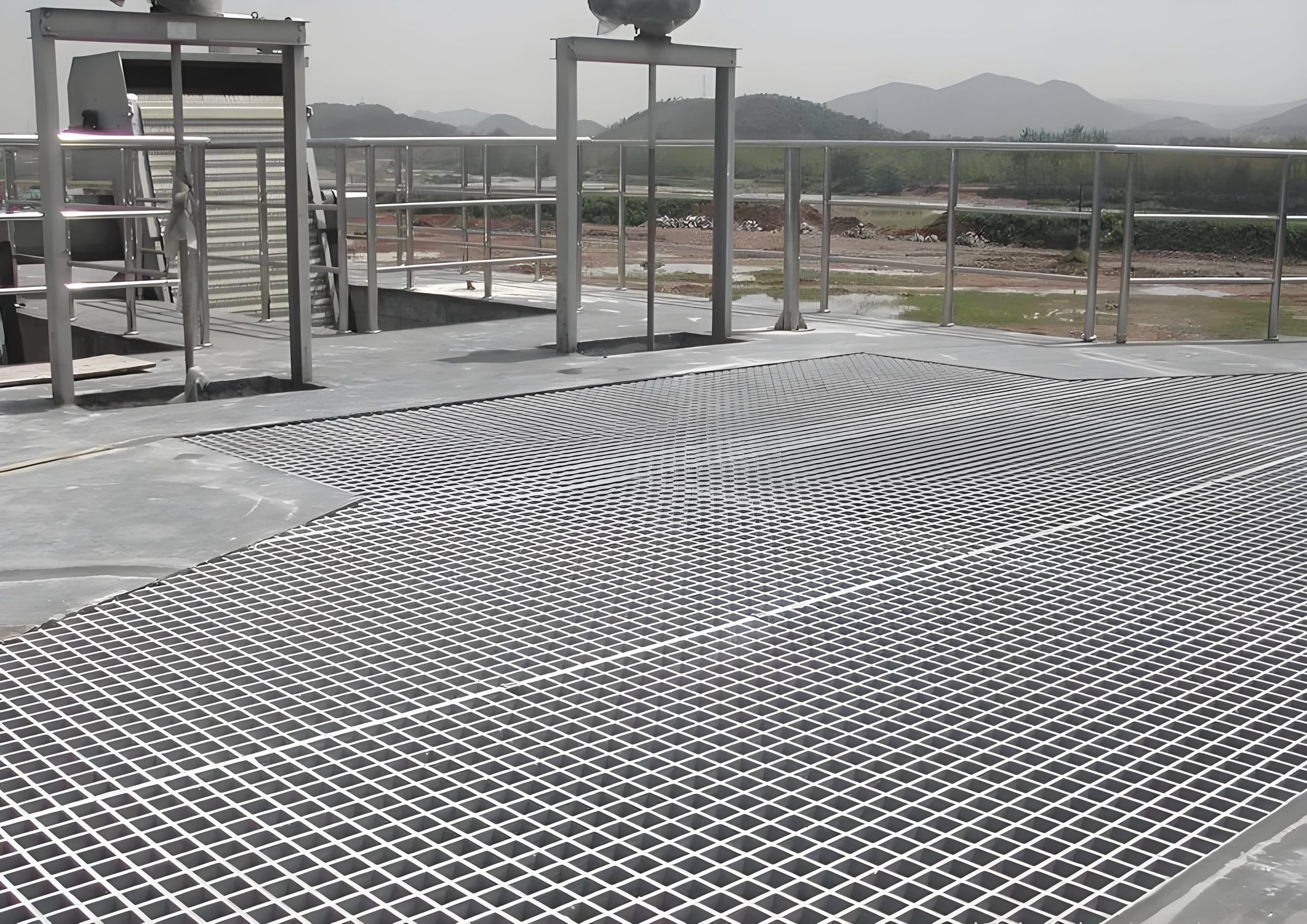
When buying galvanized steel grating, buyers often need to choose between hot-dip galvanizing and electro-galvanizing. Both methods apply zinc to steel, but the process, coating thickness, corrosion resistance, appearance, and application range are different.
Hot-dip galvanized steel grating is usually fabricated first and then immersed in molten zinc. The zinc coating covers bearing bars, cross bars, welded joints, cut edges, and banding areas. This makes it suitable for outdoor, humid, industrial, and long-term service environments.
For platforms, walkways, drainage covers, bridge access, water treatment plants, and outdoor stairs, hot-dip galvanized grating is normally recommended because it provides better corrosion resistance than electro-galvanized grating.
Electro-galvanized grating has a thinner zinc coating applied through an electrochemical process. It usually has a cleaner and brighter appearance, but the corrosion resistance is generally weaker than hot-dip galvanized grating. It may be used for indoor, dry, light-duty, or decorative applications where heavy corrosion protection is not required.
| Item | Hot-Dip Galvanized Steel Grating | Electro-Galvanized Steel Grating |
|---|---|---|
| Coating process | Grating is dipped into molten zinc after fabrication | Zinc is deposited by electrochemical process |
| Coating thickness | Usually thicker | Usually thinner |
| Corrosion resistance | Better for outdoor and industrial use | Suitable for dry indoor or light-duty environments |
| Surface appearance | May have zinc spangle and thicker coating texture | Often smoother and brighter |
| Common use | Walkways, platforms, trench covers, outdoor grating | Indoor panels, decorative grating, light-duty applications |
For most buyers searching for a galvanized steel grating supplier for industrial projects, hot-dip galvanized steel grating is usually the safer and more practical choice, especially where the grating will be exposed to rain, water, humidity, dust, or long-term outdoor conditions.
Bearing bar size and spacing are the most important technical details when buying galvanized steel grating. The bearing bars carry the main load. Their height, thickness, spacing, and span direction determine whether the grating can safely support pedestrians, carts, forklifts, vehicles, or equipment loads.
Bearing bar size is usually expressed as height x thickness, such as 25 x 3 mm, 30 x 3 mm, 30 x 5 mm, 40 x 5 mm, or 50 x 5 mm. A deeper and thicker bearing bar provides higher load capacity, but it also increases weight and price.
Bearing bar spacing is the center-to-center distance between bearing bars. Common spacing includes 25 mm, 30 mm, 34 mm, and 40 mm. Closer spacing means more steel bars per square meter, better load distribution, smaller openings, and higher weight. Wider spacing reduces material cost and increases open area, but it may not be suitable for heavy loads or public walking areas.
Load capacity depends not only on the grating specification but also on the clear span between supports. A panel that works well on a short span may not be suitable for a longer span. For heavy loads, forklift areas, trench covers, or vehicle access zones, the supplier should confirm actual load conditions before recommending a grating size.
| Bearing Bar Size | Relative Load Level | Common Application |
|---|---|---|
| 20 x 3 mm | Light | Light pedestrian access, small covers, indoor walkways |
| 25 x 3 mm | Light to medium | General walkways, light-duty platforms, service areas |
| 30 x 3 mm | Medium | Industrial walkways, standard platforms, drainage covers |
| 30 x 5 mm | Medium to heavy | Factory platforms, stronger trench covers, frequent-use areas |
| 40 x 5 mm | Heavy | Heavy-duty platforms, longer spans, forklift-related areas |
| 50 x 5 mm or larger | Very heavy | Vehicle access, heavy trench covers, demanding industrial floors |
| Bearing Bar Spacing | Weight Effect | Performance Effect | Typical Use |
|---|---|---|---|
| 25 mm | Higher weight | Smaller openings and better walking comfort | Public access, close-mesh walkways, special platforms |
| 30 mm | Medium to high weight | Strong load distribution | Industrial platforms, walkways, trench covers |
| 34 mm | Medium weight | Balanced strength and open area | General galvanized steel grating |
| 40 mm | Lower weight | Larger openings and lower material use | Drainage areas, light-duty grating, economical panels |
Another important buying decision is choosing smooth galvanized steel grating or serrated galvanized steel grating. The difference is mainly on the top surface of the bearing bars. Smooth grating has flat bearing bar tops, while serrated grating has toothed edges for better traction.
Smooth galvanized grating is suitable for dry indoor platforms, general walkways, equipment maintenance areas, and places where slip risk is low. It is usually easier to clean and may be slightly more economical because no serration processing is required.
Serrated galvanized grating is designed for better anti-slip performance. The toothed bearing bar surface increases friction between footwear and the grating surface. It is commonly used for outdoor walkways, wet areas, drainage covers, stair treads, shipyards, water treatment plants, oily platforms, and industrial areas where walking safety matters.
| Comparison Item | Smooth Galvanized Steel Grating | Serrated Galvanized Steel Grating |
|---|---|---|
| Surface form | Flat bearing bar top | Toothed bearing bar top |
| Anti-slip performance | Suitable for dry areas | Better for wet, oily, dusty, or outdoor areas |
| Cleaning | Easier to clean | Serrations may hold more dirt in some conditions |
| Cost | Usually slightly lower | Usually slightly higher due to serration processing |
| Common application | Indoor platforms, dry walkways, equipment floors | Outdoor walkways, stairs, drainage covers, wet industrial areas |
If the project is outdoors or has water, oil, mud, snow, or frequent foot traffic, serrated galvanized steel grating is usually the safer option. If the area is dry and easy cleaning is more important, smooth galvanized grating may be enough.
Galvanized steel grating can be purchased in standard sizes or custom sizes. Standard panels are useful for stock, resale, and simple projects. Custom panels are better for industrial platforms, stairs, drainage covers, bridge walkways, equipment access areas, and projects with drawings.
Standard galvanized grating panels are often produced in regular widths and lengths for easier stock management and cutting. Common panel widths may include 500 mm, 600 mm, 750 mm, 900 mm, 1000 mm, and 1200 mm. Common panel lengths may range from 1000 mm to 6000 mm, depending on factory production capacity, galvanizing tank size, transportation, and installation requirements.
| Common Panel Width | Common Panel Length | Typical Use |
|---|---|---|
| 500 mm | 1000 mm to 6000 mm | Narrow walkways, trench covers, service access |
| 600 mm | 1000 mm to 6000 mm | Drainage covers, maintenance platforms, walkway panels |
| 750 mm | 1000 mm to 6000 mm | Industrial platforms and equipment access areas |
| 900 mm | 1000 mm to 6000 mm | General platform flooring and catwalks |
| 1000 mm | 1000 mm to 6000 mm | Common stock panels and large-area flooring |
| 1200 mm | 1000 mm to 6000 mm | Large panels and cutting stock |
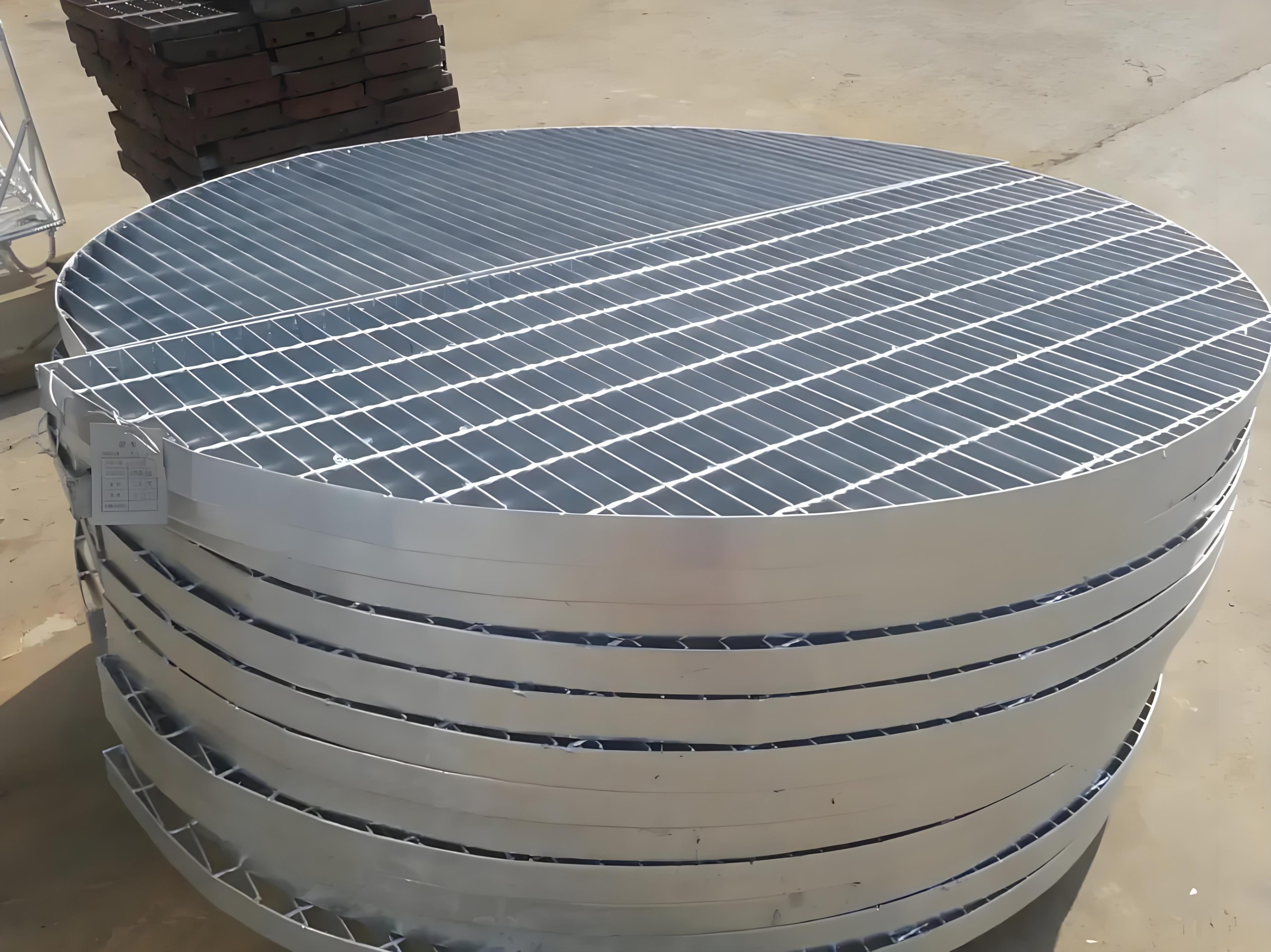
Custom galvanized steel grating is produced according to project drawings. It can include special dimensions, irregular shapes, notches, holes, cut-outs, banding, side plates, lifting holes, toe plates, stair tread nosing, and panel numbering. For engineering projects, custom grating often reduces site cutting and helps avoid installation problems.
| Item | Standard Galvanized Steel Grating | Custom Galvanized Steel Grating |
|---|---|---|
| Best for | Stock, resale, simple platforms, general use | Project drawings, stairs, trench covers, irregular platforms |
| Production time | Usually faster | Needs drawing confirmation and fabrication |
| Site installation | May need cutting or adjustment | Designed to fit site layout |
| Cost | Usually more economical | Higher if many cut-outs and special shapes are required |
| Surface protection | Site cutting may damage galvanized coating | Galvanized after factory fabrication for better edge protection |
Many buyers choose a galvanized steel grating supplier because they need panels made to project drawings. Custom fabrication is one of the most important supplier capabilities, especially for industrial platforms, maintenance walkways, trench covers, stair treads, and equipment areas.
Cut-to-size galvanized grating panels are made according to the required length and width. This helps reduce site cutting, saves installation time, and keeps the galvanized coating more complete because fabrication is completed before hot-dip galvanizing.
Industrial platforms often include pipes, columns, valves, tanks, machines, handrails, and equipment bases. A capable factory can process notches, round openings, rectangular cut-outs, corner cuts, and irregular shapes according to drawings.
Edge banding closes the open ends of bearing bars and cross bars. It improves appearance, handling safety, and structural integrity. Banding is commonly used for platform panels, trench covers, stair treads, drainage grating, and custom-shaped panels.
Toe plates or kick plates may be required around elevated platforms to prevent tools or objects from falling. These plates are usually welded to the grating or support structure according to project drawings.
Galvanized grating stair treads can be supplied with side plates, bolt holes, front nosing, serrated surface, and specific tread dimensions. The supplier should confirm stair width, stringer spacing, hole position, nosing type, and surface requirement before production.
| Custom Option | What It Includes | Why It Matters |
|---|---|---|
| Cut-to-size panels | Custom length and width | Improves fit and reduces site cutting |
| Special shapes | Notches, holes, irregular cuts, round openings | Allows grating to fit pipes, columns, and machines |
| Edge banding | Flat bars welded around panel edges | Improves handling safety and panel appearance |
| Toe plates | Raised plates around platform edges | Improves safety on elevated platforms |
| Stair tread parts | Side plates, bolt holes, nosing, serrated surface | Supports faster stair installation |
| Panel numbering | Marks panels according to layout drawings | Helps installation teams identify each panel quickly |
Most galvanized steel grating is made from carbon steel or mild steel because these materials provide good strength, weldability, and cost performance. After hot-dip galvanizing, carbon steel grating becomes suitable for many outdoor and industrial applications.
Carbon steel is the most widely used material for galvanized grating. It is strong, economical, easy to fabricate, and suitable for welding. It can be used for platforms, walkways, trench covers, stair treads, drainage grating, and heavy-duty industrial flooring.
Mild steel is commonly used in welded bar grating. It is easy to cut, weld, press, and galvanize. For many standard galvanized steel grating panels, mild steel is the practical material choice.
Some engineering projects require specific steel grades according to drawings or standards. For heavy-duty grating, bridge access, vehicle covers, port projects, or power plant applications, the supplier may need to provide material certificates and confirm mechanical properties.
If the project is in a highly corrosive chemical, marine, coastal, food processing, or hygienic environment, stainless steel grating may be considered instead of galvanized carbon steel. The price is higher, but corrosion resistance may be more suitable for special service conditions.
| Material | Main Advantage | Typical Use | Buyer Note |
|---|---|---|---|
| Carbon steel | Strong and economical | Platforms, walkways, trench covers, industrial flooring | Most common material for hot-dip galvanized grating |
| Mild steel | Good fabrication and welding performance | Standard welded grating and stair treads | Suitable for many general projects |
| Structural steel grade | Matches engineering design requirements | Heavy-duty areas, bridges, ports, power plants | Confirm certificate requirements before ordering |
| Stainless steel | Higher corrosion resistance | Marine, chemical, food, and high-corrosion areas | Higher cost but useful in harsh environments |
Galvanized steel grating is used in many industries because it offers load capacity, drainage, ventilation, corrosion resistance, and flexible installation. The correct grating specification depends on the project type and working environment.
Industrial platforms need safe walking surfaces around machines, tanks, boilers, pipe racks, valves, conveyors, and maintenance areas. Galvanized steel grating is used because it is strong, drains quickly, and resists corrosion better than untreated steel.
Walkways and catwalks often need lightweight but strong flooring. Galvanized grating provides access for workers while allowing air, light, water, and dust to pass through. Serrated grating may be selected for outdoor or wet walkways.
Drainage covers need open area for water flow and enough strength for pedestrian, cart, forklift, or vehicle loads. Galvanized steel grating is commonly used for factory drainage, municipal trenches, roadside channels, and outdoor drainage systems.
Galvanized steel grating stair treads are used in industrial stairs, outdoor access systems, towers, platforms, and emergency routes. They may include serrated surface and anti-slip nosing for safer stepping.
Bridge walkways, service platforms, utility covers, municipal access paths, and public drainage areas often use galvanized steel grating because it provides drainage and corrosion resistance under outdoor exposure.
Heavy industrial sites often need grating that can handle moisture, dust, impact, and frequent maintenance traffic. Galvanized steel grating is used in power plants, mines, ports, wastewater treatment plants, chemical facilities, and manufacturing workshops.
| Project Type | Recommended Grating Feature | Key Selection Point |
|---|---|---|
| Industrial platform | Medium or heavy-duty galvanized grating | Load capacity and clear span |
| Outdoor walkway | Serrated hot-dip galvanized grating | Anti-slip surface and corrosion resistance |
| Drainage trench cover | Banded or framed galvanized grating | Water flow, support ledge, removable design |
| Stair tread | Serrated grating with side plates and nosing | Tread size, bolt holes, walking safety |
| Forklift area | Heavy-duty galvanized grating | Wheel load and support structure |
| Municipal project | Custom galvanized grating with safe opening size | Public safety and long-term durability |
Choosing the right galvanized steel grating supplier is one of the most important steps in procurement. The right supplier should understand product specification, load requirements, drawings, fabrication details, galvanizing quality, packing, and delivery. A low price is not enough if the grating does not fit the project or fails to meet load and corrosion requirements.
A reliable supplier should be able to produce welded grating, serrated grating, stair treads, trench covers, heavy-duty panels, standard panels, and custom fabricated grating. For project buyers, the supplier’s ability to process drawings is especially important.
The supplier should help confirm bearing bar size, bar spacing, cross bar spacing, panel dimensions, bearing direction, load requirement, and surface type. If the buyer provides incomplete information, a professional supplier should ask technical questions instead of giving a random price.
Since corrosion protection is a major reason for buying galvanized steel grating, galvanizing quality should be checked carefully. The supplier should control coating coverage, zinc buildup, sharp points, bare areas, clogged openings, and coating damage.
For platforms, trench covers, stairs, and industrial access systems, the supplier should be able to read CAD drawings, prepare panel lists, confirm cut-outs, process banding, and mark panels according to installation layout.
Quality inspection should include raw material checks, welding inspection, dimension control, flatness, coating appearance, panel quantity, and packing condition. A supplier with stable inspection procedures is less likely to create installation problems.
Galvanized steel grating is heavy and can damage its coating during handling if poorly packed. For export orders, strong bundles, steel pallets, clear labels, packing lists, loading photos, and container loading plans are important.
For buyers looking for a factory-based galvanized steel grating supplier, Anping County Chuansen Silk Screen Products Co., Ltd. can be considered when evaluating standard galvanized grating, walkway grating, trench covers, stair treads, and customized steel grating panels. Before ordering, buyers should still confirm specifications, drawings, load requirements, galvanizing requirements, packing method, and delivery terms.
| Supplier Selection Point | What to Confirm | Why It Matters |
|---|---|---|
| Production range | Standard grating, serrated grating, heavy-duty grating, stair treads, trench covers | Shows whether the supplier can support different project needs |
| Technical ability | Load, span, bar size, spacing, bearing direction | Reduces risk of wrong specification |
| Drawing support | CAD reading, panel list, cut-outs, numbering | Improves installation accuracy |
| Galvanizing control | Coating coverage, zinc buildup, surface defects | Affects corrosion resistance and appearance |
| Quality inspection | Material, welding, dimension, flatness, coating, packing | Helps avoid site problems and quality disputes |
| Export packing | Strong bundles, labels, pallets, loading plans | Reduces damage during transportation |
Correct installation and basic maintenance help galvanized steel grating perform safely for a long time. Even a good grating panel can create problems if it is installed in the wrong direction, poorly supported, loosely fixed, or damaged during site cutting.
The bearing bars must span between supports. This is one of the most important installation rules. If the panel is installed with the bearing bars in the wrong direction, the load capacity can be greatly reduced.
Galvanized steel grating can be fixed with clips, welding, bolts, or frames. Clips are useful when panels need to be removable. Welding provides strong permanent fixing, but the damaged galvanized coating must be repaired after welding. Bolting is common for stair treads, framed covers, and heavy-duty applications.
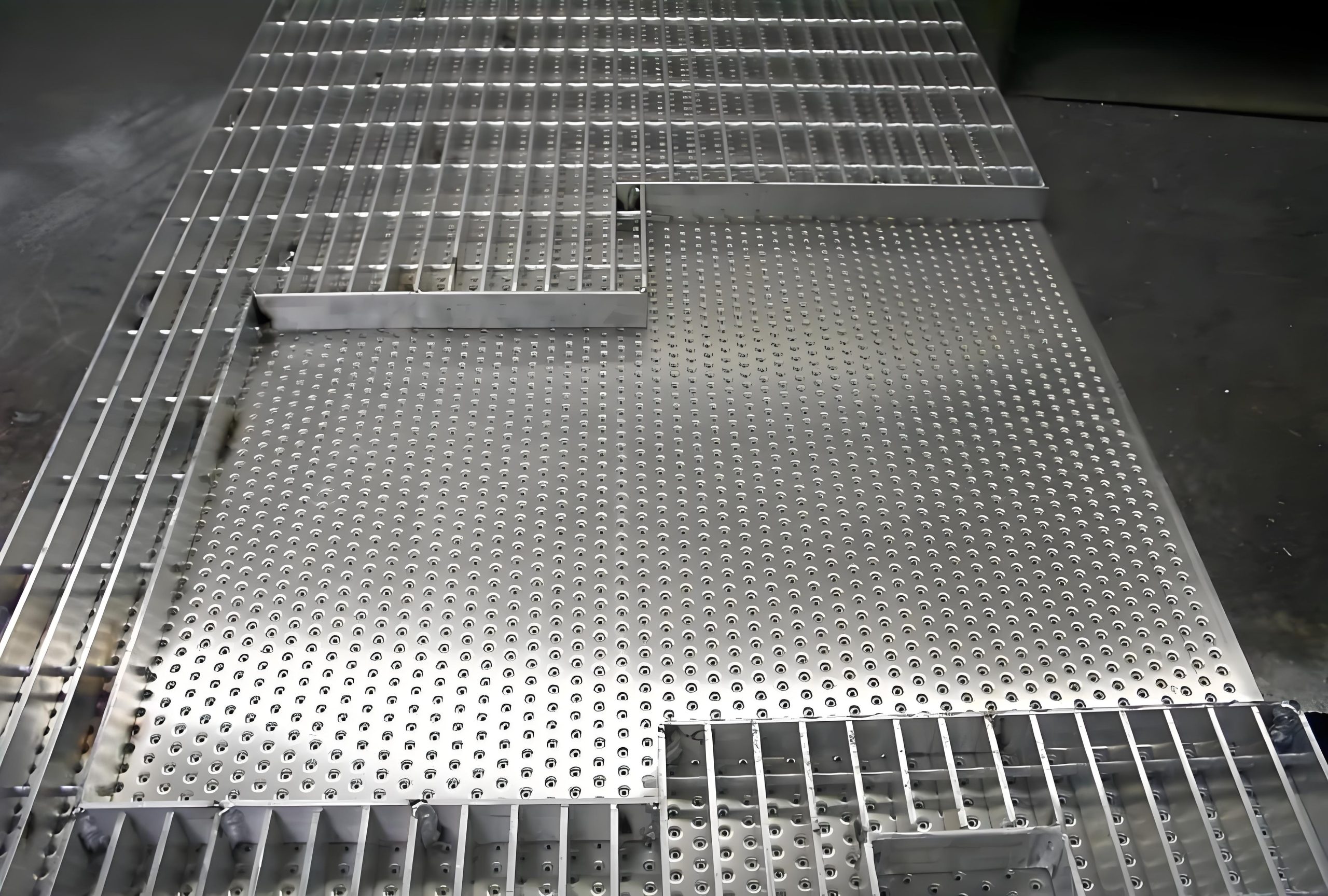
The support ledge or steel beam must be strong enough and wide enough to carry the grating safely. For trench covers and vehicle areas, the frame design is just as important as the grating specification.
Hot-dip galvanized grating is relatively low-maintenance, but regular inspection is still useful. Check for loose clips, coating damage, bent panels, blocked drainage openings, excessive corrosion, and movement under load. In wet or corrosive environments, damaged zinc coating should be repaired in time.
| Installation or Maintenance Item | Recommended Practice |
|---|---|
| Bearing bar direction | Install bearing bars so they span between supports |
| Panel fixing | Use clips, bolts, welding, or frames according to site conditions |
| Coating repair | Repair areas damaged by welding, cutting, or impact |
| Drainage openings | Keep openings clear of mud, debris, and industrial residue |
| Fasteners | Check clips and bolts regularly in vibration or vehicle areas |
| Heavy traffic areas | Inspect for deformation, movement, noise, and support wear |
In real projects, the value of a reliable galvanized steel grating supplier often appears before the product is shipped. A supplier with enough experience can identify missing information, correct unsuitable specifications, optimize panel layout, reduce site cutting, and prevent installation delays.
A buyer needs galvanized steel grating for an outdoor industrial platform, several drainage trench covers, and stair treads. At first, the buyer only provides total square meters and asks for the lowest price. If the supplier quotes only a standard light-duty panel, the product may not match the platform span, trench load, or stair installation requirements.
A responsible supplier will ask for project drawings or at least confirm the clear span, load condition, bearing bar direction, grating surface, trench width, stair tread size, installation method, and corrosion environment. For wet outdoor areas, the supplier may recommend serrated hot-dip galvanized grating. For trench covers exposed to forklift traffic, the supplier may recommend heavier bearing bars and stronger frames.
With the right specification, panels arrive closer to the required installation size. Panel numbers match the layout drawing. Cut-outs are already processed before galvanizing. Stair treads have correct side plates and bolt holes. Trench covers sit properly on support frames. Workers spend less time cutting and modifying panels on site, and the galvanized coating remains better protected.
| Project Issue | Risk If Supplier Is Not Experienced | Value of a Reliable Supplier |
|---|---|---|
| Only total area is provided | Wrong bar size or spacing may be quoted | Supplier asks for load, span, and drawing details |
| Outdoor platform | Plain surface may be slippery in rain | Serrated galvanized grating can be recommended |
| Drainage trench cover | Panel may be too weak for carts or forklifts | Supplier checks trench width and load condition |
| Stair tread installation | Wrong bolt holes cause site drilling and coating damage | Factory confirms side plate and hole position before production |
| Complex platform layout | Site cutting increases labor and damages coating | Custom panels and cut-outs are fabricated before galvanizing |
This is why buying galvanized steel grating should not be treated as a simple price comparison. A suitable supplier can reduce hidden costs in design review, fabrication accuracy, coating protection, installation speed, and long-term maintenance.
Where can I buy galvanized steel grating?
You can buy galvanized steel grating from a steel grating factory, industrial metal supplier, construction material distributor, or export manufacturer. For project-based orders, it is usually better to work with a supplier that can confirm bearing bar size, spacing, load capacity, panel drawings, galvanizing requirements, and custom fabrication details before production.
What should I provide when requesting a galvanized steel grating quote?
When requesting a quote, provide the grating type, material, bearing bar size, bearing bar spacing, cross bar spacing, panel size, quantity, surface type, galvanizing requirement, load condition, clear span, installation method, and drawings if available. If you need stair treads, trench covers, or cut-outs, include side plate details, bolt holes, support frame dimensions, and panel numbering requirements.
How do I choose between standard and custom galvanized steel grating?
Choose standard galvanized steel grating when the project is simple, rectangular, and does not need special openings. Choose custom galvanized steel grating when panels must match platform drawings, drainage trenches, stairs, pipes, columns, machines, or irregular structures. Custom grating may cost more at the factory stage, but it often reduces site cutting, installation time, and coating damage.
