
Serrated bar grating factory price depends on material grade, bearing bar size, mesh spacing, load capacity, surface treatment, panel dimensions, processing details, order quantity, and export packaging requirements. In most factory quotations, serrated bar grating is priced per square meter, per piece, or by project drawing. Compared with ordinary smooth bar grating, serrated bar grating usually costs slightly more because the bearing bars require additional tooth processing to improve slip resistance. For walkways, platforms, stair treads, drain covers, industrial floors, and outdoor access areas, buyers should compare not only the unit price but also load performance, safety requirements, corrosion resistance, fabrication accuracy, and long-term maintenance cost.
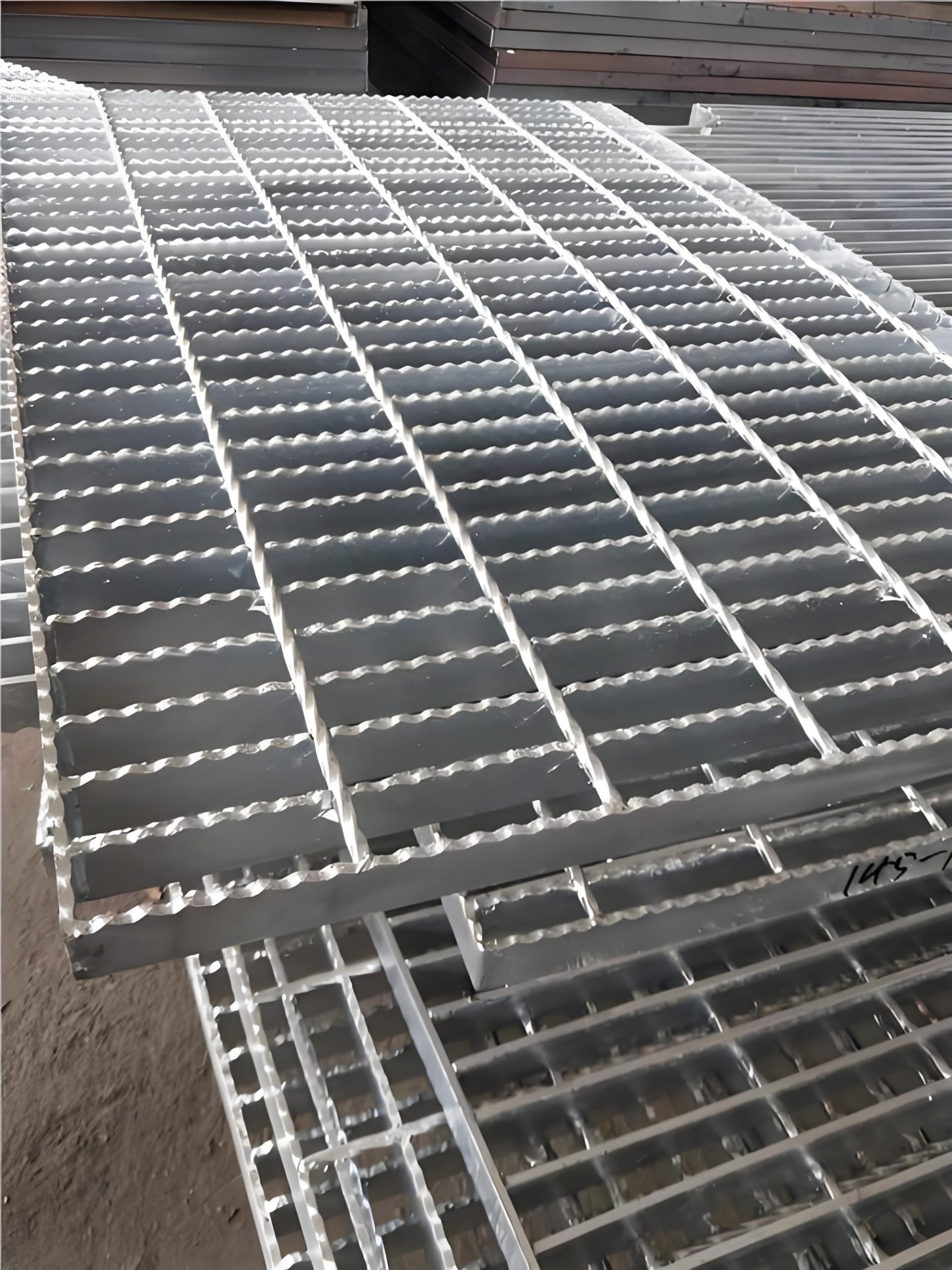
Serrated bar grating is a steel or metal grating panel made from load-bearing bars with toothed or notched upper edges. These serrations increase traction under wet, oily, muddy, dusty, or outdoor conditions. Because of this anti-slip surface, serrated bar grating is widely used in industrial walkways, plant platforms, stair treads, drainage covers, offshore structures, wastewater treatment facilities, power plants, chemical plants, and machinery access areas.
From a factory pricing point of view, serrated bar grating is not a single standard product with one fixed price. The same product name may refer to many different specifications. A light-duty carbon steel serrated grating panel for a pedestrian walkway will cost much less than a heavy-duty galvanized serrated grating panel designed for vehicle loading. A standard welded serrated grating panel will also have a different price from a stainless steel press-locked serrated grating with custom cutouts and polished edges.
Factory price is usually calculated from several cost layers: raw material weight, bar processing, welding or locking process, panel cutting, banding, surface treatment, inspection, packaging, and export documentation. For a clear quotation, the buyer should provide drawings or at least basic specifications such as panel size, bearing bar size, spacing, material, surface treatment, load requirement, and quantity.
| Price Factor | How It Affects Serrated Bar Grating Price |
|---|---|
| Material | Carbon steel is usually lower cost; stainless steel and aluminum are higher |
| Bearing bar size | Higher and thicker bars increase weight and load capacity |
| Bar spacing | Closer spacing uses more bearing bars per square meter |
| Serrated surface | Additional tooth processing increases manufacturing cost |
| Manufacturing type | Welded, press-locked, swage-locked, and riveted grating have different costs |
| Surface treatment | Hot-dip galvanizing, painting, pickling, passivation, or polishing adds cost |
| Custom processing | Cutting, banding, notching, openings, and stair nosing increase labor cost |
| Order quantity | Bulk orders usually reduce unit factory price |
| Packaging and shipping | Export packing, palletizing, container loading, and documents affect final cost |
Serrated bar grating factory price is commonly calculated per square meter or per piece. For general purchasing reference, carbon steel serrated bar grating is usually the most economical option. Hot-dip galvanized serrated bar grating costs more than untreated carbon steel because of zinc coating and galvanizing handling. Stainless steel serrated bar grating is significantly higher in price due to raw material cost, especially when 316 or 316L stainless steel is required. Aluminum serrated bar grating is also higher than ordinary carbon steel but offers lower weight and good corrosion resistance in many environments.
As a general factory pricing reference, serrated bar grating may range from economical pedestrian-grade panels to much higher-priced heavy-duty or stainless steel panels. A simple standard carbon steel serrated welded grating panel may be quoted at a relatively low price per square meter, while a custom stainless steel serrated grating with close spacing, thick bearing bars, cutouts, edge banding, and special surface treatment can cost several times more.
The practical answer is: serrated bar grating price can only be accurately confirmed after the factory checks the material, bearing bar size, spacing, panel dimensions, load requirement, finish, quantity, and drawing details.
| Serrated Bar Grating Type | Typical Price Level | Common Use |
|---|---|---|
| Untreated carbon steel serrated grating | Lower | Indoor dry platforms, temporary access, low-corrosion areas |
| Painted carbon steel serrated grating | Low to medium | Indoor industrial platforms and general maintenance walkways |
| Hot-dip galvanized serrated grating | Medium | Outdoor walkways, stairs, platforms, drainage covers |
| Stainless steel 304 serrated grating | High | Food processing, water treatment, clean industrial areas |
| Stainless steel 316 serrated grating | Higher | Marine, chemical, chloride, and aggressive corrosion environments |
| Aluminum serrated grating | Medium to high | Lightweight platforms, marine access, rooftop systems |
| Heavy-duty serrated grating | High | Vehicle areas, heavy equipment platforms, industrial loading zones |
For international buyers, the quoted factory price may not include sea freight, customs duty, destination port charges, local delivery, taxes, or installation. Therefore, when comparing quotations from different suppliers, buyers should confirm whether the price is EXW, FOB, CFR, CIF, DAP, or another trade term.
Serrated bar grating is often quoted in two ways: price per square meter and price per piece. Both methods are valid, but they are used in different purchasing situations.
Price per square meter is commonly used when the project involves many panels of similar specifications. This method helps buyers compare material cost and production cost across different suppliers. It is also useful for early budget planning when detailed panel drawings are not yet finalized.
However, square meter pricing can be misleading if two quotations do not use the same specification. A 30 mm × 3 mm serrated grating with wide spacing cannot be directly compared with a 40 mm × 5 mm serrated grating with close spacing. Even if both prices are shown per square meter, the steel weight, load capacity, service life, and safety performance may be completely different.
Price per piece is more accurate when panel size, cutting shape, edge banding, notching, openings, stair nosing, fixing holes, or frames are involved. Many grating projects are supplied according to layout drawings, and each panel may have a different mark number, size, and processing detail.
For example, a rectangular serrated grating panel without cutouts is easier and cheaper to produce than a panel with pipe openings, corner notches, welded toe plates, and custom fixing holes. In this case, per-piece pricing gives a clearer cost picture.
| Quotation Method | Best Used For | Main Advantage |
|---|---|---|
| Per square meter | Standard panels, early budget, repeated specifications | Easy to compare general unit cost |
| Per piece | Custom panels, stair treads, drain covers, drawing-based projects | More accurate for real fabrication cost |
| Per project | Large industrial platforms or full grating layouts | Includes panel marks, drawings, packing, and export planning |
| By weight | Some bulk steel grating orders | Useful when material weight is the main price basis |
Material selection is one of the biggest factors affecting serrated bar grating factory price. The surface may be serrated in all material options, but raw material cost, corrosion resistance, fabrication method, and finishing process are different.
Carbon steel serrated bar grating is usually the most cost-effective option. It has good strength, wide availability, and efficient production. It is suitable for industrial platforms, walkways, stairs, trench covers, and general access flooring where corrosion exposure is limited or surface protection is added.
Untreated carbon steel grating is normally used only in dry indoor environments or where temporary use is acceptable. For most outdoor or industrial projects, carbon steel serrated grating is finished by hot-dip galvanizing or painting.
Hot-dip galvanized serrated bar grating is one of the most common choices for outdoor industrial use. After fabrication, the entire panel is immersed in molten zinc, forming a protective coating over bearing bars, cross bars, welds, cut edges, and banding areas.
The factory price is higher than untreated carbon steel because galvanizing adds coating cost, handling cost, inspection cost, and sometimes correction work after galvanizing. However, galvanized serrated grating often provides better long-term value in outdoor service because it reduces corrosion maintenance.
Stainless steel serrated grating has a much higher raw material cost than carbon steel. It is selected where corrosion resistance, hygiene, chemical resistance, or long service life is more important than low initial price.
304 stainless steel is suitable for many general corrosion environments. 316 and 316L stainless steel are often selected for marine, chloride, chemical, and wastewater exposure. Stainless steel may also require pickling, passivation, bead blasting, or polishing depending on project requirements.
Aluminum serrated grating is lighter than steel and is useful where reducing dead weight is important. It is used in rooftop access, marine structures, lightweight platforms, wastewater facilities, and some architectural applications.
Although aluminum is lighter, it does not always mean the finished grating is cheaper. Aluminum material cost, profile design, swage-locking process, surface finish, and load requirement all affect the final price.
| Material Type | Price Level | Main Advantage | Typical Application |
|---|---|---|---|
| Carbon steel | Low | Strong and economical | Indoor platforms, general industrial flooring |
| Hot-dip galvanized steel | Medium | Good outdoor corrosion protection | Walkways, stair treads, drainage covers, platforms |
| 304 stainless steel | High | General corrosion resistance and cleaner appearance | Food plants, water treatment, clean production areas |
| 316 stainless steel | Higher | Better chloride and chemical resistance | Marine, chemical, wastewater, coastal projects |
| Aluminum | Medium to high | Lightweight and corrosion resistant | Rooftop access, marine walkways, lightweight platforms |
The bearing bar is the main load-carrying component of serrated bar grating. Its height, thickness, and spacing have a direct effect on both price and structural performance.
Higher bearing bars generally provide greater bending resistance and allow the grating to span longer distances or carry heavier loads. A 40 mm high bearing bar is normally stronger than a 25 mm high bearing bar of the same thickness and material.
However, higher bars use more steel. This increases weight, raw material cost, galvanizing cost, shipping weight, and sometimes handling difficulty. For this reason, the factory should choose a bearing bar height that meets the load requirement without unnecessary overspecification.
Thicker bearing bars increase strength, impact resistance, welding area, and durability. They are often used for heavy-duty platforms, trench covers, industrial loading areas, or locations exposed to equipment movement.
Common thicknesses include 3 mm, 4 mm, 5 mm, and heavier custom sizes. A 5 mm thick bearing bar costs more than a 3 mm thick bearing bar, but it may be necessary for load safety or longer service life.
Bearing bar spacing determines how many bearing bars are used per meter of grating width. Closer spacing means more steel, more welding or locking points, and higher factory price. Wider spacing reduces material usage but also changes load distribution, walking feel, and object passage.
Typical bearing bar spacing may include 30 mm, 32 mm, 34.3 mm, 40 mm, or other project-specific centers. The spacing must match the load requirement, safety standard, walking condition, and whether small objects may fall through the openings.
| Specification Change | Price Impact | Performance Impact |
|---|---|---|
| Higher bearing bars | Higher cost | Better span and load capacity |
| Thicker bearing bars | Higher cost | Improved strength and durability |
| Closer bearing bar spacing | Higher cost | More support points and smaller openings |
| Wider bearing bar spacing | Lower cost | Larger openings and lower material weight |
| Custom bar profile | Higher cost | May meet special load or surface requirements |
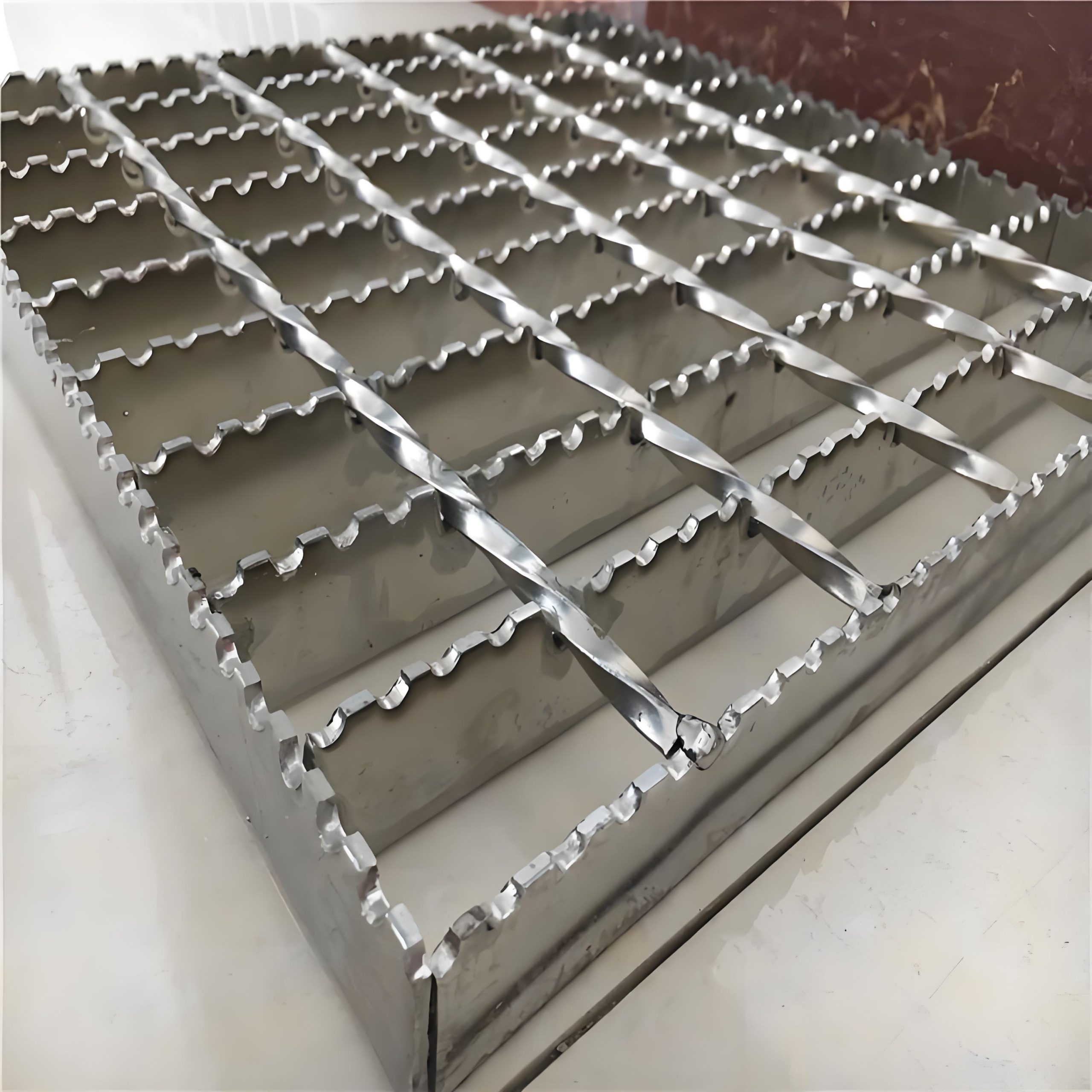
Serrated bar grating costs more than ordinary smooth bar grating mainly because the bearing bars require additional tooth processing. Before assembly, the top edge of each bearing bar must be serrated by cutting, punching, rolling, or other forming methods depending on factory equipment and bar profile.
The serration process must be controlled carefully. Teeth should be consistent, clean, and suitable for walking. Poor serration quality can affect appearance, galvanizing coverage, walking comfort, and slip resistance. If the serrations are too shallow, the anti-slip effect may be limited. If they are too aggressive, the surface may feel uncomfortable or difficult to clean.
Standard serrated bearing bars are more economical because factories can produce them with existing tools and regular production settings. For most walkway and platform projects, standard serration is sufficient.
Custom serration patterns may be requested for special industrial conditions, but they usually increase tooling cost, production time, and minimum order requirements. If the project does not require a special serration profile, standard factory serration is normally more cost-effective.
Serration processing can create small material waste and may slow down production compared with plain bars. For large orders, the factory can reduce unit cost by producing serrated bars in batches. For very small orders, setup and processing time may increase the unit price.
| Serration Factor | Cost Influence |
|---|---|
| Standard serration | Lower processing cost and faster production |
| Deep serration | May increase tooling wear and processing difficulty |
| Custom tooth shape | Higher setup and production cost |
| Thicker bearing bars | May require more force or slower processing |
| Small order quantity | Higher unit cost due to setup time |
| Large batch production | Better efficiency and lower average processing cost |
Serrated bar grating can be manufactured by different methods. Each method has different structural characteristics, appearance, production efficiency, and cost level.
Welded serrated bar grating is one of the most common industrial types. Cross bars are welded to serrated bearing bars to form a strong, rigid panel. It is widely used for platforms, walkways, stair treads, drainage covers, machinery floors, and industrial access systems.
This type is generally cost-effective for carbon steel and galvanized steel grating. It is suitable for large production quantities and standard industrial specifications.
Press-locked serrated bar grating is produced by pressing cross bars into pre-slotted bearing bars. It has a neat appearance and can be used where both function and visual quality matter.
The price is usually higher than standard welded grating because slotting, pressing, alignment, and finishing require more processing control. It is often used in platforms, architectural flooring, facades, ventilation panels, and custom access areas.
Swage-locked serrated grating is commonly used for aluminum or stainless steel grating systems. Cross bars are mechanically locked into bearing bars by a swaging process. This method provides a clean and stable structure without traditional welded cross bars.
Its price depends heavily on material, bar profile, panel size, and production quantity. Aluminum swage-locked serrated grating can be cost-effective where lightweight construction is required, even if the unit material cost is higher than carbon steel.
Riveted grating uses rivets or mechanically connected bars to create a durable grating structure. It is often used in applications requiring high impact resistance, rolling loads, or special structural performance.
Riveted serrated grating normally costs more than standard welded grating because it requires additional components and more complex assembly. It is not always necessary for general pedestrian walkways, but it may be useful for special heavy-duty service.
| Manufacturing Type | Typical Price Level | Common Use |
|---|---|---|
| Welded serrated grating | Lower to medium | Industrial platforms, walkways, stair treads |
| Press-locked serrated grating | Medium to high | Architectural flooring, clean appearance platforms |
| Swage-locked serrated grating | Medium to high | Aluminum and stainless steel access systems |
| Riveted serrated grating | High | Special heavy-duty or impact applications |
Standard mesh sizes are usually more economical than custom specifications because raw materials, tooling, welding settings, and production procedures are already established. Custom mesh sizes may be necessary for special load, drainage, safety, or project matching requirements, but they usually increase unit price.
Standard serrated bar grating usually uses common bearing bar spacing and cross bar spacing. These standard options are easier to produce, easier to inspect, and easier to combine with existing stock materials.
For many industrial walkway projects, standard mesh sizes provide a practical balance between cost, strength, drainage, ventilation, and walking safety.
Custom mesh may be required when the project has special load requirements, small object passage limits, heel-safe requirements, architectural appearance needs, or replacement panel dimensions that must match existing structures.
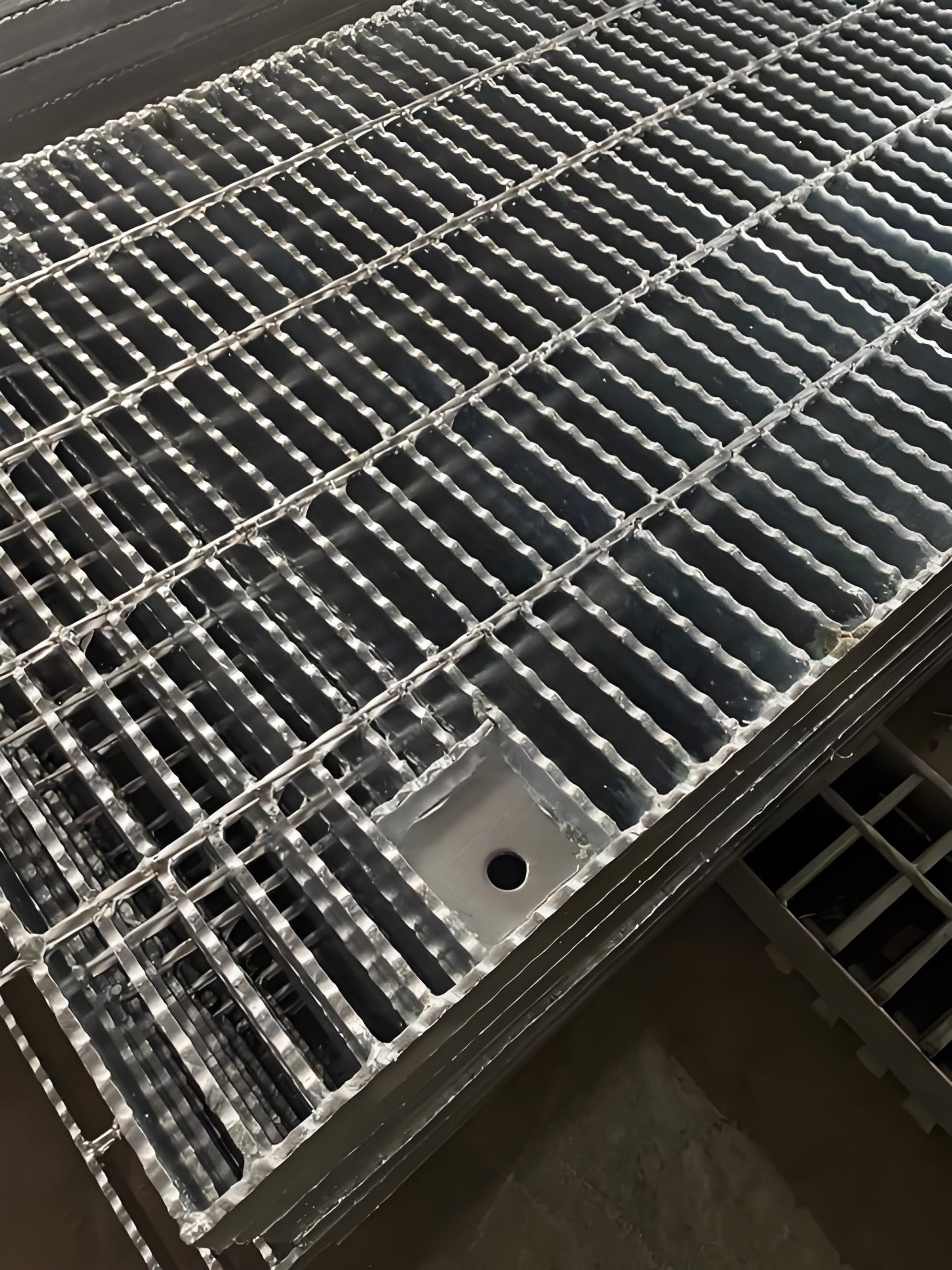
Custom mesh requires more production planning. The factory may need to adjust cross bar spacing, bearing bar layout, cutting plan, welding equipment, and panel drawings. These changes can increase labor cost and production time.
| Specification Type | Price Level | Best For |
|---|---|---|
| Standard mesh | Lower | General walkways, platforms, stair treads, industrial flooring |
| Close mesh | Higher | Pedestrian safety, small object control, special walkway requirements |
| Heavy-duty mesh | Higher | Vehicle loads, machinery areas, trench covers |
| Custom drawing mesh | Higher | Replacement panels, project-specific layout, special applications |
Load capacity is another major factor in serrated bar grating price. The heavier the load requirement, the stronger the bearing bars must be. Stronger grating usually means more steel weight and higher cost.
Light-duty serrated grating is mainly used for pedestrian access, light maintenance platforms, small walkways, and areas with short spans. It uses smaller bearing bars and wider spacing than heavier grating types.
This option is economical, but it should not be used where heavy equipment, carts, vehicles, or large concentrated loads are expected.
Standard-duty serrated grating is suitable for many industrial platforms, stair treads, catwalks, and factory walkways. It provides a balance of load capacity, safety, and cost.
For most industrial buyers, standard-duty galvanized serrated bar grating is a common choice because it offers anti-slip performance and outdoor corrosion protection at a reasonable factory price.
Heavy-duty serrated grating uses deeper and thicker bearing bars. It may also require closer spacing, stronger edge banding, reinforced frames, or special support design.
It is used for forklift areas, vehicle trench covers, heavy machinery platforms, loading zones, industrial drain covers, and areas subject to high concentrated loads. Heavy-duty serrated grating has a higher price because of increased steel weight, stronger fabrication requirements, and more demanding inspection.
| Load Grade | Price Level | Typical Application |
|---|---|---|
| Light-duty | Lower | Pedestrian walkways, light access platforms |
| Standard-duty | Medium | Industrial platforms, stairs, plant walkways |
| Heavy-duty | High | Vehicle areas, trench covers, machinery platforms |
Surface treatment affects both the initial factory price and the long-term service cost of serrated bar grating. The correct finish should be selected according to the working environment, corrosion exposure, appearance requirements, and maintenance plan.
Hot-dip galvanizing is the most common surface treatment for carbon steel serrated bar grating used outdoors. It protects the steel from atmospheric corrosion and covers fabricated areas such as welds, cut edges, banding, and openings.
Galvanizing cost is affected by steel weight, panel size, zinc consumption, batch quantity, drainage design, and post-galvanizing inspection. Serrated surfaces have more edges and small recesses, so good cleaning and zinc drainage are important.
Painting can be used for indoor areas, color identification, or moderate corrosion protection. It is usually less expensive than galvanizing at the beginning, but it may require more maintenance over time.
Painted serrated grating should be inspected carefully because coatings on sharp teeth may wear faster under foot traffic.
Stainless steel serrated grating may be pickled and passivated after welding to remove heat tint and improve corrosion resistance. This is especially important for chemical, food, marine, and clean industrial environments.
Pickling and passivation add cost, but they help preserve stainless steel performance after fabrication.
Polished stainless steel serrated grating is less common than smooth stainless grating because serrations are more difficult to polish evenly. When required, polishing can increase the price significantly.
| Surface Treatment | Cost Level | Suitable Environment |
|---|---|---|
| Untreated | Lowest | Dry indoor or temporary use |
| Painted | Low to medium | Indoor industrial areas and color-coded zones |
| Hot-dip galvanized | Medium | Outdoor platforms, stairs, walkways, drainage covers |
| Pickled and passivated stainless steel | High | Chemical, food, marine, and clean environments |
| Polished stainless steel | Higher | Special appearance or cleanability requirements |
Panel processing has a strong impact on serrated bar grating price. A standard rectangular panel is easier to produce than a custom panel with many openings, angled cuts, notches, and reinforced edges.
Larger panels may reduce installation joints, but they are heavier and more difficult to handle, galvanize, pack, and transport. Oversized panels may require special production planning and may not fit efficiently into containers.
Smaller panels are easier to install and replace, but too many small panels can increase cutting, banding, and marking cost.
Straight cutting is usually simple. Angled cutting, curved cutting, pipe openings, column notches, and irregular shapes require more labor and may create more material waste.
If the buyer provides CAD drawings or clear panel layouts, the factory can optimize cutting and reduce unnecessary waste.
Banding means welding flat bars around the edges of the grating panel. It improves appearance, protects the bearing bar ends, and helps distribute edge loads. Most custom panels, stair treads, drain covers, and removable covers require banding.
Load banding may be stronger than normal edge banding and can increase cost when the panel carries concentrated loads.
Notches and openings are often required for pipes, columns, equipment bases, bolts, handles, frames, and drainage structures. These details increase fabrication time and should be shown clearly on drawings.
Serrated stair treads may include checker plate nosing, perforated nosing, abrasive nosing, or reinforced front edges. Nosing improves visibility and safety, but it also adds material and welding cost.
| Processing Item | Price Impact | Reason |
|---|---|---|
| Straight rectangular cutting | Low | Simple and efficient fabrication |
| Edge banding | Medium | Adds material and welding work |
| Pipe openings | Medium to high | Requires cutting, layout checking, and reinforcement if needed |
| Corner notches | Medium | Increases manual processing |
| Toe plates | High | Adds vertical plate material and welding |
| Stair tread nosing | Medium to high | Adds safety edge and extra fabrication |
| Custom frames | High | Requires additional steel and fitting work |
Serrated bar grating is selected mainly because it improves safety in areas where smooth metal surfaces may become slippery. Different applications have different pricing structures because the required load capacity, dimensions, processing, and installation details vary.
Serrated grating walkways are used in factories, power plants, warehouses, refineries, water treatment plants, ports, and outdoor structures. Walkway grating usually requires good slip resistance, suitable bearing bar spacing, secure fixing clips, and corrosion protection.
Factory price for walkway grating is often calculated per square meter when panel specifications are repeated. Custom walkway layouts with many panel marks may be quoted per project.
Industrial platforms may carry workers, tools, maintenance equipment, and occasional concentrated loads. Platform grating should be selected according to span, load, safety requirement, and support structure.
Platform projects often require layout drawings, panel numbering, edge banding, cutouts around columns, toe plates, and installation clips. These details increase the total project price compared with simple standard panels.
Serrated bar grating stair treads are commonly supplied with side plates, bolt holes, and front nosing. They are normally priced per piece because each tread has a specific width, length, side plate design, and nosing type.
The price depends on tread size, bearing bar specification, stair nosing, side plate thickness, hole pattern, material, and surface treatment.
Serrated grating drain covers are used over drainage channels, trenches, cable pits, wastewater channels, and industrial floor openings. They may require heavier bearing bars than normal walkway panels, especially when carts, forklifts, or vehicles pass over them.
Drain cover prices are often quoted per piece because width, length, frame design, bearing direction, load capacity, lifting holes, and edge details vary from project to project.
| Application | Common Pricing Method | Important Cost Factors |
|---|---|---|
| Walkways | Per square meter or per project | Panel size, bar spacing, galvanizing, clips |
| Platforms | Per project or per panel | Load, cutouts, toe plates, layout drawings |
| Stair treads | Per piece | Side plates, nosing, bolt holes, tread size |
| Drain covers | Per piece | Load grade, frame, lifting details, bearing direction |
Order quantity has a direct effect on serrated bar grating factory price. Larger quantities allow the factory to purchase raw materials more efficiently, reduce setup time per panel, optimize cutting plans, and arrange production in batches.
Small orders are common for replacement panels, samples, maintenance projects, or urgent repairs. The unit price is usually higher because setup, drawing review, material preparation, and packaging are spread across a small quantity.
For small orders, factories may also have a minimum order value to cover production and handling costs.
Medium orders usually include several panels or a complete walkway section. The factory can improve material utilization and production efficiency, so the unit price may be more competitive than a small order.
Bulk orders normally receive better factory pricing. Large quantities of the same specification are easier to produce continuously. Bulk orders also allow better container loading and lower packaging cost per square meter.
MOQ depends on material type, specification, serration profile, surface treatment, and whether the product is standard or custom. Standard galvanized serrated grating may have a more flexible MOQ, while custom stainless steel or special serrated profiles may require a higher minimum quantity.
| Order Type | Unit Price Trend | Reason |
|---|---|---|
| Sample order | Highest | Setup and handling cost are high per piece |
| Small maintenance order | High | Limited quantity and possible custom processing |
| Medium project order | Moderate | Better production planning and material use |
| Bulk factory order | Lower | Batch production and optimized cutting |
| Container order | More competitive | Efficient packing and shipping arrangement |
For export orders, the final cost is not only the serrated bar grating factory price. Packaging, inland transport, port charges, sea freight, insurance, customs documents, and destination charges may all affect the buyer’s landed cost.
Serrated grating panels are usually packed in steel straps, pallets, wooden supports, or custom bundles depending on size, weight, surface treatment, and shipping method. Galvanized or stainless steel grating should be packed to reduce coating damage, rubbing, and deformation during transportation.
Stair treads, small panels, and stainless steel grating may require more careful separation and protection. Export packaging must also consider forklift handling, container loading, unloading safety, and moisture exposure.
Heavy grating orders are usually shipped by sea. The freight cost depends on total weight, volume, destination port, container type, loading method, and shipping season.
For urgent replacement panels or small quantities, air freight may be possible, but it is usually much more expensive due to the weight and size of metal grating.
Common export documents may include commercial invoice, packing list, bill of lading, certificate of origin, material certificate, galvanizing certificate, inspection report, and other documents required by the buyer or destination market.
To receive an accurate quotation, buyers should provide enough technical information. If the inquiry only says “serrated bar grating price,” the factory can only give a rough reference. A serious project quotation needs drawings or full specifications.
| Information Needed for Quotation | Example Detail |
|---|---|
| Material | Carbon steel, galvanized steel, 304 stainless steel, 316 stainless steel, aluminum |
| Surface type | Serrated bearing bars |
| Bearing bar size | 30 mm × 5 mm, 40 mm × 5 mm, or custom size |
| Bar spacing | Bearing bar spacing and cross bar spacing |
| Panel size | Length, width, quantity, bearing direction |
| Load requirement | Pedestrian load, trolley load, forklift load, vehicle load |
| Surface treatment | Hot-dip galvanized, painted, pickled, passivated, polished |
| Processing details | Banding, cutouts, openings, notches, toe plates, stair nosing |
| Packaging requirement | Bundle packing, pallet packing, export wooden packing |
| Trade term | EXW, FOB, CFR, CIF, DAP, or other requested term |
When buyers compare serrated bar grating prices from different factories, the lowest unit price is not always the best choice. Two quotations may look similar, but the specifications may not be equal.
A lower price may be based on thinner or lower bearing bars. This can reduce load capacity and service life. Buyers should always compare bearing bar height, thickness, spacing, and material grade.
Hot-dip galvanizing, painting, and stainless steel finishing are not the same. A quotation without galvanizing may look cheaper, but it may not be suitable for outdoor use.
Some suppliers may quote only standard rectangular panels and exclude cutouts, banding, stair nosing, clips, frames, or export packing. These missing items may become additional costs later.
Theoretical weight is a useful way to check whether two grating quotations are based on similar specifications. If one price is much lower, the steel weight may also be lower.
Fast delivery may be important for maintenance or construction schedules. A low price with a long or uncertain delivery time may not be suitable for urgent projects.
A reliable factory should be able to provide drawings, material confirmation, production photos, inspection support, packaging details, and export documents when required.
| Quotation Check Point | Why It Matters |
|---|---|
| Material grade | Controls strength, corrosion resistance, and cost |
| Bearing bar size | Determines load capacity and steel weight |
| Spacing | Affects price, opening size, and walking safety |
| Serration quality | Influences anti-slip performance and surface consistency |
| Surface treatment | Controls corrosion resistance and service life |
| Processing details | Prevents hidden costs after order confirmation |
| Packaging | Protects panels during transport |
| Trade term | Defines what cost is included in the quotation |
Is serrated bar grating more expensive than smooth grating?
Yes, serrated bar grating is usually slightly more expensive than smooth grating with the same material, bearing bar size, spacing, and finish. The extra cost comes from processing the toothed bearing bar surface. However, in wet, oily, muddy, or outdoor environments, the improved slip resistance often makes serrated grating a better safety choice.
What is the cheapest serrated bar grating material?
Carbon steel serrated bar grating is usually the cheapest material option. If the grating is used outdoors or in humid conditions, hot-dip galvanized carbon steel is often more practical than untreated carbon steel because it provides better corrosion protection and longer service life.
How do I get an accurate serrated bar grating price?
To get an accurate serrated bar grating price, provide the material, bearing bar size, bar spacing, cross bar spacing, panel dimensions, bearing direction, quantity, load requirement, surface treatment, and any drawings showing cutouts, banding, notches, stair nosing, or fixing details. A complete specification allows the factory to calculate weight, processing cost, coating cost, packing cost, and delivery time more accurately.
