

Selecting the right offshore grating manufacturers is vital for securing high-performance, marine-grade flooring capable of surviving harsh saltwater environments. The global market demands a careful balance between upfront structural costs and long-term durability on oil rigs, wind farms, and marine vessels.
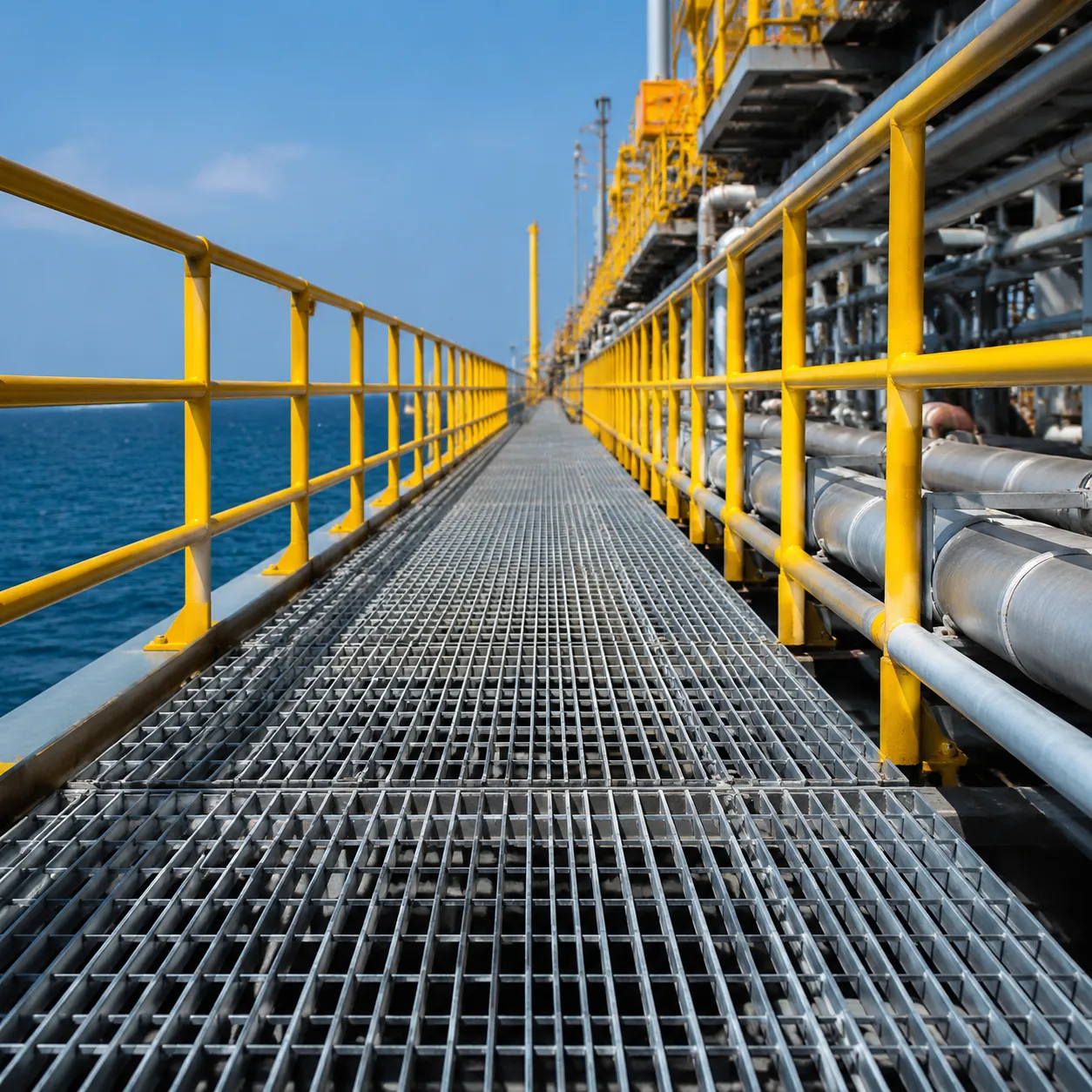
The cost of offshore platform grating varies significantly based on material choice, weight capacity, and protective coatings. For bulk orders direct from primary production lines, baseline market pricing spans across three main categories:
| Grating Material Type | Estimated Factory Price Range (per $m^2$) | Primary Applications |
|---|---|---|
| Mild Carbon Steel (Hot-Dip Galvanized) | $35 – $150 | High-load production decks, main walkways |
| Fiberglass Reinforced Plastic (FRP) | $100 – $250 | Chemical storage, light walkways, tidal zones |
| Stainless Steel (316 / 316L Grade) | $300 – $600+ | High-corrosion splash zones, extreme environments |
Key Price Factors: Heavy-duty load profiles, custom panel shapes, serrated anti-slip profiles, and specific maritime certifications (such as ABS or NORSOK) will shift final project estimates toward the higher end of these pricing brackets.
Offshore platforms operate in some of the most unforgiving environments on earth. From salt spray and extreme UV exposure to heavy impacts and constant foot traffic, every single component must be built to last. Choosing the right offshore platform grating isn’t just about floor coverage—it is a critical safety and operational decision that prevents catastrophic slips, trips, and structural failures out at sea.
Marine environments demand strict compliance with international safety protocols. For oil rig grating manufacturer designs and general marine walk spaces, flooring must meet the following baseline requirements:
Different zones on an offshore platform require different material properties. We manufacture and supply three primary types of offshore walkway grating to balance budget, strength, and environmental challenges.
| Material Type | Key Benefits | Best Used For |
|---|---|---|
| Carbon Steel Offshore Grating | Exceptional load-bearing capacity, highly cost-effective, impact-resistant. Must be hot-dip galvanized. | Heavy equipment zones, primary decks, high-traffic main walkways. |
| Stainless Steel Marine Grating | Superior rust prevention, long service life, resists harsh chemical washdowns. | Chemical storage areas, splash zones, extreme moisture environments. |
| FRP Offshore Grating | Lightweight, completely non-corrosive, non-conductive, low maintenance. | Handrails, catwalks, areas with strict weight limits. |
Selecting the right material ensures the platform remains safe for crew members while optimizing the total lifecycle cost of the facility.
Crude oil, saltwater, and constant moisture make offshore platforms notoriously slippery. To prevent catastrophic slips and falls, we manufacture heavy-duty offshore grating with a highly pronounced serrated surface. These aggressive, grooved teeth slice through surface liquids, ensuring optimal traction for workers even during severe storms. For high-traffic marine walkway grating and open deck sections, choosing a serrated steel grating for offshore platforms maximizes safety without compromising on drainage or load capacity.
Offshore structural components must endure extreme environments, which is why compliance with rigorous international maritime standards is non-negotiable. As an experienced oil rig grating manufacturer, our engineering team builds and tests products according to global industry benchmarks:
Unprotected metal breaks down rapidly when exposed to constant ocean spray and saltwater. To prevent premature structural failure, our carbon steel offshore grating undergoes a rigorous hot-dip galvanized grating treatment. This process creates a thick, zinc-iron alloy barrier that seals the core steel from moisture. For areas facing intense chemical exposure or requiring zero maintenance, we also supply alternative corrosion-resistant grating solutions, including marine-grade stainless steel marine grating and lightweight FRP offshore grating, ensuring the ideal fit for your specific environment.
Navigating offshore grating prices requires a clear understanding of materials, environmental demands, and manufacturing variables. Because these products must withstand harsh marine environments, upfront costs directly reflect the quality of engineering and raw materials.
Several critical variables dictate the baseline factory price of offshore platform grating:
| Material Type | Estimated Price Range (USD / $m^2$) | Primary Cost Drivers |
|---|---|---|
| Carbon Steel (Hot-Dip Galvanized) | $35 – $75 | Steel market rates, zinc coating thickness |
| Stainless Steel (316 / 316L) | $120 – $250 | Nickel/molybdenum alloys, pickling passivation |
| FRP (Isophthalic / Vinylester) | $45 – $110 | Resin type, UV inhibitors, fire retardant additives |
Opting for standard panels is always the most economical route. Standard sizes flow through automated production lines with minimal waste. However, marine decks rarely feature perfectly square layouts.
Custom fabrication involves precise cutting, banding, and welding around piping, structural columns, and equipment penetrations. While standard panel pricing stays predictable, custom offshore grating fabrication costs can increase by 20% to 50% due to manual labor, specialized engineering drawings, and structural scrap material. For budgeting purposes, checking a foundational industrial grating manufacturers and prices guide can help establish a baseline before adding custom fabrication premiums.
Skimping on raw material quality is a liability in saltwater environments. Cheap carbon steel with high impurities corrodes prematurely, even when galvanized. Similarly, low-grade resins in FRP grating will degrade under intense UV exposure and offshore weathering.
Investing in certified, mill-tested steel or marine-grade resins increases the initial purchase price but drastically lowers life-cycle maintenance costs. High-quality raw materials ensure the grating achieves its expected 20-to-30-year service life without catastrophic structural failures.
The ex-factory price is only one part of the total procurement equation. When sourcing from offshore grating suppliers, buyers must factor in the landed cost:
Choosing the right offshore grating manufacturers requires looking beyond a low upfront quote. In harsh marine environments, the reliability of your supplier directly impacts the safety and longevity of your platform. A trustworthy manufacturer must possess advanced technical capabilities, rigorous quality controls, and a clear understanding of marine engineering demands.
Offshore platforms rarely rely entirely on standard, off-the-shelf panels. Top-tier marine grating manufacturers offer extensive custom fabrication services, including precise cutting, banding, and toe plate welding. Our facilities utilize heavy-duty automated welding machines and high-capacity hydraulic presses to ensure every joint achieves full penetration. Whether you need complex cutouts for piping on an oil rig grating installation or specific load-bearing spans for an offshore walkway grating project, a capable manufacturer must deliver tight tolerances that match your structural drawings perfectly.
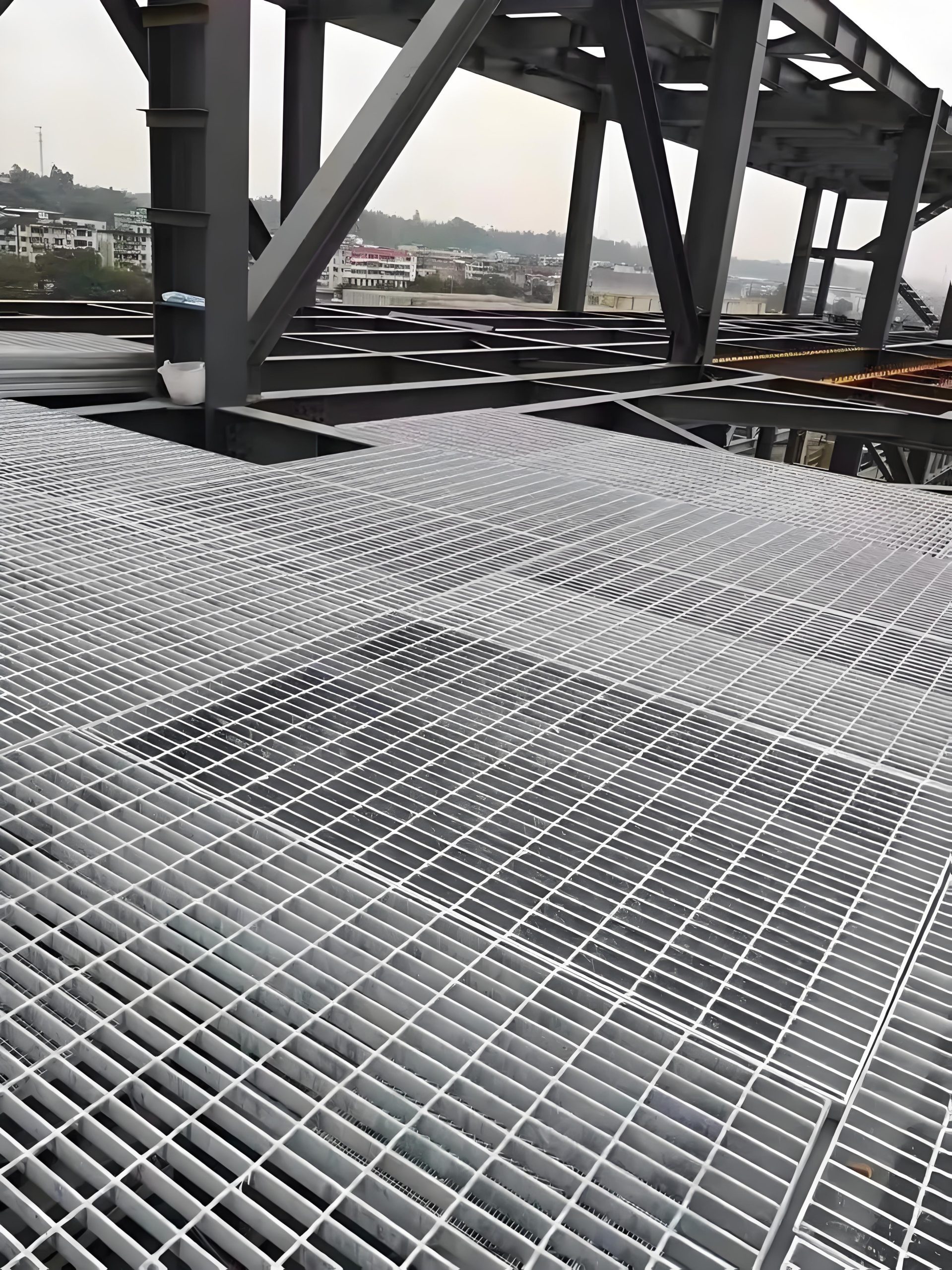
In saltwater environments, a single material defect can lead to catastrophic structural failure. Reliable offshore platform grating suppliers provide full traceability for all raw materials, backed by Mill Test Certificates (MTCs). Our quality control protocol includes independent, third-party testing from classification societies such as ABS, DNV, or Lloyd’s Register. We subject our carbon steel, stainless steel, and FRP offshore grating to rigorous testing for yield strength, load capacity, coating thickness, and salt spray corrosion resistance to ensure compliant, long-term field performance.
While procurement budgets are always a priority, focusing solely on the initial factory price is a costly mistake. Low-quality steel or substandard hot-dip galvanizing will rust prematurely, leading to expensive offshore maintenance down the line. Investing in premium carbon steel offshore grating with superior zinc coatings or high-grade stainless steel marine grating significantly lowers your total cost of ownership. Over a 20-year service life, durable products reduce shutdown times, structural repairs, and replacement labor costs on marine deck grating installations. Understanding general industrial metal grating prices helps establish a baseline, but specialized marine-grade coatings and certifications naturally command a premium for their extended service life.
To get a fast and highly accurate offshore grating quotation, buyers need to provide clear, detailed technical specifications. Missing data can delay production or lead to inaccurate pricing. When submitting an inquiry, ensure you include the following vital details:
Offshore grating prices generally range from $30 to $150 per square meter, depending heavily on the material, load requirements, and surface treatments. Carbon steel offshore grating is the most budget-friendly upfront, while heavy-duty stainless steel marine grating sits at the higher end of the price spectrum due to its superior lifespan in harsh saltwater environments.
The choice depends on the specific zone of the offshore platform:
Hot-Dip Galvanized Carbon Steel: Best for high-load structural areas where cost-efficiency is a priority.
Stainless Steel: Ideal for highly corrosive splash zones and chemical processing areas.
FRP (Fiberglass Reinforced Plastic): Preferred for walkways and areas requiring lightweight, non-conductive, and corrosion-resistant grating.
Safety is the main driver. Serrated steel gratings provide crucial multi-directional slip resistance in wet, oily, and icy marine conditions. Choosing an anti-slip offshore grating design significantly reduces workplace injuries on marine decks and offshore walkways compared to smooth-surface bars.
Reliable marine grating manufacturers must supply independent test certifications. Look for compliance with international marine and industrial standards, including:
ABS (American Bureau of Shipping)
NORSOK (Norwegian petroleum industry standards)
ISO 1461 (Hot-dip galvanizing specifications)
ASTM standards for material strength and load-bearing capacities
Standard panels are always the most economical. Custom cutouts, complex toe plates, non-standard shapes, and specialized penetrating holes increase labor and scrap rates during production. To get the most accurate offshore grating quotation, always provide detailed structural drawings to your manufacturer to minimize material waste and unexpected fabrication costs.