

Bridge grating price in 2026 depends on the material, load rating, span, panel weight, corrosion-protection system, fabrication detail, quantity, packing, and shipping destination. There is no single worldwide bridge grating price because a light pedestrian bridge deck panel, a galvanized maintenance walkway, a heavy-duty vehicle grate, and an FRP marine bridge platform are completely different products. For current budgeting, the most reliable approach is to compare finished weight, load requirement, material, finish, and delivery terms rather than relying on a generic price per square meter.
Bridge grating is often priced by kilogram, square meter, square foot, or finished panel. The final factory price may include raw material, cutting, welding, edge banding, frames, galvanizing, anti-slip treatment, inspection, export packing, and accessories. Freight, insurance, import duty, local taxes, installation, and site lifting are normally calculated separately unless the quotation includes a delivered-price term.
In 2026, raw-material markets remain an important cost variable. The World Bank reported that its metals and precious metals price indexes fell 2.4% in June 2026, while its earlier 2026 outlook described elevated metal prices and significant volatility driven by supply pressure, industrial demand, energy costs, and geopolitical uncertainty. This is a market indicator, not a finished bridge grating price, but it explains why metal quotations should have a clear validity period.
For bridge grating purchases, the most useful question is not “What is the latest price per square meter?” but “What does this price include, what load does it meet, and what is the finished installed weight?” A lower initial offer may use lighter bearing bars, a smaller support frame, a different zinc coating, less edge banding, or a lower load rating than the project actually requires.
| Quotation Item | Why It Matters |
|---|---|
| Material grade | Carbon steel, galvanized steel, aluminum, stainless steel, or FRP affects cost and durability |
| Finished unit weight | Controls material cost, freight, lifting, and support load |
| Load rating | Confirms suitability for pedestrian, maintenance, vehicle, or bridge service |
| Clear span | Determines bearing bar size and structural performance |
| Mesh and opening size | Affects weight, drainage, dropped-object control, and safety |
| Surface treatment | Controls corrosion resistance and long-term maintenance cost |
| Fabrication details | Cutouts, edge banding, frames, clips, hinges, and toe plates affect price |
| Packing and shipping term | Determines whether the price is factory-only, port-delivered, or site-delivered |
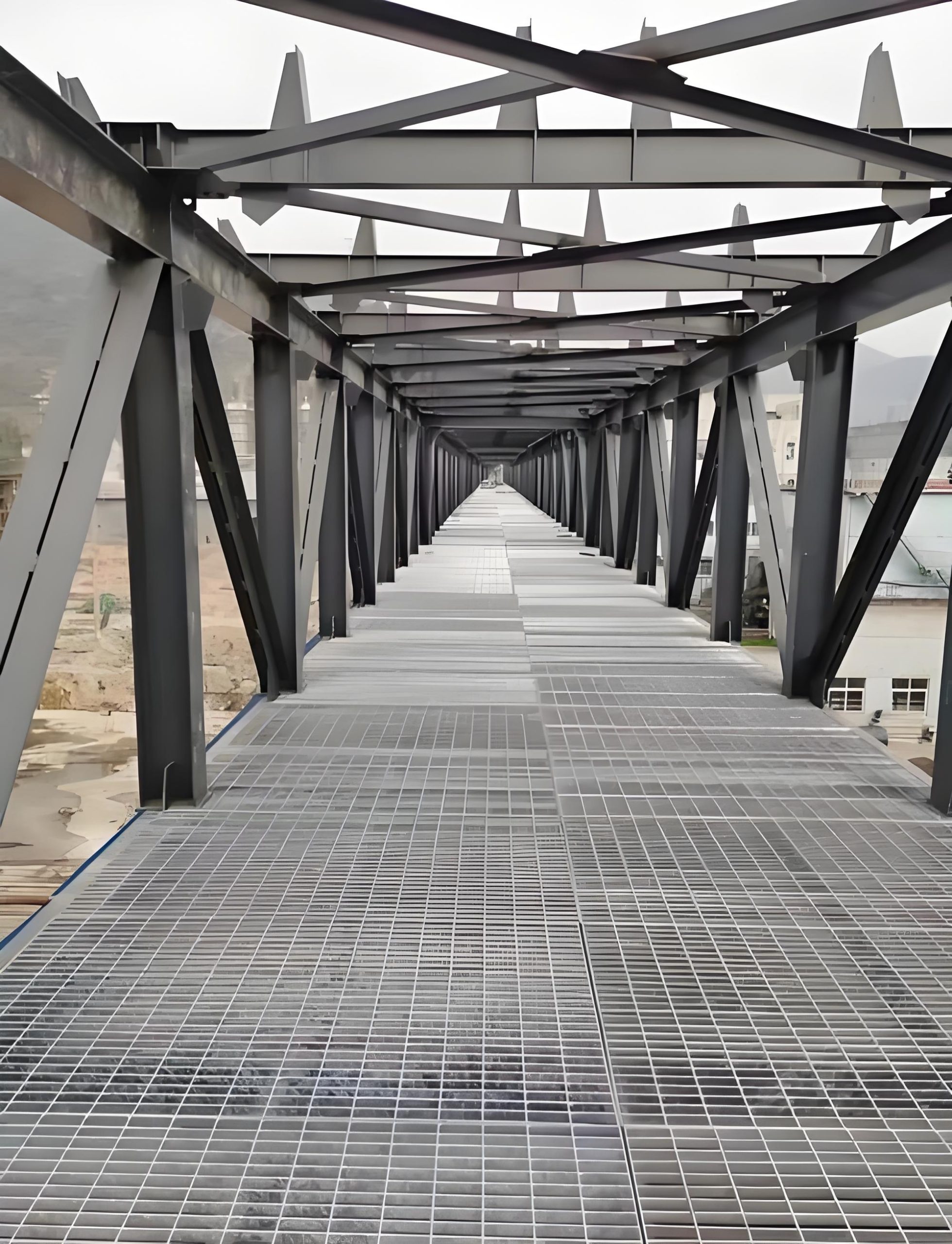
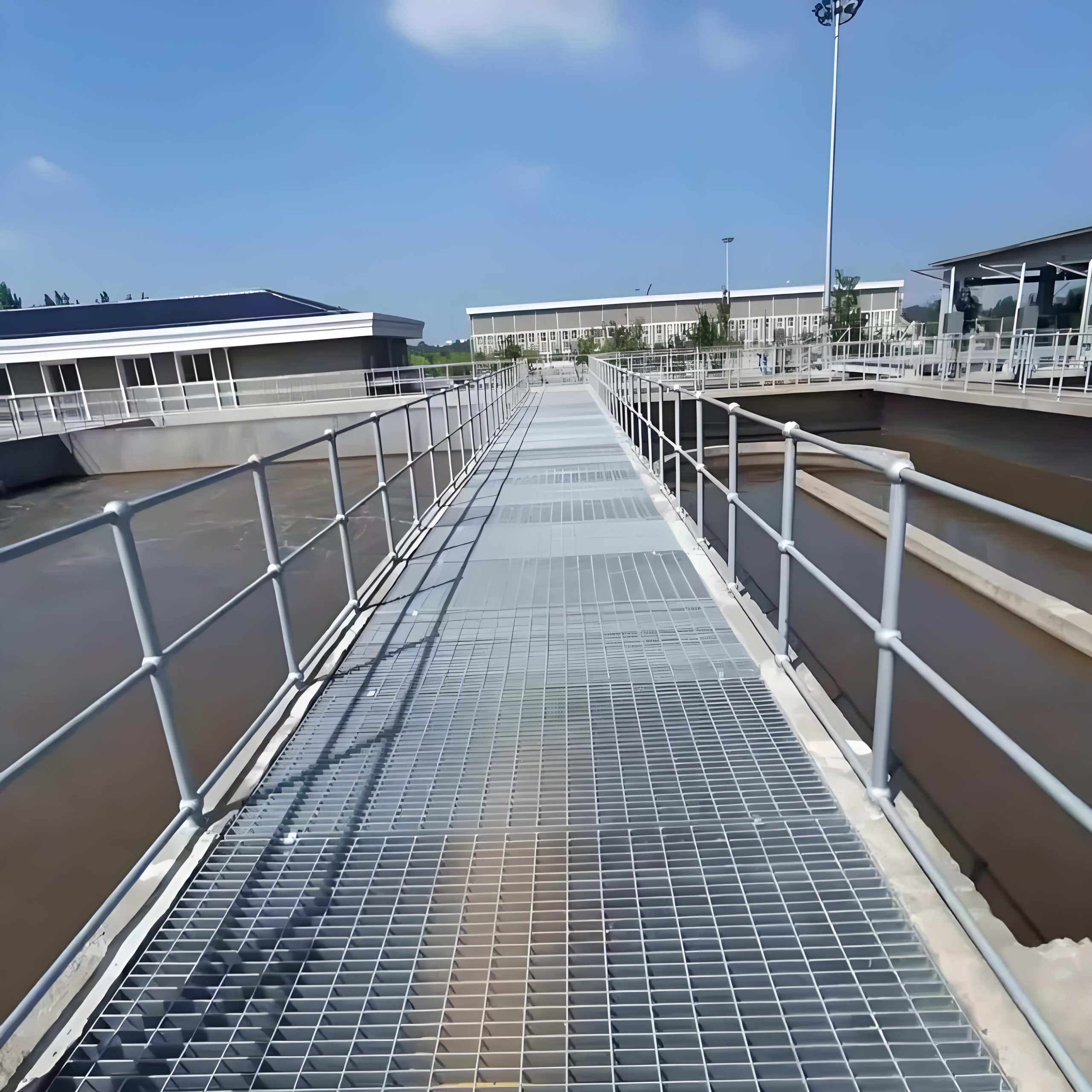
Bridge grating is an open-grid flooring, deck, walkway, or cover system used on pedestrian bridges, maintenance bridges, access bridges, footbridges, industrial bridge walkways, drainage channels, catwalks, utility crossings, and bridge maintenance platforms.
The word “bridge grating” can describe several different products. Before requesting a price, the buyer should identify which type of bridge application is involved.
A standard pedestrian walkway grate should not be used automatically for a vehicle bridge, forklift crossing, emergency access route, or high-load maintenance bridge. Bridge grating must be selected for the actual traffic type, support span, load distribution, impact, vibration, and safety requirement.
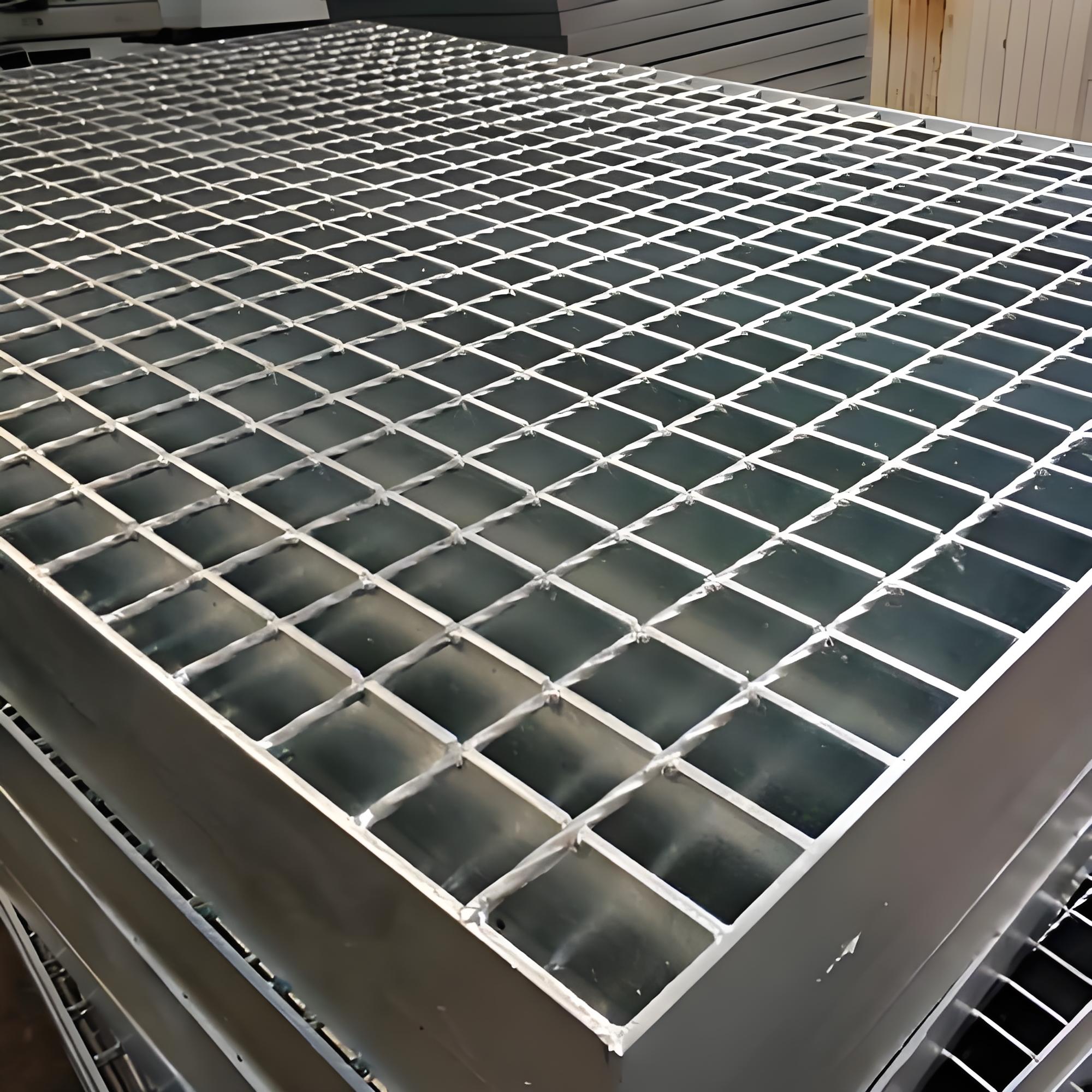
Welded steel bar grating is made by joining bearing bars and cross bars under heat and pressure. It is widely used for industrial bridges, catwalks, pedestrian access routes, drainage covers, maintenance platforms, and general steel structures.
Welded bar grating is economical and strong. For outdoor use, it is commonly hot-dip galvanized after fabrication. Serrated bearing bars can improve traction in wet, icy, muddy, or oily conditions.
Heavy-duty grating uses thicker and deeper bearing bars, stronger cross bars, heavier edge frames, and more robust fabrication. It is selected for vehicle traffic, forklift loading, maintenance equipment, service vehicles, loading areas, and heavy bridge applications.
Heavy-duty grating should be selected from an applicable load table or project engineering calculation. The support frame, bearing width, welds, clips, and connection details are as important as the grating panel itself.
Pressure-locked grating uses cross bars mechanically pressed into slotted bearing bars. It can provide a clean architectural appearance and may be selected for pedestrian bridges, decorative public walkways, terraces, platforms, and projects requiring a particular mesh pattern.
Aluminum bridge grating is lightweight and corrosion resistant. It is commonly selected for pedestrian bridges, marine access routes, rooftop crossings, temporary bridges, lightweight structures, and situations where handling weight must be reduced.
Aluminum grating should be selected using aluminum-specific load tables. Aluminum is lighter than steel but has different stiffness characteristics, so a steel grating size cannot be copied directly into an aluminum bridge design.
FRP bridge grating is made from fiber-reinforced polymer. It is lightweight, corrosion resistant, electrically non-conductive, and suitable for many chemical, coastal, marine, water-treatment, and electrical environments.
Molded FRP grating is often selected for corrosive platforms and shorter spans. Pultruded FRP grating can be suitable for longer spans because its main load-bearing bars are oriented in one direction. Resin type, fire requirement, UV exposure, temperature, creep behavior, and support spacing must be considered before selecting FRP bridge grating.
| Bridge Grating Type | Typical Strength Level | Typical Use | Main Cost Driver |
|---|---|---|---|
| Standard welded steel grating | Light to medium duty | Pedestrian and maintenance bridges | Steel weight and galvanizing |
| Heavy-duty steel grating | Medium to very high duty | Vehicle, forklift, and high-load bridges | Deep bearing bars, frames, and fabrication |
| Pressure-locked grating | Application dependent | Architectural and pedestrian bridge decks | Mesh pattern and fabrication method |
| Aluminum grating | Light to medium duty | Lightweight pedestrian and marine bridges | Aluminum material and specialized fabrication |
| Molded FRP grating | Light to medium duty | Corrosive pedestrian bridge routes | Resin system, thickness, and grit surface |
| Pultruded FRP grating | Medium duty and longer spans | Lightweight industrial bridge walkways | Structural profile and resin system |
Carbon steel is usually the most economical bridge grating material when high strength is required and a protective finish is acceptable. It is widely used for industrial bridge platforms, utility crossings, drainage covers, maintenance walkways, and access bridges.
Black carbon steel is best suited to dry indoor or protected applications. Outdoor carbon steel requires galvanizing, paint, or another corrosion-protection system.
Hot-dip galvanized steel combines steel strength with zinc corrosion protection. It is widely used for outdoor bridge grating because it protects bearing bars, cross bars, welded intersections, cut edges, and perimeter banding after fabrication.
For fabricated steel products, ASTM A123/A123M-24 covers hot-dip zinc coatings on fabricated iron and steel. ISO 1461:2022 covers hot-dip galvanized coatings on fabricated iron and steel articles for many international projects.
Stainless steel grating has a higher initial cost but provides strong corrosion resistance and a premium appearance. Type 304 stainless steel may be suitable for many indoor, wet, and hygienic environments. Type 316 is often selected for coastal, marine, poolside, chloride-rich, and aggressive chemical environments.
Stainless steel can reduce maintenance costs in difficult environments, but it should not be selected only for appearance. The grade, finish, chemical exposure, cleaning process, and fastening details should be matched to the installation environment.
Aluminum bridge grating is lighter than steel and naturally corrosion resistant in many environments. It is often selected when low weight, easy handling, corrosion resistance, or reduced structural dead load is important.
Aluminum can have a higher raw material cost than carbon steel, but lower weight can reduce freight, lifting, installation, and support-structure costs. The final price comparison should consider the complete system rather than material price alone.
FRP grating is often selected where corrosion resistance, electrical insulation, low maintenance, and low weight are priorities. Its price depends heavily on resin type, thickness, mesh, anti-slip surface, fire requirement, chemical resistance, and panel size.
304 stainless steelHighGood in many wet and hygienic environmentsPublic, architectural, and washdown bridge routes
| Material | Initial Cost Trend | Corrosion Resistance | Typical Bridge Application |
|---|---|---|---|
| Carbon steel | Lower | Low without coating | Indoor or protected industrial crossings |
| Galvanized steel | Medium | Good for many outdoor environments | Outdoor bridge walkways and maintenance access |
| 316 stainless steel | Higher | High in many chloride and marine conditions | Coastal, marine, and severe corrosion locations |
| Aluminum | Medium to high | Good in many outdoor environments | Lightweight pedestrian and marine bridges |
| FRP | Medium to high | Excellent when resin is correctly selected | Chemical, marine, electrical, and wet environments |
Bridge grating is frequently fabricated from standard stock panels and then cut, banded, framed, and labeled to suit the bridge layout. Standard panel dimensions vary by supplier, material, and production method.
Common metric bearing bar sizes include 25 × 3 mm, 30 × 3 mm, 30 × 5 mm, 32 × 5 mm, 40 × 3 mm, 40 × 5 mm, 50 × 5 mm, and heavier custom sections. Typical mesh patterns include 25/100 mm, 30/100 mm, 30/50 mm, 40/100 mm, and 40/50 mm.
50 × 5 mm or largerHeavy-duty bridge and special load applicationsShould be selected from engineering calculations
| Specification | Typical Application | Selection Note |
|---|---|---|
| 25 × 3 mm, 30/100 mesh | Short-span pedestrian or light maintenance access | Confirm load and deflection before use |
| 30 × 3 mm, 30/100 mesh | General bridge walkways and maintenance platforms | Common standard-duty starting point |
| 30 × 5 mm, 30/100 mesh | Higher concentrated-load access routes | Heavier and more durable than 30 × 3 mm |
| 40 × 3 mm, 30/100 mesh | Longer-span pedestrian and industrial bridge routes | Greater depth improves stiffness |
| 40 × 5 mm, 30/100 mesh | Heavy service and demanding bridge applications | Requires stronger supports and handling plan |
| Nominal Panel Size | Typical Use |
|---|---|
| 500 × 1000 mm | Small access covers and removable panels |
| 600 × 1000 mm | Narrow bridge walkway sections |
| 800 × 1000 mm | Modular platform and footbridge sections |
| 1000 × 3000 mm | Bridge walkway strips and modular deck panels |
| 1000 × 6000 mm | Common long factory panel format |
| 1200 × 6000 mm | Wide deck sections and large bridge panels |
The overall panel length is not necessarily the structural span. The clear span is the unsupported distance between supports in the bearing bar direction. Long panels can be used safely when they are supported at appropriate intervals.
Load capacity is the most important technical factor in bridge grating selection. The required design may range from pedestrian loading to maintenance equipment, service vehicles, forklifts, emergency vehicles, or full roadway traffic.
Pedestrian bridge grating should be selected for expected foot traffic, maintenance activity, crowd loading where applicable, local code requirements, and concentrated loads from people, tools, cleaning equipment, or mobility devices.
Industrial bridges may carry workers, carts, equipment, pipe maintenance tools, cable pulling equipment, conveyor access traffic, or temporary repair loads. The grating design must account for the actual use rather than assuming ordinary pedestrian loading.
Vehicle bridge grating requires special engineering. Wheel load, axle load, tire contact area, impact factor, vehicle path, support frame spacing, welds, and fatigue conditions all affect the design.
NAAMM MBG 532-24 provides technical information for heavy-duty steel and stainless steel bar grating. Its supporting engineering guidance includes vehicle load criteria for heavy-duty grating applications. The contract should identify the applicable bridge authority, vehicle standard, and design criteria before production.
Impact factorAccounts for dynamic loading from moving equipmentFatigue requirementImportant for repeated traffic and vibration conditions
| Load Requirement | Why It Matters |
|---|---|
| Uniform distributed load | Represents general loading spread over the bridge surface |
| Concentrated load | Checks local force from feet, tools, wheels, or equipment supports |
| Wheel load | Required for vehicle, forklift, and maintenance equipment traffic |
| Clear span | Controls bending stress and panel deflection |
| Deflection limit | Controls comfort, stability, and long-term serviceability |
A bridge grating panel can be strong enough to avoid material failure but still deflect too much for safe or comfortable service. The final selection must satisfy both strength and deflection requirements.
Bridge grating cost is driven by the finished product, not just by raw material price. The following factors have the greatest effect on the 2026 buying price.
Material weight is often the largest cost factor. Deeper bearing bars, thicker bars, close mesh patterns, heavier cross bars, edge frames, toe plates, and cutout reinforcement all increase the finished weight.
Higher load capacity normally requires larger bearing bars, stronger cross bars, closer supports, heavier framing, or specialized grating construction. A vehicle-rated bridge grate can cost much more than a pedestrian-rated grate of the same length and width.
Carbon steel is usually the lowest-cost option. Galvanized steel adds zinc coating and processing cost. Aluminum, stainless steel, and FRP generally have higher initial material costs, but may reduce maintenance, corrosion, lifting, or freight costs.
Hot-dip galvanizing, powder coating, duplex systems, passivation, anodizing, and specialized FRP resin systems add cost. The finish should match the bridge environment rather than being selected only by appearance.
Curved bridge layouts, tapered panels, pipe cutouts, handrail-post holes, toe plates, hinges, lifting handles, custom clips, and access hatches increase fabrication time. Plain rectangular panels are generally the most economical.
Large orders with repeatable panel sizes usually have lower unit prices. One-off replacement panels, irregular bridge segments, and prototype designs have higher unit costs because setup, drawings, material handling, and inspection are spread over fewer pieces.
Vehicle load designMay require heavy-duty grating and reinforced support framesStainless steel or aluminumRaises material cost but may improve corrosion performanceFRP specialty resinCan increase cost for chemical or fire requirementsSerrated anti-slip surfaceAdds processing cost but improves wet-condition tractionHot-dip galvanizingAdds zinc, handling, inspection, and processing costCustom cutouts and curvesAdds cutting, banding, fitting, welding, and inspection workSmall quantityIncreases setup and handling cost per panelExport packing and shippingCan significantly affect the delivered project cost
| Cost Driver | Effect on Bridge Grating Price |
|---|---|
| Heavier bearing bars | Increases raw material, galvanizing, freight, and lifting cost |
| Closer mesh spacing | Increases bar count, cross bars, welding, and unit weight |
Bridge grating price is affected by steel, aluminum, zinc, stainless alloy, resin, energy, labor, and freight markets. These inputs change at different speeds, so a finished grating quotation should include a defined validity period.
Steel remains the main cost input for welded and heavy-duty bridge grating. Steel cost changes affect the bearing bars, cross bars, perimeter frames, support angles, toe plates, fasteners, and fabrication waste.
In 2026, global metal markets have remained volatile. The World Bank’s April 2026 outlook described elevated metals prices and supply pressure, while its July 2026 update reported a 2.4% decline in metals and precious metals prices during June. This means a quote prepared early in the year may not reflect the latest raw material conditions.
Aluminum grating cost is affected by primary aluminum prices, extrusion costs, fabrication complexity, alloy grade, freight, and finishing. Aluminum may have a higher material cost than carbon steel, but its lower weight can reduce transport and installation costs for pedestrian bridge or lightweight access projects.
Galvanized steel grating cost is influenced by the underlying steel weight, zinc market conditions, local galvanizing capacity, surface area, batch size, and handling requirements. Small custom batches often have a higher galvanizing cost per kilogram than large repeat orders.
FRP grating pricing depends on resin chemistry, fiberglass reinforcement, thickness, molded or pultruded construction, grit surface, fire requirement, chemical-resistance requirement, and freight volume. FRP may be attractive where corrosion maintenance would be expensive, even if the initial purchase price is not the lowest.
Galvanized steel bridge grating is often the best balance of strength, outdoor durability, and initial price for industrial and pedestrian bridge projects. Its cost is determined by more than the zinc coating alone.
Galvanizing is normally charged according to finished fabricated weight, surface area, handling, batch minimums, and local processing conditions. A heavier bridge grate requires more steel and more zinc coating.
Bridge grating should usually be cut, welded, banded, drilled, and fitted before hot-dip galvanizing. This protects the welded joints and exposed cut edges. Field cutting after galvanizing can create repair work and may reduce the finished appearance.
Fabricated bridge panels with closed sections, frames, or hollow members may require drainage and venting details before galvanizing. Good fabrication design helps prevent trapped zinc, coating defects, unnecessary handling issues, and distortion risk.
The order should state the required galvanizing standard. ASTM A123/A123M-24 and ISO 1461:2022 apply to fabricated steel products in their respective scopes. Fasteners may require a separate standard, so the grating finish and hardware finish should be specified independently.
Stainless steel bridge grating has a higher initial cost because of alloy content, fabrication requirements, welding, surface finishing, and material handling. Type 316 stainless steel normally costs more than Type 304 because it is selected for more demanding chloride and marine environments.
Stainless steel can be cost-effective when repainting, galvanizing repair, rust staining, and frequent replacement would create higher life-cycle costs. The buyer should compare expected service life and maintenance cost, not only the factory purchase price.
Aluminum bridge grating cost depends on alloy, bearing bar profile, swage-locking or pressure-locking method, surface treatment, cutouts, edge banding, and fastening details. Aluminum can reduce dead load and make installation easier, especially for remote sites, rooftop bridges, pedestrian crossings, and marine walkways.
When aluminum grating is fixed to carbon steel bridge structures, the connection should be designed to reduce galvanic corrosion risk. Isolation pads, compatible fasteners, coatings, and drainage details may add cost but improve long-term performance.
Bridge grating is often custom fabricated because bridges include support beams, handrails, expansion joints, curves, drainage channels, service pipes, cable trays, lighting brackets, and access hatches.
Edge banding closes exposed bearing bar ends and reinforces cut edges. It improves appearance, reduces sharp edges, supports the cut geometry, and helps transfer load around openings.
Removing edge banding to reduce the initial price can create problems with durability, safety, corrosion, and panel rigidity. The correct approach is to use the required banding and frame detail shown on the approved drawing.
Bridge grating should be manufactured from approved shop drawings. The drawings should show panel numbers, overall dimensions, bearing bar direction, supports, cutouts, edge banding, clips, toe plates, finish, material, and installation sequence.
Accurate drawings reduce field cutting, galvanizing damage, installation delays, and the risk of placing panels in the wrong location.
Powder-coated aluminumMedium to highLightweight architectural pedestrian bridgesFRP resin and grit surfaceMedium to highCorrosive, wet, electrical, and marine bridge access routes
| Finish | Initial Cost Trend | Typical Bridge Application |
|---|---|---|
| Black carbon steel | Low | Dry indoor or temporary protected applications |
| Painted steel | Low to medium | Protected structures and color-coded bridge components |
| Hot-dip galvanized steel | Medium | Outdoor bridge walkways and access structures |
| Duplex coating | Medium to high | Premium outdoor protection with specified color |
| 304 stainless steel | High | Architectural and moderately corrosive bridge areas |
| 316 stainless steel | Higher | Coastal, marine, and chloride-rich bridge environments |
The lowest-cost finish is not always the most economical over the life of a bridge. Black steel may be acceptable for a dry interior structure, but it is not suitable for an exposed pedestrian bridge without a corrosion-protection system.
For long-life outdoor bridge installations, galvanized steel, duplex-coated steel, aluminum, stainless steel, or FRP may provide better value when maintenance access is difficult or expensive.
Large bridge grating orders usually have lower unit costs because raw material purchasing, production setup, welding fixtures, galvanizing handling, inspection, and packing are spread over more panels.
Small replacement orders and one-off bridge panels usually have a higher price per square meter or per kilogram. This is especially true when the panel needs unique cutouts, special lifting details, custom frames, or separate galvanizing.
Using repeatable panel widths, mesh patterns, bearing bar sizes, clip types, and finish systems can reduce total cost. A bridge design with many unique panels may still be necessary, but standardizing wherever possible improves material yield and production efficiency.
Bridge grating export packing may include steel frames, timber dunnage, separators, corner protection, bundle labels, accessory boxes, and container lashing. Large or curved panels may require custom packing to prevent bending or coating damage.
Heavy galvanized steel grating may reach a container’s weight limit before the container volume is full. Lightweight aluminum and FRP grating may fill the container volume before reaching the weight limit. The best shipping plan depends on panel length, bundle dimensions, finished weight, container restrictions, destination port, and unloading equipment.
When comparing suppliers, confirm whether the quoted price is:
A lower EXW price may not produce the lowest delivered cost if packing, inland transport, port charges, freight, duty, or destination handling costs are higher.
A reliable bridge grating supplier should understand the difference between pedestrian grating, industrial walkway grating, drainage grating, heavy-duty vehicle grating, and bridge deck systems. The supplier should be able to provide technical data, fabrication drawings, accurate finished weights, inspection support, and clear export documentation.
Ask whether the supplier can review load, span, deflection, support direction, vehicle traffic, corrosion environment, and installation details. A supplier should not recommend a grating size only from panel dimensions without confirming the support span and load requirement.
For metal bar grating, ANSI/NAAMM MBG 531-24 provides technical data and typical specifications for standard metal grating. NAAMM MBG 532-24 is relevant for heavy-duty metal bar grating applications. The project may also require local bridge authority rules, AASHTO criteria, EN requirements, or client-specific standards.
For major bridge projects, ask whether the supplier can provide material certificates, galvanizing records, dimensional reports, weld inspection records, FRP resin declarations, coating reports, and third-party inspection support.
The final drawing should show:
When comparing bridge grating prices, make sure every supplier is offering the same load rating, material, mesh, finish, fabrication, accessories, inspection scope, packing, and delivery term. A low-priced quotation may exclude heavy edge frames, clips, galvanizing, shipping, or engineering documentation.
How much does bridge grating cost in 2026?
Bridge grating cost in 2026 varies widely because pedestrian panels, heavy-duty vehicle grates, aluminum bridge decks, stainless steel grating, and FRP bridge walkways use different materials and load ratings. The most accurate price is based on finished weight, support span, load requirement, mesh size, material, corrosion protection, fabrication details, quantity, packing, and delivery term.
What is the best material for bridge grating?
Galvanized steel is often the best balance of strength, durability, and initial cost for outdoor industrial and pedestrian bridge grating. Aluminum is useful for lightweight applications, stainless steel is suitable for corrosive or marine environments, and FRP is a strong option for chemical, wet, electrical, and corrosion-sensitive locations. The final choice depends on load, span, environment, maintenance access, and project budget.
Is heavy-duty bridge grating more expensive than standard grating?
Yes. Heavy-duty bridge grating usually costs more because it uses deeper and thicker bearing bars, stronger cross bars, heavier frames, more welding, and stricter load verification. It is necessary for vehicle, forklift, equipment, or high concentrated-load applications and should not be replaced with standard walkway grating without engineering approval.