
A metal drainage grate for driveway applications is designed to collect surface water while allowing cars, delivery vehicles and pedestrians to pass safely over the drainage channel. A properly selected grate helps prevent standing water, driveway flooding, soil erosion, slippery surfaces and water intrusion near garages or building foundations. Because driveway conditions vary widely, buyers need to consider more than grate dimensions alone. Material type, load capacity, corrosion resistance, opening design, anti-slip performance, installation method and compatibility with the drainage channel all affect long-term reliability. This guide explains how metal driveway drainage grates are designed, where they are used and what homeowners, contractors, distributors and project buyers should check before ordering standard or custom products.
A metal driveway drainage grate is the removable or fixed cover installed over a trench drain, channel drain, catch basin or surface water collection system. Openings in the grate allow rainwater, wash water and snowmelt to enter the drainage system while the metal structure carries loads from vehicles and foot traffic.
Driveway grates are commonly manufactured from galvanized steel, stainless steel or cast iron. Depending on the drainage system, the grate may be supplied as a narrow linear section, a wide trench cover, a square catch basin grate or a custom-shaped panel. Typical designs include slotted grates, bar grating, perforated plates, heel-proof patterns and decorative laser-cut panels.
The grate cannot be selected independently from its supporting frame. Its load performance depends on the material thickness, bar spacing, reinforcement structure, clear span, frame design, fixing method and quality of installation. A heavy-looking grate placed on an inadequate frame can still bend or move under traffic. For that reason, the complete drainage assembly should be evaluated as one system.
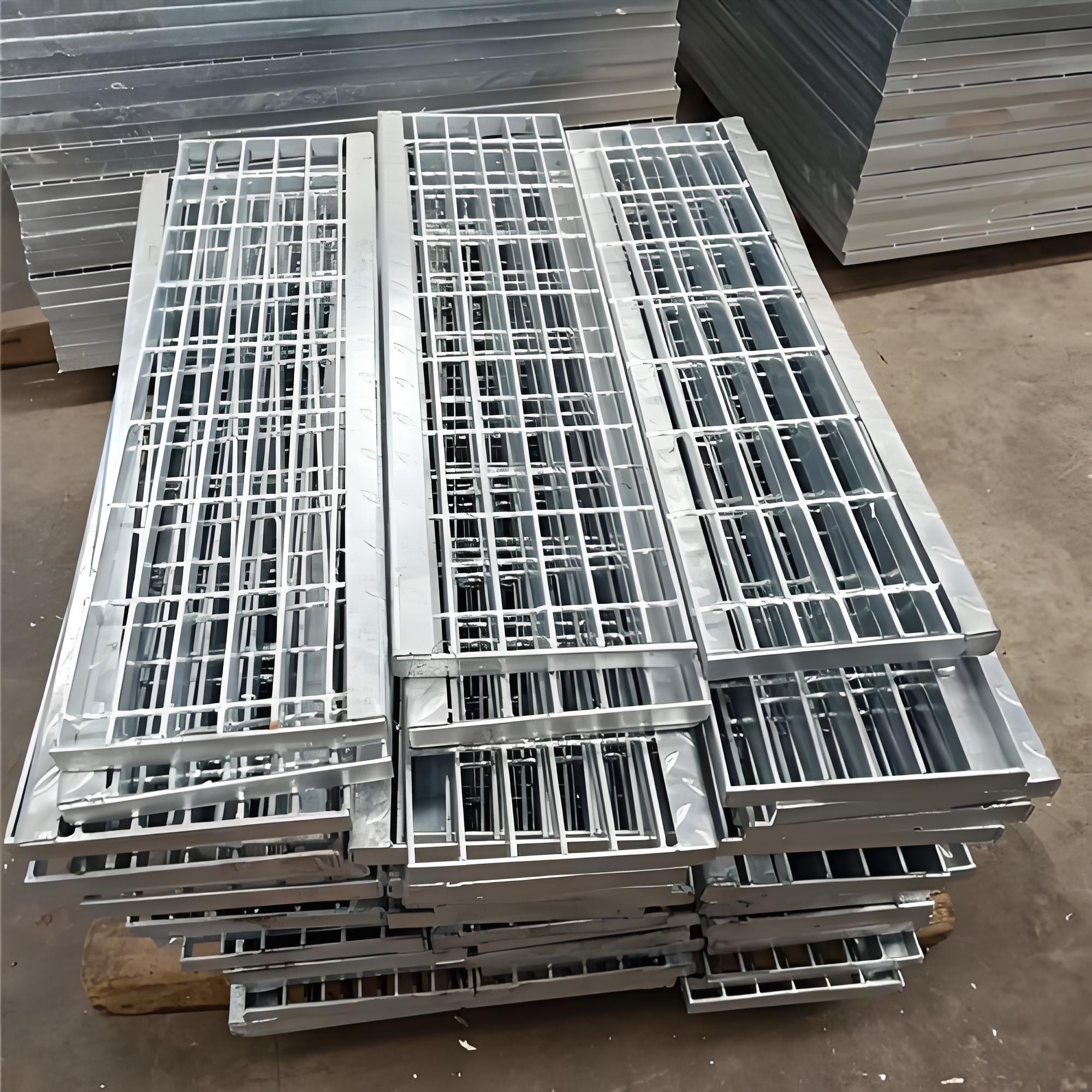
The primary function is to intercept water before it accumulates on the driveway or flows into an unwanted area. It also protects the drainage channel from large debris, supports vehicles crossing the channel and provides a stable surface for pedestrians.
A well-designed metal grate should deliver several functions at the same time:
A complete driveway drainage grate system may include the metal grate panel, edge frame, trench channel, anchor points, locking clips, bolts, lifting points, end caps and outlet connections. Some projects purchase only replacement grates, while new installations usually require a matched grate-and-frame assembly.
For replacement orders, accurate measurements are especially important. The buyer should provide the grate length, width, thickness, clear support span, frame seat dimensions, opening pattern and location of any bolt holes. Photographs or technical drawings can help a manufacturer confirm whether the replacement product will fit the existing channel.
Driveways often act as collection surfaces because concrete, asphalt, stone and paving blocks allow little water to penetrate the ground. During heavy rain, runoff moves toward the lowest point. If the slope directs water toward a garage, gate, building entrance or public road, a linear drainage system may be needed to intercept the flow.
A trench drain installed across the driveway near a garage entrance can collect runoff before it reaches the door threshold. This is particularly useful where the driveway slopes downward toward the building. However, the drain must have enough hydraulic capacity, and its outlet must discharge water to a suitable location. A grate alone cannot solve flooding if the channel, pipe or downstream outlet is undersized or blocked.
Standing water creates inconvenience and can gradually damage paved areas. Repeated wetting may wash fine material out of paving joints, soften the base below certain driveway surfaces and contribute to cracks or settlement. In cold climates, trapped water can freeze and expand, making surface damage more severe.
Reliable drainage keeps the traffic surface usable after rain and reduces the time that water remains in contact with the pavement. It can also reduce splashing onto walls, doors and parked vehicles.
Uncontrolled runoff leaving the edge of a driveway can erode soil, damage landscaping and create channels in unpaved areas. A drainage grate and channel collect the water at a planned location so it can be directed through an outlet pipe, soakaway system or approved stormwater network.
Wet surfaces can become slippery, especially when combined with oil, algae, leaves or winter ice. A drainage system helps remove water, but the grate itself must also provide safe traction. Openings should be appropriate for the direction of travel, and the grate should sit securely within the frame without rocking or lifting.
The material determines much of the grate’s corrosion resistance, appearance, weight, manufacturing method and price. Galvanized steel, stainless steel and cast iron are the most common choices, but they do not perform identically in every environment.
Galvanized steel grates are made from carbon steel protected by a zinc coating. They are widely used because they provide a practical balance of strength, corrosion protection, availability and cost. Common forms include welded bar grating, press-locked grating, stamped slotted panels and fabricated trench covers.
Hot-dip galvanizing is generally selected for outdoor drainage products because the zinc coating reaches exposed surfaces after fabrication. Coating quality depends on steel preparation, galvanizing conditions, product geometry and applicable manufacturing requirements. Cut edges, drilled holes and welding performed after galvanizing may need suitable repair treatment.
Galvanized steel is a common option for residential driveways, parking areas, service yards and light commercial entrances. It is especially suitable when buyers need strong custom-fabricated panels at a controlled cost.
Stainless steel provides a clean appearance and strong corrosion resistance. It is frequently used at modern homes, hotels, shopping areas, food facilities, coastal developments and projects where hygiene or architectural finish is important.
Different stainless steel grades provide different levels of corrosion resistance. Grade selection should consider chloride exposure, cleaning chemicals, airborne salt, industrial pollution and the expected maintenance routine. A stainless steel grade that performs well in a normal inland residential environment may not be the best choice for a coastal driveway or an area exposed to de-icing salts.
Stainless steel grates can be manufactured with a brushed, pickled, passivated or other specified surface finish. Fabrication quality matters because contamination from carbon steel tools or poor post-welding treatment can create localized staining.
Cast iron grates are valued for their high mass, rigid structure and suitability for vehicle traffic. They are common in road drainage, parking areas, garage entrances and traditional trench drain systems. Their weight helps them remain stable, although proper seating and locking are still important.
Ductile iron is often selected when greater toughness and impact resistance are required. Compared with ordinary gray iron, ductile iron can provide better mechanical performance for demanding traffic conditions. Buyers should confirm the exact iron grade, load rating and product standard instead of relying only on the general description “cast iron.”
Cast iron grates are typically supplied with a protective coating. The coating can improve initial appearance and delay surface oxidation, but it should not be assumed to provide permanent protection in every outdoor environment. The structural suitability of the grate usually remains the key consideration.
No single material is best for every driveway. The right choice depends on vehicle type, climate, appearance, budget, drainage channel design and expected service life.
| Comparison Item | Galvanized Steel | Stainless Steel | Cast Iron or Ductile Iron |
|---|---|---|---|
| Typical Cost Level | Moderate and economical for custom fabrication | Higher initial cost | Moderate to high depending on rating and design |
| Corrosion Resistance | Good when the zinc coating remains intact | Very good when the correct grade is selected | Requires coating and appropriate maintenance |
| Weight | Moderate | Moderate | Heavy |
| Custom Size Flexibility | Excellent | Excellent | Better suited to standard molds or larger production quantities |
| Appearance | Industrial metallic finish | Clean and architectural | Solid and traditional |
| Vehicle Load Applications | Suitable when correctly engineered and supported | Suitable when correctly engineered and supported | Widely used for vehicle-rated drainage systems |
| Maintenance | Inspect damaged zinc coating and clean deposits | Clean regularly and prevent iron contamination | Inspect coating, seating surfaces and oxidation |
| Common Uses | Homes, workshops, parking areas and service driveways | Modern residences, coastal projects and hygienic facilities | Road entrances, heavy driveways and parking areas |
Galvanized steel is often the most practical choice when the project requires custom dimensions, moderate cost and dependable outdoor performance. It works well for welded bar grating and fabricated trench covers, especially in residential and commercial environments without severe chemical exposure.
Stainless steel is suitable when corrosion resistance, appearance or cleanliness has a high priority. It may justify the higher initial cost in coastal areas, architectural driveways, food processing sites or locations that require frequent washing. The material grade should always match the actual exposure.
Cast iron or ductile iron is a strong candidate for standard channel systems exposed to regular vehicle traffic. It is also appropriate when the buyer prefers a heavy grate with a traditional appearance. For trucks, forklifts or public traffic, a verified vehicle-rated ductile iron system may be more suitable than a grate intended only for private cars.
Load capacity is one of the most important specifications for a metal drainage grate for driveway use. The grate must carry more than the total weight of a vehicle. Vehicle loads are transferred through relatively small tire contact areas, creating concentrated wheel loads. Dynamic effects from braking, turning, impact and uneven installation can further increase stress.
A grate described as suitable for pedestrians, gardens or patios should not automatically be installed across a driveway. Thin decorative panels may look strong but can bend when a vehicle wheel crosses the center of an unsupported span.
Private residential driveways generally require grates suitable for passenger cars, SUVs and light utility vehicles. Commercial entrances may need to accommodate delivery vans, refuse vehicles, fire trucks, forklifts or heavy trucks. The product rating should be based on the heaviest vehicle that can reasonably access the area, including occasional service vehicles.
A reduction in clear span can significantly improve the load performance of a grate. This is why a wider grate is not necessarily stronger, even if it uses the same material and thickness. For custom products, the manufacturer should know the unsupported span and support direction before recommending a bar size or plate thickness.
Some drainage products are tested and classified under recognized regional standards. Load classes help buyers compare products, but the specified class must match the installation location and expected traffic. A class suitable for pedestrian areas may not be appropriate for a driveway, while a product designed for public roads may be unnecessary for a lightly used residential entrance.
Standards and class labels can differ between markets. Buyers should state the destination country, applicable project standard and required test documentation when requesting a quotation. A simple statement such as “heavy duty” is not a substitute for a defined rating, test method or engineering calculation.
The load rating of a grate usually assumes correct support. A strong grate installed on a weak plastic channel, cracked concrete edge or poorly anchored frame can fail as a system. The surrounding concrete, channel body and frame must distribute wheel loads into the foundation.
For vehicle areas, the grate should sit evenly on its bearing surfaces. Gaps, high points and debris under the grate can create rocking and impact noise. Repeated movement may damage the frame or surrounding concrete. Installation instructions from the drainage system supplier should be followed carefully.
Outdoor drainage grates are repeatedly exposed to water, dirt, oxygen and contaminants. Coastal salt, road de-icing chemicals, fertilizers, cleaning agents and industrial pollutants can accelerate corrosion. Material selection should therefore be based on the environment rather than appearance alone.
The zinc layer on galvanized steel protects the underlying steel through both barrier protection and sacrificial action. Service life depends on coating thickness, exposure conditions, drainage, abrasion and maintenance. Areas that remain wet or trap salty deposits can corrode faster than surfaces that dry between rainfall events.
Good product design avoids pockets where water and sediment remain for long periods. After fabrication, sharp edges should be controlled, drainage holes should be provided where necessary, and damaged coating should be repaired using an appropriate zinc-rich system.
Stainless steel forms a passive surface layer that helps resist corrosion. Performance depends on alloy grade, surface condition, fabrication quality and exposure. Chlorides are particularly important because they can contribute to pitting or staining when an unsuitable grade is used.
Routine cleaning helps maintain the appearance of stainless steel. Deposits should not be allowed to remain indefinitely, and harsh cleaners containing unsuitable chemicals should be avoided. Tools and brushes previously used on carbon steel can transfer iron particles to the stainless surface and cause rust-colored staining.
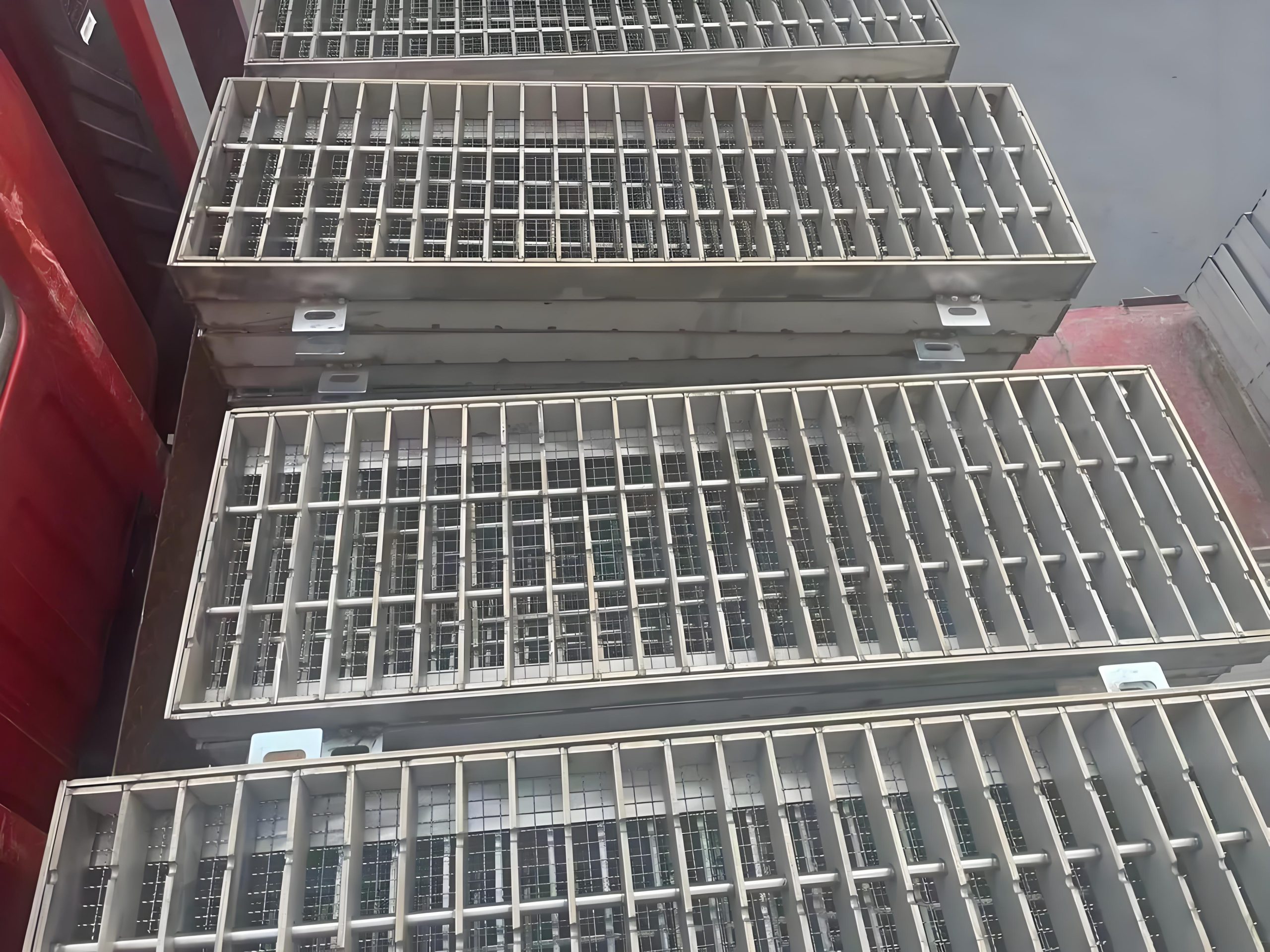
Cast iron drainage grates may be coated with paint, bituminous material, epoxy or another specified finish. Coatings provide initial protection and improve appearance, but traffic wear can expose the base metal over time. Surface oxidation does not always mean immediate structural failure, yet heavy corrosion, section loss, cracks or loose seating require attention.
| Environment | Important Risks | Common Material Direction |
|---|---|---|
| Normal inland residential driveway | Rainwater, soil and occasional vehicle fluids | Galvanized steel, stainless steel or coated iron |
| Coastal driveway | Airborne salt and frequent chloride exposure | Suitable stainless steel grade or specially protected system |
| Cold region using de-icing salt | Chlorides, freeze-thaw cycles and abrasive grit | Material and coating selected for salt exposure |
| Food or beverage facility | Frequent washing, hygiene requirements and chemicals | Appropriate stainless steel grade |
| Industrial driveway | Chemicals, heavy traffic and impact loads | Project-specific engineered metal and protection system |
A driveway grate needs sufficient open area to capture the expected water flow. However, using the largest possible openings is not always desirable. Wide gaps can admit more debris, create hazards for narrow wheels and make the surface uncomfortable for pedestrians. Effective design balances hydraulic performance, safety, structural strength and maintenance.
Open area is the portion of the grate surface available for water entry. A grate with more open area can generally accept more water, but actual drainage performance also depends on the direction and speed of surface flow, channel capacity, outlet pipe size, driveway slope and debris accumulation.
During intense rain, fast-moving water may pass over narrow slots if the grate is poorly positioned. A transverse trench drain across the direction of flow can improve interception. In some locations, multiple drain lines or a wider channel may be needed.
Long slots should be arranged with traffic safety in mind. Where bicycles, wheelchairs, carts or narrow tires may cross the grate, slot direction and width deserve careful attention. Openings that run in the same direction as narrow wheels can create a trapping risk. A cross-slot, mesh or heel-resistant pattern may be preferable in mixed pedestrian and vehicle areas.
Small openings reduce the amount of large debris entering the channel, but they can clog more quickly with leaves, mud and seeds. Larger openings are easier for water to enter but may require a sediment basket or catch basin downstream.
Driveways near trees need frequent cleaning regardless of grate pattern. For such locations, removable sections and accessible lifting points can make maintenance much easier. The best design is not simply the one with the smallest or largest slots; it is the one that can handle the local water and debris conditions with a realistic cleaning schedule.
| Opening Design | Main Advantages | Typical Considerations |
|---|---|---|
| Parallel slots | Clean appearance and efficient linear drainage | Check slot direction for bicycles and narrow wheels |
| Welded bar grating | Strong, open and economical | Bar spacing should suit traffic and pedestrian use |
| Perforated plate | Small openings and smooth appearance | May clog faster in areas with leaves or mud |
| Heel-proof pattern | Safer for pedestrian and accessibility areas | Requires regular cleaning to maintain intake |
| Decorative cut pattern | Architectural appearance and branding options | Pattern must still meet load and open-area requirements |
A drainage grate is located where water naturally collects, so slip resistance is important. Smooth metal can become slippery when wet, oily or covered by algae. Surface design should provide traction without creating sharp projections that damage tires or make walking uncomfortable.
Bar grating can be manufactured with serrated bearing bars. The serrations improve traction in wet, oily or sloped areas. This option is often considered for workshop driveways, loading areas, ramps and commercial entrances. The required serration style should be confirmed during design because it affects manufacturing and surface finish.
Fabricated plate grates may use embossed, raised or textured surfaces. The pattern should allow water to drain rather than forming small pockets. Raised features must be strong enough to withstand repeated tire contact without becoming sharp or distorted.
Anti-slip performance also depends on grate stability. A panel that rocks, slides or lifts can be dangerous even when its surface has excellent traction. Vehicle turning forces can shift an unsecured grate, especially if it is lightweight or not closely fitted to the frame.
Depending on the system, grates may be secured with bolts, clips, locking bars or captive fasteners. Locking can also reduce theft risk and prevent unauthorized removal. Fasteners should remain accessible for maintenance and should be made from materials compatible with the grate and frame.
Exposed edges should be smooth and properly finished. Weld spatter, sharp cut edges and projecting fasteners can injure pedestrians or damage tires. Openings should be selected according to the users of the area, including children, people wearing narrow heels, bicycles, wheelchairs, mobility aids and wheeled equipment.
Standard trench drain grates are convenient for common channel widths, but many renovation and infrastructure projects require custom fabrication. Existing concrete channels may have nonstandard dimensions, curved layouts, irregular corners or unusual support conditions.
Metal fabrication allows grates to be produced in project-specific lengths and widths. Long drainage lines are usually divided into manageable sections for transportation, installation and maintenance. Section length should allow workers to remove individual panels safely while keeping joints aligned with the supporting frame.
Custom grates can be manufactured for L-shaped channels, corners, curved driveways, circular catch basins and transitions between different widths. Complex shapes normally require accurate drawings, templates or site dimensions. For curved channels, the inside radius, outside radius, centerline radius and segment arrangement should be clearly defined.
Slot width, length, spacing and orientation can be adjusted to balance drainage, safety and appearance. Laser cutting is useful for architectural patterns and lower-volume customization, while punching, stamping, welding and casting may be more economical for repeated production.
Decorative patterns can complement paving, gates or landscape features, but structural performance must remain the first priority. Removing too much material from a plate reduces strength. Reinforcement ribs, thicker material or reduced span may be needed to compensate for a high open-area design.
| Required Information | Why It Matters |
|---|---|
| Overall grate length and width | Determines fit within the frame or channel |
| Clear support span | Essential for structural design |
| Material and grade | Affects strength, corrosion resistance and cost |
| Expected vehicle type | Helps determine the required load capacity |
| Opening size and pattern | Controls drainage intake, safety and debris entry |
| Surface treatment | Provides the required corrosion protection and appearance |
| Frame or channel dimensions | Ensures correct seating and support |
| Fastener locations | Allows secure installation and maintenance access |
| Quantity | Influences production method, tooling and unit price |
| Applicable standard | Defines testing, tolerances and project acceptance requirements |
Metal drainage grates are used anywhere vehicle-accessible paved surfaces need controlled water collection. The design may range from a narrow residential channel to a heavy-duty industrial trench.
A linear drain is often installed directly in front of a garage door, especially when the driveway slopes toward the building. The grate should be comfortable to walk over, quiet under vehicle tires and easy for the homeowner to remove for cleaning.
At a property entrance, a trench drain can prevent runoff from leaving private land or entering from an adjacent road, depending on site levels. The grate may be integrated with paving stones, concrete or asphalt. Load capacity should account for delivery vehicles and maintenance trucks, not only the homeowner’s car.
Shared residential developments experience more frequent traffic than individual homes. Drainage grates need reliable locking, durable frames and convenient maintenance access. Noise control may also be important because loose grates can disturb nearby residents whenever vehicles pass.
Commercial driveways must handle customer vehicles, delivery vans and regular pedestrian movement. Grates in these areas often require small, safe openings and slip-resistant surfaces. Appearance may also need to match the architectural design of the property.
Industrial entrances may be crossed by trucks, forklifts and heavy equipment. The drainage system should be designed for concentrated wheel loads, repeated traffic and possible exposure to oils or chemicals. A removable sediment basket or inspection chamber can simplify maintenance where dirt and debris levels are high.
These sites need drainage systems that support vehicles while remaining safe for pedestrians, wheelchairs and mobility equipment. Small openings, stable fastening and smooth transitions with the surrounding pavement are particularly important.
Installation quality directly affects drainage performance, noise, safety and service life. Even a correctly rated grate can fail prematurely if the channel is poorly supported or the frame is installed out of level.
The typical process begins with identifying the drainage line and outlet location. The trench is excavated to provide space for the channel, outlet connection and surrounding concrete. The channel is then positioned to the required level and slope before concrete is placed around it.
The top of the grate should align with the finished driveway surface according to the system design. If it sits too high, it may create an impact point for tires and obstruct surface flow. If it sits too low, it can create a depression that traps dirt and causes uncomfortable wheel impact.
During concrete placement, the channel must be protected from distortion. Frames should remain straight, parallel and correctly spaced. Temporary bracing or installed grates may be required according to the supplier’s instructions.
Before ordering a replacement, the existing frame should be checked for corrosion, cracks, deformation and concrete damage. A new grate will not perform correctly if the support ledge is broken or uneven.
The frame opening should be measured at several points because older channels may not be perfectly square. Measure the clear opening, external seat dimensions, support depth and available clearance. Confirm whether the original grate used bolts, clips or simple gravity seating.
Removable grates provide easier access for cleaning and are common in residential and commercial drainage systems. Fixed or locked grates offer additional security and stability but should still allow planned maintenance. Captive fasteners are useful because they remain attached to the panel when loosened, reducing the chance of lost hardware.
Metal-to-metal contact can produce noise when a grate rocks under vehicle loads. Correct tolerances, level support and suitable seating details help control movement. Some engineered systems use resilient inserts or noise-reducing components, provided these materials are compatible with the load, water and outdoor environment.
Driveway drainage systems need routine maintenance because leaves, sand, mud and litter can reduce water intake. Cleaning frequency depends on weather, nearby vegetation, driveway use and channel design.
Leaves and other visible debris should be removed before they pack into the openings. Cleaning is particularly important before seasonal storms and after landscaping work. A stiff brush, suitable vacuum or low-pressure water rinse may be used depending on the grate and site conditions.
Surface cleaning alone is not enough. Sediment can accumulate below the grate and reduce channel capacity. Removable panels should be lifted using the intended lifting points and suitable tools. The channel, catch basin and outlet should then be cleared.
Workers should use safe lifting practices because cast iron and large steel grates can be heavy. An appropriate lifting key or mechanical aid may be necessary.
Loose bolts, missing clips and worn seats should be corrected promptly. Check the frame for cracks, deformation and movement within the surrounding concrete. A rocking grate should be investigated rather than temporarily ignored because repeated impact can enlarge the problem.
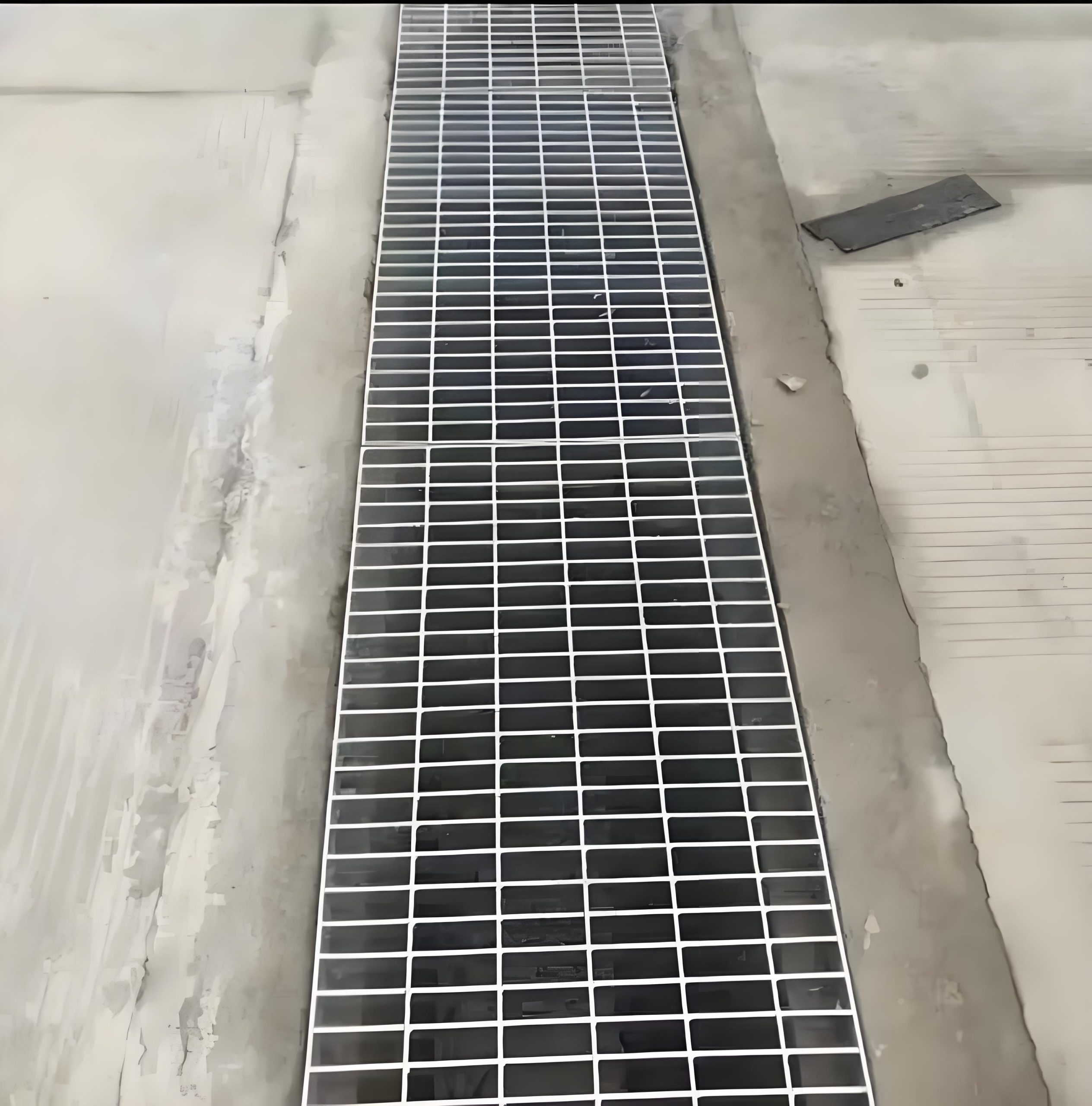
Galvanized steel should be inspected for damaged coating, especially after construction work or impact. Stainless steel should be cleaned when staining or deposits appear. Coated cast iron may need surface preparation and recoating when the protective finish becomes heavily worn.
| Maintenance Item | Suggested Timing | Action |
|---|---|---|
| Visual surface inspection | Monthly and after major storms | Remove leaves, litter and visible blockage |
| Channel cleaning | Several times per year or as site conditions require | Lift grates and remove sediment |
| Fastener inspection | At regular service intervals | Tighten or replace damaged components |
| Frame and concrete inspection | At least annually | Check for movement, cracks and loss of support |
| Corrosion inspection | At least annually and more often in harsh environments | Clean, repair or recoat affected surfaces |
| Outlet inspection | Before rainy seasons | Confirm that pipes and discharge points are open |
The right metal drainage grate for a driveway is one that fits the channel, carries the expected vehicle loads, drains water efficiently, resists the local environment and remains safe for every user of the area. Buyers should start with site conditions rather than selecting a product based only on appearance or price.
List all vehicles that may cross the drain, including passenger cars, SUVs, delivery vans, refuse trucks and emergency vehicles. Occasional heavy traffic can control the required rating even when most daily traffic is light.
A grate beside a driveway is exposed to different loads than one installed directly in the wheel path. Products across a garage entrance, parking aisle or commercial access road need appropriate vehicle-load performance.
Record the overall grate dimensions and the clear distance between supporting edges. For replacements, also measure the frame seat depth, bolt locations and available installation clearance. Do not order from the nominal channel width alone.
Consider the driveway area, slope, rainfall conditions and direction of runoff. The grate opening, channel size and outlet pipe must work together. Large drainage problems may require calculations by a qualified drainage or civil professional.
Galvanized steel offers an economical and flexible solution for many projects. Stainless steel is preferred for architectural appearance or more demanding corrosion conditions. Cast or ductile iron is widely used where a heavy, rigid and traffic-rated grate is required.
If people, bicycles, wheelchairs or wheeled equipment use the area, check the opening width and orientation. Consider heel-resistant or small-slot designs where needed. The grate surface should offer suitable traction in wet conditions.
A grate should be removable in manageable sections. Confirm the panel weight, lifting method and fastener arrangement. Areas with frequent leaf or sediment accumulation benefit from convenient access to the full channel.
For vehicle-rated or project-specified products, request drawings, material information, load data, surface treatment details and applicable test records. Ensure that the documentation refers to the actual grate size and support condition being supplied.
| Selection Question | Details to Confirm |
|---|---|
| What traffic will cross the grate? | Pedestrians, cars, vans, trucks, forklifts or mixed traffic |
| Where will it be installed? | Garage entrance, gate, parking area, ramp or industrial yard |
| What size is required? | Length, width, thickness, frame seat and clear span |
| What material is suitable? | Galvanized steel, stainless steel or cast iron |
| How corrosive is the environment? | Inland, coastal, de-icing salt, chemical or frequent washdown exposure |
| What opening pattern is safe? | Slot width, bar spacing, direction and pedestrian requirements |
| How will it be secured? | Bolts, clips, locking bars or gravity seating |
| How will it be maintained? | Panel weight, lifting points, removable sections and cleaning access |
| Is a verified rating needed? | Applicable standard, load class, test report or engineering calculation |
Factory sourcing can support both standard drainage grate orders and project-specific manufacturing. Contractors, distributors, drainage system suppliers and construction companies may purchase grates as individual replacement panels, complete grate-and-frame sets or components integrated into a larger trench drainage system.
Standard sizes usually provide shorter production times and lower tooling requirements. They are suitable when the project uses common channel widths and does not require a special appearance. Buyers should still verify the exact external dimensions because products described by the same nominal width may use different frames.
Custom manufacturing can include nonstandard dimensions, specified steel grades, special bar spacing, serrated surfaces, reinforced structures, bolt holes, lifting slots, logos and project-specific finishes. Production methods may include cutting, welding, press locking, punching, bending, casting, machining, galvanizing and stainless steel surface treatment.
For custom quotations, a dimensioned drawing is preferable to a written description. The drawing should identify load-bearing direction, support positions, tolerances, surface treatment and quantity. If no drawing is available, a clear hand sketch with photographs and complete measurements can help the factory prepare an initial proposal.
A prototype or pre-production sample may be useful for custom projects. It allows the buyer to check fit, appearance, slot pattern, frame seating and installation details before full production. A sample should not be treated as proof of a load rating unless it has been evaluated using the required method.
Quality checks may cover incoming material, dimensions, weld appearance, panel flatness, bar spacing, frame fit, coating condition and packaging. Requirements should be agreed before production, especially where the order has project-specific tolerances or inspection documents.
For galvanized products, inspection may include coating coverage and areas affected by handling. Stainless steel products may require surface cleaning, pickling or passivation according to the specification. Cast products should be checked for dimensional accuracy, seating stability and unacceptable casting defects.
Wholesale buyers should consider more than unit price. Packaging density, panel weight, pallet dimensions, product labeling, replacement availability and compatibility across different batches can affect total purchasing cost.
Repeat orders are easier when each product has a stable drawing number and revision. Labels can identify material, size, model, batch or project location. For mixed-size orders, clear packing lists and pallet markings reduce sorting time at the destination.
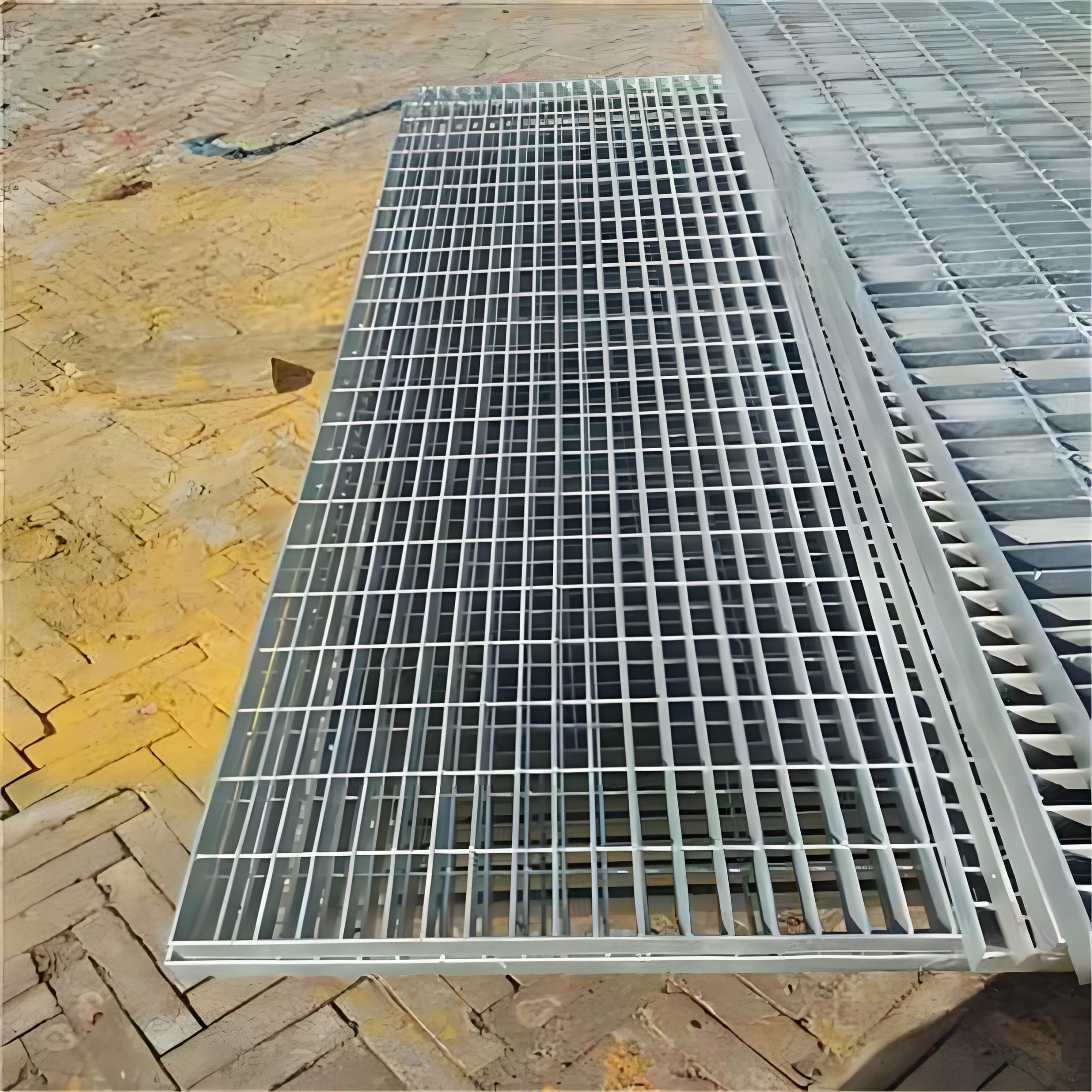
Metal grates are heavy and can damage one another if they move during transport. Packaging should protect edges, coatings and finished surfaces. Stainless steel decorative grates may require protective film or separators, while galvanized bar grating needs secure bundling and suitable lifting points.
Export orders may require moisture protection, reinforced pallets and packaging suitable for forklift handling. Buyers should provide unloading limitations and site access information when unusually large or heavy panels are requested.
Providing this information at the beginning helps the manufacturer evaluate feasibility, select a suitable production process and prepare a more accurate quotation. For a driveway project, the most important details are the heaviest expected vehicle, the unsupported span and the supporting frame design.
What is the best metal grate for a driveway?
The best metal grate for a driveway depends on traffic load and environmental conditions. Galvanized steel is a cost-effective choice for many residential and commercial driveways, stainless steel is suitable when corrosion resistance and appearance are priorities, and ductile iron is commonly selected for demanding vehicle traffic. Whichever material is chosen, the grate and frame must have a verified load capacity suitable for the heaviest vehicle expected to cross the drain.
How strong should a driveway drain grate be?
A driveway drain grate should be rated for the actual wheel loads at its installation location, including occasional delivery, service or emergency vehicles. A pedestrian-only grate is not suitable for vehicle traffic. Required strength depends on the grate material, bearing-bar size, plate thickness, clear span, frame support and installation method. Buyers should request a defined load rating, applicable class or engineering data instead of relying only on terms such as light duty or heavy duty.
Do metal driveway grates rust?
Untreated carbon steel and cast iron can rust when exposed to water and oxygen. Hot-dip galvanizing, protective coatings and suitable stainless steel grades improve corrosion resistance, but every material still requires appropriate selection and maintenance. Coastal salt, de-icing chemicals, trapped dirt and damaged coatings can accelerate corrosion. Regular cleaning and inspection help extend the service life of a metal driveway drainage grate.
