

Residential metal stair treads are used in modern homes, lofts, duplexes, garden stairs, roof access systems, balconies, basements, exterior entryways, and custom architectural staircases. A professional residential metal stair treads manufacturer can produce steel, aluminum, stainless steel, perforated, expanded metal, checker plate, bar grating, and fully customized stair treads to match the home’s structure and design style. The right tread must balance appearance with practical requirements such as tread depth, slip resistance, load capacity, corrosion protection, fixing method, and compliance with local residential building rules.
A residential metal stair tread is the horizontal walking surface of a staircase made from steel, aluminum, stainless steel, or fabricated metal components. It may be a solid plate tread, an open bar grating tread, a perforated safety tread, an expanded metal tread, or a folded and reinforced metal pan.
Metal treads are often selected for contemporary homes because they create a clean architectural appearance while offering high durability. They can be combined with timber handrails, glass balustrades, cable railings, concrete landings, stone walls, brick façades, or steel stringers.
For exterior residential stairs, metal treads can provide better drainage than solid wood or concrete. For interior stairs, they can create a modern industrial, minimalist, loft, or floating-stair appearance. The final product should be designed as part of the complete stair system rather than as an isolated decorative item.
| Component | Purpose |
|---|---|
| Tread surface | Provides the main walking area |
| Nosing | Defines and reinforces the front edge of the tread |
| Support frame or stringer connection | Transfers load from the tread into the stair structure |
| Anti-slip treatment | Improves traction in wet, dusty, or smooth-floor conditions |
| Finish | Protects the metal and creates the required appearance |
| Fasteners or concealed brackets | Secure the tread to the steel, concrete, or timber structure |
Metal stair treads are durable, adaptable, and suitable for many residential styles. They can be fabricated to standard dimensions or made to fit curved staircases, narrow landings, split-level homes, spiral stairs, floating stair systems, and custom outdoor access routes.
A properly finished metal stair tread can withstand regular foot traffic, furniture movement, weather exposure, and repeated cleaning. Steel, aluminum, and stainless steel all offer long-term performance when matched to the correct environment.
Metal can create many different visual styles. Powder-coated steel offers a clean contemporary finish, stainless steel provides a refined modern look, aluminum is lightweight and bright, while blackened steel can create an industrial loft style.
Metal stair treads can be cut, folded, welded, perforated, laser-cut, formed, drilled, and finished to suit almost any residential design. This makes metal a practical option for renovations where existing stair openings are not standard.
Open metal surfaces such as bar grating, expanded metal, and perforated treads allow rainwater, leaves, mud, and snow to pass through. This can reduce standing water on garden stairs, rooftop access stairs, fire escape-style stairs, and exterior balconies.
Steel and aluminum can achieve a strong visual result with relatively slim tread profiles when the support structure is properly designed. This is useful for floating stairs, mono-stringer stairs, cantilevered treads, and contemporary staircases with open risers.
Solid steel plate treads are made from folded, welded, reinforced, or framed steel plate. They are often used in interior staircases where a clean, quiet, modern appearance is required. The visible top surface may be smooth, checker plate, powder coated, painted, or finished with an anti-slip insert.
Solid plate treads can provide a premium architectural appearance, but outdoor applications need careful drainage design. Water should not collect inside folded tread pans, at stringer connections, or beneath decorative caps.
Checker plate, also called diamond plate or tread plate, has a raised pattern on the surface. It is commonly used for garages, basements, workshops, utility stairs, and outdoor access steps. The raised pattern improves texture, but it should not be treated as a complete anti-slip solution in icy, oily, or heavily wet conditions.
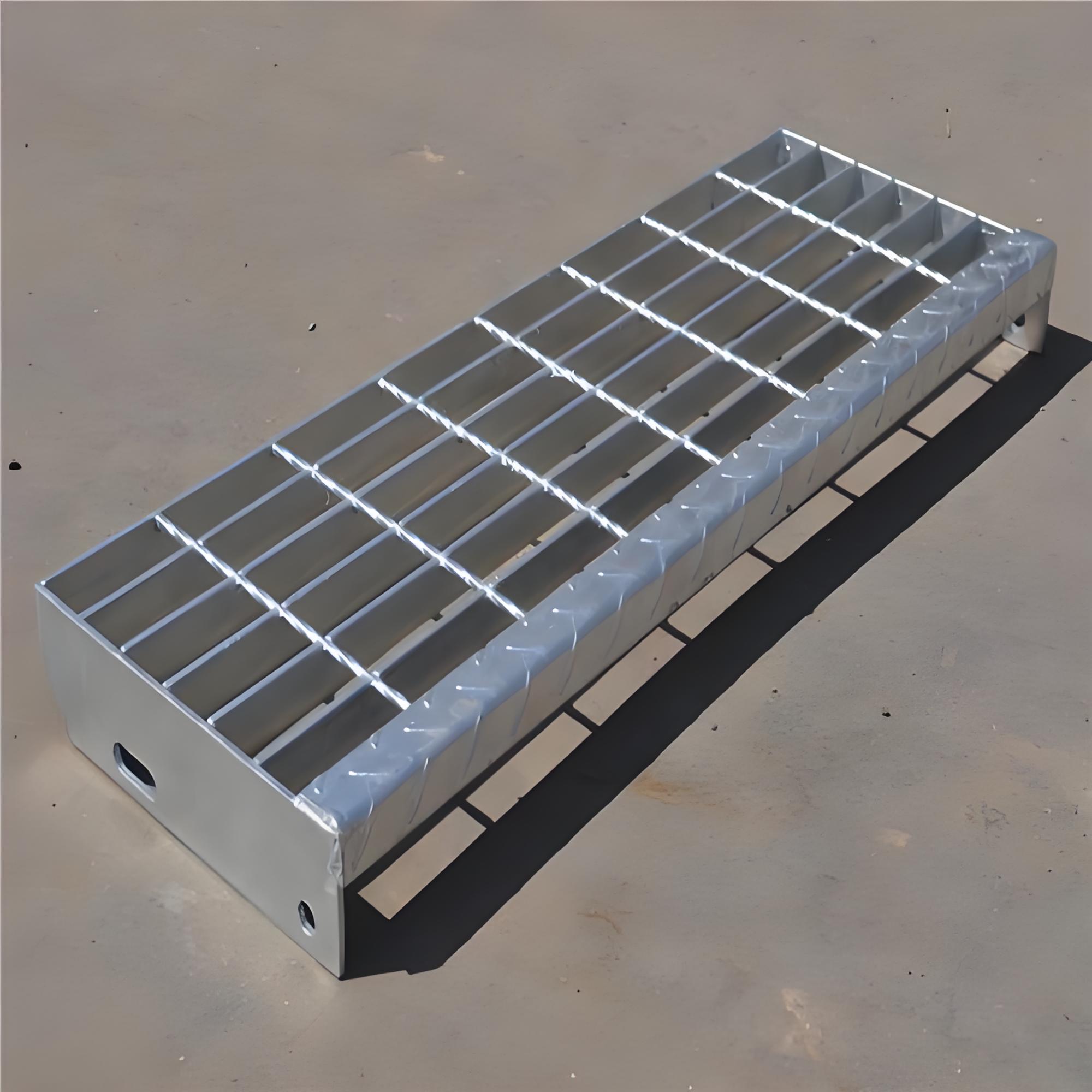
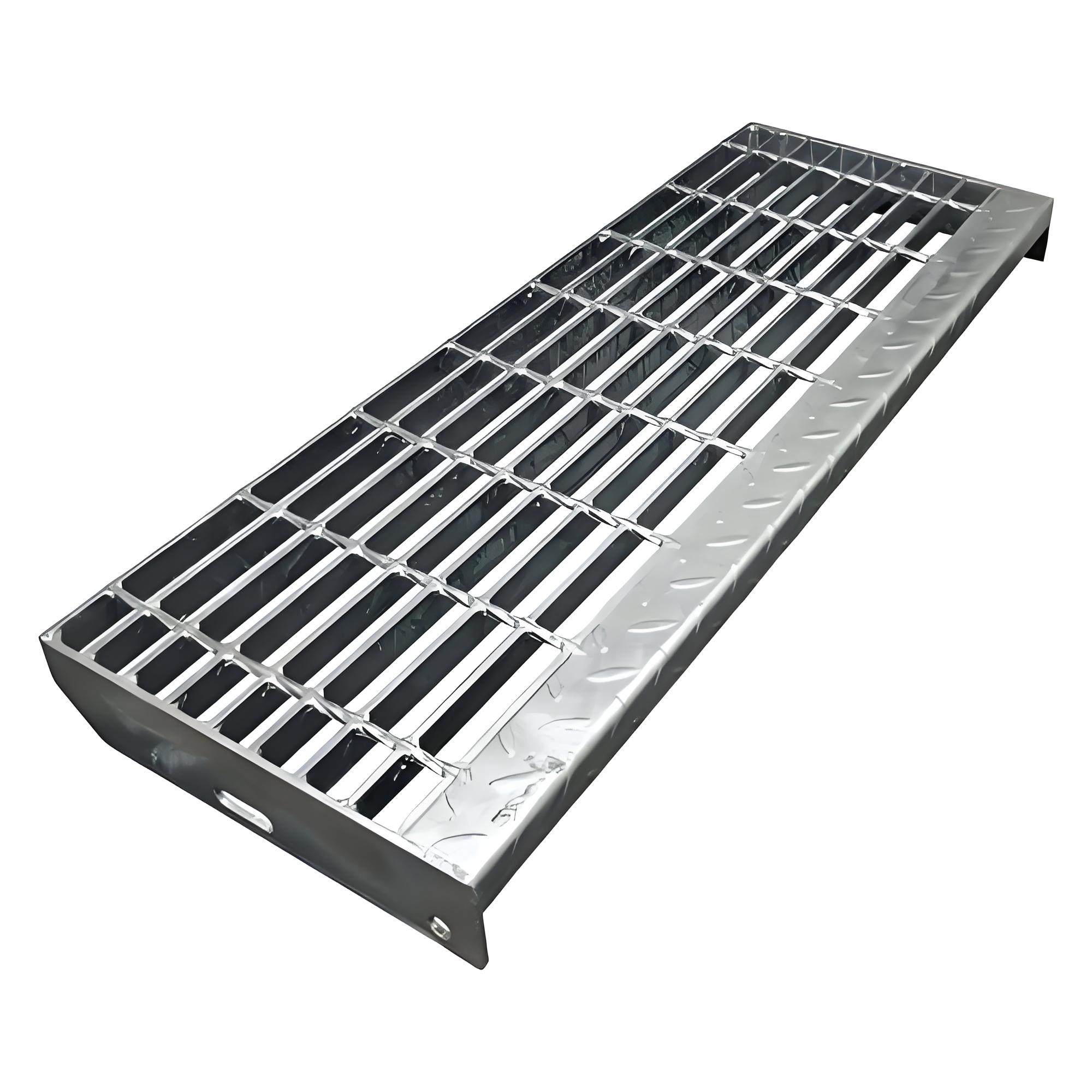
Metal bar grating treads are open-grid stair steps made from bearing bars and cross bars. They are commonly used for exterior stairs, garden access, roof platforms, maintenance routes, and industrial-style residential designs.
Bar grating offers excellent drainage and can be supplied with serrated bearing bars for additional traction. It is less common for formal indoor living-room stairs because of its open appearance and sound, but it can work well in lofts, garages, workshops, and modern architectural homes.
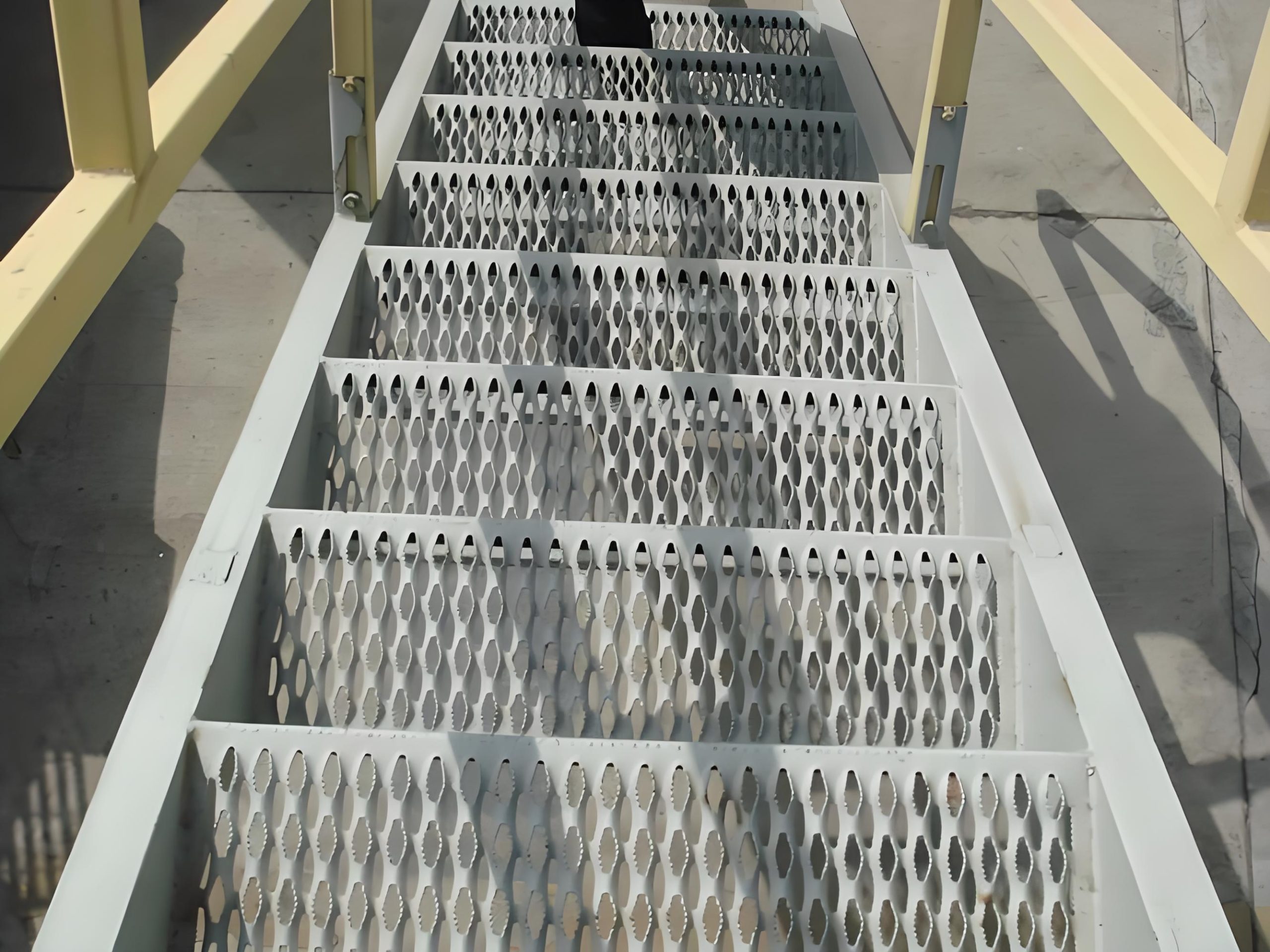
Perforated safety treads are formed from punched metal sheet with raised holes or serrated traction points. They are lightweight, drain well, and are especially suitable for outdoor stairs where rain, snow, mud, or leaves may be present.
Expanded metal is made by slitting and stretching steel or aluminum sheet into a diamond-shaped mesh. It can provide a lightweight open walking surface and an industrial visual style. Expanded metal stair treads often need formed side channels, edge frames, or support angles to achieve the required stiffness.
Laser-cut and folded metal treads are popular in high-end residential projects. They can include custom patterns, perforations, drainage slots, folded returns, hidden fixing tabs, LED strip channels, and matching handrail details.
Decorative laser-cut steel should not be assumed to be structural. The tread frame, plate thickness, support method, and connection design must be verified separately.
| Tread Type | Best Use | Main Advantage | Main Consideration |
|---|---|---|---|
| Solid plate tread | Interior modern stairs | Clean and refined appearance | Needs anti-slip treatment and drainage outdoors |
| Checker plate tread | Garages, workshops, utility stairs | Durable raised texture | May need extra anti-slip treatment outdoors |
| Bar grating tread | Exterior and industrial-style stairs | Excellent drainage and open area | Open grid may not suit every indoor design |
| Perforated safety tread | Wet outdoor access stairs | High traction and drainage | Surface can be aggressive for barefoot use |
| Expanded metal tread | Lightweight and industrial-style stairs | Open mesh and economical fabrication | Requires suitable edge reinforcement |
| Laser-cut folded tread | Custom architectural stairs | Highly flexible design options | Requires detailed engineering and fabrication drawings |
Carbon steel is strong, versatile, and economical. It is often used for indoor stairs, black-painted staircases, powder-coated treads, steel stringers, and custom welded residential stair systems.
For indoor dry locations, painted or powder-coated steel can provide an attractive finish. For exterior stairs, carbon steel needs a durable corrosion-protection system such as hot-dip galvanizing, galvanizing plus paint, or a carefully specified outdoor coating system.
Aluminum is lightweight and naturally corrosion resistant. It is commonly used for rooftop access stairs, exterior balconies, marine-adjacent homes, garden access, lightweight modular stairs, and locations where handling weight matters.
The Aluminum Association notes that 6xxx-series aluminum alloys are widely used for structural and architectural extrusions because they combine formability, weldability, moderate strength, and corrosion resistance. Common options for stair components include 6061 and 6063, depending on whether the part is structural, extruded, decorative, or formed.
Stainless steel provides excellent corrosion resistance and a premium appearance. Type 304 stainless steel is common for interior and moderately exposed applications. Type 316 stainless steel is often preferred in coastal locations, near swimming pools, or in chloride-rich environments.
Stainless steel is not maintenance-free. Surface contamination, tea staining, salt deposits, and incorrect cleaning products can affect appearance. Exterior stainless steel stairs should be cleaned periodically, especially in coastal areas.
| Material | Relative Cost | Best Environment | Typical Finish |
|---|---|---|---|
| Carbon steel | Low to medium | Indoor stairs or protected outdoor stairs | Paint, powder coating, galvanizing |
| Galvanized steel | Medium | Outdoor stairs, gardens, roof access | Hot-dip galvanized, optional paint topcoat |
| Aluminum | Medium to high | Lightweight outdoor and corrosion-resistant applications | Mill finish, anodized, powder coated |
| 304 stainless steel | High | Indoor modern homes and moderate outdoor exposure | Brushed, satin, polished, bead blasted |
| 316 stainless steel | Higher | Coastal, poolside, and marine-influenced locations | Brushed, satin, bead blasted, polished |
Residential stair tread dimensions are controlled by local building codes, the building type, stair layout, and whether the stair is interior, exterior, spiral, winder, or part of an accessible route. A manufacturer can produce typical tread sizes, but the final dimensions should be approved by the project architect, builder, engineer, or local authority.
For many U.S. residential applications, commonly referenced code guidance limits riser height to 7-3/4 inches or 196 mm and requires a minimum tread depth of 10 inches or 254 mm. The 2021 International Residential Code also limits variation within a stair flight and includes requirements for nosings and open-riser openings. Local adoption, amendments, and project conditions always govern.
| Dimension | Typical Residential Range | Important Note |
|---|---|---|
| Tread width | 750–1200 mm | Must match clear stair width and local code |
| Tread depth | 250–300 mm | Confirm code-defined horizontal depth |
| Riser height | 150–196 mm | Uniformity is critical for safety |
| Nosing projection | Typically 19–32 mm where required | Depends on tread depth and applicable code |
| Plate thickness | Varies by support design | Must be engineered, not selected by appearance |
| Open-riser gap | Code-dependent | May be restricted to prevent passage of a sphere |
The International Residential Code provisions for stair treads and risers emphasize consistent dimensions within each flight. For example, the 2021 IRC limits the maximum riser height and restricts variation between risers. It also contains nosing and open-riser provisions. See the relevant ICC residential stair requirements for the adopted edition and local interpretation.
A visually attractive staircase can still be unsafe if the rise, run, or nosing changes from one step to another. Even small differences in tread depth or riser height can disrupt walking rhythm and increase trip risk.
Custom metal stair treads should therefore be fabricated from an approved stair schedule showing every rise, tread depth, nosing detail, landing level, and fixing position. This is especially important in renovation projects where the existing floor levels are not perfectly consistent.
Custom fabrication is one of the main reasons homeowners choose metal stair treads. A manufacturer can adapt the tread profile, width, surface, finish, and support details to suit unusual stair openings, curved walls, narrow hallways, split-level rooms, mezzanines, or outdoor landscaping.
Metal treads can be rectangular, tapered, curved, triangular, L-shaped, cantilevered, or designed as winder treads. Custom shapes are often needed for spiral stairs, curved stairs, alternating layouts, and stairs that turn around a central feature wall.
Floating stair treads are designed to appear unsupported from one side. The load is usually carried by a concealed steel spine, wall-mounted structural bracket, central stringer, or engineered support frame.
The visible metal tread may be a structural component or only a decorative shell over an internal frame. This distinction should be clear before manufacturing begins. The fixing detail, wall structure, anchorage capacity, tread deflection, and handrail system must all be reviewed by qualified professionals.
Many modern residential stairs combine a steel or aluminum structural pan with a timber top surface. This arrangement can provide the strength and slim profile of metal while retaining the warmth of oak, walnut, ash, bamboo, or engineered wood.
When combining materials, allow for different thermal and moisture movement. Fixings should permit timber movement where necessary and prevent trapped moisture between the metal pan and timber finish.
Custom metal treads can include LED strip channels, recessed anti-slip strips, concealed drainage slots, handrail-post cut-outs, glass-clamp connections, cable openings, and ventilation details. These features should be shown on the fabrication drawing before cutting or welding begins.
Slip resistance is important for every residential staircase, especially at entry doors, garages, patios, roof decks, pool areas, and exterior garden paths. The right anti-slip treatment depends on whether the stairs are indoors or outdoors, whether users may walk barefoot, and whether water, snow, mud, or oil can reach the treads.
Textured powder coating can improve grip compared with a smooth painted metal surface. It is commonly used for indoor and covered exterior stairs. The coating should be selected for the expected wear, UV exposure, and cleaning method.
Serrated bar grating uses notched bearing bar tops to create more contact edges. It is a strong option for exterior metal stairs exposed to rain, mud, frost, and leaves. Serrated grating is usually more suitable for utility and modern industrial-style homes than for barefoot interior stairs.
Abrasive strips can be added to solid steel, aluminum, or stainless steel treads. They provide high traction and can be supplied in contrasting colors for better tread-edge visibility.
Abrasive strips should be selected for resistance to UV exposure, cleaning chemicals, moisture, and expected foot traffic. Replaceable strips can be useful on heavily used exterior stairs.
Perforated metal treads use punched holes with raised edges to improve grip and drainage. They are suitable for wet outdoor stairs, garden access, roof routes, and workshops. The surface may be too aggressive for some interior residential applications or barefoot areas.
Residential metal stair treads can be fitted with rubber, timber, cork, or composite inserts. These inserts can improve comfort, reduce sound, and add visual warmth. The insert system should be mechanically secure and designed to avoid moisture trapping.
| Surface Option | Best Use | Key Benefit |
|---|---|---|
| Textured powder coating | Indoor and covered stairs | Clean modern appearance with improved grip |
| Serrated grating | Outdoor and wet stairs | Strong drainage and traction |
| Abrasive strip | High slip-risk edges | High traction and visual contrast |
| Perforated safety tread | Garden, roof, and utility access | Drainage with raised gripping edges |
| Timber or rubber insert | Indoor feature stairs | Comfort, sound reduction, and visual warmth |
Indoor metal stairs are often designed around appearance, sound control, comfort, and furniture-friendly use. Smooth powder-coated steel, stainless steel, metal pans with timber inserts, folded steel treads, and laser-cut designs are common choices.
Indoor stairs still require safe traction. Highly polished metal, smooth painted surfaces, or wet-cleaned treads can become slippery. A subtle texture, anti-slip strip, rubber insert, or properly designed nosing can improve safety without changing the overall style.
Outdoor metal stair treads must handle rain, UV exposure, dirt, temperature change, leaves, frost, snow, and corrosion. Hot-dip galvanized steel, aluminum, 316 stainless steel, perforated safety treads, and serrated bar grating are common outdoor choices.
Outdoor stair designs should avoid water traps. Closed sections, overlapping plates, poorly sealed folded pans, and horizontal ledges can retain moisture and accelerate corrosion. Drainage gaps, sloped surfaces, open grating, and sealed ends help improve long-term performance.
| Feature | Indoor Metal Stairs | Outdoor Metal Stairs |
|---|---|---|
| Main priority | Appearance, comfort, sound control | Drainage, corrosion resistance, anti-slip safety |
| Common material | Powder-coated steel, stainless steel, aluminum | Galvanized steel, aluminum, 316 stainless steel |
| Surface type | Textured coating, timber insert, rubber insert | Serrated, perforated, abrasive, grating |
| Drainage need | Usually low | High |
| Maintenance focus | Cleaning and finish protection | Corrosion checks, drainage, dirt and leaf removal |
Residential metal stair treads must safely transfer loads into the stair stringers, wall brackets, central spine, or support frame. The required capacity depends on local building rules, expected use, tread span, material thickness, connection details, and stair type.
A thick-looking metal plate may still deflect if it spans too far without adequate support. A slim-looking tread may be safe if it includes hidden reinforcement, folded returns, a structural pan, or a properly designed stringer connection.
The manufacturer should know:
Open-riser stairs can create a lightweight visual effect, but they may be subject to limitations on opening size. In many residential code systems, openings are limited where the stair is above a certain height because children could pass through or become trapped.
Guardrails, balustrades, glass panels, cable systems, and handrails must also be designed as part of the stair. A metal tread manufacturer should coordinate the tread edges and fixing points with the selected railing system.
| Safety Item | What to Check |
|---|---|
| Tread depth | Confirm code-defined horizontal walking depth |
| Riser height | Keep dimensions uniform within each flight |
| Nosing | Confirm projection, profile, visibility, and anti-slip treatment |
| Open-riser gap | Check local limitations for openings |
| Handrail | Confirm height, continuity, fixing strength, and graspability |
| Guardrail | Check required height and opening restrictions |
| Tread support | Verify steel frame, wall bracket, or stringer capacity |
| Anti-slip finish | Match surface to indoor or outdoor exposure |
Floating metal stair treads create a clean and open look. They are often paired with glass guards, cable railings, or slim steel handrails. The structural support may be concealed within a wall, central spine, or boxed steel stringer.
Industrial loft stairs often use black powder-coated steel, raw-look steel, expanded metal, perforated plate, or bar grating. These materials work well with exposed brick, concrete, timber floors, and open ceilings.
Modern farmhouse staircases often combine black steel tread pans or stringers with oak, pine, or reclaimed timber inserts. The metal provides structure and contrast, while the timber softens the visual effect.
Spiral stairs can use folded steel treads, perforated plate treads, checker plate, aluminum treads, or custom laser-cut components. Because spiral stair geometry is different from a conventional straight stair, tread width, walkline depth, central support, and handrail layout should be carefully engineered.
Outdoor residential stairs often use galvanized steel grating, aluminum bar grating, serrated plate, perforated safety tread, or expanded metal. These materials help shed water and suit gardens, decks, balconies, roof terraces, and external utility access.
Hot-dip galvanizing is one of the most durable corrosion-protection methods for exterior steel stair treads. The steel is fabricated first and then immersed in molten zinc, protecting cut edges, welds, corners, and hidden areas.
For fabricated steel products, ASTM A123/A123M-24 covers hot-dip zinc coatings on iron and steel products. Galvanizing is especially useful for exterior stairs, garden access, rooftop platforms, and utility structures.
Powder coating creates a durable colored finish and is widely used for indoor stair treads, handrails, steel stringers, and covered exterior stair systems. Matte black, charcoal gray, bronze, white, and textured finishes are common residential choices.
For exterior use, the powder coating system should be suitable for UV exposure and the local climate. Surface preparation is critical. If powder coating is applied over galvanized steel, the galvanizing surface must be prepared correctly for coating adhesion.
A duplex finish combines hot-dip galvanizing with paint or powder coating. This option can provide both corrosion resistance and color control. It is often used for premium outdoor residential stairs where the owner wants a dark architectural color but also needs long-term protection.
Stainless steel can be brushed, satin finished, bead blasted, polished, or patterned. Brushed and satin finishes are often more practical than mirror-polished finishes because they show fewer fingerprints and scratches.
Aluminum stair treads can be supplied with mill finish, anodized finish, powder coating, or decorative brushed treatment. Anodizing improves surface durability and appearance, while powder coating provides a wide color range.
| Finish | Suitable Use | Main Benefit |
|---|---|---|
| Painted steel | Indoor or protected locations | Flexible color and economical finishing |
| Textured powder coating | Indoor and covered exterior stairs | Durable appearance with improved grip |
| Hot-dip galvanized steel | Outdoor stairs and garden access | Strong corrosion protection |
| Duplex coating | Premium exterior installations | Corrosion protection plus architectural color |
| Brushed stainless steel | Modern interiors and coastal homes | Premium appearance and corrosion resistance |
| Anodized aluminum | Lightweight architectural stairs | Durable oxide finish and clean appearance |
Bolted installation allows individual treads to be removed, adjusted, or replaced. This is useful for outdoor stairs, modular steel stairs, bar grating treads, and renovation projects. Bolted connections should use suitable washers, locking devices, and corrosion-compatible fasteners.
Welded installation creates a permanent connection between the tread and steel stringer. It can produce a clean appearance with concealed fixings, but it should be completed by qualified fabricators. Site welding can damage paint or galvanizing, so touch-up and corrosion repair may be required afterward.
Concealed brackets are common in floating stair designs. The brackets may be fixed to a steel spine, reinforced wall frame, or engineered support structure. The bracket capacity and wall anchorage are critical because the visual design often hides the structural system.
Traditional stairs often use two side stringers, while modern stairs may use a central mono-stringer. Metal treads can be bolted, welded, or clipped to either system. The manufacturer should receive the stringer drawing before finalizing end plates and hole positions.
When aluminum treads are attached to carbon steel stringers in wet locations, isolating materials may be needed to reduce galvanic corrosion. Common solutions include non-conductive pads, washers, compatible coatings, and carefully selected fasteners.
Metal stair treads are durable, but regular inspection helps preserve safety and appearance. Maintenance is especially important for exterior stairs exposed to rain, dirt, salt, leaves, or temperature changes.
Clean the treads regularly to remove dirt, grease, leaves, mud, and debris. Open grating and perforated treads should be checked for blocked openings. Outdoor stairs should be cleared before snow, ice, or wet leaf buildup becomes a slip hazard.
Inspect bolts, clips, brackets, welds, and tread supports periodically. Loose fasteners can cause movement, noise, uneven tread edges, and premature wear. Any rocking tread should be repaired before normal use continues.
Painted and powder-coated steel should be checked for scratches, chips, and rust spots. Repair damaged coating early to prevent corrosion from spreading beneath the finish.
Galvanized steel should be checked for damage caused by drilling, cutting, welding, or impact. Stainless steel should be cleaned with products suitable for stainless surfaces and should not be exposed to steel wool or contaminated abrasive tools that can leave rusting particles behind.
Abrasive strips, rubber inserts, and anti-slip tapes should be inspected for wear or loosening. Serrated grating and perforated safety treads should be kept free of compacted dirt and paint buildup that could reduce traction.
A reliable manufacturer should understand both fabrication and residential design requirements. The best supplier is not simply the one offering the lowest price; it is the one able to provide safe dimensions, clear drawings, suitable materials, dependable finishes, and accurate installation details.
Choose a manufacturer with experience producing residential stairs, custom metal treads, steel stringers, aluminum components, stair nosings, railing interfaces, and outdoor access systems. Residential stairs often require more visual quality and tighter detail control than standard industrial grating.
Before production, request a detailed fabrication drawing that includes tread width, depth, thickness, nosing, riser dimensions, support points, bolt holes, hidden brackets, finish, material, and orientation. The drawing should match the site measurements and approved stair design.
The quotation should state whether the treads are carbon steel, galvanized steel, aluminum, 304 stainless steel, or 316 stainless steel. It should also identify the finish, such as powder coating, galvanizing, anodizing, brushed stainless steel, or duplex coating.
The manufacturer should understand the support structure. Ask whether the tread is designed for side stringers, a central stringer, wall brackets, a concrete frame, or a timber-and-metal combination. Decorative metal panels should not be mistaken for structural treads without engineering confirmation.
When comparing residential metal stair tread quotations, confirm that each supplier is offering the same:
Custom residential metal stair treads for an exterior straight stair, 900 mm clear width, 280 mm tread depth, serrated galvanized steel or powder-coated aluminum finish, anti-slip nosing, end plates with bolted fixing holes, suitable for the approved stringer span and local residential code requirements, supplied according to approved fabrication drawings.
Are metal stair treads good for homes?
Yes. Metal stair treads are durable, customizable, and suitable for modern homes, lofts, outdoor stairs, roof access, balconies, garages, and garden paths. The material, anti-slip surface, finish, and support structure should be selected for the specific indoor or outdoor environment.
What metal is best for outdoor residential stairs?
Hot-dip galvanized steel is a strong and economical choice for many outdoor stairs. Aluminum is useful where low weight and corrosion resistance are important. Type 316 stainless steel is often selected for coastal, poolside, or chloride-rich environments. The best choice depends on climate, maintenance expectations, and design style.
How deep should a residential metal stair tread be?
Many residential stair designs use tread depths of approximately 250 to 300 mm. In many U.S. residential code applications, a minimum tread depth of 10 inches or 254 mm is commonly referenced, but local code adoption, stair type, nosing design, and project conditions must be confirmed before fabrication.