
Custom metal grates are not automatically expensive. A simple rectangular grate cut from a standard stock panel may cost only modestly more than a standard size, while a heavy-duty grate with custom openings, edge banding, anti-slip treatment, galvanizing, and special load requirements can cost substantially more. The real cost comes from material weight, fabrication time, complexity, finish, quantity, inspection, and delivery requirements. The best way to control custom metal grate cost is to specify only the features the project actually needs and provide a clear drawing before production.
The short answer is: custom metal grates can be affordable when the design is simple, repeatable, and based on standard materials. They become more expensive when the project requires unusual shapes, thick bearing bars, close mesh openings, extensive cutouts, special coatings, heavy-duty load capacity, premium materials, or small production quantities.
A custom grate should not be compared only by price per square meter. Two grates with the same overall dimensions can have very different steel weights, fabrication hours, corrosion protection costs, and installation requirements.
For example, a basic galvanized rectangular bar grating panel may require only cutting and edge banding. A similar-sized panel with circular pipe cutouts, a column notch, toe plates, lifting handles, serrated bars, special clips, and a non-standard hole pattern requires more labor and material. The difference is not caused by the word “custom” alone; it is caused by the amount of work needed to turn stock grating into a finished product.
| Custom Feature | Typical Cost Effect | Reason |
|---|---|---|
| Simple rectangular cut size | Low | Can often be cut from standard stock grating |
| Standard edge banding | Low to medium | Adds flat bar and welding labor |
| One small rectangular cutout | Medium | Requires cutting and local edge finishing |
| Multiple pipe or column cutouts | Medium to high | More cutting, banding, measuring, and inspection |
| Irregular curved shape | High | Requires detailed programming, cutting, and custom banding |
| Heavy-duty bearing bars | High | Uses more material and may require special fabrication |
| Stainless steel construction | High | Higher material and fabrication cost |
| Small quantity or one-off panel | Higher unit cost | Setup and handling costs are spread over fewer pieces |
A metal grate becomes custom when it differs from a factory’s standard stock panel, standard mesh, standard edge treatment, or standard fixing arrangement. Custom work can be as simple as cutting a stock panel to a required width, or as complex as fabricating a complete framed access cover for a plant, home, trench, platform, or drainage system.
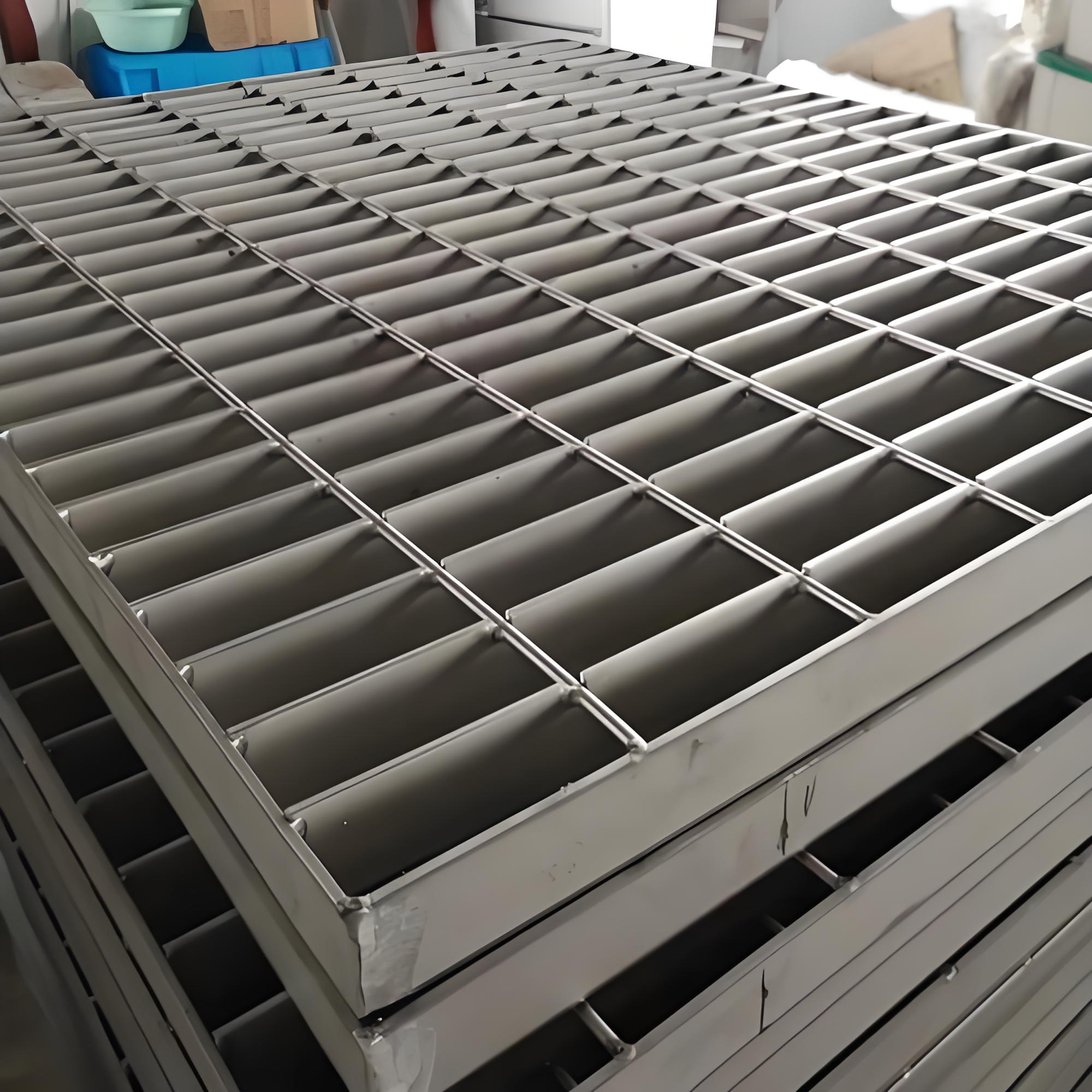
Many custom grates do not require expensive molds or dies. Modern fabrication often uses CNC cutting, saw cutting, manual fitting, welding fixtures, and standard grating stock. A custom rectangular panel with a few cutouts can usually be made without dedicated tooling.
New tooling may become necessary when the project requires a unique perforated pattern, custom extrusion profile, repeated formed shape, special press tooling, or large-volume proprietary product design. For most standard bar grating fabrication, the main cost is material plus cutting, welding, edge banding, coating, and handling.
Custom metal grate cost is usually built from several practical components. Understanding these components makes it easier to compare quotations from different suppliers.
Material is often the largest part of the factory price. The total weight of bearing bars, cross bars, edge banding, frames, toe plates, and accessories affects both raw material cost and freight cost.
Fabrication includes cutting, notching, drilling, welding, edge banding, straightening, cleaning, marking, and final inspection. A simple panel needs less labor than a panel with many unique details.
Galvanizing, powder coating, painting, pickling, passivation, or special anti-slip coatings add to the price. The correct finish should be selected for the environment; unnecessary premium coating increases cost without always adding value.
Material certificates, coating reports, load testing, third-party inspection, detailed packing photos, and special traceability documents can increase cost. These items are valuable when required by a contract, but they should be identified clearly before quotation.
Large repeat orders usually have a lower unit cost because setup, engineering, cutting programs, fixtures, inspection, and packing are spread across more panels. A one-piece replacement grate often has a higher unit price even if the grate itself is not large.
FabricationCutouts, curves, welding, edge banding, drilling, special framesFinishGalvanizing, powder coating, paint system, passivationAccessoriesClips, bolts, hinges, handles, toe plates, locks, support anglesInspectionCertificates, third-party inspection, load testing, traceabilityPackingPallets, timber frames, export packing, labels, protective separatorsDeliveryFreight, destination, Incoterms, customs documents, insurance
| Cost Category | What Changes the Price |
|---|---|
| Raw material | Material grade, steel weight, bar thickness, mesh spacing |
Carbon steel is usually the most economical material for custom metal grates. It is strong, widely available, easy to cut, weld, and fabricate. Black carbon steel is commonly used for indoor dry environments or for products that will receive a separate paint system.
Carbon steel is often the best value when:
Hot-dip galvanized steel is a popular choice for outdoor grates because it combines the strength of carbon steel with zinc corrosion protection. The grate is usually fabricated first and galvanized afterward, helping protect welded joints, cut edges, and banded areas.
Galvanizing adds cost, but it can reduce long-term maintenance and replacement costs for outdoor platforms, drainage covers, stairs, garden grates, industrial walkways, and exposed structures.
For fabricated steel products, ASTM A123/A123M-24 covers hot-dip zinc coatings on fabricated iron and steel products. International projects may also reference ISO 1461:2022 for hot-dip galvanized coatings on fabricated iron and steel articles.
Aluminum grates are lighter than steel and naturally corrosion resistant in many environments. Aluminum may cost more per kilogram than carbon steel, but its lighter weight can reduce handling, structural support, and freight costs in some projects.
Aluminum is commonly selected for rooftop access, marine-related structures, lightweight stairs, balconies, architectural screens, drainage covers, and installations where lifting weight is important.
Stainless steel has a higher initial cost than carbon steel or galvanized steel, but it offers strong corrosion resistance and a premium appearance. Type 304 is common in indoor, hygienic, and moderate corrosion environments. Type 316 is often selected for coastal, poolside, marine, and chloride-rich conditions.
Stainless steel may be a cost-effective long-term choice where rust stains, frequent repainting, or early replacement would create higher maintenance expense.
| Material | Initial Cost Trend | Common Application | Cost Consideration |
|---|---|---|---|
| Carbon steel | Low | Indoor grates, painted structures, standard platforms | May need coating for corrosion protection |
| Galvanized steel | Medium | Outdoor grates, stairs, drains, walkways | Added galvanizing cost can reduce maintenance needs |
| Aluminum | Medium to high | Lightweight and corrosion-resistant applications | Lower weight can offset some transport or handling cost |
| 304 stainless steel | High | Food, indoor wet areas, architectural grates | Higher material and fabrication cost |
| 316 stainless steel | Higher | Coastal, marine, poolside, chemical exposure | Premium option for demanding corrosion environments |
Size is important, but weight usually has a greater effect on custom metal grate cost than area alone. A large lightweight grate may cost less than a smaller heavy-duty grate if the smaller grate uses thicker bearing bars, closer spacing, and more framing.
For bar grating, weight depends mainly on bearing bar height, bearing bar thickness, bearing bar pitch, cross bar spacing, edge banding, frames, and accessories.
A basic estimating formula is:
Finished grate weight = grating body weight + edge banding + frames + cutout reinforcement + accessories + coating allowance
Factory quotations are often based on a price per square meter, price per kilogram, or price per finished panel. The most accurate comparison includes both unit price and finished piece weight.
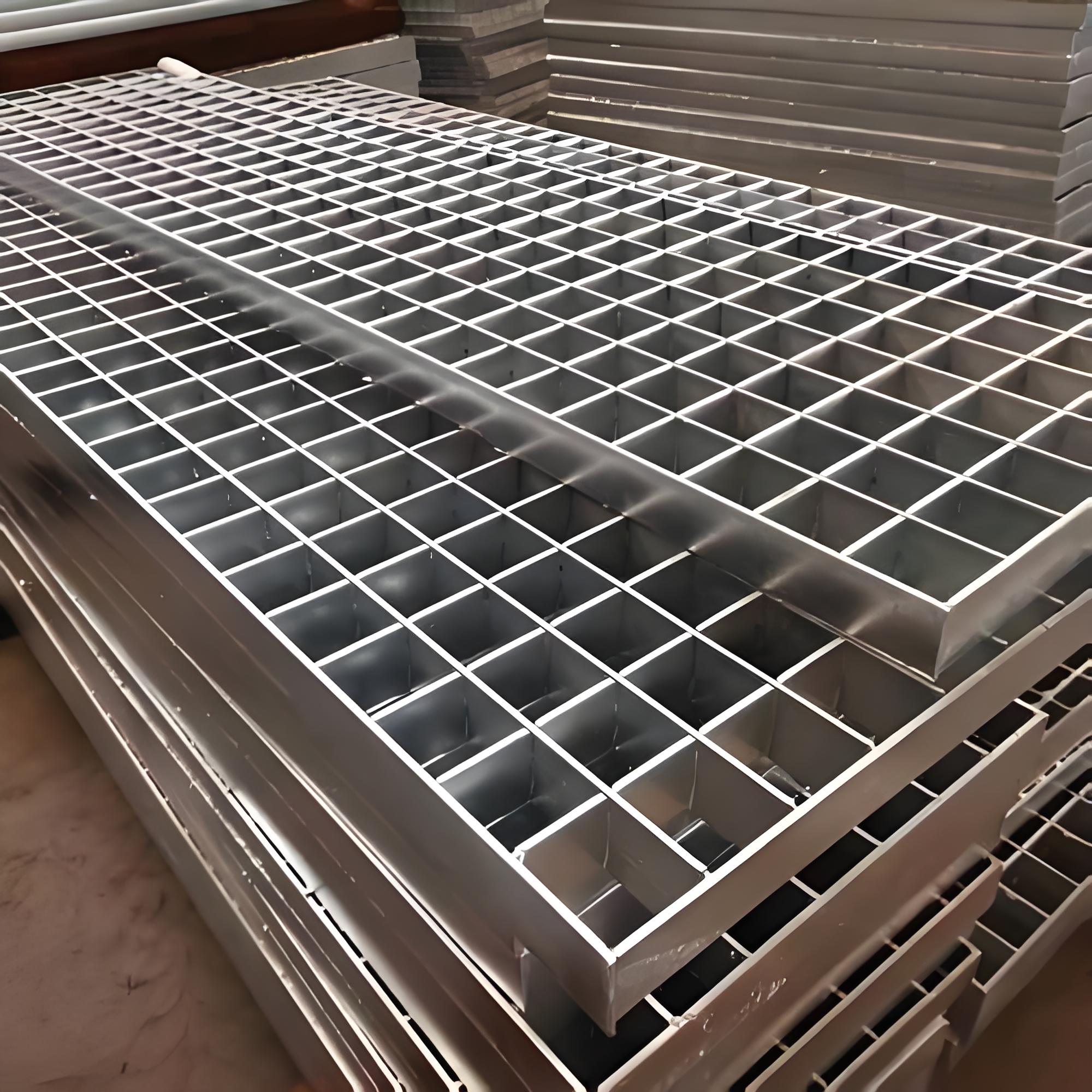
Increasing the bearing bar thickness or height increases weight and cost. It can also improve capacity, but overspecifying bar size adds unnecessary material cost. The best choice is the lightest grate that safely meets the required load, span, deflection limit, durability, and corrosion allowance.
For metal bar grating, ANSI/NAAMM MBG 531-24 provides technical data, load tables, and recommended practices for steel, stainless steel, and aluminum bar grating. Load selection should be based on the correct material, support span, surface type, and loading condition.
Large panels may reduce the number of joints and clips required, but they can increase lifting difficulty, packing cost, transport risk, and installation complexity. In some projects, dividing one large custom grate into smaller modular panels can lower the total installed cost even if the number of panels increases.
Mesh size affects material weight, drainage, open area, safety, cleaning, and price. Closer mesh patterns use more bearing bars or cross bars, increasing material weight and welding work. Larger openings can reduce weight, but they may not meet footwear, dropped-object, drainage, or safety requirements.
Close mesh grating is used where smaller openings are needed. It may be selected for pedestrian areas, fine-heel concerns, small-object control, certain drainage applications, or locations where a large opening would be unsafe.
Because close mesh uses more bars, it usually costs more per square meter than a more open pattern of the same bearing bar size.
Open mesh grating is lighter and offers better drainage and ventilation. It is often used for industrial walkways, drainage covers, exterior platforms, and outdoor access routes where open area is beneficial.
An open mesh pattern should still be checked for foot traffic, tools, debris, local codes, and the risk of objects falling to lower levels.
Custom opening patterns can include rectangular grids, square mesh, diamond mesh, laser-cut decorative openings, round drainage holes, slots, or irregular architectural patterns. These features can increase cost because they require additional programming, cutting time, edge finishing, and inspection.
Close mesh bar gratingMedium to highMore bearing bars and smaller openingsPerforated sheet grateMediumDepends on hole pattern, sheet thickness, and formingExpanded metal grateLow to mediumEfficient mesh production but may need reinforced edgesLaser-cut decorative grateHighMore cutting time, programming, and finishingCustom drainage slot patternMedium to highMay require engineering and detailed fabrication
| Mesh or Opening Type | Cost Trend | Typical Reason |
|---|---|---|
| Standard open bar grating | Lower | Efficient stock production and less material |
Load capacity can have a major effect on custom metal grate cost. A grate designed only for pedestrian use may use standard bearing bars. A grate required to support maintenance equipment, wheeled loads, vehicles, machinery, or high concentrated loads may need deeper bars, thicker material, closer supports, heavier edge frames, or a different grating type.
A grate may require a perimeter angle frame, flat-bar edge banding, support channels, or reinforced cutout edges. These items add cost but are often necessary to maintain strength and prevent sharp edges or movement.
Removing edge banding to lower the price can be a false economy. Cut bearing bars may bend, snag, rust, or become unsafe if they are not properly finished. The correct approach is to use the minimum necessary reinforcement based on the actual load and support condition.
A grate may be strong enough to avoid failure but still deflect too much under normal use. Excessive deflection can make a walkway feel unstable, loosen clips, damage coatings, or create uneven edges between panels.
For this reason, the quotation should state both the design load and the permitted deflection where applicable. This helps the manufacturer select the most economical safe configuration.
Standard grates are generally less expensive because they are produced in common sizes, mesh patterns, and materials. Factories can purchase raw material efficiently, use established production settings, and minimize waste.
Custom grates cost more when they require additional work, but custom fabrication can also reduce project cost by improving fit, reducing site cutting, avoiding installation delays, and eliminating unnecessary field welding.
| Standard Grate | Custom Grate |
|---|---|
| Usually made in stock panel dimensions | Made to project dimensions or shop drawings |
| Common mesh and bearing bar sizes | May use custom mesh, bar size, frame, or finish |
| Lower setup cost | May require drawing review and additional fabrication time |
| May need field cutting during installation | Can reduce field cutting and on-site adjustments |
| Best for simple repetitive applications | Best for irregular layouts, openings, and exact fit requirements |
Standard panels are usually best when the required size is close to stock dimensions, the layout is rectangular, the support spacing is regular, and no major cutouts are needed. They are suitable for simple walkways, platforms, drainage channels, and repeat installations.
Custom fabrication can reduce total project cost when field cutting would be difficult, when many panels have different openings, when the site is remote, when galvanizing cannot be repaired easily after field welding, or when installation time is expensive.
A well-planned custom panel can arrive ready to install, with edge banding, holes, clips, labels, and cutouts already completed. This reduces labor at the project site and can prevent incorrect modification of load-bearing bars.
Mill-finish carbon steel is generally the lowest-cost option. It is suitable for dry indoor use or products that will receive a separate paint system. It should not be used without protection in wet or outdoor environments.
Painted grates can provide color identification, architectural appearance, and moderate corrosion protection. Cost depends on surface preparation, paint system, number of coats, color, drying requirements, and whether the finish is applied in the factory or at the site.
Powder coating is common for architectural, residential, commercial, and protected industrial applications. It can provide a clean, durable finish in many colors. Complex shapes and closely spaced mesh can require more preparation and coating control.
Hot-dip galvanizing usually costs more than black steel but is often economical over the life of an outdoor product. The price depends on finished weight, surface area, zinc cost, batch size, galvanizing plant handling, and inspection requirements.
Fabricating and welding the grate before galvanizing is usually more economical and durable than cutting the galvanized grate repeatedly in the field. Field modifications can damage the coating and create extra repair work.
A duplex coating combines hot-dip galvanizing with paint or powder coating. It is a premium option for projects requiring both strong corrosion protection and a specific color or architectural finish.
Shop primerLow to mediumTemporary protection before final paint systemPaint systemMediumIndoor, protected, or color-coded structuresPowder coatingMediumArchitectural and residential metal gratesHot-dip galvanizingMediumOutdoor steel grates, stairs, walkways, drainage coversDuplex finishMedium to highPremium exterior corrosion protection with color controlStainless steel finishHighHygienic, coastal, marine, and premium architectural projects
| Finish | Initial Cost Trend | Best Use |
|---|---|---|
| Black steel | Low | Dry indoor environments or later-painted products |
Custom shapes and cutouts are often necessary, but they are among the most important cost drivers because they add measuring, cutting, welding, banding, and quality-control work.
Round pipe cutouts, square column cutouts, valve openings, and cable tray penetrations often require local edge banding or reinforcement. The more irregular the opening, the more fabrication time is required.
Curved, radial, tapered, and triangular grates are common around tanks, circular staircases, architectural features, and drainage systems. These shapes may require custom templates, CNC cutting, curved edge banding, or careful manual fitting.
Edge banding closes the exposed ends of cut bearing bars. It improves appearance, adds rigidity, protects users from sharp edges, and helps maintain the structural behavior of the grate.
Standard flat-bar banding is usually more economical than complex angle frames or decorative borders. However, heavy-duty panels and access covers may require stronger framing to support loads and prevent distortion.
Access hatches and removable grates may need hinges, lifting handles, locks, hold-open devices, safety chains, or anti-rattle clips. These accessories add cost, but they can improve maintenance safety and reduce the risk of dropped panels.
Anti-slip features can increase the initial price of a custom grate, but they can be essential in wet, oily, outdoor, or high-traffic areas. The correct safety feature depends on the environment and intended users.
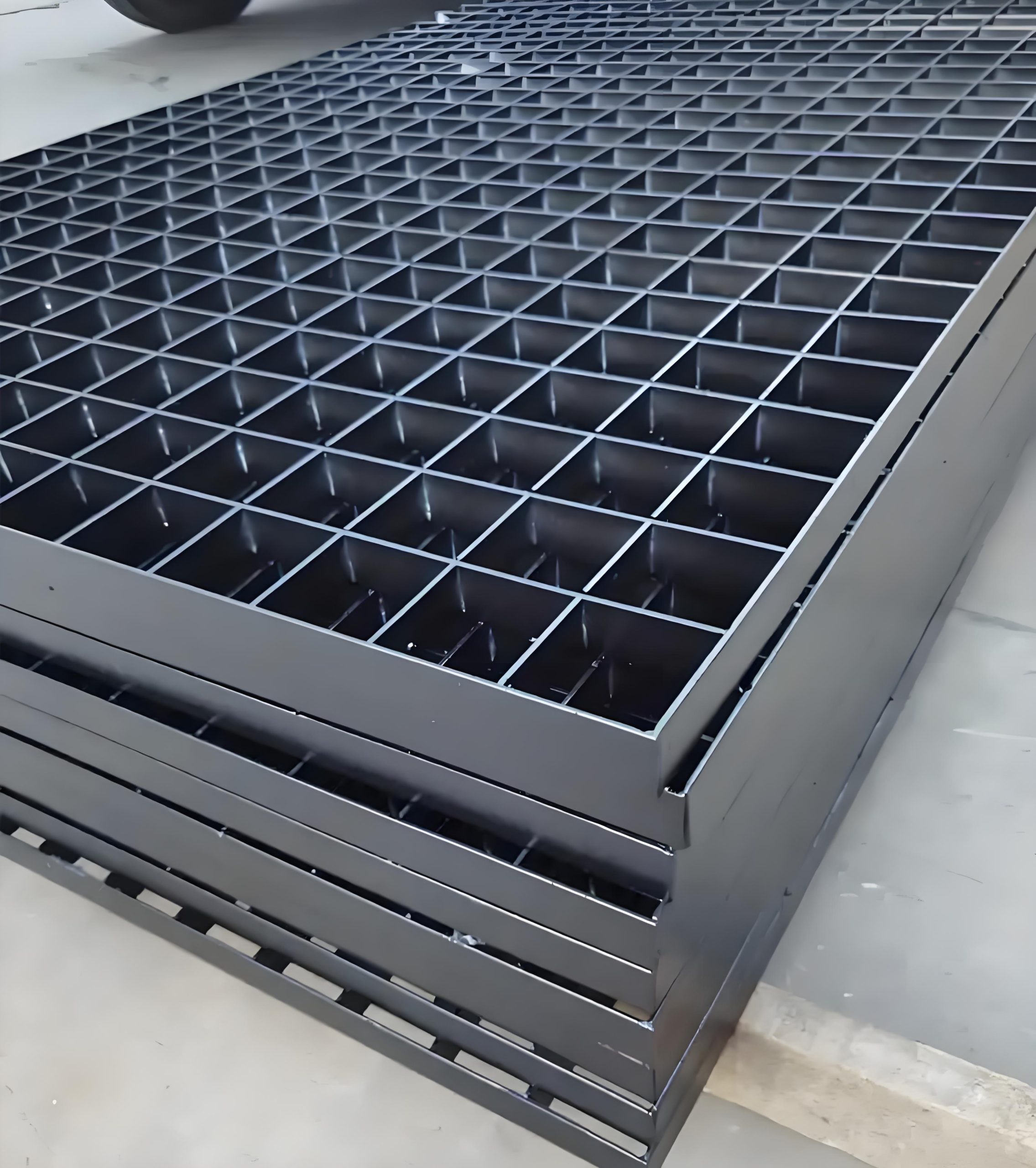
Serrated bearing bars have notches along the top surface. They improve traction in wet, muddy, icy, or oily conditions. Serrated grating normally costs more than plain grating because the bar surface requires additional processing.
Perforated safety grates use raised holes, punched teeth, or formed traction edges. They are often used for stair treads, roof access, maintenance platforms, and exterior service routes.
Abrasive grit inserts provide high traction and can improve tread-edge visibility. They are commonly used on stair nosings, ramps, poolside access areas, and outdoor entrances. The grit material, bonding method, color, and wear resistance affect the cost.
Toe plates, kick plates, high-visibility edges, and protective mesh may be required where tools, small materials, or debris could fall through the grate. These features add material and fabrication cost but may be necessary for the safety of people working below the platform.
Quantity has a strong effect on custom metal grate pricing. A factory must spend time reviewing drawings, setting up cutting programs, preparing fixtures, arranging materials, and organizing packing whether the order is for one grate or one hundred.
When many panels use the same material, mesh, finish, and fabrication details, the factory can improve material yield, reduce setup time, batch galvanizing or coating, and pack products more efficiently.
A replacement grate can be expensive per piece because it may require separate material handling, custom setup, a small galvanizing batch, and special packing. Ordering a few spare panels during the original project can reduce future replacement cost.
Labor cost depends on how much manual work the custom grate needs. Straight cuts and standard edge banding can often be completed efficiently. Curved cuts, detailed fitting, multiple welds, hand finishing, and unique accessories require more skilled labor.
Laser cutting, plasma cutting, waterjet cutting, saw cutting, and manual cutting can all be used depending on material and thickness. Complex drawings require programming time and detailed checking before fabrication begins.
Welding cost increases with the number of edge bands, support frames, cutout reinforcements, toe plates, hinges, and brackets. Stainless steel and aluminum welding can also require more specialized procedures than standard carbon steel fabrication.
Most custom bar grating work uses existing production equipment and standard fixtures. Dedicated tooling is more likely when a project requires a proprietary profile, repeated formed pattern, special press die, or high-volume custom perforation.
Deburring, grinding, cleaning, coating preparation, galvanizing preparation, dimensional inspection, and packing all add labor. The cost is justified when these processes improve safety, finish quality, and installation accuracy.
The best way to reduce custom grate cost is not to remove necessary safety or structural features. The goal is to simplify the design while maintaining the required load capacity, corrosion resistance, drainage, and installation performance.
Choose standard bearing bar heights, thicknesses, mesh patterns, and panel widths where possible. Standard materials are easier to source and usually create less waste during production.
Plan the panel layout around stock grating sizes. A good nesting layout reduces offcuts and can lower material waste. If several panels are needed, arrange them so they can be cut efficiently from the same stock sheets or grating panels.
Every cutout increases fabrication cost. Review whether openings can be combined, relocated, standardized, or coordinated with support framing. However, do not remove necessary openings for pipes, maintenance access, drainage, or safety.
Use the same flat-bar edge banding, frame profile, clip type, and hole pattern across multiple panels where practical. Standardized details reduce setup time, simplify installation, and make future replacement easier.
Do not specify premium stainless steel or duplex coating for a dry indoor grate if painted carbon steel will perform adequately. At the same time, do not choose black steel for an exposed outdoor project simply because it has the lowest initial price.
Late changes are expensive. A complete drawing should show overall dimensions, bearing bar direction, supports, cutouts, edge banding, holes, frames, finish, clips, and installation orientation before fabrication begins.
Combining multiple grates into one production order can reduce material, setup, coating, packing, and freight costs. This is especially useful for projects with repeated trench covers, walkway panels, stair treads, or platform sections.
Combine order quantitiesLowers setup and handling cost per panelUse factory fabrication instead of field cuttingImproves finish quality and reduces installation labor
| Cost-Reduction Method | Potential Benefit |
|---|---|
| Use standard mesh patterns | Reduces material sourcing and production complexity |
| Use repeatable panel dimensions | Improves nesting and reduces cutting waste |
| Approve drawings before production | Reduces rework and field modification |
| Use one suitable finish system | Simplifies coating and packing |
| Order spare panels with the main batch | Reduces future replacement cost |
| Choose the correct load rating | Avoids unnecessary material weight and cost |
A clear inquiry helps the supplier quote accurately and prevents unexpected price changes. The more complete the information, the easier it is to compare offers from different manufacturers.
A useful specification format may read as follows:
Custom galvanized steel bar grate, 1000 mm × 1500 mm, 30 × 3 mm bearing bars at 30 mm centers, cross bars at 100 mm centers, serrated surface, all cut edges flat-bar banded, one pipe cutout reinforced with banding, supplied with fixing clips, hot-dip galvanized after fabrication, suitable for the approved support span and project load requirements.
How much more does a custom metal grate cost?
A simple custom rectangular grate may cost only slightly more than a standard stock panel because it mainly requires cutting and edge finishing. The price increases when the grate needs heavy-duty bars, close mesh, unusual shapes, multiple cutouts, frames, anti-slip treatment, premium materials, galvanizing, or small-quantity production. The most accurate comparison is based on the finished drawing, weight, and fabrication details.
Is galvanized steel cheaper than stainless steel grating?
In most cases, galvanized steel grating has a lower initial cost than stainless steel grating. Galvanized steel is widely used for outdoor walkways, drainage covers, and industrial platforms. Stainless steel costs more but can be a better long-term choice in coastal, marine, hygienic, poolside, or highly corrosive environments.
How can I get a lower price for custom metal grates?
You can reduce cost by using standard mesh patterns and materials, simplifying cutouts, standardizing panel sizes, combining quantities, approving drawings early, and choosing the correct finish for the environment. Do not reduce bearing bar size, support details, edge banding, or anti-slip features if they are required for safety and load capacity.
