
Lightweight grating is widely exported for industrial walkways, platforms, stairs, drainage covers, marine access routes, rooftop equipment areas, water treatment plants, and modular structures. Aluminum grating, FRP grating, lightweight steel bar grating, expanded metal, and perforated safety grating can all reduce installation weight while maintaining safe access when properly designed. Export compliance is not based on one document alone. The buyer must confirm the product specification, load and span requirements, applicable ASTM, ANSI, EN, or ISO standards, material certificates, inspection scope, packaging method, and shipping requirements for the destination country.
Lightweight grating refers to grating products selected to reduce dead load, simplify handling, improve corrosion resistance, or lower transport and installation costs compared with conventional heavy steel flooring. It does not mean that the product is automatically suitable only for light loads. A lightweight grating system can be engineered for demanding industrial access applications when the material, panel design, support span, and fixing method are correctly selected.
For export projects, lightweight grating is commonly supplied as finished panels, stair treads, trench covers, access hatches, removable platform sections, or complete walkway packages. The export order may include grating panels, clips, support brackets, toe plates, handrails, stair treads, fasteners, material certificates, quality reports, packing lists, and installation drawings.
The main challenge in export procurement is making sure that the supplier, buyer, engineer, installer, and end user are referring to the same product. A request for “lightweight grating” is incomplete without details such as material, load, span, mesh pattern, open area, anti-slip requirement, corrosion environment, panel dimensions, fixing arrangement, and required standards.
| Lightweight Feature | Practical Benefit |
|---|---|
| Lower-density material | Reduces lifting, transport, and support-structure load |
| Open grid design | Uses less material than solid plate while allowing drainage and ventilation |
| Optimized bearing bars | Provides capacity without unnecessary steel or aluminum weight |
| Modular panel size | Improves handling, replacement, and container loading |
| Corrosion-resistant material | Can reduce coating maintenance and long-term replacement cost |
| Integrated anti-slip surface | Improves safety without adding a separate heavy flooring layer |
Different lightweight grating products have different structural behavior. The right product depends on whether the priority is low weight, corrosion resistance, smaller openings, fire performance, aggressive anti-slip texture, long-span capacity, or low factory cost.
Aluminum bar grating is made from bearing bars and cross bars. It is much lighter than carbon steel grating of similar volume and is commonly used for marine structures, rooftop access, pedestrian bridges, water treatment plants, food processing areas, and lightweight industrial platforms.
Aluminum grating may be swage-locked, pressure-locked, welded, or assembled by another controlled manufacturing process. The product construction should be stated clearly in the export specification because the load capacity and available profiles can vary by manufacturing method.
Molded FRP grating is made by placing continuous glass fibers in a mold and saturating them with a thermosetting resin system. It forms a square or rectangular grid with load-bearing bars in both directions. Molded FRP grating is corrosion resistant, electrically non-conductive, lightweight, and often supplied with a molded grit surface.
It is widely used in chemical plants, wastewater facilities, marine environments, cooling towers, electrical areas, and corrosive industrial locations. Molded FRP grating is especially useful where steel corrosion, electrical conductivity, or magnetic interference is a concern.
Pultruded FRP grating uses load-bearing bars produced by pultrusion, a continuous process that creates structurally efficient fiberglass profiles. The bars are assembled with cross rods or cross members to form a grating panel.
Pultruded FRP grating is often selected for longer spans because the primary load-bearing bars are oriented in one direction. It is commonly used for walkways, bridges, platforms, offshore access systems, and industrial areas where lighter panels and longer unsupported spans are required.
Lightweight steel grating normally refers to standard-duty welded bar grating, thinner bearing bar sections, shallower bar heights, expanded metal, perforated plank, or optimized grating layouts used on short spans. Carbon steel remains heavier than aluminum or FRP, but it can offer high load capacity and competitive factory pricing.
Galvanized lightweight steel grating is common for outdoor walkways, maintenance platforms, stair treads, drainage covers, and utility structures where corrosion resistance and mechanical strength are both needed.
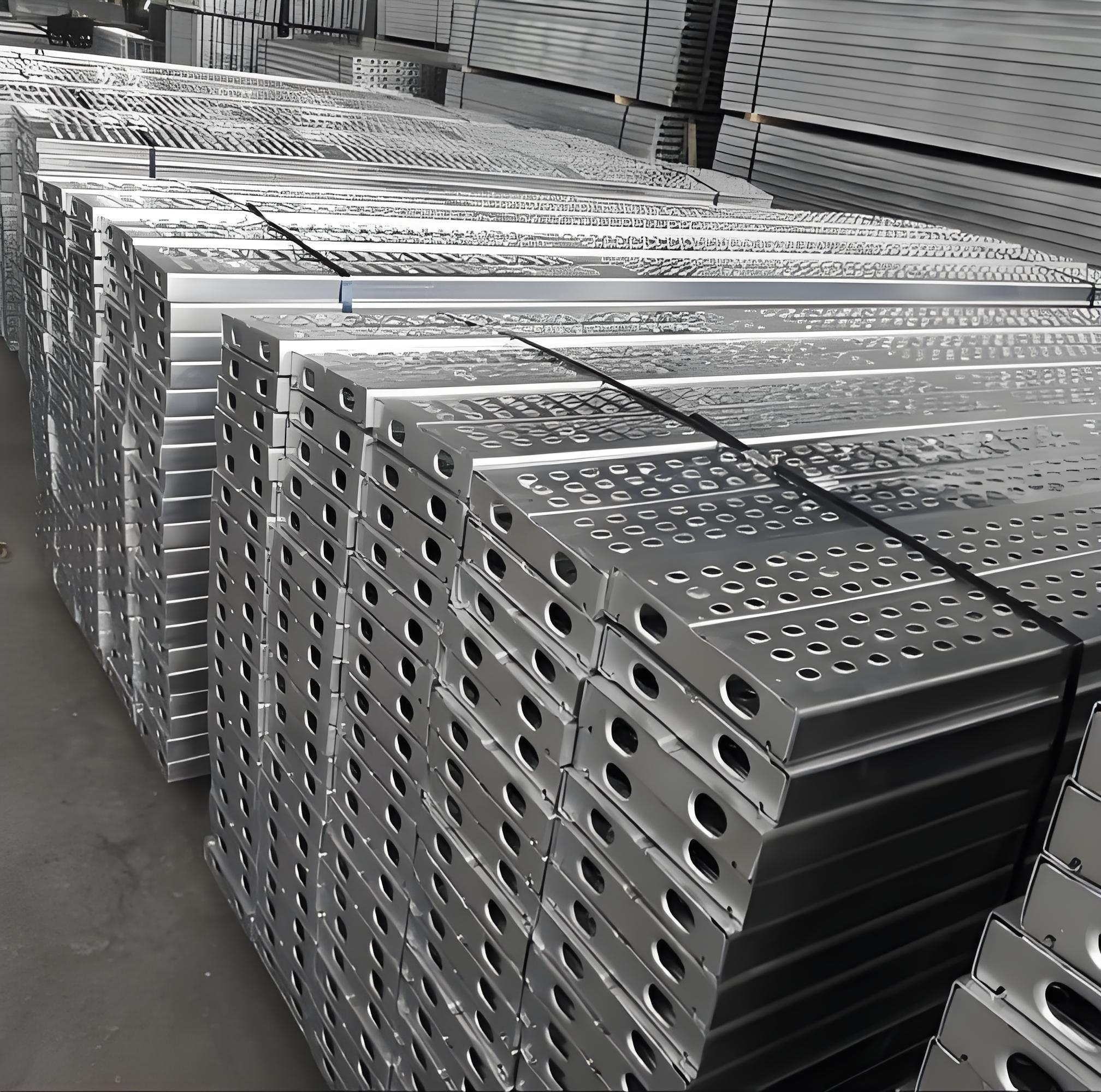
Perforated safety plank and expanded metal are lightweight open-flooring options often used for stairs, catwalks, maintenance platforms, ladders, and service routes. Raised edges, punched holes, and formed channels can create an anti-slip surface while maintaining drainage.
| Grating Type | Weight Trend | Corrosion Resistance | Typical Use |
|---|---|---|---|
| Aluminum bar grating | Low | Good in many outdoor environments | Marine access, platforms, roof walkways, lightweight stairs |
| Molded FRP grating | Low to medium | Excellent in many chemical and wet environments | Water treatment, chemical plants, electrical areas |
| Pultruded FRP grating | Low to medium | Excellent in many corrosive environments | Longer-span walkways, bridges, industrial platforms |
| Lightweight galvanized steel grating | Medium | Good with suitable galvanizing | Industrial walkways, stairs, drainage covers |
| Perforated safety plank | Low to medium | Depends on material and finish | Anti-slip stairs, catwalks, maintenance access |
| Expanded metal grating | Low to medium | Depends on material and finish | Light-duty access routes and formed stair treads |
Material selection is one of the first decisions in an export project. The material affects weight, corrosion resistance, load behavior, fire performance, electrical conductivity, fabrication method, packing method, and final cost.
Aluminum grating is often selected where low weight and corrosion resistance are priorities. Aluminum has a density of approximately 2700 kg/m³, compared with approximately 7850 kg/m³ for carbon steel. This does not mean an aluminum panel will always weigh exactly one-third of a steel panel because the bar sizes and design may differ, but aluminum can substantially reduce handling weight.
Common aluminum alloys used in structural grating and related access products include 6061, 6063, 5052, and 5083, depending on whether the component is an extrusion, sheet product, marine fabrication, nosing, or structural bar. Aluminum alloy and temper should be identified in the export specification when project documentation requires it.
FRP grating is useful where corrosion resistance, electrical insulation, low thermal conductivity, and low maintenance are important. Resin selection is critical. Orthophthalic, isophthalic, vinyl ester, phenolic, and other resin systems have different chemical, fire, smoke, temperature, and corrosion characteristics.
For FRP export projects, the supplier should not describe a product as simply “fiberglass grating” without identifying the resin system, load direction, mesh size, surface, thickness, fire requirements, and chemical exposure conditions.
Steel grating remains a practical option where mechanical strength, standardization, and cost are more important than the lowest possible panel weight. Standard-duty welded steel grating with optimized bearing bars can be economical for short and medium spans.
For outdoor projects, hot-dip galvanized steel is commonly selected. If the project involves severe chemicals, high chloride exposure, or long-term marine service, aluminum, FRP, stainless steel, or a specialized coating system may be more appropriate.
Corrosion protectionNatural oxide layer; alloy dependentResin-system dependentUsually requires galvanizing or coating
| Selection Factor | Aluminum | FRP | Lightweight Steel |
|---|---|---|---|
| Weight | Low | Low to medium | Medium |
| Load stiffness | Requires aluminum-specific load data | Requires FRP-specific span and deflection data | High stiffness for a given section size |
| Electrical conductivity | Conductive | Non-conductive | Conductive |
| Magnetic behavior | Non-magnetic | Non-magnetic | Magnetic |
| Typical export concern | Surface damage and dissimilar-metal contact | Resin, fire rating, UV protection, point-load damage | Coating damage, rust prevention, high shipping weight |
There is no single international standard panel size for lightweight grating. Standard stock sizes depend on the material, manufacturing process, factory equipment, handling limits, and export container plan. A supplier should clearly state whether a listed size is a stock panel, a maximum manufacturing size, or a finished fabricated size.
For aluminum and steel bar grating, common metric stock panels often include widths such as 800 mm, 1000 mm, and 1200 mm, with lengths such as 3000 mm, 5000 mm, or 6000 mm. The actual usable span is not the overall panel length; it is the distance between the supports under the bearing bars.
| Nominal Panel Size | Typical Use | Export Note |
|---|---|---|
| 500 × 1000 mm | Small access covers and removable platform panels | Easy to handle and pack in small bundles |
| 600 × 1000 mm | Narrow walkways and trench covers | Confirm bearing bar direction before fabrication |
| 800 × 1000 mm | Modular platform flooring | Useful for manual handling limits |
| 1000 × 1000 mm | General platform modules | Simple to stack and label for export |
| 1000 × 3000 mm | Walkway strips and service platforms | Check bundle weight and lifting method |
| 1000 × 6000 mm | Common factory stock panel size | Confirm container loading method and panel protection |
| 1200 × 6000 mm | Large platform sections | May require special packing and lifting arrangements |
Molded and pultruded FRP grating is frequently supplied in rectangular panels sized for factory molding, pultrusion, handling, and transport. Common export panel formats may include approximately 1000 × 4000 mm, 1220 × 2440 mm, 1220 × 3660 mm, and other factory-specific sizes.
FRP panels are often cut to custom dimensions because platform layouts include columns, pipe penetrations, handrail posts, drains, cable trays, and equipment bases. Cut edges should be sealed or finished according to the resin system and manufacturer’s installation instructions.
Lightweight grating stair treads are commonly supplied in lengths from 600 mm to 1200 mm and depths from 240 mm to 300 mm. The final tread size depends on clear width between stringers, stair angle, required tread run, nosing design, load, and code requirements.
For export projects, the tread drawing should identify:
Lightweight grating must be selected by verified load capacity, not by appearance or weight alone. A panel may be light enough for manual handling but still require deeper bearing bars, closer supports, or a different material to meet the required load and deflection limit.
| Required Information | Why It Matters |
|---|---|
| Clear support span | Controls bending stress and deflection |
| Support direction | Confirms the main load-bearing bars are correctly oriented |
| Uniform distributed load | Represents general pedestrian or platform loading |
| Concentrated load | Checks local loading from people, tools, wheels, or equipment |
| Load contact area | Important for small wheels, point loads, and equipment feet |
| Deflection limit | Controls walking comfort and serviceability |
| Material and construction type | Determines the correct load table and behavior |
| Cut-outs and edge details | Can change the load path and require reinforcement |
Finished weight is important for more than freight cost. It affects lifting plans, packing design, container loading, platform dead load, worker handling, and the quantity that can be bundled safely.
The finished panel weight should include:
For a bar grating panel, a preliminary estimate can be calculated by multiplying the panel area by the manufacturer’s unit mass:
Panel weight = panel width × panel length × unit mass
For metric units:
Panel weight (kg) = width (m) × length (m) × unit mass (kg/m²)
The final export packing list should use the actual finished piece weight rather than a preliminary estimate. Factory fabrication, cut-outs, banding, coating, and accessories can change the total weight.
FRP grating can have excellent corrosion resistance, but it behaves differently from metal grating. The span direction, resin system, bar profile, support spacing, temperature, and long-term creep behavior must be considered. An FRP panel should be selected using the manufacturer’s specific load and deflection data, not steel or aluminum load tables.
Mesh size affects drainage, ventilation, weight, slip resistance, dropped-object control, footwear compatibility, and cleaning performance. A larger opening often reduces weight and improves drainage, but it may allow tools, bolts, debris, or smaller objects to fall through.
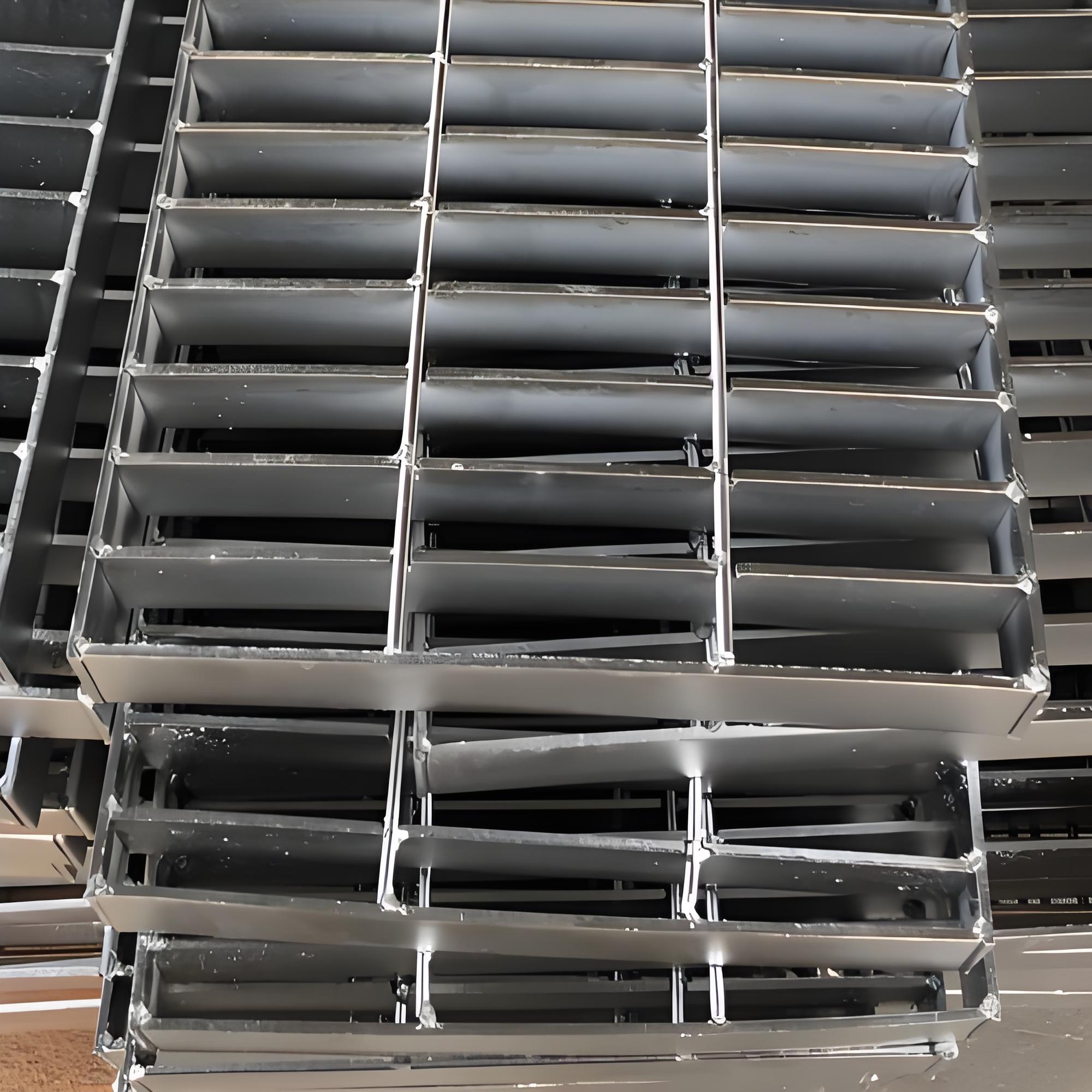
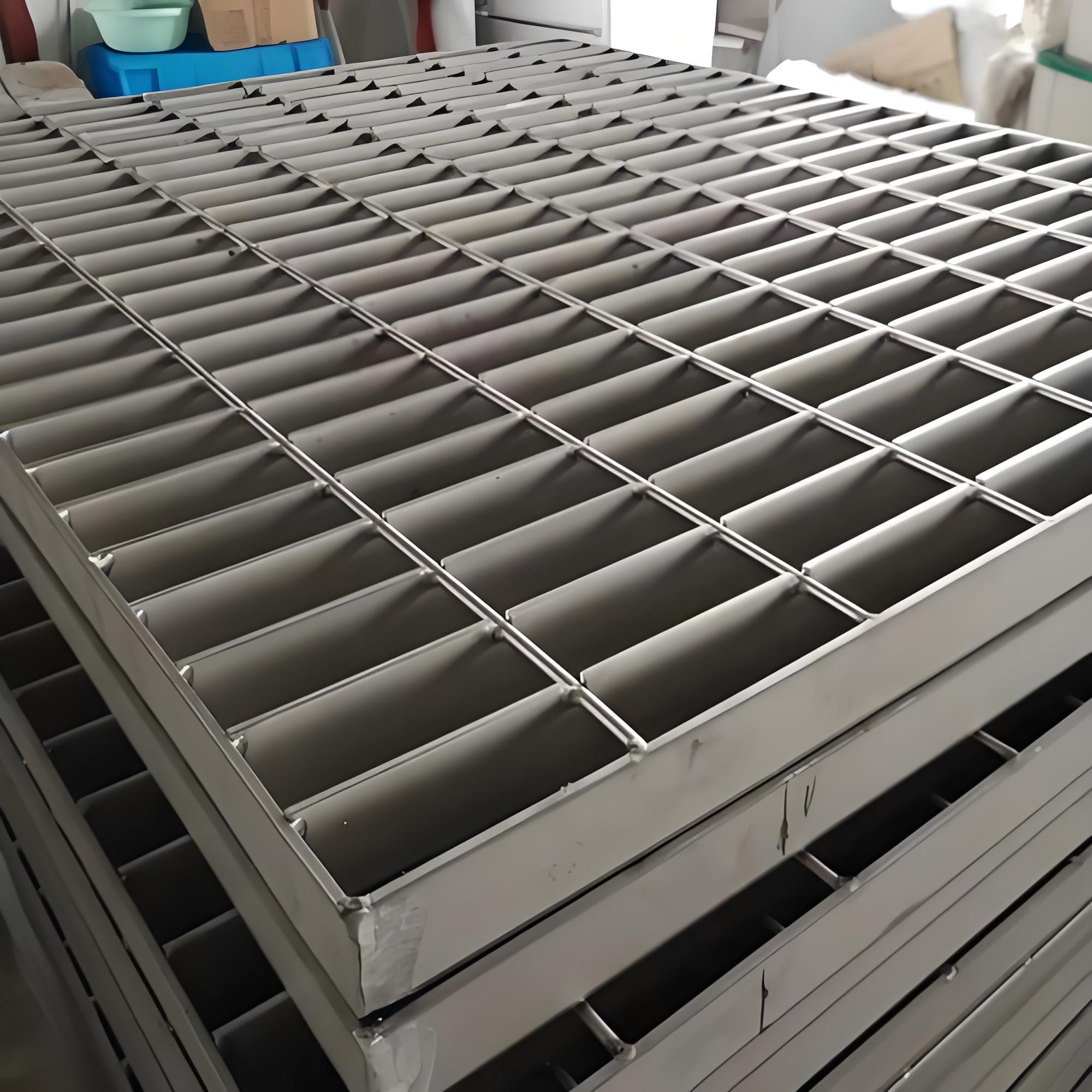
Common metric bar grating patterns include 25/100 mm, 30/100 mm, 30/50 mm, 32/100 mm, 40/100 mm, and 40/50 mm. The first number normally refers to bearing bar spacing, while the second refers to cross bar spacing.
| Mesh Pattern | Opening Trend | Weight Trend | Typical Use |
|---|---|---|---|
| 25/50 mm | Smaller openings | Higher weight | Close mesh and controlled opening applications |
| 30/50 mm | Moderate openings | Moderate to high weight | Industrial access with closer cross bar spacing |
| 30/100 mm | High open area | Standard weight | General industrial walkways and platforms |
| 40/50 mm | Moderate to high open area | Moderate weight | Open bar layout with closer cross bar spacing |
| 40/100 mm | Large openings | Lower weight | Light to standard-duty access areas where permitted |
Molded FRP grating is often supplied with square mesh openings such as approximately 25 × 25 mm, 38 × 38 mm, or 50 × 50 mm. The selected opening size should match the service environment, footwear, drainage requirement, and dropped-object control plan.
Smaller FRP mesh openings can improve walking comfort and reduce the risk of small objects falling through. Larger openings can reduce material use and improve drainage but may not be suitable for every industrial platform.
High open area is useful for drainage and ventilation, but it should be balanced against safety. The project may need to consider:
Slip resistance is a major reason for selecting open grating. The surface must remain safe in the actual operating environment, not only in a clean dry sample condition.
Serrated bearing bars have notches or teeth along the top edge. They improve traction in wet, oily, muddy, snowy, or outdoor conditions. Serrated aluminum and galvanized steel grating are common choices for industrial stairs, catwalks, platforms, and drainage areas.
Molded FRP grating can be supplied with an integral quartz grit surface. This provides a durable anti-slip texture across the full panel. The grit type, surface coverage, resin compatibility, and expected chemical exposure should be matched to the project conditions.
Perforated safety plank uses punched holes with raised edges. These raised edges provide grip, while the openings allow water and dirt to pass through. It is often selected for outdoor access routes, industrial stairs, service ladders, and areas exposed to mud or snow.
Stair treads should have a visible, durable nosing. Platforms may require toe plates to prevent tools or materials from falling to lower levels. The grating supplier should coordinate clips, toe plates, handrail posts, and cut-outs with the platform drawing.
For machinery access, ISO 14122-2 states that working platforms and walkways should have durable slip-resistant walking surfaces and should be designed to prevent falling-object hazards. The standard also addresses material compatibility, environmental effects, and the avoidance of water accumulation in joints.
Export projects often involve coastal conditions, humidity, long transport periods, chemical exposure, outdoor installation, and limited maintenance access. Corrosion resistance should be considered at the quotation stage, not after the product reaches the destination.
Aluminum is suitable for many outdoor and marine-related applications because it forms a protective oxide layer. The alloy, finish, drainage design, and fixing method still matter. Direct contact with dissimilar metals in wet conditions can cause galvanic corrosion, so isolation pads, compatible fasteners, coatings, or non-conductive washers may be required.
FRP corrosion resistance is mainly determined by the resin system rather than by the glass fiber alone. A standard polyester resin may be suitable for general industrial exposure, while vinyl ester or phenolic systems may be considered for more demanding chemical or fire-related applications.
Before exporting FRP grating for a chemical plant, request the chemical name, concentration, temperature, frequency of exposure, cleaning agent, and expected service life. A supplier should select resin based on a documented chemical-resistance assessment.
Hot-dip galvanized steel is widely used for outdoor steel grating. The zinc coating protects the fabricated steel, including edges and weld areas, when the grating is galvanized after fabrication.
Projects may reference ASTM A123/A123M-24 or ISO 1461:2022 for hot-dip galvanized coatings on fabricated steel products. The required coating standard and inspection documents should be included in the purchase order.
Export standards must be separated into product standards, material standards, coating standards, testing standards, safety standards, and documentation requirements. A supplier should not claim broad compliance without identifying the exact document, edition, scope, and project requirement.
For metal bar grating, ANSI/NAAMM MBG 531-24 provides technical information, recommended practices, load tables, and typical installation details for steel, stainless steel, and aluminum bar grating. It is useful for North American-style grating specifications, but it does not replace local building, workplace, or machinery regulations.
For heavy-duty metal bar grating, NAAMM MBG 532-24 may be relevant when the application involves higher wheel loads, industrial vehicles, or demanding support conditions. For welding requirements, NAAMM MBG 533-21 covers fabrication welding for steel, stainless steel, and aluminum bar grating.
ISO 14122-2:2016 covers non-powered working platforms and walkways associated with stationary machinery. It addresses general requirements for construction, materials, slip resistance, flooring openings, dimensions, environmental effects, and safe access.
ISO 14122-3:2016 covers stairs, stepladders, and guardrails associated with permanent means of access to machinery. The standard is published and remains current, although its ISO status indicates revision activity. Buyers should verify the required edition when preparing a final project specification.
For European machinery access projects, EN ISO 14122-2:2016 and EN ISO 14122-3:2016 are commonly referenced as European adoptions of the ISO requirements for working platforms, walkways, stairs, and guardrails.
For metal grating used as flooring in some European projects, DIN 24537-1 may be relevant for metal gratings used as flooring, platforms, walkways, and related access areas. The final standard selection depends on the country, contract, application, and whether the grating is part of a machine, building structure, marine installation, or industrial platform.
For marine construction and shipbuilding applications, ASTM F3059-24 provides testing and performance requirements for FRP gratings used in marine construction and shipbuilding. Its scope includes personnel-safety requirements and should not be treated as a universal design standard for every FRP platform or equipment load.
ASTM standards may apply to different parts of the product rather than the finished grating alone. Examples include:
ISO standards may address access systems, quality management, galvanizing, testing, and documentation. ISO 9001 certification can demonstrate that a supplier maintains a quality management system, but ISO 9001 certification alone does not prove that a specific grating panel meets the project’s load, material, or fire requirements.
| Standard Type | Example | What It Covers |
|---|---|---|
| Metal bar grating product guidance | ANSI/NAAMM MBG 531-24 | Technical data, specifications, load tables, and typical details |
| Machinery walkways | ISO 14122-2:2016 / EN ISO 14122-2:2016 | Working platforms and walkways associated with machinery |
| Stairs and guardrails | ISO 14122-3:2016 / EN ISO 14122-3:2016 | Stairs, stepladders, and guardrails for machinery access |
| Galvanized steel finish | ASTM A123/A123M-24 / ISO 1461:2022 | Hot-dip galvanized coatings on fabricated steel |
| Aluminum extrusion material | ASTM B221 | Aluminum and aluminum-alloy extruded bars and profiles |
| Marine FRP grating | ASTM F3059-24 | FRP gratings for marine construction and shipbuilding |
| Supplier quality management | ISO 9001 | Quality management system, not a product load certificate |
ASTM, ANSI, EN, and ISO documents are not automatically interchangeable. A product may be manufactured in accordance with one standard while the destination project requires another. A careful compliance review should identify which document controls the material, fabrication, load testing, coating, access system, and inspection records.
Statements such as “ASTM compliant,” “EN approved,” or “ISO certified” are incomplete unless the exact standard number and edition are stated. A correct export quotation should identify the standard, the relevant clause or requirement where appropriate, the test or document supplied, and any exclusions.
| Project Requirement | Question for the Supplier |
|---|---|
| Load capacity | Which product load table applies to the requested span and deflection limit? |
| Material grade | Can the supplier provide alloy, steel grade, resin, and batch traceability? |
| Galvanizing | Which galvanizing standard applies, and what inspection record is supplied? |
| FRP fire performance | Which test method is specified, and does the offered resin system match it? |
| Machinery access | Does the full walkway system need ISO or EN ISO 14122 compliance? |
| Stair geometry | Which local stair and workplace rules apply at the installation location? |
| Third-party inspection | Is pre-shipment inspection required, and what acceptance criteria apply? |
| Export documents | Which certificates, packing marks, origin documents, and photos are required? |
Material certificates and inspection records provide confidence that the exported grating matches the approved specification. The required documents should be agreed before production, especially for government, marine, oil and gas, chemical, infrastructure, and large industrial projects.
Some export projects request inspection documents in accordance with EN 10204, such as a 3.1 material certificate. If this requirement appears in the purchase order, the buyer should define which materials need traceability and how the certificate must be linked to the finished grating panels.
A material certificate is useful only when the supplier can connect it to the actual production batch. Batch numbers, heat numbers, panel tags, packing labels, and inspection reports should be coordinated for traceability.
Packing marksSupports correct installation and customs identification
| Inspection Item | Why It Matters |
|---|---|
| Panel dimensions | Confirms fit with support frames and installation drawings |
| Bearing bar direction | Prevents incorrect span orientation |
| Mesh spacing | Confirms opening size, open area, and design requirement |
| Unit weight | Supports freight, lifting, and structural calculations |
| Cut-outs and banding | Checks fabrication against approved drawings |
| Surface condition | Identifies sharp edges, cracks, damage, or finish defects |
| Anti-slip surface | Confirms serration, grit, perforation, or profile requirement |
| Coating or galvanizing | Confirms corrosion-protection quality |
| Clips and fasteners | Ensures all accessories are supplied and correctly packed |
Export packaging must protect the grating during lifting, inland transport, port handling, container loading, ocean transit, unloading, and site storage. Lightweight grating can still be damaged by point loads, loose banding, abrasion, moisture, fork truck impact, or poor stacking.
Aluminum grating can be scratched or bent by direct contact with steel straps, fork tips, or sharp timber edges. Protective pads, separators, edge guards, and non-staining packing materials are useful, especially when the project requires a visible architectural finish or anodized surface.
Aluminum panels should not be stored in a way that traps water between tightly stacked surfaces. Moisture and contamination can create staining or corrosion issues during long transit periods.
FRP grating should be supported evenly to avoid concentrated point loads that can crack bars, damage the grit surface, or distort panels. Bundles should not be overtightened with straps. Corners, exposed cut edges, and grit surfaces should be protected from abrasion.
FRP panels should also be secured against movement inside the container. Repeated vibration during ocean transport can cause surface wear if panels slide against each other.
Galvanized steel grating is durable, but stacked panels can still be damaged by impact or rough lifting. Clips, bolts, and small accessories should be packed separately in clearly marked boxes or bags and matched to the corresponding panel bundles.
For black steel grating, moisture-control packaging, temporary rust protection, or vapor corrosion inhibitor materials may be required depending on transit time and destination climate.
Where wood pallets, timber frames, or timber dunnage are used for export, the packing material may need to comply with ISPM 15 requirements. Buyers should confirm the destination country’s current phytosanitary and customs rules before shipment.
Container planning should begin during the panel layout stage. Long panels, heavy bundles, fragile FRP sections, and mixed accessories can create loading problems if the shipping method is considered only after production is complete.
The choice between a 20-foot container, 40-foot container, high-cube container, open-top container, flat rack, or breakbulk shipment depends on panel length, bundle weight, total cargo density, port restrictions, and destination handling capability.
Heavy steel grating may reach container payload limits before filling the available volume. Lightweight aluminum or FRP grating may fill the container volume before reaching the weight limit. The final loading plan should use the shipping line’s permitted payload, internal dimensions, floor loading limits, and cargo-securing requirements.
| Loading Practice | Purpose |
|---|---|
| Use dunnage below bundles | Creates fork access and spreads load over the container floor |
| Distribute weight evenly | Reduces handling risk and container imbalance |
| Use separators between bundles | Prevents abrasion, point loading, and surface damage |
| Block and brace cargo | Prevents movement during transport |
| Use approved lashing points | Secures bundles without damaging panels |
| Keep accessories boxed and labeled | Prevents missing clips, bolts, and small parts |
| Take loading photographs | Provides evidence of packing condition before shipment |
| Check container condition before loading | Helps prevent water ingress, floor damage, and cargo contamination |
Damage prevention begins with the correct bundle design. Heavy grating bundles should be supported at multiple points to prevent bending. Long aluminum panels should not be placed under heavy steel cargo. FRP panels should be protected from concentrated loads and shifting cargo.
For mixed-material shipments, separate aluminum, FRP, and steel bundles with appropriate packing materials. Avoid placing wet timber, loose steel components, or sharp metal edges directly against finished aluminum or FRP surfaces.
Large export projects often include dozens or hundreds of panels with similar dimensions but different cut-outs. Bundle labels should include panel numbers that match the installation drawing. This reduces site sorting time and prevents costly errors during erection.
A reliable export supplier should understand both manufacturing and international project requirements. The supplier must be able to explain what the product can do, what it cannot do, which standards apply, and which information is still needed before production.
Choose a supplier experienced in the material you need. Aluminum bar grating, molded FRP, pultruded FRP, galvanized steel grating, expanded metal, and safety plank all require different manufacturing knowledge, load data, fabrication methods, and packing practices.
A professional supplier should provide a compliance matrix showing the requested material, surface, dimensions, standards, documents, tests, finish, packing, and exclusions. This is particularly useful when the inquiry mentions ASTM, ANSI, EN, ISO, marine, fire, or third-party inspection requirements.
Ask for load and deflection information that matches the actual product, span direction, support condition, and material. Do not accept a generic load chart for a different thickness, resin system, bar size, or grating construction.
Before production, approve drawings showing panel dimensions, cut-outs, support direction, stair tread orientation, clips, toe plates, handrail openings, nosing, material, finish, and identification marks.
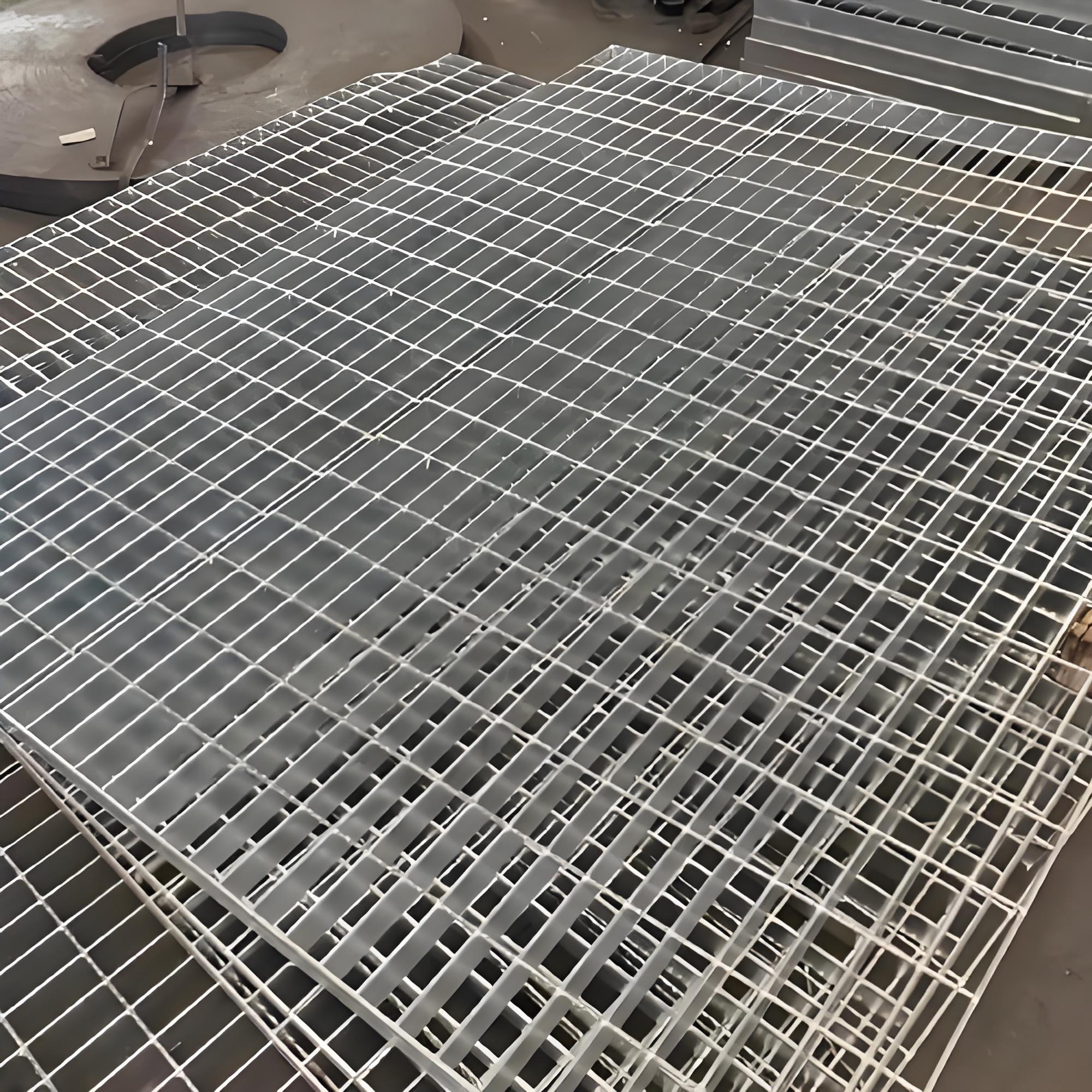
The supplier should be able to provide material certificates, resin declarations, galvanizing reports, dimensional inspection records, packing photos, and third-party inspection support when required. This is especially important for marine, chemical, power generation, infrastructure, and public-sector projects.
A supplier may manufacture good grating but still create export problems through poor packing. Ask how panels will be bundled, protected, labeled, loaded, and secured. Confirm whether the supplier can provide commercial invoices, packing lists, certificate of origin, inspection documents, and export packing information required by the buyer.
What is the best lightweight grating for export?
The best lightweight grating depends on the project environment and load requirement. Aluminum bar grating is widely used for low weight and outdoor corrosion resistance. Molded or pultruded FRP grating is suitable for many corrosive and electrically sensitive environments. Lightweight galvanized steel grating is often selected when higher stiffness and competitive cost are more important than achieving the lowest possible weight.
Which standards apply to exported grating?
Common references include ANSI/NAAMM MBG 531 for metal bar grating, ISO 14122-2 and EN ISO 14122-2 for machinery walkways and platforms, ISO 14122-3 for stairs and guardrails, ASTM A123 or ISO 1461 for hot-dip galvanized steel, ASTM B221 for aluminum extrusions, and ASTM F3059 for FRP grating used in marine construction. The applicable standards must be confirmed by the project contract and destination-country requirements.
How should grating be packed for sea freight?
Grating should be bundled by size and panel number, separated with protective spacers, supported on dunnage, secured with suitable straps, and blocked inside the container to prevent movement. Aluminum and FRP panels need protection from scratches and point loads, while steel grating needs protection from moisture and coating damage. Accessories such as clips and bolts should be packed separately in labeled boxes.
