
Steel bar grating manufacturers are evaluated by production stability, welding consistency, material control, fabrication accuracy, and the ability to deliver grating panels that match structural drawings. For industrial platforms, trench covers, drainage systems, stair treads, walkways, and equipment access areas, steel bar grating is not only a surface panel but also a load-bearing component. From the factory perspective of Anping County Chuansen Silk Screen Products Co., Ltd., manufacturing steel bar grating requires controlled flat bar preparation, stable cross bar welding, accurate spacing, reliable surface treatment, and project-based fabrication capability for standard and non-standard structures.
A steel bar grating manufacturer needs verifiable production conditions rather than only trading experience. Factory qualifications normally include years of continuous operation, workshop scale, equipment configuration, raw material storage capacity, welding process control, surface treatment coordination, inspection capability, and export packing experience. These factors decide whether the factory can handle repeated orders, large platform areas, urgent replacement panels, and drawing-based custom fabrication.
Anping County Chuansen Silk Screen Products Co., Ltd. operates from the manufacturing base of Anping, where steel grating, wire mesh, fencing systems, and metal fabrication products are produced for industrial and construction use. The factory organization is built around steel grating production, including material preparation, automatic welding, cutting, edge banding, surface finishing, inspection, and packing. A manufacturer with dedicated workshop space can separate standard panel production from customized processing, reducing confusion between stock sizes and project-specific fabrication items.
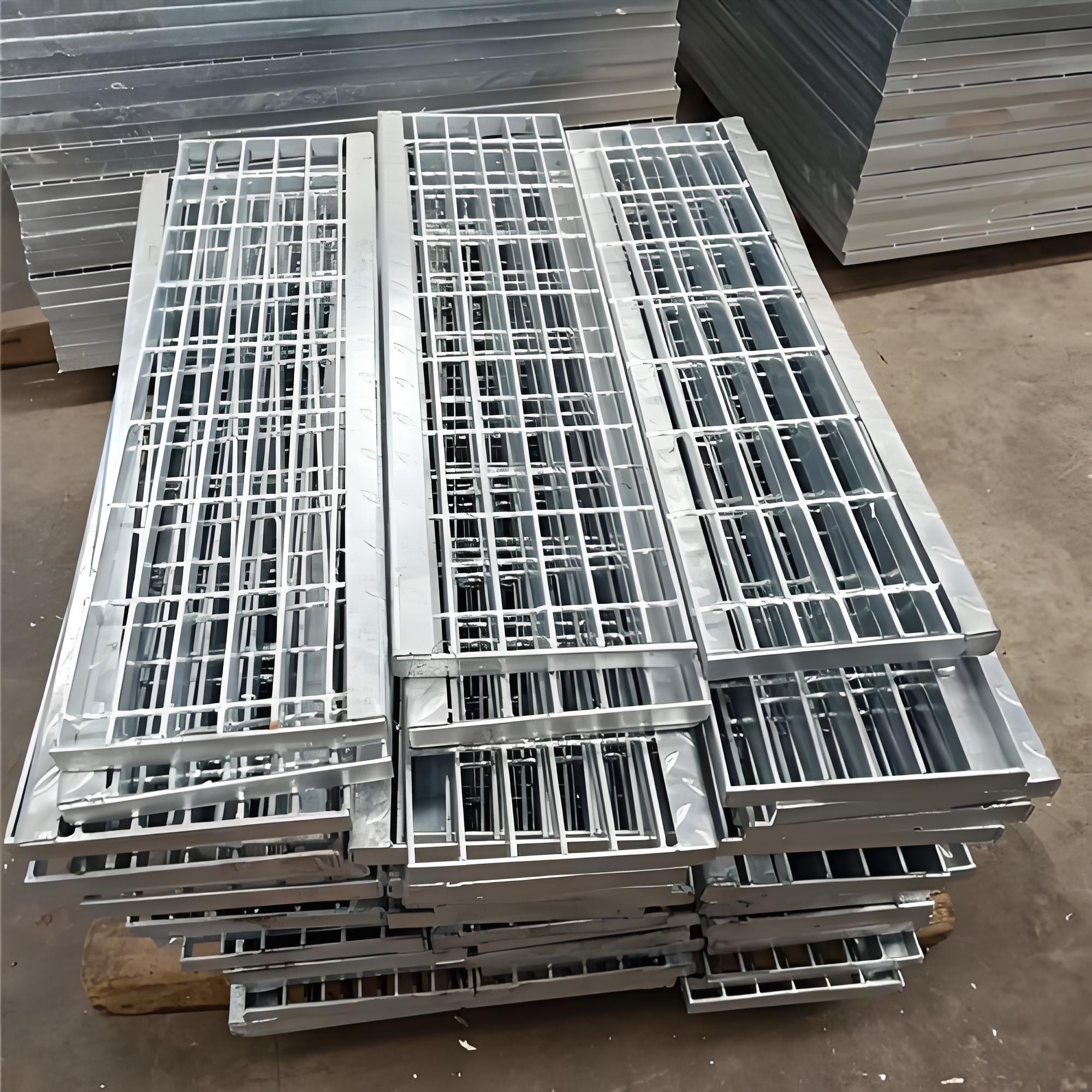
Workshop area is not only a figure on a factory profile. In steel bar grating production, sufficient plant space allows flat steel bars to be stored by size, cross bars to be prepared by batch, finished panels to be stacked according to project number, and galvanized products to be inspected before packing. For export projects, storage and loading zones also affect delivery efficiency because grating panels are heavy, sharp-edged, and usually packed in bundles or pallets.
The production line configuration directly affects welding uniformity. Automatic pressure welding lines are used for regular steel bar grating where bearing bars and cross bars must be joined at fixed spacing. Resistance welding units support stable weld formation between the bearing bar and cross bar. Serrated punching equipment is used to process anti-slip tooth profiles on flat bars before the grating panel is welded or assembled.
| Production Equipment | Main Function | Manufacturing Value |
| Automatic pressure welding line | Welds bearing bars and cross bars | Stable spacing and repeated panel accuracy |
| Resistance welding unit and serrated punching equipment | Controls weld points and anti-slip tooth forming | Supports industrial grating and safety grating production |
Annual production capacity is connected with line speed, material supply, galvanizing coordination, and finishing labor. A reliable steel bar grating manufacturer should be able to produce standard panels continuously while reserving capacity for urgent custom orders. Conventional inventory is usually arranged around common bearing bar sizes, common mesh spacing, stair tread blanks, mounting clips, edge bars, and regularly used raw steel grades.
Common inventory planning covers frequently used specifications such as 25 mm, 30 mm, 32 mm, and 40 mm bearing bar heights, with thicknesses such as 3 mm and 5 mm depending on loading demand. Spacing systems such as 30/100, 40/100, 30/50, and related project-specific layouts are prepared according to production frequency. This structure allows the factory to respond faster to standard trench cover, walkway, platform, and stair tread requirements.
Steel bar grating manufacturers need broad material coverage because application environments differ sharply. A dry indoor maintenance platform, a coastal walkway, a chemical workshop trench cover, and a municipal drainage grille may use similar product shapes but completely different material and surface treatment systems. Material selection influences corrosion resistance, load-bearing capacity, weight, welding behavior, and service life.
Carbon steel Q235B is widely used for general steel bar grating because it offers practical strength, weldability, and cost control for industrial platforms, trench covers, equipment walkways, and municipal drainage systems. Q235B grating is normally combined with hot-dip galvanizing when outdoor corrosion resistance is required. For indoor or temporary structures, painted or electro-galvanized surfaces may be used where exposure is lighter.
Stainless steel 304 is selected for environments requiring better corrosion resistance and cleaner surface conditions. Food processing plants, pharmaceutical facilities, clean production workshops, and chemical handling zones may use 304 stainless steel grating because it resists ordinary atmospheric corrosion and many washdown conditions better than carbon steel.
Stainless steel 316L is used where chloride exposure, salt spray, marine atmosphere, or stronger chemical corrosion is present. Compared with 304, 316L contains molybdenum, which improves resistance to pitting corrosion in chloride-containing environments. Offshore platforms, coastal facilities, marine engineering areas, desalination plants, and certain chemical plants may require 316L stainless steel bar grating.
Aluminum alloy grating is used where lightweight structure and corrosion resistance are both required. Aluminum grating reduces dead load and is easier to handle during installation, making it suitable for certain architectural walkways, maintenance platforms, lightweight drainage covers, and environments where magnetic or spark-related concerns are considered during design.
| Material | Main Property | Typical Use |
| Q235B carbon steel | Strong weldability and economical structure | Platforms, trench covers, walkways, drainage grating |
| 304, 316L stainless steel and aluminum alloy | Corrosion resistance or reduced weight | Food plants, marine areas, chemical sites, lightweight structures |
Surface treatment is another major part of product coverage. Hot-dip galvanized steel grating is the most common outdoor industrial option. The zinc coating protects steel surfaces and welded joints, which is especially relevant because grating panels contain many intersections, cut edges, and exposed surfaces.
Electro-galvanized grating provides a thinner and smoother zinc layer, generally used for lighter indoor or decorative applications. Painted grating allows color marking, visual identification, or basic surface protection in less corrosive spaces. Stainless steel grating may be acid pickled and passivated to remove welding discoloration and improve the surface oxide layer after fabrication.
By structural form, pressure welded grating is the standard industrial series. It is produced by welding cross bars into bearing bars under pressure and heat, creating a rigid grid structure. Press-locked grating, including close-mesh and I-bar types, uses mechanical interlocking and pressing to form a neat surface appearance. Serrated safety grating uses bearing bars with punched tooth profiles to increase traction in oily, wet, muddy, or sloped areas.
Steel bar grating manufacturing must follow recognized standards when panels are used in industrial or public engineering structures. Standards define bearing bar spacing, cross bar spacing, dimensional tolerance, welding quality, deflection limits, surface conditions, and loading requirements. Without standard-based production, panels may look correct but fail to match structural design assumptions.
YB/T 4001.1 is commonly used for steel grating production in Chinese manufacturing and engineering projects. It covers product classification, size tolerance, technical requirements, inspection methods, and delivery conditions. For international projects, ANSI/NAAMM and BS 4592 are frequently referenced for grating design, fabrication, and load performance requirements.
| Standard | Focus Area | Application Context |
| YB/T 4001.1 | Steel grating specification, tolerance, inspection | Domestic and export manufacturing reference |
| ANSI/NAAMM and BS 4592 | Structural design, load tables, fabrication requirements | North American, British, and international engineering projects |
ISO 9001 quality management is relevant because grating production contains repeated process steps that must be controlled by material records, production instructions, inspection procedures, and nonconforming product handling. A steel bar grating manufacturer working under ISO 9001 principles can organize production traceability from raw material receiving to finished product inspection.
Testing ability is part of real manufacturing control. Spectral analysis helps verify the chemical composition of carbon steel, stainless steel, and aluminum alloy materials. This is especially meaningful for stainless grades, where 304 and 316L must not be mixed during production. Material identification protects the corrosion performance expected in the project environment.
Coating thickness measurement is used after galvanizing to confirm that zinc coating thickness meets the required range. A panel with insufficient zinc coating may corrode earlier, especially at welded points, cut edges, and drainage exposure zones. Coating inspection also helps separate different surface treatment batches before packing.
Load testing verifies whether the grating structure performs under the designed load condition. Bearing bar height, bearing bar thickness, span direction, support distance, cross bar spacing, and welding quality all affect load performance. For heavy-duty grating used in vehicle access areas or equipment platforms, load calculation and load testing are more significant than appearance inspection alone.
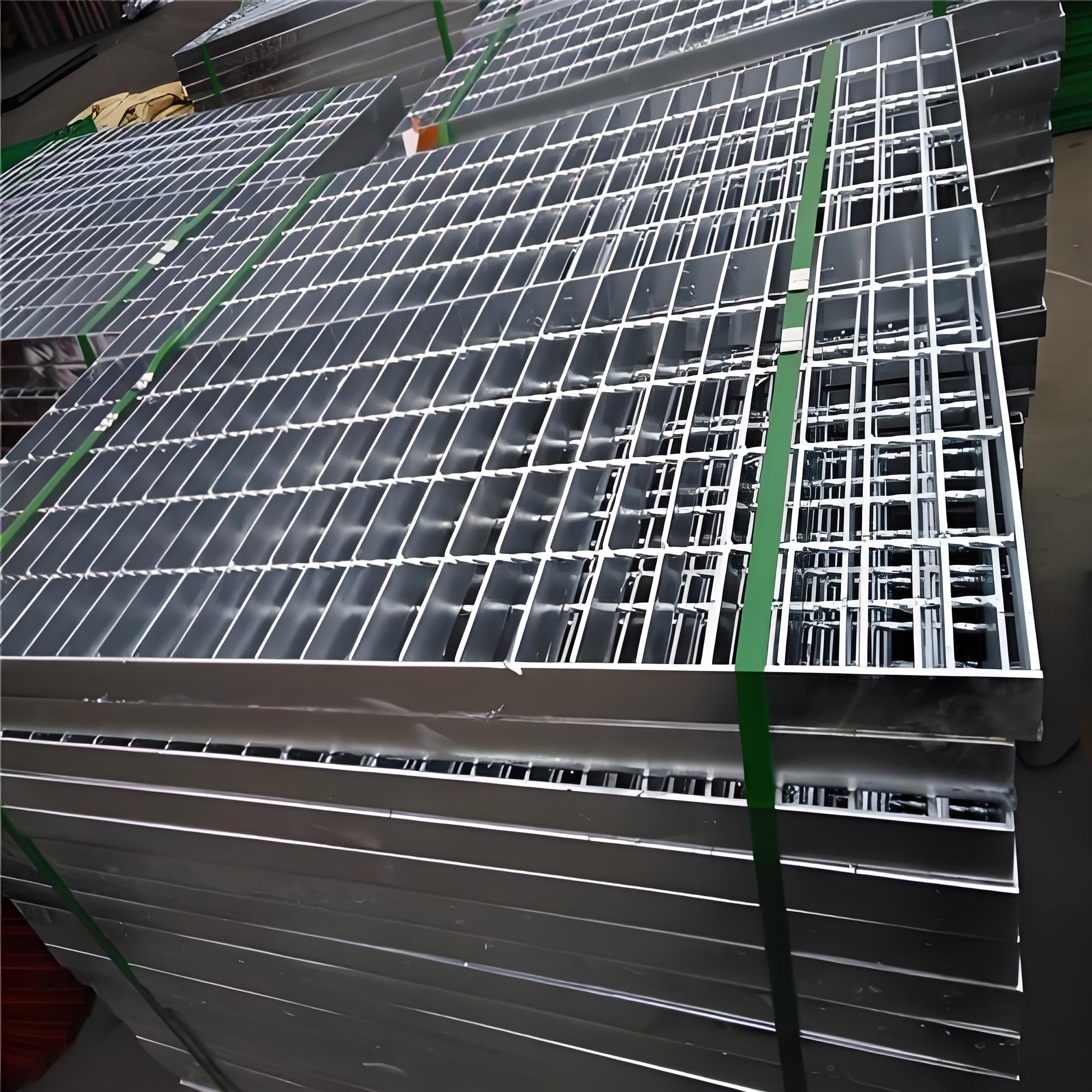
Many steel bar grating projects are not completed with standard rectangular panels only. Industrial sites contain pipes, tanks, columns, cable trays, drainage channels, pumps, ladders, valves, and structural frames. These features require non-standard cutting, opening, edge reinforcement, and panel numbering. A manufacturer with only standard panel welding capacity may not be suitable for drawing-based engineering projects.
Irregular fabrication includes arc-shaped panels, fan-shaped panels, diagonal cutting, corner cutting, round openings, square openings, and pipe penetration holes. These shapes are common around circular tanks, clarifiers, platform columns, pipe supports, and equipment foundations. Accurate processing reduces field cutting and helps maintain galvanized coating integrity because excessive site cutting exposes bare steel surfaces.
Deep processing includes bending, edge banding, welding kick plates, preparing mounting clips, adding frames, and producing stair tread assemblies. Edge banding improves panel stiffness and protects bearing bar ends. Kick plates are used on elevated platforms to reduce the risk of tools, small parts, or materials falling from platform edges. Mounting clips secure grating panels to steel beams without welding on site.
Supporting parts are also part of manufacturing service. Stair tread nosing, column base plates, fasteners, brackets, clamps, and installation accessories can be produced or supplied together with grating panels. When these items are coordinated in one production package, hole position, panel width, tread length, and installation direction can be checked before shipment.
CAD drawing deepening is necessary when original project drawings only show platform layout or trench dimensions. The factory must convert these layouts into panel-by-panel production drawings, including panel number, bearing bar direction, cut-out position, edge bar arrangement, and packing sequence. This work reduces mismatch between workshop production and installation sequence.
Factory-direct supply means the production unit manages quotation, technical confirmation, production scheduling, inspection, packing, and shipment coordination. The structure removes resale margin between production and delivery and reduces the number of communication layers between engineering drawings and workshop manufacturing.
Ex-factory pricing is based on raw material weight, bearing bar specification, cross bar type, welding method, surface treatment, cutting difficulty, packing method, and logistics arrangement. For standard carbon steel hot-dip galvanized grating, the production calculation is usually straightforward. For stainless steel, serrated grating, heavy-duty grating, and irregular panels, processing time and material loss become more visible in the quotation structure.
Delivery control is one of the practical advantages of direct manufacturing. Standard specifications can generally be arranged within 7 to 10 days when raw materials and surface treatment capacity are available. Non-standard grating, including special cutting, openings, stair treads, kick plates, and drawing-based panel numbering, usually requires 15 to 20 days because fabrication and inspection stages are longer.
| Production Type | Typical Lead Time | Main Work Involved |
| Regular specification | 7 to 10 days | Welding, cutting, galvanizing, inspection, packing |
| Non-standard fabrication | 15 to 20 days | Drawing review, special cutting, accessories, surface treatment, numbering |
Technical support is connected with manufacturing accuracy. CAD drawing deepening allows the factory to confirm panel dimensions before production. Load-bearing calculation helps match bearing bar size with span and operating load. Installation guidance helps define bearing bar direction, support requirements, clip layout, and panel numbering sequence.
Export capability is not limited to booking shipment. Steel bar grating panels require secure packing because panels are heavy and contain sharp edges. Fumigated wooden crates, steel or wooden pallets, bundled packing, waterproof wrapping, and container loading plans are used according to shipment distance and unloading method. Origin certificates and export documents can be prepared according to project and destination requirements.
Steel bar grating is used across heavy industry, civil infrastructure, public works, and specialized manufacturing because it combines open area, drainage ability, ventilation, anti-slip performance, and structural support. The same product category may serve different functions depending on span, load, material, and finish.
Petrochemical projects use steel bar grating for refinery platforms, pipe racks, equipment maintenance areas, tank farm walkways, drainage trenches, and ladder-connected operating decks. These locations require stable welds, corrosion protection, and accurate panel layout because installation areas are often congested with pipelines and steel structures.
Power and energy projects use grating around boilers, turbines, substations, cable trenches, cooling systems, and maintenance corridors. Panel strength, fire resistance, grounding compatibility, and safe walking surfaces are relevant in these environments. Carbon steel hot-dip galvanized grating is commonly used, while stainless steel may appear in corrosive process zones.
Wastewater treatment plants require grating for channels, tanks, inspection platforms, sludge treatment zones, pump rooms, and drainage covers. Corrosion exposure, humidity, chemical contact, and maintenance traffic influence material and surface treatment selection. Hot-dip galvanized carbon steel and stainless steel are both used depending on the service area.
Food and pharmaceutical facilities require cleaner surface conditions, corrosion resistance, and washdown compatibility. Stainless steel 304 or 316L grating is more suitable for these environments than ordinary painted carbon steel. Acid pickling and passivation can be applied after fabrication to improve surface condition.
Marine engineering and coastal projects require stronger corrosion control because salt exposure accelerates corrosion. 316L stainless steel, aluminum alloy, or heavy hot-dip galvanized carbon steel may be selected according to design life, load demand, and budget control. Offshore platforms, docks, shipyard walkways, and seawater treatment structures often require careful material separation and coating inspection.
Municipal transportation projects use steel bar grating in drainage trench covers, bridge maintenance passages, road-side drainage systems, subway ventilation grilles, and public works access covers. These products require dimensional consistency because they are installed into frames, trenches, or support channels prepared by civil construction teams.
Overseas engineering projects and OEM fabrication require stable repeatability. Panel numbering, packaging marks, production drawings, and export documentation must be consistent. OEM cooperation may involve private labels, regional specifications, or repeated production under fixed drawings. A factory with welding, cutting, surface treatment coordination, and packing control is better positioned to support this production model.
The coordination process begins with drawings or a requirement list. Drawings should show overall dimensions, bearing bar direction, span, support method, opening position, edge banding requirements, surface treatment, quantity, and installation location. For stair treads, drawings should include tread length, width, side plate hole position, nosing type, and bolt requirements.
After receiving drawings or specifications, the factory prepares a quotation based on material, size, weight, surface treatment, processing difficulty, packaging, and delivery schedule. For large platform projects, quotation work may also include panel layout review, numbering method, and drawing adjustment before production approval.
Production scheduling follows confirmed drawings and approved specifications. Raw materials are prepared according to flat bar size, cross bar type, and material grade. Standard grating moves through welding, cutting, edge banding, surface treatment, inspection, and packing. Non-standard items pass through additional drawing checks, cutting procedures, opening processing, accessory welding, and panel marking.
Factory inspection is completed before logistics arrangement. Inspection points include panel size, diagonal tolerance, bearing bar spacing, cross bar spacing, weld condition, edge bar condition, surface treatment appearance, coating thickness where applicable, accessory quantity, and packing marks. For export orders, inspection records and packing lists support customs clearance and project receiving work.
Logistics dispatch is arranged after packing. Steel grating panels can be shipped by full container, less-than-container shipment, truck delivery, or project-based cargo forwarding. Heavy panels require stable bundling and forklift-compatible packaging. For overseas projects, fumigated wooden crates, palletized packing, waterproof wrapping, and clear shipping marks help reduce handling damage during long-distance transport.
What makes a steel bar grating manufacturer different from a trading company?
A manufacturer controls welding, cutting, edge banding, surface treatment coordination, inspection, and packing. A trading company may handle quotation and communication but does not directly manage production equipment, workshop scheduling, or fabrication quality.
Which material is most common for steel bar grating?
Q235B carbon steel is the most common material for general industrial steel grating. It is frequently combined with hot-dip galvanizing for outdoor platforms, trench covers, drainage grating, and walkway systems.
Can stainless steel bar grating be produced in 304 and 316L?
Yes. 304 stainless steel is suitable for many clean and mildly corrosive environments, while 316L stainless steel is used for marine, coastal, chloride, and stronger corrosion conditions.
What is the normal delivery time for steel bar grating?
Regular specifications are generally produced within 7 to 10 days. Non-standard grating with special cutting, openings, kick plates, stair tread details, or drawing-based numbering generally requires 15 to 20 days.
Can steel bar grating be made with openings for pipes and equipment?
Yes. Pipe openings, corner cuts, arc shapes, fan shapes, and special contours can be processed according to CAD drawings or site dimensions.
Which standards are used for steel bar grating manufacturing?
Common standards include YB/T 4001.1, ANSI/NAAMM, and BS 4592. The selected standard should match the project region, load requirement, dimensional tolerance, and engineering specification.
What information should be provided before production?
Useful production information includes panel dimensions, bearing bar direction, span, load requirement, material grade, surface treatment, quantity, opening positions, edge banding details, installation accessories, and delivery requirements.
