

316L stainless steel bar grating is widely specified for chemical plants, marine walkways, offshore platforms, pharmaceutical facilities, wastewater systems, and other applications where low-carbon stainless steel offers better weldability and more stable corrosion resistance after fabrication. For this reason, choosing a supplier is not only about comparing a basic price per square meter. It is also about evaluating customization capability, factory flexibility, tooling support, lead time, inspection ability, and experience with 316L project orders.
For 316L stainless steel bar grating, the true strength of a supplier is often reflected in its ability to manufacture beyond standard catalog sizes. Many projects involve trench covers, platform flooring, stair treads, drainage zones, equipment access areas, or offshore maintenance walkways that do not match conventional production dimensions. A capable factory should therefore be able to offer both standard and fully customized configurations based on drawings, loading conditions, and installation requirements.
In terms of bearing bar dimensions, the usual customization range is flat bar thickness from 3mm to 10mm, with height from 20mm to 150mm. This range covers a large part of industrial demand. Lighter pedestrian areas may use smaller bearing bars, while heavy-duty platforms, process plant walkways, and maintenance zones may require higher and thicker bars for improved load capacity and stiffness. If the required size is outside the regular rolling or cutting range, some factories can open custom tooling for non-standard profiles. This is especially relevant when an engineering contractor wants to match an old existing grating system or follow a project-specific structural standard.
Grid spacing is another major part of customization. Standard spacing such as 30x100mm, 30x50mm, or 40x100mm is common in many markets, but custom projects frequently require non-standard spacing like 25x38mm, 50x60mm, or other project-defined combinations. These special spacings may be selected for anti-slip performance, drainage control, heel-safe pedestrian traffic, or small object retention. A reliable supplier should be able to confirm whether the spacing can be produced through existing tooling, modified welding jigs, or custom mold development.
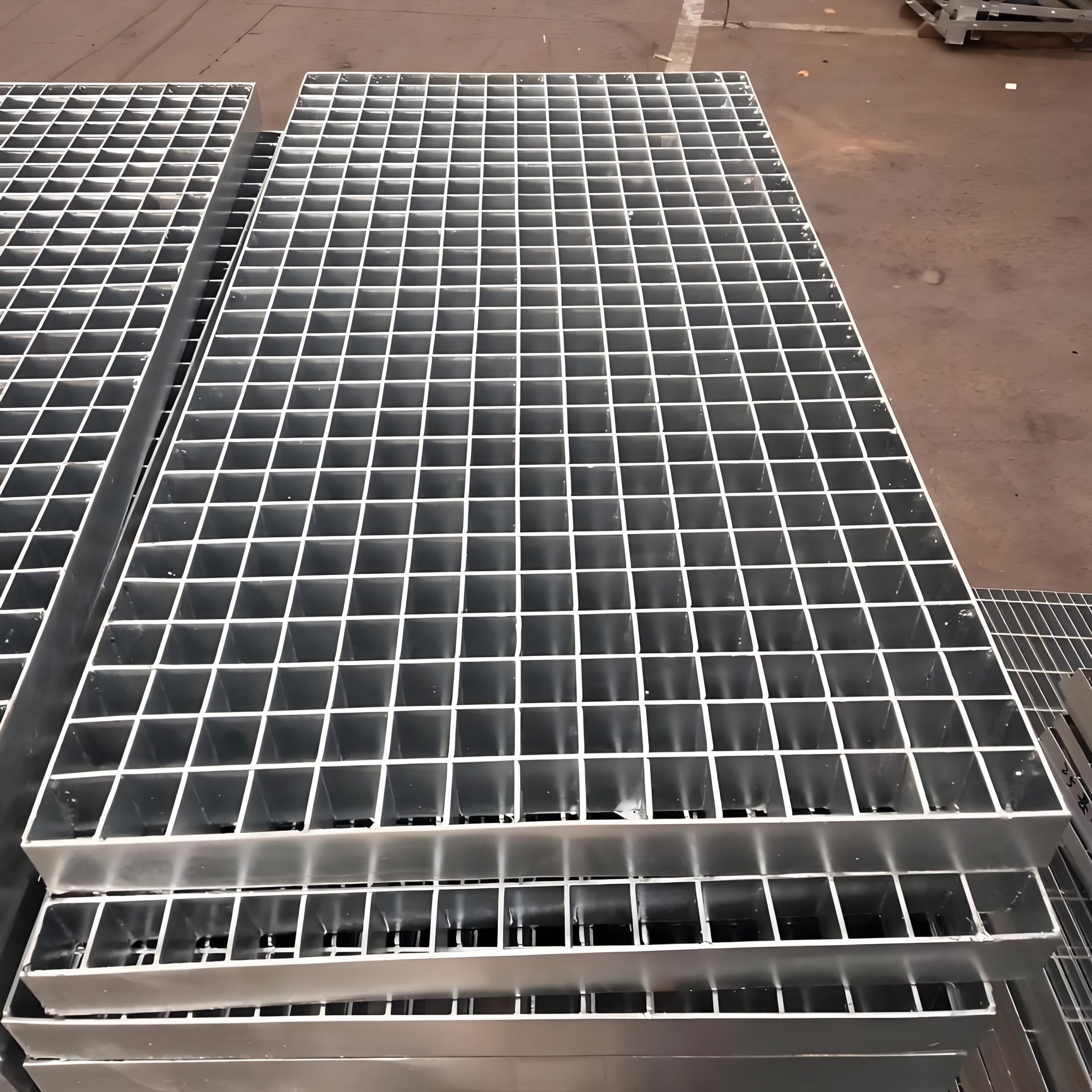
Maximum panel size also matters in project planning. In most factory conditions, a single fabricated grating panel can be processed up to a width of no more than 2 meters and a length of no more than 6 meters. This is generally the practical upper limit for welding, handling, straightness control, packing, and shipping. If the site requires extra-long panels, the supplier will usually recommend segmented fabrication with field assembly or factory splicing. Buyers should understand this early in the quotation stage because oversized requirements can affect both cost and installation design.
Anping County Chuansen Silk Screen Products Co., Ltd. typically evaluates custom requests by checking bearing bar dimensions, spacing, load span, fabrication complexity, and final installation method. For 316L stainless steel grating, these details directly influence manufacturability, cost control, and lead time accuracy.
Custom 316L stainless steel bar grating is priced differently from standard stock panels because the supplier must account for extra production variables. Buyers often assume that only the material grade changes the cost, but in reality, the main price difference frequently comes from tooling, setup, labor intensity, and lower production efficiency. This is why two 316L grating panels of similar size may have very different quotations if one follows a standard pattern and the other includes several non-standard fabrication features.
The first additional cost item is non-standard tooling or mold cost. If the project requires a special bearing bar profile, unusual spacing, or a custom pressed component, the factory may need to open a new mold or modify existing production tooling. In practice, this cost may be charged once as a standalone tooling fee or allocated proportionally across the order quantity. For small-volume projects, the mold charge has a more visible effect on unit price. A typical reference range for special tooling may fall around USD 200 to USD 1,500 depending on complexity, though highly specialized tooling can exceed this level.
The second cost factor is irregular cutting and profile modification. Custom projects often include round cut-outs for pipes, square openings for columns, corner notches, bevel cuts, angle trimming, removable access sections, or layout-specific edge treatment. These are not simple standard operations. Factories usually charge such work either per cut, per opening, per labor hour, or as a total fabrication surcharge based on drawing complexity. For example, a basic corner cut may only add a small cost, while multiple pipe penetrations with close tolerance and reinforced edges can add a much more significant amount to the panel price.
The third important factor is quantity. The smaller the batch, the higher the customization premium. This is a standard manufacturing rule because setup cost, programming, jig adjustment, labor preparation, and quality verification are spread over fewer square meters. Many factories therefore use a stepped price system. As a practical reference, a small custom batch may carry a premium of about 15 percent to 35 percent over a standard equivalent specification. In very low-volume jobs with non-standard tooling, the premium can be even higher.
For buyers requesting project quotations, it is often more useful to ask the supplier to separate the price into material cost, processing cost, tooling fee, and surface treatment cost. This makes it easier to compare suppliers fairly. Anping County Chuansen Silk Screen Products Co., Ltd. generally advises buyers to provide complete drawings at the beginning, because incomplete information often causes repeated recalculation and hidden cost changes later.
Minimum order quantity is one of the most practical concerns when sourcing 316L stainless steel bar grating suppliers, especially for contractors purchasing only one section of a plant or a limited maintenance replacement batch. MOQ is rarely fixed across all configurations. It depends on whether the product belongs to a standard specification or a fully customized program.
For standard specifications, the MOQ is usually relatively flexible. In many cases, factories can accept an order starting from 10 to 20 square meters, especially when the grating uses common bearing bar sizes, regular spacing, and no unusual fabrication steps. This is suitable for small platform extensions, trench covers, sample procurement, or replacement panels in existing facilities. Standardized orders are easier to fit into ongoing production schedules, which is why suppliers can offer lower minimums.
For fully customized specifications, the MOQ is higher. A practical factory range is often 50 to 100 square meters, or in some cases based on a full tonnage threshold. This is because custom orders may involve dedicated setup, non-standard flat bar preparation, custom welding jigs, additional inspection, and separate packing arrangements. If the project quantity is below that threshold, the supplier may still accept it, but the unit price will usually increase to cover low-volume inefficiency.
Buyers should also distinguish between “custom size” and “fully custom specification.” A panel cut to a different length within a standard grating pattern is usually easier to supply than a panel requiring special spacing, non-standard bearing bar dimensions, reinforced framing, and custom surface finishing. The first case may still follow a lower MOQ, while the second usually falls into the full customization category.
Order flexibility also depends on the supplier’s production structure. A factory that controls more of its own upstream flat bar processing and in-house welding can often handle mixed sizes with better flexibility than a workshop depending heavily on outsourced semi-finished materials. This is one reason why experienced buyers do not evaluate MOQ in isolation; they compare MOQ together with lead time, fabrication scope, and actual manufacturing capability.
Custom fabrication is a major reason why project buyers prefer working with established 316L stainless steel bar grating suppliers instead of buying generic stock sheets. In industrial construction, the grating is rarely used exactly as a flat panel. It often needs to be adapted into stairs, access covers, framed modules, removable panels, anti-slip platforms, or equipment-specific structural components.
One of the most common custom services is stair tread fabrication with anti-slip nosing. In process plants, offshore systems, public utility structures, and marine access zones, stair treads often require a defined front edge to improve foot grip and visibility. The supplier can fabricate the tread to the required width and depth, weld side plates, add fixing holes, and install an anti-slip front nosing according to the project standard. For wet or oily environments, this detail is especially important.
Another common service is welding frames, stiffeners, and embedded fixing parts. Some projects require fully framed grating panels for removable hatch covers, channel tops, equipment support decks, or maintenance openings. Reinforcing ribs may be added to improve rigidity across longer spans or to support concentrated loads. Embedded fixing tabs, anchor plates, clips, or welded brackets may also be included when the panel must connect to a special support structure. These services move the product beyond standard grating supply and into semi-fabricated structural assembly.
Surface treatment is another highly requested custom area. For 316L stainless steel grating, the common options include pickling and passivation, electropolishing, and epoxy coating. Pickling and passivation is often specified after welding to restore the surface and improve corrosion resistance, especially in marine, chemical, and pharmaceutical projects. Electropolishing is selected when a smoother, cleaner, and more hygienic finish is needed, such as in high-purity or sanitary environments. Epoxy coating is less common on stainless steel than on carbon steel, but some projects still request it for color coding, secondary barrier protection, or compatibility with an existing plant coating system.
Other custom services may include toe plates, removable lifting handles, bolted fixing kits, marked installation numbers, drainage direction identification, or project-specific packaging labels. Buyers handling export and site installation in complex projects often benefit from asking the factory to include these details in advance rather than arranging modification after delivery.
Lead time is one of the most sensitive issues when selecting 316L stainless steel bar grating suppliers. In engineering procurement, even a technically qualified product can become a problem if the supplier cannot meet the installation schedule. Buyers should therefore look beyond the quoted production days and understand what the lead time actually includes: raw material preparation, grating fabrication, custom cutting, welding, surface finishing, inspection, packing, and shipping release.
For standard specifications, the normal factory lead time is around 7 to 10 days. This generally applies to common bearing bar sizes, standard spacing, routine panel dimensions, and no complex secondary fabrication. If the supplier has matching raw materials in stock and the order quantity is moderate, delivery may remain near the lower end of that range.
For custom specifications, the lead time is typically around 15 to 25 days. This longer cycle usually covers tooling arrangement, drawing confirmation, special cutting, frame welding, opening fabrication, reinforcement installation, and custom finishing. When a new mold is required or the project includes extensive irregular fabrication, lead time can move toward the upper end or beyond it.
Buyers should also ask whether the quoted lead time starts from payment, drawing approval, raw material arrival, or final technical confirmation. Different suppliers define lead time differently, and this can create misunderstandings in project management. A realistic supplier should explain the production schedule in stages rather than only offering a single total number.
Anping County Chuansen Silk Screen Products Co., Ltd. generally treats standard and custom orders separately when planning production, because custom 316L grating often requires additional engineering review and process control. For urgent jobs, buyers may be able to reduce risk by freezing drawings early and avoiding repeated specification revisions after production starts.
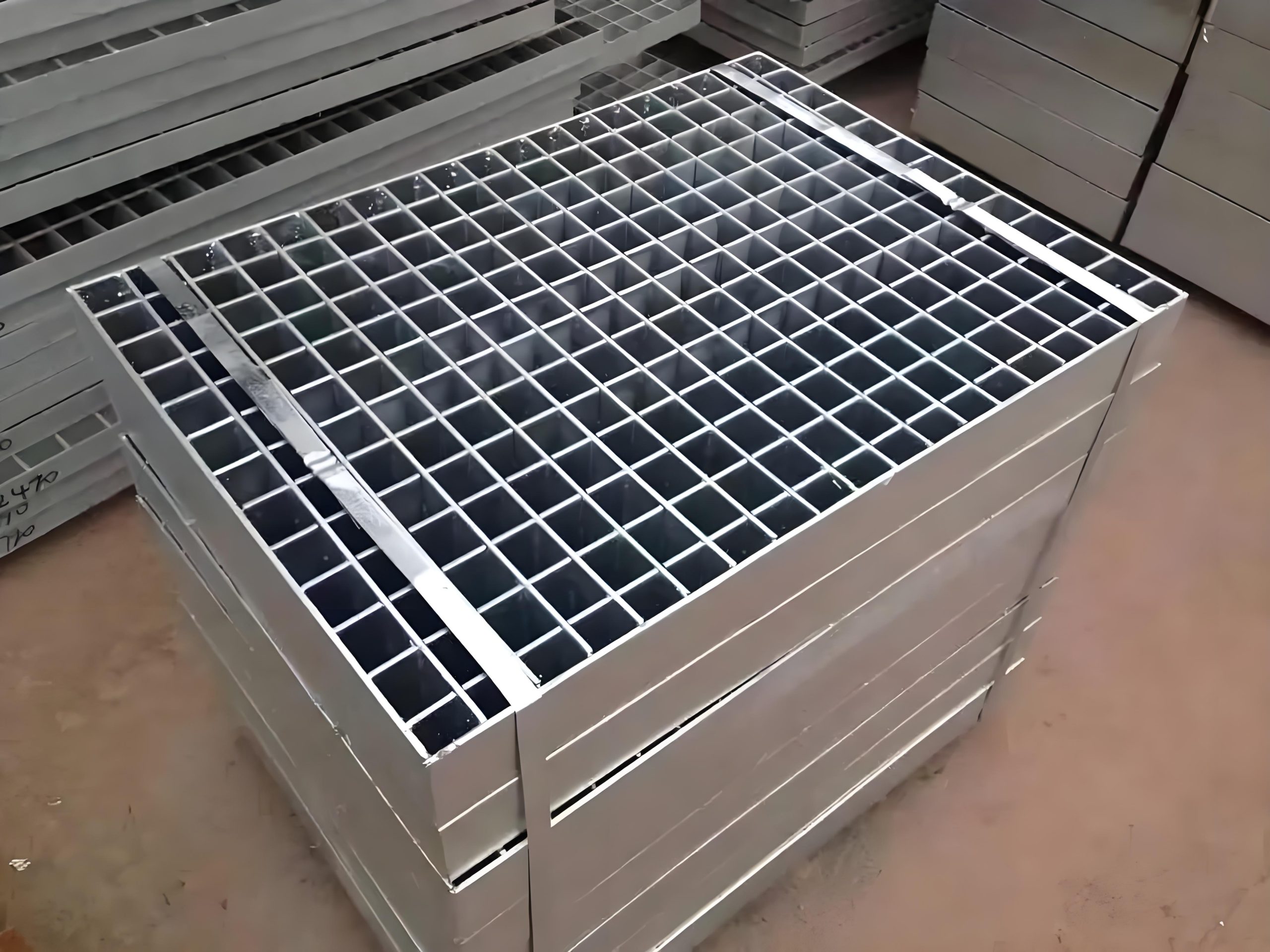
Not all 316L stainless steel bar grating suppliers have the same manufacturing depth. Some are direct factories with in-house forming and fabrication capability, while others are mainly trading entities coordinating subcontracted production. For buyers sourcing custom stainless steel grating, supplier qualification verification is an essential step because it affects cost, lead time, quality consistency, and problem-solving ability.
The first point to check is whether the factory has its own flat bar rolling or processing line. This matters because upstream control directly influences both cost and delivery speed. A supplier that depends entirely on outside semi-finished bearing bars may face longer material lead times, less flexibility for non-standard sizes, and higher cost for special customization. By contrast, a factory with stronger internal control over flat bar preparation can often respond faster to custom thickness and height requests.
The second point is material verification. For 316L grating, buyers should ask for material test reporting based on actual spectrometer measurement, not only a generic written statement. Spectrometer testing helps confirm the chemical composition of the stainless steel, including key alloying elements that affect corrosion resistance. This is especially important in marine, chemical, and pharmaceutical applications where material substitution risk cannot be ignored.
The third point is proven experience with previous 316L custom projects. A capable supplier should be able to demonstrate past fabrication records for chemical plants, offshore or marine projects, corrosive drainage systems, pharmaceutical platforms, or similar industrial environments. Real project experience is valuable because custom stainless steel grating is not only about cutting metal. It also involves understanding welding quality, corrosion-sensitive finishing, dimensional tolerance, and practical installation details.
Buyers may also check weld appearance, edge finishing consistency, panel flatness, packing method, and whether the supplier can provide production photos or inspection records before shipment. These details often reveal more about a supplier’s actual reliability than a simple product brochure.
To get an accurate and efficient quotation from 316L stainless steel bar grating suppliers, buyers should prepare a clear RFQ package. Many pricing delays happen because the factory receives only a basic description such as “need 316L grating” without dimensions, loading information, or fabrication details. Since custom stainless steel grating is strongly project-based, the quality of the RFQ directly affects the quality of the quotation.
The first essential item is a drawing or at least a hand-sketched dimension layout. A simple sketch showing panel length, width, support direction, openings, cut corners, frame details, and installation position is often enough for a preliminary quotation. For more complex systems, CAD drawings or project fabrication drawings are preferred. Without a layout, the supplier cannot judge cutting complexity or panel segmentation properly.
The second required item is load requirement and service environment. Buyers should indicate whether the grating is for pedestrian use, maintenance access, equipment support, or heavier industrial loading. It is equally important to mention if the site involves seawater, salt spray, acid exposure, high humidity, high temperature washdown, chemical splash, or hygienic cleaning procedures. These conditions influence bar size selection, welding detail, and surface treatment recommendation.
The third item is whether third-party testing or certification is needed. In certain marine or industrial projects, certification such as ABS or DNV may be requested depending on the end-use and project specification. If this requirement is raised only after production starts, both cost and lead time can change significantly. It is therefore best to include any inspection, witness test, or documentation demand in the initial inquiry.
Buyers may also include quantity, preferred panel size, required finish, expected delivery time, packing preference, and destination market. The more complete the RFQ, the easier it is for the factory to provide a realistic quotation with fewer revisions. Anping County Chuansen Silk Screen Products Co., Ltd. generally recommends that project buyers combine technical drawings with a short written application note, because this helps the engineering team evaluate both fabrication feasibility and corrosion-resistance expectations.
What is the typical price of custom 316L stainless steel bar grating?
The reference factory price depends on bearing bar size, spacing, panel dimensions, fabrication complexity, quantity, and finishing requirements. In many cases, custom 316L stainless steel bar grating may fall around USD 60 to USD 220 per square meter. Heavier-duty panels, non-standard tooling, irregular cut-outs, reinforced frames, or electropolished finishes can push the price higher. Buyers should request a breakdown covering material, fabrication, tooling, and surface treatment.
Can suppliers produce non-standard grating sizes and unusual mesh spacing?
Yes, experienced suppliers can usually produce non-standard sizes and special spacing such as 25x38mm or 50x60mm, provided the project quantity and technical feasibility are acceptable. Custom bearing bar thickness, bar height, edge framing, pipe cut-outs, and stair tread fabrication are also commonly available. For highly unusual profiles or spacing, a mold or tooling charge may apply.
How can I know if a 316L bar grating supplier is a real factory?
A practical way is to check whether the supplier has in-house processing capability for flat bars and grating fabrication, can provide spectrometer-based material test reports, and can show previous 316L project cases for chemical or marine applications. Buyers may also ask for workshop photos, production records, weld detail examples, and inspection documentation. A real factory is usually able to answer technical questions in detail rather than only offering a basic price.