

Stainless steel stair treads in 304 and 316 grades provide durable, corrosion-resistant access for industrial plants, marine structures, food-processing facilities, outdoor stairways, commercial buildings, and architectural projects. The correct tread is selected by matching the stainless grade, tread type, width, depth, bearing-bar size, mesh opening, nosing, anti-slip surface, support span, and fixing method to the actual environment. Grade 304 is a practical choice for many indoor and moderate wet applications, while 316 or 316L is usually preferred where chloride exposure, coastal air, saltwater, pool chemicals, or more demanding washdown conditions are expected.
Both 304 and 316 are widely used austenitic stainless steel grades. They have good corrosion resistance, a clean appearance, and strong performance in wet industrial environments. The main difference is that 316 contains molybdenum, which improves resistance to pitting and crevice corrosion in many chloride-containing environments.
For stair treads, the difference matters most when the surface is repeatedly exposed to salt spray, coastal air, de-icing salt, seawater, chlorine, food-processing chemicals, or standing water that can concentrate contaminants around welds, clips, and end plates.
| Feature | 304 Stainless Steel | 316 / 316L Stainless Steel |
|---|---|---|
| Corrosion resistance | Good for many indoor, washdown, and moderately corrosive environments. | Higher resistance in many chloride-rich, coastal, and marine environments. |
| Typical use | Food plants, commercial buildings, indoor industrial stairs, general washdown areas. | Coastal stairs, marine platforms, swimming pools, chemical sites, offshore access. |
| Material cost | Usually lower than 316. | Usually higher because of alloy content. |
| Welded fabrication | Suitable for standard fabricated stair tread production. | Suitable for demanding corrosion environments when correctly fabricated and cleaned. |
| Best value | Projects where strong corrosion resistance is needed without severe chloride exposure. | Projects where higher first cost can reduce long-term corrosion and replacement risk. |
304 stainless steel stair treads are commonly used in food-processing facilities, breweries, beverage plants, commercial kitchens, laboratories, hospitals, indoor industrial platforms, public buildings, and covered outdoor access systems. They offer good corrosion resistance in many wet environments and are often selected when a clean, durable, low-maintenance appearance is required.
304 is not a universal marine-grade material. In coastal areas, pool environments, salt-storage facilities, and locations exposed to de-icing salts or chloride cleaning chemicals, 304 can develop localized staining or corrosion if contaminants remain on the surface.
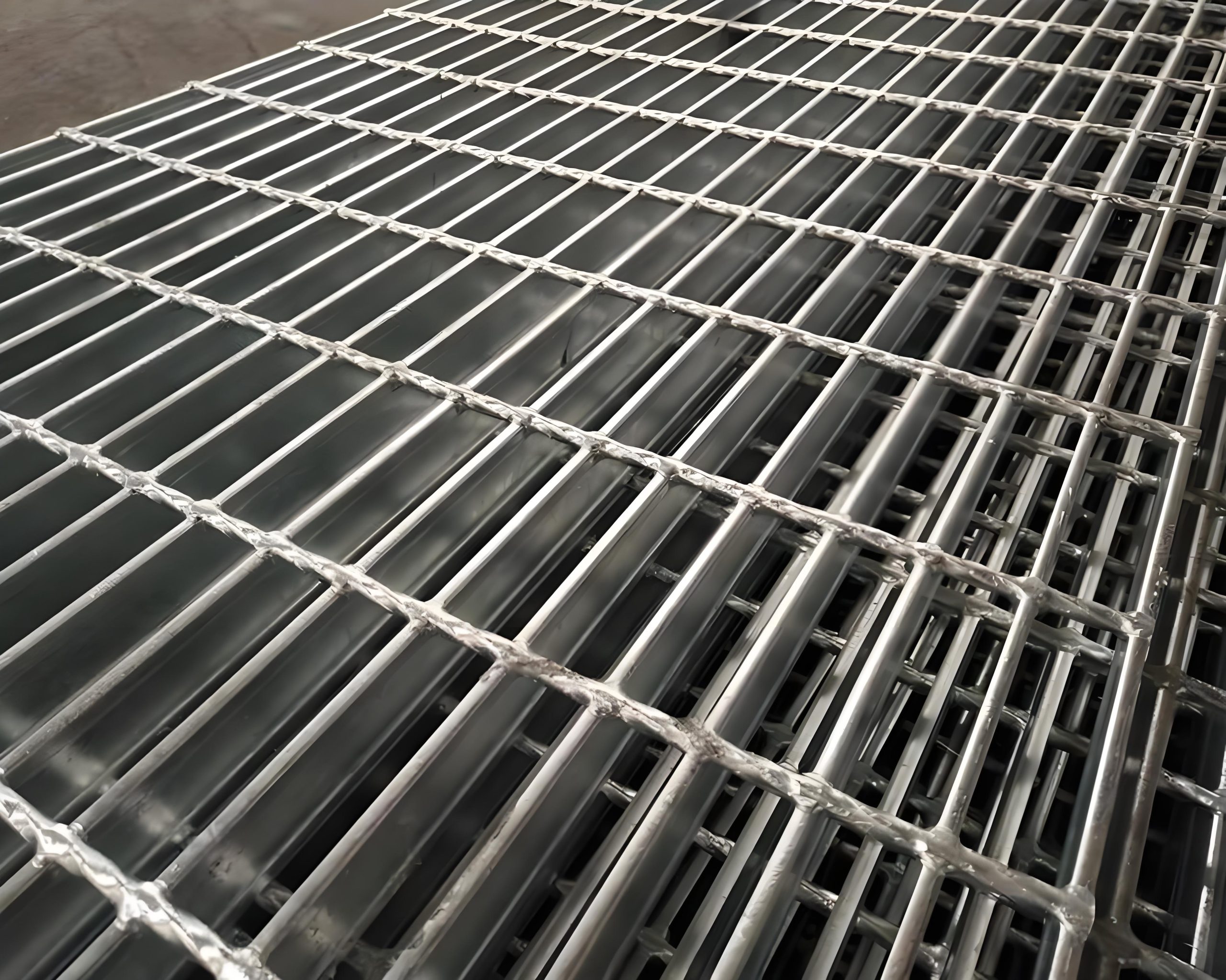
316 stainless steel stair treads are commonly specified for coastal plants, offshore structures, marine walkways, desalination facilities, swimming pools, chemical processing areas, salt-handling plants, and outdoor environments with regular chloride exposure.
316L is the low-carbon version of 316 and is frequently selected for welded fabricated products. The lower carbon content can be beneficial when welding is extensive, but grade selection should still be based on the project specification and actual service environment.
Neither 304 nor 316 should be described as maintenance-free. Good drainage, surface cleaning, compatible fasteners, weld finishing, and avoiding trapped deposits all help maintain long-term corrosion performance.
The material choice should start with the environment, not only the budget. A 316 tread may be unnecessary for a dry indoor utility stair, while 304 may be an expensive mistake on a coastal jetty or chlorine-exposed pool access stair.
| Installation Environment | Recommended Starting Point | Why |
|---|---|---|
| Dry indoor industrial stair | 304 stainless steel | Usually provides adequate corrosion resistance with a lower material cost. |
| Food and beverage washdown area | 304 stainless steel, subject to cleaning chemicals | Common hygienic material for wet indoor processing areas. |
| Commercial kitchen or hospital | 304 stainless steel | Clean appearance and good resistance to routine cleaning conditions. |
| Coastal outdoor stair | 316 or 316L stainless steel | Better resistance to salt air and chloride deposits. |
| Marine jetty or offshore platform | 316 or 316L stainless steel | Higher chloride exposure and frequent wet-dry cycling. |
| Swimming pool or water park | 316 or 316L stainless steel | Chloride-containing water and cleaning agents can be demanding on 304. |
| Chemical process stair | 316L or another material reviewed for the exact chemical | Specific chemical concentration, temperature, and vapor exposure matter. |
| Salt-storage or de-icing-salt area | 316 or 316L stainless steel | High chloride loading can accelerate localized attack. |
The tread material should be compatible with the supporting stringers, bolts, clips, handrails, frames, and surrounding metals. A 316 stainless tread fixed with unsuitable carbon steel bolts can still develop staining and corrosion around the connection points.
Where dissimilar metals are connected in a wet environment, galvanic corrosion should be considered. Isolation pads, suitable washers, compatible fasteners, drainage gaps, and careful support detailing can improve system durability.
Stainless steel stair treads can be manufactured in several forms. The best type depends on load, drainage, slip resistance, hygiene, appearance, and fabrication requirements.
Bar grating stair treads are made with load-bearing bars and cross bars arranged in an open grid. They are commonly manufactured as welded grating or press-locked grating. The open structure allows water, dirt, light, and air to pass through, making it practical for outdoor, industrial, marine, and wet-process applications.
Bar grating treads normally include a front nosing, two end plates, bolt holes, and edge banding. Serrated bearing bars are often selected for wet or outdoor conditions, while plain bars can be used in dry or controlled environments.
Perforated stair treads are made from stainless steel sheet or plate with punched holes, slots, raised patterns, or formed dimples. They can provide a more continuous walking surface than open bar grating while still allowing drainage and slip resistance.
Perforated treads are useful in commercial buildings, food plants, public access areas, architectural stairs, and maintenance systems where a smaller opening pattern or a cleaner visual appearance is required.
Stainless steel plate treads may use checker plate, diamond plate, embossed anti-slip sheet, or formed plate construction. They are often selected when the user needs a more solid surface, such as for small wheels, narrow equipment legs, high-heel traffic, or applications where objects must not fall through an open mesh.
Solid plate treads can retain water and debris if drainage is not designed properly. They may need a raised anti-slip pattern, formed drainage edges, slots, or a suitable cleaning plan for wet applications.
| Tread Design | Main Benefit | Typical Limitation | Common Application |
|---|---|---|---|
| Bar grating tread | Excellent drainage, ventilation, and high strength-to-weight ratio. | Openings may not suit high heels, small wheels, or dropped-object control. | Industrial stairs, platforms, offshore structures, outdoor access. |
| Press-locked bar grating tread | Clean appearance and flexible mesh configurations. | Can cost more than standard welded grating. | Architectural and commercial stainless steel stair systems. |
| Perforated tread | Fine openings, good drainage, and continuous walking support. | Can require more fabrication and cleaning. | Food plants, public stairs, commercial interiors. |
| Checker plate tread | Solid walking surface with raised anti-slip pattern. | Lower drainage performance than open grating. | Maintenance stairs, equipment access, small-wheel areas. |
| Formed safety tread | Aggressive anti-slip surface and lightweight formed construction. | Load capacity depends on profile depth and support spacing. | Outdoor stairs, maintenance access, industrial facilities. |
Custom stainless steel stair treads should be manufactured to match the stair stringer layout, stair width, riser height, tread depth, handrail position, user traffic, and local code requirements. The tread itself is only one part of the staircase, so its dimensions must work with the complete installed stair geometry.
Tread width is the distance between the stair stringers or side supports. Common industrial stainless steel stair tread widths include 600 mm, 700 mm, 800 mm, 900 mm, 1000 mm, 1200 mm, and custom sizes. Wider treads require greater structural capacity and may need heavier bearing bars, deeper end plates, or additional central support.
Tread depth is measured in the direction of travel from the front nosing to the rear edge. Common industrial bar grating tread depths include 240 mm, 270 mm, and 300 mm, but custom depths are available. The required depth depends on stair angle, riser height, building use, local code, and safety requirements.
Riser height is not normally determined by the grating manufacturer alone. It is part of the overall stair design. The riser height, tread depth, landing arrangement, handrail system, and stair angle must work together to provide safe access.
For U.S. general-industry stairs within its scope, OSHA requires stairways to have uniform riser heights and tread depths between landings. The standard also includes requirements for stair geometry, minimum width, tread depth, and load capacity. OSHA’s 29 CFR 1910.25 stairway requirements should be read as applying to the complete installed stairway, not only to an individual grating tread. Local building codes and project specifications always govern the final design.
The nosing is the front edge of the stair tread. It improves visibility, helps define the step edge, and can improve traction. Stainless steel bar grating treads often use a front angle, flat bar, serrated nosing, or formed anti-slip nosing.
| Dimension | Typical Custom Range | Why It Matters |
|---|---|---|
| Tread width | 600–1200 mm or custom | Must match stair stringers, user traffic, and required escape or access width. |
| Tread depth | 240 mm, 270 mm, 300 mm, or custom | Must suit stair angle, riser height, and local stair requirements. |
| Front nosing | 25 mm, 30 mm, 40 mm, 50 mm, or custom | Improves edge definition, stiffness, and slip resistance. |
| End plate height | Usually selected to match bearing-bar depth | Provides support and fixing connection to the stringers. |
| End plate thickness | Typically 3 mm, 5 mm, 6 mm, or custom | Must suit bolt load, stringer detail, and installation method. |
| Bolt hole diameter | Commonly 11 mm, 13 mm, 14 mm, or custom | Must match bolt size, installation tolerance, and fastening arrangement. |
For stainless steel bar grating stair treads, bearing bars carry the main load from one stringer to the other. Their depth, thickness, spacing, and orientation determine the tread capacity and deflection.
Common stainless steel bearing-bar sizes include 20 mm × 3 mm, 25 mm × 3 mm, 30 mm × 3 mm, 30 mm × 5 mm, 40 mm × 3 mm, 40 mm × 5 mm, and larger custom sizes. Deeper or thicker bars increase strength and stiffness, but they also increase weight and price.
Typical metric mesh patterns include 25 mm × 100 mm, 30 mm × 100 mm, 30 mm × 50 mm, 32 mm × 100 mm, 40 mm × 100 mm, and custom close-mesh layouts. The first dimension normally refers to bearing-bar spacing, while the second refers to cross-bar spacing, but the manufacturer’s notation should always be confirmed.
Open area affects drainage, visibility, ventilation, cleaning, and the risk of dropped objects. A more open tread can drain quickly and reduce the buildup of snow, water, and dirt. A tighter mesh offers more support for footwear and small objects but can cost more and may require more cleaning.
| Mesh Pattern | Typical Feature | Best Use | Relative Cost |
|---|---|---|---|
| 25 mm × 100 mm | Close bearing-bar spacing with standard cross bars. | Walkways and stair treads needing better foot support. | Medium to high. |
| 30 mm × 100 mm | Common industrial open mesh. | General outdoor stairs and industrial access platforms. | Medium. |
| 30 mm × 50 mm | Closer cross-bar pattern. | Public-access and close-mesh stair treads. | Medium to high. |
| 32 mm × 100 mm | Common metric industrial pattern. | General stainless steel grating treads. | Medium. |
| 40 mm × 100 mm | More open mesh with fewer bearing bars. | Low-traffic industrial stairs with strong drainage needs. | Lower to medium. |
| Custom close mesh | Smaller openings for specialty applications. | High-heel, small-tool, architectural, or public-use areas. | High. |
Surface selection is especially important for stainless steel stair treads because stairs are inherently more slip-sensitive than level walkways. Water, oil, mud, salt, frost, food residue, chemical splash, and cleaning liquids can all affect traction.
Plain bearing bars have a smooth top edge. They are suitable for dry, clean, controlled environments where cleaning is important and slip exposure is limited. Plain treads can provide a clean architectural appearance and are often easier to wash down than heavily serrated surfaces.
Serrated bearing bars have notched upper edges that improve traction. They are widely used on outdoor stairs, marine accessways, industrial platforms, wastewater facilities, oil and gas sites, towers, and any location where the tread may be wet, oily, icy, or dirty.
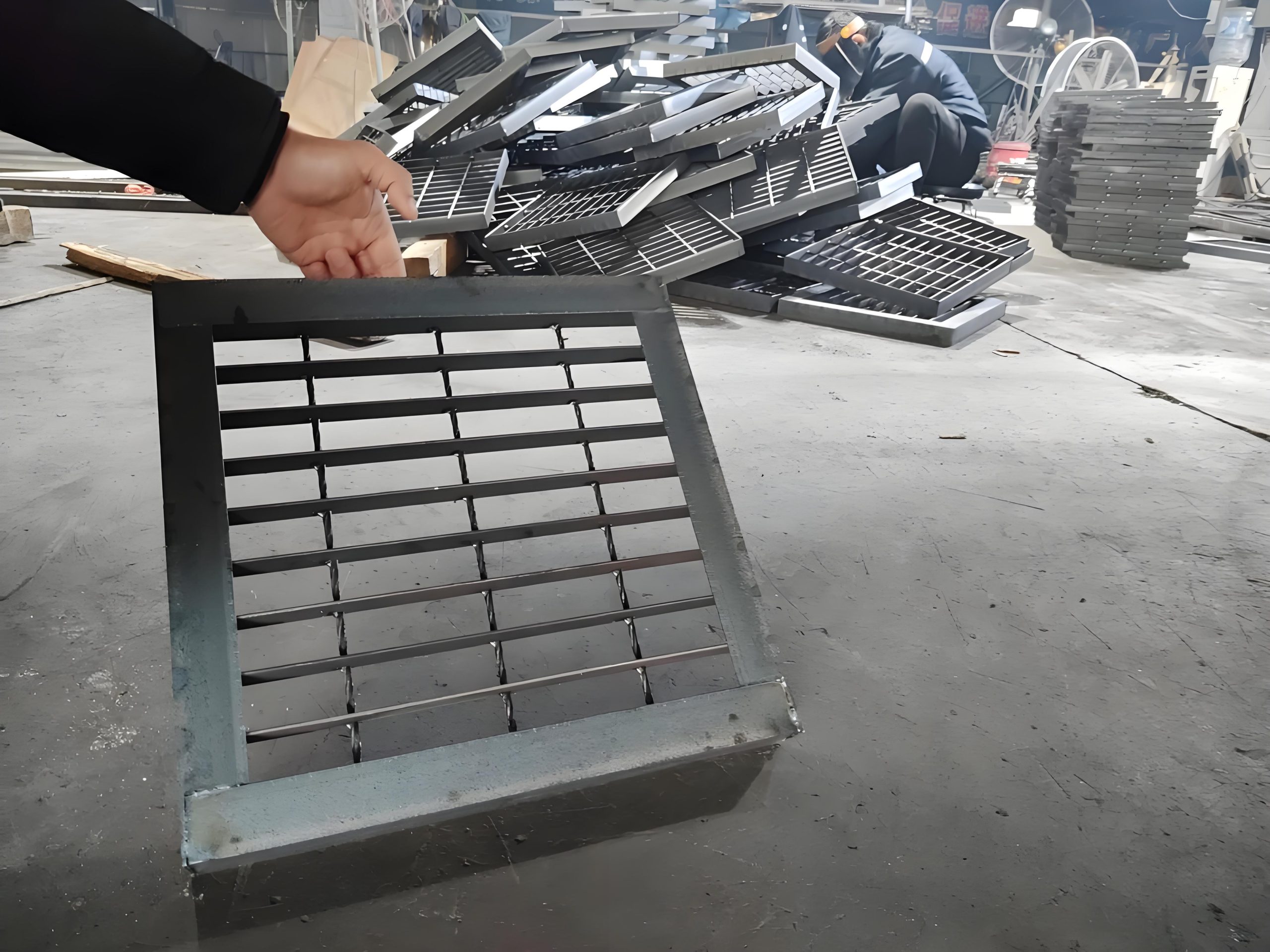
Perforated or formed treads can use raised lugs, punched buttons, formed dimples, or punched serrations to create slip resistance. These designs can be useful when a more continuous walking surface is needed while maintaining drainage and grip.
| Surface Option | Main Advantage | Best Environment |
|---|---|---|
| Plain bar grating | Clean appearance and easier washdown. | Dry indoor, low-slip-risk areas. |
| Serrated bar grating | Strong traction for safety footwear. | Outdoor, wet, oily, marine, and industrial stairs. |
| Perforated anti-slip sheet | Fine openings with formed grip points. | Commercial, public, food, and maintenance access stairs. |
| Checker plate | Solid tread surface with raised pattern. | Equipment stairs and areas requiring small-object retention. |
| Gritted or abrasive strip insert | High traction at the front edge. | Special architectural and public-access stair systems. |
Stainless steel stair treads should be selected according to the clear span between stringers, expected live load, concentrated load, deflection requirement, tread width, and fastening detail. The bearing bars should run from one stringer to the other so they carry the load in their intended direction.
A tread can be strong enough to avoid structural failure but still deflect too much under foot traffic. Excessive deflection can make stairs feel unstable, loosen fasteners, affect nosing alignment, and reduce user confidence. Stainless steel treads should therefore be selected for both strength and acceptable stiffness.
For installed general-industry stairs covered by OSHA, each stair must be capable of supporting at least five times the normal anticipated live load and never less than a 1,000 lb concentrated load applied at any point. This is a complete stair-system requirement and should not be interpreted as a simple product rating for one loose tread. See OSHA 1910.25 for the current wording and scope.
For stainless steel bar grating and stair tread design, the ANSI/NAAMM MBG 531-24 Metal Bar Grating Manual provides technical data, load tables, recommended practices, and typical installation details for steel, stainless steel, and aluminum gratings.
Stainless steel is selected for corrosion resistance, but the service environment must still be evaluated carefully. Chlorides, chemicals, heat, trapped moisture, cleaning solutions, and deposits can all influence performance.
Coastal air, salt spray, direct seawater contact, and wet-dry cycles are demanding conditions for stair treads. Grade 316 or 316L is usually the preferred starting point for marine stairs, jetties, docks, offshore platforms, coastal treatment plants, and waterfront access systems.
Drainage is important. Water trapped between a tread and its support, under a bolt head, inside a crevice, or beneath accumulated salt deposits can create a more aggressive local environment than open exposure. Treads should be designed to drain freely and should be cleaned when salt buildup occurs.
In chemical plants, grade selection should be based on the actual process environment. The chemical name, concentration, temperature, splash frequency, vapor exposure, cleaning routine, and immersion time should be reviewed. Grade 316L can be suitable for many conditions, but it is not resistant to every acid, alkali, solvent, or chemical gas.
For highly aggressive environments, duplex stainless steel, specialty alloys, FRP grating, coated steel, or another material system may be more appropriate. The manufacturer should not guess chemical compatibility from a general description such as “chemical area.”
Food and beverage plants commonly use 304 stainless steel for stairs, platforms, drainage, and access systems because it is durable and easy to clean. Where salt, chlorine, acidic food products, aggressive cleaning chemicals, or high humidity are present, 316L may provide a better long-term solution.
Hygienic stair designs should avoid unnecessary crevices, inaccessible weld areas, and gaps that retain product residue. Smooth weld finishing, adequate drainage, removable panels where required, and appropriate surface treatment can make cleaning easier.
Surface finishing affects the appearance, cleanliness, weld condition, and corrosion performance of stainless steel stair treads. The required finish should be stated clearly in the purchase order.
Mill finish is the standard surface condition of stainless material after rolling or production. It is often suitable for general industrial grating and stair treads where visual appearance is not the main requirement. Fabrication, cutting, and welding can alter the surface condition, so further treatment may be needed for demanding environments.
Pickling or descaling can be used to remove heat tint, scale, welding discoloration, and surface contamination created during fabrication. This is particularly valuable for welded stainless steel treads used in corrosive, marine, chemical, or hygiene-sensitive environments.
Passivation is a controlled chemical treatment used to clean stainless steel and support the formation of a corrosion-resistant passive surface. ASTM A967/A967M covers chemical passivation treatments for stainless steel parts and includes treatment guidance and verification options. Buyers can specify passivation when corrosion performance after welding and fabrication is important.
Passivation does not change an unsuitable stainless grade into a suitable one. A properly passivated 304 tread may still be less appropriate than 316L for a severe coastal chloride environment.
Polished, brushed, satin, or decorative finishes may be selected for architectural stairs, public spaces, hospitality projects, and visible commercial installations. These finishes can increase fabrication cost and may require extra protection during transport and installation to avoid scratching.
| Finish | Main Purpose | Typical Application |
|---|---|---|
| Mill finish | Economical standard industrial surface. | Industrial stairs, platforms, utility access. |
| Pickled or descaled finish | Removes weld scale and heat tint after fabrication. | Marine, chemical, food-processing, and washdown environments. |
| Passivated finish | Improves surface cleanliness and corrosion-resistance performance after fabrication. | High-hygiene, corrosive, and specification-controlled projects. |
| Brushed or satin finish | Provides controlled architectural appearance. | Commercial buildings, public stairs, visible installations. |
| Polished finish | Premium decorative surface. | High-end architecture, hospitality, specialty projects. |
Custom end plates and fixing details allow stainless steel stair treads to match different stringer types, including channel stringers, angle stringers, flat-bar stringers, structural steel frames, concrete stair supports, and prefabricated modular systems.
End plates are fixed at the left and right ends of a grating tread. They provide a connection point to the stair stringers and help maintain the tread shape. Plate thickness, height, hole location, and welding detail should be selected according to the load and support arrangement.
Typical stair tread end plates may use two bolt holes per side, but custom patterns are available. Hole diameter, center-to-center distance, edge distance, slotting, and bolt grade should be coordinated with the structural drawing.
Slotted holes can provide installation tolerance where stringer spacing has minor variation. However, they should be used only where the fixing design can safely accommodate adjustment without allowing tread movement.
For marine and corrosive installations, bolts, washers, clips, and anchors should be selected with the same care as the tread material. Stainless steel fasteners should be compatible with the selected grade and support arrangement, and installation should avoid creating water traps or unprotected dissimilar-metal contact.
Stainless steel stair treads can be adapted to a wide range of applications. The same basic product can be customized through grade, bar size, mesh pattern, surface, nosing, end plates, and finish.
| Project Type | Typical Material Choice | Preferred Tread Style | Key Requirement |
|---|---|---|---|
| Industrial plant | 304 stainless steel | Welded or press-locked bar grating tread. | Load capacity, drainage, anti-slip, easy maintenance. |
| Outdoor utility stair | 304 or 316 depending on exposure. | Serrated bar grating tread with nosing. | Weather resistance and slip safety. |
| Marine access stair | 316 or 316L stainless steel | Serrated grating or formed anti-slip tread. | Chloride resistance, drainage, compatible fixings. |
| Food-processing stair | 304 or 316L depending on washdown chemicals. | Fine-mesh grating, perforated, or hygienic plate tread. | Cleanability, drainage, smooth weld finishing. |
| Swimming pool stair | 316 or 316L stainless steel | Perforated or fine-slot anti-slip tread. | Chloride resistance and bare-foot safety. |
| Architectural public stair | 304 or 316 depending on location. | Press-locked, perforated, or checker plate tread. | Appearance, heel safety, accessibility, finish quality. |
| Wastewater-treatment stair | 316L stainless steel or alternative corrosion-resistant material. | Serrated open grating tread. | Moisture, gases, anti-slip performance, maintenance access. |
A clear technical inquiry helps the manufacturer provide the correct stainless steel stair tread and prevents costly revisions after fabrication. The request should include material, dimensions, loading, mesh, surface, fittings, and environmental details.
“Please quote 316L stainless steel serrated bar grating stair treads for a coastal outdoor access stair. Tread width: 900 mm. Tread depth: 270 mm. Bearing bars: 30 mm × 3 mm at 30 mm centers. Cross bars: 100 mm centers. Front serrated nosing required. End plates: 65 mm × 5 mm with two 14 mm bolt holes per side. Bearing bars to span 900 mm between steel stringers. Treads to be pickled and passivated after fabrication. Please provide material certificate, finished weight, packing method, lead time, and FOB price.”
Quality control is important because stainless steel stair treads are structural access components. The product should be inspected for material grade, dimensions, weld quality, surface condition, nosing fit, end-plate position, bolt-hole location, and packing protection.
The supplier should be able to provide a material test certificate showing the stainless steel grade and heat or batch traceability when requested. For critical projects, buyers may also request positive material identification testing, third-party inspection, or additional corrosion-related documentation.
Flat-rolled stainless steel plate, sheet, and strip for general applications may be specified to standards such as ASTM A240/A240M. The exact material specification should match the stainless product form used in the tread, such as plate, flat bar, bearing bar, cross bar, or fabricated component.
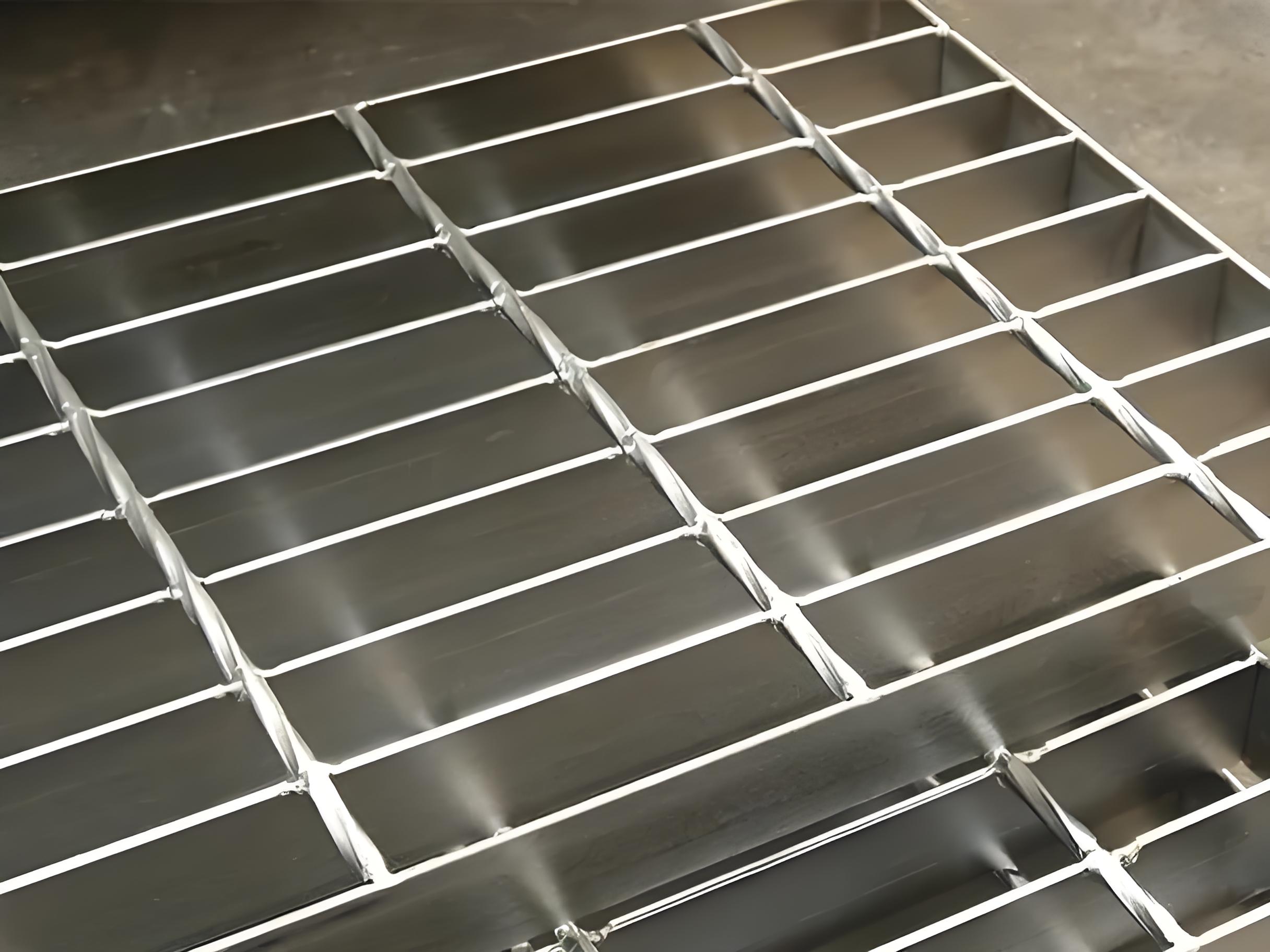
Typical dimensional checks include tread width, depth, bearing-bar orientation, mesh spacing, nosing length, end-plate height, end-plate thickness, bolt-hole diameter, bolt-hole spacing, and overall flatness. These checks help ensure the treads fit the stringers correctly during installation.
Welded treads should be checked for secure welds, clean fabrication, sharp edges, distortion, weld discoloration, and finish consistency. For corrosive or hygiene-sensitive installations, the client may request pickling, passivation, and visual inspection after surface treatment.
Stainless steel surfaces can be scratched or contaminated during transport. Treads should be packed in stable bundles, separated where necessary, protected from carbon steel contamination, and clearly marked to match installation drawings. Custom tread labels can reduce installation errors on large stair systems.
Is 316 stainless steel better than 304 for outdoor stair treads?
316 or 316L is usually better for outdoor stair treads exposed to coastal air, salt spray, pool chemicals, de-icing salts, or regular chloride contamination. For dry indoor stairs and many normal washdown environments, 304 stainless steel is often a cost-effective and durable choice.
What is the standard size of a stainless steel stair tread?
Common industrial stainless steel stair tread widths include 600 mm, 700 mm, 800 mm, 900 mm, 1000 mm, and 1200 mm. Common tread depths include 240 mm, 270 mm, and 300 mm. The final size should match the stair stringers, riser height, stair angle, load requirement, and local code.
Should stainless steel stair treads be serrated?
Serrated stainless steel stair treads are recommended for outdoor, wet, oily, marine, industrial, and high-slip-risk areas because they provide better traction. Plain treads can be suitable for dry indoor environments, food-processing areas requiring easier cleaning, or architectural projects where a smoother surface is preferred.