

304 stainless steel bar grating is one of the most practical choices for industrial walkways, trench covers, drainage channels, and working platforms. Buyers usually choose it because it gives a good balance between corrosion resistance, strength, clean appearance, and cost. In real projects, though, the right grating is not decided by material grade alone. The application matters just as much. A walkway panel needs safe footing, a drainage cover needs the right open area, and a platform panel needs enough load capacity for people, equipment, or even vehicles. That is why 304 stainless steel bar grating should always be selected based on the actual use scenario, not just by asking for a “standard panel.”
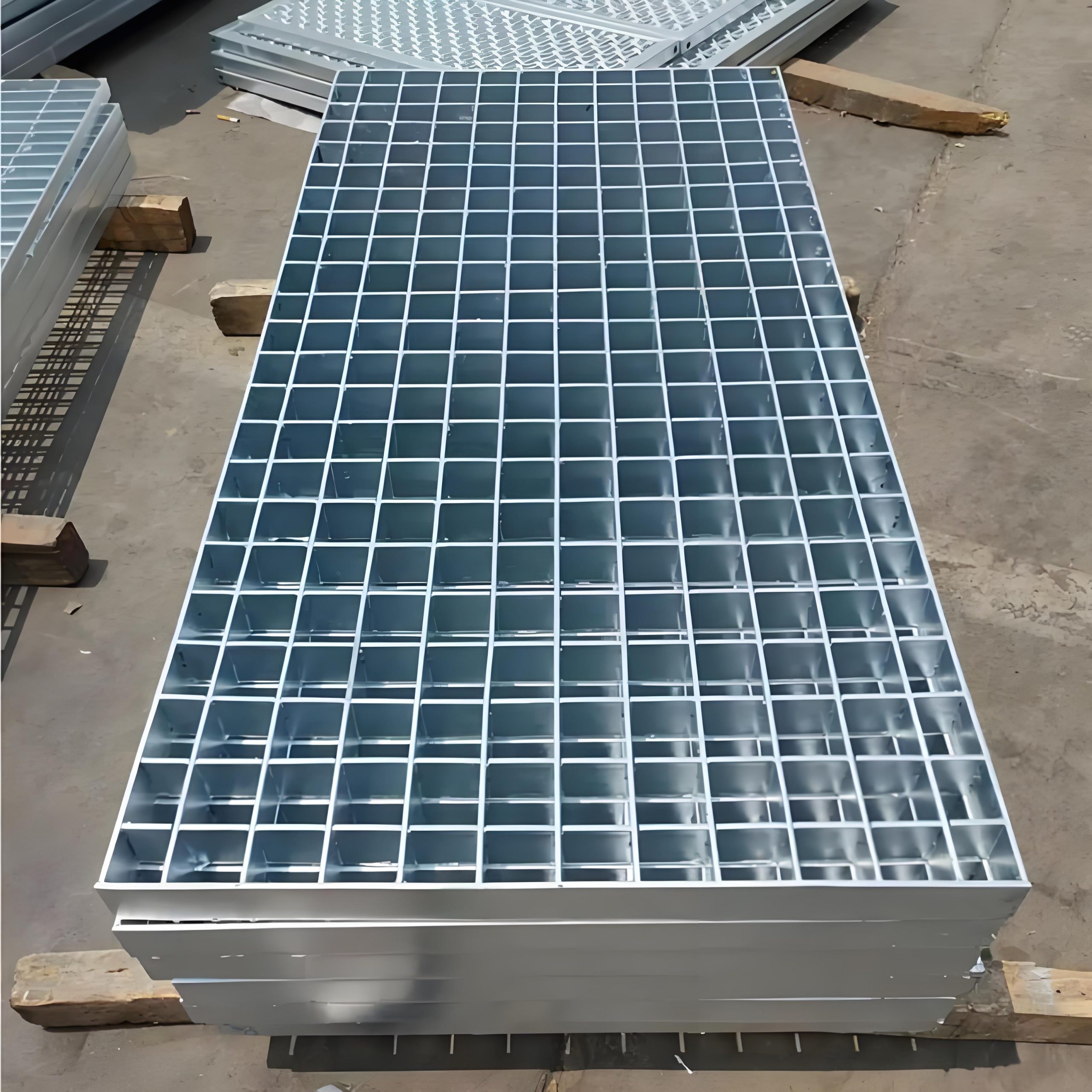
Walkway use is one of the most common applications for 304 stainless steel bar grating. In factories, treatment plants, food processing workshops, rooftop service paths, equipment access areas, and mezzanine passageways, bar grating is preferred because it allows dirt, liquid, and debris to pass through while still giving workers a stable walking surface. Compared with solid plate, it reduces standing water and helps keep the walking path cleaner and safer.
For pedestrian safety, serrated bearing bars are often the first recommendation. A serrated surface means the top of the load-bearing flat bars is formed with teeth or anti-slip notches. This detail may look small, but it makes a real difference in daily use. When workers are walking in wet areas, oily service platforms, or places where cleaning water is present, a smooth bar top can become slippery. Serrated 304 stainless steel grating improves traction and gives better footing, especially on outdoor walkways or washdown areas.
In many building materials and industrial projects, the most commonly requested specification for walkway grating uses flat bar heights of 25 mm to 32 mm. This range is popular because it gives a good mix of strength, weight control, and reasonable cost. If the span is short and the traffic is only pedestrian, 25 mm bearing bars may be enough. If the span is a bit longer or the project wants a stiffer feel underfoot, 30 mm or 32 mm bar height is more common.
A widely used mesh arrangement is 30 x 100 mm. In practical terms, this usually means the bearing bars are spaced at 30 mm center-to-center and the cross bars at 100 mm center-to-center. This spacing works well for ordinary walkways because it gives enough open area for drainage and ventilation while still feeling secure for foot traffic. It also supports regular industrial footwear well and is commonly accepted as a standard industrial walkway pattern.
For lighter-duty indoor access paths, some buyers prefer a simpler smooth-top surface to save cost and make cleaning easier. But in most industrial settings, especially where there may be moisture, soap, oil mist, or dust, serrated grating is usually the safer option. If the walkway is elevated or placed over channels, safety should come first rather than chasing a small price saving.
Another point often missed in walkway design is panel size. Large grating panels may reduce the number of support points and installation joints, but they can become harder to lift for maintenance. Smaller, modular 304 grating panels are easier to remove and inspect, especially around pipelines, cable trenches, or valve access points. The best size is usually a compromise between structural span, handling convenience, and installation speed.
In food and pharmaceutical environments, 304 stainless steel is also valued because it looks clean and is easier to wash than carbon steel or painted steel. In these settings, walkway grating is not just about strength. It also needs to resist corrosion from humidity and routine cleaning. For many indoor processing areas, 304 provides enough corrosion resistance without the higher cost of 316.
304 stainless steel bar grating is also widely used in drainage applications such as trench covers, channel grates, drain pit covers, sump surrounds, wash bay drains, and process water collection systems. In this type of application, load capacity is still important, but water flow performance becomes just as critical. A drainage cover that is strong but blocks flow will quickly create operational problems.
The first design point is open area. Open area refers to the percentage of the grating surface that allows water to pass through. In simple terms, the wider the gap and the fewer obstructions, the better the drainage capacity. But open area cannot be increased without limit, because the panel still needs enough metal to carry the required load. This is where proper matching between opening ratio and water flow speed becomes important.
If the drainage system handles only light rainwater or normal floor washdown, a standard 30 x 100 mm grating pattern is often enough. But if the trench receives high-volume discharge, fast-moving runoff, or repeated heavy washdown, the designer should pay more attention to hydraulic behavior. Too little open area can cause water to pond above the grate. Too much open area can weaken the cover if the support structure and bar size are not upgraded accordingly.
In practical project selection, buyers usually do not calculate water flow speed by themselves, but they should at least provide the trench width, estimated water volume, and whether the drainage is gravity-fed or high-flow. Once this information is known, the manufacturer can recommend a suitable bar spacing and panel structure. This is especially useful for processing plants, commercial kitchens, wastewater stations, and vehicle wash areas, where water flow can change quickly during operation.
For channel and trench covers, reinforced edge banding is extremely important. A drainage panel is often removed and reinstalled many times during cleaning or inspection. Without a strong edge frame, the panel may twist, deform, or suffer damage at the ends. Reinforced border flat bars help maintain panel shape and improve bearing performance, especially when the trench width is wide or the panel is expected to take maintenance traffic.
The load requirement for trench covers should never be guessed. Some drainage grates only carry pedestrian traffic, while others may be crossed by carts, pallet jacks, cleaning machines, or even light vehicles. The same 304 stainless steel material can be used in all these situations, but the bearing bar height, thickness, and spacing must be changed accordingly. A trench cover in a factory aisle is not the same as a trench cover inside a truck loading area.
Another useful design detail is seat support. The trench frame should provide stable support on both sides, and the grating panel should sit properly without rocking. If the support ledge is too narrow or uneven, even a well-made 304 grating panel may not perform well after installation. For this reason, many buyers choose to order the grating and support frame together when dimensions are fixed.
For industrial platforms, 304 stainless steel bar grating is chosen not only for corrosion resistance but also for structural performance. Platforms can include equipment operating decks, maintenance access floors, pump station tops, rooftop service platforms, machine surrounds, and elevated working areas. In these cases, the grating must feel stable under load and meet the expected service conditions.
The first selection factor is the load class. Before choosing a grating specification, the buyer should know whether the platform is for pedestrian-only use, concentrated equipment loads, rolling loads, or occasional vehicle access. This directly affects the required flat bar thickness and spacing. Thicker bearing bars and closer spacing generally increase load capacity and reduce deflection.
For example, a pedestrian-only platform may use a moderate bearing bar thickness with standard 30 mm spacing. But if the same platform supports heavy equipment maintenance, tool carts, or dense worker traffic, a thicker flat bar or a taller bar section may be needed. The design should also consider span direction. A strong grating panel installed with the bearing bars running the wrong way can perform badly.
In real procurement, many problems happen because buyers only provide panel length and width without giving the clear span. The clear span is one of the most important values in grating design. A 304 panel with 30 mm high bearing bars may work perfectly on a short span but be too flexible on a longer span. This is why professional manufacturers such as Anping County Chuansen Silk Screen Products Co., Ltd. usually ask for support spacing before confirming the final specification.
For vehicle-access platforms, cross bar density should be increased. This is a very important point. Many people focus only on the bearing bars because they carry the main load, but the cross bars also help stabilize the structure and distribute local wheel impact. When platforms are used by carts, trolleys, maintenance vehicles, or small forklifts, a denser cross bar arrangement improves panel integrity and reduces deformation risk.
Vehicle traffic platforms may also need heavier edge bars and stronger fixing methods. If a wheel load acts near the panel edge, weak border construction can become a failure point. For this reason, platform grating for rolling loads should not be treated like standard walkway grating. Even if both are made from 304 stainless steel, their structural design should be different.
Deflection control is another key issue. A grating panel may technically carry the load without breaking, but if it bends too much under service load, it can feel unsafe and uncomfortable. In work platforms, user confidence matters. Workers do not like platforms that bounce or move noticeably underfoot. Proper bar size selection improves not just safety margin but also the actual usability of the platform.
304 stainless steel bar grating is usually priced according to specification, weight, panel size, fabrication details, and order quantity. The same material grade can show a large price difference depending on whether the product is for a simple walkway, a reinforced trench cover, or a heavy-duty platform. Buyers should therefore compare prices by use scenario rather than asking for one general “304 grating price.”
For ordinary walkway-grade 304 stainless steel bar grating, the reference factory price is often around USD 75 to USD 145 per square meter. This range usually covers standard pedestrian panels with common bearing bar heights such as 25 mm or 30 mm, regular 30 x 100 mm spacing, and normal border banding. Serrated surface versions may be slightly higher depending on the manufacturing method and quantity.
For heavy-duty platform-grade 304 stainless steel bar grating, the reference price can rise to around USD 130 to USD 240 per square meter, and in some heavier custom cases even higher. The reason is simple: more steel is used. Thicker and taller bearing bars, closer spacing, heavier border bars, and denser cross rods all increase panel weight and processing effort.
One point that often helps buyers is this: under the same specification, grating used for drainage and grating used for platforms usually has the same base price. The intended use does not automatically change the price. What changes the price is the structure itself. If a drainage trench cover and a platform panel use the same flat bar size, same spacing, same panel dimensions, and same edge treatment, their price is basically the same. The application label does not matter as much as the physical specification.
This is why two drainage projects can have very different costs. A light pedestrian trench cover in a washroom may be cheaper than a heavy trench cover in a logistics lane, even though both are “drainage grating.” In the same way, not every platform panel is expensive. A small indoor service deck with short spans may cost close to a standard walkway panel if the loading is light.
As a rough tonnage reference, 304 stainless steel bar grating in common industrial production may be quoted around USD 2,900 to USD 4,300 per metric ton, depending on raw material conditions and fabrication complexity. However, square-meter pricing is usually more practical for project buyers because it connects directly to layout drawings and installed area.
For bulk orders, panel standardization can help reduce cost. If all panels use the same width, similar span, and repeatable edge details, production becomes more efficient. Custom projects with many different cut sizes, irregular notches, and special supports naturally cost more per square meter even if the material grade remains 304.
The base specification is only part of the final price. Fabrication details can change the quotation a lot, especially in stainless steel work. Buyers are often surprised that two panels with the same area and same bar size still have different prices. The reason is usually processing time, not raw material alone.
Cut corners are a common example. If the grating panel must fit around columns, pipes, wall projections, or machine supports, corner cut-outs are needed. Simple rectangular trimming is relatively easy, but complex cut angles and irregular profiles add labor. Every additional cut usually requires measuring, positioning, finishing, and sometimes reinforcing the cut edge.
Openings also affect cost. If the panel needs holes for posts, drains, conduits, or access fittings, the fabrication becomes more complicated. After opening a hole in the grating, the surrounding bars may need edge finishing or re-banding to maintain strength. This adds welding and polishing work, which increases the quote.
Pressed or locked edges can also raise the price. Some projects require pressure-locked boundaries or more refined edge treatment for architectural appearance, hygienic cleaning, or better dimensional control. These details may not change the load capacity much, but they do increase manufacturing complexity, especially in stainless steel.
Another important item is whether kick plates are needed. In platform and elevated walkway projects, welded kick plates are often required for safety. A kick plate helps prevent tools, small parts, or debris from falling off the edge of the platform. Once a kick plate is added, the manufacturer must cut, align, weld, and finish the plate along the panel edge. This adds both material and labor cost.
Support brackets are another quotation factor. Some buyers need only loose grating panels, while others want the grating supplied together with welded brackets, side supports, or frame components. If brackets are included, the quote will go up because of extra steel, fabrication time, and welding work. In many platform systems, though, this integrated supply helps installation go faster on site and can reduce coordination problems.
Surface finishing after fabrication also matters. Stainless steel parts often require cleaning after welding and cutting. If the project only asks for standard industrial finishing, the cost remains moderate. If the buyer wants a more decorative, uniform, or hygienic finish, then extra post-processing is needed and the quotation increases.
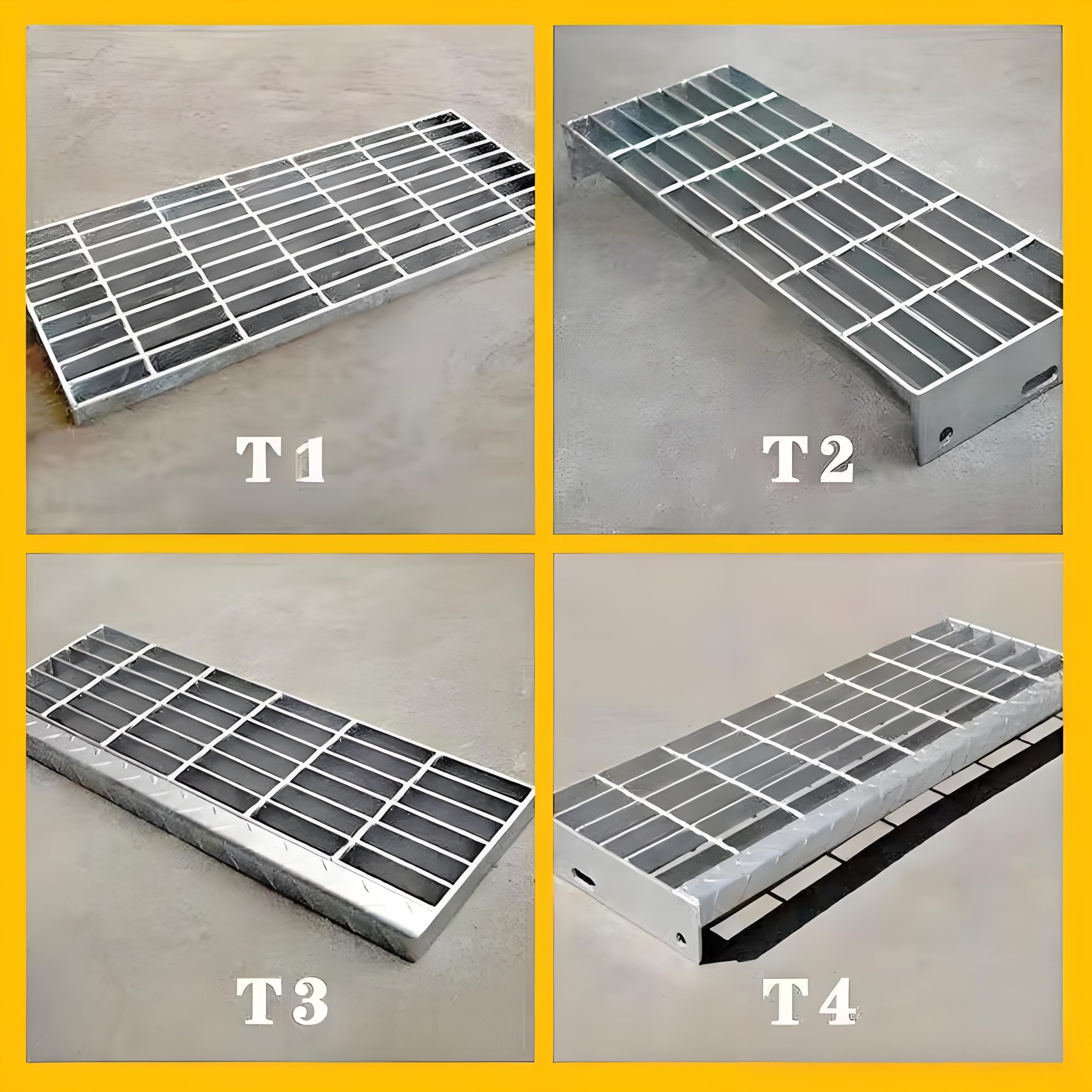
In actual supply, grating performance depends not only on the panel itself but also on the accessories and surface treatment that go with it. A good 304 stainless steel bar grating project usually includes suitable clips, stable installation details, and the right finish for the environment.
For installation, M-type and C-type clips are commonly recommended. M clips are often used when the buyer wants a secure top hold-down with practical installation and removal. They are suitable for many walkway and platform applications where panels may need periodic lifting for maintenance. C clips are also widely used and can be a good choice depending on support steel shape and project preference.
The correct clip should be selected based on support thickness, access for tightening, expected vibration, and whether the panel will be removed often. In areas with equipment movement or repeated foot traffic, proper fixing is important to prevent panel shifting and noise. Stainless steel grating should not just be placed loosely unless the structure is specifically designed for that condition.
As for surface treatment, acid pickling and passivation is the standard recommendation for most 304 stainless steel bar grating. This process cleans the surface, removes welding discoloration and contamination, and helps restore the protective passive layer of the stainless steel. For industrial use, this is usually the most balanced option in terms of performance and cost.
Electropolishing is a higher-grade finish option. It gives the grating a smoother, brighter, and more refined surface. This can be useful in food, pharmaceutical, laboratory, or architectural projects where appearance and cleanability are especially important. A smoother surface can also reduce dirt retention and make washing easier.
That said, electropolishing is not always necessary. For many drainage covers, service walkways, and ordinary factory platforms, standard pickling and passivation is enough. Buyers should choose electropolishing only when the project really benefits from its added surface quality, because it will increase the final cost.
When discussing a project with Anping County Chuansen Silk Screen Products Co., Ltd., buyers usually get better matching results if they provide the full use scenario rather than just the grating size. Information such as whether the panel is for a walkway, trench cover, or heavy platform, whether anti-slip is needed, whether kick plates are required, and whether the environment demands a higher surface finish will help define a more accurate quotation and product recommendation.
What is the standard size of 304 stainless steel bar grating for walkways?
For many industrial walkways, a common specification uses bearing bar heights of 25 mm to 32 mm with 30 x 100 mm grating spacing. Serrated top surfaces are often preferred for better slip resistance. The exact size still depends on span length, support conditions, and required load.
Is 304 stainless steel bar grating good for drainage channels?
Yes, 304 stainless steel bar grating is widely used for drainage channels, trench covers, and washdown areas because it has good corrosion resistance, strong drainage performance, and easy maintenance. The key is to select the right open area, edge reinforcement, and load rating for the actual site conditions.
How much does 304 stainless steel bar grating cost per square meter?
As a reference, ordinary walkway-grade 304 stainless steel bar grating is often around USD 75 to USD 145 per square meter, while heavier platform-grade products may be around USD 130 to USD 240 per square meter or more. The final price depends on bar size, spacing, panel dimensions, fabrication complexity, and surface finish requirements.
 English English
  Arabic
 Vietnamese
 German
 French