

304 and 316 stainless steel bar grating, Both materials are widely used for industrial platforms, drainage covers, stair treads, walkways, trench grates, marine access areas, and food or chemical processing floors. The difference is mainly about corrosion resistance, project environment, and total cost over the service life.
304 stainless steel is often called “18-8 stainless steel” because it usually contains around 18% chromium and 8% nickel. This combination gives 304 good general corrosion resistance in many normal industrial and commercial environments. For many indoor platforms, factory walkways, mezzanine floors, and equipment access grating, 304 performs well and is often the most cost-effective stainless steel choice.
316 stainless steel is similar to 304 in its basic structure, but it has one important extra element: molybdenum. In most common 316 stainless steel, the molybdenum content is around 2% to 3%. This small percentage makes a big difference when the grating is exposed to chlorides, salt spray, seawater, de-icing salts, brine, or wet chemical environments.
The main reason 316 resists corrosion better than 304 is that molybdenum improves resistance to pitting corrosion. Pitting is not the same as general rust on carbon steel. It often starts as small, dark pinholes on the stainless steel surface. At first, it may look minor, but once pits form, they can deepen and damage the steel locally. For bar grating, this matters because bearing bars and cross bars are load-carrying parts. Localized corrosion can reduce section thickness and shorten the safe service life.
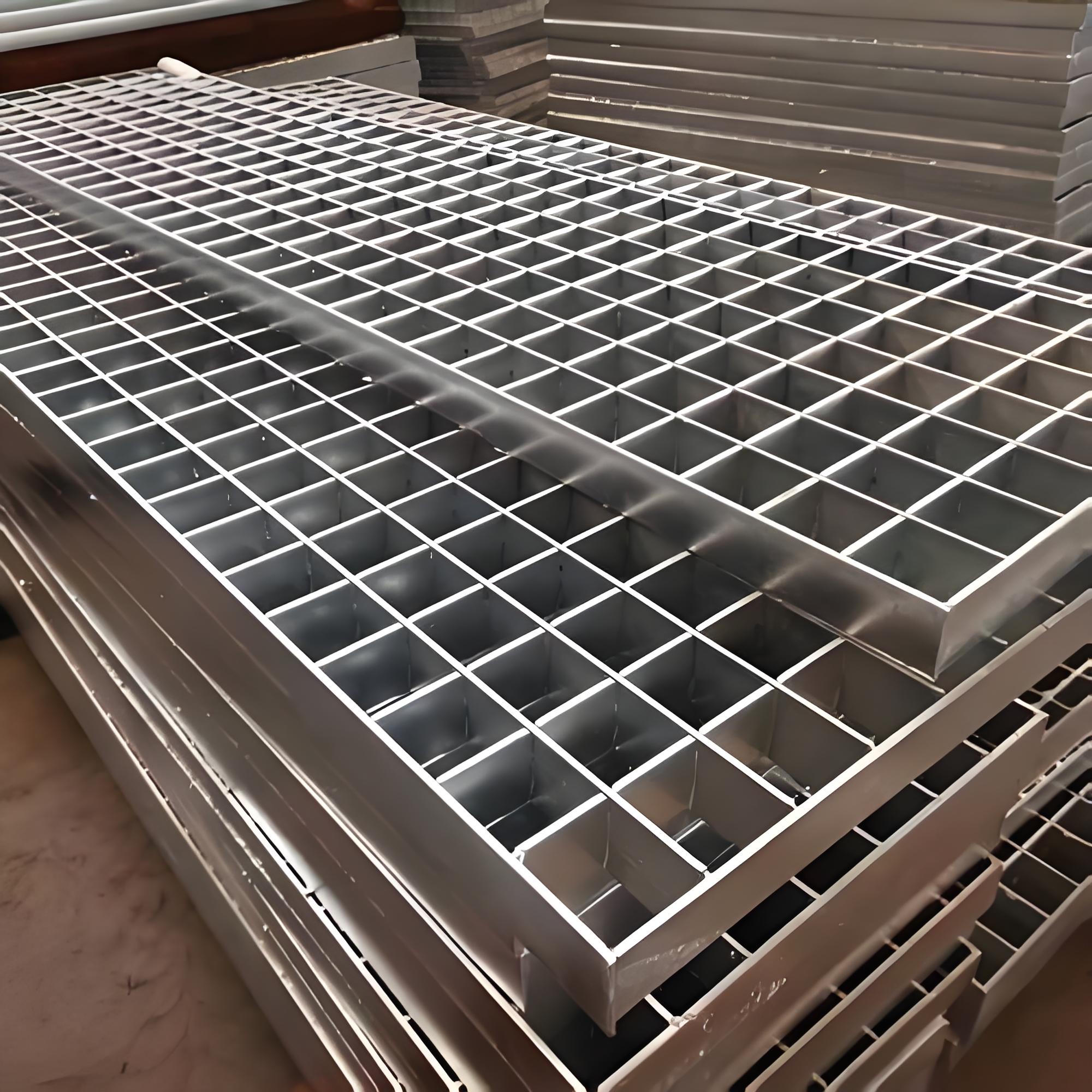
Chloride ions are the key problem. They are common in seawater, coastal air, road salt, cleaning chemicals, brine tanks, and some chemical processing areas. Chlorides can attack the passive film on stainless steel. The passive film is a thin protective chromium oxide layer that gives stainless steel its corrosion resistance. In 304, this film is good under normal conditions, but in chloride-rich environments it can break down more easily. In 316, molybdenum helps the passive film resist chloride attack better.
This does not mean 316 is completely corrosion-proof. It is still stainless steel, not a magic material. If 316 bar grating is used in very high chloride concentration, high temperature, poor ventilation, or stagnant wet conditions, corrosion can still happen. But compared with 304, 316 gives a much wider safety margin in harsh service environments.
For buyers, the simple rule is this: 304 is a good general-purpose stainless steel grating material, while 316 is a better corrosion-resistant stainless steel grating material. If the site is dry, inland, and not exposed to salt or aggressive chemicals, 304 is normally enough. If the site is coastal, wet, salty, or chemically aggressive, 316 should be seriously considered.
In real factory projects, material selection is rarely decided only by a material data sheet. It is usually decided by where the bar grating will be installed, what liquids or vapors are present, how often the floor is washed, and whether the environment allows moisture to stay on the steel surface for long periods.
304 stainless steel bar grating is commonly used in inland chemical plants where the atmosphere is not heavily chloride-based. For example, a factory platform used for inspection around tanks, pipelines, pumps, or valves may work well with 304 if the chemicals do not contain strong chlorides and the area is not continuously wet. In many inland industrial zones, 304 offers a practical balance between corrosion resistance and price.
Food processing plants also use 304 stainless steel grating widely. In areas such as dry processing rooms, packaging zones, clean walkways, and equipment platforms, 304 is often suitable. It has good hygienic properties, is easier to clean than carbon steel, and avoids paint peeling problems. However, if the food plant uses strong salt solutions, brine, or frequent chlorine-based cleaning chemicals, the situation changes. In those areas, 316 may be safer.
General industrial platforms are another typical 304 application. Many factories need stainless steel grating because carbon steel grating may rust too quickly or because galvanized grating is not allowed in the process area. If the platform is located indoors, away from salt, and only exposed to normal humidity, 304 can usually provide long service life with reasonable maintenance.
316 stainless steel bar grating is more suitable for coastal facilities. Coastal air carries salt spray, and even if the grating does not touch seawater directly, salt particles can settle on the surface. When moisture combines with salt deposits, corrosion risk increases. This is especially true for open platforms, pier walkways, offshore-related access areas, shipyard platforms, and wastewater facilities near the sea.
Areas using de-icing salt are another important case. In cold regions, road salt and de-icing chemicals can be carried onto entrance platforms, ramps, drainage grates, trench covers, stair treads, and loading areas. If the grating is repeatedly exposed to salty water in winter, 304 may show staining and pitting earlier. 316 normally provides better long-term performance in these conditions.
Continuously wet or submerged environments also push buyers toward 316. Examples include water treatment plants, drainage channels, pump station platforms, wet wells, cooling tower areas, marine docks, fish processing plants, and facilities where washdown water remains on the grating. Stainless steel needs oxygen to maintain its passive layer. In stagnant water, under deposits, or in crevices, corrosion risk increases. 316 does not eliminate the risk, but it performs better than 304.
A practical factory example is an indoor production platform in an inland machinery plant. The grating is used for worker access around equipment. It stays mostly dry, cleaning is occasional, and there is no salt exposure. In this case, 304 stainless steel bar grating is usually a sensible choice. Using 316 may not bring enough extra value to justify the price difference.
Another example is a coastal wastewater treatment plant where grating covers channels and access walkways. The air is humid, the floor is often wet, and the location is near the sea. In this case, 316 stainless steel bar grating is usually the better option. Even though the initial cost is higher, the reduced corrosion risk and longer replacement interval can make it more economical over time.
One common misunderstanding is that 316 stainless steel bar grating is much stronger than 304. In most practical grating applications, this is not true. The main advantage of 316 is corrosion resistance, not a major increase in load-bearing strength.
Typical tensile strength and yield strength values for 304 and 316 stainless steel are quite close. Exact values depend on the product form, manufacturing process, heat treatment condition, and applicable standard, but for bar grating design, both grades are generally treated as similar in mechanical behavior. If two gratings have the same bearing bar size, same spacing, same cross bar spacing, same span, and same manufacturing quality, their load-bearing capacity is not substantially different just because one is 304 and the other is 316.
For stainless steel bar grating, the load capacity is mainly controlled by the bearing bar dimensions and layout. Important factors include bearing bar height, bearing bar thickness, center-to-center spacing, clear span, cross bar spacing, support method, and whether the grating is welded, press-locked, or swage-locked. Material grade matters, but the geometry matters more for deflection and safe load.
For example, a 30 mm by 3 mm bearing bar with 30 mm spacing will not carry the same load as a 40 mm by 5 mm bearing bar with the same spacing. Increasing the bearing bar depth usually improves load capacity significantly. Reducing the span also improves performance. These design factors are much more important than choosing 316 instead of 304 if the only concern is structural loading.
If the grating will be used for pedestrian walkways, equipment maintenance platforms, forklift traffic, or heavy vehicle areas, the buyer should provide the working load, span direction, clear span, support width, and deflection requirement. The manufacturer can then select the proper bearing bar size. The choice between 304 and 316 should be made mainly after checking corrosion exposure.
In a dry indoor environment, choosing 316 will not normally allow you to reduce the grating thickness or bearing bar height. That would be a risky assumption. Structural design should be based on load tables, standards, and project requirements. 316 protects better against corrosion, but it does not automatically make a lighter grating acceptable for the same load.
There is one indirect strength-related point to remember. In a corrosive environment, 316 can maintain its effective metal thickness longer than 304. If 304 suffers pitting and section loss, its long-term load-bearing safety can decline faster. So at the beginning, both may carry the load similarly, but after years of exposure in a harsh chloride environment, 316 may retain its original performance better.
316 stainless steel bar grating is more expensive mainly because of its alloy content, especially molybdenum and often slightly higher nickel cost impact. In many market conditions, 316 raw material cost is usually about 30% to 50% higher than 304. The exact gap changes with nickel and molybdenum prices, order quantity, bar size, grating type, surface treatment, and fabrication complexity.
For factory quotation, stainless steel bar grating may be priced by metric ton or by square meter. Pricing by ton is common for bulk industrial orders because stainless steel material cost is a major part of the total. Pricing by square meter is convenient for project budgeting, especially when the buyer already knows panel dimensions and grating specifications.
As a rough industry reference, 304 stainless steel bar grating may be quoted around USD 2,800 to USD 4,200 per metric ton for common specifications, depending on market conditions, structure type, and fabrication requirements. 316 stainless steel bar grating may often range from about USD 4,000 to USD 6,200 per metric ton. These figures are only reference ranges, not fixed prices, because stainless steel markets move frequently.
By square meter, the range varies even more because grating weight per square meter can be very different. A light-duty pedestrian grating uses much less steel than a heavy-duty grating for vehicle loading. For common stainless steel industrial platform grating, 304 may often fall around USD 80 to USD 180 per square meter, while 316 may often fall around USD 110 to USD 260 per square meter. Heavy bearing bars, close spacing, custom cutting, toe plates, stair tread nosing, and special edge banding will increase the price.
The important point is that the cheapest initial price is not always the lowest total cost. If 304 is used in a dry indoor factory and lasts many years without serious corrosion, paying extra for 316 may not be necessary. In that case, 304 is cost-effective. But if 304 is used in a coastal plant, salty drainage area, or wet chemical zone, the lower purchase price may be offset by earlier replacement, shutdown labor, safety risk, and maintenance cost.
Replacement cost is often underestimated. Removing old grating is not just the cost of buying new panels. It may include stopping production, arranging lifting equipment, cutting seized clips or fasteners, cleaning corroded supports, checking platform safety, and reinstalling panels. If the grating is located above tanks, channels, conveyors, or operating equipment, replacement can be inconvenient and expensive.
For buyers comparing quotations, it is useful to ask for both 304 and 316 pricing on the same specification. This makes the real premium clear. For example, if a project needs 500 square meters of grating and 316 costs USD 45 more per square meter than 304, the initial difference is USD 22,500. That sounds large. But if the site is coastal and 316 can avoid one full replacement cycle, the higher upfront cost may be reasonable.
A practical way to look at cost-effectiveness is to divide the total installed cost by expected service years. If 304 costs USD 100 per square meter and lasts 6 years in a harsh area, the material cost alone is about USD 16.7 per square meter per year. If 316 costs USD 145 per square meter and lasts 15 years, the material cost alone is about USD 9.7 per square meter per year. This simple calculation does not even include labor and downtime, which often make 316 even more attractive in difficult environments.
Service life depends heavily on environment. There is no single number that applies to every project. A 304 stainless steel grating installed inside a dry inland factory can last for many years, sometimes decades, with normal cleaning and inspection. The same 304 grating installed beside the sea, exposed to salt spray and standing water, may show staining and pitting much earlier.
In the same harsh chloride environment, 316 stainless steel can often last 2 to 3 times longer than 304. This is a practical field expectation rather than an absolute guarantee. The actual result depends on chloride concentration, temperature, moisture, cleaning frequency, surface finish, crevice conditions, and whether deposits accumulate on the grating surface.
For example, in an inland food processing walkway with regular cleaning and no brine exposure, both 304 and 316 may perform well. The difference in service life may not be dramatic enough to justify the higher price of 316. But in a fish processing plant, seafood facility, salt production area, or coastal drainage platform, 316 can provide a much stronger advantage.
Maintenance also affects service life. Stainless steel is low-maintenance, but it is not zero-maintenance. Salt deposits, chemical residues, and dirt should not be allowed to build up for long periods. Periodic rinsing with clean water, especially in coastal or de-icing salt areas, helps both 304 and 316. Good drainage is also important. If water can drain away quickly, corrosion risk is lower. If water sits in corners, under clips, or around welded areas, risk increases.
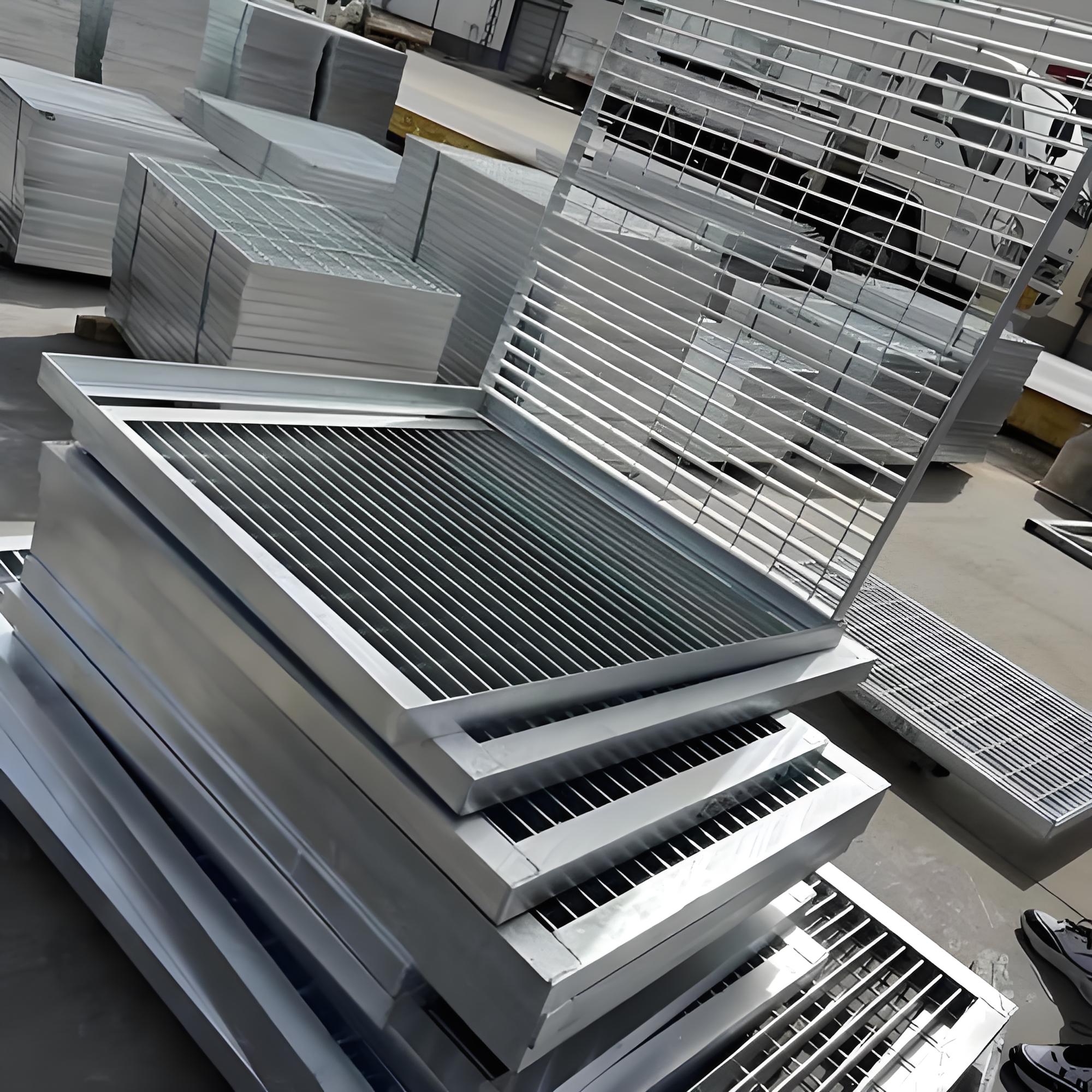
Surface condition matters too. Smooth surfaces are easier to clean and usually resist corrosion better than rough, contaminated, or mechanically damaged surfaces. During fabrication, stainless steel should be protected from carbon steel contamination. If carbon steel particles become embedded on the surface, they may rust and create the false impression that the stainless steel itself is rusting. Proper fabrication and handling are important for both 304 and 316.
Welded areas can be more sensitive if not cleaned properly. Heat tint and welding oxidation should be removed or treated when the project requires higher corrosion resistance. For ordinary industrial grating, the required level of post-weld cleaning depends on the environment. In aggressive service, better surface cleaning can help extend service life.
From a factory recommendation point of view, the decision should consider the cost of future replacement. If the grating is easy to replace, located in a non-critical area, and the environment is only mildly corrosive, 304 can be a reasonable choice. If the grating is difficult to access, located in a safety-critical walkway, or installed in a plant where shutdown is expensive, 316 is often the safer long-term investment.
For projects with uncertain exposure, it is wise to ask practical questions before ordering. Will the grating be outdoors? Is the site within a coastal region? Will cleaning chemicals contain chlorides? Will de-icing salt be used nearby? Will the grating be exposed to brine, wastewater, seawater, or continuous washdown? Will the surface stay wet for long periods? If several answers are yes, 316 should move to the top of the material list.
A simple purchasing rule is: choose 304 unless the environment gives you a clear reason not to. This rule works because many industrial grating projects are inland, indoor, and only mildly corrosive. In those cases, 304 stainless steel bar grating usually gives good performance at a lower cost.
Choose 304 stainless steel bar grating when the grating is installed indoors, away from salt exposure, and used in a dry or normally humid environment. It is also suitable for many food processing areas, general factory platforms, warehouse walkways, machinery access platforms, and inland chemical plants where chloride exposure is low. If the main purpose is to avoid ordinary rust and paint maintenance, 304 is often enough.
Choose 316 stainless steel bar grating when the site is coastal, marine, salty, wet, or chemically aggressive. This includes offshore facilities, shipyards, seaside platforms, coastal wastewater plants, fish processing areas, brine handling zones, swimming pool-related areas, de-icing salt zones, and outdoor platforms where salty moisture can collect. It is also a better choice for continuously wet or occasionally submerged grating.
Decision table in plain words: Environment: dry indoor factory; recommended grade: 304; reason: good corrosion resistance and lower cost. Environment: inland food processing without brine; recommended grade: 304; reason: hygienic and economical. Environment: coastal outdoor platform; recommended grade: 316; reason: better salt spray resistance. Environment: road salt or de-icing area; recommended grade: 316; reason: better chloride pitting resistance. Environment: continuous washdown or wet drainage channel; recommended grade: 316; reason: better long-term durability. Environment: unknown or mixed exposure; recommended grade: 316; reason: safer choice when corrosion risk is unclear.
If the environment is uncertain, the safer recommendation is usually 316. This is especially true when the project is far from the supplier, installation labor is expensive, or replacement would interrupt production. The extra material cost is easier to accept at the purchasing stage than after corrosion problems appear on site.
For buyers working with a manufacturer such as Anping County Chuansen Silk Screen Products Co., Ltd., it is useful to provide more than just the required panel size. The supplier should know the installation environment, load requirement, span, bearing bar direction, surface exposure, drainage condition, and any chemical contact. With that information, the material grade and grating specification can be matched more accurately.
It is also important not to select the stainless steel grade in isolation. A good grating purchase should combine the right material, correct bearing bar size, suitable spacing, proper edge banding, secure fixing clips, and practical panel layout. A well-chosen 304 grating in the right environment can be better than an over-specified 316 grating with poor structural design. At the same time, a perfectly designed 304 grating can still fail early if installed in a high-chloride environment where 316 should have been used.
In budget-sensitive projects, one useful method is mixed material selection. For example, 304 can be used in indoor dry areas, while 316 is used only in coastal outdoor zones, washdown areas, drainage trenches, or chemical contact points. This approach can control cost without ignoring corrosion risk in critical locations.
For long-term industrial projects, the best decision is usually based on the most aggressive realistic exposure, not the best-case condition. If the grating is outdoors, assume rain and dirt accumulation. If it is near the sea, assume salt deposits. If it is in a cleaning area, assume chemical residues. Stainless steel selection should match the conditions that actually happen during operation, not only the conditions shown on the drawing.
Is 316 stainless steel bar grating always better than 304?
316 is better for corrosion resistance, especially in chloride, salt, coastal, and wet environments. But it is not always the better purchase. If the grating is used indoors in a dry inland factory, 304 usually performs well and costs less. In that situation, 316 may be unnecessary unless the buyer wants a higher safety margin or the environment may become more corrosive in the future.
Can 304 stainless steel bar grating be used outdoors?
Yes, 304 stainless steel bar grating can be used outdoors in many inland locations with normal rain and air exposure. However, it is not the best choice for coastal outdoor areas, de-icing salt zones, or places where salty water can remain on the surface. If the outdoor site is near the sea, near salted roads, or constantly wet, 316 is usually the safer material.
How much more expensive is 316 stainless steel grating than 304?
In many market conditions, 316 stainless steel bar grating is about 30% to 50% more expensive than 304 because of the molybdenum and alloy cost. As a rough reference, 304 may be around USD 80 to USD 180 per square meter for common industrial grating, while 316 may be around USD 110 to USD 260 per square meter. The final price depends on bearing bar size, spacing, panel dimensions, order quantity, fabrication details, and stainless steel market prices.