

For 304 stainless steel bar grating, the price is never decided by one single factor. Buyers usually ask for a square-meter price, but factories calculate it from raw stainless steel cost, bar size, grid spacing, surface finish, welding work, edge treatment, packing, and order quantity. If two quotations look very different, the reason is often hidden in the specification, not only in the supplier margin.
304 stainless steel bar grating is mainly made from 304 stainless steel bearing flat bars and cross bars. In many projects, the bearing bars are slit from stainless steel plate or strip, while the cross bars may come from round bar, square twisted bar, or stainless steel wire rod. Because the finished grating uses a large amount of metal, the raw material price is the first layer of the factory price.
The purchase cost of 304 stainless steel plate, strip, and wire rod changes with the stainless steel market. In a normal market, 304 stainless steel raw material may move within a broad range, for example around USD 2,300 to USD 3,600 per metric ton for common industrial material, depending on region, mill brand, thickness, surface, and nickel market conditions. This is only a reference range. When nickel prices rise sharply, stainless steel mills often adjust offers quickly, and grating quotations may only remain valid for a short time.
Nickel content is one of the biggest reasons why 304 stainless steel costs more than carbon steel or 201 stainless steel. Standard 304 stainless steel usually contains about 8% nickel and around 18% chromium. Chromium helps form the passive oxide layer on the surface, while nickel improves corrosion resistance, toughness, and stability. When the nickel market goes up, the cost of 304 stainless steel follows because nickel makes up a meaningful part of the alloy cost.
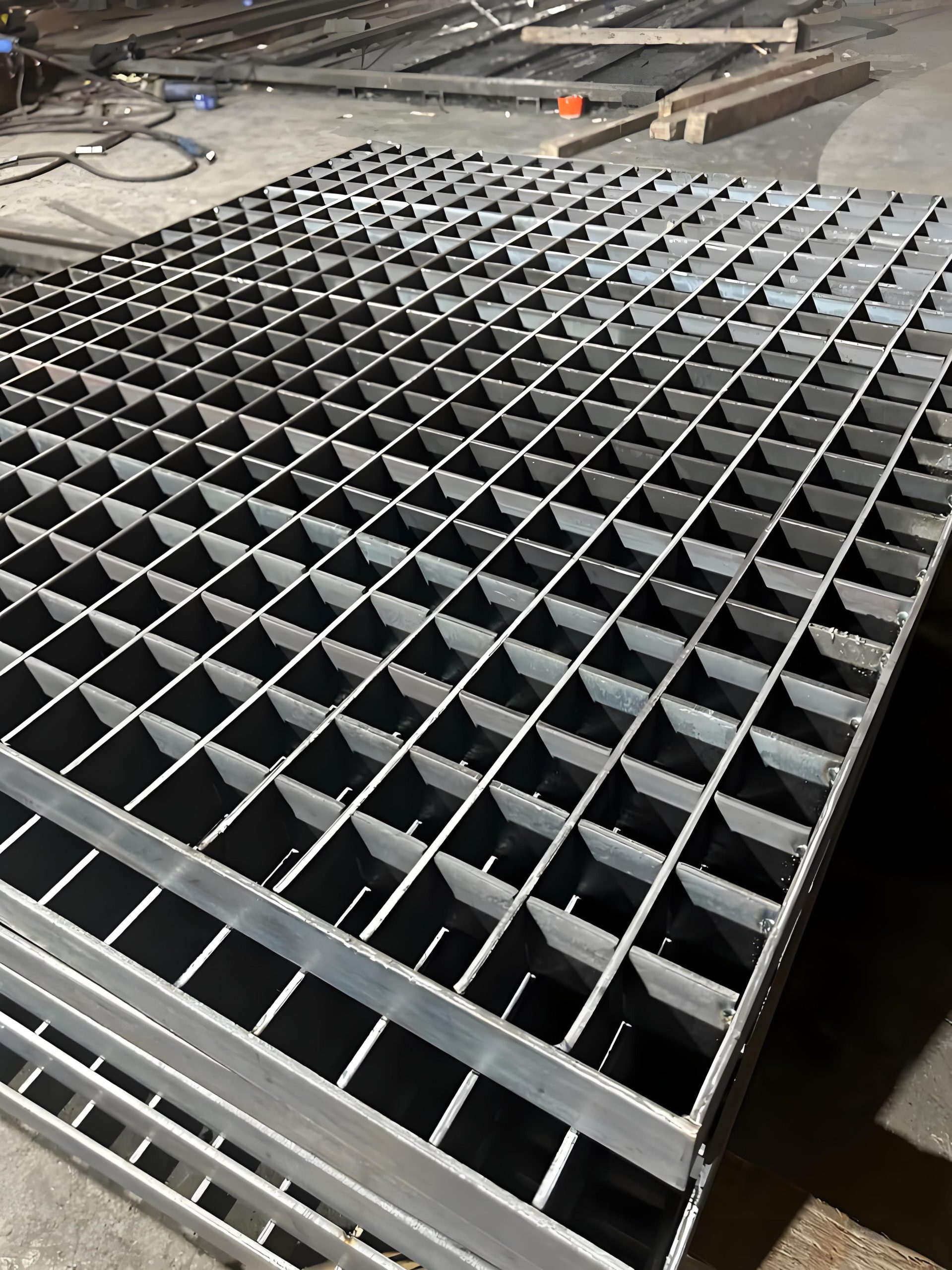
For bar grating buyers, this means a low price should always be checked carefully. If the quotation is far below the normal market level, the material grade may not be true 304, or the actual thickness may be lower than the drawing. Some low-cost offers may use 201 stainless steel instead of 304, or use thinner flat bars with the same nominal size. For a corrosive environment, this can create a serious lifecycle cost problem even if the first purchase price looks attractive.
Factories generally build the base price through material weight. First, the supplier calculates the theoretical weight per square meter based on the bearing bar height, bearing bar thickness, bearing bar spacing, cross bar spacing, cross bar size, and edge bar weight. Then the raw material cost is added with processing cost, welding cost, surface treatment cost, cutting loss, packing, and overhead. This is why stainless steel grating is often discussed both by square meter and by ton.
Compared with galvanized carbon steel grating, 304 stainless steel grating has a much higher material input cost. However, in wet, salty, chemical, or hygienic areas, the price should not be judged only by the first purchase cost. If galvanized grating needs frequent replacement, rust cleaning, repainting, or contamination control, 304 stainless steel may become more economical over the service life of the project.
The bearing flat bar is the main load-carrying part of stainless steel bar grating. Its thickness and height have a direct effect on weight, strength, and price. A grating made with 3 mm thick bearing bars is much lighter and cheaper than a 5 mm thick version. A 20 mm high bearing bar is also much lighter than a 40 mm high bearing bar. For example, 25 x 3 mm bearing bar grating may be suitable for light-duty walkways, while 40 x 5 mm or heavier sections are used where higher load capacity is required.
The difference between 3 mm and 5 mm thickness may look small on paper, but it changes the steel weight per square meter significantly. A 5 mm bearing bar has roughly 67% more thickness than a 3 mm bearing bar of the same height. If the bearing bar spacing is the same, the heavier section increases raw material cost, welding difficulty, and sometimes freight cost. So when buyers compare prices, the bearing bar size must be exactly the same.
Height has an even stronger effect on load capacity. A 40 mm high flat bar has much better bending resistance than a 20 mm high flat bar, assuming the same thickness and spacing. This is why walkway grating, trench cover grating, stair tread grating, and platform grating cannot be priced accurately without span and load information. If the grating panel is only used for drainage cover in a small indoor area, 20 mm or 25 mm height may work. If it is used for industrial platforms, maintenance walkways, or equipment access floors, 30 mm, 40 mm, or 50 mm high bars may be required.
Grid spacing also changes the price. Common stainless steel bar grating openings include 30 x 30 mm, 30 x 50 mm, 30 x 100 mm, 40 x 40 mm, and 40 x 100 mm. A 30 x 30 mm grid uses more bearing bars and more cross bars than a 40 x 100 mm grid, so it is heavier and more expensive. A tighter mesh opening may be required for heel-safe access, small tool fall protection, or food processing areas, but it should be specified clearly because it changes both cost and drainage performance.
A 40 x 100 mm grid is often more economical because fewer cross bars are needed. It can be suitable for general industrial walkways where the main concern is load support and drainage, not small-object retention. A 30 x 30 mm grid is more compact, safer for smaller wheels or foot traffic, and more comfortable for some pedestrian areas, but it naturally costs more. The decision should match the use environment instead of simply choosing the cheapest pattern.
Anti-slip serrated surfaces are another price factor. Serrated stainless steel bar grating is made by cutting teeth on the top surface of the bearing flat bars. This gives better grip in wet, oily, or marine environments. However, serrating adds processing cost and may increase material loss. For dry indoor platforms, plain surface grating may be enough. For wastewater plants, offshore access areas, chemical workshops, food washing zones, and ramps, serrated bearing bars are often worth the added cost.
Factory price also depends on panel size and fabrication details. Standard rectangular panels are easier to produce. Irregular shapes, notches, pipe openings, lifting holes, curved edges, and many small pieces need extra cutting and layout work. If the project requires welded edge banding around each panel, the supplier must add more stainless steel flat bar and more welding labor. Therefore, two gratings with the same mesh and bearing bar size can still have different prices if the fabrication drawings are different.
304 stainless steel grating is often chosen when ordinary carbon steel grating cannot handle the environment well. Galvanized carbon steel grating has a zinc coating that protects the steel underneath, but zinc is gradually consumed in aggressive environments. Once the coating is damaged or worn away, corrosion can spread. In areas with chloride ions, acidic cleaning agents, chemical vapors, or continuous moisture, the zinc layer may deteriorate faster than expected.
304 stainless steel has better resistance to chloride ion corrosion than standard galvanized carbon steel in many service conditions. The chromium in 304 forms a passive film on the surface. If this passive film is scratched lightly, it can reform in the presence of oxygen. This self-passivating behavior is one of the main reasons stainless steel is used in environments where rust staining, coating failure, or frequent maintenance is not acceptable.
That said, 304 stainless steel is not completely immune to all chloride corrosion. In high-chloride water, warm seawater, poorly drained salt deposits, or continuously wet crevices, 304 may still suffer from pitting or crevice corrosion. For severe marine immersion or high-temperature chloride exposure, 316 stainless steel may be a better choice. But for many industrial floors, splash zones, humid workshops, and cleaning areas, 304 offers a strong balance between cost and corrosion resistance.
Chemical plants often use 304 stainless steel bar grating for platforms, drains, stair treads, and maintenance walkways. The advantage is not only corrosion resistance, but also cleaner appearance and lower coating maintenance. In facilities where chemical splashes happen occasionally, stainless steel grating can reduce the risk of rust particles falling into production areas or drainage channels.
Nearshore platforms, port facilities, and coastal industrial buildings are also common application areas. Salt in the air can attack galvanized coatings over time. If the structure is exposed to sea breeze, rain, and regular washing, 304 stainless steel grating may last longer than galvanized grating. For areas very close to seawater spray or direct seawater contact, the buyer should discuss whether 304 is enough or whether 316 is required.
Food workshops use 304 stainless steel grating because hygiene, washability, and corrosion resistance are important. In meat processing plants, beverage factories, dairy facilities, seafood processing plants, and commercial kitchens, floors and drains are often washed with water and cleaning chemicals. Carbon steel rust is not acceptable in these areas. 304 stainless steel grating is easier to clean, does not need paint, and has good compatibility with many food-industry cleaning practices.
The corrosion performance also depends on design. Good drainage matters. If water, salt, or chemicals stay trapped between the grating and support frame, corrosion risk increases. Smooth welds, proper passivation, accessible cleaning gaps, and avoiding unnecessary crevices can all improve service life. A good stainless steel grating design is not only about choosing 304 material; it is also about avoiding details that hold corrosive liquid for a long time.
For most industrial 304 stainless steel bar grating, pickling and passivation is the standard surface treatment. After welding and fabrication, heat tint and welding scale may appear around weld areas. Pickling helps remove oxide scale, iron contamination, and discoloration. Passivation helps restore and improve the chromium-rich passive layer on the stainless steel surface. This treatment is practical, widely used, and usually included in normal stainless steel grating pricing.
Pickled and passivated grating has a clean industrial appearance, but it is not a mirror finish. Buyers should not expect decorative polish unless it is requested. The surface may show normal stainless steel texture, weld marks, and slight color differences, especially on heavy-duty welded grating. For platforms, trenches, drainage covers, and equipment access areas, this finish is normally acceptable and cost-effective.
Electropolishing is a higher-grade surface treatment. It removes a very thin layer from the stainless steel surface through an electrochemical process, making the surface smoother, brighter, and easier to clean. Electropolished stainless steel grating is more expensive because it needs special processing tanks, controlled chemistry, electricity, handling, and additional quality control. It is usually requested for food, pharmaceutical, cleanroom, laboratory, or high-cleanliness applications.
The price increase for electropolishing can vary widely. For simple small panels, it may add a moderate cost. For large, heavy, or complicated panels, it can add a significant cost because handling and tank size become limiting factors. As a rough industry reference, electropolishing may add around USD 15 to USD 60 per square meter or more, depending on panel size, surface area, finish requirement, and local treatment cost.
Some buyers ask for extra coatings on 304 stainless steel grating. This can include epoxy coating, fluorocarbon coating, color coating, or special anti-slip coating. Extra coatings are not usually needed for corrosion protection in standard 304 applications, but they may be used for safety color coding, chemical resistance, visual identification, or electrical insulation requirements. These customized coatings increase cost and lead time.
Before choosing an extra coating, buyers should think about maintenance. Stainless steel itself resists corrosion by its passive surface. If a coating is added and later damaged, repair may be needed. In high-traffic walkways, coatings can wear off faster on the top surface. For many projects, plain pickled and passivated 304 grating is more reliable and easier to maintain than coated stainless steel.
Surface finish also affects inspection standards. If the buyer needs a decorative finish, food-grade finish, low-roughness surface, or no visible weld discoloration, this should be written clearly before production. A general industrial quotation will not automatically include high cosmetic polishing. Clear surface requirements avoid disputes after delivery.
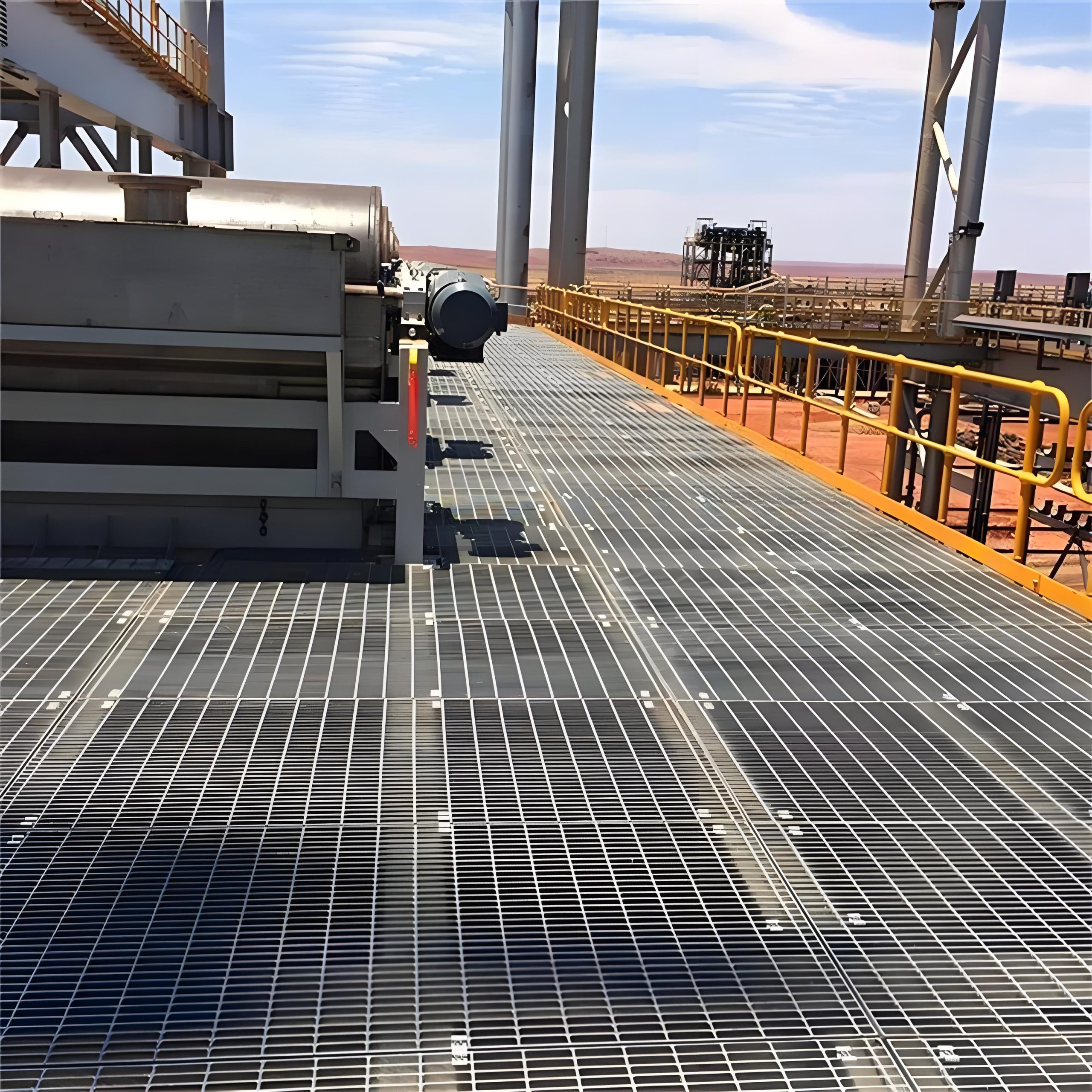
In the industry, 304 stainless steel bar grating is often quoted by square meter for project purchasing, but the factory still checks the weight by ton. The price per square meter changes because different specifications have very different weights. A light-duty 304 grating may be much cheaper per square meter than a heavy-duty grating, even if both are made from the same grade of stainless steel.
As a broad reference, standard 304 stainless steel bar grating may range from about USD 85 to USD 220 per square meter at factory level for many common industrial specifications. Light panels with smaller bearing bars and wider spacing may be near the lower side. Heavy panels with 40 x 5 mm bearing bars, tight spacing, serrated surfaces, welded edging, and passivated finish may move toward the higher side or above it.
If calculated by ton, finished 304 stainless steel grating may commonly fall around USD 3,200 to USD 5,500 per metric ton at factory level, depending on raw material price, fabrication complexity, surface treatment, and order volume. This ton price is not the same as raw stainless steel coil price because it includes cutting, welding, straightening, edging, pickling, passivation, loss, packing, and factory processing.
For example, a simple 30 x 3 mm bearing bar grating with wider cross bar spacing may have a much lower square-meter cost than a 40 x 5 mm serrated grating with edge banding and small panel sizes. The heavier grating consumes more stainless steel and requires stronger welding control. If the project includes many special-shaped panels, the labor cost per square meter rises because workers spend more time cutting and fitting each piece.
Minimum order quantity also affects unit price. A small trial order may have a higher square-meter price because material purchasing, machine setup, welding fixture adjustment, acid cleaning, packing, and paperwork still take time. If the order is only a few square meters, the supplier cannot spread these costs across many panels. This is why small custom orders often look expensive per square meter.
When the order quantity increases, the unit price usually decreases. For example, an order below 50 square meters may carry a small-batch surcharge. An order of 100 to 300 square meters may receive a more stable production price. Larger orders, such as 500 square meters or more, can often get a better unit rate because raw material purchasing is more efficient and production can be arranged in batches.
The price drop is not unlimited. Since stainless steel material makes up a large portion of the cost, even a large order cannot reduce the price below the real material cost. Larger quantities mainly reduce setup cost, cutting loss ratio, labor inefficiency, and packing cost per square meter. If the raw material market rises, the unit price may still increase even for large orders.
For buyers comparing quotations from different factories, it is useful to ask whether the price includes edge banding, cutouts, surface treatment, packing, inspection documents, and loading terms. A low base price may exclude some items that become extra charges later. A detailed quotation from a manufacturer such as Anping County Chuansen Silk Screen Products Co., Ltd. should match the drawing, loading requirement, finish, and project environment, not just list a simple square-meter number.
A good inquiry for 304 stainless steel bar grating should start with the load requirement. The supplier needs to know whether the grating is for pedestrian traffic, trolley traffic, light equipment access, drainage trench cover, stair tread, or vehicle loading. The clear span between supports is also important. A grating panel that is safe on a 600 mm span may not be safe on a 1,200 mm span with the same bar size.
Buyers should provide the required load in practical terms if engineering data is not available. For example, state whether it must support workers only, pallet trucks, maintenance carts, forklifts, or parked equipment. If there is a known uniform load or concentrated load, include it. This helps the factory recommend bearing bar height and thickness more accurately. Without load information, the quotation may be based on a common specification that is either too weak or unnecessarily expensive.
The use environment must be described clearly. Tell the supplier whether the grating will be used indoors or outdoors, in a dry area or wet area, near the coast or far from salt air, in a chemical plant or food workshop. Also mention whether the grating will be continuously immersed in water or chemicals. Continuous immersion is very different from occasional splashing. 304 may handle many splash and washdown environments, but continuous chloride immersion may require a higher alloy such as 316.
If cleaning chemicals are used, buyers should mention them. Chlorinated cleaners, acidic cleaners, caustic solutions, and sanitizers can affect stainless steel differently. Temperature also matters. Warm chloride solution is more aggressive than cold freshwater. The more information the buyer provides, the lower the chance of choosing the wrong material grade.
Panel size and layout are also essential. The inquiry should include length, width, bearing bar direction, support direction, and whether panels need to be removable. Bearing bar direction is especially important because the bearing bars must span between supports. If the grating is fabricated in the wrong direction, it may not carry the expected load even if the material is correct.
Buyers should state whether welded edge banding is needed. Edge banding improves panel strength at the perimeter, makes handling safer, and gives a more finished appearance. It is often required for removable panels, trench covers, stair treads, and platforms with exposed edges. However, edge banding adds material and welding cost, so it should be included in the quotation from the beginning.
Embedded parts, fixing clips, anchor plates, hinge parts, lifting handles, kick plates, toe plates, and stair nosing should also be specified. These accessories can change both price and production time. If they are requested after the main grating price is confirmed, the final cost may increase. For construction projects, it is better to send drawings showing all fixing details.
Surface preference should be clear as well. State whether the grating needs plain top or serrated top, pickled and passivated finish, electropolished finish, or extra coating. If the grating is used in a food workshop, the buyer may need smoother edges and better weld cleaning. If it is used on a wet platform, serrated bearing bars may be more important than a bright surface.
Packing and delivery requirements can also affect price. Stainless steel surfaces can be scratched during transport if packing is too simple. For industrial grating, normal scratches may be acceptable, but for polished or food-grade pieces, better protection is needed. Buyers should mention whether panels need labels, installation sequence marks, wooden pallet packing, or export seaworthy packing.
How much does 304 stainless steel bar grating cost per square meter?
For common industrial specifications, 304 stainless steel bar grating is often around USD 85 to USD 220 per square meter at factory level. Light-duty grating with thinner bars and wider spacing may be lower, while heavy-duty, serrated, edge-banded, or electropolished grating may be higher. The final price depends on bearing bar size, mesh spacing, panel drawing, surface treatment, and order quantity.
Is 304 stainless steel grating better than galvanized steel grating?
304 stainless steel grating is usually better for wet, coastal, food, chemical, and washdown environments because it has stronger corrosion resistance and does not rely on a zinc coating. Galvanized steel grating is cheaper and works well in many dry or mild outdoor areas, but the zinc layer can wear or corrode over time. If the area has chloride, chemical splash, or strict hygiene requirements, 304 stainless steel is often the safer long-term choice.
Should I choose 304 or 316 stainless steel bar grating for a marine project?
For coastal air exposure or occasional salt spray, 304 may be acceptable in some projects if the design drains well and regular cleaning is possible. For direct seawater contact, continuous saltwater immersion, warm chloride exposure, or severe offshore service, 316 is usually recommended because it contains molybdenum and has better pitting resistance. The right choice depends on chloride level, temperature, wet time, maintenance plan, and expected service life.