

Steel bar grating dimensions are defined by a small set of structural parameters, but each parameter has a direct effect on strength, open area, weight, drainage, fabrication method, and installation fit. The most important dimensions are bearing bar height and thickness, bearing bar spacing, cross bar spacing, panel size, and tolerance control. Once these are fixed, the grating can be matched against span and load requirements under standards such as YB/T 4001.1-2019, ANSI/NAAMM MBG 531-20, and BS 4592-0:2006. In production at Anping County Chuansen Silk Screen Products Co., Ltd., these specification items are the basis for both standard grating supply and non-standard project fabrication.
The bearing bar is the primary load-carrying member in steel bar grating. Its height controls bending resistance much more strongly than its thickness, while thickness contributes to section stiffness, welding stability, and local durability. Standard height series commonly includes 20 mm, 25 mm, 32 mm, 40 mm, 50 mm, 65 mm, 75 mm, and 100 mm. Thickness series usually includes 3 mm, 4 mm, 5 mm, and 6 mm. These dimensions are used in both carbon steel and stainless steel grating, although the most common combinations vary by application.
A 20 mm or 25 mm bearing bar is generally used for light-duty trench covers, pedestrian flooring, small access panels, or decorative grating where span is short. A 32 mm or 40 mm bar is one of the most common ranges for industrial walkways and maintenance platforms because it offers a practical balance between load capacity and weight. A 50 mm or 65 mm bar is more suitable for heavier plant access areas, service decks, and traffic covers. The 75 mm and 100 mm series are usually reserved for long spans, high loads, or projects where deflection control is especially strict.
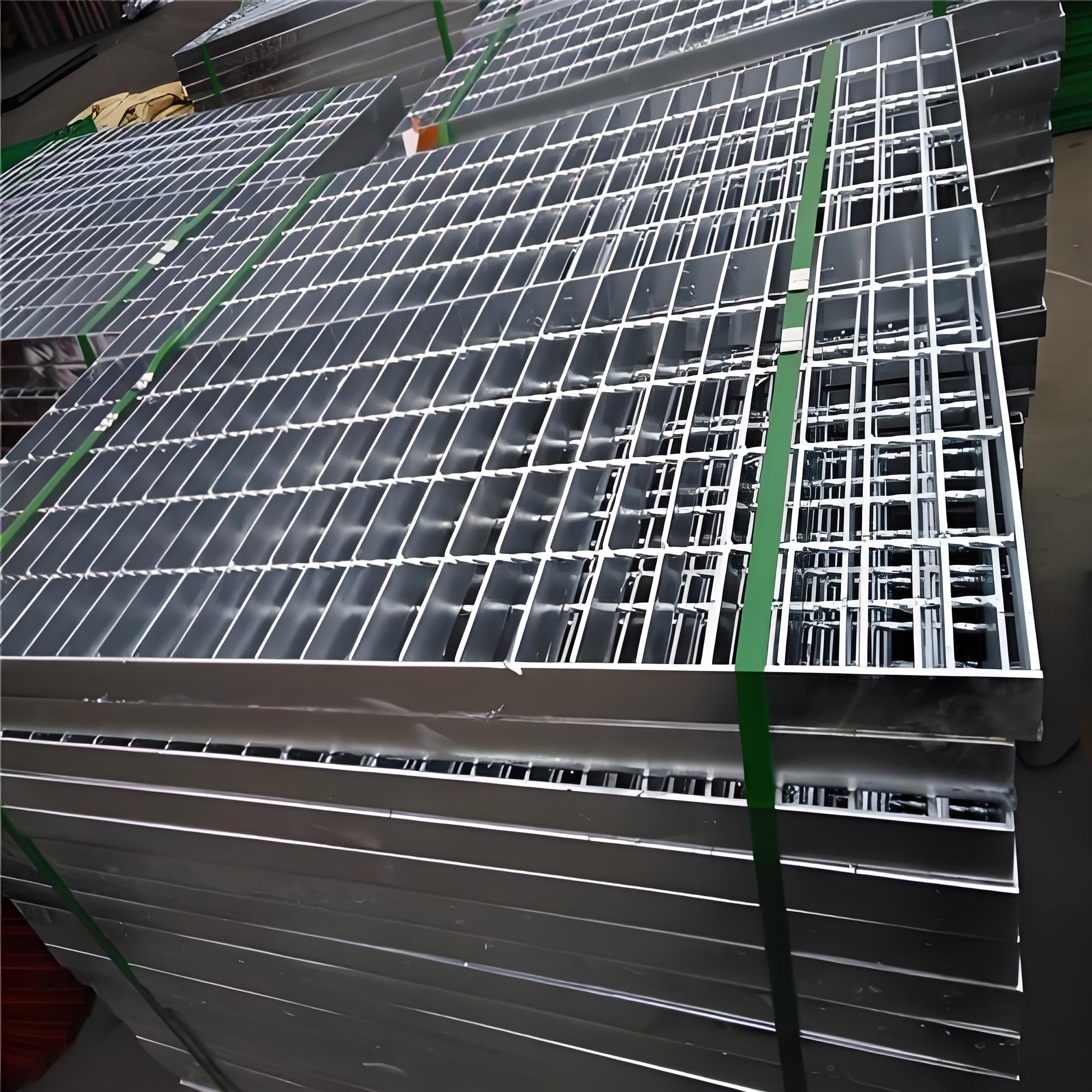
Common combinations seen in production include 25×3 mm, 25×5 mm, 32×5 mm, 40×5 mm, and 50×6 mm. These combinations represent typical demand rather than a complete design range. The difference between 25×3 and 25×5 is significant: the height remains the same, but the thicker bar provides higher mass per square meter, improved local robustness, and a larger load section. The difference between 32×5 and 40×5 is even more pronounced because increasing the bar height raises the section modulus substantially. For this reason, bar height selection is often the first adjustment when span increases.
| Bearing Bar Height | Thickness Options | Typical Use |
| 20 / 25 / 32 / 40 mm | 3 / 4 / 5 mm | Light to medium-duty walkways and covers |
| 50 / 65 / 75 / 100 mm | 5 / 6 mm | Heavy-duty platforms, long spans, traffic zones |
In practical specification work, the bearing bar size should not be selected by appearance alone. Two gratings with the same panel dimensions can perform very differently depending on whether the bearing bar is 25×5 mm or 50×6 mm. This is why engineering selection always starts from support span and applied load rather than from open area or surface pattern only.
Grid spacing is defined by the center-to-center distance between adjacent bearing bars and the center-to-center distance between cross bars. Common bearing bar spacing series includes 30 mm, 40 mm, 50 mm, and 60 mm. Common cross bar spacing is 50 mm or 100 mm, with 100 mm being particularly widespread in industrial welded grating. A 30×100 mm grating means 30 mm center spacing between bearing bars and 100 mm center spacing between cross bars.
The open area and usable opening size depend on the relationship between center distance and bearing bar thickness. Net opening is not the same as center spacing. It is calculated by subtracting the bar thickness from the center spacing in that direction. For example, when the bearing bar pitch is 30 mm and the bar thickness is 5 mm, the net opening between bearing bars is 25 mm. This distinction matters for heel safety, debris passage, drainage rate, ventilation, and compliance with project requirements involving object retention or pedestrian comfort.
Tighter spacing such as 30 mm between bearing bars produces a denser walking surface, better load distribution, and smaller openings. This is useful for pedestrian-heavy areas, small tool retention, and projects where visual solidity is preferred. A 40 mm spacing is common in general industrial grating because it gives more open area while remaining suitable for many platform and cover applications. Spacing of 50 mm or 60 mm is chosen when larger open area, lower weight, and lower steel consumption are more important, provided the service conditions permit larger openings.
Cross bar spacing influences panel stability and surface feel. A 50 mm cross bar arrangement produces a tighter panel structure and a more frequent transverse pattern. A 100 mm spacing is often sufficient for conventional welded grating and is more economical. In close-mesh or special-purpose grating, different spacing can be used, but standard series remain preferred because tooling, welding, and tolerance control are more straightforward.
| Center Spacing | Common Configuration | Net Opening Example |
| 30 / 40 / 50 / 60 mm | With 50 or 100 mm cross bar spacing | 30 mm pitch – 5 mm bar = 25 mm net opening |
| Cross bar 50 / 100 mm | Typical grating mesh: 30×100, 40×100 | Affects panel rigidity and pattern density |
The cross bar connects the bearing bars into a rigid panel and helps maintain spacing, distribute local load, and resist lateral movement. In welded steel grating, the most common cross bar form is twisted square bar. Standard sizes include 5×5 mm, 6×6 mm, and 8×8 mm. The actual choice depends on the grating type, bearing bar depth, panel size, and required fabrication strength.
For many carbon steel gratings, the cross bar is carbon steel and receives the same final hot-dip galvanizing treatment as the bearing bar assembly. In stainless steel grating, the cross bar may be stainless as well to maintain corrosion compatibility throughout the structure. In some special fabrications, cross bar material is selected separately for process efficiency or project requirement, but standard production usually keeps the whole welded assembly materially consistent.
The arrangement of cross bars is commonly described by frequency across the bearing bars. A practical way of reading workshop drawings is to interpret one cross bar every 5, 7, or 9 bearing bar spaces, depending on the specified pitch combination. A 100 mm cross bar spacing in a panel with 30 mm bearing bar pitch results in a repetitive mesh pattern that is both structurally stable and easy to inspect visually. Tighter cross bar arrangement can improve panel integrity in smaller-format panels or applications where higher rigidity is desired.
Cross bar size is often underestimated because it does not carry the primary bending load. However, undersized or poorly welded cross bars can allow panel looseness, noise under traffic, or reduced shape stability during handling. In fabricated units with cut-outs or irregular edges, cross bar arrangement becomes even more important because it helps preserve panel geometry where the full bearing bar pattern is interrupted.
Panel tolerances are critical for installation fit, especially where grating is supplied with support frames, removable cover seats, stair stringers, or multiple adjacent panels. Typical tolerance values include a length tolerance of 0 / -5 mm, width tolerance of ±5 mm, diagonal tolerance of ±5 mm per meter, and flatness tolerance of ±3 mm per meter. These values are widely recognized as practical manufacturing targets for welded grating products.
A length tolerance of 0 / -5 mm means the delivered panel should not exceed the nominal design length, but it may be up to 5 mm shorter. This helps prevent field interference where the grating is intended to drop into a framed opening. Width tolerance of ±5 mm allows for normal manufacturing variation without affecting most support seat conditions. Diagonal tolerance is especially important for square and rectangular panels because diagonal error indicates skewing, which can create visible misalignment or edge gaps in assembled flooring layouts.
Flatness tolerance is often the most relevant quality control item in practical installation. A panel that is within length and width limits can still be difficult to install if it twists or bows. A flatness tolerance of ±3 mm per meter is generally suitable for industrial grating, though tighter requirements may apply in architectural, machine-mounted, or high-visibility installations. For long narrow panels, local warp after galvanizing should be monitored carefully, since residual stress and zinc bath thermal effects can influence final shape.
At Anping County Chuansen Silk Screen Products Co., Ltd., tolerance control in custom fabrication depends heavily on drawing clarity, cutting sequence, welding balance, and edge banding arrangement. For non-standard shapes such as fan sections, radial panels, and panels with multiple cut-outs, dimensional review before welding is the main method of keeping final tolerances under control.
Steel bar grating dimensions and performance are commonly referenced against several recognized standards. In China, YB/T 4001.1-2019 is a key standard for steel grating products. It covers terminology, product structure, dimensional rules, material use, fabrication requirements, and inspection items. For domestic industrial projects and many export jobs originating from Chinese production, this standard provides the basic specification framework.
In the United States, ANSI/NAAMM MBG 531-20 is widely used for metal bar grating. It includes standard dimensions, product types, loading concepts, and manufacturing guidance. It is often referenced on engineering drawings for industrial buildings, wastewater facilities, public works, energy installations, and commercial service platforms. The standard is useful because it gives clear notation methods and expected grating behavior under typical applications.
BS 4592-0:2006 is a well-known reference in international projects, especially where British or broader Commonwealth design practice influences the specification package. It addresses the use of open steel flooring, including grating design considerations and application context. In export production, standard matching is not only about nominal size. It can affect load notation, tolerance interpretation, bearing bar terminology, and panel marking conventions.
When a project drawing references one of these standards, the grating manufacturer still needs the actual dimensional schedule, span direction, support detail, and load case. Standards define the framework, but they do not replace the project-specific specification sheet.
Section modulus is one of the key values used to estimate the bending performance of the bearing bars. In grating design, it is commonly expressed per meter width, since the panel consists of repeated bearing bars across a given width. Larger bar height and greater thickness produce higher section modulus, which increases the panel’s ability to resist bending under load. This is why a 40×5 mm bearing bar can carry significantly more than a 25×3 mm bar, even if the panel layout appears similar.
The exact section modulus depends on the number of bearing bars per meter and the geometry of each bar. For practical reference, the following values illustrate the trend for common specifications under standard spacing assumptions. These values are typical engineering reference figures rather than a substitute for final design calculation.
| Bearing Bar Size | Approx. Section Modulus | Typical Duty Range |
| 25×3 mm | About 5-6 cm³/m | Light pedestrian use, short spans |
| 32×5 mm / 40×5 mm | About 13-17 cm³/m | General industrial walkways and covers |
Uniform load tables are normally prepared by the factory to relate bearing bar size, mesh spacing, and clear span to allowable distributed load and deflection limit. For example, a 25×5 mm grating may be suitable for short-span pedestrian flooring, while a 50×6 mm grating can serve much higher loads or longer support distances. The maximum recommended span increases with section modulus, but practical span limits also depend on whether the governing condition is strength or deflection. In many platform applications, deflection control becomes the limiting factor before yield strength is reached.
As a broad engineering guide, 25 mm series bars are usually kept to relatively short spans, 32 mm and 40 mm series fit medium spans common in plant platforms, and 50 mm or deeper bars are selected when support spacing becomes larger or wheel loads are introduced. Final values should always be confirmed through the applicable load table because a change in bearing bar pitch from 30 mm to 40 mm also changes the effective panel behavior.
In routine quotation and drawing review, a compact selection table is often more useful than a long narrative specification. The most common items are bearing bar size, mesh pattern, cross bar spacing, theoretical weight per square meter, and an indicative span range for standard loads. The following quick-reference table reflects typical industrial selections frequently produced at Anping County Chuansen Silk Screen Products Co., Ltd.
| Common Specification | Theoretical Weight | Typical Suggested Span |
| 25×5 mm, 30×100 mm, cross bar 100 mm | About 24-26 kg/m² | Short pedestrian spans around 0.8-1.0 m |
| 32×5 mm / 40×5 mm, 30×100 or 40×100 mm | About 30-40 kg/m² | General spans around 1.0-1.5 m depending on load |
For heavier-duty service, 50×6 mm grating typically moves into a higher weight class, often above 45 kg/m² depending on pitch and edge banding. That extra mass corresponds to significantly greater bending resistance. In plant engineering, this quick-reference method allows designers and fabricators to narrow down the likely section range before checking the exact load table.
Theoretical weight is influenced by bearing bar size, bar spacing, cross bar size, cross bar spacing, and edge treatment. Galvanizing adds additional mass, and stainless steel versions differ from carbon steel due to density and fabrication details. Weight tables are therefore useful for transport planning, structural support calculation, and installation handling strategy.
Not every project fits standard bar height, thickness, and mesh combinations. Non-standard bearing bar sizes can be produced when the required section falls between standard series or when a project needs a specific visual or structural profile. Examples include special height bars for machine trench covers, heavier-than-standard thickness for impact service, or closer-than-usual spacing where object retention requirements are strict.
Irregular grid spacing is another common customization area. Some projects require a denser bar pitch in high-traffic zones, a tighter opening over channels, or a hybrid panel arrangement to match existing grating in an older installation. Although standard 30 mm and 40 mm bearing bar pitch remain the most practical production options, special spacing can be manufactured when drawings define the pattern clearly.
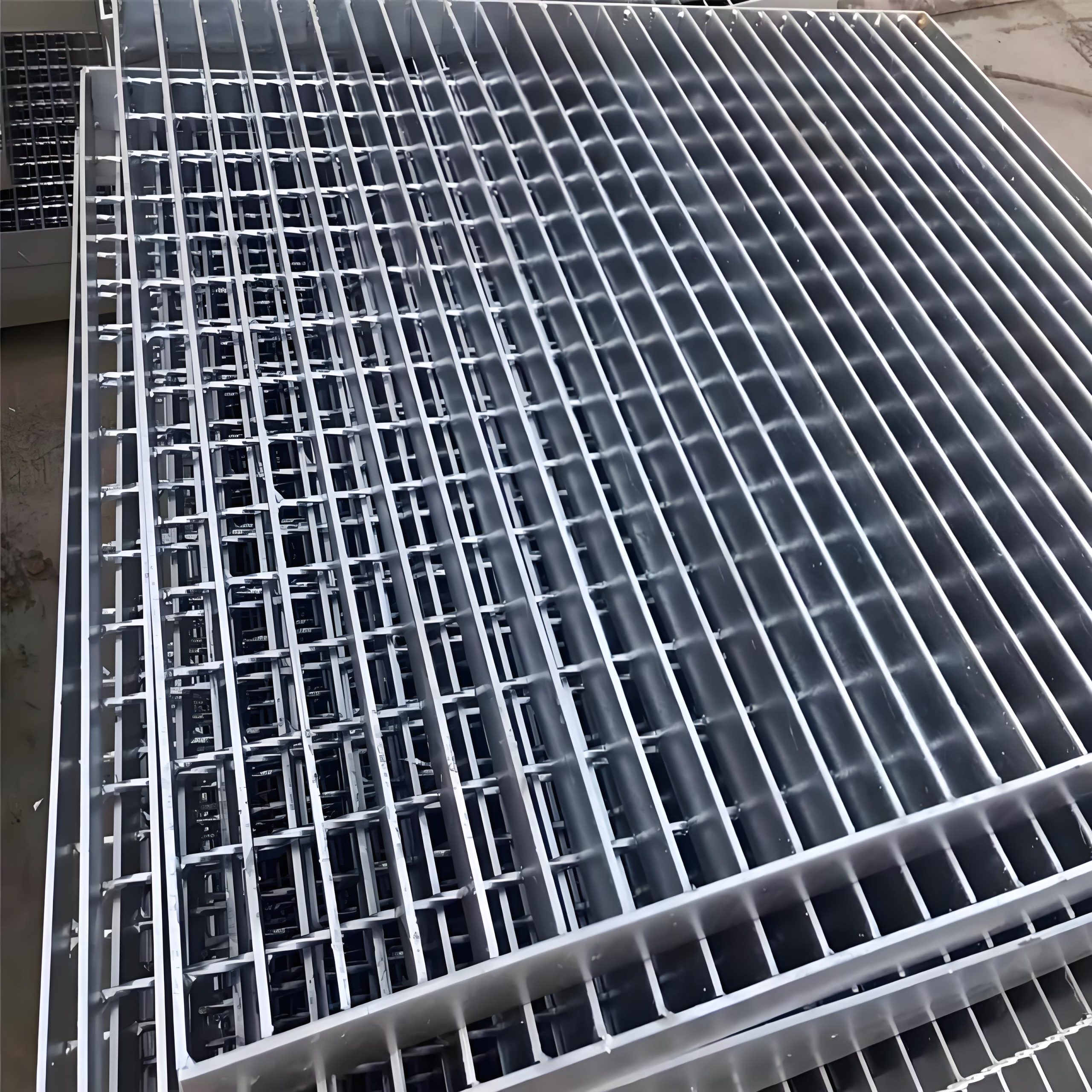
Arc-shaped and fan-shaped grating panels require a different approach to dimension marking. Instead of only length and width, the drawing should identify inner radius, outer radius, included angle, bearing bar direction, and any segmentation line between adjacent panels. For fan-shaped pieces installed around tanks or circular platforms, support line orientation is just as important as the visible outer geometry. A panel can have the correct radius and still fail to install properly if the bearing bars are not aligned to the support structure.
Cut corners, pipe penetrations, hinge details, folded edges, removable frames, and bolt-on accessories are also part of the customization range. In these cases, the basic grating specification remains the starting point, but the fabrication drawing becomes equally important. Standard dimensions tell the factory what the grating is; custom details tell the factory how the finished panel must fit and function.
What is the most common steel bar grating size?
For many industrial applications, 32×5 mm or 40×5 mm bearing bars with 30×100 mm or 40×100 mm mesh are among the most common specifications. The actual choice depends on span and load.
How do you calculate net opening in steel grating?
Net opening is calculated by subtracting the bar thickness from the center-to-center spacing. For example, 30 mm pitch with 5 mm thick bearing bars gives a 25 mm clear opening.
What tolerance is usually allowed for bar grating panels?
Typical values are 0 / -5 mm for length, ±5 mm for width, ±5 mm per meter for diagonal difference, and ±3 mm per meter for flatness.
Which standard is used for steel bar grating?
Common reference standards include YB/T 4001.1-2019 in China, ANSI/NAAMM MBG 531-20 in the United States, and BS 4592-0:2006 in international project work.
Can steel bar grating be made in custom shapes?
Yes. Non-standard production includes special bar sizes, custom spacing, arc-shaped panels, fan-shaped panels, cut corners, penetrations, and fabricated accessories according to project drawings.