

In the heavy duty steel bar grating industry, price is closely connected to load-bearing performance, steel consumption, processing accuracy, surface treatment, export packaging, and delivery reliability. For this reason, a professional supplier should not only provide a competitive reference price in USD, but also explain clearly what is included in the offer and how the final cost is formed.
Anping County Chuansen Silk Screen Products Co., Ltd. focuses on the production and export of steel grating products for industrial, municipal, construction, and infrastructure applications. In the field of heavy duty steel bar grating, factory strength directly influences price stability, lead time, and product consistency. Buyers who source from a manufacturer instead of a trading intermediary usually pay close attention to workshop scale, production line layout, and technical capability, because these factors affect not only cost but also project execution efficiency.
A well-equipped factory is expected to maintain organized production areas for raw material preparation, pressure welding or manual welding, cutting, edging, surface treatment coordination, inspection, and export packing. In heavy duty grating production, advanced equipment is especially important because the bearing bars are thicker, the finished panels are heavier, and dimensional accuracy must remain stable under higher steel mass. Factories with stronger processing capacity can handle both standard grating panels and customized high-load projects with better consistency.
Anping County Chuansen Silk Screen Products Co., Ltd. supports production requirements for different specifications of heavy duty grating, including projects requiring larger bearing bar heights, thicker flats, and reinforced welded structures. This production capability is important for customers in industries such as petrochemical plants, power stations, port engineering, roadway trench systems, drainage channels, and loading platforms. These sectors do not buy grating only for covering an opening; they buy grating for structural performance under long-term use.
Annual output capacity is another core factor when evaluating a supplier. A factory with stable annual production can usually purchase raw steel in a more organized way, which helps maintain more competitive pricing. For export business, this also means stronger schedule control for container loading, repeated orders, and project-based supply programs. Buyers from North America, Europe, Southeast Asia, the Middle East, and other overseas markets often prefer suppliers that can support both one-time shipment needs and long-term replenishment plans.
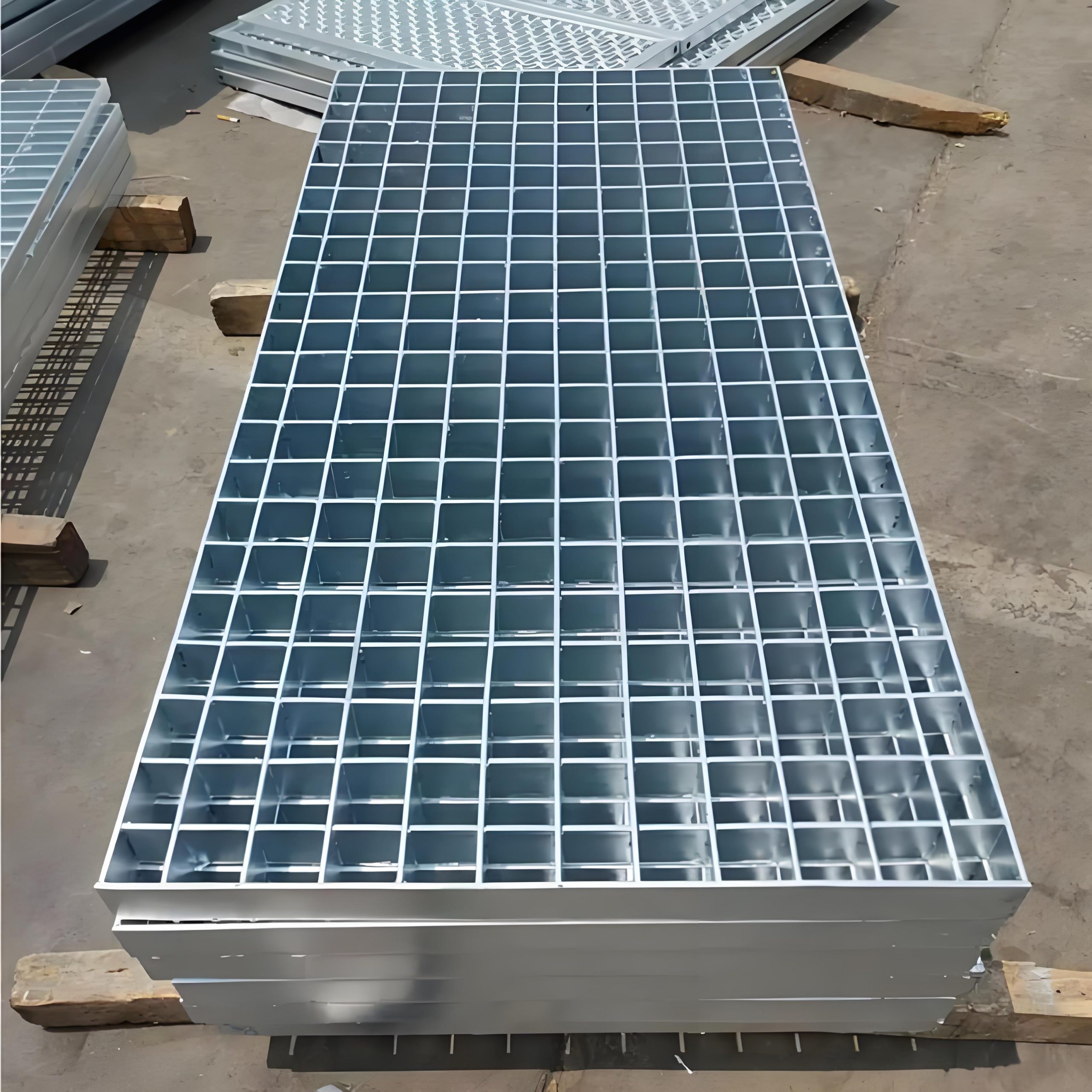
Export experience matters because heavy duty steel bar grating is not only a manufacturing product but also a logistics product. A supplier familiar with international shipment standards understands packing protection, pallet loading efficiency, dimensional labeling, and customs documentation requirements. Anping County Chuansen Silk Screen Products Co., Ltd. serves overseas demand with a focus on practical export arrangements, which helps reduce transit damage risk and communication gaps during project procurement.
Quality certification is also a key indicator of manufacturing reliability. In the international market, buyers often look for suppliers able to work in line with ISO quality management principles and support inspection expectations associated with CE or SGS-related verification practices when required by project scope. For heavy duty steel bar grating, inspection is not limited to appearance. It may include dimensional tolerance, welding integrity, material conformity, galvanizing quality, and load-related manufacturing consistency.
Heavy duty steel bar grating is designed for applications where standard grating may not provide sufficient strength. Compared with light or medium duty grating, the heavy duty version uses larger bearing bars, thicker sections, and often tighter support logic to achieve stronger load-bearing performance. This makes it suitable for places such as truck-access platforms, shipyards, industrial walkways with concentrated loads, trench covers in traffic areas, and municipal engineering projects where durability is essential.
Material options play a major role in product performance and supplier price. Carbon steel remains the most common choice because it offers a practical balance between strength and cost. Alloy steel may be selected in certain special industrial environments where enhanced mechanical properties are needed. Hot dip galvanized steel bar grating is widely used where outdoor corrosion resistance is required, especially in infrastructure and utility projects. Stainless steel 304 and stainless steel 316 are typically chosen for highly corrosive environments, food-related operations, marine zones, wastewater systems, and chemical plants.
Each material category affects both cost and service life. Carbon steel provides the lowest base price among common heavy duty grating materials. Hot dip galvanized carbon steel adds a protective zinc layer, improving corrosion resistance while raising the overall price. Stainless steel 304 generally costs much more than galvanized carbon steel, while 316 stainless steel is usually higher still because of its stronger resistance to chlorides and aggressive conditions. Buyers should therefore evaluate not just the initial purchase cost, but the environment in which the grating will operate.
Product features are one of the main reasons heavy duty grating remains in strong demand. The first and most obvious feature is high load-bearing capacity. Heavy duty panels are designed to carry greater distributed loads or concentrated loads than standard walkway grating. This is achieved through taller and thicker bearing bars, stronger weld joints, and application-specific support design. In projects involving equipment movement, forklift traffic, or service trenches in industrial areas, this load strength becomes a key engineering requirement.
Corrosion resistance is another important feature, especially for buyers selecting galvanized or stainless steel versions. In outdoor or wet service conditions, corrosion control is directly linked to operating life and replacement cost. Heavy duty grating is often installed in locations where maintenance access is inconvenient or interruption is expensive. Under such circumstances, a higher-priced corrosion-resistant option can reduce long-term maintenance pressure.
Anti-slip performance is also a common concern. Serrated heavy duty steel bar grating is frequently specified where surfaces may become wet, oily, or exposed to snow and mud. The serrated bearing bar design improves foot traction and contributes to safer walking and working conditions. Some industrial buyers prefer smooth surface grating for cleaning convenience, while others prioritize slip resistance over appearance. The supplier should be able to offer both designs according to project demand.
Standard panel sizes can improve production efficiency and lower procurement cost, but custom dimensions are often necessary in real projects. Heavy duty steel bar grating can be supplied in standard modular sizes for common platform or trench systems, while custom cutting is used to match support structures, opening dimensions, pipe penetrations, or irregular frames. Buyers should confirm whether the quotation is based on standard repeated sizes or custom fabricated panels, because this affects both price and lead time.
The supplier price of heavy duty steel bar grating is formed by several major cost components. The first is raw material cost, which normally takes the largest share of the total. Heavy duty grating uses more steel than standard grating because the bearing bars are larger and the product weight per square meter is higher. If stainless steel is selected, the raw material proportion becomes even more significant.
The second major component is processing cost. This includes cutting, pressure welding or manual welding, edging, panel trimming, finishing, and quality inspection. Heavy duty grating generally requires more production effort than standard grating because the steel sections are thicker and the panels are heavier. If the order includes irregular shapes, reinforced borders, or traffic-rated fabrication, the labor content increases further.
The third major component is surface treatment. Black steel grating without coating may appear less expensive at first, but many customers require hot dip galvanizing for outdoor corrosion protection. Galvanizing adds process cost, zinc consumption, and handling cost. For stainless steel products, there may be no galvanizing, but the material cost is already much higher, and in some cases additional surface finishing may also be requested.
For general budgeting, carbon steel heavy duty steel bar grating may often fall in a reference range of about USD 850 to USD 1,250 per ton, depending on specification and market conditions. Hot dip galvanized heavy duty grating may often range from about USD 1,000 to USD 1,500 per ton. Stainless steel 304 or 316 heavy duty grating usually requires real-time quotation because alloy prices fluctuate strongly, but the final level is commonly much higher than galvanized carbon steel.
Some buyers prefer square meter pricing rather than ton pricing. In that case, it is important to understand that square meter price depends on actual panel weight. A heavy duty grating panel with large bearing bars and close spacing may cost several times more per square meter than a lighter specification, even if the visible area is the same. For reference only, many export offers for heavy duty carbon steel grating may fall around USD 35 to USD 110 per square meter, while galvanized heavy duty grating may often be around USD 45 to USD 135 per square meter. These are broad reference values only and must be confirmed against exact dimensions and load requirements.
Bulk orders usually enjoy a price advantage. This is because larger volume helps the factory reduce setup cost per panel, improve raw material planning, and optimize production line scheduling. A repeated-size order with stable dimensions is easier to process than a mixed batch with many irregular layouts. For project procurement, this means the more standardized the order is, the more likely the supplier can offer a better unit price.
Several specification factors can strongly affect price. Thickness is one of the most obvious variables. A thicker bearing bar means more steel consumption and higher weight per panel. Bearing bar spacing also matters. Closer spacing increases the number of load bars and therefore raises both material and fabrication cost. Panel length affects weight, handling, and possible reinforcement needs. Surface treatment, especially galvanizing or stainless material selection, changes the price level significantly. Transport method is another factor, because heavy grating is costly to move, and freight can become a major part of the total landed cost.
In practical engineering projects, many heavy duty steel bar grating orders are not fully standard. This is why customization ability is a major advantage when selecting a supplier. Anping County Chuansen Silk Screen Products Co., Ltd. supports non-standard fabrication based on drawings, size lists, and application requirements. Custom grating may include special lengths, widths, cut corners, circular holes, notches, banding bars, reinforcement elements, and anti-slip requirements.
Non-standard size production is especially valuable for drainage systems, bridge maintenance platforms, equipment bases, dock structures, and plant renovation work. In these projects, using standard panels without adjustment may create installation difficulty or structural mismatch. A factory that can cut and fabricate according to drawings helps reduce field modification work and saves installation time on site.
Fast sample support is another important service feature. Many buyers, especially new customers, prefer to test one sample or place a small trial order before launching a large purchase. This is reasonable because heavy duty grating must meet both dimensional and quality expectations. Sample confirmation helps buyers inspect welding quality, galvanizing appearance, edge finishing, and actual weight before moving to full production.
Small batch trial orders can also help importers assess packaging, shipment condition, and communication efficiency. Although small quantity pricing is usually higher than full-scale production pricing, trial orders reduce purchasing risk and create a practical basis for future volume cooperation. For long-term sourcing, this step can be highly valuable.
Packaging is an often overlooked part of the supplier service system. Heavy duty steel bar grating must be packed securely because the product is heavy, rigid, and capable of damaging adjacent cargo if not fixed correctly. Export packing may include steel strapping, pallets, wooden cases for smaller accessories, and reinforced bundles for mixed-size orders. For some destinations, palletized packing improves unloading speed and inventory management. For high-value or precision-fabricated orders, protective packaging reduces edge damage during handling.
Technical support is also part of the service value offered by an experienced manufacturer. Buyers sometimes know the opening size but are not fully sure which grating specification matches the load condition. In such cases, supplier guidance on bar size selection, spacing logic, surface treatment choice, and installation method becomes useful. Installation support may include clip recommendations, fixing positions, panel layout suggestions, and general handling guidance for safer on-site use.
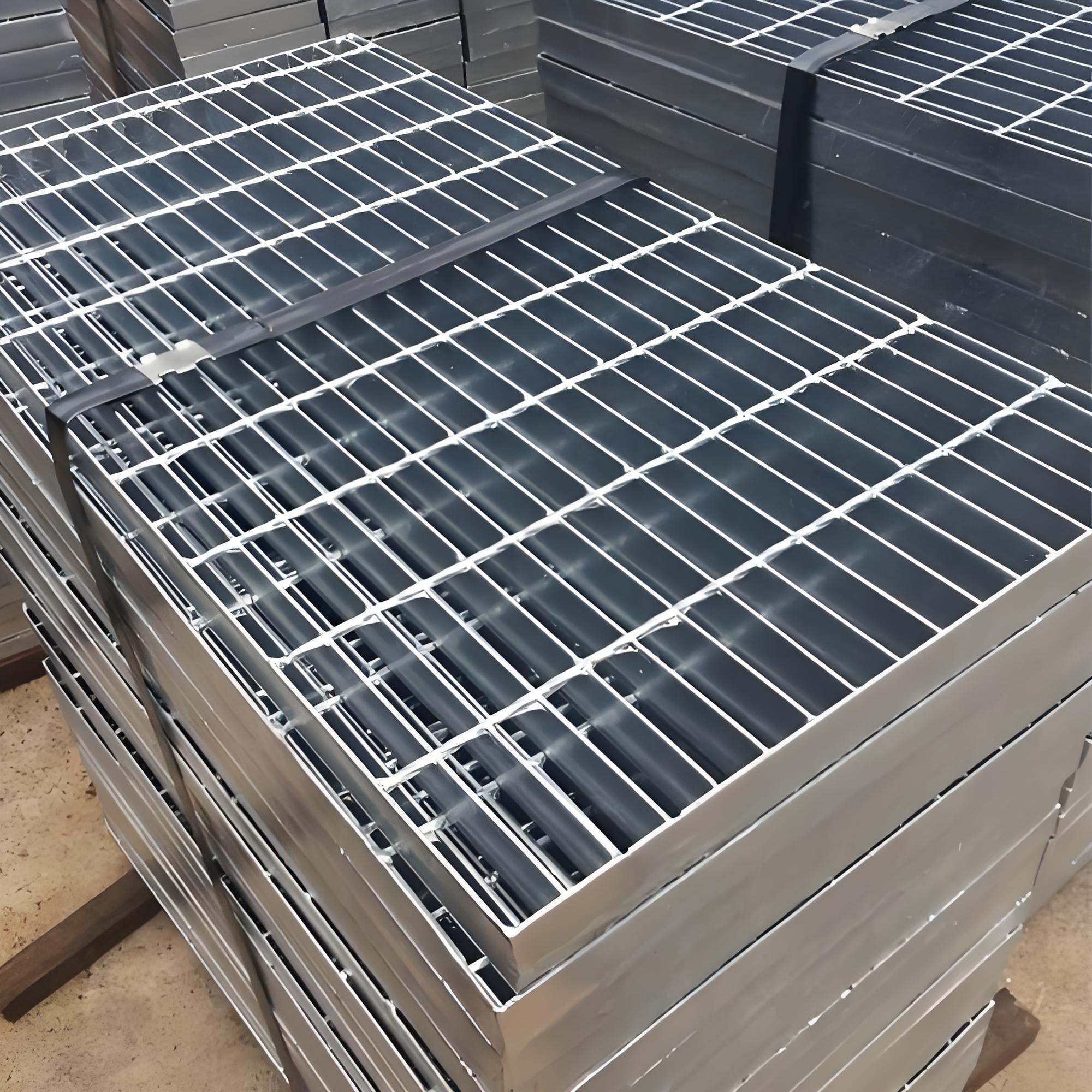
Transportation is a practical part of heavy duty steel bar grating pricing because the product is heavy and freight-sensitive. A supplier with export experience should be able to arrange shipment through sea freight, air freight for urgent samples or small lots, and land transport for nearby regional destinations. Since heavy duty grating has a high weight-to-volume ratio, sea freight is usually the most cost-effective method for large international orders.
For container shipment, loading efficiency matters. Proper bundle size, panel stacking logic, pallet use, and weight distribution all influence freight economy and unloading convenience. Experienced suppliers know how to optimize loading plans based on panel dimensions and destination transport conditions. This can help reduce wasted space and avoid excessive handling during transit.
Standard product lead time is usually shorter than custom fabrication lead time. If a buyer orders conventional heavy duty grating specifications with repeat dimensions, the production schedule is generally more predictable. Custom products requiring drawing review, irregular cutting, reinforcement welding, or special packing normally need more time. Buyers should therefore distinguish between standard stock-oriented production and project-based custom manufacturing when discussing delivery.
Lead time also depends on raw material supply, galvanizing scheduling, order quantity, and seasonal production pressure. In many cases, standard heavy duty grating orders may be prepared within a relatively short production cycle, while larger customized projects may need a more structured schedule. Early drawing confirmation helps the factory lock material planning and reduce delay risk.
Payment flexibility is another sign of mature export capability. Common international payment methods may include TT, LC, and in some cases PayPal for samples or small-value trial transactions. The final payment arrangement usually depends on order value, cooperation history, production nature, and destination trade practice. For custom heavy duty grating projects, clear payment terms are important because raw material procurement often begins early in the production cycle.
Buyers should also consider that delivery reliability is not only about production completion date. It also includes inspection timing, packing completion, booking coordination, and document preparation. A factory that responds quickly but ships in a disorganized way may still create project delays. That is why transportation and delivery capability should be assessed as part of total supplier value, not as an isolated logistics issue.
One of the strongest reasons buyers choose Anping County Chuansen Silk Screen Products Co., Ltd. is cost performance. Factory direct supply removes many unnecessary intermediate links, making the quotation more transparent and often more competitive than multi-layer trading channels. For heavy duty steel bar grating, where product weight and fabrication complexity already create a substantial cost base, reducing intermediary markup can make a meaningful difference to procurement budget.
Stable quality is another major advantage. In heavy duty applications, small manufacturing inconsistencies can lead to large practical problems. Uneven spacing, poor welding, weak edging, or inadequate galvanizing may affect installation efficiency and long-term performance. A supplier with strict internal control provides better consistency across repeated panels and project batches, which is especially important for engineering contractors and industrial end users.
Inspection discipline adds to that reliability. Buyers often expect dimensional checking, visual weld inspection, and confirmation of finishing quality before shipment. For galvanized products, coating appearance and surface completeness are also important. A serious manufacturer understands that quality control is not merely a sales promise but a necessary part of heavy duty product supply.
Long-term cooperation benefits are also highly valued in the grating market. Returning customers often need repeat dimensions, staged shipments, or quotation updates for similar future projects. A responsive factory can retain past specifications, shorten communication time, and offer more flexible arrangements for repeated demand. In many cases, stable long-term cooperation leads to better pricing efficiency than one-off bargaining.
Flexibility in communication and production response is another reason many overseas buyers prefer direct factory cooperation. Some projects change during engineering execution. Support beam spacing may be revised, panel count may increase, or a galvanized version may replace plain steel. A flexible manufacturer is better positioned to respond to such changes quickly and keep the project moving.
Real project experience also strengthens buyer confidence. For example, heavy duty grating may be supplied for loading areas, factory trenches, power station maintenance platforms, or municipal drainage projects. Feedback from such applications often centers on load performance, fabrication precision, corrosion protection, and packaging reliability. Buyers tend to trust suppliers that can demonstrate practical export and project execution experience rather than offering only generic catalog claims.
Buyers interested in heavy duty steel bar grating can request a quotation by providing key project details such as material type, bearing bar size, spacing, surface treatment, panel dimensions, quantity, destination, and expected load requirement. If drawings are available, quotation accuracy will be significantly improved. Sample requests, drawing confirmation, and customized production discussions are also welcomed before formal bulk production.
A clear inquiry helps the supplier provide a faster and more practical offer. When asking for price, buyers should indicate whether they want a reference price by ton or by square meter, whether packing should be included, and whether accessories such as grating clips and bolts are required. This avoids hidden cost differences when comparing multiple offers.
Procurement teams planning long-term cooperation may also ask for staged pricing based on quantity ranges. This is useful for distributors, contractors, and industrial buyers who expect repeated orders over time. By confirming technical data early, both sides can save time and reduce the risk of price variation caused by incomplete specification details.
What is the average supplier price for heavy duty steel bar grating?
The average supplier price depends on material, specification, and surface treatment. As a broad reference, carbon steel heavy duty grating may often be around USD 850 to USD 1,250 per ton, while hot dip galvanized heavy duty grating may often be around USD 1,000 to USD 1,500 per ton. Square meter prices vary greatly because weight per square meter changes with bar size and spacing.
How can I get the best price from a heavy duty steel bar grating factory?
The best price usually comes from providing complete specifications, ordering in larger volume, standardizing panel sizes where possible, and confirming whether galvanizing, accessories, and custom cutting are truly needed. Clear drawings and a stable order plan help the factory reduce processing inefficiency and offer more competitive pricing.
Can the factory produce customized heavy duty steel bar grating based on drawings?
Yes. Anping County Chuansen Silk Screen Products Co., Ltd. can support customized production based on drawings, size schedules, and project requirements. This may include non-standard dimensions, cutouts, reinforced edges, serrated surfaces, special packing, and project-specific fabrication details depending on the application.