

Galvanized steel grating and stainless steel grating are both widely used for industrial platforms, walkways, stair treads, trench covers, drainage channels, equipment access areas, and maintenance floors. The right choice depends on more than the initial quotation. Galvanized grating usually offers a lower purchase price and reliable protection for general outdoor and industrial conditions, while stainless steel grating provides stronger long-term corrosion resistance, a cleaner appearance, and better performance in demanding chemical, hygienic, marine, and wastewater environments. This guide compares galvanized and stainless steel grating by manufacturing method, material properties, load capacity, corrosion behavior, maintenance, installation, cost, and life-cycle value.
The term “steel grating” describes an open grid made from load-bearing bars and cross bars. The bearing bars span between structural supports and carry the applied load, while the cross bars hold the panel together and provide lateral stability. Grating can be welded, press-locked, swage-locked, or manufactured in other engineered forms.
Galvanized grating is normally manufactured from carbon steel and then protected with a zinc coating, usually by hot-dip galvanizing. Stainless steel grating is manufactured from corrosion-resistant alloy steel, commonly 304, 304L, 316, or 316L, and does not rely on a separate zinc coating for its primary corrosion resistance.
A practical selection rule is:
For product-specific information, you can review the steel grating product range and the guide to 304 stainless steel grating sizes and applications.
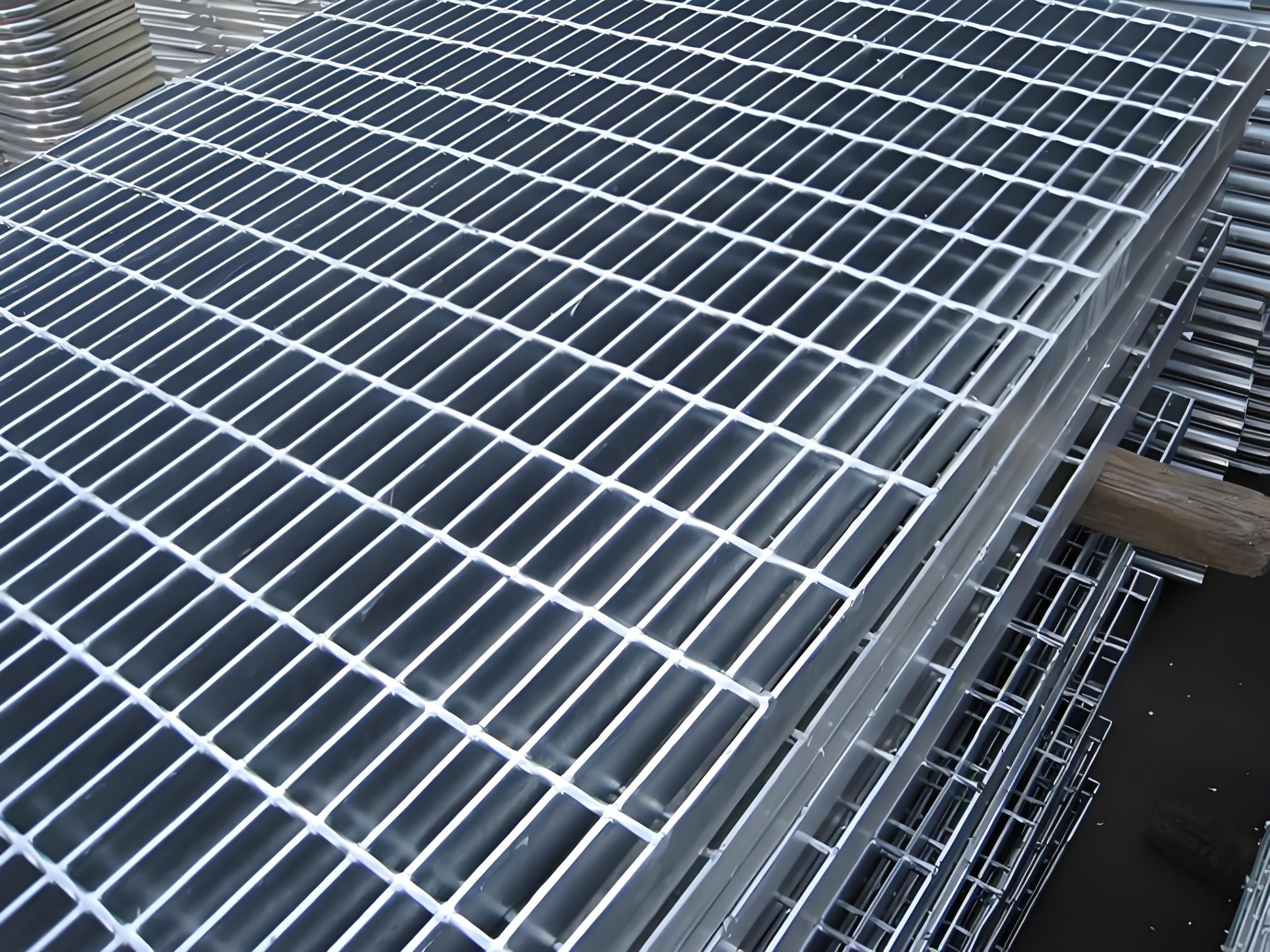
Galvanized steel grating is generally made from mild carbon steel, formed into a grating panel, and coated with zinc. The zinc layer protects the underlying steel by acting as a physical barrier and by providing sacrificial cathodic protection when the surface is scratched or cut.
Hot-dip galvanized grating is immersed in molten zinc after fabrication. The zinc bonds metallurgically to the steel and forms a series of zinc-iron alloy layers with an outer zinc layer. This process protects the broad panel surfaces, bearing bars, cross bars, welds, and many fabricated edges more effectively than painting alone.
Most galvanized bar grating uses structural carbon steel selected for the required strength, weldability, and fabrication process. The steel grade may vary according to the regional standard, project specification, or manufacturer’s production range.
Grating can be galvanized before fabrication in certain production arrangements, but post-fabrication hot-dip galvanizing is often preferred for welded panels because it coats the welds, cut edges, and assembled components. The purchase specification should clearly state the galvanizing sequence and coating requirements.
New galvanized grating normally has a bright, silver-gray, or spangled surface. The appearance changes over time as the zinc develops a protective patina. Variations in shade, spangle, and surface texture are normal and do not automatically indicate a coating problem.
Stainless steel grating is manufactured from chromium-containing alloy steel that forms a passive oxide film on its surface. This self-repairing film provides corrosion resistance without the need for a zinc or paint coating.
The most common stainless steel grades for grating are 304 and 316. Grade 304 is a chromium-nickel stainless steel used for general corrosion resistance and hygienic applications. Grade 316 contains molybdenum, which improves resistance to chloride-induced pitting and crevice corrosion. The low-carbon versions, 304L and 316L, are often selected when extensive welding is required.
Stainless steel grating can be supplied with plain or serrated bearing bars, welded or press-locked construction, and finishes ranging from mill finish to pickled, passivated, brushed, polished, or electropolished surfaces.
For demanding chloride and chemical environments, see the detailed information on 316 stainless steel grating for marine, chemical, and wastewater applications.
Stainless steel grating follows a similar forming and assembly process, but the finished panel usually receives surface cleaning rather than zinc coating. Welded stainless grating may require pickling and passivation to remove heat tint and restore a clean passive surface around the welds.
Welded grating is commonly selected for industrial platforms because it provides a rigid, stable panel. Resistance-welded cross bars are fused to the bearing bars at controlled intersections. Weld quality, penetration, alignment, and distortion control are important for both galvanized and stainless products.
Press-locked grating is manufactured by pressing cross bars into pre-punched or notched bearing bars. It offers a clean appearance and can be produced with close spacing or special opening patterns. It is frequently used in architectural, commercial, and medium-duty industrial applications.
Swage-locked grating uses twisted square cross bars mechanically locked into bearing bars. The surface can provide a distinctive appearance and useful drainage characteristics. The selected construction must be checked against the expected loading and support span.
| Material | Primary Protection Mechanism | Main Advantages | Main Limitations |
|---|---|---|---|
| Galvanized carbon steel | Zinc coating and sacrificial protection | Low initial cost, good structural strength, broad availability | Zinc can be consumed in acidic, alkaline, salty, or continuously wet conditions |
| 304 stainless steel | Chromium-rich passive film | Good general corrosion resistance, clean appearance, hygienic surface | More vulnerable to chloride pitting than 316 |
| 316 stainless steel | Chromium-rich passive film with molybdenum enhancement | Better chloride, marine, and chemical resistance | Higher material and fabrication cost; not immune to severe corrosion |
Galvanized steel depends on the condition and thickness of its zinc layer. Stainless steel depends on alloy composition, surface cleanliness, weld treatment, and environmental conditions. Neither material should be evaluated only by appearance or nominal thickness.
Carbon steel used for galvanized grating can provide excellent structural strength and is available in a wide range of bearing bar sizes. Stainless steel also provides reliable strength, but its mechanical properties depend on grade, product form, temper, and applicable material standard.
In most grating designs, the load-bearing result is controlled more by bearing bar geometry and span than by the difference between galvanized carbon steel and stainless steel grades. A thicker or deeper bearing bar can have a much greater effect on capacity than changing from 304 to 316.
Galvanized steel grating performs well when the zinc coating remains intact and the environment is not excessively acidic, alkaline, abrasive, or chloride-rich. The coating gradually sacrifices itself to protect the steel. Once the zinc is significantly consumed, exposed carbon steel can begin to rust.
Stainless steel forms a passive layer that can reform when oxygen is available. This gives stainless steel an advantage in many wet and hygienic environments, especially where coating damage would be difficult to repair.
| Exposure Condition | Galvanized Grating | 304 Stainless Grating | 316 Stainless Grating |
|---|---|---|---|
| Indoor dry factory | Usually suitable | Suitable but may cost more than needed | Usually unnecessary unless chemicals are present |
| Normal outdoor atmosphere | Common and economical | Performs well | Provides additional corrosion margin |
| Freshwater washdown | Often suitable if coating is maintained | Usually suitable | Suitable with additional chloride resistance |
| Coastal salt air | May require increased inspection and maintenance | Higher risk of staining and pitting | Generally preferred |
| Direct salt spray or brine | Shorter coating life is possible | Not normally the first choice | Better, but exposure severity must be reviewed |
| Acidic process area | Zinc may dissolve quickly | Compatibility must be checked | Often better than 304, but not universally resistant |
| Wastewater treatment area | Suitable in selected zones | Suitable in mild zones | Often preferred for wet and chemical zones |
| Continuous immersion | Requires specific coating and water chemistry review | Often unsuitable in severe chloride immersion | May also be unsuitable in warm stagnant seawater |
Galvanized steel commonly shows a more visible progression as the zinc coating weathers. Stainless steel may remain visually clean while localized pits develop under deposits or inside crevices. Inspection programs should therefore look beneath clips, around welds, and at support interfaces rather than relying only on a visual check of the top surface.
Outdoor service includes more than rain. Grating may be exposed to ultraviolet radiation, condensation, salt spray, industrial dust, freeze-thaw cycles, deicing salts, fertilizer, vehicle exhaust, and abrasive particles.
Hot-dip galvanized grating is often the most economical choice for ordinary outdoor platforms, fire escapes, factory stairs, warehouses, utility compounds, and equipment access areas. A properly applied zinc coating can provide many years of service when the environment is reasonably dry and the panel is not exposed to severe chemicals.
Stainless steel, particularly 316 or 316L, is normally preferred for marine walkways, coastal platforms, seawater equipment, docks, and salt-spray areas. Galvanized grating can still be used in selected coastal applications, but coating thickness, drainage, edge protection, inspection frequency, and replacement expectations should be carefully evaluated.
Zinc coatings can be attacked by strong acids and some alkaline solutions. Chemical vapor and process splashes may also collect beneath panels and consume the coating faster than expected. Stainless steel may offer better resistance, but the grade must be matched to the actual chemical. A chemical compatibility review is more reliable than choosing a material solely because the facility is called a “chemical plant.”
Wastewater plants can contain moisture, chlorides, hydrogen sulfide, treatment chemicals, biological deposits, and stagnant liquid. Galvanized grating is common in general access areas, while 316L stainless steel is often considered for chemical dosing zones, wet wells, screening areas, aeration structures, and locations where replacement access is difficult.
Repeated wetting and drying can accelerate zinc consumption when contaminants remain on the galvanized surface. Stainless steel generally handles ordinary moisture well, provided the surface is clean and oxygen can reach the passive film.
Salt is particularly important because chloride deposits become more concentrated as water evaporates. Galvanized steel may lose zinc more quickly in salt-laden conditions. Grade 304 can also suffer pitting, especially in warm or sheltered areas. Grade 316 has a better margin because molybdenum improves localized corrosion resistance.
Zinc is amphoteric and can dissolve in both strongly acidic and strongly alkaline solutions. Galvanized grating should not be specified for aggressive chemical exposure without a coating compatibility review. Stainless steel performance depends on the acid, concentration, temperature, and contamination level.
Swimming pools, food plants, hospitals, and sanitation areas may use chlorine-containing products. These chemicals can be aggressive to zinc coatings and may also cause localized corrosion of stainless steel if concentrated residues remain on the surface. Cleaning instructions should specify dilution, contact time, rinsing, and drying.
Wastewater and sewage facilities can contain hydrogen sulfide and deposits that retain moisture. The atmosphere, liquid chemistry, ventilation, and cleaning schedule should be reviewed before selecting galvanized or stainless grating for these areas.
Galvanized and stainless steel grating can both be designed for pedestrian, maintenance, equipment, and vehicular loads. The structural design must be based on actual loads rather than on the coating or alloy name.
Load-bearing bars must span between supports. Cross bars stabilize the panel but should not be treated as the principal spanning members. Incorrect orientation can reduce capacity regardless of whether the panel is galvanized or stainless steel.
Even when a panel is technically strong enough, excessive deflection can create an uncomfortable walking surface, loosen clips, damage finishes, or cause water and debris to collect. The project specification should state the maximum allowable deflection for walkways, platforms, stairs, and removable covers.
Forklifts, trucks, maintenance vehicles, and rolling equipment require specific wheel-load calculations. Heavy-duty galvanized grating is widely used where the environment is moderate. Stainless steel heavy-duty grating is available for corrosive facilities, but its higher material cost should be evaluated against the consequences of corrosion and replacement.
Service life depends on the environment, coating or alloy, structural design, fabrication, installation, and maintenance. It is not possible to guarantee one universal number of years for galvanized or stainless steel grating without site data.
Galvanized grating may provide excellent value when the zinc coating will remain effective for the expected project life. Stainless steel may provide better long-term reliability where replacing panels requires scaffolding, shutdowns, confined-space access, or disruption to production.
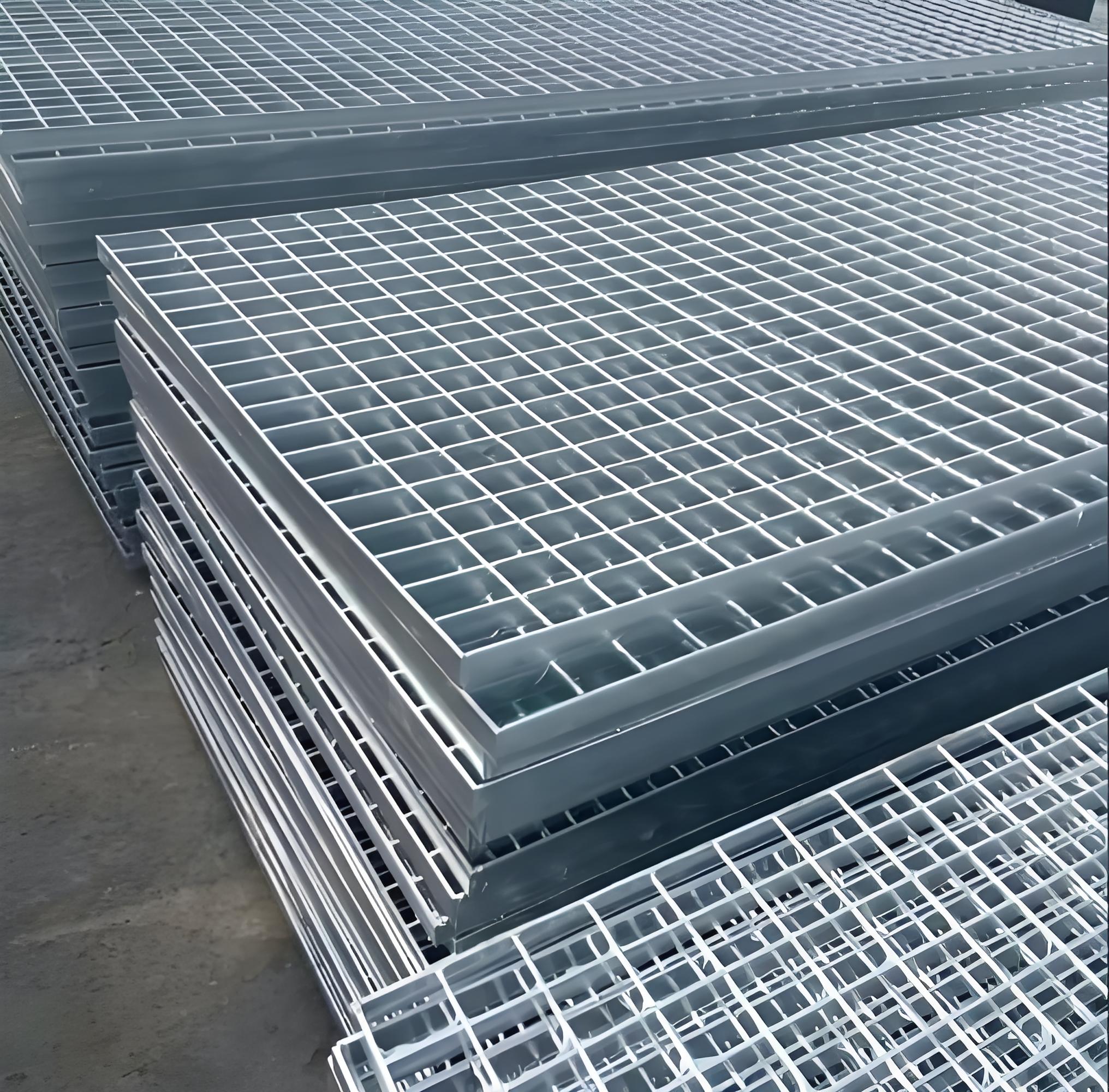
Routine maintenance should remove leaves, dirt, salts, process residue, and debris that trap moisture against the zinc coating. Damaged areas should be cleaned and repaired with a compatible zinc-rich repair system according to the project procedure.
Cut edges, welds, drilled holes, and impact points deserve special attention because exposed steel can begin to rust after the coating is damaged. Repair coatings should not be applied over oil, loose rust, or wet contamination.
Stainless grating should be rinsed and cleaned to remove chlorides, grease, chemical deposits, and iron contamination. Use nonmetallic brushes or stainless-dedicated tools. Avoid chloride-rich cleaners, hydrochloric acid, steel wool, and abrasive practices that can damage the passive surface.
Inspection frequency should reflect the exposure severity and safety consequences. A dry indoor walkway may need a different schedule from an offshore platform or wastewater access cover.
Both galvanized and stainless steel grating can be supplied with plain or serrated bearing bars. The surface profile should be selected according to contamination, footwear, drainage, slope, and worker movement.
Plain grating has smooth bearing bar tops and is common in dry indoor platforms, architectural floors, equipment access areas, and locations where easy cleaning and a smooth appearance are priorities.
Serrated grating uses notched bearing bar tops to improve traction under wet, oily, muddy, or contaminated conditions. It is frequently used for outdoor walkways, industrial stairs, chemical facilities, wastewater plants, and marine platforms.
Serrated grating is not automatically slip-proof. Oil, algae, ice, grease, powder, and chemical residue can still reduce traction. Handrails, toe plates, lighting, housekeeping, drainage, and footwear remain essential safety controls.
Galvanized serrated grating is often selected where cost and general outdoor durability are priorities. Stainless serrated grating is preferred when the same wet or contaminated condition is combined with chlorides, aggressive chemicals, hygiene requirements, or frequent washdown.
Both galvanized and stainless steel are noncombustible metallic materials, but their structural capacity changes as temperature increases. Zinc coatings can be affected by elevated temperatures, while stainless steel also loses strength and stiffness during fire or sustained high-temperature operation.
For high-temperature service, review:
Stainless steel is not automatically the best choice for every hot application. Grade selection should account for oxidation, sulfur, carburization, thermal cycling, process chemistry, and structural code requirements.
Galvanized grating has an industrial silver-gray appearance that fits factories, warehouses, utilities, bridges, and outdoor equipment areas. The finish may change with weathering, and differences in spangle or shade can occur between panels.
Stainless steel provides a clean metallic appearance suitable for food plants, public buildings, architectural walkways, pharmaceutical facilities, and visible equipment platforms. Brushed, polished, pickled, passivated, and electropolished finishes can be specified.
The open design of bar grating allows air, light, water, and small debris to pass through. This reduces standing water and can improve ventilation around equipment. Opening size must be reviewed where small objects, tools, wheels, heels, or personnel fall-through risks exist.
For visible installations, coordinate grating orientation, panel joints, banding, surface finish, nosing, fasteners, and adjacent handrails. Stainless steel may be selected for appearance, but a galvanized panel with an appropriate finish can be more economical where the grating is not a prominent architectural element.
Grating should have adequate bearing on the support frame, with the bearing bars oriented correctly. Supports must be level, aligned, and strong enough to resist the applied reactions. Uneven supports can create rocking, point loading, vibration, and premature damage.
Clips hold panels in position and resist movement, uplift, and vibration. Galvanized grating may use galvanized or compatible coated fasteners. Stainless steel grating normally uses stainless fasteners, with grade compatibility reviewed for the environment.
Mixing galvanized steel and stainless steel in a wet conductive environment can create galvanic corrosion. Isolation washers, sleeves, coatings, or compatible fastener systems may be required depending on the project design.
Field cutting can remove banding, expose unprotected edges, alter load paths, and create sharp corners. Cut panels should be re-banded or reinforced where required by the design. Galvanized cut areas need suitable zinc-rich repair. Stainless cut areas should be deburred, cleaned, and passivated when the environment requires it.
Removable panels should include lifting access, stable support, and a method to prevent accidental displacement. Hinged grating covers may require hinges, handles, locks, gas struts, or lifting assistance. The additional hardware must be compatible with the selected grating material and environment.
Galvanized grating normally has a lower initial material cost than stainless steel grating. Carbon steel is widely available, fabrication is well established, and hot-dip galvanizing remains an economical method of protecting industrial grating.
The delivered price depends on:
Stainless steel grating costs more initially because chromium-nickel alloy steel is more expensive than carbon steel and because fabrication, tooling, cleaning, finishing, and contamination control can require additional work.
316 and 316L usually cost more than 304 because of molybdenum and nickel content. Serrated profiles, close spacing, polished finishes, extensive banding, custom cutouts, and documentation can further increase the quotation.
Stainless steel pricing should be compared using identical panel geometry and finish. A 304 mill-finish panel cannot be directly compared with a 316L pickled-and-passivated panel that includes custom fabrication and certificates.
Stainless steel may reduce total ownership cost when coating repairs are difficult, contamination is unacceptable, access is restricted, or replacement would require shutdowns. The higher purchase price can be justified by reduced repainting, reduced coating repair, longer inspection intervals, and lower replacement risk.
| Cost Element | Galvanized Grating | Stainless Steel Grating |
|---|---|---|
| Initial material cost | Usually lower | Usually higher |
| Fabrication availability | Very broad and economical | Broad, but may require dedicated stainless tooling |
| Surface protection | Depends on zinc coating condition | Depends on passive film and surface cleanliness |
| Repair after damage | Zinc-rich repair may be required | Cleaning and passivation may be required |
| Harsh chloride exposure | Higher coating consumption risk | 316 offers a stronger corrosion margin |
| Hygienic applications | Coating condition must be carefully controlled | Often preferred for cleanability and contamination control |
| Replacement difficulty | Lower initial cost may be offset by earlier replacement | Higher initial cost may be justified by longer service |
| Appearance over time | Finish weathers as zinc patina develops | Maintains a clean metallic appearance with proper cleaning |
A life-cycle assessment should include purchase, galvanizing or finishing, shipping, installation, inspection, cleaning, repair, downtime, replacement, and disposal. For a simple indoor platform, galvanized steel is often the clear economic choice. For an offshore walkway or chemical access platform, stainless steel may provide a lower total cost over the project life.
| Project Condition | Preferred Starting Material | Reason |
|---|---|---|
| Dry indoor platform | Galvanized steel | Good strength and lower purchase cost |
| Normal outdoor factory walkway | Hot-dip galvanized steel | Reliable atmospheric protection and broad availability |
| Food plant with mild washdown | 304 or 304L stainless steel | Cleanability and corrosion resistance |
| Food plant with salt and chlorine cleaners | 316L stainless steel | Greater chloride and chemical resistance |
| Coastal walkway | 316 or 316L stainless steel | Improved resistance to salt spray and pitting |
| Wastewater chemical dosing area | 316L or higher alloy after review | Wet, chemical, and deposit-related corrosion risk |
| Heavy-duty vehicle trench cover | Galvanized or stainless according to environment | Geometry and load design are as important as material |
| Severe chemical immersion | Specialist material selection | Neither ordinary galvanized nor standard stainless may be adequate |
Galvanized steel grating is usually the best balance of cost and performance for general industrial use. Stainless steel grating becomes the stronger choice when corrosion, hygiene, appearance, or maintenance access carries more financial and operational weight than the initial material price. The most reliable specification matches the material to the actual environment and then designs the grating geometry around the real load and support conditions.
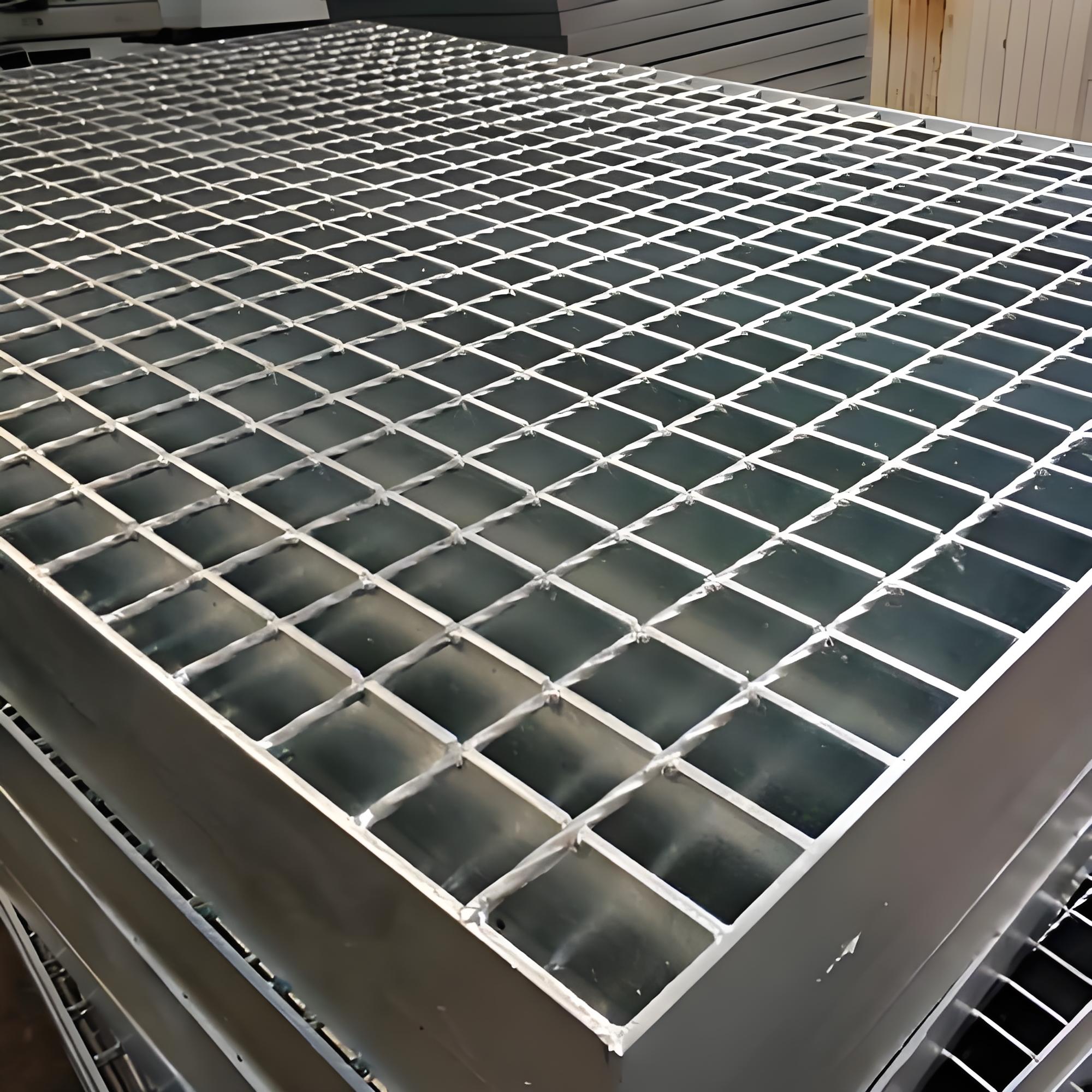
Which is cheaper, galvanized or stainless steel grating? Galvanized steel grating is normally cheaper to purchase because it uses lower-cost carbon steel with a zinc coating. Stainless steel grating has a higher material and fabrication cost, especially 316 and 316L. However, stainless steel may provide better life-cycle value in corrosive, hygienic, marine, or difficult-to-access installations where galvanized coating repairs or early replacement would be expensive.
Is stainless steel grating better than galvanized grating outdoors? Not for every outdoor project. Hot-dip galvanized grating performs very well in many normal outdoor atmospheres and is often the economical choice. Stainless steel is generally better for coastal salt spray, marine facilities, aggressive chemicals, wastewater, food washdown, and locations where long-term appearance and corrosion resistance are priorities.
Should I choose 304 or 316 stainless steel grating instead of galvanized steel? Choose 304 when the environment is mainly indoor, freshwater-based, hygienic, or mildly corrosive. Choose 316 or 316L when chlorides, salt, brine, coastal air, wastewater chemicals, or aggressive cleaning products are present. If the grating will be continuously immersed in warm seawater or exposed to concentrated chemicals, obtain a specialist corrosion review because standard 316 may also be insufficient.