

Stainless steel expanded metal grating prices depend on much more than the stainless steel grade. Mesh dimensions, strand thickness, raised or flattened construction, finished sheet size, open area, load requirements, surface treatment, fabrication, order quantity, packaging, and shipping terms can all change the final quotation. This guide explains how factories normally price expanded metal grating, how 304 and 316 stainless steel compare, and what information buyers should provide when requesting a reliable factory quote.
Stainless steel expanded metal grating is manufactured by slitting and stretching a stainless steel sheet to form a continuous diamond-shaped mesh. Unlike welded bar grating, it does not use separate bearing bars and cross bars welded together. The original sheet becomes an interconnected pattern of strands, which gives the product a good strength-to-weight ratio and allows air, light, water, and small particles to pass through the openings.
The two main forms are raised expanded metal and flattened expanded metal. Raised mesh retains the ridge created during the expansion process, while flattened mesh is passed through leveling rolls to produce a flatter surface. Both forms can be supplied in 304, 316, or 316L stainless steel, depending on the environment and project specification.
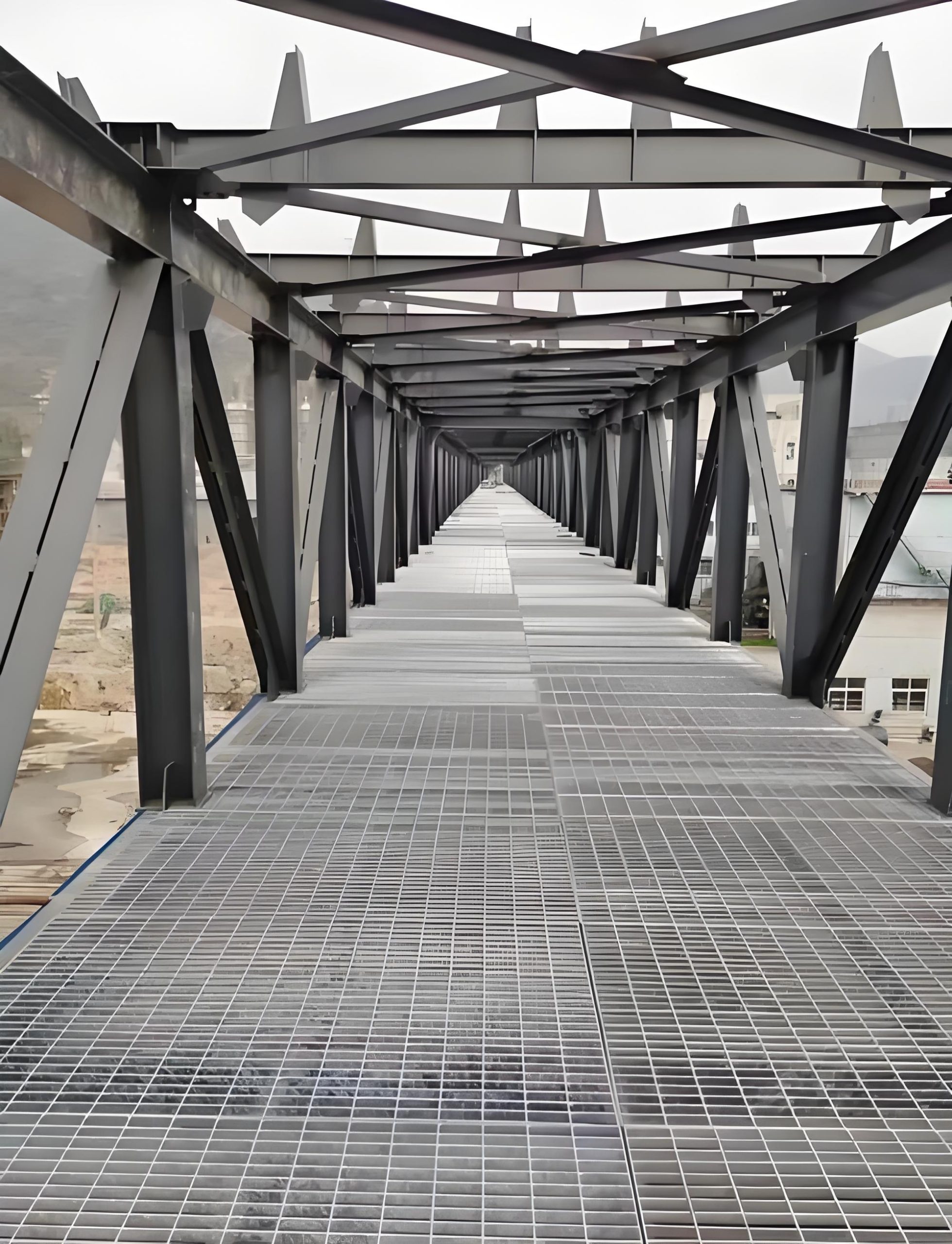
Expanded metal grating is used for industrial walkways, equipment platforms, machine guards, ventilation covers, ramps, stair treads, access panels, mezzanines, drainage areas, and architectural screens. A thin decorative expanded sheet should not automatically be treated as a structural floor grating. The product must have sufficient strand thickness, support, and a verified load table for the intended use.
Factories may quote stainless expanded metal grating by square meter, square foot, sheet, kilogram, metric ton, or a catalog weight designation such as pounds per square foot. The quotation basis should be confirmed before comparing suppliers because two companies may use different measurement methods for the same product.
| Quotation Basis | How It Is Used | What the Buyer Should Confirm |
|---|---|---|
| Price per m² | Common for project quantities and cut-to-size panels | Whether the area is raw sheet area, expanded area, or net finished area |
| Price per square foot | Common in North American catalogs and stock-sheet sales | Whether cutting, banding, and packaging are included |
| Price per sheet | Useful for standard 4 × 8 ft or 4 × 10 ft sheets | Exact sheet dimensions, weight, grade, and usable area |
| Price per kg or ton | Often used for large stainless steel orders | Actual finished weight, tolerance, and whether fabrication is charged separately |
| Nominal lb/ft² style | Used in some expanded grating catalogs | Whether the number is a catalog style designation or actual shipping weight |
A practical factory pricing formula is:
Final price = material cost + expansion and leveling labor + cutting or fabrication + surface treatment + packaging + export documentation + freight and other delivery charges.
For a project order, the most useful comparison is usually the price of the same finished product per square meter. A quote should state whether the price is EXW, FOB, CIF, or another delivery basis. Taxes, import duties, inland transport, and destination unloading may not be included in an ex-works or FOB price.
The following ranges are broad budgeting references for common factory inquiries. They are not fixed market prices or firm offers. Thin architectural expanded metal can be lower, while heavy structural grating, small quantities, 316L material, framed panels, and highly finished products can be substantially higher.
| Product Type | 304 Stainless Steel | 316/316L Stainless Steel | Typical Situation |
|---|---|---|---|
| Lightweight flattened mesh | Approximately US$45–95/m² | Approximately US$65–130/m² | Light platforms, guards, screens, and low-load panels |
| Raised standard grating | Approximately US$60–130/m² | Approximately US$85–175/m² | Walkways, service platforms, and access areas |
| Heavy-duty or close-mesh grating | Approximately US$100–220+/m² | Approximately US$140–300+/m² | Higher loads, small-wheel traffic, framed panels, and custom projects |
A 4 × 8 ft sheet covers approximately 2.97 m². As a rough planning guide, a 304 light sheet may fall around US$135–280 per sheet, while a heavier 304 raised sheet may be around US$180–385 per sheet. Comparable 316 products may be approximately US$195–385 for light styles and US$250–520 for structural styles. The actual price still depends on the exact SWD, LWD, strand size, thickness, surface treatment, quantity, and delivery terms.
For additional pricing terminology and factory cost factors, buyers can review this steel grating factory price guide and then request a product-specific calculation for expanded metal.
304 stainless steel is the most widely used general-purpose grade for expanded metal. It provides good corrosion resistance in indoor areas, many industrial facilities, food-processing spaces, and ordinary outdoor environments. It is usually the lower-cost option when the mesh dimensions and finish are the same.
316 stainless steel contains molybdenum, which improves resistance to chloride exposure and localized corrosion. It is often selected for coastal installations, saltwater service, chemical handling, wastewater treatment, marine structures, and locations where cleaning chemicals are aggressive. 316L may be preferred when extensive welding or fabricated framing is required because of its lower carbon content.
| Factor | 304 Stainless Steel | 316/316L Stainless Steel |
|---|---|---|
| Typical cost | Lower starting price | Often 20–50% higher, depending on the market and product weight |
| General atmosphere | Suitable for many indoor and ordinary outdoor applications | Preferred for chloride-rich, marine, and aggressive chemical environments |
| Food and hygiene areas | Common where cleaning chemistry is moderate | Useful where chlorides, salt, or stronger chemicals are present |
| Fabrication | Widely available for cutting and forming | May have higher raw-material and fabrication charges |
| Lifecycle consideration | Economical when the environment is not highly corrosive | Higher initial cost can reduce replacement and maintenance risk in severe service |
The grade premium should be evaluated together with the cost of failure. Choosing 304 for a salt-spray environment may create early staining, tea-colored corrosion, or frequent maintenance. Choosing 316 for a dry indoor platform may add cost without a meaningful service-life benefit. This 304 and 316 stainless steel grating guide can also help when comparing expanded metal with stainless bar grating.
Raised expanded metal has a three-dimensional diamond profile. The strands remain above the original sheet plane, creating more texture underfoot and a useful drainage path. Flattened expanded metal is rolled after expansion, producing a smoother surface that is easier to clean, stack, and integrate into some frames.
| Feature | Raised Expanded Metal | Flattened Expanded Metal |
|---|---|---|
| Surface profile | Ribbed or diamond-shaped ridge | Relatively flat and smoother |
| Slip resistance | Usually better for wet or dirty walkways | Lower texture unless another anti-slip treatment is added |
| Drainage | Good drainage through the raised openings | Good open area, but the flatter profile may hold more residue in some layouts |
| Cleaning | Ridges can retain dirt and may require brushing | Easier to wipe, wash, and stack |
| Stiffness | Three-dimensional profile can improve rigidity for some styles | Effective thickness and stiffness change after flattening |
| Typical price | Often higher for structural or heavy-duty styles | Often economical for light and medium-duty panels |
Flattening is not simply a cosmetic step. It changes the geometry of the openings, the overall thickness, the direction of the diamond pattern, and the effective stiffness. A load table for raised mesh should not be used for a flattened panel without confirmation from the manufacturer.
Expanded metal dimensions can be confusing because the diamond opening is described by both its design size and its clear opening. A proper request should include all relevant dimensions instead of only stating “2-inch mesh” or “4 × 8 expanded metal.”
| Term | Meaning | Why It Matters |
|---|---|---|
| SWD | Short Way of Diamond, measured center-to-center across the short direction | Controls mesh pitch and affects support behavior |
| LWD | Long Way of Diamond, measured center-to-center along the long direction | Determines opening direction and panel orientation |
| SWO | Short Way Opening, the clear opening across the short direction | Important for heel safety, small wheels, and debris retention |
| LWO | Long Way Opening, the clear opening along the long direction | Affects drainage, airflow, and visual openness |
| Strand width | Width of the metal strip between adjacent openings | Influences strength, weight, and open area |
| Strand thickness | Thickness of the original stainless sheet or strip | One of the main factors in weight and load capacity |
| Overall thickness | Total height of a raised mesh, including the ridge | Important for clearances, frames, and support details |
A metric designation such as 38 × 100 × 3 × 8 mm may describe SWD × LWD × strand thickness × strand width. However, product codes are not universal. One factory may list dimensions in a different order or use a catalog weight number instead. Always request a drawing showing SWD, LWD, SWO, LWO, strand width, strand thickness, overall thickness, and finished sheet size.
Open area is the percentage of the total panel surface that consists of openings rather than metal strands. A simplified calculation is:
Open area (%) = clear opening area ÷ total panel area × 100.
A larger open area generally improves drainage, ventilation, light transmission, and weight reduction. However, reducing the amount of metal also reduces the material available to carry a load, so open area must be evaluated together with strand thickness, strand width, mesh direction, and support spacing.
For pedestrian flooring, the clear opening should be checked against the project’s heel-safety and accessibility requirements. A large diamond may allow heels, small wheels, tools, or debris to pass through. Close-mesh expanded metal is often selected for carts, trolleys, small casters, and public access areas, even when a more open mesh would be cheaper and lighter.
Drainage is also affected by surface slope, support framing, dirt accumulation, and whether the panel is raised or flattened. In oily or outdoor areas, a serrated or raised profile can help liquid move away from the walking surface, but no open mesh can replace proper floor slope and drainage design.
Common stainless expanded metal stock sizes include 4 × 8 ft, 4 × 10 ft, and 5 × 10 ft sheets. Metric stock may be available in sizes such as 1,000 × 2,000 mm, 1,000 × 3,000 mm, or 1,250 × 2,500 mm, depending on the manufacturer’s equipment and inventory. These dimensions are common examples rather than universal standards.
| Nominal Sheet Size | Approximate Metric Size | Approximate Area | Common Use |
|---|---|---|---|
| 4 × 8 ft | 1,219 × 2,438 mm | 2.97 m² | General stock and smaller fabricated panels |
| 4 × 10 ft | 1,219 × 3,048 mm | 3.72 m² | Long walkways and larger cut-to-size work |
| 5 × 10 ft | 1,524 × 3,048 mm | 4.65 m² | Large panels and reduced joint count |
Expanded metal can use material efficiently because one continuous sheet is stretched rather than punched into separate holes. Even so, the final yield depends on the expansion ratio, trim allowance, orientation, cutouts, damaged edges, flattening, and framing. A factory may need to purchase a full sheet even when the project uses only part of it.
For example, a 4 × 8 ft sheet has approximately 2.97 m² of gross area. If the customer requires several narrow panels, pipe cutouts, and a perimeter frame, the usable net area may be much lower than the gross area. The unused strips and setup time are then reflected in the finished price.
Lightweight expanded metal usually has a thinner strand and a higher proportion of open area. It is suitable for screens, guards, ventilation panels, light access covers, and platforms with short spans and modest loads. Heavy-duty expanded grating uses thicker strands, a heavier sheet, or a closer mesh to support higher loads and reduce deflection.
| Category | Typical Characteristics | Applications |
|---|---|---|
| Lightweight | Thin strand, low self-weight, larger openings, easier handling | Guards, screens, light walkways, ventilation covers |
| Standard-duty | Balanced open area, weight, and rigidity | Service platforms, catwalks, maintenance access |
| Heavy-duty | Thicker strand, closer mesh, higher weight, stronger support requirement | Industrial floors, small-wheel traffic, equipment areas |
Some catalogs identify expanded grating by nominal weight styles such as 3.3 lb or 4.5 lb per square foot. These labels are useful for identifying a catalog pattern, but they should not replace the actual strand dimensions and engineering data. The same nominal style can have different details between suppliers or materials.
Expanded metal grating is directional. The diamond geometry creates different stiffness along the SWD and LWD directions, so panel orientation matters. The direction of the stronger strand pattern should normally span between supports, subject to the manufacturer’s load table and the project engineer’s design.
Load capacity depends on:
Clear span means the unsupported distance between bearing supports under the load-carrying direction. It is not necessarily the overall length of the expanded metal sheet. A panel that performs well over a 600 mm span may deflect excessively over a 1,200 mm span, even if the material and mesh remain unchanged.
Many projects specify an allowable deflection such as L/200 or L/240, but the correct limit depends on the owner’s requirements, the use of the platform, and local design practice. A supplier should provide a load table or engineering calculation for the exact style, orientation, span, and loading condition. Do not select a structural floor panel based only on open area or sheet thickness.
| Feature | Expanded Metal Grating | Stainless Bar Grating | Perforated Metal |
|---|---|---|---|
| Manufacturing method | Slitting and stretching one sheet | Welding, pressing, or riveting bearing bars and cross bars | Punching or drilling holes in sheet |
| Strength-to-weight | Good for many light and medium-duty applications | Usually better for long spans and concentrated loads | Depends heavily on hole pattern and remaining metal |
| Drainage and airflow | Good, with directional diamond openings | Very good, especially with open mesh | Predictable but often lower open area for the same sheet thickness |
| Slip resistance | Raised styles provide useful texture | Serrated bar grating offers strong anti-slip performance | Usually smoother unless embossed or specially formed |
| Typical fabrication | Cutting, flattening, bending, banding, and framing | Banding, toe plates, nosing, clips, and welded frames | Cutting, bending, flanging, and edge reinforcement |
| Best selection logic | Economical open coverage and moderate loads | Clearly defined structural spans and heavy loads | Controlled appearance, filtration, and precise hole patterns |
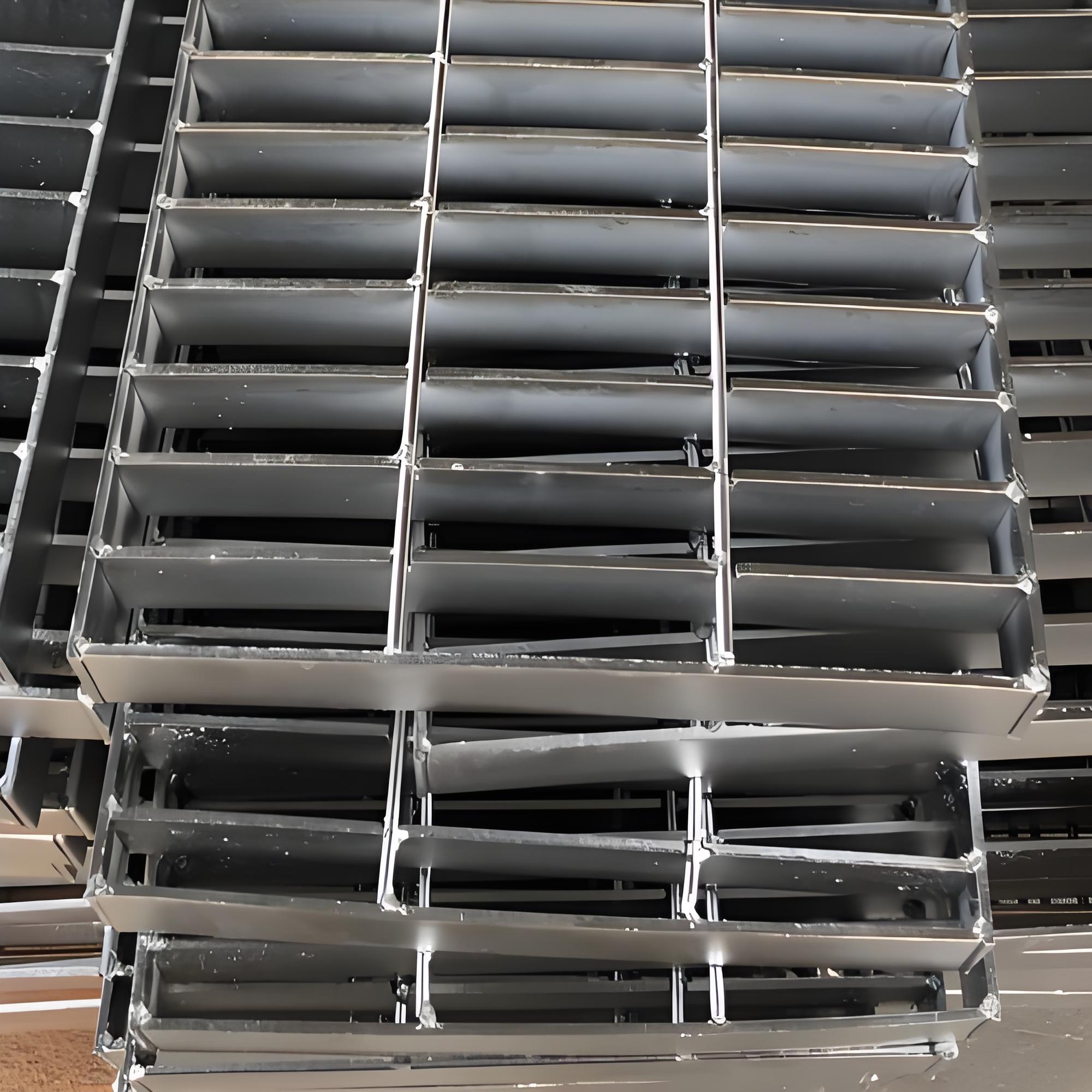
For high wheel loads, long unsupported spans, or heavy industrial traffic, bar grating often offers more familiar load-table options. Buyers can compare the geometry with this steel grating dimensions guide. For wet platforms and stair applications, a serrated stainless steel grating may provide a more aggressive walking surface than flattened expanded metal.
| Finish | Description | Cost and Use Considerations |
|---|---|---|
| Mill or as-fabricated finish | Supplied with the normal surface from rolling and expansion | Lowest cost; may show tooling marks, heat tint, or handling discoloration |
| Pickled | Chemical treatment removes scale, oxide, and heat tint | Useful after welding or fabrication; adds processing cost |
| Passivated | Restores a more uniform passive chromium-oxide surface | Common for hygienic or corrosive service; cleaning and rinsing control are important |
| Polished or brushed | Mechanically improves appearance and surface smoothness | Higher labor cost; selected for architectural or visible installations |
| Electropolished | Electrochemical treatment produces a smoother, brighter surface | Higher price; useful where cleanability and low surface roughness matter |
Passivation does not repair poor welding, remove heavy contamination, or make an unsuitable grade immune to corrosion. The required finish should be matched to the cleaning chemicals, chloride exposure, appearance expectations, and hygiene requirements of the project.
Standard sheets are normally the least expensive option. Once a factory begins cutting many individual pieces, the price is influenced by programming, setup, handling, tool wear, scrap, and inspection time.
Shearing is economical for straight cuts. CNC plasma, laser, waterjet, or saw cutting may be used for irregular shapes, pipe openings, columns, drains, and equipment cutouts. Small cutouts can create a surprisingly high cost per panel because every opening requires positioning, measurement, deburring, and inspection.
Flattening requires a rolling or leveling operation. The charge depends on sheet size, strand thickness, quantity, and whether the material is supplied raised and then processed. Flattening may also require a revised drawing because the overall thickness and opening geometry change.
Expanded metal can be bent into channels, guards, covers, stair treads, and equipment enclosures. Forming requires control of bend direction, radius, springback, and edge cracking. Thick 316L material and small-radius bends generally require more setup and inspection.
Perimeter frames can use flat bar, angle, channel, or a welded stainless steel border. Edge framing improves rigidity and gives the panel a clean bearing surface, but it adds material, welding, grinding, pickling, passivation, and dimensional inspection. For load-bearing floors, the frame should be designed with the support condition rather than added only for appearance.
| Cost Factor | Effect on the Quote |
|---|---|
| Stainless grade | 316/316L generally costs more than 304 because of alloy content and raw-material availability |
| Sheet thickness and strand width | Heavier material increases weight, material consumption, handling, and shipping cost |
| Mesh size and open area | Close mesh and thicker strands normally require more material per finished area |
| Raised or flattened form | Flattening adds rolling and leveling labor; raised heavy styles may require more material |
| Order quantity | Larger orders spread setup, tooling, inspection, and packing costs over more panels |
| MOQ | Small orders may carry a minimum charge or a higher unit price |
| Material yield | Narrow cuts, irregular shapes, and many cutouts create more unused sheet area |
| Edge treatment | Banding, framing, deburring, grinding, and welding add separate fabrication charges |
| Surface finish | Pickling, passivation, polishing, and electropolishing increase labor and processing cost |
| Packing and delivery | Crates, pallets, export protection, container loading, and freight affect the landed cost |
For a fair comparison, ask each supplier to separate the quotation into material, mesh production, cutting, framing, finishing, packaging, and delivery. A low square-meter price may exclude the frame, passivation, or export packing that another supplier has already included.
Stainless expanded metal sheets can bend or rub against one another during handling. Standard packaging may use steel or timber pallets, edge protectors, separators, strapping, and moisture-resistant wrapping. Finished framed panels may require a stronger crate so that the frame does not twist during lifting.
For overseas shipment, confirm the packing dimensions, gross weight, number of bundles, container loading plan, and whether the material is shipped loose, palletized, or crated. Stainless products should be protected from carbon-steel contamination during storage and loading. If the panels are passivated or polished, protective film and separators may be necessary.
Depending on the project, the supplier may be asked to provide:
If a project specification names ASTM F1267, RR-G-661, BS 4592-2, or a local expanded-metal standard, include the exact edition and required tests in the RFQ. The supplier should confirm whether the requested standard applies to the selected stainless grade, mesh type, finish, and structural use.
| Required Information | Example |
|---|---|
| Material grade | 304, 304L, 316, or 316L |
| Mesh dimensions | SWD, LWD, SWO, and LWO |
| Strand dimensions | Strand thickness and strand width |
| Construction | Raised or flattened |
| Finished panel size | Length, width, quantity, and allowable tolerance |
| Load information | Clear span, uniform load, point load, wheel load, and deflection limit |
| Fabrication | Cutouts, bends, banding, frames, holes, clips, and lifting points |
| Surface treatment | Mill finish, pickled, passivated, brushed, polished, or electropolished |
| Documents | Material certificates, inspection report, load table, and export documents |
| Delivery terms | EXW, FOB, CIF, or another agreed Incoterm |
A supplier that asks for these details is more likely to produce a usable quotation than one that prices only “stainless expanded metal grating” without a drawing or load requirement. When comparing offers, check that every supplier is quoting the same grade, mesh, strand size, finished area, finish, packaging, and delivery basis.
How much does stainless steel expanded metal grating cost per square meter?
As a broad factory budgeting reference, 304 flattened or lightweight mesh may be approximately US$45–95/m², 304 raised standard grating approximately US$60–130/m², and heavier custom products approximately US$100–220+/m². Comparable 316 or 316L products are often higher. The final price depends on strand dimensions, sheet size, quantity, finish, fabrication, packing, and shipping.
Is raised or flattened expanded metal better for a walkway?
Raised expanded metal is usually better where slip resistance, drainage, and textured footing are priorities. Flattened expanded metal is easier to clean and may be more convenient for stacking, framing, or architectural applications. The choice should also be checked against the manufacturer’s load table because flattening changes the mesh geometry and effective stiffness.
What information should I send to a factory for a stainless expanded metal grating quote?
Provide the grade, raised or flattened form, SWD, LWD, SWO, LWO, strand thickness, strand width, finished panel dimensions, quantity, load and span requirements, surface finish, cutouts, edge framing, packaging, certifications, and delivery terms. A drawing or marked-up layout is especially helpful for custom panels and load-bearing applications.