

Steel grating walkway products sold directly from a factory are manufactured around load capacity, span, surface condition, corrosion exposure, and installation method. For Anping County Chuansen Silk Screen Products Co., Ltd., walkway grating is not treated as a single standard panel, because a pedestrian platform in a warehouse, an outdoor maintenance aisle, a chemical plant access deck, and an inclined service ramp all require different bearing bar sizes, cross bar spacing, surface treatment, and fixing details. Factory direct supply allows the grating panel to be produced from drawings instead of being selected only from limited stock sizes.
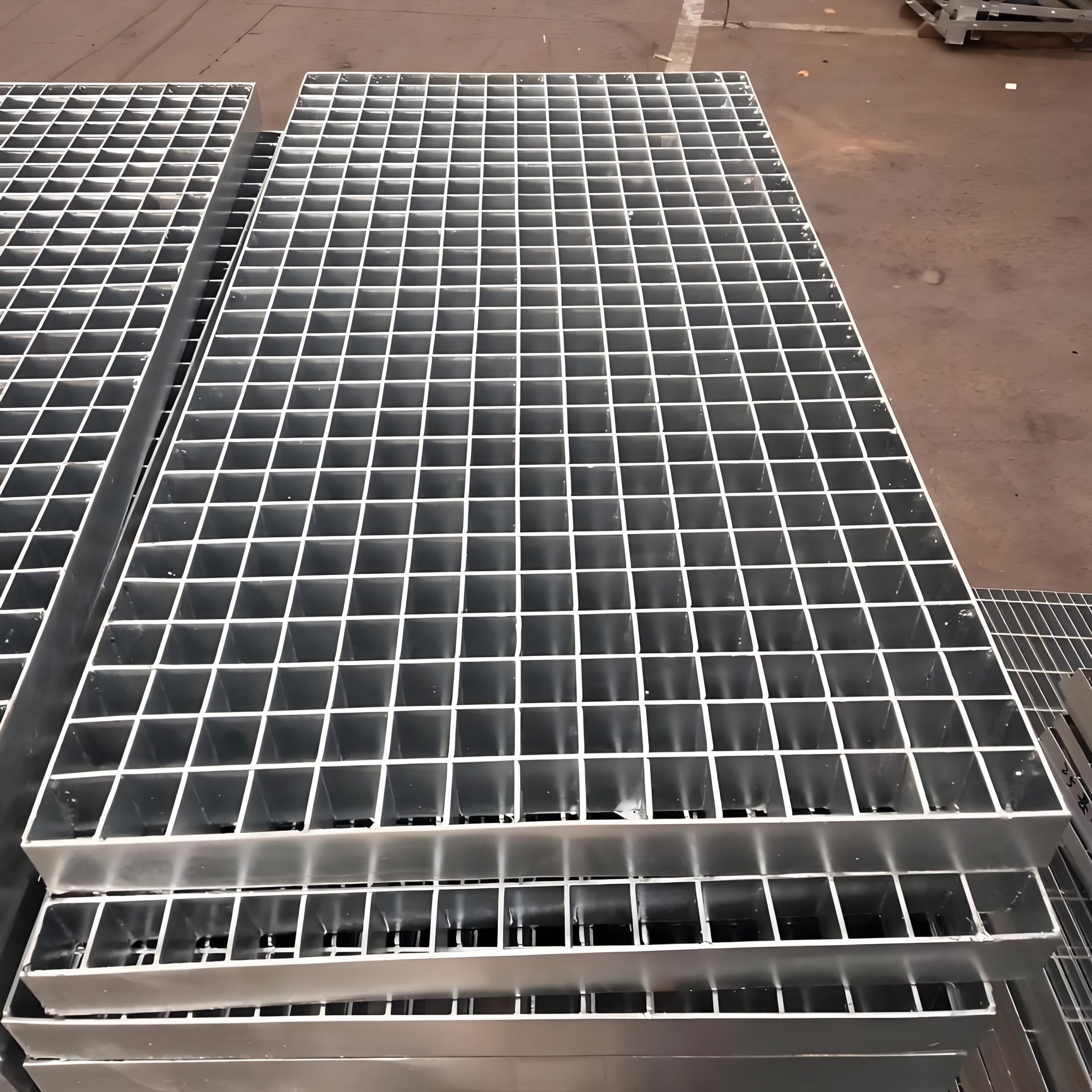
Welded steel grating is the standard walkway product for industrial platforms, catwalks, stair landings, pipe rack access areas, equipment service paths, and general pedestrian passages. It is produced by pressure welding twisted square cross bars or round cross bars into bearing flat bars. The welded structure gives stable spacing, good load transfer, and efficient production for large quantities. For most walkway projects, welded steel grating is the most economical structure because it balances strength, open area, drainage, ventilation, and production speed.
Press-locked steel grating is used where higher visual regularity, closer bar alignment, or special architectural appearance is required. Instead of welding the cross bars onto the bearing bars, the bars are mechanically locked by pressure. This creates a flatter and cleaner surface profile. Press-locked grating is suitable for equipment platforms, public access walkways, commercial maintenance decks, sunshade structures, and areas where the panel must provide both load-bearing performance and a more refined appearance. It can also be produced with heavier bearing bars when a walkway has higher point loads or longer supporting spans.
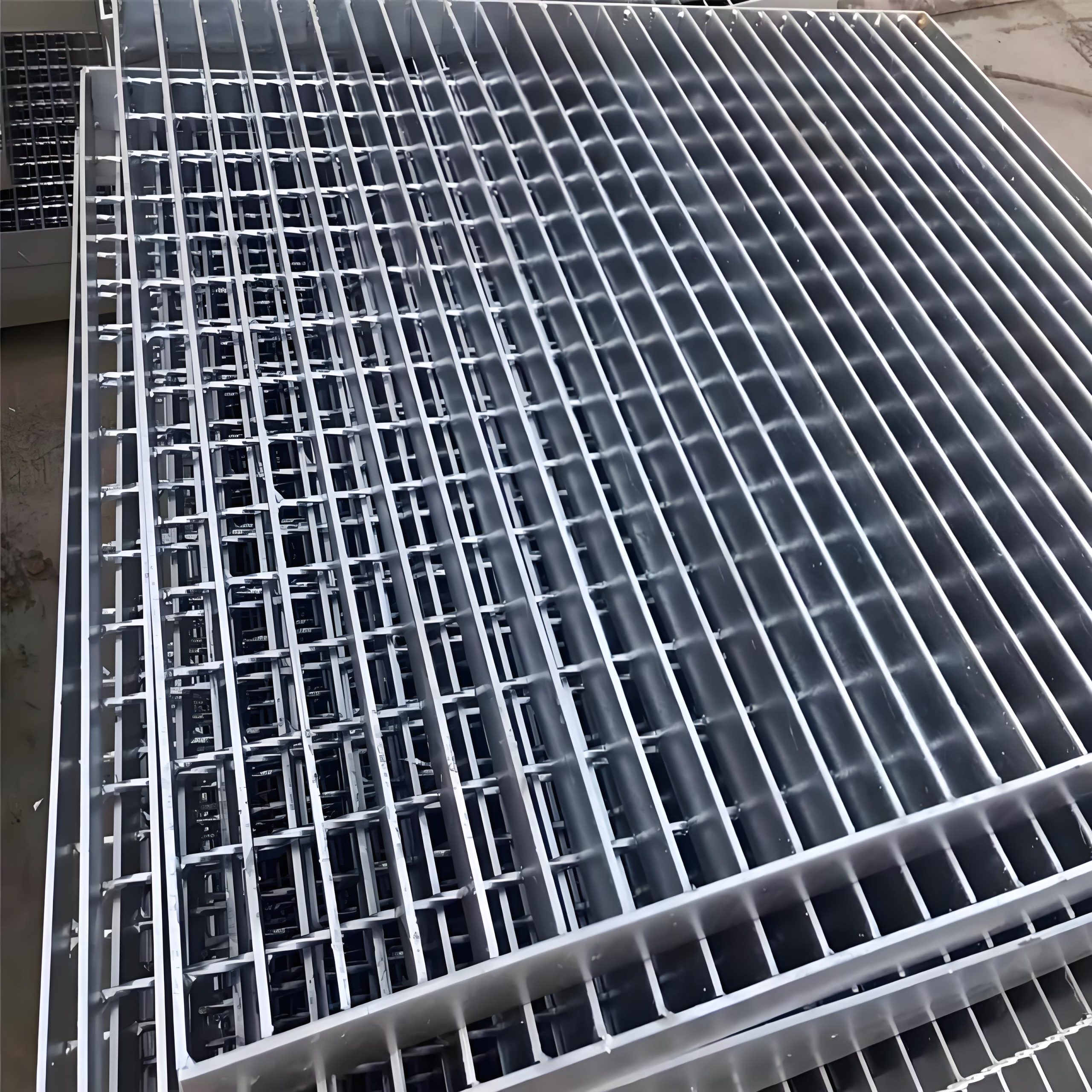
Serrated anti-slip walkway grating is manufactured with notched bearing bars. The serrated edge increases friction under wet, oily, dusty, icy, or inclined conditions. This type is commonly used on outdoor walkways, wastewater treatment plants, marine access areas, mining platforms, loading zones, and ramps. The serrated surface does not change the basic open-grid structure, but it improves foot grip where smooth flat bars may become unsafe. For sloped access paths, serrated grating is normally preferred over plain surface grating.
Plain surface walkway grating uses smooth bearing flat bars. It is suitable for indoor dry areas, clean workshops, mechanical rooms, storage platforms, and walkways where footwear contact conditions are stable. The smooth surface is easier to clean than serrated edges and is less likely to trap fine dust. In indoor projects where corrosion is limited and anti-slip demand is moderate, plain surface grating provides a clean walking surface with good bearing strength and efficient fabrication.
Factory direct supply removes the trading layer between production and project use. For regular welded walkway grating, this can reduce the purchase cost by about 10–20% compared with distributor supply, especially when the order includes repeated panel sizes, standard bearing bar sections, and full-container quantities. The cost reduction comes from direct material calculation, direct production scheduling, and direct packing control rather than simplified stock resale.
Specification control is another major difference. A distributor normally works with existing inventory or a limited set of standard panels. A factory can produce panels according to the actual walkway width, support span, drainage opening, drawing number, installation sequence, and edge treatment. Bearing bar height, bearing bar thickness, cross bar pitch, panel length, panel width, toe plate position, cut-out shape, and fixing hole position can all be aligned with project drawings.
Delivery control is also stronger under factory direct production. Large walkway projects are rarely installed in one single step. Platform grating, stair treads, trench covers, and access decks may need to arrive according to site zones or construction phases. Anping County Chuansen Silk Screen Products Co., Ltd. can divide production by drawing batch, panel mark, pallet sequence, or installation area. This reduces sorting time at the jobsite and keeps large-area walkway installation more organized.
Walkway grating specifications are mainly determined by span and live load. For general pedestrian use, bearing flat bar height from 25 mm to 32 mm is commonly used when the support spacing is moderate. These sizes provide enough stiffness for maintenance personnel, inspection access, and normal walking loads without excessive steel weight.
When the walkway must also handle light hand trolleys, small maintenance carts, tool boxes, or occasional concentrated loads, bearing flat bar height from 35 mm to 50 mm is more suitable. The increased bar height improves bending resistance and reduces deflection over the same span. A thicker bearing bar may also be used when the load includes wheels, equipment movement, or repeated impact.
| Walkway Use | Common Bearing Bar Height | Typical Application |
| Pedestrian access | 25–32 mm | Platforms, catwalks, maintenance aisles |
| Pedestrian plus light trolley | 35–50 mm | Service platforms, tool cart access, light handling areas |
The most common mesh openings for walkway panels are 30 × 100 mm and 40 × 100 mm. A 30 mm bearing bar pitch provides a denser walking surface and better load distribution. A 40 mm pitch reduces material weight and cost while still meeting many general access requirements. Cross bar spacing is normally 50 mm or 100 mm. A 50 mm cross bar pitch gives better lateral stability and a tighter walking feel, while 100 mm spacing is used where standard industrial access and lower material weight are acceptable.
Panel size is also linked to handling and installation. Very large panels reduce the number of joints but increase lifting difficulty and hot-dip galvanizing deformation risk. Smaller panels are easier to install and replace, but they require more supports or more fixing points. Factory production normally balances these factors through drawing review before cutting and welding.
Black steel grating is supplied without galvanizing or coating. It is mainly used for temporary platforms, indoor dry areas, short-term construction access, or projects where the panel will be painted or treated after installation. Black grating has the lowest surface treatment cost, but it has limited corrosion resistance. It should not be used directly in long-term outdoor or humid environments unless further protection is applied.
Hot-dip galvanized grating is the standard treatment for outdoor walkways, humid plants, open platforms, drainage areas, coastal facilities, and industrial sites with normal corrosion exposure. After fabrication, the grating panel is dipped into molten zinc so that the bearing bars, cross bars, welded joints, and panel edges receive corrosion protection. For walkway grating, hot-dip galvanizing is widely used because the open grid allows zinc flow and drainage when the panel is correctly designed.
Painted grating is used when color identification, equipment zone marking, or light anti-corrosion protection is required. Paint can be applied to black steel or galvanized steel, depending on the project requirement. Painted panels may be used for indoor platforms, safety color zones, machine access walkways, or areas where visual classification is needed. Paint thickness, surface preparation, and coating system should match the working environment.
Epoxy or polyurethane coated grating is used in chemical plants, food-related facilities, wastewater treatment areas, and locations where stronger surface resistance or cleaner coating performance is required. These coatings provide better resistance to certain chemicals and moisture conditions than ordinary paint. They are also selected where the grating surface must be easier to clean or must match specific plant hygiene requirements. The coating system must be matched with the substrate preparation and service environment.
Factory fabrication allows walkway grating to be cut according to the actual walkway width instead of forcing the structure to match stock panel sizes. Width control is especially important for long access corridors, pipe rack walkways, overhead platforms, and stair landings. Accurate panel width helps maintain consistent side clearance and reduces field cutting.
End banding can be welded to the panel edge to close the open bearing bar ends. This improves appearance, reduces side movement risk, strengthens the panel edge, and makes installation cleaner. Banded edges are common for walkways exposed to regular foot traffic or areas where the grating edge remains visible after installation.
Pre-opened mounting holes and welded fixing lugs can be produced before surface treatment. This is cleaner than drilling or welding after galvanizing, because post-treatment modification can damage zinc coating or paint film. Fixing ears, slotted holes, bolt holes, and clamp positions can be arranged according to support beam layout.
Arc cuts, corner cuts, pipe openings, column notches, and irregular walkway panel shapes can also be fabricated according to drawings. These details are common around tanks, columns, pipelines, equipment bases, and curved platforms. For irregular panels, clear drawing marks and installation sequence numbers help avoid confusion during site assembly.
Walkway steel grating can be priced by square meter when the specification is common and the panel structure is relatively standard. This method is practical for welded steel grating with regular bearing bar sizes, common mesh openings, and repeated panel dimensions. A square-meter quotation normally includes steel material, welding, cutting, edge banding when specified, surface treatment, and packing.
Pricing by ton is more suitable for large quantities, heavy bearing bar sections, non-standard structures, or mixed specifications. Ton-based pricing reflects actual steel consumption more directly. It is often used when the project includes many panel sizes, thick bearing bars, special load requirements, or combined products such as walkway grating, stair treads, trench covers, and platform panels.
| Quantity Level | Quotation Logic | Typical Pricing Feature |
| 100 m² | Small project or trial batch | Higher unit cost due to setup and packing ratio |
| 500–1000 m² | Batch production | Lower unit cost through material nesting and repeated welding setup |
Batch discount is built from production efficiency, material utilization, surface treatment loading efficiency, and packing density. A 100 m² order may include more cutting changes and smaller packing volume. A 500 m² order allows more stable welding setup and better steel cutting arrangement. A 1000 m² order gives stronger advantages in raw material purchase, galvanizing batch arrangement, and container loading.
For factory direct quotation, the most stable pricing method is to calculate from bearing bar size, cross bar spacing, panel area, surface treatment, fabrication details, and packing requirement. Serrated bearing bars, thicker flat steel, dense spacing, irregular cutting, and special coating all increase processing cost. Repeated standard panels reduce fabrication time and steel waste.
M-type and C-type grating clips can be supplied with walkway panels when the project requires removable installation. Grating clips allow the panel to be fixed to supporting steel beams without welding on site. This is useful for maintenance areas where panels may need to be removed for equipment inspection, pipe access, or cleaning.
Galvanized bolts, nuts, and washers can be packed together with clips or fixing lugs. Matching fasteners with galvanized grating helps reduce corrosion mismatch and simplifies site installation. Bolt size should correspond to the clip type, support beam thickness, and expected vibration condition.
Walkway support beams can also be supplied when the project scope requires a more complete walking platform system. Support beams are selected according to span, load, walkway width, and connection method. For light pedestrian platforms, simple steel supports may be enough. For longer spans or elevated walkways, support beam design must consider deflection, lateral stability, and connection strength.
Accessory packing should match the panel marking system. Clips, bolts, washers, and special fixing parts can be packed by pallet, walkway zone, or drawing number. This prevents missing components during installation and reduces time spent matching small parts with panel positions.
Walkway span is the first technical parameter required for grating selection. Span means the clear distance between supporting beams under the bearing bar direction. Bearing bars must run across the supports, not parallel to them. A longer span requires higher or thicker bearing flat bars to control deflection and maintain walking comfort.
Design live load should be stated in kN/m² when available. For simpler projects, the load description may include pedestrian access, maintenance personnel, light trolley, tool cart, or occasional equipment load. Forklift traffic is not treated as a normal walkway load; it requires a different load analysis because wheel loads create concentrated stress.
Installation method affects panel edge design and accessory preparation. Welded installation creates a firm connection and is common for permanent industrial platforms. Clip fixing allows removal and avoids welding damage to galvanized coating. Bolted lug fixing is used when the panel needs stronger mechanical locking than ordinary clips but still requires removable installation.
Environmental condition determines surface treatment. Indoor dry areas may use black or painted grating. Outdoor walkways normally use hot-dip galvanizing. Chemical, food-processing, wastewater, coastal, or high-humidity environments may require a stronger coating system or more careful material selection. The working environment also affects drainage direction, anti-slip surface choice, and long-term maintenance planning.
Drawing information also improves production accuracy. Panel length, panel width, bearing bar direction, support location, cut-out position, edge banding type, stair landing connection, and fixing point layout should be shown clearly. For Anping County Chuansen Silk Screen Products Co., Ltd., these details are used to prepare cutting lists, welding arrangement, surface treatment sequence, packing marks, and delivery batches.
What is the most common steel grating type for walkway platforms?
Pressure welded steel grating is the most common type for walkway platforms because it provides stable load capacity, open drainage, efficient production, and good cost control. It is widely used for industrial platforms, maintenance aisles, pipe rack access, and equipment service walkways.
Is serrated steel grating necessary for every walkway?
Serrated grating is not required for every walkway. It is more suitable for wet, oily, outdoor, sloped, or dusty conditions. Plain surface grating can be used in dry indoor areas, clean rooms, mechanical rooms, and platforms where slip risk is limited.
Can walkway steel grating be made according to drawings?
Walkway steel grating can be produced according to drawings, including panel size, bearing bar direction, cut-outs, banding, mounting holes, fixing lugs, irregular corners, and installation marks. Factory production is more suitable than stock supply when the walkway includes different spans, support positions, or shaped panels.
How is factory direct walkway grating usually quoted?
Factory direct walkway grating is commonly quoted by square meter for standard specifications and by ton for large-volume or non-standard specifications. The quotation is built from bearing bar size, mesh opening, surface treatment, fabrication work, packing method, and order quantity.