

Aluminum grating is widely used in industrial facilities where low weight, corrosion resistance, drainage, and long-term serviceability are important. Compared with carbon steel grating, aluminum grating is easier to handle during installation and can reduce dead load on elevated structures. It is commonly used for platforms, walkways, stairs, trench covers, mezzanines, equipment access areas, offshore facilities, water-treatment plants, chemical plants, marine structures, and rooftop service paths. Selecting the correct aluminum grating requires more than choosing a panel size: alloy, bearing bar profile, bar spacing, span direction, load, surface type, corrosion environment, fastening method, and fabrication details should all be reviewed before ordering.
Industrial aluminum grating provides an open, load-bearing floor surface made from aluminum bearing bars and cross bars. The open construction allows water, light, air, heat, and small debris to pass through the panel. This can improve drainage and reduce the standing-water problems associated with solid steel plate or checker plate.
The main reason many industrial buyers choose aluminum grating is its combination of low weight and corrosion resistance. Aluminum is much lighter than steel, which can simplify lifting, reduce installation labor, and lower the load placed on supporting steelwork, pipe racks, rooftop structures, and mobile equipment.
Aluminum grating is not automatically the best choice for every industrial project. Carbon steel or galvanized steel grating may be more economical for heavy-duty, high-impact, or very long-span applications. Stainless steel may be preferable for highly corrosive chemical service, food processing, or severe chloride exposure. The best material depends on the actual load, environment, service life, budget, and maintenance plan.
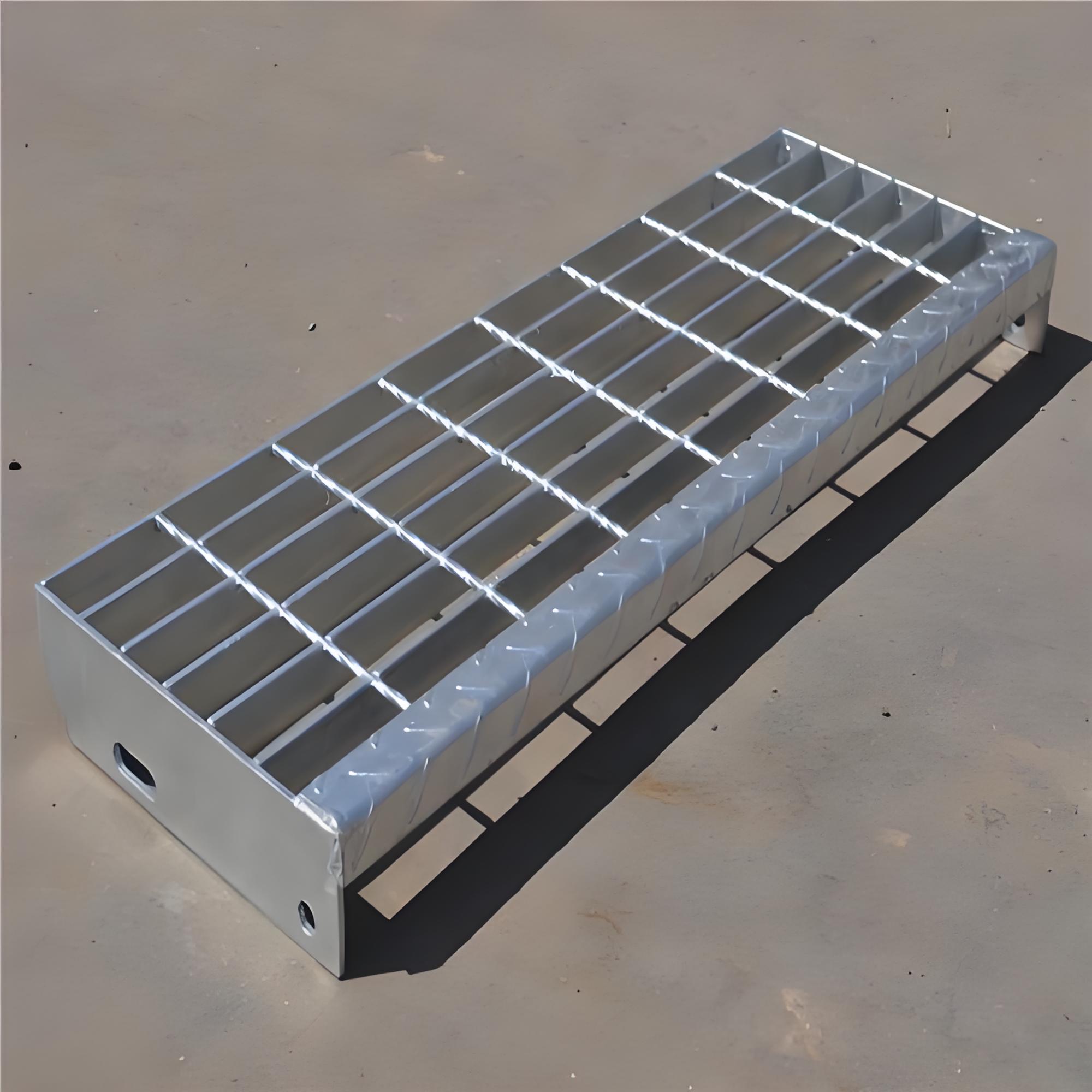
Aluminum grating can be produced using different construction methods. The most common types for industrial use are swaged aluminum bar grating, press-locked aluminum grating, and dovetail pressure-locked grating. Each type has a different appearance, connection method, load behavior, and preferred application.
Swaged aluminum grating is one of the most common industrial aluminum grating types. Square or round cross bars are inserted through pre-punched holes in the bearing bars and mechanically locked in place by a high-pressure swaging process. The permanent mechanical connection creates a stable panel while maintaining an open grating surface.
Swaged grating is commonly available with rectangular bearing bars, I-shaped bearing bars, or flush-top profiles. Rectangular bars are widely used for platforms and walkways. I-bar grating can reduce weight while maintaining useful load capacity for appropriate spans. Flush-top grating may be selected where a smoother top surface or more uniform appearance is required.
Press-locked aluminum grating is assembled by mechanically pressing cross bars into notched bearing bars. The bars interlock under pressure, creating a clean, architectural appearance with well-defined openings. It is often selected for industrial areas that also require a refined visual finish, such as plant entrances, architectural stairs, public walkways, equipment enclosures, and commercial facilities.
Press-locked grating can be supplied with rectangular, flat-top, or serrated bearing bars. Because the bar intersections are different from swaged grating, the supplier should provide load data for the selected product rather than assuming that a press-locked panel will perform exactly like a swaged panel of similar dimensions.
Dovetail aluminum grating is a pressure-locked product made by joining interlocking bearing bars and cross bars with a dovetail-shaped connection. The result can provide a close, clean appearance with good lateral stability. It is often used where a lighter panel, smaller opening pattern, or more architectural surface is needed.
Dovetail grating may be useful for pedestrian walkways, catwalks, access floors, stair treads, bridge maintenance areas, and applications where a close-mesh surface is needed. The manufacturer should confirm the available bar sizes, load ratings, and panel-width limitations for the selected dovetail profile.
| Grating Type | Construction Method | Typical Advantages | Common Applications |
|---|---|---|---|
| Swaged Rectangular Bar | Cross bars mechanically swaged through bearing bars | Strong, versatile, widely available, suitable for industrial platforms | Walkways, platforms, stair treads, trench covers |
| Swaged I-Bar | I-shaped bearing bars with mechanically locked cross bars | Lower weight and efficient material use | Elevated walkways, rooftop access, lighter platform systems |
| Press-Locked | Notched bars mechanically pressed together | Clean appearance, close openings, custom layout flexibility | Architectural-industrial floors, stairs, pedestrian areas |
| Dovetail Pressure-Locked | Interlocking dovetail bar connections | Close mesh, stable construction, refined finish | Access platforms, walkways, stair treads, architectural applications |
Published aluminum grating specification guidance identifies swaged rectangular bar, swaged I-bar, swaged flush-top, and aluminum dovetail pressure-locked grating as common product types. See standard aluminum grating type and specification options.
Aluminum grating performance depends not only on the grating design but also on the selected alloy and temper. Common industrial aluminum grating products are manufactured from 6061 and 6063 alloy families, although the exact alloy may vary by manufacturer, bar type, cross-bar design, and fabrication method.
6063 aluminum is commonly used for extruded aluminum components because it has good forming and finishing characteristics. It is often used for swaged aluminum grating bearing bars and cross bars. In many standard rectangular-bar grating products, 6063-T6 is a common alloy and temper.
6063 aluminum can provide a practical balance of corrosion resistance, appearance, extrudability, and mechanical performance for industrial walkways, access platforms, stair treads, and general outdoor applications.
6061 aluminum is widely used for structural aluminum applications because of its useful strength and machining characteristics. It may be selected for structural supports, frames, fabricated brackets, custom components, and certain grating elements where a stronger alloy is appropriate.
The final alloy choice should be confirmed through the supplier’s material certificate and approved submittal. Do not assume that all aluminum grating is made from the same alloy or that any aluminum alloy can be substituted without reviewing load and corrosion requirements.
| Service Environment | Typical Material Consideration | Additional Review Needed |
|---|---|---|
| Dry indoor platform | Standard mill-finish aluminum grating may be suitable | Load, slip resistance, cleaning method |
| Outdoor industrial walkway | Corrosion-resistant aluminum with suitable fasteners | Drainage, UV exposure, steel-contact isolation |
| Marine or coastal site | Appropriate aluminum alloy and corrosion-control detailing | Salt exposure, crevices, galvanic corrosion, fasteners |
| Chemical or wastewater area | Review aluminum compatibility with actual chemicals | pH, cleaning agents, splash exposure, immersion risk |
| Architectural or visible installation | Mill finish, anodized, or powder-coated aluminum | Color, finish uniformity, fabrication marks, maintenance |
Aluminum has good corrosion resistance in many outdoor and wet environments because it naturally forms a protective oxide layer. However, strong acids, strong alkalis, certain chemicals, trapped moisture, and contact with dissimilar metals can reduce long-term performance. The operating environment should always be described clearly to the supplier.
Bearing bars are the main load-carrying members of aluminum grating. They run in the span direction, from one support to another. Cross bars hold the bearing bars in position and create the grating mesh pattern, but the bearing bars normally provide the primary bending strength.
Rectangular bearing bars are flat aluminum bars positioned vertically to create depth. This is one of the most common profiles for industrial aluminum grating. The bearing bar depth is selected according to the load and clear span, while the bar thickness is selected according to the grating type and required performance.
Typical bearing bar sizes may range from approximately 1 in. deep through 2-1/2 in. deep or more, with thicknesses such as 1/8 in. or 3/16 in. depending on the profile. A deeper bearing bar generally provides greater stiffness, but it also increases panel height, material use, and price.
I-bar grating uses bearing bars with an I-shaped profile instead of a full rectangular section. The profile removes material from lower-stress zones while retaining a useful load-carrying shape. This can reduce the weight of the grating and make the panels easier to handle.
I-bar grating can be a good choice for elevated walkways, service platforms, roof access, and installations where minimizing dead load is important. The manufacturer’s load tables should be used because I-bar capacity and deflection behavior differ from rectangular bar grating.
| Typical Bearing Bar Spacing | Typical Cross Bar Spacing | General Use |
|---|---|---|
| 1-3/16 in. on center | 4 in. on center | Standard industrial walkway and platform grating |
| 1-3/16 in. on center | 2 in. on center | Improved lateral stability and closer cross-bar pattern |
| 15/16 in. on center | 4 in. on center | Closer bearing-bar spacing for increased support and smaller openings |
| 11/16 in. on center | 2 in. or 4 in. on center | Pedestrian-oriented or close-mesh applications |
| 7/16 in. on center | 2 in. or 4 in. on center | Heel-conscious and small-opening applications |
Standard industrial aluminum grating is often described using a designation that identifies bearing-bar spacing, construction type, and cross-bar spacing. For example, a common 19-SG-4 pattern typically refers to swaged grating with bearing bars near 1-3/16 in. on center and cross bars near 4 in. on center. The exact naming system can vary by manufacturer, so always confirm the supplier’s designation chart.
Published aluminum bar grating information lists common bearing-bar spacings of 1-3/16 in., 15/16 in., 11/16 in., and 7/16 in., together with 2 in. or 4 in. cross-bar spacing options. See common aluminum bearing bar and cross-bar spacing options.
Load capacity is the most important structural consideration when specifying aluminum grating. A panel that looks strong enough may deflect excessively if it spans too far, uses undersized bearing bars, or is installed in the wrong direction.
The grating span is the clear distance between the supports that carry the bearing bars. The bearing bars must run perpendicular to the support members. If the grating is rotated 90 degrees so that the cross bars span between supports, the panel can lose much of its intended load capacity.
A uniform load is distributed over the grating surface, such as multiple workers standing on a platform. A concentrated load is applied over a small area, such as a heavy tool chest, wheel, maintenance cart, ladder foot, or equipment support. Concentrated loads can control the selection even when the uniform-load requirement appears moderate.
Industrial grating should be selected using the relevant manufacturer load table or project-specific calculation. Do not choose aluminum grating based only on a neighboring installation or a standard panel size. A 1 in. deep panel over a 2 ft span may be acceptable for pedestrian access, while the same panel over a 5 ft or 6 ft span may require a larger bearing bar or a different support layout.
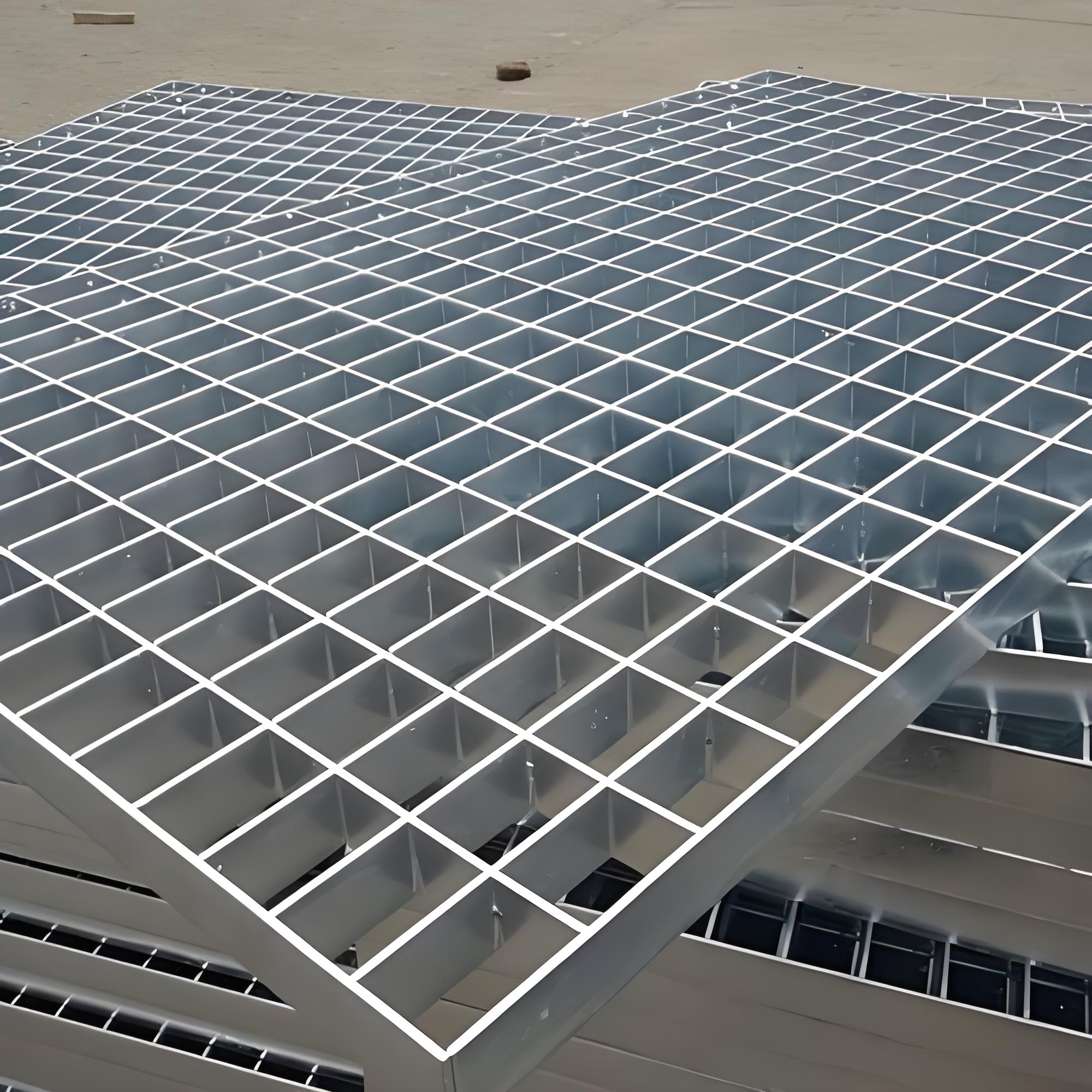
Deflection is the amount the grating bends under load. Excessive deflection can make a platform feel unstable, affect attached equipment, create uneven joints, reduce drainage, or cause user discomfort even if the grating does not fail structurally.
Common project requirements may limit deflection to a fraction of the span, such as L/200, L/240, or another specified value. The correct limit depends on the application, finishing materials, safety requirements, and engineer’s design criteria. The supplier should be given the required deflection limit before finalizing the bearing bar size.
Aluminum grating load tables normally provide uniform-load, concentrated-load, and deflection information for different spans and bearing bar sizes. See aluminum grating load-table selection guidance.
Aluminum grating is often selected where weight reduction is valuable. In elevated industrial structures, every kilogram added to a platform can affect the size of support beams, columns, connections, foundations, lifting equipment, and installation labor.
Lightweight does not mean low strength. Properly designed aluminum grating can provide useful industrial load capacity, but the bearing bar profile and support span must be selected carefully. For very high-impact service, forklift routes, vehicle traffic, or long spans, steel grating or a specially engineered aluminum system may be more appropriate.
When comparing aluminum and steel grating, compare the complete installed system rather than only price per square meter. Aluminum can cost more per kilogram than carbon steel, but lower installation weight, reduced support requirements, lower maintenance, and improved corrosion resistance can provide better value over the full service life of the project.
Aluminum grating is widely used in wet and outdoor industrial environments because aluminum naturally develops an oxide layer that helps protect the surface. This makes it useful for wastewater treatment plants, marine structures, docks, chemical plants, food-processing areas, cooling towers, washdown zones, and rooftop walkways.
However, aluminum corrosion resistance is not unlimited. Chemical compatibility should be reviewed whenever the grating is exposed to acids, alkalis, chlorides, concentrated cleaners, process fluids, saltwater, or chemical fumes. The right alloy and surface treatment depend on the actual service conditions.
In marine and coastal areas, aluminum grating can provide useful resistance to general weathering, but salt deposits and trapped moisture can create corrosion risks at crevices, overlaps, fastener locations, and steel contact points. Good drainage and regular cleaning are important, especially where saltwater spray can accumulate.
Wastewater plants often use aluminum grating because it is lighter than steel and can perform well in humid environments. Chemical plants require a more detailed review because some process chemicals can attack aluminum rapidly. The supplier should receive a list of chemicals, concentration, temperature, exposure method, cleaning cycle, and expected contact duration.
Mill finish is common for industrial aluminum grating. For visible, architectural, or more demanding environments, the project may require chemical cleaning, anodizing, powder coating, or another protective finish. Coatings should not be viewed as a replacement for proper drainage and compatible material selection.
Serrated aluminum grating has notches or raised serrations along the top edge of the bearing bars. These serrations improve grip in wet, oily, muddy, icy, or high-traffic work areas. It is commonly selected for outdoor stairs, ramps, rooftop access, marine platforms, maintenance catwalks, and process areas where slipping is a concern.
Plain-top aluminum grating may be suitable for dry indoor areas, equipment platforms, architectural applications, or locations where cleaning comfort and appearance are more important than maximum traction. Serrated grating is usually a better choice for work areas exposed to water, oil, snow, or other contaminants.
Some manufacturer load guidance notes that serrated bearing bars should be evaluated using the correct reduced effective depth or the specific serrated load table rather than a plain-bar table. See aluminum grating load-table notes for serrated surfaces.
Open area is the percentage of the panel that remains open after deducting the bearing bars and cross bars. It affects drainage, ventilation, light transmission, visibility, debris fall-through, and walking comfort.
Standard aluminum bar grating can provide a high percentage of open area. For example, a common 19-series rectangular aluminum grating pattern may provide about 80% open area, depending on bar thickness and cross-bar configuration. Closer bar spacing reduces open area but may improve heel safety, small-object retention, and support distribution.
| Requirement | Preferred Grating Direction |
|---|---|
| Maximum drainage and light transmission | More open standard bar spacing, subject to safety and load requirements |
| Small-object retention | Closer bearing-bar spacing or a smaller opening pattern |
| Heel-conscious pedestrian traffic | Close-mesh grating with verified opening size and orientation |
| High-airflow equipment platforms | Higher open area, with structural and fall-through requirements checked |
| Heavy debris exposure | Opening pattern selected to avoid clogging and allow cleaning access |
For drainage applications, consider the direction of water flow, the size of debris, cleaning procedures, and the opening below the grating. A very open panel may drain well but allow tools or process material to fall through. A close-mesh panel may retain small objects but require more cleaning. The best selection depends on what is below the grating and how the area will be used.
Aluminum grating can be fabricated for a wide range of industrial uses. The same base grating type can be cut and finished differently for a walkway, stair tread, trench cover, platform, or removable access panel.
Walkways require sufficient clear width, correct bearing-bar direction, appropriate slip resistance, and secure fastening. In wet, outdoor, or process areas, serrated aluminum grating is often selected. Toe plates or kick plates may be added along exposed edges to help prevent tools from falling to lower levels.
Aluminum grating platforms are useful where drainage, ventilation, and lower weight are needed. Large platforms may use several panels with intermediate support beams. The supplier should coordinate panel sizes with support spacing, lifting access, cutouts, handrail posts, equipment bases, and maintenance routes.
Aluminum stair treads can be supplied with welded end plates, bolt holes, serrated nosings, and custom widths. For industrial stairs, the tread should be selected according to stair width, tread depth, stringer detail, loading, and slip-resistance requirements. Aluminum stair treads are particularly useful where corrosion resistance and lighter handling weight are important.
Aluminum trench covers may be used in pedestrian areas, service zones, equipment rooms, and selected industrial drainage applications. The clear span, frame support, opening direction, heel safety, and expected load must be confirmed. Heavy vehicle traffic usually requires a more robust engineered solution and may favor steel, ductile iron, or a specialized composite cover system.
Industrial facilities rarely use only full standard grating panels. Platforms often include columns, pipes, handrails, pumps, vessels, cable trays, valves, drains, and equipment penetrations. Custom fabrication allows aluminum grating panels to fit the actual plant layout and reduces field cutting during installation.
Banding is a closure bar installed along the cut edge of a grating panel. It improves appearance, protects exposed bearing-bar ends, helps distribute load at the edge, and provides a finished perimeter around cutouts. For removable grating panels and areas exposed to traffic, correct banding can improve durability and handling safety.
When a cutout passes through bearing bars, the supplier may need to band the opening or add support details around the penetration. The fabrication drawing should show whether pipes, columns, or conduits can remain in place while grating panels are removed for maintenance.
Galvanic corrosion can occur when aluminum and steel are in electrical contact in the presence of an electrolyte such as rainwater, saltwater, condensation, or chemical solution. In this condition, the aluminum can become the more vulnerable material and may corrode preferentially around joints, fasteners, and support contact areas.
Aluminum grating is often installed on galvanized steel or painted carbon-steel support structures. This can be a reliable arrangement when the joint is designed correctly, but direct wet contact without protection should be avoided in aggressive environments.
Fastener selection should be coordinated with the grating material, steel support coating, and exposure environment. A fastening method that works in a dry indoor plant may not provide the same service life on a marine platform or a wastewater treatment structure.
A reliable aluminum grating supplier should be able to help match the grating design to the actual industrial service conditions. The supplier should not simply quote a standard panel without confirming bearing-bar direction, span, loading, material, opening pattern, and fabrication requirements.
For engineered industrial projects, submit drawings, structural notes, and the relevant specification pages with the inquiry. This allows the supplier to quote the right aluminum grating configuration and reduces the risk of costly site changes after delivery.
Is aluminum grating strong enough for industrial platforms?
Yes, aluminum grating can be strong enough for industrial platforms when the bearing-bar size, spacing, alloy, support span, load, and deflection limit are selected correctly. It should be chosen using the manufacturer’s load table or a project-specific calculation. For very heavy traffic, vehicle loads, high impact, or long spans, steel grating may be more suitable.
What is the best aluminum grating for wet areas?
Serrated swaged aluminum bar grating is commonly used in wet industrial areas because the serrated bearing bars improve traction while the open surface allows drainage. For chemical or marine environments, the aluminum alloy, fasteners, support isolation, and chemical compatibility should also be reviewed before selection.
How do you prevent corrosion between aluminum grating and steel supports?
Use isolation pads, non-conductive washers or sleeves, compatible fasteners, protective coatings, and drainage details to reduce direct wet contact between aluminum and steel. This helps limit galvanic corrosion, especially in outdoor, marine, coastal, chemical, and wastewater environments.