
Galvanized steel walkway grating is a strong, open-grid metal flooring product used for industrial walkways, maintenance platforms, equipment access channels, stairs, bridge walkways, municipal passages, drainage areas, and outdoor service routes. It combines the load-bearing strength of steel bar grating with the corrosion protection of hot-dip galvanizing, making it suitable for environments where workers need safe passage, water drainage, ventilation, and long service life. For engineering buyers, contractors, distributors, and factory project managers, choosing the right galvanized steel walkway grating means confirming load capacity, bearing bar size, spacing, surface type, panel dimensions, installation method, and corrosion conditions before production.
Galvanized steel walkway grating is a type of steel grating panel designed as a walking surface and protected by a zinc coating through hot-dip galvanizing. It is usually made from bearing bars and cross bars. The bearing bars carry the main load, while the cross bars keep the structure stable and maintain the grid opening. After fabrication, the complete grating panel is hot-dip galvanized to improve corrosion resistance.
The main purpose of galvanized steel walkway grating is to provide a safe, strong, and durable walking surface in industrial, commercial, municipal, and outdoor environments. Compared with solid steel plate, walkway grating has an open-grid structure, which allows water, dust, snow, oil, small debris, and air to pass through. This helps reduce accumulation on the walking surface and makes it suitable for wet, exposed, and demanding working areas.
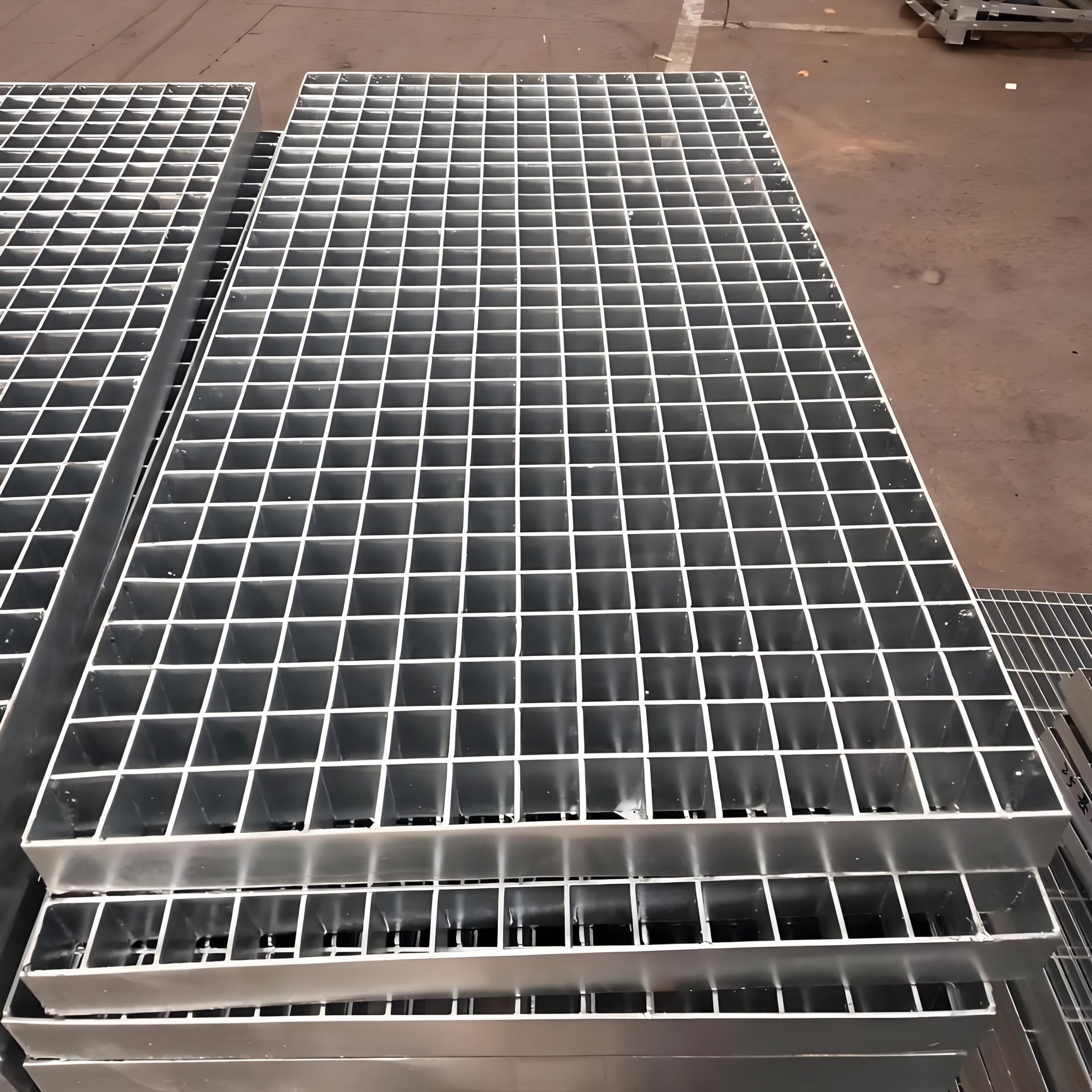
Walkway grating is commonly selected because it offers a practical balance between strength, weight, drainage, slip resistance, and corrosion protection. In factories, power plants, water treatment plants, chemical facilities, bridges, and outdoor maintenance routes, workers often need access to equipment, pipelines, valves, tanks, stairs, and elevated platforms. Galvanized steel walkway grating provides a stable surface while keeping the structure lighter than solid plate flooring.
| Main Feature | Practical Value for Walkway Projects |
|---|---|
| Open-grid structure | Allows drainage, ventilation, light transmission, and debris fall-through |
| Steel bearing bars | Provide load capacity for pedestrian and maintenance traffic |
| Hot-dip galvanized coating | Improves corrosion resistance in outdoor and humid environments |
| Plain or serrated surface | Offers different walking and anti-slip performance options |
| Custom panel fabrication | Allows panels to fit platforms, stairs, trenches, bridges, and equipment areas |
| Removable installation options | Useful for inspection, cleaning, drainage channels, and maintenance areas |
The structure of galvanized steel walkway grating is simple, but every part has a specific function. A typical panel includes bearing bars, cross bars, edge banding, and sometimes additional accessories such as fixing clips, toe plates, stair tread side plates, or anti-slip nosing.
Bearing bars are the main load-carrying members of walkway grating. They are usually flat steel bars installed in one direction. During installation, the bearing bars should span between supports. If the bearing bar direction is wrong, the grating may not provide the expected load capacity even if the panel size appears correct.
Cross bars connect the bearing bars and help maintain spacing. They may be twisted square bars, round bars, or flat bars depending on the grating type and factory production method. Cross bars improve the stability of the grid and prevent bearing bars from moving independently.
Edge banding is often welded around the perimeter of the panel. It protects open bar ends, improves appearance, and makes handling safer. For custom panels, trench covers, stair treads, and panels with cut-outs, banding is especially important.
The open area is one of the key advantages of walkway grating. It reduces water accumulation and allows dirt, snow, and small debris to fall through. For industrial sites, this can make the walking surface safer and easier to maintain than solid plates.
| Structural Part | Function | Selection Note |
|---|---|---|
| Bearing bar | Carries the main load | Size and spacing should match span and load requirement |
| Cross bar | Connects and stabilizes bearing bars | Spacing affects panel stability and appearance |
| Banding bar | Closes panel edges and improves handling | Recommended for custom panels and exposed edges |
| Galvanized coating | Protects steel from corrosion | Important for outdoor and wet environments |
| Fixing accessories | Secure panels to support structures | Clips, bolts, or welding may be selected according to use |
Hot-dip galvanizing is one of the most common surface treatments for steel walkway grating. After the grating is welded and fabricated, the complete panel is immersed in molten zinc. The zinc coating forms a protective layer on the steel surface, including bearing bars, cross bars, welded joints, edges, and many internal contact areas.
Walkway grating is often used in outdoor or humid environments. Rain, moisture, industrial dust, chemical vapor, and temperature changes can cause untreated steel to rust. Hot-dip galvanizing helps delay corrosion and extends service life. This is why galvanized steel walkway grating is widely used in plants, bridges, drainage zones, municipal facilities, rooftops, outdoor platforms, and water treatment areas.
Because grating panels are normally welded before galvanizing, the zinc coating covers welded joints and cut edges after fabrication. This is important because welded areas and cut edges are more vulnerable to corrosion if they are left untreated.
Hot-dip galvanized walkway grating usually requires less maintenance than painted carbon steel in outdoor use. It does not need frequent repainting under normal conditions, although inspection is still recommended in coastal, chemical, or high-abrasion environments.
| Surface Treatment | Main Advantage | Typical Walkway Application |
|---|---|---|
| Untreated black steel | Low initial cost | Temporary or indoor dry areas only |
| Painted steel grating | Color options and basic protection | Indoor platforms or low-corrosion environments |
| Hot-dip galvanized steel grating | Good corrosion protection and long outdoor service life | Industrial walkways, platforms, bridges, drainage covers, outdoor stairs |
| Stainless steel grating | Higher corrosion resistance in harsh environments | Marine, food processing, chemical, and high-corrosion areas |
Galvanized steel walkway grating is usually made from carbon steel or mild steel, then hot-dip galvanized after fabrication. The material should offer good strength, weldability, dimensional stability, and suitability for galvanizing. For most industrial walkway projects, carbon steel with hot-dip galvanizing provides a cost-effective solution.
Carbon steel is the most common raw material for galvanized walkway grating. It offers good load capacity, stable welding performance, and economical cost. When protected by hot-dip galvanizing, carbon steel grating can be used in many outdoor and industrial areas.
Mild steel is frequently used for standard welded steel grating. It is easy to cut, weld, press, and form. For walkway grating that needs regular panel sizes, stair treads, trench covers, and platform flooring, mild steel is widely accepted.
Low-carbon steel is useful because it provides good fabrication performance. It can reduce cracking risk during processing and helps maintain stable welding quality. Good raw material quality also improves the appearance and consistency of the finished galvanized product.
If the walkway is installed in a marine, coastal, food processing, or chemical environment, stainless steel grating may be considered. If weight reduction is more important than price, aluminum grating may also be selected. However, for most general industrial walkway projects, galvanized carbon steel remains one of the most practical choices.
| Material Option | Main Benefit | Suitable Use | Cost Level |
|---|---|---|---|
| Carbon steel with hot-dip galvanizing | Strong, economical, and corrosion resistant | Industrial walkways, platforms, drainage covers, outdoor access | Medium |
| Mild steel with galvanizing | Easy fabrication and good availability | Standard walkway grating and stair treads | Medium |
| Stainless steel | Better corrosion resistance in harsh environments | Chemical, marine, food processing, and hygienic areas | High |
| Aluminum | Lightweight and corrosion resistant | Rooftop access, marine walkways, lightweight structures | Medium to high |
The bearing bar specification has a direct influence on the load capacity of galvanized steel walkway grating. The bearing bar height, thickness, steel grade, and spacing determine how much load the panel can support and how much it will deflect under load.
A higher bearing bar provides stronger bending resistance. For longer spans, deeper bearing bars are usually required. For example, a 40 mm high bearing bar can generally support a longer span or higher load than a 25 mm high bearing bar when other conditions are similar.
Thickness also affects load capacity and durability. Thicker bearing bars can handle heavier loads and are more resistant to impact and deformation. However, thicker bars also increase weight and cost, so they should be selected according to actual project requirements.
For walkway use, the grating should not only be strong enough to carry the load, but also stable enough under foot. Excessive deflection may make workers feel unsafe and can create long-term service problems. A suitable bearing bar specification should consider both strength and walking comfort.
| Bearing Bar Size | Relative Load Capacity | Common Walkway Use |
|---|---|---|
| 20 x 3 mm | Light | Short-span pedestrian access and light covers |
| 25 x 3 mm | Light to medium | General walkways and light platforms |
| 30 x 3 mm | Medium | Common industrial walkway grating |
| 30 x 5 mm | Medium to heavy | Stronger platforms, trench covers, frequent-use walkways |
| 40 x 5 mm | Heavy | Longer spans, heavy maintenance platforms, outdoor service areas |
| 50 x 5 mm | Very heavy | Heavy-duty access zones and higher-load industrial areas |
Bearing bar spacing affects both load performance and walking safety. It determines how many bearing bars are used in a given panel width and how large the openings are between bars. Common bearing bar spacing includes 25 mm, 30 mm, 34 mm, and 40 mm, depending on market practice and project requirements.
Closer spacing means more bearing bars per square meter. This increases weight and price, but it also improves load distribution, walking comfort, and small-object safety. For public walkways, frequent pedestrian areas, or platforms where tools may be dropped, closer spacing may be preferred.
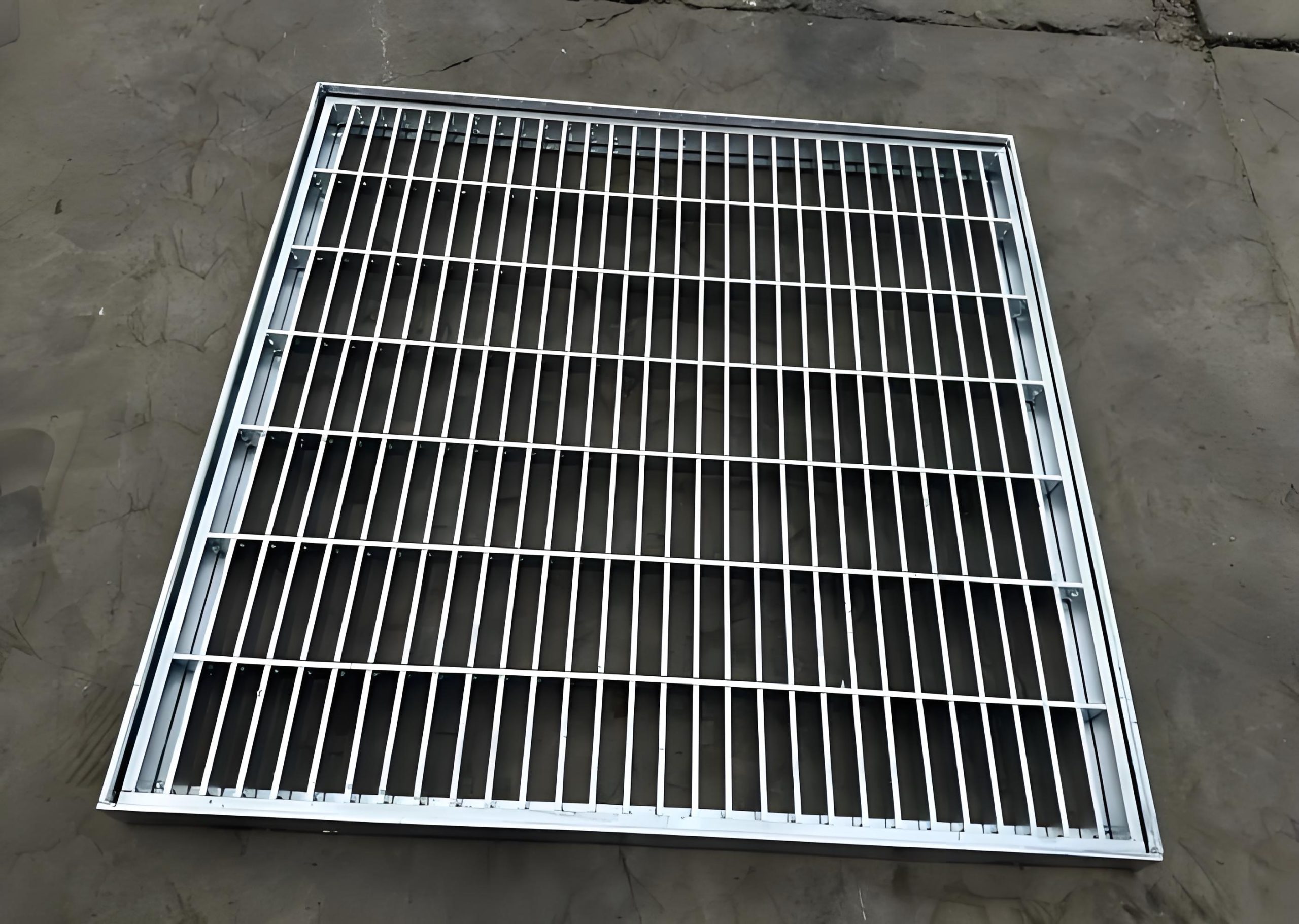
Wider spacing reduces weight and cost while increasing open area. This can be useful for drainage, ventilation, and light transmission. However, wider spacing may not be ideal for high-load walkways, areas with small wheels, or locations where walking comfort is a priority.
The correct bearing bar spacing should be selected according to the walkway purpose. A narrow maintenance walkway in a dry indoor plant may not need the same spacing as an outdoor industrial platform exposed to rain and heavy foot traffic. The factory should confirm the actual use before recommending a standard specification.
| Bearing Bar Spacing | Weight Effect | Walking Safety Effect | Common Use |
|---|---|---|---|
| 25 mm | Higher weight | Smaller openings and better walking comfort | Public access, special walkways, close-mesh requirements |
| 30 mm | Medium to high weight | Good load performance and safe walking surface | Industrial walkways and platforms |
| 34 mm | Medium weight | Balanced opening and load performance | General galvanized steel walkway grating |
| 40 mm | Lower weight | Larger openings and lighter panel weight | Drainage areas, light-duty access, economical panels |
Cross bar spacing affects the overall stability, appearance, and rigidity of galvanized steel walkway grating. Although bearing bars carry the main load, cross bars are important because they connect the bearing bars and help keep the grid structure stable during transportation, installation, and use.
Common cross bar spacing includes 50 mm, 76 mm, and 100 mm. A closer spacing provides a denser grid and may improve panel stability. Wider spacing can reduce weight and cost while still meeting many industrial walkway requirements.
For walkways with frequent pedestrian traffic, closer cross bar spacing may make the grating feel more rigid and stable. It can also improve the visual appearance of the panel. For basic industrial platforms, standard spacing is often enough if the bearing bar specification is correct.
More cross bars require more welding and material, which increases production cost slightly. The cost impact is usually less than changing bearing bar size, but it can still matter in large projects.
| Cross Bar Spacing | Structural Effect | Common Walkway Use |
|---|---|---|
| 50 mm | Closer grid and stronger stability feel | Stair treads, special walkways, areas needing tighter structure |
| 76 mm | Balanced stability and open area | General walkways and platform grating |
| 100 mm | Common industrial spacing and economical structure | Standard galvanized steel walkway grating |
Galvanized steel walkway grating can be supplied with a plain surface or serrated surface. The right choice depends on the walking environment, slip risk, drainage condition, and safety requirement.
Plain walkway grating uses smooth bearing bars. It is suitable for dry indoor platforms, general maintenance walkways, equipment access areas, and places where slip risk is relatively low. Plain grating is usually easier to clean and may be more economical than serrated grating.
Serrated walkway grating has toothed bearing bar edges. The serrated profile increases friction between footwear and the walking surface. It is commonly used in outdoor walkways, wet areas, oily platforms, drainage zones, stair treads, shipyards, wastewater treatment plants, and industrial facilities where slip resistance is important.
If the walkway is indoors, dry, and used for light maintenance, plain galvanized grating may be suitable. If the walkway is exposed to rain, oil, mud, dust, water spray, or frequent outdoor traffic, serrated galvanized steel walkway grating is usually the safer choice.
| Item | Plain Walkway Grating | Serrated Walkway Grating |
|---|---|---|
| Surface | Smooth bearing bar top | Toothed bearing bar top |
| Anti-slip performance | Suitable for dry areas | Better for wet, oily, and outdoor areas |
| Cleaning | Easier to clean | Serrations may hold more dirt in some environments |
| Cost | Usually more economical | May cost more due to serrated processing |
| Common use | Indoor platforms and dry walkways | Outdoor walkways, stairs, drainage areas, industrial access |
Galvanized steel walkway grating sizes are usually described by bearing bar size, bearing bar spacing, cross bar spacing, panel width, panel length, surface type, and edge treatment. A complete specification is necessary for accurate quotation and production.
Common bearing bar sizes include 20 x 3 mm, 25 x 3 mm, 30 x 3 mm, 30 x 5 mm, 40 x 5 mm, and 50 x 5 mm. The correct size should be selected according to load, clear span, and deflection requirement.
Bearing bar spacing may be 25 mm, 30 mm, 34 mm, or 40 mm. Cross bar spacing may be 50 mm, 76 mm, or 100 mm. Different markets may use different standard combinations, so the supplier should confirm the exact specification before production.
Walkway grating panels may be produced in standard sizes or custom sizes. Common panel widths include 500 mm, 600 mm, 750 mm, 900 mm, 1000 mm, and 1200 mm. Common panel lengths may range from 1000 mm to 6000 mm, depending on project design, galvanizing capacity, transportation, and installation conditions.
| Specification Item | Common Options | Selection Advice |
|---|---|---|
| Bearing bar size | 20 x 3 mm, 25 x 3 mm, 30 x 3 mm, 30 x 5 mm, 40 x 5 mm | Select according to load and span |
| Bearing bar spacing | 25 mm, 30 mm, 34 mm, 40 mm | Closer spacing improves walking comfort and load distribution |
| Cross bar spacing | 50 mm, 76 mm, 100 mm | Choose according to stability, appearance, and cost |
| Panel width | 500 mm, 600 mm, 750 mm, 900 mm, 1000 mm, 1200 mm | Match walkway layout and handling requirement |
| Panel length | 1000 mm to 6000 mm or customized | Confirm support span, installation method, and transport limit |
| Surface type | Plain or serrated | Use serrated surface for wet or outdoor areas |
Galvanized steel walkway grating is widely used in industrial platforms because it provides strength, drainage, ventilation, slip resistance options, and corrosion protection. Industrial facilities often need safe access to machines, tanks, pipelines, boilers, valves, conveyor systems, and elevated equipment.
Maintenance platforms allow workers to inspect, repair, and operate equipment safely. Galvanized steel walkway grating is suitable because it supports workers and tools while allowing water, oil, dust, and small debris to pass through the openings. This reduces accumulation on the walking surface and helps keep the work area cleaner.
Catwalks are narrow walkways used to connect equipment areas or provide access at height. Galvanized walkway grating is often preferred because it is strong but lighter than solid plate. It also allows better airflow and reduces wind load in outdoor elevated structures.
Power plants, chemical plants, and process facilities commonly use galvanized steel walkway grating around tanks, pipe racks, towers, cooling systems, and maintenance zones. If the environment contains chemical exposure or high corrosion risk, the material and surface protection should be carefully reviewed.
Water treatment facilities often require walkway grating around channels, tanks, pumps, and filtration systems. Because the environment is wet, hot-dip galvanized steel grating or stainless steel grating may be selected according to corrosion conditions. Serrated surface is often recommended in wet areas.
| Industrial Area | Why Galvanized Walkway Grating Is Used |
|---|---|
| Equipment platforms | Provides access for inspection, repair, and operation |
| Pipe racks | Allows workers to reach valves, joints, and service points |
| Water treatment plants | Handles wet conditions and provides drainage |
| Power plants | Suitable for elevated platforms and maintenance access |
| Manufacturing workshops | Works as durable flooring for frequent industrial movement |
Galvanized steel walkway grating is also commonly used outdoors because the hot-dip galvanized coating provides corrosion protection and the open-grid surface allows water drainage. Outdoor applications often require extra attention to anti-slip performance, weather exposure, load capacity, and long-term maintenance.
Outdoor industrial walkways are exposed to rain, dust, sunlight, and temperature changes. Galvanized grating is suitable because it resists corrosion better than untreated steel and drains water quickly. Serrated surface may be selected to improve grip during wet weather.
Bridge maintenance walkways and service platforms often use galvanized steel grating because it is strong, open, and relatively lightweight. The open-grid design reduces water accumulation and can also reduce wind pressure compared with solid panels. For coastal bridges or areas with deicing salts, corrosion protection should be evaluated carefully.
Municipal projects may use galvanized walkway grating for pedestrian access, drainage channels, utility service covers, public maintenance paths, and outdoor platforms. In public areas, opening size, heel safety, anti-slip surface, edge treatment, and fixing method are important.
Outdoor drainage and utility areas require panels that allow water flow and safe access. Galvanized steel walkway grating can be used as trench covers, channel covers, and service access panels. Removable panels may require lifting holes, handles, locks, or anti-theft fixing depending on the project.
| Outdoor Application | Important Requirement | Recommended Grating Feature |
|---|---|---|
| Outdoor walkway | Rain resistance and safe walking | Hot-dip galvanized surface and serrated option |
| Bridge access | Drainage, corrosion resistance, and lightweight structure | Galvanized grating with proper load design |
| Municipal platform | Public safety and long-term durability | Controlled opening size and secure fixing |
| Drainage cover | Water flow and removable maintenance access | Framed or banded galvanized grating panels |
Correct installation is essential for galvanized steel walkway grating. The panel must be properly supported, fixed, aligned, and installed in the correct bearing bar direction. Poor installation can reduce load performance, create trip hazards, cause noise, or damage the galvanized coating.
Grating clips are widely used because they allow panels to be removed for inspection or maintenance. Clips are suitable for industrial walkways, drainage covers, platforms, and areas where welding is not preferred. They can hold the panel to the support structure without damaging the galvanized coating as much as field welding.
Welding provides a strong permanent connection. It is often used when grating panels do not need to be removed. However, welding will damage the galvanized coating at the welded points, so zinc-rich repair paint or another repair method should be applied after welding.
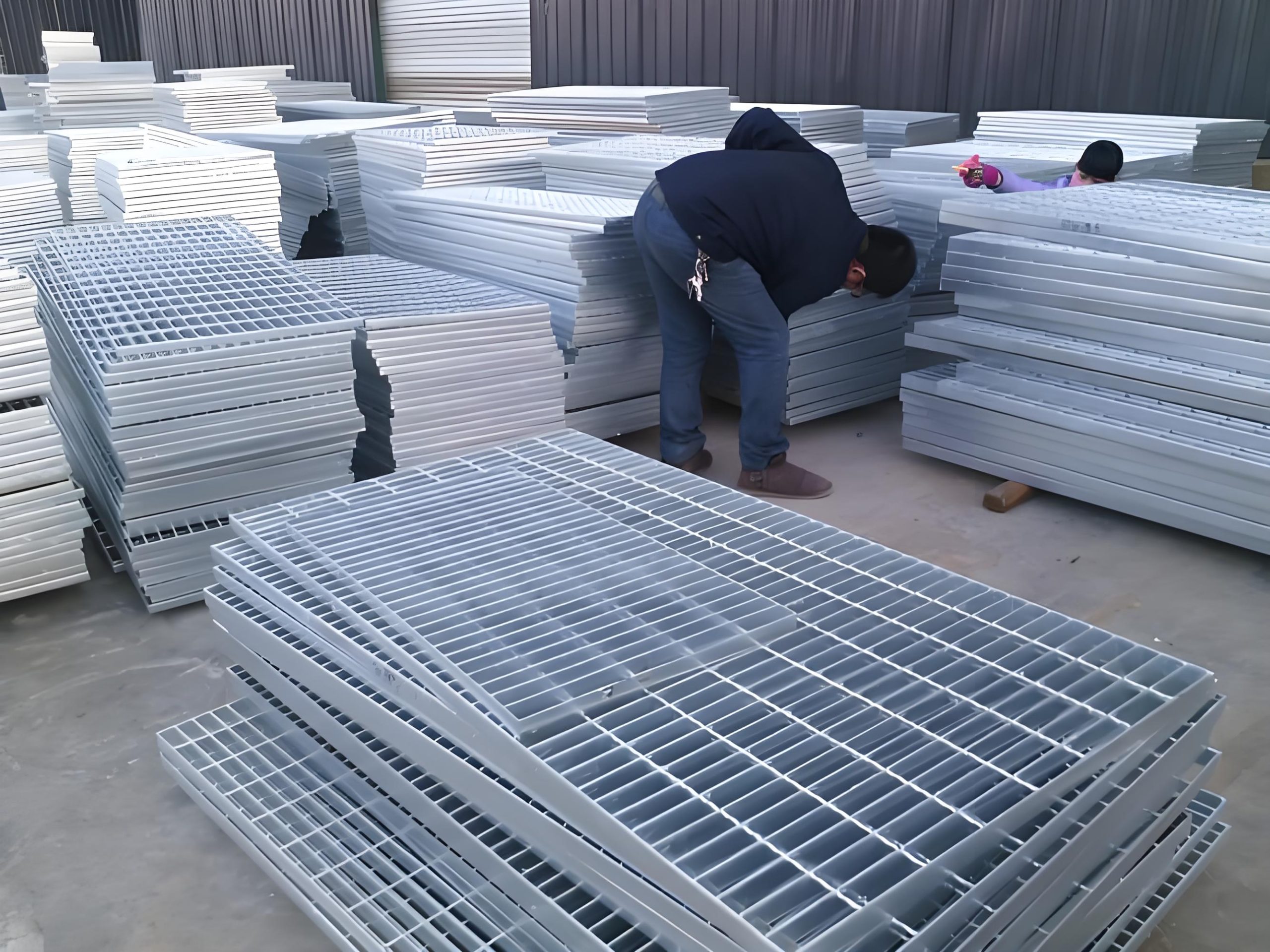
Bolted installation is common for stair treads, framed grating panels, removable walkway sections, and heavy-duty applications. Bolt holes can be prepared in the factory according to project drawings. This method provides strong fixing while allowing future removal.
For trench covers, drainage walkways, and municipal grating panels, the grating may be installed into frames or support ledges. The support ledge must be wide enough to safely carry the panel. The bearing bar direction should be arranged so that loads transfer correctly to the frame.
| Installation Method | Main Advantage | Suitable Use |
|---|---|---|
| Clips | Removable and easy to install | Walkways, platforms, maintenance areas, drainage covers |
| Welding | Strong permanent fixing | Fixed industrial platforms and non-removable panels |
| Bolting | Secure and removable | Stair treads, framed panels, heavy-duty sections |
| Frame installation | Good positioning and load transfer | Trench covers, municipal drainage covers, utility areas |
Galvanized steel walkway grating is often selected because it supports safe movement in working environments. The safety performance is related to anti-slip surface design, opening size, drainage ability, support condition, panel fixing, edge protection, and maintenance.
For wet, oily, dusty, or outdoor areas, serrated galvanized walkway grating is usually recommended. The serrated bearing bar surface provides better grip than plain grating. Stair treads and inclined walkways should be considered carefully because slipping risk is higher than on flat platforms.
The open-grid structure allows water, snow, mud, and debris to pass through the panel. This helps keep the walkway surface cleaner and reduces standing water. Drainage performance is especially useful in outdoor areas, water treatment plants, drainage channels, bridges, and industrial processing zones.
The opening size should be suitable for the users and environment. Industrial maintenance walkways may allow larger openings, while public access areas may need closer spacing to reduce heel hazards or small-object fall-through risks.
Walkway grating should not move, rock, slide, or lift during use. Fixing clips, welding, bolts, or frames should be selected according to whether the panel needs to be removable. Loose panels can create noise, trip hazards, and safety risks.
Edges, cut-outs, and openings should be banded when required. This improves safety during walking and handling. Around pipes, columns, or equipment, accurate factory fabrication can reduce gaps and improve installation quality.
| Safety Requirement | Recommended Design Practice |
|---|---|
| Wet surface safety | Use serrated bearing bars or anti-slip stair nosing |
| Drainage | Select suitable open-grid spacing for water flow |
| Walking comfort | Use appropriate bearing bar spacing and panel support |
| Panel stability | Install with clips, bolts, welding, or frames as required |
| Cut-out safety | Add banding around openings and irregular edges |
| Corrosion protection | Use hot-dip galvanizing and repair damaged coating after installation |
The price of galvanized steel walkway grating depends on material cost, bearing bar size, bearing bar spacing, cross bar spacing, panel size, surface type, galvanizing cost, custom fabrication, order quantity, packing, and shipping. Buyers should compare quotations based on complete specifications, not only price per square meter.
Steel weight is one of the biggest cost factors. Larger bearing bars and closer spacing increase weight and material cost. A 40 x 5 mm grating panel will cost more than a 25 x 3 mm panel because it uses more steel and has higher load capacity.
Serrated galvanized grating may cost more than plain grating because the serrated bearing bars require additional processing. However, the added cost may be necessary in wet, oily, outdoor, or stair applications where anti-slip performance matters.
Hot-dip galvanizing adds zinc and processing cost. The cost is affected by panel weight, surface area, coating requirement, and galvanizing conditions. For outdoor walkway projects, galvanizing is often worth the additional cost because it improves corrosion resistance and reduces maintenance.
Standard rectangular panels are usually more economical. Custom panels with cut-outs, notches, banding, stair tread side plates, toe plates, bolt holes, lifting holes, and panel markings require more labor and processing time.
Larger orders usually offer better unit cost because raw material purchasing, production setup, galvanizing arrangement, and packing can be planned more efficiently. Small custom orders may have higher unit cost because setup and handling costs are shared across fewer panels.
Export packing, steel pallets, bundle protection, labels, loading photos, and container loading plans can affect total cost. Good packing reduces damage during shipping and helps the buyer identify panels more easily at the job site.
| Price Factor | How It Affects Cost | Buyer Advice |
|---|---|---|
| Bearing bar size | Larger bars increase steel weight and price | Select according to span and load requirement |
| Bearing bar spacing | Closer spacing increases material use | Use closer spacing only where needed for safety or load |
| Surface type | Serrated grating costs more than plain grating | Use serrated surface for wet or slippery areas |
| Galvanizing | Adds zinc and processing cost | Recommended for outdoor and humid environments |
| Custom fabrication | Cut-outs and special shapes increase labor | Provide clear drawings to reduce mistakes and rework |
| Order quantity | Larger quantity may reduce unit cost | Combine project demand when possible |
| Packaging and shipping | Heavy grating affects freight and loading cost | Confirm total weight, bundle size, and container loading plan |
Choosing the right galvanized steel walkway grating factory is important because walkway grating is related to worker safety, project installation, corrosion resistance, and long-term performance. A suitable factory should not only quote the product, but also understand load capacity, span direction, grating specification, fabrication drawings, galvanizing quality, and export packing.
A reliable factory should have experience producing galvanized steel walkway grating, platform grating, stair treads, trench covers, drainage grating, and custom fabricated panels. Experience helps the factory avoid common problems such as wrong bearing bar direction, poor welding, inaccurate cut-outs, coating damage, and weak packaging.
The factory should be able to recommend bearing bar size, spacing, surface type, and panel dimensions according to load and span. If a buyer only sends “galvanized steel walkway grating” without detailed specifications, a professional factory should ask for the missing information before production.
Many walkway projects require panels to fit around pipes, columns, machines, tanks, handrails, and structural beams. The factory should be able to read CAD drawings, prepare panel lists, mark panel numbers, and process cut-outs accurately.
Since corrosion protection is one of the main reasons for choosing galvanized grating, galvanizing quality is very important. The factory should check zinc coating coverage, surface appearance, sharp zinc buildup, blocked openings, untreated areas, and coating damage before shipment.
A reliable factory should inspect raw materials, welding quality, dimensions, diagonal difference, panel flatness, cut-outs, banding, surface treatment, and packing. These checks help reduce installation problems and quality disputes.
When comparing factories, make sure each quotation is based on the same bearing bar size, bar spacing, cross bar spacing, panel dimensions, surface type, galvanizing requirement, accessories, packing, and delivery terms. A lower price may simply mean lighter material, wider spacing, or incomplete fabrication scope.
For international buyers, packing and documentation are important. Galvanized steel walkway grating is heavy, and poor packing can lead to coating damage, bending, or unloading problems. The factory should provide clear labels, packing lists, bundle photos, and loading details when required.
| Factory Selection Point | What to Confirm |
|---|---|
| Production capability | Welding, cutting, banding, serrating, stair tread fabrication, and custom panels |
| Technical support | Ability to recommend specification according to span, load, and application |
| Drawing ability | CAD processing, panel numbering, cut-outs, and installation layout support |
| Galvanizing control | Coating coverage, appearance, zinc buildup control, and repair guidance |
| Quality inspection | Raw material, welding, dimension, flatness, surface, and packing inspection |
| Export experience | Strong packing, container loading, documents, and communication for overseas buyers |
A good galvanized steel walkway grating factory should help buyers choose the correct product, not simply offer the lowest price. The right factory can reduce site cutting, improve installation efficiency, control quality, and deliver walkway grating that matches the project’s safety and durability requirements.
What is galvanized steel walkway grating used for?
Galvanized steel walkway grating is used for industrial walkways, maintenance platforms, equipment access channels, stair treads, bridge walkways, drainage covers, outdoor service areas, and municipal access routes. It provides a strong walking surface with drainage, ventilation, corrosion resistance, and optional anti-slip performance.
Is serrated walkway grating better than plain walkway grating?
Serrated walkway grating is better for wet, oily, dusty, outdoor, or high-slip-risk areas because the toothed bearing bar surface improves traction. Plain walkway grating can be suitable for dry indoor platforms and general maintenance areas where slip risk is lower. The best choice depends on the actual working environment.
How do I choose the right galvanized steel walkway grating size?
To choose the right galvanized steel walkway grating size, confirm the clear span, load requirement, bearing bar direction, bearing bar size, bearing bar spacing, cross bar spacing, panel dimensions, surface type, and installation method. For outdoor or wet areas, hot-dip galvanizing and serrated surface are often recommended. For heavy loads or longer spans, deeper and thicker bearing bars may be required.
