
Heavy duty galvanized steel grating is a high-strength steel bar grating designed for areas that must carry heavier loads than ordinary walkway grating. It is commonly used in forklift zones, vehicle access areas, loading platforms, heavy industrial floors, trench covers, road drainage covers, ports, mines, power plants, and large equipment maintenance platforms. Compared with standard steel grating, heavy duty galvanized steel grating uses deeper and thicker bearing bars, stronger welded joints, closer or specially designed spacing, and a hot-dip galvanized coating for corrosion protection. For engineering buyers and project contractors, choosing the right heavy duty grating requires careful checking of load rating, span, bearing bar direction, support structure, panel weight, installation method, and working environment.
Heavy duty galvanized steel grating is a type of steel grating manufactured with larger load-bearing flat bars and protected by hot-dip galvanizing after fabrication. It is designed for applications where ordinary pedestrian grating may not be strong enough, especially where vehicles, forklifts, pallet trucks, heavy tools, equipment components, or concentrated loads may pass over the grating surface.
The key difference is load capacity. Standard galvanized steel grating is often used for pedestrian walkways, platforms, stairs, and light trench covers. Heavy duty galvanized steel grating is selected when the grating must withstand higher wheel loads, heavier point loads, longer spans, or more demanding industrial service conditions.
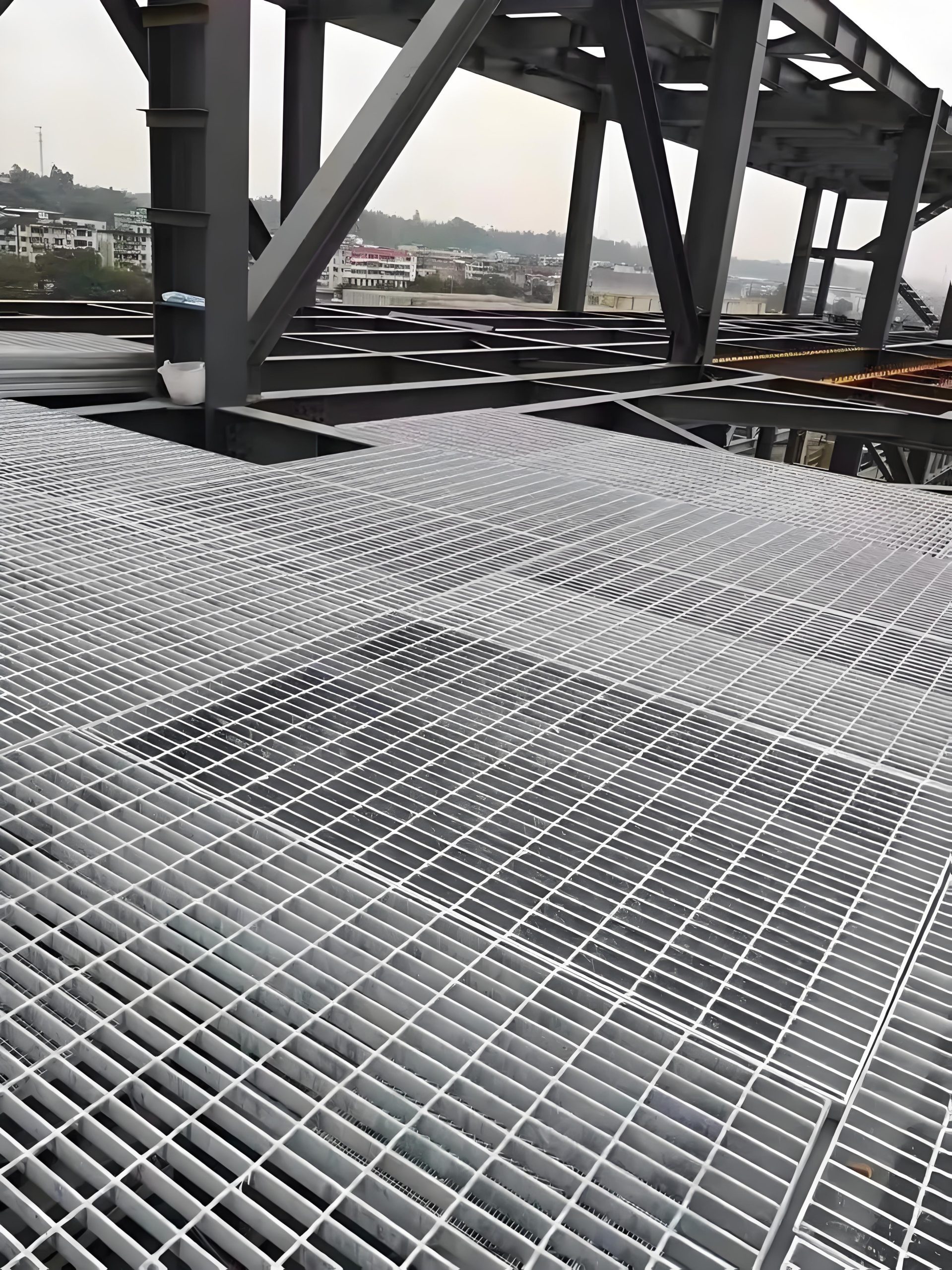
This type of grating is often installed in industrial floors, factory trench covers, loading areas, vehicle maintenance areas, logistics centers, power plants, port facilities, mining sites, and heavy equipment platforms. It can be supplied as plain or serrated grating depending on whether anti-slip performance is required.
| Product Type | Main Feature | Typical Application |
|---|---|---|
| Standard galvanized steel grating | Moderate load capacity and economical weight | Walkways, platforms, stairs, drainage covers |
| Heavy duty galvanized steel grating | Higher load capacity with deeper and thicker bearing bars | Forklift areas, vehicle zones, heavy platforms, road trench covers |
| Serrated heavy duty grating | High load capacity with improved anti-slip surface | Outdoor vehicle access, wet industrial floors, sloped areas |
| Framed heavy duty trench grating | Strong support frame and removable cover design | Drainage channels, cable trenches, roadside covers |
Heavy duty galvanized steel grating is made from several structural parts. Each part affects the final strength, stability, installation method, and service life of the grating panel. The main components include bearing bars, cross bars, edge banding, welded joints, surface coating, and sometimes frames or fixing accessories.
Bearing bars are the most important load-carrying members. In heavy duty grating, these bars are usually deeper and thicker than those used in ordinary walkway grating. Common heavy duty bearing bars may include 40 x 5 mm, 50 x 5 mm, 60 x 5 mm, 65 x 5 mm, 75 x 6 mm, or other customized sizes depending on the load requirement.
Cross bars hold the bearing bars in position and keep the panel stable. They are normally welded or mechanically locked to the bearing bars. Although cross bars are not the main load-carrying elements, they help maintain the grid shape and improve overall rigidity.
Heavy duty panels often require stronger edge banding. Banding closes the panel edge, protects open bar ends, improves handling safety, and helps transfer load in certain framed applications. For trench covers and road covers, banding is usually important.
After welding and fabrication, the entire grating panel is hot-dip galvanized. The zinc coating covers bearing bars, cross bars, welded joints, cut edges, and banding bars. This improves corrosion resistance in outdoor, humid, industrial, and drainage environments.
| Component | Function | Heavy Duty Requirement |
|---|---|---|
| Bearing bar | Carries the main load | Deeper and thicker than standard grating |
| Cross bar | Connects bearing bars and stabilizes the grid | Strong welds and proper spacing are required |
| Edge banding | Protects edges and improves panel integrity | Often heavier for trench covers and vehicle areas |
| Welded joints | Keep bars firmly connected | Must resist vibration, impact, and repeated loading |
| Galvanized coating | Protects steel from corrosion | Important for outdoor and drainage applications |
| Fixing accessories | Secure panels to support structures | Must match heavy load and site conditions |
The main difference between heavy duty steel grating and standard steel grating is the load level they are designed to handle. Standard grating is mostly used for pedestrian access and general platform flooring. Heavy duty grating is designed for stronger loads, wheel traffic, equipment movement, and more demanding support conditions.
Heavy duty grating uses larger bearing bars. This is the most direct reason for its higher load capacity. A standard platform grating may use 30 x 3 mm or 30 x 5 mm bearing bars, while heavy duty grating often uses 40 x 5 mm, 50 x 5 mm, 60 x 5 mm, or heavier bars.
Heavy duty galvanized steel grating is much heavier than ordinary grating. The higher weight comes from larger bearing bars, closer spacing, heavier banding, and stronger fabrication. This affects transportation, installation, support design, and total project cost.
Standard grating is usually designed for pedestrian loads or light maintenance traffic. Heavy duty grating may need to carry wheel loads, forklift loads, concentrated loads, or heavy equipment parts. The load may be repeated many times during service, so fatigue, deformation, and weld quality need attention.
Heavy duty grating requires stronger support beams, frames, or ledges. A heavy grating panel cannot perform correctly if the support structure is weak, too narrow, or poorly aligned. The support design is just as important as the grating specification.
| Comparison Item | Standard Galvanized Steel Grating | Heavy Duty Galvanized Steel Grating |
|---|---|---|
| Main use | Walkways, platforms, stairs, light covers | Vehicle areas, forklift zones, heavy trench covers, industrial floors |
| Bearing bar size | Usually smaller | Deeper and thicker bearing bars |
| Weight | Lower to medium | Medium to very heavy |
| Load condition | Pedestrian and light maintenance loads | Wheel loads, concentrated loads, heavy equipment loads |
| Support requirement | General platform supports | Stronger beams, frames, or trench ledges |
| Cost | More economical | Higher due to steel weight and fabrication strength |
Hot-dip galvanizing is widely used for heavy duty steel grating because many heavy-duty applications are exposed to moisture, outdoor weather, road runoff, industrial dust, drainage water, and corrosive conditions. The zinc coating helps protect the carbon steel structure from rust and extends service life.
Heavy duty steel grating is usually galvanized after welding, cutting, banding, and drilling. This is important because cut edges and welded joints are more vulnerable to corrosion. Hot-dip galvanizing after fabrication helps cover these areas with zinc coating.
Heavy duty galvanized grating is commonly used outdoors, in drainage channels, around industrial equipment, at ports, in power plants, and on factory roads. These areas often face rain, humidity, mud, oil, and mechanical wear. Galvanizing gives the grating better corrosion resistance than untreated carbon steel.
Hot-dip galvanized grating is lower maintenance than painted steel in many outdoor environments. However, heavy traffic and wheel movement may gradually wear the surface. Areas with coating damage should be inspected and repaired when necessary, especially in corrosive environments.
| Environment | Corrosion Risk | Galvanized Grating Benefit |
|---|---|---|
| Indoor factory floor | Low to medium | Provides long service life with limited maintenance |
| Outdoor vehicle area | Medium | Protects steel from rain and moisture |
| Drainage trench | Medium to high | Resists water exposure better than untreated steel |
| Port and coastal area | High | Improves protection, but coating requirements should be reviewed carefully |
| Chemical industrial area | High | Material and coating system should be selected according to chemical exposure |
Heavy duty galvanized steel grating is normally produced from carbon steel or mild steel with good weldability and suitable mechanical strength. The exact steel grade may depend on local standards, project requirements, and customer drawings. A reliable factory should confirm the material grade before production, especially for heavy-duty or vehicle-access projects.
Carbon steel is the most common material for heavy duty galvanized grating. It provides high strength, good welding performance, and reasonable cost. After hot-dip galvanizing, it becomes suitable for many outdoor and industrial applications.
Mild steel is widely used for welded steel grating because it is easy to cut, weld, form, and galvanize. It is suitable for many heavy-duty platform and trench cover applications when the correct bearing bar size and spacing are selected.
For heavy-duty projects, structural steel grades may be specified by the project engineer. The factory should match the required grade and provide material certificates if requested. This is especially important for ports, bridges, industrial plants, and projects where load safety is critical.
Although galvanized carbon steel is common, stainless steel heavy duty grating may be used in highly corrosive environments such as chemical plants, food processing areas, marine platforms, or coastal facilities. Stainless steel costs more, but it may be more suitable when zinc coating is not enough for the environment.
| Material | Main Advantage | Common Use |
|---|---|---|
| Carbon steel | Strong, economical, and suitable for galvanizing | Heavy platforms, trench covers, vehicle areas |
| Mild steel | Good fabrication and welding performance | Welded heavy duty grating and industrial flooring |
| Specified structural steel | Matches engineering design requirements | Ports, bridges, power plants, high-load projects |
| Stainless steel | Better corrosion resistance in harsh environments | Marine, chemical, food, and high-corrosion areas |
Bearing bar height and thickness are the main factors that determine the load capacity of heavy duty galvanized steel grating. A deeper bearing bar improves bending strength over longer spans, while a thicker bearing bar improves strength, impact resistance, and durability.
The height of the bearing bar is critical for load performance. A higher bearing bar can resist bending more effectively. For example, a 60 mm high bearing bar can usually handle a heavier load or longer span than a 40 mm high bearing bar when the thickness and spacing are similar.
Thickness also matters. A 50 x 5 mm bar is stronger and heavier than a 50 x 3 mm bar. For heavy duty grating, 5 mm, 6 mm, 8 mm, or thicker bearing bars may be used depending on the load requirement. Thicker bars also provide better resistance against repeated wheel pressure and local deformation.
For heavy duty applications, strength alone is not enough. Deflection must also be controlled. If grating bends too much under a forklift or vehicle load, it may feel unsafe, create noise, damage the galvanized coating, or reduce service life. Correct bearing bar selection helps reduce deflection.
| Bearing Bar Size | Relative Load Level | Typical Application |
|---|---|---|
| 30 x 5 mm | Medium | Stronger platforms and industrial walkways |
| 40 x 5 mm | Medium to heavy | Heavy maintenance platforms and trench covers |
| 50 x 5 mm | Heavy | Forklift areas, heavy covers, longer spans |
| 60 x 5 mm | Heavy | Vehicle-access grating and strong industrial flooring |
| 65 x 5 mm | Heavy to very heavy | Road trench covers and loading areas |
| 75 x 6 mm or heavier | Very heavy | Special high-load projects and heavy equipment zones |
Bearing bar spacing affects the number of load-carrying bars in the panel. For heavy duty galvanized steel grating, spacing must be selected carefully because it influences load capacity, wheel contact, open area, weight, and cost.
Closer spacing means more bearing bars per square meter. This improves load distribution and helps support wheel loads more effectively. It also reduces the open gap between bars, which can be important for smaller wheels, pallet trucks, and areas with frequent vehicle movement.
Wider spacing reduces weight and cost but may not be suitable for heavy wheel loads or small tire contact areas. If the spacing is too wide, wheels may concentrate pressure on fewer bars, increasing the risk of deformation or uncomfortable movement.
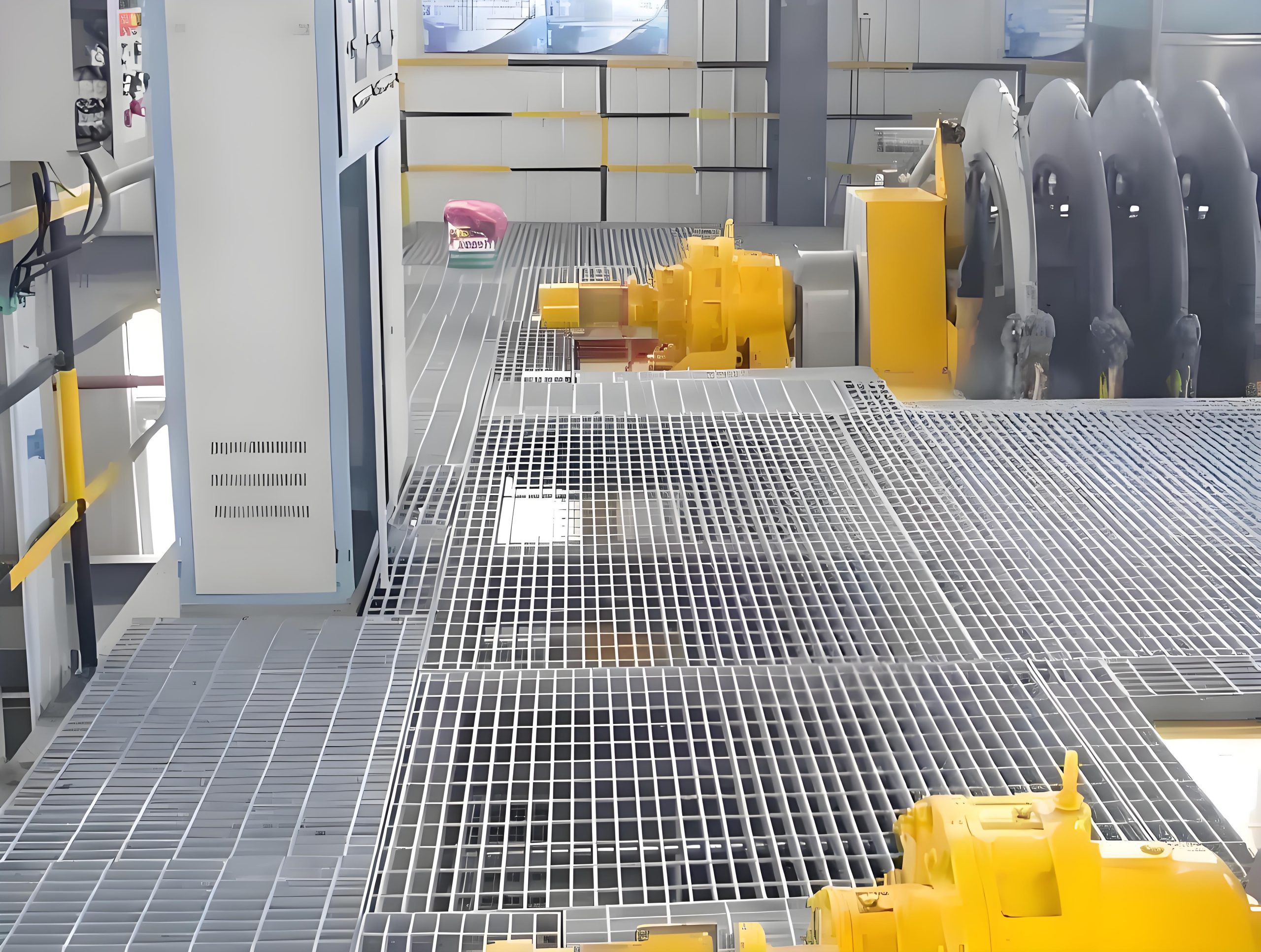
For forklift or vehicle areas, the tire size, wheel load, contact area, traffic frequency, and direction of travel should be considered. A grating specification that is acceptable for pedestrian loads may not be safe for repeated wheel loading.
| Bearing Bar Spacing | Heavy Load Performance | Common Use |
|---|---|---|
| 25 mm | Higher load distribution and smaller openings | Special heavy-duty areas and small wheel traffic |
| 30 mm | Strong and commonly used | Industrial platforms, trench covers, forklift zones |
| 34 mm | Balanced performance and open area | General heavy-duty galvanized grating |
| 40 mm | Lower weight but larger openings | Drainage and areas where load conditions allow wider spacing |
Cross bar spacing affects the overall stability of heavy duty galvanized steel grating. Although the bearing bars carry the main load, cross bars keep the grid aligned and help resist movement during handling, installation, and service.
Heavy duty grating panels are often exposed to vibration, impact, and repeated movement from vehicles or equipment. Proper cross bar spacing helps maintain bar alignment and prevents the panel from feeling loose or unstable.
Cross bars do not replace bearing bar strength, but they help maintain structural consistency. If cross bars are too weak or poorly welded, the panel may deform, twist, or develop loose areas under repeated loading.
Common cross bar spacing includes 50 mm, 76 mm, and 100 mm. Heavy-duty applications may use closer spacing when stability is important, especially for trench covers, stair treads, and areas with frequent movement.
| Cross Bar Spacing | Stability Effect | Recommended Use |
|---|---|---|
| 50 mm | Denser grid and stronger stability feel | Heavy-duty covers, stair treads, special industrial grating |
| 76 mm | Balanced stability and cost | General heavy-duty platforms and factory flooring |
| 100 mm | Common industrial spacing with lower material use | Heavy-duty areas where bearing bars provide sufficient support |
Heavy duty galvanized steel grating specifications are usually described by bearing bar size, bearing bar spacing, cross bar spacing, panel size, surface type, edge treatment, and load requirement. Unlike light walkway grating, heavy duty grating should not be selected by panel size alone. The load condition and support span must be confirmed first.
Common heavy duty bearing bar sizes may include 40 x 5 mm, 50 x 5 mm, 60 x 5 mm, 65 x 5 mm, 75 x 6 mm, and customized larger sizes. The exact specification depends on the span, wheel load, load frequency, and support design.
Panel widths may include 500 mm, 600 mm, 750 mm, 900 mm, 1000 mm, and 1200 mm. Panel lengths may range from 500 mm to 3000 mm for trench covers and from 1000 mm to 6000 mm for platform panels, depending on handling, galvanizing, and transportation limits.
Heavy duty grating can be plain or serrated. Plain surface is suitable for dry areas or where easy cleaning is important. Serrated surface is better for wet, oily, outdoor, or sloped areas where traction is required.
| Specification Item | Common Options | Selection Advice |
|---|---|---|
| Bearing bar size | 40 x 5 mm, 50 x 5 mm, 60 x 5 mm, 65 x 5 mm, 75 x 6 mm or customized | Select according to span and load |
| Bearing bar spacing | 25 mm, 30 mm, 34 mm, 40 mm | Closer spacing improves load distribution |
| Cross bar spacing | 50 mm, 76 mm, 100 mm | Choose based on stability and project standard |
| Panel width | 500 mm to 1200 mm or customized | Match support structure and lifting method |
| Panel length | 500 mm to 6000 mm or customized | Confirm span, handling, and galvanizing capacity |
| Surface | Plain or serrated | Use serrated surface for wet or slippery areas |
Vehicle traffic, forklift areas, and heavy platforms require more careful design than pedestrian walkways. The grating must support not only the total load but also concentrated wheel pressure. Repeated wheel movement can create stress on bearing bars, welded joints, coating surfaces, and support frames.
For vehicle-access grating, tire load, vehicle weight, wheelbase, contact area, speed, traffic direction, and impact factor should be considered. The grating must be designed with enough bearing bar strength and proper support spacing.
Forklifts can create high concentrated loads because the wheel contact area is relatively small and the load may be repeated many times. Forklift zones often require heavy bearing bars, closer spacing, strong support frames, and careful fixing. The grating should not rock or shift during wheel movement.
Heavy platforms may support equipment parts, maintenance tools, pumps, motors, valves, or temporary loads. Even if vehicles do not pass over the platform, concentrated loads from maintenance work may require heavier grating than ordinary walkway panels.
In real use, loads are not always static. Vehicles may brake, turn, or move unevenly. Forklifts may create impact when entering a trench cover or platform edge. These dynamic conditions should be considered when selecting heavy duty galvanized steel grating.
| Load Condition | Design Concern | Recommended Focus |
|---|---|---|
| Pedestrian plus tools | Moderate load and walking comfort | Medium to heavy bearing bars depending on span |
| Pallet truck traffic | Small wheels and repeated movement | Closer bearing bar spacing and smooth support |
| Forklift traffic | High concentrated wheel loads | Heavy bearing bars, strong support frame, secure fixing |
| Vehicle access | Wheel load, impact, and traffic direction | Engineering load calculation and strong support design |
| Heavy equipment platform | Point loads and maintenance loads | Deflection control and proper bearing bar size |
Heavy duty galvanized steel grating is widely used for drainage trench covers and road trench covers because it allows water drainage while supporting heavy loads. These covers may be installed in factories, warehouses, loading yards, roadsides, parking areas, logistics centers, ports, and municipal utility zones.
Industrial drainage covers need to support workers, carts, forklifts, and sometimes small vehicles. The grating must be strong enough for the expected load and easy enough to remove for cleaning or inspection. Shorter panel lengths can reduce piece weight and make maintenance easier.
Road trench covers require stronger design because vehicles may pass over them frequently. Bearing bar size, frame design, support ledge, panel length, fixing method, and anti-noise treatment are all important. If the grating moves during vehicle traffic, it can create noise, damage, and safety problems.
One advantage of grating covers is the open area. Water can pass through the grid quickly. However, the opening size must still be balanced with wheel safety, walking safety, and load capacity. In some public areas, the opening should be small enough to reduce risks for pedestrians and small wheels.
Drainage trench covers are often removable. Heavy duty grating panels may need lifting holes, handles, hinged systems, or panel numbers. Since the panels can be heavy, the design should consider how maintenance workers will remove and reinstall them safely.
| Cover Type | Common Requirement | Recommended Grating Feature |
|---|---|---|
| Factory drainage cover | Drainage, forklift resistance, corrosion protection | Heavy bearing bars and hot-dip galvanizing |
| Road trench cover | Vehicle load and stable support | Heavy-duty grating with strong frame and secure fixing |
| Loading yard cover | Repeated wheel load and impact | Closer spacing, strong welding, and anti-shift installation |
| Municipal drainage cover | Public safety and easy maintenance | Controlled opening size and removable panel design |
Heavy duty galvanized steel grating is used in demanding industrial environments where strength, drainage, corrosion resistance, and long service life are required. Ports, mines, power plants, logistics yards, steel mills, cement plants, and petrochemical facilities often need grating that can handle more than normal pedestrian traffic.
Ports need grating for platforms, drainage covers, loading zones, maintenance walkways, and equipment access areas. These environments often face moisture, salt air, mechanical impact, and heavy movement. Hot-dip galvanizing helps improve corrosion resistance, while heavy bearing bars handle higher loads.
Mines require durable flooring and covers that can resist impact, abrasion, mud, and heavy equipment use. Heavy duty grating is often selected for screening areas, equipment platforms, drainage channels, and maintenance access.
Power plants use heavy duty galvanized grating around boilers, turbines, cooling systems, pipe racks, service platforms, and drainage areas. The grating must support maintenance workers, tools, and equipment components while providing drainage and ventilation.
Industrial facilities use heavy duty grating for loading areas, vehicle channels, floor openings, trench covers, machine platforms, and service walkways. The grating must match actual traffic conditions, not only the drawing size.
| Industry | Common Use | Key Requirement |
|---|---|---|
| Port | Loading zones, drainage covers, equipment access | Corrosion resistance and heavy load capacity |
| Mining | Platforms, drainage channels, heavy covers | Impact resistance and strong structure |
| Power plant | Maintenance platforms, pipe rack access, trench covers | Load capacity, ventilation, and corrosion protection |
| Steel mill | Heavy-duty flooring and service areas | High strength and resistance to harsh site conditions |
| Logistics yard | Forklift areas and drainage covers | Wheel load resistance and stable installation |
The manufacturing process of heavy duty galvanized steel grating must be well controlled because the product carries high loads. Poor welding, inaccurate spacing, weak banding, or poor galvanizing can cause installation problems and reduce service life.
The factory first prepares bearing bars, cross bars, banding bars, and any required frame materials. Material grade, bar size, straightness, surface condition, and dimensional tolerance should be checked before production. Heavy duty grating needs stable raw material quality because small defects may become serious under high loads.
Bearing bars and cross bars are cut according to the required panel size. For heavy-duty custom panels, the factory must confirm bearing bar direction, panel number, opening size, support span, and drawing details before welding.
Cross bars are welded to bearing bars to form a rigid grid. Heavy duty grating requires strong welds because the panel may experience vibration, impact, and repeated loading. Welding quality should be checked to prevent loose bars, weak joints, or uneven structure.
Heavy duty panels often need stronger banding or frames. For trench covers, edge bars, support frames, or angle frames may be fabricated together with the grating system. Correct framing helps transfer load and improves installation stability.
Panels may require cut-outs for pipes, columns, drains, lifting holes, bolt holes, or installation accessories. It is better to finish most fabrication before galvanizing so that cut edges and welded areas can be protected by the zinc coating.
After fabrication, the panels are cleaned and hot-dip galvanized. Because heavy duty panels are thicker and heavier, galvanizing handling must be planned carefully. Hanging points, drainage holes, zinc flow, and distortion control should be considered.
The finished panels should be inspected for dimensions, diagonal tolerance, welding quality, flatness, coating coverage, sharp zinc buildup, blocked openings, panel markings, and packing condition.
| Production Step | Main Control Point | Purpose |
|---|---|---|
| Material preparation | Steel grade, bar size, straightness | Ensure stable load performance |
| Cutting | Length, width, bearing bar direction | Match project drawing and support layout |
| Welding | Weld strength and cross bar position | Improve rigidity and service safety |
| Banding | Edge strength and panel shape | Improve handling and load transfer |
| Galvanizing | Coating coverage and distortion control | Improve corrosion resistance |
| Inspection | Dimensions, flatness, coating, quantity | Reduce installation and quality problems |
Heavy duty galvanized steel grating must be installed correctly to perform safely. The grating panel, fixing system, and support structure work together. Even a strong panel can fail to perform if the support ledge is too small, the bearing bars are placed in the wrong direction, or the fixing method is weak.
The bearing bars must span between structural supports. This is one of the most important installation rules. If the panel is rotated incorrectly, the cross bars may be forced to carry load, which can reduce the actual capacity and create safety risks.
Heavy duty grating needs sufficient bearing length on the support structure. For trench covers, both sides of the panel must sit securely on ledges or frames. For platforms, support beams should match the panel layout and load direction.
Fixing clips can be used when panels need to be removable. Heavy duty clips should match the panel size, load condition, and support structure. For areas with vibration, wheel movement, or outdoor exposure, clips should be checked regularly.
Welding provides strong permanent fixing. It may be used for fixed platforms where panels do not need to be removed. After welding, damaged galvanized coating should be repaired to reduce corrosion risk.
Bolted installation is common for heavy trench covers, stair treads, and framed grating panels. Frames help support the panel and transfer load to the surrounding structure. Bolted systems can also reduce movement and noise in vehicle areas.
In vehicle or road applications, panel movement can cause noise, impact, and wear. Proper fixing, stable frames, rubber pads, anti-vibration design, or accurate panel fit may be required depending on the project.
| Installation Item | Requirement | Reason |
|---|---|---|
| Bearing bar direction | Must span between supports | Ensures correct load performance |
| Support ledge | Must be wide and strong enough | Prevents unsafe bearing and edge failure |
| Fixing clips | Should match heavy-duty use | Prevents panel movement and lifting |
| Welded points | Should be repaired after welding | Protects damaged galvanized coating |
| Frame system | Should match load and panel size | Improves load transfer and installation stability |
| Panel gap | Should be controlled | Reduces movement, noise, and trip hazards |
The price of heavy duty galvanized steel grating is mainly affected by steel weight, bearing bar size, spacing, cross bar design, panel dimensions, hot-dip galvanizing cost, custom fabrication, load requirements, order quantity, and packing method. Since heavy duty grating uses more steel than ordinary grating, its price is usually higher.
Steel weight is the largest cost factor. Deeper and thicker bearing bars increase material cost, galvanizing cost, and freight cost. A heavy-duty specification may weigh much more per square meter than standard platform grating.
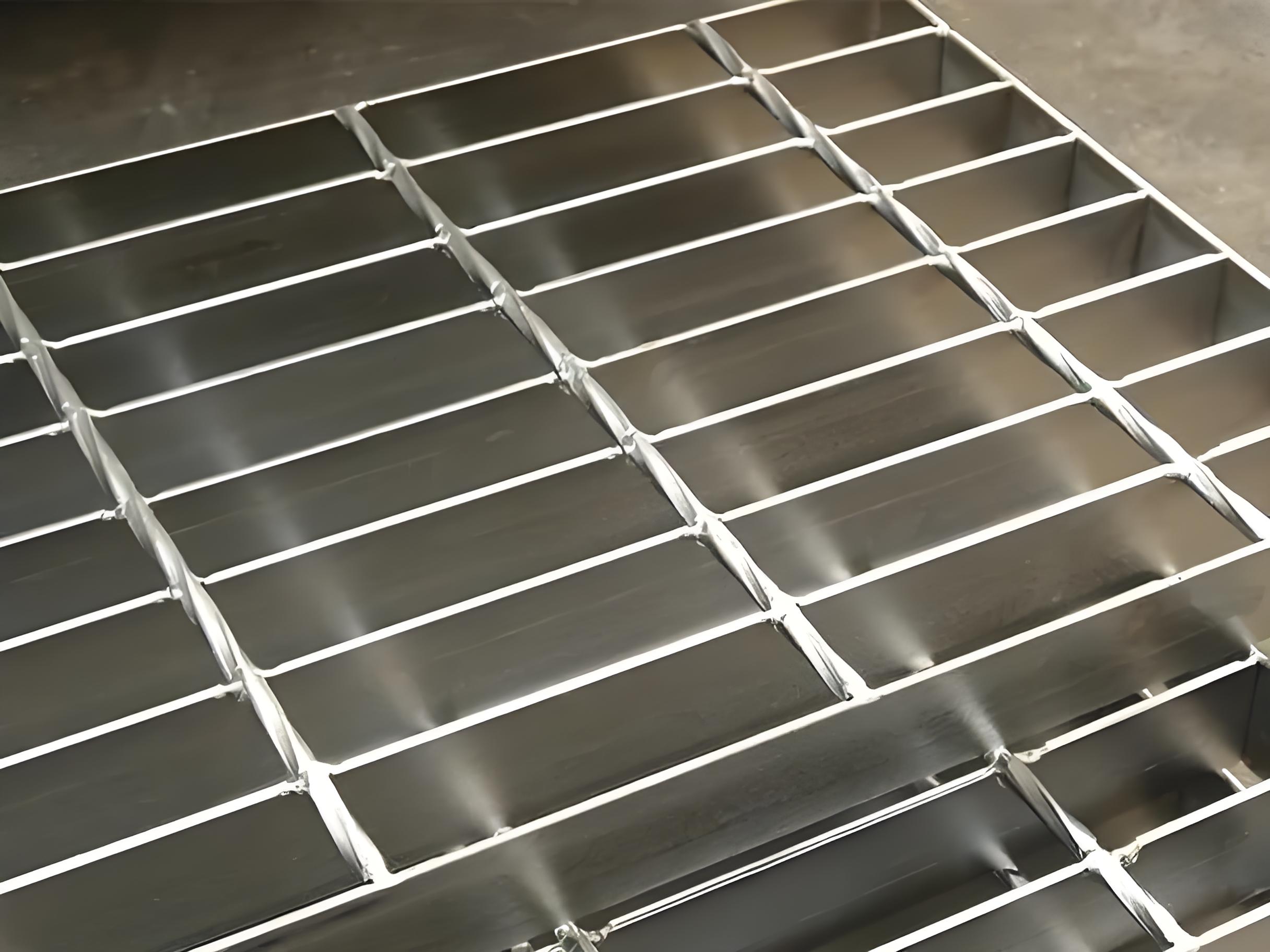
Larger bearing bars and closer spacing both increase steel consumption. For example, 50 x 5 mm bearing bars at 30 mm spacing will cost more than lighter bars at wider spacing. However, reducing bar size only to lower price may create safety problems if the load requirement is high.
Serrated heavy duty grating may cost more than plain grating because the bearing bars need serrated processing. Serrated surface is often worth the cost in wet, oily, outdoor, or sloped vehicle areas.
Galvanizing cost is influenced by panel weight, surface area, zinc consumption, coating requirement, and local galvanizing conditions. Heavy duty grating is heavier, so galvanizing cost is naturally higher than lighter grating.
Custom sizes, frames, lifting holes, bolt holes, notches, reinforced banding, toe plates, side plates, and anti-noise designs increase labor and processing cost. But accurate factory fabrication can reduce site cutting and improve installation efficiency.
Heavy duty galvanized steel grating is heavy, so transportation cost can be significant. Export orders may require strong steel pallets, careful bundling, panel marking, forklift loading, and container loading plans.
| Price Factor | Cost Impact | Buyer Advice |
|---|---|---|
| Bearing bar size | Larger bars increase steel weight and price | Select according to actual load and span |
| Bar spacing | Closer spacing increases material use | Use closer spacing where wheel load or safety requires it |
| Cross bar spacing | Closer spacing adds material and welding work | Balance stability and cost |
| Galvanizing | Adds zinc and processing cost | Important for outdoor and drainage applications |
| Custom fabrication | Frames, holes, and special shapes increase labor | Provide clear drawings before quotation |
| Panel weight | Affects freight, handling, and installation cost | Confirm kg/m² and kg/piece before ordering |
| Order quantity | Larger orders may reduce unit processing cost | Combine project quantities when possible |
Choosing a reliable heavy duty galvanized steel grating factory is important because the product is used in high-load areas where failure, deformation, or poor installation can create serious problems. A qualified factory should understand load requirements, steel grating structure, welding quality, galvanizing control, custom drawings, packaging, and export delivery.
A factory that mainly produces light walkway grating may not always have enough experience with heavy-duty vehicle grating or road trench covers. Heavy duty projects require stronger welding, better dimensional control, heavier raw material handling, and more careful support design communication.
A reliable factory should ask about clear span, load type, wheel load, traffic frequency, support ledge, bearing bar direction, and installation method. If a supplier quotes heavy duty grating without asking these details, the quotation may not be reliable.
Heavy duty grating often needs custom drawings, panel numbers, frames, cut-outs, bolt holes, lifting holes, and installation marks. The factory should be able to read drawings and turn them into production details.
Welding quality is critical for heavy duty grating. The factory should control weld strength, bar alignment, cross bar position, edge banding, and overall panel flatness. Poor welding can lead to loose bars, deformation, noise, or early failure.
Hot-dip galvanizing should cover the full panel, including welded joints and cut edges. The factory should inspect coating coverage, zinc buildup, sharp points, blocked openings, and damaged areas before shipment.
Heavy duty grating panels are heavy and can damage each other during transportation if they are poorly packed. The factory should provide strong bundling, proper lifting points, clear marks, packing lists, and loading photos when required.
For steel grating buyers who need factory-based supply, Anping County Chuansen Silk Screen Products Co., Ltd. can be considered when evaluating customized galvanized steel grating, trench covers, walkway grating, and heavy-duty grating production. Buyers should still confirm project drawings, load requirements, material specifications, galvanizing requirements, and packing details before placing an order.
| Factory Selection Point | What to Check |
|---|---|
| Heavy-duty production capability | Ability to process thick bearing bars, heavy panels, frames, and custom covers |
| Technical communication | Understanding of load, span, bearing bar direction, and support conditions |
| Drawing support | CAD processing, panel numbering, cut-outs, bolt holes, and layout confirmation |
| Welding control | Strong welds, stable grid, accurate spacing, and flatness control |
| Galvanizing control | Good zinc coverage, clean surface, and coating inspection |
| Packing and shipment | Strong bundles, lifting safety, clear labels, and export loading experience |
What is heavy duty galvanized steel grating used for?
Heavy duty galvanized steel grating is used for vehicle access areas, forklift zones, loading platforms, heavy industrial floors, drainage trench covers, road covers, ports, mines, power plants, and factory areas where ordinary walkway grating may not provide enough load capacity. It is selected when the project needs higher strength, corrosion resistance, drainage, and long service life.
How is heavy duty grating different from standard steel grating?
Heavy duty grating uses deeper and thicker bearing bars, stronger welding, heavier edge banding, and often stronger support requirements. Standard steel grating is usually suitable for pedestrian walkways and light platforms, while heavy duty galvanized steel grating is designed for wheel loads, concentrated loads, longer spans, and demanding industrial applications.
How do I choose the right heavy duty galvanized steel grating size?
To choose the right heavy duty galvanized steel grating size, confirm the clear span, load type, wheel load, traffic frequency, bearing bar direction, bearing bar size, spacing, cross bar spacing, support ledge, surface type, and installation method. For forklift or vehicle areas, the grating should be selected based on actual wheel load and support design, not only panel length and width.
