

Heavy-duty stainless steel grating is designed for applications where ordinary floor grating is not enough. It is used where high uniform loads, concentrated equipment loads, rolling loads, corrosion exposure, washdown conditions, hygiene requirements, or long service life justify a stronger and more corrosion-resistant grating system. Factory price is driven mainly by stainless grade, bearing bar size, mesh spacing, panel weight, fabrication method, finish, quantity, and project documentation. For budget planning, heavy-duty 304 stainless steel grating commonly costs more than carbon steel by a wide margin, while 316 or 316L grating adds another level of cost for improved resistance to chlorides and aggressive environments.
Heavy-duty stainless steel grating is not defined by one fixed bearing bar size or one material grade. A 40 x 5 mm stainless bearing bar may be heavy duty in one application and insufficient in another if the span is longer, the support condition is weaker, or the grating must carry wheel loads instead of pedestrian traffic. The correct designation depends on the complete structural situation.
In practical factory and engineering terms, stainless grating becomes heavy duty when it is designed around higher-than-normal loading conditions. These can include equipment access floors, wastewater treatment platforms, chemical plant walkways, heavy trench covers, marine structures, loading bays, bridge maintenance decks, vehicle-access areas, industrial ramps, and service platforms that carry tools, machinery, or repeated maintenance traffic.
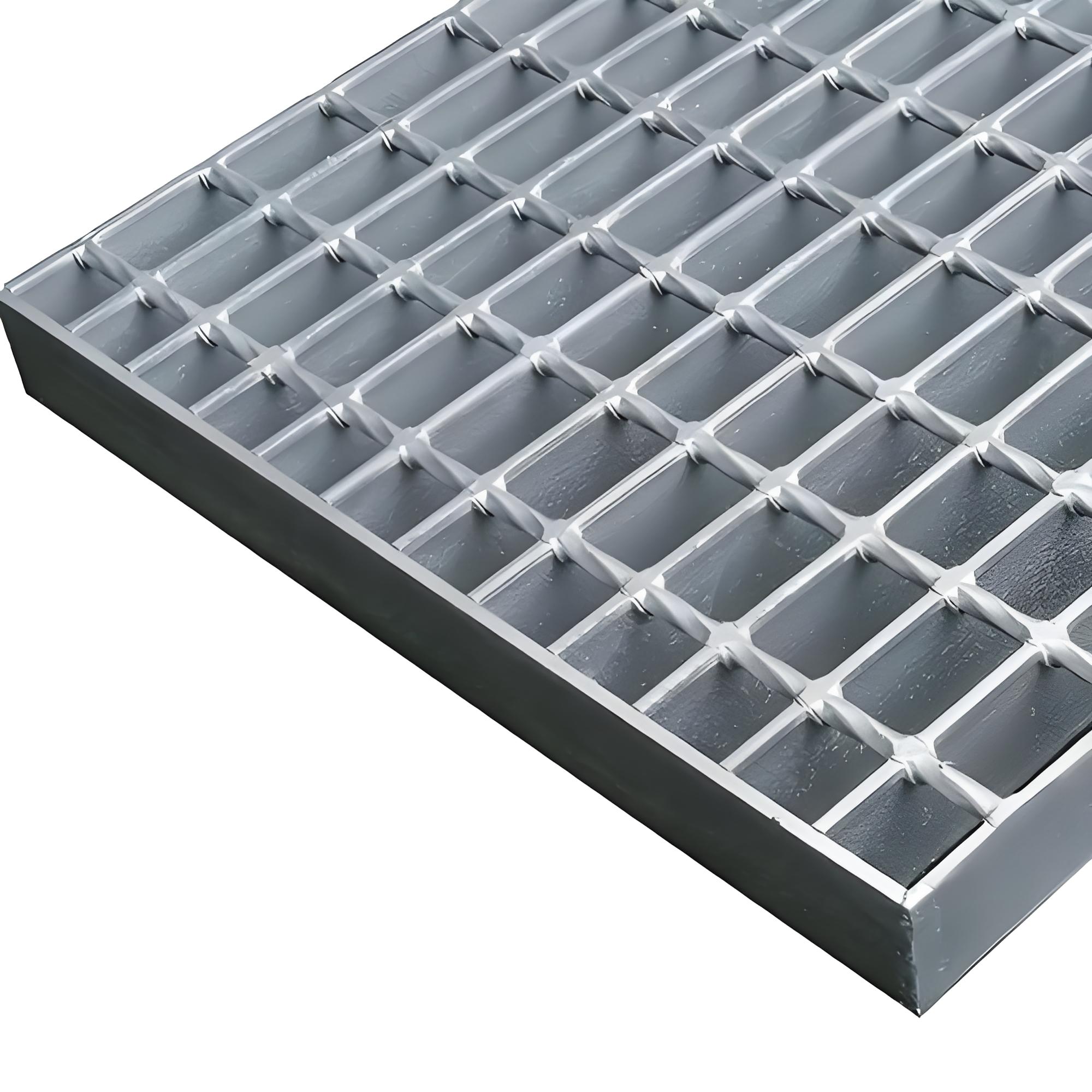
A heavy-duty specification normally considers the bearing bar depth and thickness, bearing bar pitch, cross bar construction, grating span direction, support width, design load, allowable deflection, fabrication details, and corrosion environment. It should not be selected by looking only at the visible top surface or the total panel weight.
| Design Factor | Why It Matters | Typical Heavy-Duty Effect |
|---|---|---|
| Bearing bar depth | Controls bending stiffness across the clear span | Deeper bars are often needed for longer spans and higher loads |
| Bearing bar thickness | Adds steel area and improves local structural capacity | Thicker bars increase weight, cost, and load resistance |
| Bearing bar pitch | Determines how many bearing bars share the load | Closer spacing can improve load distribution but reduces open area |
| Clear span | Defines the unsupported distance between supports | A longer span often requires a larger bearing bar even at the same load |
| Load type | Uniform, point, wheel, impact, and repetitive loads behave differently | Vehicle and equipment loads require project-specific verification |
| Surface condition | Affects worker footing and cleaning requirements | Serrated surfaces may be selected for wet, oily, or outdoor areas |
| Material grade | Controls corrosion resistance and lifecycle performance | 316L is often chosen for chloride-rich or marine exposure |
The phrase “heavy duty” should therefore be treated as an engineering and purchasing description, not as a substitute for a load table. A factory can recommend a suitable grating geometry, but the buyer should provide span, load, support layout, environment, and installation information before finalizing the specification.
Both 304 and 316 stainless steel can be used for heavy-duty grating. The difference between them is primarily corrosion resistance, not basic structural classification. The bearing bar geometry, material thickness, mesh spacing, span, and support conditions determine whether the grating can safely carry the required load. The stainless grade determines how well that structure will survive in its operating environment.
304 stainless steel is a common choice for indoor industrial floors, food processing areas with moderate washdown, pharmaceutical support areas, architectural platforms, water treatment installations with limited chloride exposure, and general factory access systems. It provides good corrosion resistance at a lower cost than 316.
316 and 316L stainless steel contain molybdenum, which improves resistance to pitting and crevice corrosion in chloride-containing environments. For marine docks, coastal installations, salt-handling areas, chemical plant platforms, wastewater facilities, swimming pool surroundings, brine exposure, and aggressive washdown conditions, 316L is often the safer long-term selection. A useful internal reference is this 304 vs 316 stainless steel bar grating guide.
| Material Grade | Typical Use Environment | Heavy-Duty Suitability | Relative Factory Cost |
|---|---|---|---|
| 304 Stainless Steel | Indoor industrial areas, moderate outdoor exposure, food facilities, general washdown areas | Suitable when the bearing bar design meets the required load and span | Lower than 316/316L |
| 316 Stainless Steel | Marine, coastal, chloride-rich, chemical, wastewater, and high-moisture areas | Suitable for demanding loads when specified with the correct bar geometry | Usually higher than 304 |
| 316L Stainless Steel | Welded marine, chemical, food, and corrosive service applications | Often preferred for welded fabrications requiring strong corrosion performance | Usually similar to or slightly above 316, depending on supply |
304 is often the practical choice when corrosion exposure is moderate and the main need is a clean, durable, non-galvanized grating system. For an indoor machine platform, processing floor, brewery access walkway, plant mezzanine, or architectural service stair, 304 can provide long service life without paying for a corrosion grade that the environment does not require.
Using 316L everywhere can raise project cost substantially. The higher alloy content affects raw material cost, factory inventory, welding consumables, fabrication planning, scrap value, and sometimes lead time. If the project does not involve chlorides, saline water, aggressive cleaning chemicals, or corrosive process liquids, 304 may provide the better balance of performance and price.
316L is commonly justified where failure, staining, pitting, difficult replacement, or unplanned shutdown would cost more than the initial material upgrade. Marine platforms, offshore structures, wastewater plants, chemical transfer areas, desalination facilities, coastal walkways, seafood processing floors, and installations exposed to salt-laden air often benefit from 316L.
Even 316L is not resistant to every chemical or every chloride condition. Strong acids, hot chlorides, stagnant deposits, crevices under gaskets, and poorly drained salt solutions can damage stainless steel. For chemical projects, the factory should receive information about the chemical medium, concentration, temperature, cleaning method, splash frequency, immersion conditions, and expected service life.
Heavy-duty stainless steel grating can be welded, press-locked, or riveted. Each construction method produces a different appearance, cost structure, fabrication process, and load behavior. None should be selected simply because it is labeled stronger or more premium. The correct option depends on loading, environment, architectural requirements, cleaning needs, and project budget.
| Grating Type | Construction Method | Common Advantages | Typical Heavy-Duty Use |
|---|---|---|---|
| Welded Stainless Grating | Cross bars are resistance welded or otherwise welded to bearing bars | Rigid construction, efficient production, strong industrial appearance | Platforms, floors, trench covers, stairs, process plants, outdoor access systems |
| Press-Locked Stainless Grating | Pre-notched bars are mechanically locked together under pressure | Flush surface, clean appearance, flexible mesh options, architectural finish | Food facilities, architectural platforms, clean areas, pedestrian decks, specialty layouts |
| Riveted Stainless Grating | Bars are connected through mechanical rivets and formed reticulated bars | Good performance for repetitive and rolling load applications | Bridge decks, ramps, traffic areas, specialty industrial access systems |
Welded grating is widely used because it provides a rigid panel and can be produced efficiently for industrial projects. In a typical welded design, the bearing bars run in the load-bearing direction while cross bars are welded across them at a defined pitch. The bearing bars carry the main span load, while the cross bars maintain spacing and help distribute local loads.
For stainless steel, weld quality and post-fabrication cleaning are especially important. Heat tint, welding scale, carbon steel contamination, and rough weld areas can reduce corrosion performance or create difficult-to-clean areas. When corrosion resistance is critical, the specification may require cleaning, pickling, passivation, or a controlled surface treatment after welding and fabrication.
Press-locked grating is made by slotting the bearing bars and cross bars, then pressing them together under controlled force. The surface can appear more uniform and architectural than standard welded bar grating. It is commonly used where visual quality, flush walking surfaces, hygiene, close mesh, or special panel patterns are important.
For heavy-duty work, press-locked grating must still be evaluated using the actual bearing bar size, spacing, span, and manufacturer load data. A decorative-looking press-locked panel is not automatically suitable for machinery or vehicle loads. Larger bearing bars, stronger interlocking profiles, closer mesh, and reinforced edge details may be needed for demanding service.
Riveted grating is generally used for special heavy-duty conditions, particularly where repeated rolling loads, vibration, vehicle movement, or bridge deck service are involved. The mechanical connection pattern can provide a robust system when designed correctly. Riveted stainless grating is often more labor-intensive than welded grating and may have a higher factory price, especially in 316L.
It is useful for buyers to separate ordinary pedestrian grating from true rolling-load grating. A forklift, pallet jack, service truck, maintenance cart, or wheeled equipment can introduce concentrated loads that behave very differently from a person standing on a platform. Riveted construction may be appropriate in some of these cases, but the final decision should be based on the actual wheel data and support arrangement.
Bearing bars are the primary structural members in bar grating. They run from one support to another and carry the main bending load. In a heavy-duty stainless steel grating specification, bearing bar height, thickness, and pitch are usually the most important dimensions affecting weight and price.
A bearing bar written as 40 x 5 mm means that the bar is approximately 40 mm deep and 5 mm thick. The 40 mm dimension generally affects stiffness more strongly because it increases the depth of the structural section. The 5 mm thickness increases the steel area and improves capacity, but it also adds material cost rapidly when many bars are used per square meter.
| Nominal Bearing Bar Size | Steel Area per Bar | Typical Use Direction | Factory Cost Effect |
|---|---|---|---|
| 30 x 5 mm | 150 mm2 | Shorter spans, medium industrial loads, close support layouts | Lower than larger heavy-duty bars |
| 40 x 5 mm | 200 mm2 | Industrial platforms, plant floors, heavier walkway requirements | Common heavy-duty starting point |
| 50 x 5 mm | 250 mm2 | Longer spans and higher industrial load conditions | Noticeably higher steel weight per square meter |
| 60 x 6 mm | 360 mm2 | Heavy plant floors, large trench covers, demanding maintenance access | Higher material and handling cost |
| 75 x 8 mm | 600 mm2 | Special high-load, long-span, or vehicle-related applications | Usually made to order |
| 100 x 10 mm | 1,000 mm2 | Very heavy project-specific applications | Requires detailed engineering and special fabrication planning |
Increasing bearing bar depth can significantly improve stiffness over a clear span. This is why a 50 x 5 mm bearing bar may perform very differently from a 30 x 5 mm bar, even though the thickness is the same. When a project requires a long unsupported span, increasing depth is often more efficient than simply increasing thickness.
However, deeper bars also create a deeper grating panel. This can affect frame depth, stair transitions, drainage channel details, support angles, door clearances, and installation weight. A larger bar is not always the best answer if the panel can instead be supported at a closer spacing.
Thickness increases steel area and can help with load capacity, local bending, durability, and resistance to damage. It also has a direct effect on material consumption. For example, changing from 40 x 5 mm to 40 x 6 mm increases the bearing bar steel area by 20 percent before cross bars, banding, and fabrication are considered.
For stainless steel grating, this additional material has a major price effect because stainless steel is much more expensive than carbon steel. Buyers should avoid specifying oversized bar thickness without checking whether a different support layout, bearing bar depth, or bar pitch could provide the required load performance more economically.
Common bearing bar pitches include approximately 19 mm, 25 mm, 30 mm, and 40 mm. A 30 mm pitch is widely used for industrial flooring and walkways because it offers a balance between drainage, open area, and steel weight. A 19 mm pitch creates a closer mesh and is often used where small wheels, narrow heels, smaller objects, or additional support distribution are important.
Closer bearing bar spacing generally increases the number of load-carrying bars per meter of panel width. It can improve local load distribution and reduce the size of openings, but it also increases stainless consumption, panel weight, fabrication time, and price.
For dimensional reference when comparing specifications, see this steel bar grating dimensions guide.
Cross bars run perpendicular to the bearing bars. They keep the bearing bars at the required spacing, provide walking support between bearing bars, contribute to panel stability, and influence the visible mesh pattern. In normal bar grating, the bearing bars carry the primary span load, but cross bar design still matters for local support, durability, cleaning, fabrication method, and appearance.
| Cross Bar Type | Typical Appearance | Common Use | Selection Consideration |
|---|---|---|---|
| Twisted Square Bar | Square bar with a twisted profile | Welded industrial grating | Good grip and traditional industrial appearance |
| Round Bar | Round surface profile | Some welded and specialty grating designs | Can provide a smoother visible surface |
| Flat Bar | Flat rectangular profile | Press-locked and architectural grating | Supports a flush, more uniform panel appearance |
| Reticulated Bar | Formed corrugated or shaped bar | Riveted grating | Often selected for repeated rolling load systems |
A mesh designation usually shows the bearing bar pitch first and the cross bar pitch second. For example, 30 x 100 mm grating has bearing bars spaced approximately 30 mm center-to-center and cross bars spaced approximately 100 mm center-to-center. The actual clear opening is smaller than the nominal pitch because the bearing bars and cross bars occupy part of the space.
| Mesh Designation | Approximate Bearing Bar Pitch | Approximate Cross Bar Pitch | Typical Selection Reason |
|---|---|---|---|
| 30 x 100 mm | 30 mm | 100 mm | General industrial walkways, platforms, drainage, and process floors |
| 30 x 50 mm | 30 mm | 50 mm | More cross bar support, smaller longitudinal openings, carts and industrial flooring |
| 40 x 100 mm | 40 mm | 100 mm | Higher open area where loading and foot safety permit |
| 19W4 | About 30.2 mm | About 101.6 mm | Common inch-based industrial welded bar grating pattern |
| 19W2 | About 30.2 mm | About 50.8 mm | Closer cross bar spacing for industrial floors and small-wheel traffic |
| 11W4 | About 17.5 mm | About 101.6 mm | Close-mesh pedestrian, heel-conscious, and small-object retention applications |
Mesh size alone does not define heavy-duty capacity. A 30 x 100 mm panel with 30 x 3 mm bearing bars will have a very different load table from a 30 x 100 mm panel with 60 x 6 mm bearing bars. When comparing quotations, buyers should make sure every quote states both the mesh pattern and the full bearing bar size.
Load capacity is one of the most misunderstood parts of heavy-duty grating selection. A panel may be suitable for a uniform pedestrian load but unsuitable for a concentrated wheel load. It may carry a static machine load but not repeated forklift traffic. It may look structurally strong but fail deflection requirements over a long span.
| Load Type | How It Acts on Grating | Information Needed for Design |
|---|---|---|
| Uniform Load | Spread across a broad area of the panel | Load per square meter, span, support arrangement, allowable deflection |
| Concentrated Load | Applied at a limited point or small contact area | Load value, contact area, location on panel, frequency of use |
| Wheel Load | Applied through wheels from carts, forklifts, vehicles, or equipment | Wheel load, tire width, wheelbase, axle load, travel path, speed, impact condition |
| Impact Load | Created by dropped tools, moving equipment, braking, or sudden loading | Object weight, drop height, travel speed, expected frequency, safety factor requirements |
| Repetitive Load | Repeated loading can affect fatigue and connection performance | Cycles per day, equipment type, traffic path, maintenance access pattern |
Uniform load is commonly used for pedestrian walkways, maintenance platforms, mezzanines, and general work floors. The load is assumed to be spread across the panel surface. This is useful for initial selection, but it is not enough where machinery legs, heavy tools, lifting equipment, drums, or wheels create localized load points.
A concentrated load can be much more severe than the same total load spread over a large area. For example, a heavy valve, support leg, machine foot, or maintenance tool box may load only a few bearing bars. The factory or project engineer needs to know the contact area and exact location, especially if the load will sit near the middle of the span.
Forklift and vehicle applications require special care. It is not enough to state that a forklift weighs a certain number of kilograms. The relevant information includes the loaded wheel weight, wheel dimensions, tire type, wheel spacing, route of travel, speed, braking action, impact, support frame stiffness, and whether the wheels cross the bearing bars or travel parallel to them.
A panel that works for a hand cart may not work for a forklift. A grating that carries a slow-moving rubber-tired cart may not work for a hard-wheeled trolley. A grating that is adequate in a static calculation may not be adequate when equipment repeatedly crosses a joint or changes direction at the same point.
For serious heavy-duty stainless steel grating work, capacity should be verified by a manufacturer load table that matches the exact grating construction and alloy, or by a project-specific calculation. Stainless steel grades, fabrication methods, bar sizes, and connection details can produce different structural results. A generic carbon steel load table should not be used without confirming its suitability for the stainless design being supplied.
Clear span is the unsupported distance between the two supports beneath the bearing bars. It is one of the first dimensions needed for any grating selection. It is not always the same as panel length. A 3,000 mm long panel may have a 900 mm clear span if it rests on intermediate beams, or it may have a full 3,000 mm clear span if only the ends are supported.
| Term | Meaning | Why It Matters |
|---|---|---|
| Panel Length | Overall finished dimension of the panel | Used for layout, handling, packing, and fabrication |
| Panel Width | Dimension perpendicular to the bearing bar direction | Determines how many bearing bars are included in the panel |
| Clear Span | Unsupported distance between supports under the bearing bars | Primary structural dimension for bending and deflection |
| Support Width | Actual seating area under the panel edge | Affects bearing stability and installation security |
| Bearing Direction | Direction in which bearing bars span between supports | Incorrect orientation can drastically reduce capacity |
Bearings bars must span between supports. If a panel is rotated 90 degrees from its intended orientation, the bearing bars may span much farther than designed. This can cause excessive deflection, uncomfortable walking, damage to connections, or structural failure. Shop drawings should clearly mark bearing bar direction before fabrication and installation.
A grating panel can remain intact while still deflecting too much for safe or practical use. Excessive deflection may create a noticeable bounce under foot traffic, allow water to pond, affect adjacent panels, damage coating or finish, loosen clips, or create problems for wheeled equipment.
Projects may use different deflection limits depending on the application. Some industrial platforms accept more movement than pedestrian decks, hygienic floors, architectural walkways, or precision equipment areas. The required limit should be stated in the enquiry rather than assumed. A supplier should know whether the project uses a specific ratio such as span divided by a stated deflection limit, or whether a governing project standard defines the allowable movement.
Stainless steel grating can be supplied with plain bearing bars or serrated bearing bars. Serrated grating has notches or teeth cut into the top edge of the bearing bars to improve traction. It is widely used where water, oil, grease, sludge, frost, rain, or process contamination can make a walking surface slippery.
| Surface Type | Best Suited For | Main Benefits | Points to Check |
|---|---|---|---|
| Plain Stainless Grating | Dry areas, hygienic zones, wheeled carts, food plants, architectural floors | Smoother cleaning, easier washdown, comfortable rolling contact | May offer less traction in oily or wet conditions |
| Serrated Stainless Grating | Marine decks, wastewater plants, outdoor stairs, wet process areas, ramps | Improved grip for footwear in slippery environments | Check cleanability, wheel use, and the relevant load table |
Serrated bearing bars are commonly selected for offshore platforms, shipyards, outdoor access stairs, wet industrial walkways, oil handling areas, wastewater plants, chemical facilities, and rainy exterior platforms. The teeth help footwear grip the surface when a plain top edge may become slippery.
Serration should not be treated as a complete safety system. Proper drainage, lighting, handrails, toe plates, access control, panel fixing, housekeeping, and maintenance are still important. In some cases, a serrated surface may also collect more dirt than a smooth surface, so food and hygienic applications need a careful balance between traction and cleanability.
Plain bar grating is often preferable in cleanroom support areas, food processing zones, pharmaceutical plants, indoor equipment floors, and cart-access areas. It may be easier to wash, brush, inspect, and keep free of residue. It can also be more comfortable for wheels and small carts where the environment is relatively dry.
For projects that need anti-slip performance, stainless material, and an industrial bar grating construction, suitable serrated stainless steel grating options can be specified by bearing bar size, mesh, grade, and finish.
Heavy-duty stainless steel grating is often chosen because corrosion resistance and long service life matter as much as load capacity. A carbon steel grating panel may be structurally adequate but unsuitable for salt, washdown chemicals, food residues, corrosive vapors, or contaminated water. Stainless steel can reduce maintenance and replacement frequency when the grade and surface finish match the environment.
| Environment | Common Material Direction | Important Design Considerations |
|---|---|---|
| Marine and Coastal | 316 or 316L is often preferred | Salt spray, standing water, crevices, drainage, dissimilar-metal isolation, post-weld cleaning |
| Chemical Processing | Depends on chemical compatibility | Medium concentration, temperature, splash versus immersion, cleaning chemicals, vapor exposure |
| Food and Beverage | 304 or 316 depending on cleaners and chloride exposure | Cleanability, smooth welds, open area, drainage, hygienic finish, residue control |
| Wastewater Treatment | 316L is often evaluated for corrosive service | Chlorides, biological deposits, gases, cleaning chemicals, wet-dry cycles, slip resistance |
| Pharmaceutical and Clean Areas | 304 or 316 depending on process requirements | Surface finish, cleanability, particle control, documentation, flush details |
| Indoor Industrial Plants | 304 is often sufficient | Humidity, chemical splash risk, maintenance practice, washdown frequency, service life target |
Marine environments expose grating to salt spray, wet-dry cycles, chloride deposits, and difficult-to-clean crevices. 316L is frequently selected because it offers better resistance to chloride attack than 304. Good drainage is still critical. Water and salt deposits trapped beneath frames, in tight cutouts, under clips, or near bolted joints can create crevice conditions that are more severe than open-air exposure.
Dissimilar-metal contact should also be reviewed. Stainless steel grating installed directly against carbon steel, galvanized steel, aluminum, or copper-containing materials may need isolation details depending on the environment. Fasteners, clips, support angles, and frames should be selected as part of the whole corrosion-control plan.
Chemical resistance cannot be determined from a general statement such as “316 is chemical resistant.” A factory should receive the chemical name, concentration, operating temperature, contact duration, cleaning chemicals, and whether exposure is splash, vapor, intermittent washdown, or continuous immersion. In some environments, an FRP grating, duplex stainless grade, coated system, or different drainage design may be more suitable than standard 316L.
In food and beverage facilities, grating must be strong enough for workers, carts, equipment, and maintenance loads while remaining easy to clean. Open area helps drainage, but overly open mesh can make small-wheel movement difficult. Serrated bars improve grip in wet conditions but may retain residues more easily than plain bars. The correct balance depends on sanitation procedures and the type of traffic using the floor.
For hygienic installations, fabricators should avoid rough edges, uncontrolled weld spatter, trapped debris zones, and inaccessible crevices. Smoothly finished cutouts, sealed or properly detailed frames, and specified post-fabrication cleaning can materially improve long-term performance.
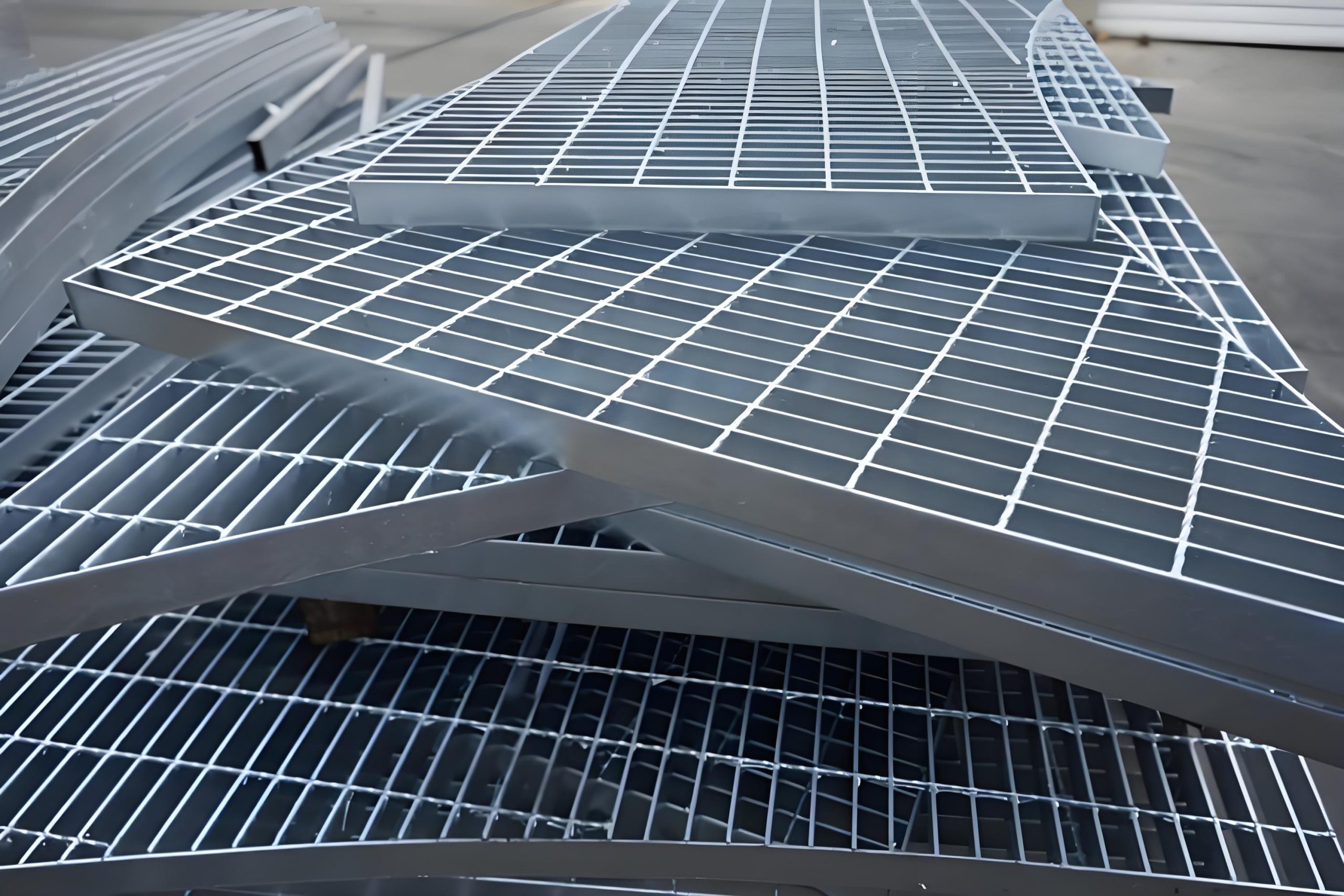
Surface finish affects corrosion performance, cleanability, appearance, and price. Heavy-duty stainless steel grating is not always supplied with the same finish. The right choice depends on whether the panel is used in a dry plant room, a food processing area, an architectural project, a marine deck, or a chemical facility.
| Finish Option | What It Does | Typical Use | Cost Effect |
|---|---|---|---|
| Mill Finish | Standard unfinished stainless surface after manufacture | General industrial applications with moderate appearance requirements | Lowest finish cost |
| Pickling | Removes welding scale, heat tint, oxide, and surface contamination | Welded fabrication, marine, chemical, and corrosion-sensitive projects | Moderate additional cost |
| Passivation | Supports formation of a clean chromium-rich passive surface after proper cleaning | Food, pharmaceutical, marine, chemical, and documented stainless projects | Moderate additional cost |
| Brushed or Polished Finish | Improves appearance and can reduce visible surface marks | Architectural platforms, visible interiors, specialty installations | Higher depending on finish level |
| Electropolished Finish | Creates a smoother, brighter, easier-to-clean surface | High-hygiene, pharmaceutical, food, laboratory, and specialty corrosion applications | Highest finish cost |
Mill finish is appropriate for many industrial uses where the grating is not exposed to aggressive chemicals or demanding hygiene requirements. It is usually the lowest-cost stainless option, but it may not be the best finish after substantial welding, cutting, grinding, or site modification.
Pickling can remove oxide scale and welding discoloration created during fabrication. Passivation helps restore the natural passive surface of stainless steel after cleaning. These processes are especially relevant where welded grating will be exposed to salt, chemical splash, washdown, or high humidity.
Passivation does not turn 304 into 316L, and it does not correct a poor drainage design or incompatible chemical exposure. It is a surface treatment step that supports the performance of the selected grade when used within its proper service environment.
Electropolishing is selected when surface smoothness, cleanability, appearance, and corrosion behavior are important. It is common in pharmaceutical, food, laboratory, semiconductor, and high-purity process environments. It can add significant cost, particularly for large, heavy, fabricated grating panels with cutouts, banding, frames, or complex geometries.
Factories can supply standard stainless grating panels or fabricate made-to-order panels. Common project panel sizes include 600 x 1,000 mm, 750 x 3,000 mm, 1,000 x 3,000 mm, 1,000 x 6,000 mm, and 1,200 x 3,000 mm. These are not universal limits. Actual maximum panel size depends on the bearing bar size, material thickness, fabrication method, finishing equipment, lifting capacity, packing method, and transportation restrictions.
| Finished Panel Size | Area | Handling Consideration | Typical Use |
|---|---|---|---|
| 600 x 1,000 mm | 0.60 m2 | Easy to lift and replace manually in many applications | Small access covers, removable trench panels, maintenance openings |
| 750 x 3,000 mm | 2.25 m2 | Weight should be checked before manual handling | Walkways, service platforms, narrow access routes |
| 1,000 x 3,000 mm | 3.00 m2 | May require planned lifting for heavy bar sizes | Industrial floors, process platforms, catwalks |
| 1,000 x 6,000 mm | 6.00 m2 | Usually requires mechanical lifting and careful transport planning | Long process decks, bridge maintenance routes, large plant platforms |
| 1,200 x 3,000 mm | 3.60 m2 | Wide panel with substantial lifting weight at heavy-duty thicknesses | Wide platforms, drainage covers, equipment access floors |
The exact weight of a stainless steel grating panel should be calculated from the approved fabrication drawing. It includes bearing bars, cross bars, welded joints or locking bars, edge banding, frames, toe plates, cutout reinforcements, clips, and any accessories. For early budgeting, bearing bar weight can be estimated from bar area and pitch.
For a one-square-meter panel, the approximate weight of the bearing bars alone can be estimated as:
Approximate bearing bar weight per square meter = 7.9 x bearing bar area in mm2 / bearing bar pitch in mm
This estimate uses an approximate stainless steel density of 7,900 kg/m3. It does not include cross bars, edge banding, frames, or fabrication additions.
| Bearing Bar Size | Bearing Bar Pitch | Approximate Bearing Bar Weight Only | Notes |
|---|---|---|---|
| 30 x 5 mm | 30 mm | About 39.5 kg/m2 | Cross bars and banding must be added for finished panel weight |
| 40 x 5 mm | 30 mm | About 52.7 kg/m2 | Common starting geometry for heavier industrial specifications |
| 50 x 5 mm | 30 mm | About 65.8 kg/m2 | Finished panel weight rises further with mesh and edge treatment |
| 60 x 6 mm | 30 mm | About 94.8 kg/m2 | Requires serious handling and support planning |
For example, a 1,000 x 3,000 mm panel has an area of 3 m2. If the approved finished grating weight is 50 kg/m2, the panel weighs about 150 kg before considering packaging. This affects lifting points, installation method, replacement access, worker safety, freight cost, and the practicality of removable panels.
Heavy-duty stainless steel grating is frequently fabricated to match existing plant layouts. Standard rectangular panels are the lowest-cost option, but industrial projects often require cutouts around columns, pipes, valves, cable trays, pumps, conveyors, ladders, handrail posts, and equipment foundations.
| Custom Feature | Purpose | Price Impact | Important Detail |
|---|---|---|---|
| Pipe Cutout | Allows a panel to fit around process piping | Moderate to high depending on shape and reinforcement | Specify diameter, location, clearance, and edge finish |
| Column Notch | Fits grating around structural columns | Moderate | Check bearing bar interruption and required support around the notch |
| Edge Banding | Closes exposed bearing bar ends and reinforces the perimeter | Usually added per linear meter | Common for safe edges, cutouts, and finished panel appearance |
| Support Frame | Provides a bearing ledge and integrated panel support | High depending on steel section and welding | Frame stiffness must match the design load |
| Stair Tread | Provides a fabricated anti-slip walking step | Moderate to high per piece | Nosing, end plates, bolt holes, and span direction are required |
| Drain Cover | Provides removable or lockable drainage access | Depends on load class, frame, locking, and opening pattern | Confirm clear opening, bearing ledge, lifting method, and traffic load |
| Toe Plate | Reduces falling-object risk at platform edges | Added fabrication and material cost | Check project height, welding, drainage, and handrail coordination |
A pipe hole or large notch can interrupt bearing bars and reduce panel capacity. The factory may need to add banding, reinforcement bars, support angles, or a separate frame around the cutout. Buyers should avoid sending only a rough site measurement. A dimensioned drawing, cutout diameter, center location, required clearance, and support condition help prevent expensive field modifications.
Stainless steel stair treads are commonly fabricated with bearing bars spanning between stair stringers, end plates for bolting, and a front nosing for visibility and traction. Serrated bearing bars are often selected for outdoor, marine, wastewater, and wet industrial stairs. For hygienic interior facilities, plain or carefully finished surfaces may be more appropriate.
Drain covers need more than a strong panel. They must fit the channel opening, bear correctly on the supporting ledge, allow water flow, resist lifting or movement, and remain serviceable for cleaning. A heavy stainless drain cover may require locking bolts, lifting keys, hinge details, support frames, anti-rattle pads, or removable sections for maintenance access.
A reliable heavy-duty stainless steel grating factory should control more than panel dimensions. The material grade, bearing bar thickness, mesh accuracy, weld quality, finish, cutout geometry, flatness, packaging, and traceability all influence project performance.
For marine, chemical, food, pharmaceutical, energy, and infrastructure projects, buyers may require material traceability. This can include stainless grade confirmation, heat number reference, mill test certificates, chemical composition data, mechanical property data, and project-specific inspection records. If these documents are needed, they should be listed in the request for quotation because they affect factory workflow and price.
Quality inspection commonly checks bearing bar height and thickness, bearing bar pitch, cross bar pitch, overall panel dimensions, diagonal accuracy, flatness, cutout location, banding quality, surface condition, and weld appearance. For heavy-duty applications, the factory should also confirm that the approved bearing bar direction is clearly marked on drawings and panels where installation confusion is possible.
Not every project requires physical load testing of every panel. In many cases, design verification is performed through an applicable load table, calculation, approved drawing, and quality-control process. Physical load testing may be requested for special project requirements, prototype validation, infrastructure work, or unusual loading conditions. If a test is required, the buyer should define the test load, support arrangement, acceptance criteria, deflection limit, and reporting format before production begins.
Heavy-duty stainless steel grating factory price is usually quoted per square meter, per panel, per kilogram, or per ton. The most useful comparison is not simply the lowest price per square meter. Buyers should compare the stainless grade, actual weight per square meter, bearing bar size, mesh, fabrication method, surface finish, custom work, inspection documents, packing, and delivery terms.
Two panels may have the same outside dimensions but very different prices. A 1,000 x 3,000 mm 304 welded panel with 40 x 5 mm bars at 30 x 100 mm mesh is not comparable with a 316L press-locked panel using 60 x 6 mm serrated bars, pickled and passivated finish, pipe cutouts, banded edges, and a framed drainage opening.
The following figures are broad planning references in US dollars for defined factory orders. They are not fixed market offers and should not be treated as a current quotation. Stainless raw material prices, alloy availability, order quantity, fabrication complexity, finish, export packing, inspection documents, freight, and delivery terms can move the final price substantially.
| Typical Heavy-Duty Specification | Indicative Factory Planning Range | Usually Includes | Usually Excludes or Varies |
|---|---|---|---|
| 304 welded stainless grating, regular rectangular panels, medium-heavy bar size | About US$170-300 per m2 | Basic fabricated grating with standard mesh | Complex cutouts, frames, special finish, freight, project documentation |
| 304 heavy stainless grating with larger bars, serration, banding, or custom work | About US$270-480 per m2 | Higher stainless weight and more fabrication | Large frames, extensive welding, special packaging, testing |
| 316 or 316L heavy-duty welded grating, standard project panels | About US$230-390 per m2 | Higher-alloy stainless steel with standard fabrication | Special treatment, complex shapes, high documentation requirements |
| 316L very heavy, serrated, framed, pickled/passivated, or specialty fabricated grating | About US$360-650+ per m2 | Heavy bar geometry and advanced fabrication scope | Freight, installation, local taxes, unusual testing, project-specific accessories |
These ranges assume a reasonable production quantity and do not represent a fixed minimum order price. Small one-off panels can cost much more per square meter because programming, cutting, welding setup, packing, and quality checks are spread over fewer pieces. Large repeat orders with simple panel layouts can reduce the unit cost.
Square-meter pricing is useful only when the panel weight and specification are known. A 30 x 5 mm bearing bar at 30 mm pitch uses much less stainless than a 60 x 6 mm bearing bar at the same pitch. The surface area is identical, but the steel weight may be more than doubled before cross bars and fabrication are included.
For accurate comparison, ask every supplier to state:
| Cost Driver | How It Changes Factory Price |
|---|---|
| Stainless Grade | 316 and 316L generally cost more than 304 because of higher alloy content and supply cost. |
| Bearing Bar Weight | Deeper and thicker bars substantially increase kilograms of stainless per square meter. |
| Mesh Spacing | Closer bearing bar pitch uses more bars and can increase fabrication time. |
| Construction Method | Press-locked and riveted systems can require more processing than standard welded panels. |
| Serrated Surface | Adds processing and may require more careful fabrication planning. |
| Pickling and Passivation | Adds cleaning, handling, process control, and environmental compliance cost. |
| Electropolishing | Can significantly increase cost for hygienic or specialty corrosion applications. |
| Cutouts and Notches | Add labor, edge finishing, reinforcement, and potential material waste. |
| Edge Banding and Frames | Add stainless steel, welding, finishing, and dimensional control work. |
| Quantity | Repeat panels generally lower unit cost; low quantities have higher setup cost per piece. |
| Documentation | Material certificates, inspection records, marked drawings, and project submittals may add cost. |
| Packing and Shipping | Heavy stainless panels may require separators, protection, steel pallets, crates, or special handling. |
To estimate price per panel, calculate the panel area and multiply it by the quoted price per square meter, then add any one-off fabrication cost. For example, a 1,000 x 3,000 mm panel equals 3 square meters. If a basic 304 heavy-duty specification is quoted at US$220 per square meter, the base panel value would be about US$660 before custom openings, frames, lifting hardware, special finish, packing, and freight.
This is only a budgeting method. A panel with a large pipe cutout, heavily banded perimeter, welded frame, toe plate, bolted access hatch, or special passivation requirement should be quoted as a fabricated item rather than calculated only by area.
The fastest way to receive an accurate quote is to provide complete technical information from the beginning. A factory can price a simple stock-like panel from dimensions and material grade, but heavy-duty stainless grating normally needs more detail because load and environment affect the recommended design.
| Information to Provide | Example | Why the Factory Needs It |
|---|---|---|
| Material Grade | 304, 316, or 316L | Determines raw material cost and corrosion performance |
| Grating Construction | Welded, press-locked, or riveted | Determines manufacturing route and available mesh options |
| Bearing Bar Size | 50 x 5 mm | Primary structural and weight factor |
| Mesh | 30 x 100 mm or 30 x 50 mm | Defines bar quantity, openings, drainage, and walking surface |
| Panel Size | 1,000 x 3,000 mm | Needed for material yield, handling, packing, and layout |
| Span Direction | 1,000 mm clear span under bearing bars | Required for load selection and shop drawing orientation |
| Design Load | Uniform load, point load, wheel load, or project standard | Determines whether the bar size is structurally suitable |
| Surface | Plain or serrated | Affects traction, cleaning, and fabrication cost |
| Finish | Mill finish, pickled/passivated, polished, electropolished | Affects corrosion resistance, hygiene, and price |
| Custom Work | Pipe holes, banding, frames, stair tread end plates | Needed to calculate labor, reinforcement, and material waste |
| Quantity | 20 panels, 100 panels, or total square meters | Determines setup cost, production efficiency, and packing method |
| Delivery Requirement | EXW, FOB, CIF, destination port, packing requirement | Separates factory product cost from logistics cost |
A drawing is strongly recommended for custom panels. Even a clear PDF with overall dimensions, support lines, bearing bar direction, cutout locations, and quantities can prevent incorrect fabrication. For buyers comparing several stainless options, this stainless steel grating factory supply guide can also help organize material and quotation requirements.
Heavy-duty stainless steel grating should be purchased as a complete specification, not as a generic commodity. The most economical choice is usually the lightest panel that meets the required load, span, corrosion resistance, deflection limit, safety surface, and service-life target. Overspecifying the alloy or bearing bars can waste budget, while underspecifying them can lead to premature corrosion, excessive deflection, unsafe footing, or expensive replacement work.
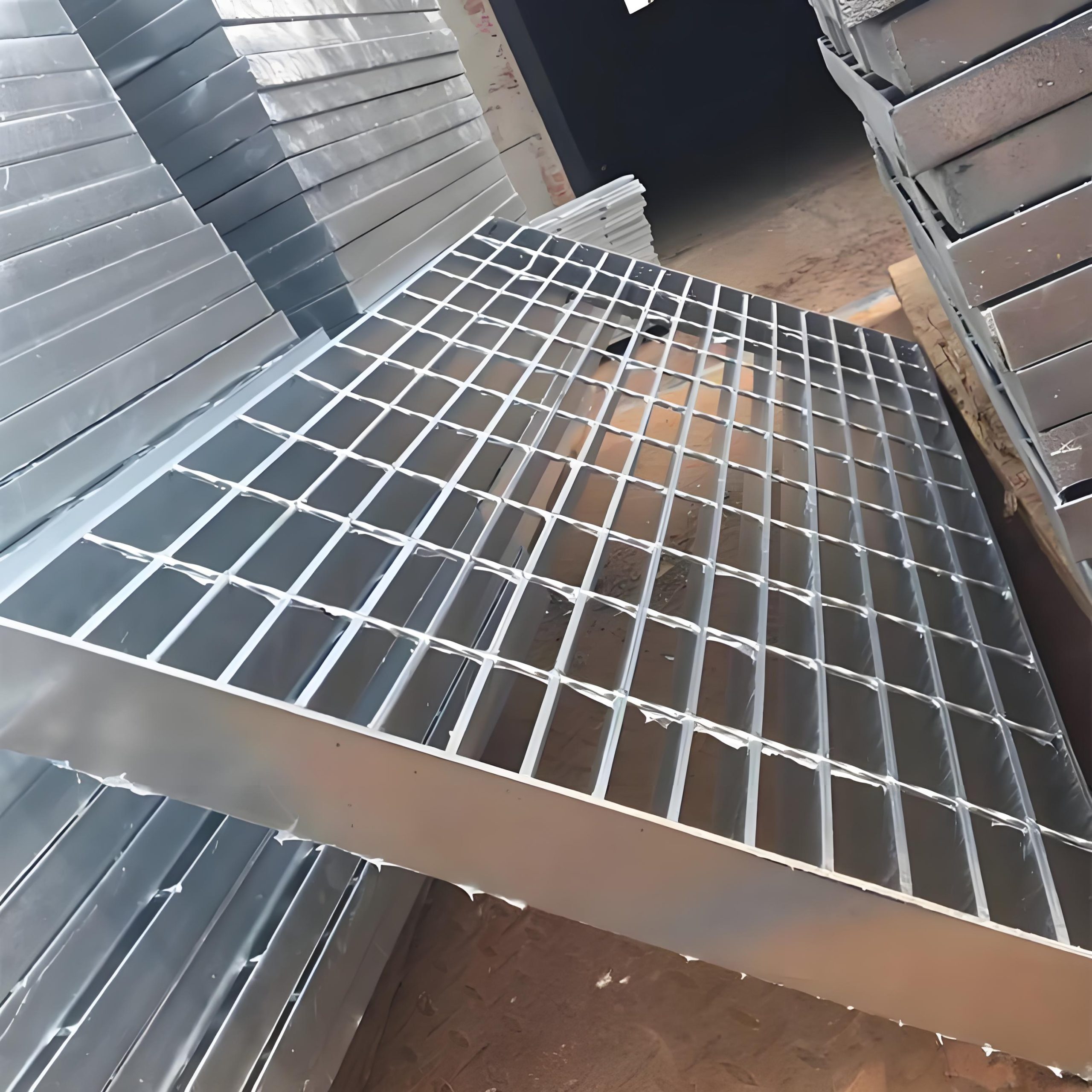
How much does heavy-duty stainless steel grating cost?
For planning purposes, heavy-duty 304 stainless steel grating often falls around US$170-480 per square meter, while 316 or 316L heavy-duty grating may fall around US$230-650+ per square meter. The actual factory price depends on bar size, weight, mesh, construction method, surface finish, custom fabrication, quantity, documentation, packaging, and shipping terms.
Is 304 or 316 better for heavy-duty stainless steel grating?
Neither grade is automatically stronger simply because of the grade number. Load capacity comes from the bearing bar size, thickness, spacing, span, and support layout. Choose 304 for moderate corrosion environments and choose 316 or 316L when chloride exposure, marine conditions, chemical washdown, salt, or aggressive moisture make stronger corrosion resistance necessary.
Can stainless steel grating carry forklift or vehicle loads?
It can, but only when it is designed as a vehicle-rated or heavy-duty grating system. The supplier needs the loaded wheel weight, tire dimensions, wheel spacing, travel direction, support layout, span, impact condition, and traffic frequency. Ordinary pedestrian stainless grating should never be assumed suitable for forklifts, trucks, or repeated rolling loads without a specific load-table check or engineering review.