
Custom painted steel grating is fabricated to a project-specific panel schedule and then finished with a primer, topcoat, epoxy system, polyurethane system, or another approved coating. It is used for platforms, walkways, catwalks, mezzanines, trench covers, stair treads, ramps, equipment floors, and architectural structures. The final factory price depends on the steel weight, bearing bar size, mesh spacing, fabrication method, surface preparation, paint system, coating thickness, cutouts, banding, quantity, inspection, packing, and delivery terms. This guide explains how painted steel grating is designed, manufactured, coated, inspected, and quoted.
Custom painted steel grating is an open steel panel fabricated to the required dimensions and coated with a specified paint system. The term “custom” can refer to more than the panel length and width. It may include non-standard bearing bars, special mesh spacing, serrated surfaces, irregular cutouts, notches, frames, stair nosing, toe plates, hinges, clips, lifting handles, and project-specific coating requirements.
The grating is normally assembled before painting. A typical sequence is to cut the bearing bars, weld or mechanically lock the cross bars, trim the panel, add banding or frames, clean the steel, apply the primer and topcoat, inspect the finish, and pack the finished panels. Painting after fabrication allows the coating to cover the completed edges and accessories. Painting individual bars before assembly can leave exposed areas at welds, joints, cuts, and contact points.
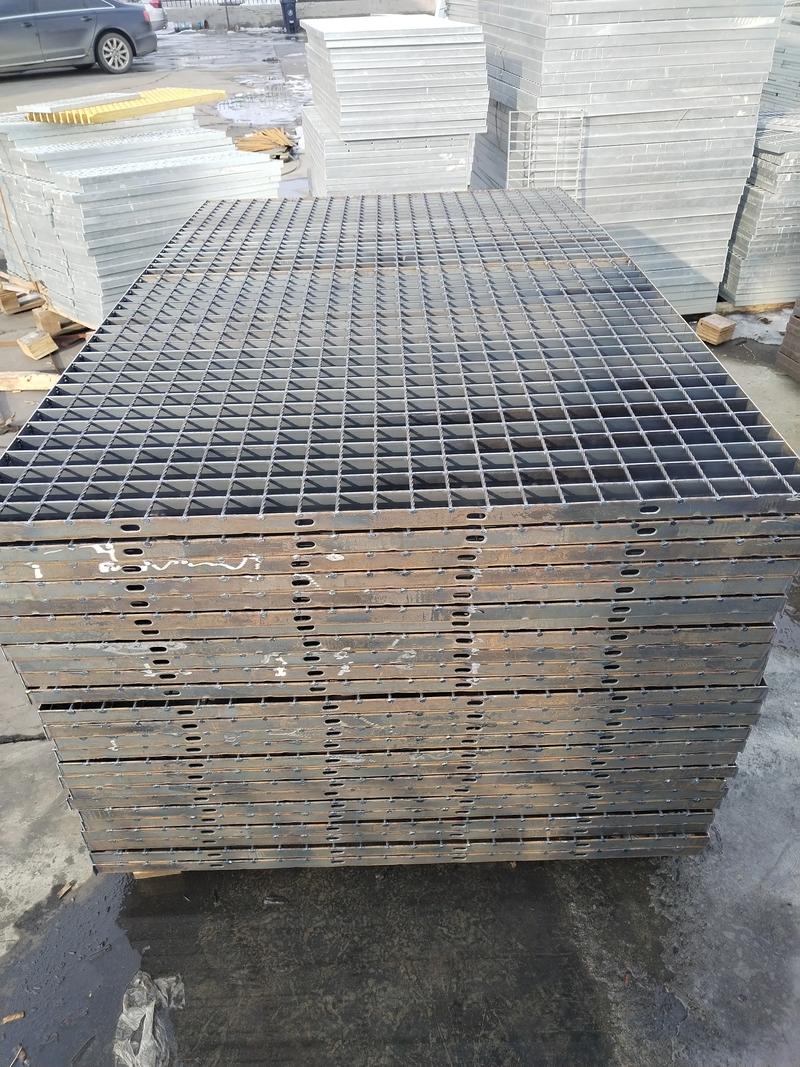
Most painted grating is made from carbon steel because it offers high strength at a relatively low material cost. Carbon steel can be supplied in grades such as ASTM A36, ASTM A1011, Q235B, S235JR, or another approved equivalent. The selected grade should be stated in the purchase specification together with the required certificates.
Painted steel grating is commonly used when the customer needs a particular color, a controlled appearance, a shop-applied coating, or a lower initial price than hot-dip galvanized grating. It must be selected with an understanding that paint is a protective film. Abrasion, impact, standing water, chemical attack, and damaged edges can eventually require maintenance or repair.
For a related overview of painted bar-grating production and coating coordination, buyers can review this painted steel bar grating fabrication guide.
Painted and galvanized grating solve corrosion problems in different ways. Paint forms a barrier between the steel and the environment. Hot-dip galvanizing provides a zinc barrier and sacrificial protection, including protection at many edges and fabricated areas. The right choice depends on exposure, abrasion, appearance, maintenance access, and project budget.
| Project Requirement | Painted Steel Grating | Hot-Dip Galvanized Grating |
|---|---|---|
| Color matching | Available in a wide range of RAL or project colors | Usually supplied in a metallic gray finish unless painted afterward |
| Indoor platforms | Often economical and adequate with the correct primer | May provide more protection than necessary in a dry interior |
| Outdoor exposure | Requires a suitable multi-coat system and regular inspection | Often provides durable protection for general atmospheric exposure |
| Mechanical abrasion | Can be damaged by wheels, tools, and heavy impact | Zinc can also wear, but it offers sacrificial protection at small scratches |
| Touch-up work | Easy to repair with compatible primer and topcoat | Cut or welded areas require zinc-rich repair or another approved system |
| Appearance | Controlled color, gloss, and texture | Natural zinc appearance with possible shade variation |
| Initial price | Often lower for basic shop-painted panels | Higher because of zinc, dipping, handling, and inspection |
| Constant immersion | Requires a coating system specifically approved for immersion | Galvanizing alone may also be unsuitable for some chemical or immersion services |
Paint is often preferable for indoor factories, warehouses, commercial buildings, color-coded process areas, and structures where appearance is important. It can also be useful when the panel is too large for a galvanizing bath, when the project requires a particular finish, or when the customer expects periodic maintenance and repainting.
Galvanizing is often preferable for exposed walkways, outdoor platforms, pipe racks, bridge components, and humid industrial areas where regular repainting is difficult. In severe environments, a duplex system can combine hot-dip galvanizing with a compatible paint system. More information about galvanizing sequence and protection is available in this hot-dip galvanized steel grating guide.
Neither finish should be selected from price alone. A low-cost paint system may require early maintenance in a coastal or chemical environment, while a galvanized system may add cost that is unnecessary for a dry indoor floor. The coating system should match the expected corrosivity, temperature, chemicals, abrasion, and inspection schedule.
Custom fabrication begins with the panel layout and structural requirements. The factory needs to know how each panel will be supported, how it will be installed, and what loads it must carry.
| Design Information | Why It Is Required |
|---|---|
| Finished panel length and width | Determines cutting, nesting, handling, and packing |
| Clear span | Determines the required bearing bar height and thickness |
| Bearing bar direction | Shows which bars span between the structural supports |
| Support width | Ensures the panel has sufficient bearing and installation clearance |
| Uniform load | Represents workers, stored material, or distributed equipment weight |
| Concentrated load | Represents equipment feet, tools, pallets, or a person in an unfavorable position |
| Wheel or vehicle load | Required for carts, forklifts, service vehicles, and bridge decks |
| Deflection limit | Controls vibration, walking comfort, equipment movement, and drainage |
| Openings and obstructions | Coordinates the panel with pipes, columns, ladders, drains, and machinery |
| Surface condition | Determines whether plain, serrated, or another anti-slip surface is required |
Clear span is the unsupported distance between the structural supports under the bearing bars. It is not necessarily the overall panel length. A 6,000 mm-long panel may have several intermediate beams and a clear span of only 1,000 mm. A shorter panel may need deeper bearing bars if it bridges a large opening.
Common custom panel widths include 300, 450, 600, 750, 900, 1,000, and 1,200 mm. Common production lengths include 2,000, 3,000, 4,000, 5,800, and 6,000 mm. These are typical factory formats rather than universal dimensions. Using standard panel sizes can reduce cutting and setup cost, but the panel layout should still place joints over supports whenever possible.
The grating should be designed together with the supporting steel. Adding an intermediate beam can sometimes reduce the required bearing bar size and total material cost. Removing a support beam may require a much deeper and heavier panel, a stronger frame, and a higher price.
Additional terminology related to bearing direction, bar pitch, panel size, and installation fit is explained in this steel grating dimensions guide.
Welded grating is made by resistance-welding the cross bars to the bearing bars at the intersections. It is the most common carbon steel fabrication method because it is efficient, rigid, and widely supported by standard load tables.
Welded panels are suitable for platforms, catwalks, stairs, trench covers, mezzanines, and general industrial flooring. After welding, the panel can be trimmed, banded, fitted with frames, cleaned, primed, and topcoated.
Welded areas need special attention before painting. Weld spatter, slag, sharp projections, undercut, oil, and heat discoloration can interfere with coating adhesion. The welds should be cleaned and inspected before the coating system is applied.
Press-locked grating is made by inserting cross bars into pre-punched slots in the bearing bars and pressing the assembly together. Dovetail and other pressure-locked profiles provide a regular appearance and avoid a weld pattern across the main panel field.
Press-locked grating can be selected for architectural floors, close-mesh walkways, access platforms, and appearance-sensitive projects. The manufacturer should provide load data for the exact bearing bar, cross bar, slot design, span, and support condition.
Pressure-locked panels may require precise surface preparation around the slots and cross-bar joints. The coating must reach recessed areas without creating excessive runs or uncoated shadow zones.
Riveted grating uses rivets to connect bearing bars and reticulated cross bars. It is often selected for bridge decks, rolling loads, service ramps, heavy plant floors, and projects that require a traditional heavy-duty construction.
Riveted panels may have more complex geometry and a higher surface area around the connections. The factory should confirm how rivet heads, cross bars, cut edges, and banding will be prepared and coated. Riveted grating used for vehicle traffic requires a specific wheel-load design rather than a general pedestrian load table.
| Fabrication Method | Main Advantage | Painting and Cost Consideration |
|---|---|---|
| Welded | Efficient, rigid, and economical for carbon steel | Weld cleaning and stripe coating are important; usually the lowest base cost |
| Press-locked | Clean appearance and regular mechanical connection | Slot and recessed areas require careful spray coverage; higher tooling cost is possible |
| Riveted | Suitable for rolling, repetitive, and heavy-duty loads | More labor, more connection details, and higher inspection cost |
Bearing bars carry the primary bending load. Their height, thickness, pitch, and direction have a greater effect on the load capacity than the overall panel width.
| Bearing Bar Example | General Service Position | Possible Application |
|---|---|---|
| 25 x 3 mm | Light-duty and short-span | Indoor walkways, light access panels, and guards |
| 30 x 3 mm | Standard-duty | General industrial platforms and catwalks |
| 30 x 5 mm | Medium-duty | Equipment floors, ramps, and longer standard spans |
| 32 x 5 mm | Medium to heavy-duty | Mezzanines, maintenance platforms, and service decks |
| 40 x 5 mm | Heavy-duty | High-load platforms and equipment areas |
| 50 x 5 mm or larger | Very heavy-duty | Vehicle traffic, bridge decks, and large concentrated loads |
Common bearing bar pitches include approximately 19, 25, 30, and 40 mm. Common cross bar spacings include 50, 75, and 100 mm. The exact clear opening is smaller than the nominal pitch because the bar thickness occupies part of the spacing.
| Mesh Example | Approximate Arrangement | Typical Selection |
|---|---|---|
| 11W4 | Approximately 17.5 mm bearing bar pitch and 100 mm cross bar pitch | Close mesh, small wheels, heels, and tool retention |
| 19W4 | Approximately 30 mm bearing bar pitch and 100 mm cross bar pitch | General industrial walkways and platforms |
| 19W2 | Approximately 30 mm bearing bar pitch and 50 mm cross bar pitch | Closer cross bars and improved object retention |
| 30 x 100 mm | Approximately 30 mm bearing bar pitch and 100 mm cross bar pitch | Metric industrial flooring and catwalks |
| 30 x 50 mm | Approximately 30 mm bearing bar pitch and 50 mm cross bar pitch | Metric close-mesh applications |
A closer bearing bar pitch increases the number of bars per square meter, reduces the opening, and usually increases weight and price. A closer cross bar pitch increases the cross-bar material and assembly time. Mesh should be selected together with heel safety, drainage, ventilation, wheel size, debris retention, and load requirements.
Plain grating has smooth bearing bar tops and is often selected for dry indoor floors, rolling equipment, and areas where easy cleaning is important. Serrated grating has notches or teeth along the top of the bearing bars and is commonly used for wet, oily, icy, muddy, or inclined walking surfaces.
| Feature | Plain Grating | Serrated Grating |
|---|---|---|
| Traction | Suitable for dry and controlled areas | Improved traction in wet or contaminated areas |
| Wheel movement | Smoother for carts and dollies | May create more vibration for small wheels |
| Cleaning | Generally easier to sweep and wash | Serrations can retain dirt and process residue |
| Price | Lower for the same bearing bar and mesh | Higher because of serration processing |
| Load selection | Use the plain-grating load data for the exact profile | Confirm whether the serration requires a greater bar depth |
Serrated grating is not automatically slip-proof. Footwear, slope, drainage, lighting, contamination, housekeeping, and handrails also affect safety. If the project requires a specific anti-slip classification, the test method and acceptance value should be written into the purchase specification.
Custom painted grating is often made to fit around structural columns, pipes, valves, cable trays, ladders, hatches, conveyors, tanks, drains, and equipment. Custom shapes should be shown on a dimensioned drawing before production begins.
Each opening should be located from two panel reference edges and should include the length, width, corner radius, and edge treatment. Cutting through several bearing bars can reduce local load capacity. The factory may recommend a load-carrying band, additional bearing bars, an angle frame, or a separate support member.
Small irregular cutouts can have a high unit cost because they require layout, CNC programming, cutting, deburring, marking, inspection, and additional paint application. Grouping similar panels and nesting openings efficiently can reduce waste.
Banding closes the ends of exposed bearing bars and produces a safer, cleaner edge. It is common around cutouts, removable panels, stair treads, and sections that bear on narrow support angles.
Banding adds flat-bar material, welding, grinding, surface preparation, paint, and inspection. A load-carrying band can transfer forces around an opening, but it does not replace a structural support beam under a large penetration.
Perimeter frames can be fabricated from angle, channel, or flat bar. A frame may provide a bearing ledge, improve panel rigidity, or create a removable cover assembly. The frame must be designed for the panel reaction, connection, and maintenance requirements.
Painted grating can be fabricated into stair treads with front nosing, end plates, side angles, bolt holes, and serrated bearing bars. The drawing should show tread width, tread depth, nosing projection, support arrangement, rise and run, surface type, and concentrated foot load.
Drain covers require a close fit with the frame, sufficient open area, removable or hinged access, and an appropriate load rating. A walkway panel should not be used as a forklift or vehicle-rated trench cover without a wheel-load calculation.
Surface preparation is the foundation of a durable painted grating system. A strong paint will still fail if it is applied over oil, moisture, loose rust, mill scale, welding residue, salts, dust, or a weak existing coating.
| Preparation Reference | General Use |
|---|---|
| SSPC-SP 2 or ISO St 2 | Hand-tool cleaning for light preparation or limited shop-coat work |
| SSPC-SP 3 or ISO St 3 | Power-tool cleaning for stronger preparation than hand cleaning |
| SSPC-SP 6 or ISO Sa 2 | Commercial blast cleaning for many industrial paint systems |
| SSPC-SP 10 or ISO Sa 2.5 | Near-white blast cleaning for higher-performance systems |
| Project-specific preparation | Required for severe corrosivity, immersion, chemical service, or warranty systems |
The applicable preparation grade should come from the paint manufacturer and project specification. It is not appropriate to use a high-cost near-white blast standard for every indoor panel, but light hand cleaning may be inadequate for an exterior multi-coat system.
Expanded surfaces can be difficult to blast uniformly because the bars create shadows and narrow spaces. The factory should confirm nozzle access, abrasive selection, dust removal, and inspection of the underside and inside corners.
The paint system should be selected as a complete package. Primer, intermediate coat, and topcoat must be chemically compatible and applied within the manufacturer’s recoat window.
| Paint System | Typical Use | Advantages and Limitations |
|---|---|---|
| Alkyd or synthetic primer and enamel | Dry indoor service and economical projects | Low initial cost, but limited chemical and immersion resistance |
| Epoxy primer and epoxy topcoat | Industrial interiors, humid rooms, and moderate chemical exposure | Good adhesion and chemical resistance; epoxy may chalk under direct sunlight |
| Zinc-rich primer, epoxy intermediate, polyurethane topcoat | Outdoor platforms and higher atmospheric corrosion categories | Strong multi-layer protection and UV resistance; higher preparation and inspection cost |
| Epoxy mastic system | Maintenance work or surfaces with limited preparation access | Useful for repairs, but performance depends heavily on substrate preparation |
| Acrylic or polyurethane color topcoat | Color retention and visible architectural surfaces | Better weathering than epoxy alone; requires compatible primer |
| Powder coating | Small or medium panels that fit the curing oven | Uniform finish, but edge impact and field repair should be considered |
Zinc-rich primers contain metallic zinc and can provide sacrificial protection when correctly applied to prepared carbon steel. The required zinc content, dry-film thickness, surface profile, and compatibility with the next coat must be confirmed from the product data sheet.
Epoxy primers and intermediate coats provide good adhesion and resistance to water, oils, and many industrial chemicals. Epoxy is commonly used below a polyurethane topcoat for outdoor service. Epoxy alone may lose color or chalk when exposed to strong ultraviolet radiation.
Polyurethane topcoats are used when color, gloss, and weathering resistance are important. They should be applied only after the underlying coat has reached the required recoat condition. Excessive thickness can cause sagging, solvent entrapment, or delayed curing.
Powder coating can provide a smooth and attractive finish, but the complete grating panel must fit the oven and receive adequate electrostatic coverage. Deep recesses, underside areas, banding, and shadow zones require special attention. Powder coating may not be the best option for panels exposed to severe abrasion, high heat, or continuous chemical immersion.
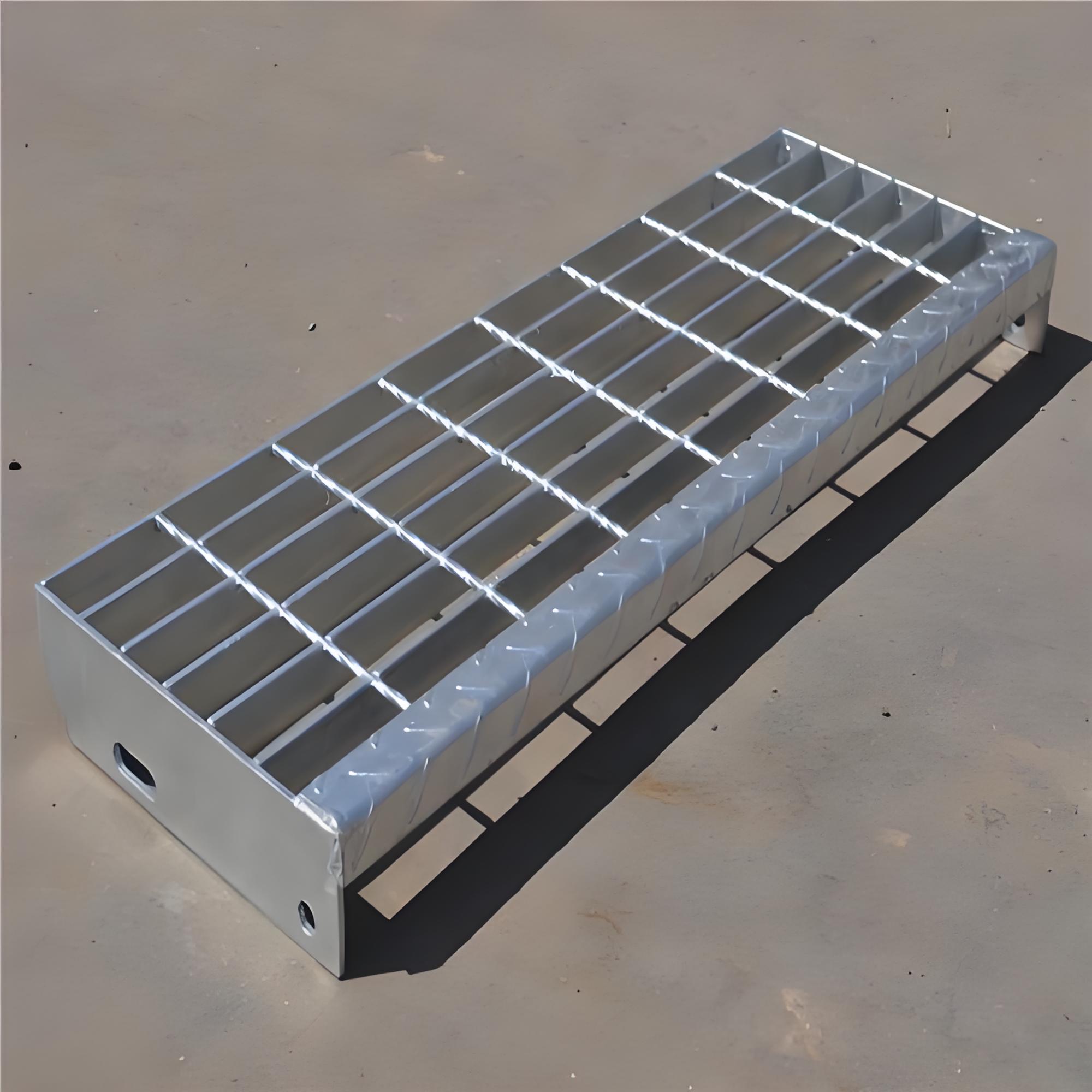
Paint color should be specified by a recognized color code, such as a RAL number, rather than by a general description such as “blue” or “dark gray.” The quotation should also identify gloss, texture, visual acceptance, and whether color variation between batches is acceptable.
| Finish Requirement | What the Factory Should Confirm |
|---|---|
| Color | RAL or project color number, sample approval, and batch tolerance |
| Gloss | Matt, satin, semi-gloss, or gloss finish |
| Dry-film thickness | Minimum and target thickness for each coat and the total system |
| Surface texture | Smooth, lightly textured, or anti-slip coating where applicable |
| Edge coverage | Stripe coat or additional edge pass for cut edges and welds |
| Touch-up limits | Acceptable repair areas, color matching, and repair procedure |
| Curing | Minimum cure time before stacking, packing, and installation |
There is no single coating thickness that suits every grating project. As broad planning examples, a simple shop primer may be around 40–75 µm, a two-coat industrial system may be around 100–180 µm total, and a severe outdoor system may be around 180–300 µm or more. The actual dry-film thickness must come from the selected coating manufacturer and the project corrosion category.
Coating thickness should be measured on representative areas of the bearing bars, cross bars, banding, frame, top surface, underside, and difficult corners. A thick reading on an accessible top bar does not prove that the recessed underside has adequate coverage.
Paint should be applied with sufficient atomization and spray angle to reach the sides of the bars. Very heavy application in one pass can create runs, curtains, bridging across openings, and slow curing. Multiple controlled coats are normally more reliable than one excessively thick coat.
Welds and cut edges are common weak points in a painted grating system. They may have a different surface profile from the surrounding steel, sharp geometry, heat discoloration, weld spatter, or contamination from fabrication.
Welds should be free from slag, spatter, oil, sharp projections, and loose scale. A stripe coat applied by brush or small roller can improve coverage at weld toes, corners, and complex junctions before the general spray coat is applied.
Cut edges should be deburred and cleaned before painting. Sharp edges can cause a thin paint film because surface tension pulls the coating away from the edge. An edge stripe coat or suitable edge-rounding procedure helps reduce early corrosion at these locations.
Banding bars and frames often create narrow gaps and weld lines where spray access is limited. The factory should inspect both sides before the final coat. If the panel is designed to fit inside a frame, coating build-up must be included in the installation clearance.
Grating bars can shield one another from the spray pattern. The painter may need to rotate the panel, spray from multiple directions, or apply an additional pass to the underside and internal corners. A visual inspection from only the top surface is not sufficient for a complete panel.
Field cutting, drilling, welding, lifting damage, and installation scratches should be repaired with the paint manufacturer’s approved materials. The repair area should be cleaned, feathered, primed, and topcoated. A generic aerosol paint may not be compatible with the factory system.
Coating selection should reflect the actual environment rather than simply whether the grating is indoors or outdoors. Humidity, condensation, salt, chemicals, temperature, abrasion, and cleaning agents can change the required system.
| Environment | Typical Risk | Possible Coating Approach |
|---|---|---|
| Dry indoor warehouse | Low humidity and limited condensation | Shop primer or basic primer and enamel system |
| Humid indoor plant | Condensation, wash-down, and intermittent moisture | Epoxy primer with compatible industrial topcoat |
| Ordinary outdoor exposure | Rain, humidity, sunlight, and temperature changes | Epoxy or zinc-rich primer with polyurethane topcoat |
| Coastal or salt-laden atmosphere | Chlorides, wet-dry cycling, and under-film corrosion | Higher-performance multi-coat system or galvanized and painted duplex system |
| Chemical plant | Acids, alkalis, solvents, fumes, or process splashes | Coating selected from chemical compatibility data and exposure testing |
| Heavy abrasion area | Forklifts, carts, dropped tools, and impact | Heavy-duty coating with a repair plan; consider galvanized or stainless alternatives |
| Continuous immersion | Constant water or chemical contact | Immersion-rated system or a different material selected by the engineer |
ISO 12944 can be used as a framework for matching protective paint systems to corrosivity categories when the project calls for it. The correct category should be selected from the site conditions, not from the product name alone.
Painted grating near food, pharmaceutical, or cleanroom operations may require low-odor, low-VOC, hygienic, or cleanable coatings. The paint must also be compatible with the cleaning chemicals and temperatures used by the facility.
In marine or chloride-rich environments, a 316 stainless steel or FRP grating may be more suitable than repeatedly repainting carbon steel. In other projects, a properly prepared galvanized and painted duplex system can provide a practical balance of cost, appearance, and service life.
Custom grating must fit the supporting steel, frame, stair stringer, trench channel, or equipment opening. The factory should define the dimensional tolerances in the approved drawing rather than relying on an informal “standard tolerance.”
| Inspection Item | Illustrative Shop Target | Why It Matters |
|---|---|---|
| Panel length and width | Often around ±2 to ±3 mm for common cut panels; larger panels may require a wider agreed tolerance | Controls fit inside frames and joint gaps |
| Squareness | Diagonal difference controlled according to panel size and project requirement | Prevents rocking and uneven support |
| Bearing bar pitch | Controlled during welding, pressing, or assembly | Affects clear opening, weight, and load behavior |
| Cross bar spacing | Checked against the approved mesh pattern | Controls stability, drainage, and appearance |
| Cutout location | Often controlled within a few millimeters of the drawing | Ensures alignment with pipes, columns, and equipment |
| Flatness | Measured with the project-approved method and reference length | Prevents rocking, trip points, and uneven bearing |
| Frame dimensions | Checked outside-to-outside and inside-to-inside | Allows proper fit after coating thickness is added |
The values in this table are planning examples, not universal acceptance limits. Large, heavy, serrated, galvanized, or multi-layer painted panels may require different tolerances. The purchase order should identify the governing standard, drawing revision, measuring method, and acceptance criteria.
Painting can affect fit. Several coats may add measurable thickness around banding, bolt holes, frames, and close joints. If the panel must be removable, the factory should leave suitable clearance after coating. If the clearance is too small, the panel may jam; if it is too large, it may rattle or create a trip hazard.
Field cutting should be limited to simple adjustments approved by the engineer. Cutting can remove bearing bars, damage the coating, change the load path, and require a complete repair procedure.
Quality inspection should cover the raw material, grating assembly, fabrication, coating, documents, and packing. A visually attractive panel is not necessarily dimensionally correct or structurally suitable.
| Inspection Stage | Typical Check |
|---|---|
| Material verification | Steel grade, thickness, heat number, and mill certificate |
| Bearing bar preparation | Height, thickness, straightness, length, and pitch |
| Assembly | Cross bar spacing, alignment, squareness, and bearing direction |
| Welded intersections | Visual weld quality, continuity, spatter, cracks, undercut, and panel rigidity |
| Press-locked joints | Locking tightness, cross bar position, slot condition, and absence of looseness |
| Riveted joints | Rivet head formation, spacing, tightness, and reticulated bar alignment |
| Cutouts and banding | Opening dimensions, edge closure, reinforcement, and deburring |
| Surface preparation | Cleanliness, blast profile, dust removal, and surface dryness |
| Paint application | Color, gloss, coverage, runs, sags, pinholes, and dry-film thickness |
| Adhesion and curing | Adhesion test or cure verification when required by the specification |
| Final dimensions | Length, width, flatness, squareness, bolt holes, and frame fit |
| Packing | Bundle marks, separators, edge protection, gross weight, and loading condition |
Visual inspection is normally the first check for welded grating. The inspector should look for incomplete welds, cracks, excessive spatter, undercut, distortion, loose cross bars, and sharp projections. Project-specific orders may require additional testing or sample destructive tests.
Dry-film thickness can be measured with a calibrated gauge. Coating adhesion may be checked with a cross-cut or pull-off method when required. ASTM D7091, SSPC-PA 2, ASTM D3359, ASTM D4541, ISO 8501, ISO 8503, and ISO 12944 may be referenced by a project, but the applicable documents and editions should be stated in the contract.
Color and gloss should be compared with an approved sample under consistent lighting. The inspector should also check the top surface, underside, bar sides, cut edges, welds, banding, corners, and recessed areas.
For heavy-duty or safety-critical grating, the factory may provide a material certificate, dimensional inspection report, coating report, paint batch information, calibration records, and a load table or engineering calculation.
A complete factory project normally follows the steps below:
The following ranges are broad 2026 factory budgeting references for carbon steel grating. They are not fixed quotations. Actual prices vary with steel markets, labor, coating materials, production location, quantity, order complexity, packing, and freight. Prices are normally understood as EXW or FOB unless another delivery basis is stated.
| Product Type | Indicative Factory Price | Typical Conditions |
|---|---|---|
| Standard painted carbon steel grating | Approximately US$18–50/m² | Common mesh, plain surface, standard panels, basic primer or paint |
| Custom cut and banded painted grating | Approximately US$35–90/m² | Cut-to-size panels, ordinary cutouts, banded edges, and shop coating |
| Epoxy or polyurethane industrial system | Approximately US$50–130/m² | Surface preparation, multi-coat system, specified dry-film thickness |
| Heavy-duty painted grating | Approximately US$70–160/m² | Deep bearing bars, close supports, serration, and higher steel weight |
| Framed or heavily fabricated panels | Approximately US$100–240+/m² | Frames, toe plates, stair treads, hinges, irregular cutouts, and inspection |
| Small-MOQ or special coating order | Approximately US$120–300+/m² | Low quantity, unusual color, special testing, urgent production, or export packing |
Thin standard grating sold in large quantities may be below these ranges, while heavy vehicle-rated panels, stainless steel, unusual profiles, complex frames, or severe-environment coating systems may be substantially higher. The quote should state whether the price includes steel, fabrication, surface preparation, paint, inspection, packaging, certificates, and freight.
A practical factory calculation is:
Finished price = steel material cost + grating assembly + custom fabrication + surface preparation + coating system + inspection + packaging + delivery and commercial charges.
Steel weight is usually calculated from the bearing bar dimensions, bearing bar pitch, cross bar size, cross bar spacing, banding, frames, and cutouts. A preliminary bearing-bar estimate can be made with:
Bearing-bar weight approximately equals 7.85 x bar height x bar thickness divided by bearing-bar pitch.
When the dimensions are entered in millimeters, the result is approximately kilograms per square meter for the bearing bars. Cross bars, bands, frames, paint, and tolerances must then be added.
For example, a 30 x 5 mm bearing bar at a 30 mm pitch contributes approximately 39.25 kg/m² before cross bars and edge components. If cross bars and banding bring the finished panel to approximately 45 kg/m², a factory may use the net weight for a ton-based quotation and the finished area for a project quotation.
| Cost Factor | How It Changes the Price |
|---|---|
| Steel weight | Heavier bearing bars, closer pitch, and reinforced frames increase material cost |
| Grating method | Welded production is often the lowest-cost carbon steel method; press-locked and riveted work may require more setup |
| Mesh and opening | Close mesh uses more bars and may require additional assembly time |
| Plain or serrated surface | Serration adds machining, inspection, and sometimes a different load-table selection |
| Cutouts and notches | CNC cutting, layout, deburring, scrap, and banding add labor |
| Frames and accessories | Angles, channels, toe plates, hinges, clips, bolts, and lifting handles add material and fabrication |
| Surface preparation | Blast cleaning and profile control cost more than simple degreasing or power-tool cleaning |
| Paint system | Multi-coat epoxy, zinc-rich primer, polyurethane, and special colors increase material and labor cost |
| Inspection | Load tests, adhesion tests, dry-film records, color approval, and third-party inspection add cost |
| Quantity and MOQ | Large repeat orders spread setup, tooling, and inspection costs over more panels |
| Material waste | Irregular panel shapes and small cutouts reduce nesting efficiency |
| Packaging and shipping | Crates, separators, moisture protection, bundle weight, and container space affect the delivered cost |
| RFQ Item | Information to Provide |
|---|---|
| Material | Carbon steel grade, certificate requirement, and thickness tolerance |
| Grating construction | Welded, press-locked, riveted, or another approved method |
| Bearing bars | Height, thickness, pitch, profile, and span direction |
| Cross bars | Type, size, spacing, and connection method |
| Surface | Plain or serrated, including any anti-slip requirement |
| Panel schedule | Panel numbers, length, width, quantity, and installation location |
| Structural loads | Uniform, concentrated, wheel, forklift, vehicle, impact, and deflection requirements |
| Custom fabrication | Cutouts, notches, banding, frames, toe plates, stair nosing, holes, hinges, and clips |
| Surface preparation | Degreasing, power-tool cleaning, commercial blast, near-white blast, or another requirement |
| Paint system | Primer, intermediate coat, topcoat, color, gloss, coating thickness, and curing |
| Inspection | Dimensional report, dry-film thickness, adhesion, color approval, and third-party inspection |
| Packaging | Bundles, pallets, timber crates, edge protection, labels, and moisture protection |
| Commercial terms | MOQ, lead time, quotation validity, destination, and EXW, FOB, CIF, or other Incoterm |
A marked-up layout is usually more useful than a general product description. It allows the factory to calculate the correct panel count, optimize the cutting plan, identify support locations, estimate paint area, and separate standard production from custom fabrication.
When comparing quotations, make sure every supplier is using the same steel grade, bearing bar size, mesh, load requirement, finish, coating thickness, panel schedule, accessories, packing method, and delivery basis. A lower square-meter price may exclude frames, cutouts, surface preparation, inspection, or export packaging.
How much does custom painted steel grating cost?
Standard painted carbon steel grating may be approximately US$18–50/m² for larger factory orders. Cut-to-size and banded panels may be around US$35–90/m², while multi-coat epoxy or polyurethane systems may be around US$50–130/m². Heavy-duty, framed, low-quantity, or highly fabricated panels can exceed US$200/m². The final price depends on steel weight, mesh, surface preparation, paint system, quantity, packing, and delivery.
Is painted steel grating better than galvanized steel grating?
Painted grating is often better for dry indoor areas, color-coded structures, architectural projects, and installations where periodic touch-up is practical. Galvanized grating is often better for outdoor, humid, and difficult-to-maintain areas because zinc provides sacrificial protection. Severe environments may require a duplex galvanized-and-painted system or a different material such as stainless steel or FRP.
What paint system is best for outdoor steel grating?
A common high-performance approach is a properly prepared carbon steel surface, zinc-rich primer where specified, an epoxy intermediate coat, and a polyurethane topcoat for weather and ultraviolet resistance. The correct system still depends on the corrosivity, chemicals, temperature, abrasion, and maintenance plan. The paint manufacturer and project specification should determine the preparation grade, dry-film thickness, recoat interval, and inspection method.
