
A reliable light-duty steel grating supplier should provide more than standard grating panels. Buyers usually need material confirmation, suitable bearing bar selection, accurate mesh spacing, custom cutting, surface treatment, load matching, packaging support, and export documents. Light-duty steel grating is commonly used for pedestrian walkways, drainage covers, maintenance platforms, stair landings, ventilation floors, and other light-load areas where strength, drainage, slip resistance, corrosion protection, and cost control must be balanced. Choosing the right supplier helps avoid undersized grating, poor galvanizing, wrong bearing direction, installation problems, and unnecessary project cost.
Light-duty steel grating is a type of open-grid metal flooring designed for pedestrian and light-load applications. It is normally made from parallel bearing bars connected by cross bars. Compared with heavy-duty steel grating, light-duty grating usually uses smaller bearing bars, lighter panel weight, wider practical application in walkways, and lower manufacturing cost.
For buyers, a light-duty steel grating supplier is not only a company that sells grating by square meter. A suitable supplier should understand how the grating will be used, what load it needs to carry, whether the area is indoor or outdoor, whether anti-slip surface is required, and whether the panels need cutting, banding, openings, clips, frames, or export packing.
Light-duty grating is often selected because it is economical, easy to install, and suitable for common industrial access areas. However, “light-duty” does not mean that technical details can be ignored. If the bearing bar is too small, the spacing is too wide, or the span direction is wrong, the grating may deform even under normal pedestrian use. This is why supplier capability matters.
| Supplier Service Item | Why It Matters to Buyers |
|---|---|
| Material selection | Ensures the grating matches corrosion and budget requirements |
| Bearing bar recommendation | Helps match load capacity and span conditions |
| Mesh spacing options | Affects walking comfort, drainage, open area, and price |
| Surface treatment | Controls corrosion protection and service life |
| Custom cutting | Allows panels to fit real site dimensions |
| Banding and openings | Improves edge strength, appearance, and installation accuracy |
| Quality control | Reduces defects in welding, dimensions, flatness, and coating |
| Export support | Helps overseas buyers receive goods and documents smoothly |
A reliable supplier should be able to respond to both standard orders and project-based requirements. Some buyers only need standard galvanized grating panels, while others need a full set of panels according to drawings. The supplier should be able to support both situations.
The supplier should confirm material grade, bearing bar size, bearing bar spacing, cross bar spacing, panel length, panel width, surface type, surface treatment, and quantity before production. If the buyer provides drawings, the supplier should check whether the panel dimensions, bearing direction, openings, and edge details are clear.
A vague quotation such as “light-duty steel grating, galvanized, standard size” may cause problems later. The buyer may receive panels that are too light, too wide in opening, or unsuitable for the actual support span. A reliable supplier will ask for the missing details instead of producing according to guesswork.
Light-duty steel grating can be used in many areas, but not every specification is suitable for every application. A walkway, a drain cover, a stair landing, and a maintenance platform may all require different panel dimensions and edge treatments.
The supplier should understand whether the grating is used for pedestrian traffic only, whether workers carry tools, whether water or oil is present, whether the grating is removable, and whether small wheels or carts may pass over it. These details affect material selection and structural design.
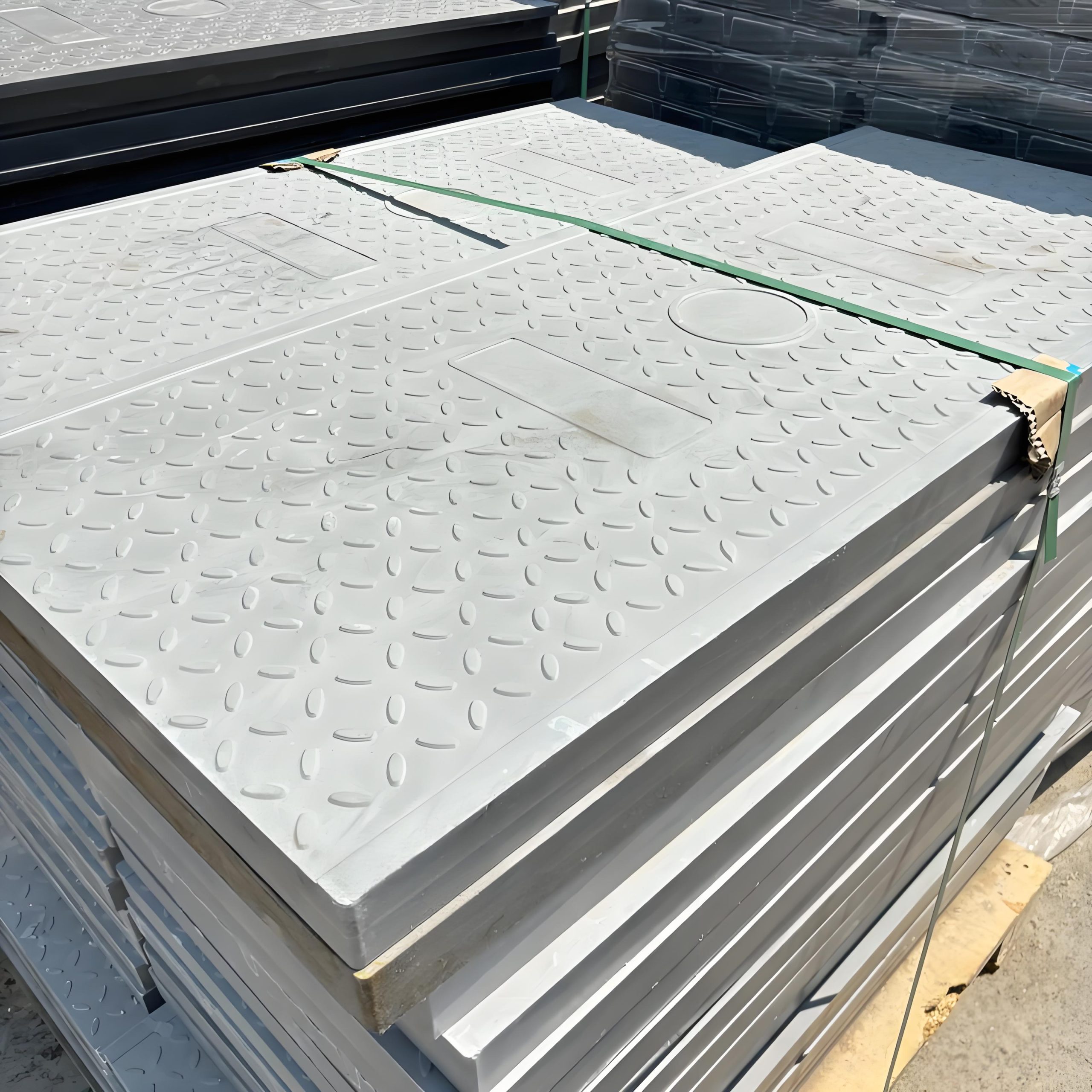
Many projects require more than plain rectangular panels. Buyers may need notches around columns, pipe openings, welded banding, toe plates, stair tread nosing, fixing clips, frames, lifting holes, or special panel marks. A supplier with fabrication capability can reduce the buyer’s installation work at site.
Light-duty steel grating should be checked for bar spacing, welding quality, panel flatness, surface condition, galvanizing quality, edge finish, and package condition. Even though the grating is light-duty, poor welding or inaccurate dimensions can still create safety and installation problems.
For international buyers, the supplier should support commercial invoice, packing list, material certificate, inspection report, certificate of origin when required, shipping marks, container loading photos, and packing details. Good communication is especially important when panels are customized according to drawings.
Material selection affects strength, corrosion resistance, weight, appearance, price, and service life. A good supplier should not recommend the same material for every project. The choice should be based on environment and use conditions.
Carbon steel is the most common and economical material for light-duty grating. It provides good strength and is easy to weld, cut, band, and galvanize. It is suitable for indoor platforms, factory walkways, maintenance areas, and general industrial flooring.
Untreated carbon steel is not recommended for humid or outdoor service because it can rust quickly. If the project needs longer service life, carbon steel should usually be painted or hot-dip galvanized.
Hot-dip galvanized steel grating is widely used for outdoor walkways, drain covers, stair landings, and platforms. After fabrication, the entire grating panel is dipped in molten zinc so the coating covers bearing bars, cross bars, welds, cut edges, and banding areas.
This is often the best cost-performance option for outdoor light-duty applications. It is more expensive than untreated carbon steel, but it offers better corrosion protection and lower maintenance demand.
Stainless steel light-duty grating is used when corrosion resistance, hygiene, or clean appearance is important. Common grades include 304 and 316. 304 stainless steel is suitable for many general corrosion environments, while 316 or 316L is more suitable for chloride, marine, chemical, or wastewater exposure.
Stainless steel grating is more expensive than carbon steel grating, but it may be necessary in food processing, water treatment, chemical plants, coastal facilities, and clean production areas.
Aluminum grating is lightweight and corrosion resistant in many atmospheric environments. It is used for rooftop access, marine walkways, lightweight platforms, and structures where reducing dead load is important.
Aluminum grating is not always cheaper than galvanized carbon steel. The final price depends on profile type, manufacturing method, load requirement, surface finish, and order quantity.
| Material | Main Advantage | Common Use | Price Level |
|---|---|---|---|
| Carbon steel | Economical and strong | Dry indoor walkways, general platforms | Low |
| Hot-dip galvanized steel | Good outdoor corrosion protection | Outdoor walkways, drain covers, stair landings | Medium |
| 304 stainless steel | General corrosion resistance and clean appearance | Food plants, clean areas, water facilities | High |
| 316 stainless steel | Better chloride and chemical resistance | Marine, chemical, wastewater, coastal projects | Higher |
| Aluminum | Lightweight and corrosion resistant | Rooftop access, marine walkways, lightweight platforms | Medium to high |
Bearing bar size and mesh spacing are two of the most important specifications in light-duty steel grating. They affect strength, price, walking feel, open area, drainage, and panel weight.
Light-duty steel grating usually uses smaller bearing bars than heavy-duty grating. Common bearing bar sizes may include 20 mm × 3 mm, 25 mm × 3 mm, 25 mm × 5 mm, 30 mm × 3 mm, 30 mm × 5 mm, and similar sizes. The correct size depends on support span and load requirement.
A deeper bearing bar provides better bending resistance. A thicker bearing bar improves strength, durability, and welding area. However, larger bars also increase weight and cost. For light-duty applications, overspecification can make the project more expensive without adding practical value.
Bearing bar spacing is the center-to-center distance between the main load-bearing bars. Common spacing may include 30 mm, 32 mm, 34.3 mm, 40 mm, or custom spacing. Closer spacing uses more steel and costs more, but it improves walking support and reduces opening size.
Wider spacing is more economical and provides more open area, but it may not be suitable where small objects, narrow footwear, or light wheels are involved.
Cross bars maintain the position of the bearing bars and help form the grid structure. Common cross bar spacing may include 50 mm, 76 mm, 100 mm, or other project-specific spacing. Closer cross bar spacing may improve panel stability and appearance, but it also increases material and processing cost.
| Specification Item | Common Options | Effect on Product |
|---|---|---|
| Bearing bar height | 20 mm, 25 mm, 30 mm, or custom | Affects span and load capacity |
| Bearing bar thickness | 3 mm, 4 mm, 5 mm, or custom | Affects strength, durability, and price |
| Bearing bar spacing | 30 mm, 32 mm, 34.3 mm, 40 mm | Affects walking support, open area, and cost |
| Cross bar spacing | 50 mm, 76 mm, 100 mm | Affects panel stability and appearance |
| Panel thickness | Based on bearing bar height | Affects installation level and clearance |
A light-duty steel grating supplier should offer different surface and manufacturing options because different applications have different safety, appearance, and budget requirements.
Plain grating has smooth bearing bar edges. It is suitable for dry indoor areas, maintenance platforms, ventilation floors, mezzanines, and clean industrial walkways. It is usually cheaper than serrated grating because the bearing bars do not require tooth processing.
Plain grating is also easier to clean because dirt, fibers, grease, and residue are less likely to remain around tooth profiles.
Serrated grating has notched or toothed bearing bar edges. It provides better traction in wet, oily, muddy, dusty, or outdoor conditions. It is often used for exterior walkways, stair treads, drainage areas, wastewater plants, marine access, and industrial platforms where slip resistance is important.
Serrated surface usually increases the factory price slightly because the bearing bars need additional processing. However, the added cost may be reasonable where safety risk is higher.
Welded grating is one of the most common types for industrial use. The cross bars are welded to the bearing bars, forming a stable and rigid panel. It is cost-effective for carbon steel and galvanized steel products.
Welded light-duty grating is commonly used for walkways, platforms, stair landings, drain covers, and factory access areas.
Press-locked grating is produced by pressing cross bars into pre-slotted bearing bars. It has a cleaner and more regular appearance than many welded products. It is used in platforms, ventilation panels, screens, facades, architectural walkways, and areas where appearance matters.
Press-locked grating usually costs more than welded grating because it requires slotting, pressing, and tighter dimensional control.
| Option | Main Feature | Suitable Application |
|---|---|---|
| Plain grating | Smooth walking surface | Dry indoor walkways, platforms, ventilation floors |
| Serrated grating | Improved slip resistance | Wet, oily, outdoor, stair, and drainage areas |
| Welded grating | Strong and economical | Industrial platforms, walkways, drain covers |
| Press-locked grating | Clean appearance and regular mesh | Architectural floors, screens, ventilation panels |
Light-duty steel grating can be supplied as standard panels or custom panels. Standard panels are more economical, while custom panels are necessary when the grating must fit real site dimensions.
Standard panels are suitable for regular walkways, simple platforms, stock supply, and projects where panels can be cut or arranged according to a repeated layout. Standard panel supply helps reduce production time and unit price.
Suppliers may offer common panel sizes based on factory production equipment and shipping convenience. Buyers should still confirm bearing bar direction, support span, and cutting tolerance before installation.
Custom panels are needed for drainage trenches, machinery platforms, pipe areas, column positions, stair landings, and replacement grating. Custom grating may include different lengths, widths, notches, openings, edge banding, toe plates, and panel marks.
A capable supplier should be able to produce according to drawings. If the buyer does not have complete drawings, the supplier can often work from dimensions, sketches, or site photos, but final production details should be confirmed before manufacturing.
For project orders, panel marking is useful. Each grating panel can be marked according to layout drawings, which helps installers place panels correctly at site. This is especially important for platforms with many custom pieces.
| Supply Type | Advantage | Suitable Buyer Need |
|---|---|---|
| Standard panel | Lower cost and faster supply | Simple walkways and regular platform areas |
| Cut-to-size panel | Fits specific dimensions | Maintenance replacement and small projects |
| Custom drawing panel | Matches project layout | Industrial platforms, drain covers, special openings |
| Marked project panel | Easier installation | Large platform systems and export projects |
Light-duty steel grating is used in many areas where pedestrian access, drainage, ventilation, and safe working surfaces are required. A suitable supplier should recommend specifications according to each application, not use the same design everywhere.
Pedestrian walkways are one of the most common uses of light-duty steel grating. They may be installed in factories, warehouses, water treatment plants, power stations, equipment areas, and outdoor access routes.
For dry indoor walkways, plain grating may be enough. For wet or outdoor walkways, serrated galvanized grating is often preferred because it provides better traction and corrosion resistance.
Light-duty steel grating is often used as drain covers over narrow channels, floor drains, pedestrian trenches, cable trenches, and drainage slots. Drain covers may require accurate dimensions, edge banding, frames, lifting holes, and suitable bearing direction.
Even for light-duty drain covers, the supplier should confirm whether pedestrians only will pass over the cover or whether carts and maintenance equipment may cross it.
Light-duty platform grating is used for equipment access, inspection areas, mezzanine floors, and maintenance decks. Platform panels may require cutouts around pipes, columns, valves, and machinery bases.
For large platforms, panel layout drawings are important. Proper panel size can reduce waste, simplify installation, and improve future maintenance access.
Maintenance areas often need removable grating panels. In these cases, fixing clips, lifting handles, edge banding, and panel marking may be useful. A supplier should consider whether the grating will be removed frequently and whether workers need safe lifting points.
| Application | Recommended Supplier Focus | Common Options |
|---|---|---|
| Pedestrian walkway | Walking safety and corrosion protection | Plain or serrated galvanized grating |
| Drain cover | Accurate size, bearing direction, edge banding | Galvanized grating with banding or frame |
| Light platform | Span, load, cutouts, panel layout | Welded or press-locked grating |
| Maintenance area | Removable panels and fixing accessories | Clips, handles, marked panels |
| Ventilation floor | Open area and panel stability | Plain grating with suitable mesh spacing |
Even though this product is called light-duty steel grating, load capacity must still be checked. The most important design factors are bearing bar size, bearing bar spacing, material strength, unsupported span, and bearing direction.
Light-duty grating is normally designed for pedestrian loads, light maintenance traffic, and limited equipment access. It should not be used for forklifts, vehicles, heavy machinery, or concentrated wheel loads unless specifically designed for those conditions.
When requesting a quotation, buyers should explain whether the grating will carry only people, people with tools, light carts, or occasional equipment. A supplier can then recommend suitable bar size and spacing.
The bearing bars must span between supports. This means the load-bearing bars should run in the direction that allows them to rest on support steel at both ends. If the panel is installed with the wrong direction, the cross bars may be forced to carry the load, which can cause unsafe deformation.
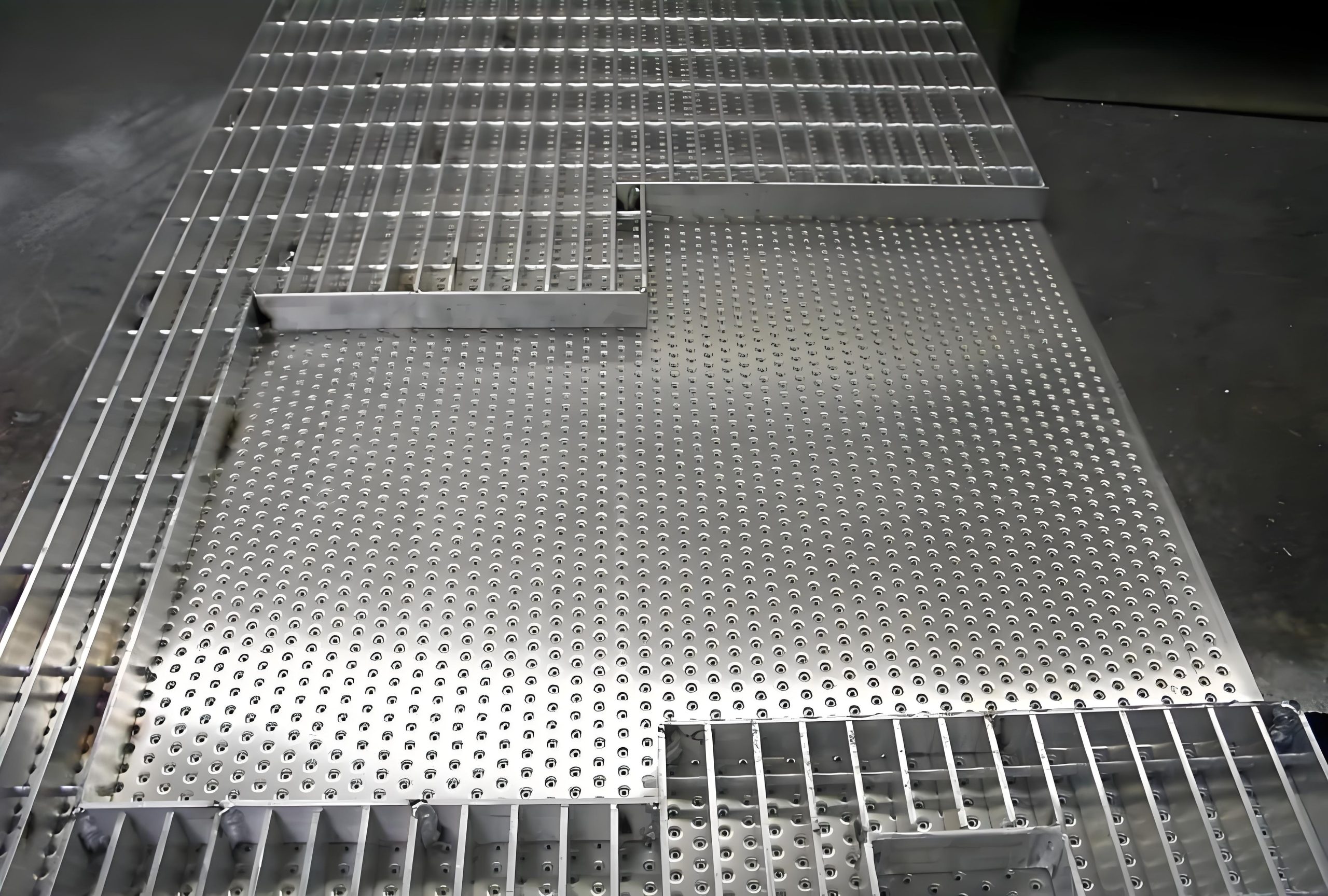
A reliable supplier should mark or explain the bearing bar direction, especially for custom panels, drain covers, and platforms.
Light-duty grating may technically carry a load but still feel too flexible if the span is too long. Excessive deflection can reduce user confidence and may indicate that the grating is not properly matched to the support condition.
For walkways and maintenance platforms, the supplier should consider both strength and stiffness.
| Design Point | Why It Matters |
|---|---|
| Bearing bar size | Controls bending strength and stiffness |
| Bar spacing | Affects the number of load-carrying bars per panel width |
| Unsupported span | Longer spans require stronger bearing bars |
| Bearing direction | Determines whether the panel is properly supported |
| Load type | Pedestrian, cart, and concentrated loads require different checks |
| Deflection requirement | Affects walking comfort and perceived safety |
Surface treatment protects light-duty steel grating from corrosion and improves service life. The right finish depends on the environment, budget, and appearance requirement.
Untreated carbon steel has the lowest initial cost. It may be used in dry indoor areas, temporary projects, or situations where the buyer will apply coating after installation. It is not suitable for outdoor or humid environments without additional protection.
Painting provides basic corrosion protection and can be used for color identification. Painted light-duty grating is suitable for indoor industrial floors, equipment areas, and dry environments.
Paint may wear at bearing bar edges under foot traffic. If long-term corrosion protection is required, hot-dip galvanizing is usually more durable than ordinary painting.
Hot-dip galvanizing is one of the most common surface treatments for light-duty steel grating. It is especially suitable for outdoor walkways, drain covers, platforms, stair landings, and wet industrial areas.
The grating should normally be galvanized after fabrication so that welds, cut edges, and banding areas are coated. The supplier should check coating coverage, drainage marks, zinc buildup, distortion, and sharp zinc residues after galvanizing.
Stainless steel grating may require pickling, passivation, bead blasting, or polishing depending on the application. Pickling and passivation help remove welding discoloration and improve corrosion resistance.
| Surface Treatment | Cost Level | Suitable Environment |
|---|---|---|
| Untreated | Lowest | Dry indoor or temporary use |
| Painted | Low to medium | Indoor industrial areas and color-coded floors |
| Hot-dip galvanized | Medium | Outdoor walkways, drain covers, platforms, stairs |
| Pickled and passivated stainless steel | High | Food, chemical, marine, wastewater environments |
| Polished stainless steel | Higher | Clean appearance or special hygiene requirements |
Many light-duty steel grating orders require custom fabrication. A supplier with processing capability can deliver panels that fit the site directly, reducing cutting and welding work during installation.
Custom cutting is used when panels must fit specific lengths, widths, angled edges, curved areas, or replacement openings. Accurate cutting improves installation speed and reduces site adjustment.
Banding means welding flat bars around the edges of the grating panel. It protects bearing bar ends, improves appearance, and may help distribute edge loads. Drain covers, stair landings, removable panels, and custom grating usually require banding.
Notching is required when grating panels need to fit around columns, pipes, wall edges, equipment bases, or structural steel. Clear drawings help the supplier avoid wrong notch position or incorrect bearing direction.
Openings may be needed for pipes, cables, valves, handles, inspection points, or equipment access. Larger openings may require reinforced banding around the cut area.
Fixing clips help secure grating panels to supporting steel without permanent welding. Common accessories may include saddle clips, top clips, bottom clips, bolts, nuts, washers, and custom fixing plates. The supplier should recommend clip quantity according to panel size and installation condition.
| Custom Processing | Purpose | Effect on Cost |
|---|---|---|
| Straight cutting | Adjusts panel length and width | Low |
| Edge banding | Protects edges and improves finish | Medium |
| Notching | Fits around columns, pipes, or structures | Medium |
| Pipe openings | Allows pipes or cables to pass through | Medium to high |
| Toe plates | Prevents objects from falling from platform edges | High |
| Fixing clips | Secures panels to support steel | Low to medium |
| Panel marking | Helps site installation | Low to medium |
A reliable light-duty steel grating supplier should have a controlled manufacturing process from raw material inspection to final packing. Quality control is especially important for export orders because replacement and repair are costly after shipment.
The supplier should prepare bearing bars and cross bars according to the required grade and dimensions. Material thickness, width, straightness, and surface condition should be checked before fabrication.
Bearing bars must be arranged at correct spacing and direction. Cross bars should be aligned consistently. Incorrect spacing can affect walking safety, open area, and appearance.
For welded grating, cross bars should be firmly welded to bearing bars. Weld quality affects panel rigidity and service life. For press-locked grating, cross bars must be pressed tightly into bearing bars without loose joints.
Panels are cut to required size, and edges are banded when needed. Banding should be straight, securely welded, and properly aligned with the panel edges.
After fabrication, carbon steel panels may be painted or hot-dip galvanized. Stainless steel panels may be pickled, passivated, or polished. The supplier should inspect the finished surface for coating defects, burrs, sharp edges, and distortion.
Final inspection should include dimensions, diagonal difference, flatness, bar spacing, welding quality, coating condition, panel marks, accessories, and packing quantity.
| Inspection Item | What Should Be Checked |
|---|---|
| Material | Grade, thickness, width, surface condition |
| Panel dimensions | Length, width, diagonal, tolerance |
| Bar spacing | Bearing bar spacing and cross bar spacing |
| Welding quality | Firm joints, no loose bars, no obvious defects |
| Flatness | No serious warping or rocking |
| Banding | Straight edges and secure welding |
| Surface treatment | Coating coverage, zinc buildup, paint quality, stainless finish |
| Packing | Quantity, labels, protection, bundle strength |
Stock and production capacity are important when buyers need fast delivery. Some light-duty grating specifications may be available from stock, while custom panels require production according to drawings.
Standard carbon steel or galvanized grating panels may be available in common sizes and mesh patterns. Stock panels are useful for urgent maintenance, small orders, and quick replacement projects.
However, stock panels may not always match the exact load, span, or size requirement. Buyers should confirm whether cutting, banding, or surface repair is needed after stock panels are modified.
MOQ depends on material, specification, surface treatment, and custom processing. Standard light-duty steel grating may have a more flexible MOQ. Stainless steel, aluminum, special mesh, or custom press-locked grating may require a higher minimum quantity because material preparation and production setup cost are higher.
Lead time depends on order quantity, raw material availability, fabrication complexity, galvanizing schedule, inspection requirements, and packing method. Simple standard panels can usually be produced faster than custom panels with many drawings and openings.
For bulk orders, the supplier should support material planning, production scheduling, batch inspection, panel marking, container loading design, and document preparation. Bulk order support is important for contractors, distributors, and project buyers.
| Order Type | Supplier Focus | Buyer Benefit |
|---|---|---|
| Sample order | Specification confirmation and quick response | Allows buyer to check quality before bulk purchase |
| Small maintenance order | Stock checking and fast cutting | Supports urgent replacement needs |
| Custom project order | Drawing review and panel marking | Improves installation accuracy |
| Bulk order | Batch production and packing control | Reduces unit cost and improves delivery planning |
| Export order | Documents, packing, and shipping support | Helps overseas buyers receive goods smoothly |
For overseas buyers, packaging and shipping support are part of supplier capability. Steel grating is heavy, bulky, and easy to scratch or deform if packed poorly. The supplier should choose suitable packing according to panel size, finish, and transport method.
Common packing methods include steel strip bundles, pallet packing, wooden supports, plastic wrapping, and customized export packing. Galvanized grating should be packed to reduce coating damage. Stainless steel grating may require separation materials to reduce surface scratches.
Small panels and stair treads should be packed securely to avoid movement inside bundles. Heavy bundles should be designed for forklift handling and container loading.
International orders are usually shipped by sea because steel grating is heavy. The supplier should provide packing dimensions, gross weight, net weight, loading photos, and container loading suggestions when needed.
For urgent replacement panels, air freight may be possible, but it is normally expensive due to weight and size. Buyers should confirm freight cost before choosing this method.
Common export documents may include commercial invoice, packing list, bill of lading, certificate of origin, material certificate, galvanizing certificate, inspection report, and other documents requested by the buyer or customs broker.
| Export Support Item | Purpose |
|---|---|
| Commercial invoice | Used for customs declaration and payment records |
| Packing list | Shows package quantity, weight, and product details |
| Material certificate | Confirms material grade and traceability when required |
| Galvanizing certificate | Confirms surface treatment for galvanized products |
| Inspection report | Supports quality verification before shipment |
| Certificate of origin | May be required for customs or trade documentation |
| Loading photos | Helps buyer check packing and container loading condition |
Choosing a suitable supplier requires more than comparing the lowest unit price. Buyers should check whether the supplier can provide correct specification guidance, stable manufacturing quality, custom processing, surface treatment, packaging, and export support.
A good supplier should offer carbon steel, galvanized steel, stainless steel, and possibly aluminum grating options. The supplier should also be able to provide plain, serrated, welded, press-locked, and custom grating according to project requirements.
The supplier should ask about application, load, span, surface condition, environment, panel size, and finish. If a supplier gives a price without asking any specification details, the quotation may not be reliable.
Buyers should compare material, bearing bar size, spacing, surface treatment, panel processing, accessories, packing, and trade terms. A lower price may be based on thinner bars, wider spacing, no galvanizing, no banding, or incomplete packing.
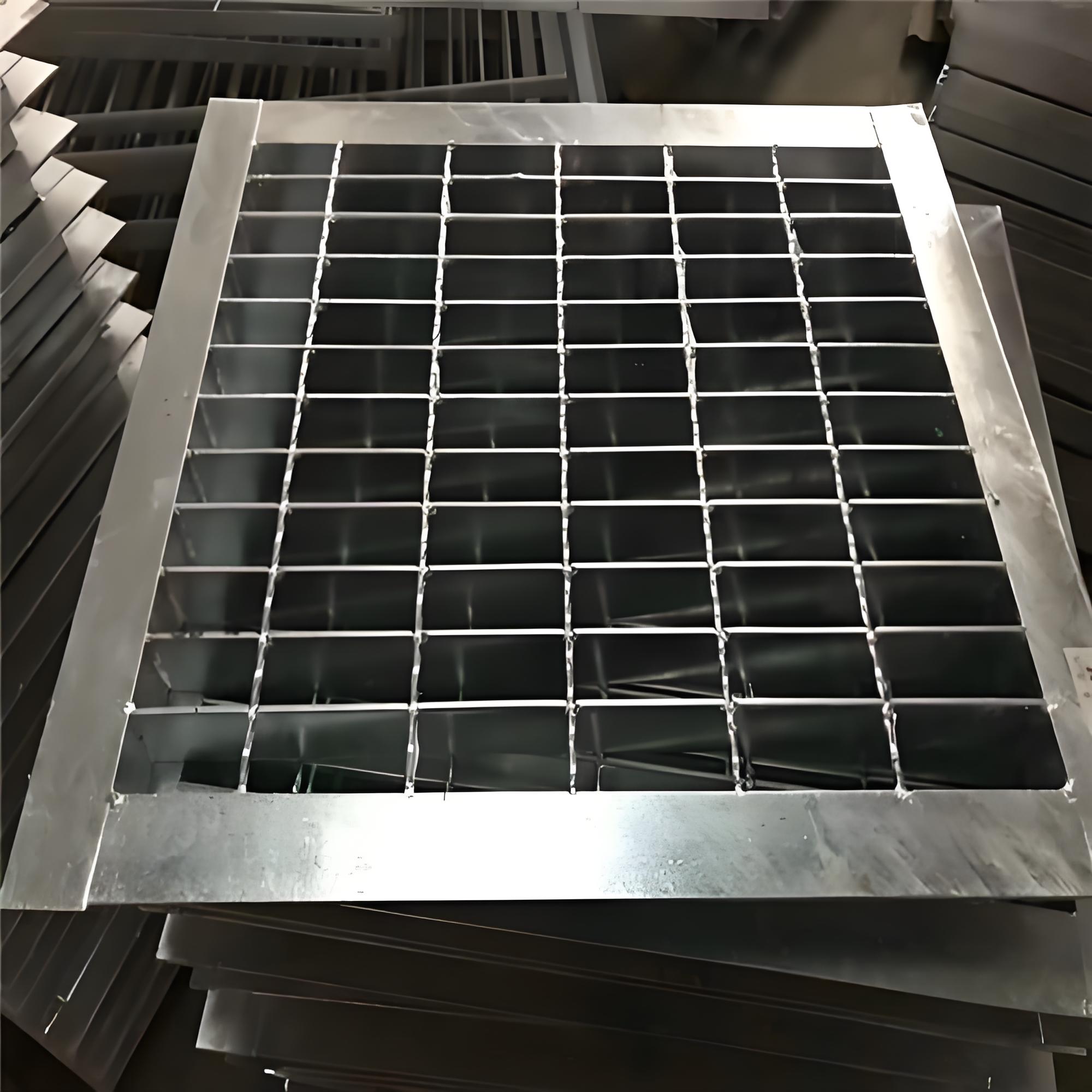
If the project needs cutouts, notches, stair treads, drain covers, frames, toe plates, or fixing clips, the supplier should be able to produce them accurately. Custom fabrication capability reduces site work and installation risk.
Quality control should cover dimensions, welding, flatness, surface treatment, packing, and documentation. For export orders, inspection photos and reports can help buyers confirm product condition before shipment.
Production lead time, MOQ, packing method, document support, and shipping coordination are important for international projects. A supplier that understands export requirements can reduce communication delays and delivery problems.
| Supplier Evaluation Point | What Buyers Should Confirm |
|---|---|
| Product specification | Material, bar size, spacing, panel size, surface type |
| Technical support | Load, span, bearing direction, application matching |
| Manufacturing capability | Welding, press-locking, cutting, banding, openings |
| Surface treatment | Hot-dip galvanizing, painting, stainless finishing |
| Quality control | Inspection process, tolerances, coating checking |
| Custom supply | Drawings, panel marks, special dimensions |
| Export service | Packing, documents, shipping support |
| Quotation clarity | Included items, accessories, trade terms, validity |
To receive an accurate quotation, buyers should provide complete details at the inquiry stage. This helps the supplier calculate material weight, fabrication cost, surface treatment cost, packing cost, and delivery time more accurately.
| Required Information | Example Detail |
|---|---|
| Application | Walkway, drain cover, platform, stair landing, ventilation floor |
| Material | Carbon steel, galvanized steel, 304 stainless steel, 316 stainless steel, aluminum |
| Surface type | Plain or serrated |
| Manufacturing type | Welded, press-locked, swage-locked, or custom |
| Bearing bar size | 25 mm × 3 mm, 30 mm × 3 mm, or custom size |
| Mesh spacing | Bearing bar spacing and cross bar spacing |
| Panel dimensions | Length, width, quantity, bearing direction |
| Load requirement | Pedestrian load, maintenance load, light trolley load |
| Surface treatment | Untreated, painted, hot-dip galvanized, pickled, passivated |
| Custom details | Cutting, banding, notches, openings, clips, toe plates |
| Documents | Material certificate, inspection report, packing list, certificate of origin |
| Trade term | EXW, FOB, CFR, CIF, DAP, or other requested term |
If drawings are available, they should show bearing direction, panel marks, support location, openings, edge details, and installation requirements. If drawings are not available, a dimensioned sketch is better than a text-only inquiry.
Many problems in light-duty steel grating orders come from incomplete specifications. A good supplier can help reduce these risks by asking the right questions before production.
A very low price may be based on thinner bearing bars, wider spacing, untreated surface, no banding, or no accessories. Buyers should compare the complete specification, not only the unit price.
If the bearing bars do not span between supports, the panel may not carry the intended load. Bearing direction should be clearly confirmed for every custom panel and drain cover.
Untreated or lightly painted carbon steel may rust quickly outdoors. For outdoor use, hot-dip galvanized steel, stainless steel, or aluminum should be considered according to corrosion conditions.
Loose panels can move, rattle, or become unsafe. Fixing clips or other fastening methods should be included when panels must be removable or when site welding is not preferred.
Pedestrian load and wheel load are different. Light-duty grating suitable for walking may not be suitable for carts, forklifts, vehicles, or heavy equipment.
Pipes, columns, wall edges, and equipment bases often require cutouts. If these details are not shown before production, panels may need site modification, causing delay and additional cost.
What is light-duty steel grating used for?
Light-duty steel grating is mainly used for pedestrian walkways, light platforms, drainage covers, stair landings, maintenance access areas, ventilation floors, and general non-vehicle industrial flooring. It is suitable where drainage, ventilation, slip resistance, and moderate load capacity are required, but it should not be used for heavy vehicles or high concentrated loads unless specially designed.
How do I choose a light-duty steel grating supplier?
Choose a supplier that can confirm material, bearing bar size, mesh spacing, load requirement, span direction, surface treatment, custom processing, packaging, and export documents. A suitable supplier should not only quote a low price but also help match the grating specification to the real application.
What information is needed for a light-duty steel grating quotation?
For an accurate quotation, provide the supplier with material, surface type, bearing bar size, mesh spacing, panel dimensions, quantity, load requirement, application, surface treatment, cutting details, banding, openings, fixing clips, packaging requirements, and trade terms. Drawings or sketches are strongly recommended for custom panels, drain covers, and platform projects.
